Editorial
BOOK REVIEW: Alex Ekwueme’s Wisdom from the Beyond

By Chido Nwakanma
Alex Ekwueme (2002), Whither Nigeria? Thoughts on Democracy, Politics, and the Constitution. Enugu:Nwamife Publishers Limited. 298 pages. ISBN: 978-33603-1-0.

It is that time again when Nigerians either cogitate or ruminate and even agonise over this land of our forebears. February 2023 general elections hold great significance in several areas. It will either be a paradigm shift or a stiffening of the status quo. It is thus appropriate to read a book that addresses the question of the moment: Whither Nigeria?
Alex Ekwueme’s (2002), Whither Nigeria: Thoughts on Democracy, Politics, and the Constitution, contains 22 essays that represent far-reaching insights and thoughts on politics and public policy in Nigeria. Reading it is like hearing a voice from the beyond with all the wisdom of the ages. The twenty-two essays in this book cover a broad range of issues and the years 1992-2000. They communicate that Ekwueme made critical and significant contributions to the birthing of the Fourth Republic.
Ekwueme’s collection of essays follows best practicesin offering a distinct point of view that enables the reader to situate himself in the Nigerian milieu and its challenges. It is a mirror and a reflection on our take-off point and where we are now twenty years after. Most Nigerians can see themselves herein and remember where they were at each of the points in the book.

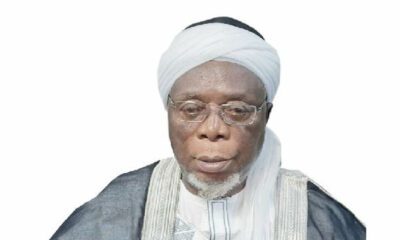
Dr. Alex Ekwueme is eminently qualified in theory and practice to speak on these topics. The erudite gentleman bagged six degrees, including two doctorates in his lifetime. He had a broad cosmopolitan worldview and saw provision and privation. He was the first elected Vice-President of Nigeria in the Second Republic.

The military governments of General Muhammadu Buhari and Ibrahim Babangida detained Ekwueme for six years after they overthrew the Shehu Shagari-Alex Ekwueme government. They found nothing on him, yet kept him, as second-in-command in jail while Shehu Shagari, captain of the team, enjoyed house arrest!
“During the incarceration, I had plenty of time on my hands. I was very much worried about Nigeria and her future. I considered the situation where elected civilian governments could be sacked at will by the military to be unsatisfactory and unacceptable. I concluded that military intervention could only be stopped if we put in place a form or structure that would ensure the involvement of representative Nigerians from all geopolitical zones of the country at the highest level of national governance”, Ekwueme states as background.
The essays in this book include ‘More than a Government of National Consensus’, ‘Restructuring the Nigerian Polity’, ‘Political Fair Play and National Reconciliation’, ‘Some Thoughts on the Crisis in Nigerian Education’, and ‘Facilitating Women’s Participation in Nigeria’s Political Structure’.
Other subjects, all still pertinent and present, include ‘The Changing Face of Nigerian Federalism: Which Way Forward?’, ‘Religion and Politics in Nigeria’, ‘Nigeria’s Federal Constitutions and the Search for “Unity in Diversity”, and ‘Democratization of the Nigerian Polity’.
In “More than a government of National Consensus”, Ekwueme states his credentials. “Having put my life at possible risk at Bonny Camp, Kirikiri, and Ikoyi prisons, I consider that I have as much stake as any other Nigerian in the unity, indivisibility, stability, and survival of this country and that I am not altogether ill-qualified to pass on a few words of advice. I will consider my duty done if I proffer the advice; the burden will then be our collective if we fail to consider the words of advice properly’.
Ekwueme performs a momentous duty of sharing his advice of many years herein. The former Vice President itemizes the critical issues requiring resolution in Nigeria to include: (i) the national question, (ii) the federal structure of Nigeria, (iii) the local government structure, (iv) the economic situation, (v) the military question, (vi) the political question and the rigidity of the constitution and (vii) conciliar federal executive and the doctrine of collegiality.
He proposed “a conciliar Presidency made up of a President and six Vice-Presidents chosen, one from each of the six regions of the country” to “operate as a council based on collegiality and true consensus”. The President would directly supervise the Ministry of Defence, Police Affairs, and the State Security Services, while the Vice Presidents would supervise ministries and departments grouped in some order.
Security: Internal Affairs, External Affairs, and Justice
National Economy: Finance, Central Bank, and National Planning Commission
Infrastructure: Works, Transport, and Communications
Social Services: Education, Health, Information, Youth, Sports, Culture and Social Welfare.
Mineral Resources and Energy: Petroleum, Mines, Power, and Steel
Production: Agriculture, Industry, Science and Technology, Employment and Labour.
Moreover, he suggests that the Vice Presidents “should be elected independently (of the President) from their regions, and their election should take place a week or a fortnight before the election of the President. This would mean that the Vice Presidents need not be of the same party as the President, and their election would not only reflect the political wishes of each region, but their participation in the Presidency would elicit the support of the entire country”.
Similar bold and “strange” (his words) proposals fill the pages of this book. Ekwueme suggested the six regions grouping of Nigeria that has now become part of the country’s structure. Will his suggestion of a conciliar system someday come to pass? Conciliar means “relating to or proceeding from a council” and originated in ecclesiastical tradition.
In “Restructuring the Nigerian Polity”, first presented on March 21, 1994, Ekwueme suggested, among others: “Reconstituting Nigeria into a true federation of six regions with five national cities”, and “allocation of a larger share of national revenue to the oil-producing states/regions”. The second is now in place with the 13% derivation to oil-producing states!
Restructuring features consistently in most of the submissions. The former VP was candid. Chapter 3 (pages 23-59) is a primer focusing on Nigeria’s political structure and all the contending ideas around federalism, confederalism, unitary government, and presidential and parliamentary systems. He recounts on page 29 the long history of attempted secession and the actual secession that Nigeria crushed.
The economy features serially in the contributions of Dr. Ekwueme. He spoke prophetically on the economy, reading him retrospectively. In “Whither Nigeria”, the title essay he submitted on February 5, 1992: “There appears to be no short answer to Nigeria’s economic problems, and while not attempting to apportion blame for a situation in which three decades of post-independence governments (civilian-military) and the Nigerian citizens themselves have contributed to creating, the truth remains that, in terms of living standards most Nigerians are certainly worse off today than they were a decade ago. Nigeria’s external debt has almost doubled within the same period. The middle class has ceased to exist as a reasonably comfortable, forward-looking stabilising stratum of society. This situation cannot augur well for stability or probity in any country. The years ahead promise to be even tougher, and all hands will need to be on deck to salvage the situation.”
Ekwueme led the G-34 following his bold letters to then Head of State General Sani Abacha, contesting some of the postulations of that government when Abacha’s word was the holy grail. Whither Nigeriacaptures the developments.
There is a feeling of déjà vu reading Whither Nigeria. Some sections say Nigeria has been revolving in one position in motion without movement. Take education. “Some Thoughts on the Crisis in Nigerian Education”, written in 1996, could also speak to today. Strikes by the Academic Staff Union of Universities, Academic Staff Union of Polytechnics and the Non-Academic Staff Union in Universities shut down the nation’s tertiary institutions for two years. The Shagari-Ekwueme government negotiated and implemented the first University Salary Structure; provided N500 million (equivalent to US$800 million) for the then 14 federal universities; while naira devaluation over the years negated all the benefits as did a massive increase in the number of universities and other national institutions.
Ekwueme, GCON, took the road less travelled in recommending tuition fees in higher education. “Government should concentrate on providing grants for capital development of universities and other tertiary institutions.” Quantify recurrent costs, deduct income the institutions generate, and divide the net costs by the number of students. “Supposing the total recurrent costs of the universities come to N22 billion, and they can generate N2 billion leaving a shortfall of N20 billion; if there are 400,000 university students in Nigeria, the tuition fees will come to N50,000 per annum. We can refine this approach further to provide differentiated tuition fees for various fields of study”.
Ekwueme was an architect, town planner, lawyer, sociologist, philosopher, educationist, historian, industrialist, politician, statesman and philanthropist. After his secondary education at King’s College, Lagos, he studied at the University of London, the University of Washington, Seattle, and the University of Strathclyde.
Ekwueme’s other book on politics is From State House to Kirikiri, which recollects his journey from a palace to prison following the military putsch. Google and Amazon list the books but indicate they are unavailable. Gladly, to mark his 90th posthumous birthday, the Ekwueme family has promised to reprint his seminal books for distribution and easy accessibility. As friends and family celebrate the legacies of Ekwueme, the statesman, they should also consider making them e-books for broader distribution. Whither Nigeria is a must-read for citizens and particularly political actors of today.



By Tony Edike
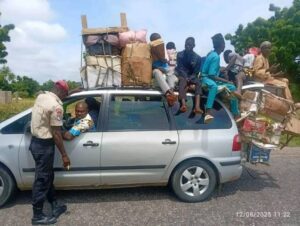
There are journeys Nigerians make every day without giving much thought to the danger involved.
We enter a car, fasten—or sometimes do not fasten—our seat belts, tell the driver where we are going and assume that we will arrive safely.
But increasingly, driving on Nigerian roads feels like an exercise in uncertainty.
The reckless overtaking.
The speeding.
The sudden lane changes.
The driver overtaking on a blind bend.
The motorist beating a red light.
The commercial bus forcing its way into traffic.
The driver using a mobile phone while driving.
The young man who bought a car yesterday and is driving it today as though years of experience came with the vehicle.
The question that should concern every Nigerian is simple:
How many people on our roads have actually demonstrated that they are competent to drive?
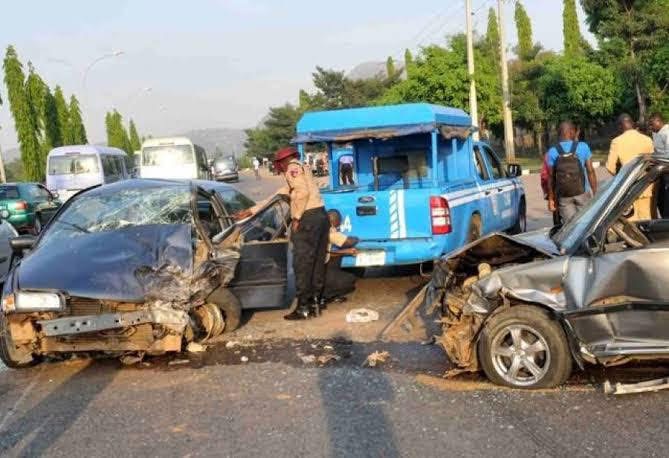
That question becomes even more important when we consider that the Federal Road Safety Corps recorded 10,446 road traffic crashes and 5,289 deaths in Nigeria in 2025.
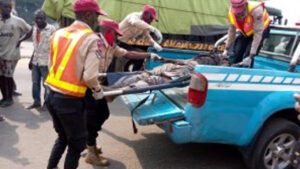
FRSC officials rescuing accident victims
Compared with 2024, the total number of crashes increased by 9.2 per cent, from 9,570 to 10,446. The number of people injured also increased by 7.2 per cent, from 31,154 to 33,400. Fatal crashes rose from 2,532 to 2,608, even though the overall number of deaths fell slightly from 5,421 to 5,289. (Nan News)
These are not merely statistics.
Behind every number is a person.
A father.
A mother.
A child.
A breadwinner.
A student.
A passenger.
A pedestrian.
A motorcyclist.
Somebody who left home expecting to return.
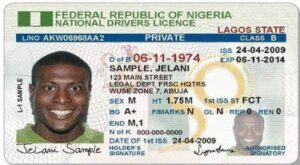
When a licence becomes a piece of plastic
Nigeria’s official driver-licensing system does require training.
The FRSC’s current driver’s licence portal states that a first-time applicant must be at least 18 years old and must have completed driving school. The application process also involves a driving test through the relevant Vehicle Inspection Office process. (Nigeria Driver’s Licence)
The FRSC’s Driving School Standardization Programme is even more specific.
A certified driving school is expected to have roadworthy dual-control training vehicles, licensed instructors, a classroom, Highway Code materials, traffic-law materials, first-aid facilities, a fire extinguisher and a driving range, among other requirements.
FRSC’s operating procedure states that certified schools are expected to train students for at least 26 sessions of a minimum of one hour each, with training sessions recorded on the FRSC system. (FRSC)
So the problem is not that Nigeria has no rules.
The problem is whether the rules are being followed rigorously enough.
A law that exists on paper but is poorly implemented cannot adequately protect the public.
A driving-school certificate should mean that somebody actually learned to drive.
A driving test should mean that somebody actually demonstrated competence.
And a driver’s licence should mean something more than the possession of a plastic card.
The young man who bought a car today
There is a growing phenomenon that deserves serious attention.
A young Nigerian saves money or makes money through unconventional means, obtains a car—or receives one from his parents—and suddenly becomes a driver.
Sometimes the person has never received formal driving instruction.
Sometimes a friend gives a few lessons.
Sometimes the person learns by watching someone else drive.
Then, almost immediately, the vehicle enters one of Nigeria’s busiest roads including the highways.
That is dangerous.
A car is not a bicycle.
It is a machine capable of weighing more than a tonne and travelling at speeds at which a mistake can become fatal within seconds.
The ability to start an engine, move a vehicle forward and turn a steering wheel does not constitute driving competence.
Driving requires judgment.
It requires hazard perception.
It requires understanding right of way.
It requires knowing when not to overtake.
It requires knowing how to react when another driver makes a mistake.
It requires understanding braking distances.
It requires lane discipline.
It requires the ability to remain calm when confronted with unexpected situations.
And, perhaps most importantly, it requires experience.
The embarrassment of the learner’s sign
There is another attitude we must confront.
Some new drivers are reluctant to identify themselves as learners.
They consider displaying a learner’s sign on their vehicles embarrassing.
There is an unfortunate social perception that says:
“If I have bought a car, why should people know that I am still learning?”
But learning is not shameful.
In fact, identifying a learner should be seen as an act of responsibility.
Other motorists need to know that the person behind the wheel may still be developing confidence and road experience.
Britain takes this principle seriously.
Learners in Great Britain must display L plates at the front and rear of the vehicle, and failure to display the required plate can attract penalty points. (GOV.UK)
Nigeria should consider a similarly serious approach to learner identification.

A standard training school for Truck Drivers
If a person is still learning, let the road know.
There is nothing shameful about saying:
“I am learning. Please give me room.”
Britain does not treat driving as automatic
There is an important lesson Nigeria can draw from the British system.
In Great Britain, becoming a driver involves several stages.
A learner obtains a provisional licence and learns under the prescribed conditions.
The driver must then pass a theory test before taking the practical driving test. The theory examination includes knowledge and hazard-perception components. (GOV.UK)
The practical test then determines whether the applicant can actually drive safely.
This distinction is important.
Knowing the Highway Code is one thing.
Applying it while controlling a moving vehicle in real traffic is another.
Nigeria should strengthen that distinction.
A person should not merely be able to answer questions about road signs.
The person should demonstrate that he or she can safely operate a vehicle around pedestrians, motorcycles, buses, trucks, traffic lights, intersections and other motorists.
America has another lesson: don’t rush beginners
The United States offers another interesting model.
The National Highway Traffic Safety Administration describes Graduated Driver Licensing, or GDL, as a three-stage system:
Learner’s permit → Intermediate licence → Full licence.
During the learner stage, driving is supervised.
During the intermediate stage, the new driver is allowed greater independence but may face restrictions on high-risk situations such as night driving and carrying young passengers.
Only later does the driver receive an unrestricted licence. (NHTSA)
The reasoning is straightforward.
A new driver needs experience.
But experience should be acquired progressively.
The NHTSA says the strongest GDL programmes are associated with substantial reductions in crashes among young drivers. It cites research associating the most restrictive programmes with a 38 per cent reduction in fatal crashes and a 40 per cent reduction in injury crashes among 16-year-old drivers. (NHTSA)
Nigeria may not need to reproduce the American system exactly.
But the principle is highly relevant:
Do not give inexperienced drivers unrestricted exposure to every dangerous driving situation immediately.
Nigeria needs a “graduated driver” system
Nigeria should seriously consider introducing a stronger graduated licensing arrangement for new and young drivers.
For example:
Stage One: Learner
The applicant would:
● obtain a learner permit;
● pass a theory examination;
● complete mandatory practical training;
● display a learner identification sign;
● drive only under prescribed supervision;
● complete a minimum number of verified training hours.
Stage Two: Provisional Driver
After passing the practical test, the driver would receive a provisional licence.
During this period, there could be restrictions appropriate to novice drivers, particularly around high-risk behaviours.
Stage Three: Full Licence
After completing the required period without serious traffic violations, the driver would graduate to a full licence.
Such a system would introduce an important principle:
A driving licence should be earned progressively, not simply obtained.
But who is teaching the drivers?
This is another question that deserves national attention.
Who owns some of Nigeria’s driving schools?
Who teaches there?
What qualifications do the instructors possess?
How often are the schools inspected?
Are training hours genuinely completed?
Are students actually taught road safety or merely given certificates?
These questions matter because FRSC itself recognises the need for standardisation.
Its Driving School Standardization Programme says schools are assessed on their facilities and trainers and that certification can be suspended or withdrawn when minimum standards are compromised. (DSSP)
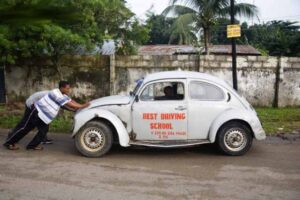
A Nigerian driving school operator
That means enforcement should be visible.
Nigeria should maintain and regularly publish an updated national register of approved driving schools and licensed instructors.
A prospective student should be able to enter a website, type the name of a driving school and immediately know:
● whether the school is accredited;
● when its accreditation expires;
● whether its instructors are certified;
● how many vehicles it has;
● whether the vehicles are roadworthy;
● whether the school has been sanctioned.
Transparency would help drive bad operators out of the industry.

The examiner must be independent
There is another reform worth serious consideration.
The person who teaches a candidate should not be the person whose word alone determines that the candidate is ready for an unrestricted licence.
Nigeria needs a strong, independent and standardised practical examination.
The test should assess actual competence, including:
● vehicle control;
● reversing;
● parking;
● lane discipline;
● turning;
● signalling;
● mirror use;
● speed management;
● safe overtaking;
● traffic-light compliance;
● pedestrian awareness;
● hazard perception;
● emergency braking;
● interaction with motorcycles and commercial vehicles.
And the examination should be digitally recorded.
Why?
Because once the examination is recorded, an applicant can challenge an unfair result and authorities can investigate suspicious patterns.
If one examiner passes virtually everyone, that should trigger an audit.
If another examiner fails almost everyone, that should also trigger an audit.
Technology can make the licensing system more transparent.
The problem is not only drivers
We must also resist the temptation to blame every road crash entirely on motorists.
Road safety is a system.
The driver matters.
The vehicle matters.
The road matters.
Traffic enforcement matters.
Emergency medical services matter.
Urban planning matters.
Road signs and markings matter.
Public transport regulation matters.
A competent driver can still encounter a mechanically defective truck.
A careful motorist can still meet a dangerously designed intersection.
A pedestrian can still be exposed to a road without adequate crossing facilities.
And a crash victim’s chances of survival can depend on how quickly emergency medical assistance arrives.
Consequently, Nigeria needs a comprehensive road-safety strategy rather than periodic enforcement campaigns.
Speed is not a small matter
One of the most dangerous behaviours on Nigerian roads is excessive speed.
At high speed, the driver has less time to react and the vehicle requires a greater distance to stop.
The consequences of a collision are also more severe.
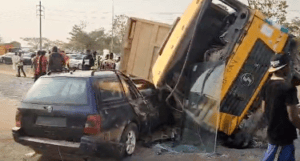
Nigeria should therefore expand intelligent speed enforcement.
Speed cameras and red-light cameras can complement human enforcement.
But technology must be transparent.
There must be proper calibration.
There must be reliable evidence.
There must be procedures for challenging erroneous penalties.
And enforcement should be designed primarily around saving lives, not generating revenue.
We need to know where crashes are happening
Nigeria also needs better public crash data.
The 2025 FRSC figures tell us the national picture, but policymakers need much more.
Every serious crash should produce a standardised record showing, where available:
● location;
● time;
● road condition;
● vehicle type;
● driver age;
● licence status;
● training status;
● estimated speed;
● weather;
● road design;
● injuries;
● fatalities;
● vehicle condition;
● suspected impairment;
● emergency response time.
FRSC already operates a Road Safety Observatory and has identified high-risk locations from its crash database.
The country should build on that work.
If a particular junction produces repeated fatal crashes, authorities should not simply erect another sign and move on.
They should ask:
What exactly is wrong with this location?
Is it the road design?
The speed?
Poor visibility?
Pedestrian movement?
Lack of traffic control?
Illegal parking?
Poor lighting?
The answer should determine the intervention.
Road safety should begin in school
We also need to change the culture before young Nigerians become motorists.
Screenshot
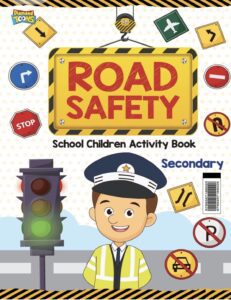
Road safety education should become a serious part of secondary-school education.
Young people should understand:
● road signs;
● pedestrian safety;
● seat belts;
● speed;
● distracted driving;
● alcohol and drugs;
● motorcycle safety;
● emergency response;
● responsible vehicle ownership.
By the time a Nigerian buys a first car, road safety should not be a new concept.
And commercial drivers need special attention
The risks associated with commercial buses, tankers and heavy trucks require particular attention.
These vehicles carry more passengers or impose greater physical force in a collision.
Commercial drivers should therefore face rigorous professional requirements, periodic medical assessments, skills testing and stronger sanctions for serious violations.
Companies operating large fleets should also be held accountable for driver working conditions.
 Pls
Pls
A driver who is pressured to drive excessively long hours without adequate rest can become a danger to himself and other road users.
Road safety therefore extends into transport-company management.
The licence should mean something
Perhaps the most important reform Nigeria can make is cultural.
We must restore the meaning of a driver’s licence.
A licence should be evidence that the holder has demonstrated:
knowledge + practical competence + road awareness + responsibility.
It should not simply be evidence that an application was processed.
Nigeria already has the foundation.
The FRSC’s licensing portal requires first-time applicants to complete driving school. The official framework provides for testing, and FRSC operates a standardisation system for driving schools. (Nigeria Driver’s Licence)
The challenge is to make those requirements real, consistent, transparent and difficult to circumvent.
The way out
Nigeria does not need another slogan telling motorists:
“Drive safely.”
We have heard that for years.
What Nigeria needs is a system that makes competent driving a requirement rather than an aspiration.
A person buying a first car should be encouraged—not embarrassed—to learn properly.
A learner should display the appropriate identification.
A driving school should be genuinely accredited.
An instructor should be properly qualified.
A practical test should be meaningful.
An examiner should be independent.
A vehicle should be roadworthy.
A dangerous driver should face predictable consequences.
A repeat offender should face escalating sanctions.
A dangerous road should be redesigned.
And every serious crash should teach the authorities something that can prevent the next one.
The statistics demand action.
Nigeria recorded 10,446 road crashes in 2025, with 5,289 people killed and 33,400 injured, according to FRSC figures reported by the News Agency of Nigeria. (Nan News)
But behind those numbers is something more profound.
Every road user is somebody’s child.
Somebody’s parent.
Somebody’s spouse.
Somebody’s friend.
Somebody’s employee.
Somebody’s future.
The ultimate question, therefore, is not whether Nigeria can reduce the number of road crashes.
It is whether Nigeria is prepared to change the way it thinks about driving.
Because a driver’s licence should never be merely a document that says:
“This person is legally allowed to drive.”
It should also give the public reasonable confidence that:
“This person has demonstrated that he or she knows how to drive.”
Until that confidence exists, every Nigerian who enters a vehicle is entitled to ask a difficult question:
Who exactly tested the person behind the wheel—and did that test really prove that the person can drive?

PETER Obi releases his full profile as more Nigerians prevail on him to do so.
NAME : Mr. Peter Gregory OBI, (CON).
CONTACT DETAILS
*22 Niger Drive, GRA, Onitsha, Anambra State, Nigeria
*Tel: 08034051000
*E-mail: poanambra@gmail.com
DATE OF BIRTH : 19th July 1961,
PLACE OF BIRTH: Onitsha, Nigeria
NATIONALITY: Nigerian
MARITAL STATUS: Married with two children
EDUCATIONAL INSTITUTIONS ATTENDED
· Christ the King College, Onitsha (W.A.S.C.)
. University of Nigeria, Nsukka (B.A. Philosophy)
· Lagos Business School, Nigeria (Chief Executive Program)
· Harvard Business School, Boston, U.S.A. (Mid to Mid Marketing)
· Harvard Business School, Boston, U.S.A. (Changing the Game)
· London School of Economics (Financial Mgmt/Business Policy)
· Columbia Business School, New York, U.S.A. (Marketing Mgmt )
· Institute for Management Development, Switzerland (Senior Executive Program)
· Institute for Management Development, Switzerland (Break-Through Program for CEOs)
· Kellogg Graduate School of Management, U.S.A. (Advanced Executive Program)
· Kellogg School of Management U.S.A. (Global Advanced Mgmt Program)
. Oxford University: Said Business School, (Advanced Mgmt& Leadership Program)
. Cambridge University: George Business School (Advanced Leadership Program)
PREVIOUS POSITIONS
· Governor, Anambra State of Nigeria (2006-2014)
· Honorary Special Adviser to the President on Finance (till May, 2015)
· Member, Presidential Economic Management Team (till May, 2015)
· Vice-Chairman, Nigeria Governors’ Forum (2008-2014)
· Chairman, South-East Governors’ Forum (2006-2014)
. Former Chairman: Board of Securities and Exchange Commission (SEC)
· Former Chairman: Fidelity Bank Plc.
· Former Chairman: Guardian Express Mortgage Bank, Ltd.
· Former Chairman: Future Views Securities, Ltd.
· Former Chairman: Paymaster Nigeria Plc.
· Former Chairman: Next International (Nigeria) Ltd
· Former Director: Guardian Express Bank Plc.
· Former Director: Chams Nigeria Plc.
· Former Director: Emerging Capital Ltd
· Former Director: Card Centre Plc
MEMBERSHIP OF PROFESSIONAL ASSOCIATIONS/ORGANIZATIONS
· Member, Nigerian Economic Summit Group (NESG)
· Member, Nigerian Chartered Institute of Bankers
· Member, British Institute of Directors (IOD)
MEMBERSHIP OF FEDERAL GOVERNMENT COMMITTEES
In my capacity as the Governor of Anambra State, I served as a member of:
*Federal Government Committee on Minimum Wage
*Federal Government Committee on Negotiation with Labour on Subsidy
*Federal Government Committee on Mass Transit
*Federal Government Committee on Natural Resource
*National Economic Council Committee on Power Sector Reform
*National Economic Council Committee on Sharing of MDGs Funds
*National Economic Council Committee on Accurate Data on Nigeria’s Oil Import and Export
*Agricultural Transformation Implementation Council
*Sub-Committee on Needs Analysis of Public Universities in Nigeria
*National Economic Council Review Committee on the Power Sector
AWARDS AND RECOGNITIONS
2015: Golden Jubilee Award from Catholic Archdiocese of Onitsha for outstanding contribution to quality healthcare delivery in St. Charles Borromeo Hospital in particular and Anambra State in general, on the occasion of the Golden Jubilee celebration of the hospital.
*2014: Nigerian Library Association Golden Merit Award for remarkable improvement of libraries in Anambra State, exemplified by our Government’s construction of the Kenneth Dike Digital State Library, remarkable upgrade of the Onitsha Divisional Library, and provision of library facilities in secondary schools across the State.
*2014: Champion Newspaper Most Outstanding Igbo Man of the Decade.
* 2014 The Voice Newspaper (Holand) Achievers Award for Outstanding Example in Leadership and Governance.
*2013: Silver Bird Man of the Year (with Governor Babatunde Fashola of Lagos State).
*2012: Business Hallmark Newspaper Man of the Year.
*2012: The Golden Award on Prudence – by the Methodist Church of Nigeria as the Most
Financially Prudent Governor in Nigeria.
* 2012: Leadership and Good Governance Award by The Ezeife Leadership Foundation Award for restoring peace and harmony to Anambra State.
* 2012: Best Performing Governor on Immunization in South-East Nigeria – by Bill & Melinda Gates Foundation.
* 2012: Outstanding Financial Planner and Manager – by the Church of Nigeria, Anglican Communion for my resourcefulness and creativity in governance.
*2011: Zik Leadership Prize.
*2010: ICT Governor of the Year – by the West Africa ICT Development Award.
*2009: Champion Newspaper Nigeria’s Most Trustworthy Governor Award.
*2009: Thisday Newspaper Most Prudent Governor in Nigeria.
*2007: The Sun Newspaper Man of the Year Award.
**The Nigerian MDGs Office/UNDP Best Governor in the Implementation of the MDGs in Nigeria
INTRODUCTION OF CONSTITUTIONAL AND OTHER MAJOR CHANGES IN NIGERIAN POLITICS
*He was the first gubernatorial candidate in Nigeria to legally challenge to its logical conclusion, his governorship electoral victory that was denied him. He won in the Courts and reclaimed his mandate.
*He was the first Governor in Nigeria to legally challenge his wrongful impeachment and was reinstated by the Courts.
*He was the first Governor in Nigeria to seek the interpretation of tenures of Governors when INEC allowed elections to take place in Anambra State when his tenure had not expired; the election already concluded was cancelled and he was allowed to complete his tenure.
*He was the first Governor to serve a 2nd term in both the new and old Anambra State, that is, almost 40 years after creation of the State.
*He was the first Governor, whilst still in Office, to be appointed a Special Adviser to the President.
*He was the first serving Governor to be appointed into the Presidential Economic Management Team.
*He was among the first Governors to be honoured with a National Award in 2011, while still in office.
*Though the only Governor whose political party was in government in only one State, he was elected Vice-Chairman of the Nigeria Governors’ Forum twice.
*Though the only non-PDP Governor in the South-East (made up of 5 States), he was elected by the other 4 PDP Governors as their Chairman for 8 years rather than the usual one year.
FUNDAMENTAL ACHIEVEMENTS AS GOVERNOR OF ANAMBRA STATE (PARTIAL LISTING)
1. Anambra was the first State to commence Sub-Sovereign Wealth savings, the first of its kind in Sub-Saharan Africa. At a time many other Governors were leaving huge debts, I left the equivalent of $500 million Dollars in investment as well as local and foreign currency, including $156 million in Dollar-denominated bonds.
2. For the first time in the history of Anambra State, Ambassadors and High Commissioners of notable countries such as United Stated, Britain, Russia, European Union, South Africa, Belgium, Israel, the Netherlands, Canada, among others, visited the State. Before my tenure, Anambra was practically a pariah state blacklisted by the Diplomatic Corps and international development partners.
3. Development partners such as UNDP, UNICEF, the World Bank, DFID, the European Union etc., which hitherto were not in Anambra State started working with the State. Anambra was consistently adjudged one of the best states in development partnership and commitment to reforms for good governance.
4. He was recognised as Best Governor by the Millennium Development Goals Office (OSSAP-MDGs) and the UNDP in the implementation of their programmes in Nigeria.
5. The Nigerian Debt Management Office (DMO) rated Anambra as the least indebted state in Nigeria. In spite of visible and measurable achievements recorded in various sectors, the State under him did not borrow or raise bonds for her various projects.
6. The Senate of the Federal Republic of Nigeria rated Anambra State as the most financially stable state in the country.
7. The State’s ground-breaking return of schools to their original owners – Voluntary Agencies (Churches) on 1st January 2009, and subsequent partnership with the Agencies in Education, saw the State move from 24th position out of 36 States to Number One in National Examination Council (NECO) and West African Examination Council (WAEC) examinations for three consecutive years. This made the World Bank to commission a study, led by the renowned Prof. Paul Collier of Oxford University, on this revolutionary partnership and phenomenal achievement.
8. The State also entered into strategic partnership with the Churches in the Health sector. This symbiotic relationship resulted in a tremendous boost to health care because of the services offered by health institutions owned by Voluntary Agencies, while the State restored grants to the agencies and made available to them more than 50 million Dollars in various types of support.
10. Through partnership with the Church in the Health sector, his Government funded the transformation of -:
a: Iyienu Hospital, Ogidi;
b: Our Lady of Lourdes Hospital, Ihiala;
c: St Charles Borromeo Hospital, Onitsha;
d: Holy Rosary Hospital, Waterside, Onitsha; and
e: St. Joseph Hospital, Adazi-Nnukwu.
His Government also built the Joseph Nwilo Heart Centre in St. Joseph, Adazi-Nnukwu, where heart operations are now being performed.
11. His Government won the Bill and Melinda Gates Foundation (1 Million dollars) as the best-performing state in immunisation in the South-East. With complementary funding from our Government, they used the money to build 10 Maternal and Child Care Centres across the State, particularly in rural communities, in partnership with the Churches.
12. The State was the first to procure and distribute more than 30,000 computers to secondary schools, including 22,500 from HP. The Managing Director for Personal Systems Group HP Inc, Mr. FabriceCampoy described the deployment as the biggest of such projects in the Middle-East and Africa.
13. Anambra State Government provided Microsoft Academies to more than 500 secondary schools, which the Head of Microsoft in Nigeria (Mr. Ken Span) described as the biggest such deployment in Africa so far.
14. The State provided Internet access to more than 500 secondary schools, which the CEO of Galaxy Backbone (Mr. Gerald Ilukwe) characterized as incomparable to any in the country.
15. More than 700 buses were provided to secondary schools in the State by our Government.
16. Boreholes were provided in schools all over the State.
17. Numerous classrooms were built in all the 177 communities of the State.
18 As part of the efforts to turn around the economy of the State, a number of companies were attracted to build their facilities in the Anambra State. A case in point is SABMiller, the 2nd largest brewery in the world, which built their first Green Field facility in the State, which is today one of the most successful facilities they operate globally.
19. A number of other companies followed the SABMiller initiative and were all supported and encouraged under our Government; a good example is INNOSON Motor Manufacturing Company, from which our government bought more than 1,000 vehicles.
20. Anambra State for the first time started close collaboration with recognized government security agencies (the Police, Army, Navy, Department of State Security, Civil Defence, among others), offering them various types of support including provision of more than 500 security vehicles. The improvement in security was phenomenal, such that the former IG of Police (Abubakar Mohammed) lauded Anambra State for not witnessing any bank robbery in my last three years in office.
21. To further enhance security, Anambra State provided at least one security vehicle to each of all the 177 communities in the State as well as various organizations such as markets and Churches.
22. His Administration conceived and built, from scratch, the first state-owned Teaching Hospital, Chukwuemeka Odumegwu-Ojukwu teaching Hospital, Awka.
23. His Government commenced the planned development of the Igbariam Campus of the ChukwuemekaOdumegwu-Ojukwu University, including the fencing, construction of internal roads, electrification, construction of the Faculty of Law, Auditorium, Administrative Block, Faculty of Agriculture, Management Building, among others).
24. His Government attracted the World Bank support on erosion – National Erosion and Watershed Management Project (NEWMAP) – to Anambra State.
25. His Government was the first to do Poverty Mapping in Nigeria, as a guide for the effective implementation of our poverty-alleviation strategies.
26 His Government, for the first time, undertook the aerial mapping of Awka as well as the production of Structure Plans for Awka Capital Territory, Onitsha and Nnewi.
27. During his tenure and with his Government’s support, Anambra State became an oil producing State.
28. He built the first Secretariat Complex to house State Government Ministries that were hitherto scattered around the State.
29. His government commenced the development of the ‘Three Arms Zone’ comprising Government House/Governor’s Lodge, Legislative Building/Speakers Residence, and Judiciary Building with Chief Judge’s Residence.
30. By the end of his tenure in 2014, more than twelve (12) health institutions, including two hospitals, had secured accreditation; when we took off in 2006, no health institution in Anambra State was duly accredited.
31. Anambra State was the first to undergo national peer review, which scrutinised State Governments for good governance, through the State Peer Review Mechanism (SPRM), an initiative of the Nigerian Governors’ Forum in collaboration with the DFID.
Editorial
Why Nigerian Graduates and Youths Are Jobless — and Increasingly Vulnerable to Crime and Other Vices
By Tony Edike
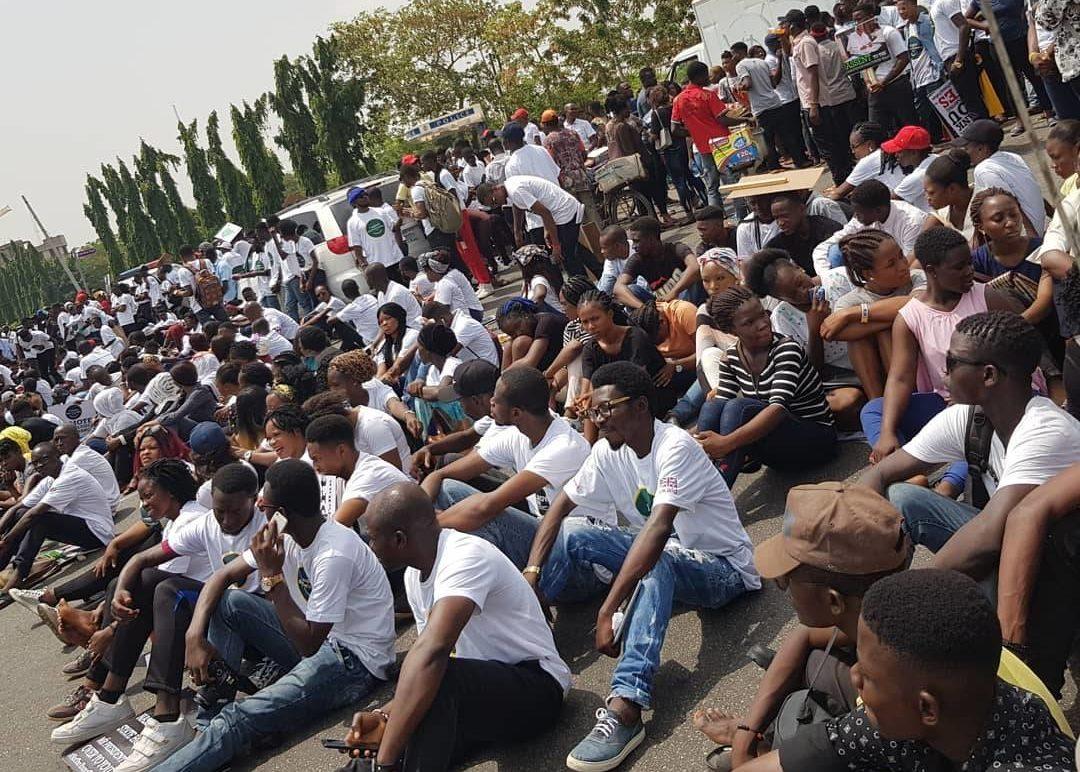
Nigeria is facing a youth employment crisis that goes far beyond the number of people officially classified as unemployed.
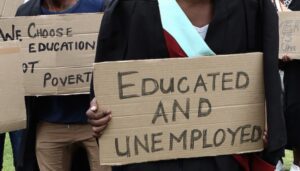
Every year, thousands of young Nigerians graduate from universities, polytechnics and other tertiary institutions with hopes of securing jobs, becoming financially independent and contributing to the economy. Instead, many spend months or even years searching for employment, while others accept poorly paid informal jobs that have little connection with their qualifications.
For some young people, the prolonged search for work has become a source of frustration, economic hardship and social vulnerability. Others have turned to entrepreneurship, freelancing, technology, migration and other legitimate alternatives. But there are also concerns that prolonged idleness, poverty and lack of opportunities can make some young people vulnerable to drug abuse, internet fraud, gambling, cultism, trafficking and other forms of criminality.
It is important, however, not to suggest that unemployment automatically causes crime. Crime and substance abuse have multiple causes, including family circumstances, peer influence, poverty, insecurity, weak social protection, drug availability and the broader economic environment. What the evidence shows is that Nigeria has a serious shortage of decent economic opportunities for its rapidly growing youth population.
The numbers tell the story
The latest National Bureau of Statistics labour-force figures illustrate the complexity of Nigeria’s employment crisis.
According to the NBS Nigeria Labour Force Survey for the second quarter of 2024, Nigeria’s overall unemployment rate stood at 4.3 per cent, while unemployment among young people was 6.5 per cent. The youth unemployment rate had been 8.4 per cent in the first quarter of 2024. Among people with post-secondary education, the unemployment rate was 4.8 per cent. (National Bureau of Statistics)
At first glance, these figures may appear surprisingly low for a country where graduates frequently complain about the difficulty of finding jobs.
Screenshot
But the explanation lies partly in the way unemployment is measured.
The NBS defines unemployment as the proportion of people in the labour force who are not employed but are actively searching and available for work. A person who manages to find a small informal job, works for himself or herself, or engages in another form of economic activity may therefore be classified as employed even if the income is inadequate to support a household.
This is why the question facing Nigeria is not simply “How many people have no job?” It is also “How many Nigerians have decent, productive and sufficiently paid jobs?”
Millions are working — but in poor-quality jobs
The World Bank has warned that Nigeria’s labour-market challenge is much broader than unemployment.
A World Bank analysis of Nigeria’s labour-force data found that only about 15 per cent of employed Nigerians were primarily engaged in paid wage employment or apprenticeships. It also found that more than three-quarters of employed Nigerians worked in establishments with fewer than five people.
The implication is significant: many Nigerians are technically employed, but the economy does not generate enough formal wage-paying jobs capable of absorbing graduates and workers with higher-level skills.
The World Bank also reported that about 13 per cent of employed Nigerians were working fewer than 40 hours a week while willing and able to work more, a sign of underemployment.
The International Labour Organisation similarly reported that 92.3 per cent of total employment in Nigeria was informal, while the proportion was about 98 per cent among young people in the data cited in its Nigeria labour-market analysis.
This means that the employment problem confronting Nigerian youths is not merely the absence of jobs. It is also the absence of quality jobs.
A rapidly growing youth population
Nigeria’s demographic structure makes the challenge even more urgent.
A World Bank analysis estimated that Nigeria has about 63 million young people aged 15 to 29, while approximately 5.5 million people become of working age every year. That number is projected to rise to about 6.1 million by 2030.
The same analysis found that more than one in four Nigerian youths were not in employment, education or training, while more than 92 per cent of employed young people were in the informal sector. (The World Bank)
This creates a fundamental economic problem: the number of young Nigerians entering the labour market is growing faster than the supply of productive opportunities capable of absorbing them.
The World Bank’s current country assessment also identifies Nigeria’s difficulty in absorbing millions of people entering the labour force each year as a persistent challenge, alongside weak job creation and limited entrepreneurial opportunities.
The graduate paradox
For Nigerian graduates, the situation can be particularly frustrating.
Young people are repeatedly encouraged to obtain university degrees as a route to economic advancement. Yet obtaining a degree does not guarantee employment.
The NBS Q2 2024 figures put unemployment among people with post-secondary education at 4.8 per cent. But the figure does not capture all graduates who are underemployed, working outside their fields, earning inadequate incomes or operating small informal businesses simply because they cannot find suitable wage employment.
The World Bank has previously identified a mismatch between the skills supplied by the education system and those demanded by employers. Its analysis noted that education helps people obtain wage employment but does not guarantee it, while many educated Nigerians remain outside productive, high-quality employment.
This creates what can be described as the graduate paradox: young Nigerians spend years acquiring qualifications, only to discover that the economy has not created enough positions requiring those qualifications.
1. The economy is not creating enough formal jobs
One of the fundamental causes is the structure of the Nigerian economy.
Nigeria has millions of micro and small businesses, but relatively few large companies capable of employing thousands of graduates in formal positions.
The World Bank has noted that more than three-quarters of employed Nigerians work in establishments with fewer than five people. It has also linked the limited growth of firms to problems such as inadequate finance and infrastructure.
Electricity costs, transportation problems, limited access to affordable credit, taxation pressures, exchange-rate volatility and other operating challenges can make it difficult for businesses to expand and employ more people.
The result is a vicious cycle:
small businesses → limited expansion → few formal jobs → more jobseekers → greater competition for available positions.
2. Skills mismatch
Another problem is the disconnect between what many young Nigerians learn in school and what employers need.
A degree may demonstrate academic achievement, but many employers also demand practical experience, digital skills, communication skills, technical abilities and industry-specific knowledge.
This puts young graduates in a difficult position.
Employers frequently demand experience, but graduates cannot acquire the required experience without getting their first meaningful opportunity.
At the same time, some employers report difficulty finding workers with the specific technical and practical skills they need.
Nigeria therefore faces a paradox in which young people are looking for jobs while some businesses are looking for suitably skilled workers.
The solution is not simply to produce more university graduates. It also requires stronger technical and vocational education, apprenticeships, internships and closer links between educational institutions and industries.
3. The dominance of informal employment
Nigeria’s informal sector provides an enormous economic safety valve.
Young Nigerians sell goods, repair phones, operate restaurants, drive commercial vehicles, work in agriculture, provide digital services, trade online and operate thousands of small businesses.
These activities are important and should not be dismissed.
But informal employment often lacks written contracts, pensions, health insurance, paid leave and predictable income.
The ILO reported that informal employment accounted for 92.3 per cent of total employment in Nigeria, while its analysis placed youth informal employment at about 98 per cent.
Thus, a graduate selling goods or providing services may be classified as employed even though the person remains economically insecure.
4. Lack of access to capital
For young Nigerians who want to create businesses instead of looking for employment, access to finance remains a major obstacle.
The World Bank has identified access to finance as a longstanding challenge for Nigerian micro, small and medium-sized enterprises.
The problem is important because a young entrepreneur with a viable business idea may still be unable to obtain affordable capital to purchase equipment, rent premises, hire workers or expand production.
Without capital, many young entrepreneurs remain at subsistence level rather than becoming employers.
5. Economic hardship is making survival more difficult
The employment crisis is occurring alongside a severe cost-of-living problem.
The World Bank’s October 2025 Nigeria Development Update said economic reforms had produced improvements in growth and macroeconomic indicators but warned that many households were still experiencing hardship, with poverty and food insecurity remaining high.
The World Bank’s May 2025 Nigeria Development Update similarly stressed that employment alone would not be enough to lift Nigerians out of poverty because the country needs more productive jobs, particularly wage-paying jobs.
For an unemployed graduate, this means that unemployment is not merely about lacking a monthly salary.
It can mean dependence on parents long after graduation, inability to marry or establish a household, inability to pay rent, inability to acquire professional qualifications and an increasing feeling of economic exclusion.
6. Frustration and vulnerability to social vices
This is where the employment crisis begins to have broader social consequences.
Young people need more than income. Employment can provide structure, purpose, social identity, independence and an opportunity to develop skills.
When large numbers of young people remain economically excluded for prolonged periods, some may become vulnerable to risky coping mechanisms.
These can include:
- internet fraud and other forms of cybercrime;
- gambling and betting;
- drug and substance abuse;
- cultism;
- trafficking;
- violent crime;
- political thuggery;
- irregular migration;
- prostitution and other exploitative activities.
However, unemployment should not be presented as the sole cause of these behaviours. The relationship is more complicated.
Family circumstances, peer pressure, drug availability, insecurity, poverty, social inequality, weak institutions and the expectation of quick wealth can all contribute.
Drug abuse is another warning sign
Nigeria’s substance-abuse problem provides evidence of the broader social pressures facing the population.
The National Bureau of Statistics and United Nations Office on Drugs and Crime’s national drug-use survey estimated that 14.4 per cent of Nigerians aged 15 to 64 — approximately 14.3 million people — had used drugs in the previous year, excluding alcohol and tobacco, based on the 2017 reference period. (UNODC)
Cannabis was the most commonly used substance, followed by pharmaceutical opioids, including drugs such as tramadol, and codeine-containing cough syrups.
The survey found particularly significant drug use among younger age groups for several substances.
Importantly, these figures are from the 2018 national drug-use survey and should not be presented as a current 2026 prevalence estimate. They nevertheless demonstrate the scale of the country’s substance-use challenge.
In July 2026, the Federal Government again described drug misuse as a complex public-health and development issue and cited the 2018 survey’s 14.4 per cent figure.
Cybercrime and the attraction of quick money
The growth of internet fraud has also become a major concern.
Nigeria’s cybersecurity policy recognises that cyberspace is being used for criminal activities that can damage individuals, businesses and the country’s economy. (:)
For some young people, the attraction is obvious: when conventional employment appears to offer low wages after years of education, while stories of sudden wealth circulate on social media, the temptation to pursue illegal shortcuts can become stronger.
But again, unemployment does not automatically produce cybercrime. Most unemployed young Nigerians do not become criminals. Many continue searching for work, start businesses, learn trades, migrate legally, pursue further education or survive through informal employment.
The appropriate conclusion is therefore that economic exclusion can increase vulnerability, but it is not a sufficient explanation for criminal behaviour.
The controversial “80 million unemployed youths” figure
One figure that has generated considerable attention is the claim that nearly 80 million Nigerian youths are unemployed.
The figure was reported in connection with the State of the Nigerian Youth Report 2025, produced by Plan International Nigeria in collaboration with ActionAid Nigeria. The report also said that approximately 1.7 million graduates leave Nigerian tertiary institutions each year, while the economy struggles to absorb them.
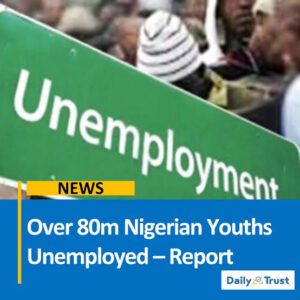
However, this figure should be handled carefully in news reporting.
It should not simply be presented as equivalent to the NBS’s official unemployment rate.
The NBS’s Q2 2024 unemployment rate was 4.3 per cent nationally and 6.5 per cent for youths under its labour-force methodology.
The much larger “80 million” figure comes from a different youth-population assessment and should therefore be attributed to the report rather than presented as the official NBS count of unemployed people.
That distinction is crucial because “unemployed”, “not in employment, education or training”, “underemployed” and “working in low-quality informal employment” are not interchangeable statistical categories.
A generation at risk of wasted potential
The greatest danger may not be unemployment itself but the prolonged loss of productive years.
A young graduate who spends five years searching unsuccessfully for meaningful employment loses valuable time that could have been used to acquire professional experience, build a business, develop technical skills or accumulate savings.
The same applies to young people who leave school without acquiring skills that the economy can use.
The problem therefore affects both the individual and the national economy.
Nigeria invests resources in educating its young people. If those young people cannot find productive opportunities afterwards, a significant part of that human-capital investment is not converted into economic output.
What needs to change?
Addressing youth unemployment requires more than announcing another empowerment programme.
First, Nigeria needs more productive businesses.
Government policy should make it easier for businesses to survive, expand and employ workers through better electricity, transportation, infrastructure, access to finance and predictable regulation.
Second, education must become more closely connected to the labour market.
Universities and polytechnics should strengthen practical training, internships, apprenticeships, digital skills and industry partnerships.
Third, technical and vocational education needs greater attention.
Not every young Nigerian needs to pursue a conventional university degree.
Electricians, plumbers, mechanics, welders, construction technicians, agricultural specialists, machine operators, software developers, healthcare technicians and other skilled workers are essential to a modern economy.
Fourth, young entrepreneurs need access to affordable finance.
A youth-enterprise policy that provides training without access to capital, markets and infrastructure will have limited impact.
Fifth, Nigeria needs better job-matching systems.
The Federal Government’s National Job Centre initiative is intended to improve job matching, career advisory services and connections between trained Nigerians and employment opportunities. The government has also introduced the Labour Employment and Empowerment Programme as part of its employment strategy.
Sixth, employment policy must address the informal sector.
The informal economy cannot simply be wished away. It employs millions of Nigerians.
The objective should be to help viable informal businesses grow into more productive enterprises while gradually expanding access to formal contracts, social protection, finance and worker protections.
Seventh, prevention of crime must go beyond policing.
Law enforcement remains important, but prevention also requires addressing the economic and social conditions that make young people vulnerable to exploitation.
Drug prevention, mental-health and social services, youth recreation, skills development, employment programmes and rehabilitation should complement law enforcement.
A problem Nigeria cannot postpone
Nigeria’s youth population can become one of the country’s greatest economic assets if young people are educated, skilled, employed and given opportunities to create businesses.
But a large youthful population without sufficient productive opportunities can also become a source of deep social pressure.
The evidence does not support the simplistic argument that unemployment automatically turns youths into criminals. What it does show is that Nigeria has a serious shortage of quality employment, a highly informal labour market, widespread underemployment, skills mismatches and a rapidly expanding population entering working age.
The real question, therefore, is not simply how many Nigerians are “unemployed.”
It is whether Nigeria can create enough productive, decent and sustainable opportunities for the millions of young people entering adulthood every year.
If the answer remains inadequate, the country risks wasting a generation of human capital — not because Nigerian youths lack ambition, but because the economy has not created enough avenues for that ambition to become productive work.
-
 News2 days ago
Why UK varsities are cancelling Nigerians’ admission — Report
-
News2 days ago
US asks American business executives to be wary of insecurity, corruption, detention risk in Nigeria
-
News23 hours ago
2027: Enugu Accuses Opposition of Plotting to Import Armed Thugs, Bandits
-
News1 day ago
Alleged Magistrate Court Order To Arrest Araraume, Okorocha Is Fake, Non-Existent — Imo First Group
-
News1 day ago
Benue APC Delegation Involved in Ghastly Accident En Route to Rally
-
News1 day ago
2027: Over 30,000 Enugu Teachers Endorse Mbah, Tinubu, List Welfare, Increased Education Funding
-
News2 days ago
Man stabs wife in Anambra community, kills himself with poison
-
News2 days ago
Why men with braids, tattoos were banned from mosque, Ogun Chief Imam clarifies