Health
How Gov Peter Mbah is rewriting Enugu’s healthcare story


By Dr. Collins Ogbu
In the life of every society, there comes a defining moment when leadership either sustains the status quo or boldly reimagines the future. For Enugu State, that moment is now. At the centre of this transformation is Governor Peter Ndubuisi Mbah, whose administration is not merely responding to challenges in the health sector but fundamentally rebuilding it. Recent public discourse surrounding the suspension of a health assistant trainee by a private institution has, perhaps inadvertently, created an opportunity to restate a deeper truth: the Enugu State Government remains focused, deliberate, and fully committed to repositioning healthcare delivery across the state.

For years, Enugu’s healthcare system reflected a troubling pattern familiar in many subnational contexts; underfunded primary healthcare centres, overstretched personnel, aging and inadequate infrastructure, and an overreliance on private or out-of-state medical services. Rural communities were particularly disadvantaged, often forced to travel long distances for basic care. Training institutions operated with limited capacity, while secondary and tertiary facilities struggled with outdated equipment and insufficient staffing. The system was largely reactive, constrained by years of neglect and unable to meet the growing needs of the population.
Governor Mbah’s administration has decisively broken from that past. Anchored on the principle that healthcare is a right and not a privilege, the government undertook a comprehensive audit of the sector and initiated a far-reaching reform agenda. Rather than incremental adjustments, the approach has been bold and systemic; targeting every layer of healthcare delivery, from primary care to specialised services.
Central to this transformation is the rollout of 260 Type-2 Primary Healthcare Centres across all political wards in the state. This initiative directly addresses the longstanding gap in grassroots healthcare access. Where communities once depended on poorly equipped facilities or distant hospitals, modern, well-positioned centres are now being established to provide quality care within reach. This effort is further strengthened by the recruitment of over 2,250 healthcare workers, a significant intervention aimed at resolving the manpower shortages that previously undermined service delivery.

At the secondary level, general hospitals are undergoing extensive rehabilitation to restore their capacity as reliable referral centres. Facilities such as Uwani General Hospital, which once symbolised infrastructural decline, are being transformed to meet modern standards. These upgrades are ensuring a more efficient continuum of care between primary and tertiary institutions.
The transformation is even more pronounced in tertiary healthcare. The Enugu State University Teaching Hospital (ESUTH), Parklane, is experiencing unprecedented infrastructural expansion, including the construction of a twin six-floor Laboratory and Clinical Complex, a seven-floor Nursing Complex equipped with advanced diagnostic facilities, and a modern Accident and Emergency Department. These developments represent a significant leap from the limitations of the past, positioning the institution as a centre of excellence in both service delivery and medical training.
In the area of medical education, the administration has recorded a landmark achievement with the reaccreditation of the ESUT College of Medicine and the subsequent increase in its admission quota to 350 students – the highest among state-owned institutions in Nigeria. This milestone reflects a strategic commitment to building human capital and ensuring a steady pipeline of highly trained medical professionals for the future.
Equally significant is the completion of the State University of Medical and Applied Sciences (SUMAS) Teaching Hospital in Igbo-Eno. Unlike in previous years when a single teaching hospital struggled to meet demand, Enugu now has a second fully equipped facility, with recruitment already underway to commence full-scale operations. This expansion not only improves access to tertiary care but also strengthens the state’s capacity for medical training and research.
Crowning these efforts is the nearly completed 300-bed Enugu International Hospital, a state-of-the-art, super-specialist facility designed to elevate healthcare standards and reduce the need for outbound medical tourism. For decades, many residents sought advanced medical care outside the state or country, often at great financial and emotional cost. This facility represents a turning point, offering world-class services within Enugu and reinforcing the state’s emergence as a healthcare hub.
Amid these sweeping reforms, the government has also demonstrated a strong commitment to transparency and responsible governance. By clearly distancing itself from the internal disciplinary processes of a private institution while engaging relevant stakeholders, it underscores respect for institutional autonomy alongside responsiveness to public concerns.
What is unfolding in Enugu today is not merely policy execution but a comprehensive transformation. The contrast between the past and the present is both clear and compelling; where there were once gaps, there is now structure; where there was decline, there is now renewal. The state is moving from a system defined by limitations to one driven by vision, investment, and measurable progress.
While challenges inevitably remain, the trajectory is unmistakable.
Enugu State is no longer managing a fragile healthcare system; it is building a resilient, modern, and inclusive one. In the final analysis, Governor Peter Ndubuisi Mbah’s strides in the health sector are redefining not just infrastructure and policy, but the very experience of healthcare for Ndi Enugu, laying the foundation for a future where quality care is accessible, reliable, and sustainable for all.
• By Dr. Ogbu is a Senior Special Assistant, SSA to Enugu State Governor on Strategic Communications



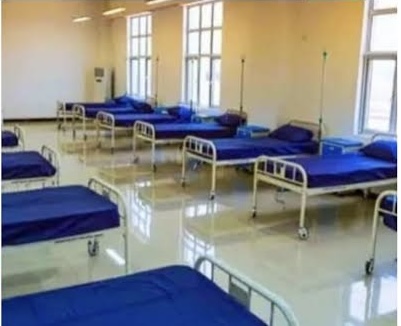
One hundred and fifty-four students of Government Science Secondary School, Batagarawa, Katsina State, were hospitalised following a suspected adverse reaction to praziquantel tablets administered to treat bilharzia.
The incident occurred on Monday, according to a statement issued on Wednesday by the Katsina State Police Command’s Public Relations Officer, Abubakar Sadiq Aliyu.
Aliyu said the students reportedly developed symptoms of an adverse drug reaction after receiving the tablets from the school authorities.
Praziquantel is used to treat schistosomiasis, also known as bilharzia, a parasitic disease associated with contact with freshwater contaminated by the parasites.
The police spokesman said the affected students were taken to hospital for treatment, with no casualties or deaths recorded.
He added that the remaining 25 students, who had been kept in hospital for further medical attention, had also been treated and discharged.
According to him, all the affected students were in good health and had been reunited with their families and schoolmates.
The Commissioner of Police, Ali Umar Fage, thanked members of the public for their cooperation and calmness during the incident.
He urged residents to refrain from spreading unverified reports and rumours, assuring them that the command would continue to protect lives and property across the state.
• Eight deaths recorded in Irele LG
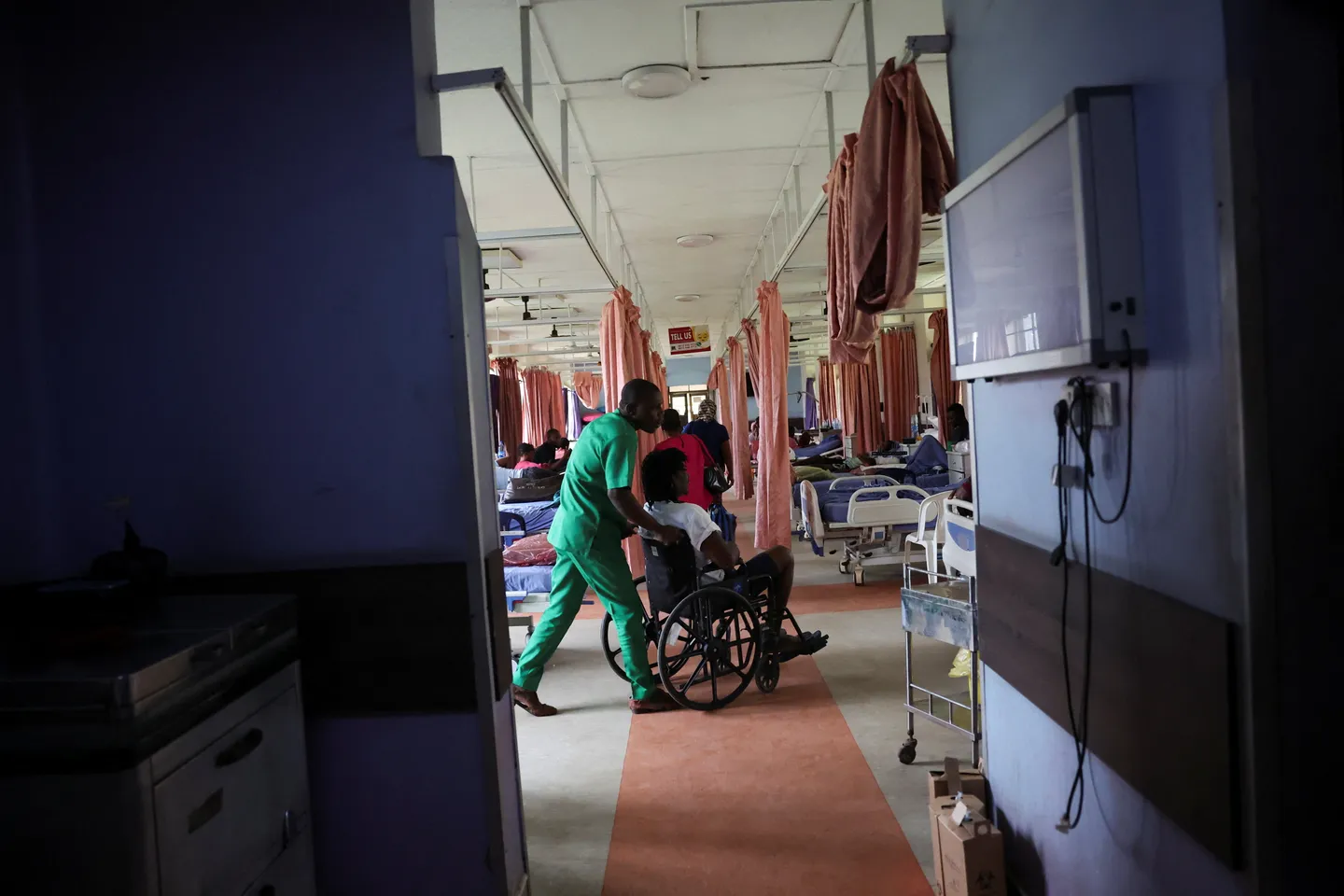
The Ondo State Government has confirmed more deaths in connection with the consumption of suspected poisonous alcoholic drinks in Odigbo Local Government Area.
The Commissioner for Health, Banji Ajaka, told journalists on Wednesday in Akure, the state capital, that 49 fatalities have now been reported, as against 39 reported last week.
The government also said the cases increased from 60 to 170 as of last Friday.
Mr Ajaka said some incidents have been reported in the Irele Local Government Area, with eight fatalities recorded in the area.
The Health Commissioner for Health, while giving an update on the situation, said that health authorities were intensifying surveillance, case management and contact tracing to contain the outbreak and identify the source of the poisonous substance.
He expressed concern that while eight of the deaths were recorded in Irele, the overall number of people affected across the areas by the incident has risen to 170.
He said the government was yet to relent in its efforts to establish the source of the substance, adding that investigators were examining whether the poisoning originated from a single source or multiple sources.
According to Ajaka, teams had been deployed to the affected communities to monitor the situation, manage cases and trace the source of the suspected poisonous substance.
He said the state government was also working with security and regulatory agencies, including the National Agency for Food and Drug Administration and Control, National Drug Law Enforcement Agency, Department of State Services, Nigeria Security and Civil Defence Corps and other relevant agencies.
Ajaka said the matter was discussed at a national meeting involving commissioners for health across the country and officials of the Nigeria Centre for Disease Control and Prevention, where Ondo State’s rapid response in surveillance, case management and tracking was commended.
He said the government would continue its investigation until the source of the poisoning was established.
The latest figures came after the commissioner had earlier disclosed that 29 people had died in connection with the suspected poisoning in Odigbo Local Government Area, with 121 persons affected at that stage.
Ajaka had linked the Odigbo outbreak to locally produced alcoholic and alcoholic-herbal substances consumed during two naming ceremonies in the affected communities.
He said investigations showed that an individual who was not a member of one of the families hosting a naming ceremony procured the substance and brought it to the event for guests to consume.
The affected communities previously identified in Odigbo include New Town, Odole, Okele, Orita Odigbo, Araromi-Obu and Oniparaga.
Following the outbreak, the state government banned the production and sale of locally brewed alcoholic and alcoholic-herbal beverages in Odigbo Local Government Area as a precautionary measure.
The commissioner also confirmed the arrest of a suspect in Araromi-Obu in connection with the production and distribution of the substances.
Ajaka warned residents against consuming unregulated alcoholic and herbal preparations, stressing that substances promoted for medicinal purposes could also pose serious health risks if their contents were unknown or unregulated.

Former Vice-President Yemi Osinbajo has raised concerns over the use of dangerous chemicals in ripening and preserving fruits, recounting how a laboratory test found his wife’s freshly squeezed orange juice “not fit for human consumption”.
Osinbajo spoke at the Open Day for Gardeners’ Seminar themed “Leaving the Earth Better Than We Found It”, held in Lagos on August 28, with a video of the event shared on his YouTube channel on Wednesday.
Osinbajo said his wife, Dolapo, developed frequent headaches after she began drinking freshly squeezed orange juice every day.
“Dolly, my dear wife, likes to have a full glass of freshly squeezed orange juice every day, a very healthy habit, by the way, especially since she stopped consuming any form of carbonated drinks many years ago,” he said.
“But then after a while she started having some strange headaches drinking her fresh juice every day. Then she checked everything she was eating and drinking, and we were wondering what could the cause of this be?”
He said they initially ruled out the orange juice because it was considered a healthy drink.
“We assumed, of course, it couldn’t be the ‘healthy’ orange juice,” he said.
“The results came back. It showed the orange juice, freshly squeezed, was not fit for human consumption.”
Osinbajo attributed the result to the use of harmful chemicals by some farmers and fruit sellers, warning that the problem could expose Nigerians to health risks.
His words, “Apparently farmers use dangerous pesticides for fruits and vegetables, and fruit and vegetable sellers use very dangerous chemicals sometimes to ripen or preserve fruits and vegetables.”
“Calcium carbide is used very frequently to force fruits such as bananas, mangoes, pawpaws and tomatoes to change colour and look ripe very quickly,” Osinbajo added.
The former vice-president cited studies from different parts of the country which he said had documented the use of chemicals among some fruit sellers.
He referenced a 2024 study in Ado-Ekiti, Ekiti State, where, according to him, half of 20 fruit sellers interviewed admitted using calcium carbide. Similarly, another study in Uyo, Akwa Ibom State, where 25 per cent of fruit sellers reportedly admitted to using the chemical to ripen fruits.
Osinbajo further referred to a 2023 survey in Lagos, saying 22 out of 50 fruit retailers admitted using chemicals to preserve their produce.
“These were the ones who agreed they do,” he said.
His call comes amid growing concerns over the proliferation of counterfeit and substandard products in Nigeria, with NAFDAC and SON facing increased pressure as Nigerians use social media to expose food, drugs, cosmetics and other consumer goods suspected to be dangerous.
-
 News2 days ago
BREAKING: Court Nullifies Atiku’s ADC Presidential Ticket, Removes David Mark-Led Leadership
-
News2 days ago
Presidency Reacts as NDC Opens Up on Peter Obi’s Health Challenge
-
News17 hours ago
PSC Appoints Fidelis Ogarabe Enugu Police Commissioner, Deploys Three Others
-
News2 days ago
‘19 Years of Waiting!’ Enugu Pensioner Breaks Down in Joy as Mbah Pays Long-Overdue Gratuity [VIDEO]
-
News2 days ago
Enugu Air to Begin Lagos–London Flights in December – Official
-
News2 days ago
Trump Blames Republican Candidates for Midterm Election Losses
-
Politics2 days ago
2027: APC Flags Off Enugu Campaign in Nsukka, Vows to Deliver Mbah, Tinubu, other Candidates
-
News2 days ago
Ebonyi Gives Occupants 30-Day Ultimatum to Vacate Defective Building