Health
Substandard health facilities: Enugu Govt. establishes Regulatory Task Team


The Enugu State Government has set-up a multidisciplinary Regulatory Task Team to check deaths, substandard and illegal activities in health facilities in the state notwithstanding their remote locations.
The Commissioner for Health, Prof George Ugwu, disclosed this in a press briefing on Tuesday in Enugu.

Ugwu noted that the Regulatory Task Team had been charged with monitoring, inspecting, and enforcing compliance with health regulations across all 17 local government areas of the state.

According to him, the state government through the ministry of health is unwavering commitment to safeguarding the health and safety of Enugu State residents through the effective regulation of health practices across the state.

The commissioner said that the team would be working with the enabling powers of the Enugu State Health Sector Reform Law 2017, N.7 section 235 and the National Health Act.
The commissioner observed with grave concern that a significant number of private health practitioners and facilities operating in Enugu State had failed to comply with procedural and operational safety standard statutory requirements.
He said, “In particular, many private health facilities have not registered with the Enugu State Ministry of Health.
“Some facilities that are registered have refused or failed to pay their annual renewal fees regularly, in clear violation of the Law.
“Several facilities are operating beyond the scope of services for which they were registered.
“For example, some hospitals registered as 10-bed facilities are operating far beyond their approved bed capacity, some even claim to be multispecialty when they are not.”
He noted the disturbingly trend of untrained and unqualified individuals operating in rural communities, falsely presenting themselves as doctors or nurses and rendering illegal and dangerous health services to the people..
“The ministry views these developments as acts of quackery and unwholesome practices that pose serious risks to public safety, undermine professional standards and erode confidence in the health system.
“The ministry is urging all stakeholders in the health sector — including professional bodies, facility owners, community leaders and the general public — to assist the government in reducing sub-standard and illegal practices in some private health facilities.
“Collective vigilance and cooperation are essential to sanitising the health sector and protecting the lives of Enugu residents,” he said.
Ugwu directed all private hospitals, chemist shops, medical laboratories, and other health facilities operating in the state to:ensure immediate registration with the ministry where applicable and maintain regular and timely payment of annual renewal fees.
“Defaulters will be sanctioned in accordance with the provisions of the Enugu State Health Sector Reform Law, including the payment of appropriate penalties, suspension of operations, or closure of facilities where necessary.
“For further enquiries, or useful information to the State Ministry of Health, please contact: Cyril – 08037955742,” he added.
Responding, the Vice Chairman, National Association of Nigerian Nurses and Mid-Wives, Mr Innocent Ezema, and Vice Chairman, Guild of Medical Laboratory Directors, Enugu State, Mr Chukwumerije Anuluw, gave maximum support of their associations to the task team.



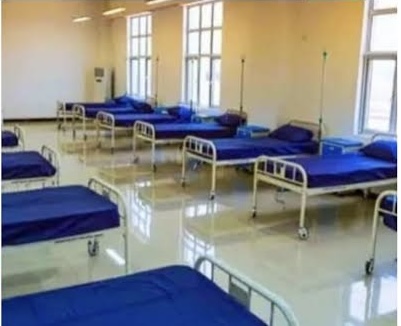
One hundred and fifty-four students of Government Science Secondary School, Batagarawa, Katsina State, were hospitalised following a suspected adverse reaction to praziquantel tablets administered to treat bilharzia.
The incident occurred on Monday, according to a statement issued on Wednesday by the Katsina State Police Command’s Public Relations Officer, Abubakar Sadiq Aliyu.
Aliyu said the students reportedly developed symptoms of an adverse drug reaction after receiving the tablets from the school authorities.
Praziquantel is used to treat schistosomiasis, also known as bilharzia, a parasitic disease associated with contact with freshwater contaminated by the parasites.
The police spokesman said the affected students were taken to hospital for treatment, with no casualties or deaths recorded.
He added that the remaining 25 students, who had been kept in hospital for further medical attention, had also been treated and discharged.
According to him, all the affected students were in good health and had been reunited with their families and schoolmates.
The Commissioner of Police, Ali Umar Fage, thanked members of the public for their cooperation and calmness during the incident.
He urged residents to refrain from spreading unverified reports and rumours, assuring them that the command would continue to protect lives and property across the state.
• Eight deaths recorded in Irele LG
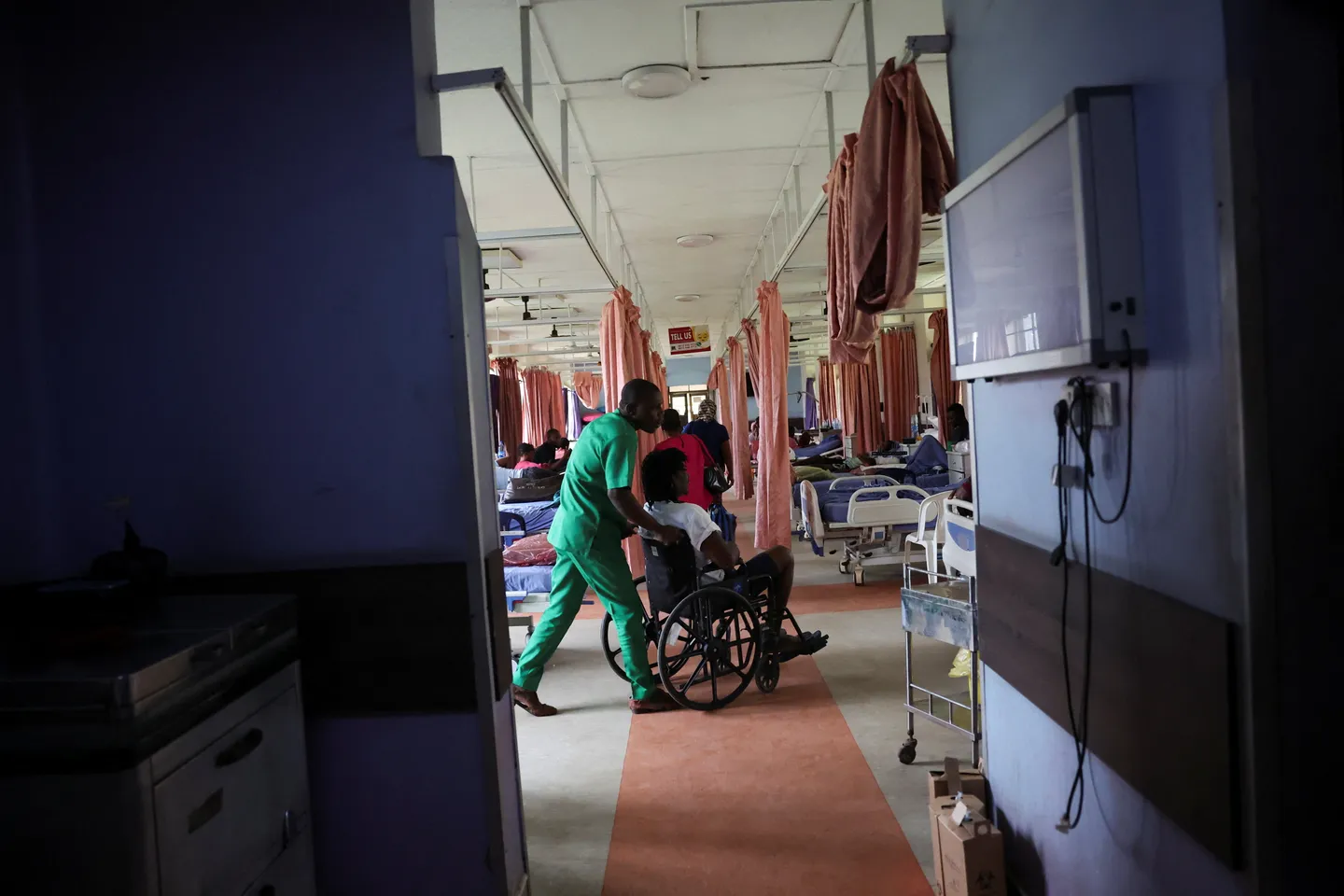
The Ondo State Government has confirmed more deaths in connection with the consumption of suspected poisonous alcoholic drinks in Odigbo Local Government Area.
The Commissioner for Health, Banji Ajaka, told journalists on Wednesday in Akure, the state capital, that 49 fatalities have now been reported, as against 39 reported last week.
The government also said the cases increased from 60 to 170 as of last Friday.
Mr Ajaka said some incidents have been reported in the Irele Local Government Area, with eight fatalities recorded in the area.
The Health Commissioner for Health, while giving an update on the situation, said that health authorities were intensifying surveillance, case management and contact tracing to contain the outbreak and identify the source of the poisonous substance.
He expressed concern that while eight of the deaths were recorded in Irele, the overall number of people affected across the areas by the incident has risen to 170.
He said the government was yet to relent in its efforts to establish the source of the substance, adding that investigators were examining whether the poisoning originated from a single source or multiple sources.
According to Ajaka, teams had been deployed to the affected communities to monitor the situation, manage cases and trace the source of the suspected poisonous substance.
He said the state government was also working with security and regulatory agencies, including the National Agency for Food and Drug Administration and Control, National Drug Law Enforcement Agency, Department of State Services, Nigeria Security and Civil Defence Corps and other relevant agencies.
Ajaka said the matter was discussed at a national meeting involving commissioners for health across the country and officials of the Nigeria Centre for Disease Control and Prevention, where Ondo State’s rapid response in surveillance, case management and tracking was commended.
He said the government would continue its investigation until the source of the poisoning was established.
The latest figures came after the commissioner had earlier disclosed that 29 people had died in connection with the suspected poisoning in Odigbo Local Government Area, with 121 persons affected at that stage.
Ajaka had linked the Odigbo outbreak to locally produced alcoholic and alcoholic-herbal substances consumed during two naming ceremonies in the affected communities.
He said investigations showed that an individual who was not a member of one of the families hosting a naming ceremony procured the substance and brought it to the event for guests to consume.
The affected communities previously identified in Odigbo include New Town, Odole, Okele, Orita Odigbo, Araromi-Obu and Oniparaga.
Following the outbreak, the state government banned the production and sale of locally brewed alcoholic and alcoholic-herbal beverages in Odigbo Local Government Area as a precautionary measure.
The commissioner also confirmed the arrest of a suspect in Araromi-Obu in connection with the production and distribution of the substances.
Ajaka warned residents against consuming unregulated alcoholic and herbal preparations, stressing that substances promoted for medicinal purposes could also pose serious health risks if their contents were unknown or unregulated.

Former Vice-President Yemi Osinbajo has raised concerns over the use of dangerous chemicals in ripening and preserving fruits, recounting how a laboratory test found his wife’s freshly squeezed orange juice “not fit for human consumption”.
Osinbajo spoke at the Open Day for Gardeners’ Seminar themed “Leaving the Earth Better Than We Found It”, held in Lagos on August 28, with a video of the event shared on his YouTube channel on Wednesday.
Osinbajo said his wife, Dolapo, developed frequent headaches after she began drinking freshly squeezed orange juice every day.
“Dolly, my dear wife, likes to have a full glass of freshly squeezed orange juice every day, a very healthy habit, by the way, especially since she stopped consuming any form of carbonated drinks many years ago,” he said.
“But then after a while she started having some strange headaches drinking her fresh juice every day. Then she checked everything she was eating and drinking, and we were wondering what could the cause of this be?”
He said they initially ruled out the orange juice because it was considered a healthy drink.
“We assumed, of course, it couldn’t be the ‘healthy’ orange juice,” he said.
“The results came back. It showed the orange juice, freshly squeezed, was not fit for human consumption.”
Osinbajo attributed the result to the use of harmful chemicals by some farmers and fruit sellers, warning that the problem could expose Nigerians to health risks.
His words, “Apparently farmers use dangerous pesticides for fruits and vegetables, and fruit and vegetable sellers use very dangerous chemicals sometimes to ripen or preserve fruits and vegetables.”
“Calcium carbide is used very frequently to force fruits such as bananas, mangoes, pawpaws and tomatoes to change colour and look ripe very quickly,” Osinbajo added.
The former vice-president cited studies from different parts of the country which he said had documented the use of chemicals among some fruit sellers.
He referenced a 2024 study in Ado-Ekiti, Ekiti State, where, according to him, half of 20 fruit sellers interviewed admitted using calcium carbide. Similarly, another study in Uyo, Akwa Ibom State, where 25 per cent of fruit sellers reportedly admitted to using the chemical to ripen fruits.
Osinbajo further referred to a 2023 survey in Lagos, saying 22 out of 50 fruit retailers admitted using chemicals to preserve their produce.
“These were the ones who agreed they do,” he said.
His call comes amid growing concerns over the proliferation of counterfeit and substandard products in Nigeria, with NAFDAC and SON facing increased pressure as Nigerians use social media to expose food, drugs, cosmetics and other consumer goods suspected to be dangerous.
-
 News2 days ago
Sowore Hospitalised After Ekiti Incident, Disputes Police Account of Attack
-
News3 days ago
Man Arrested Over Alleged Rape, Killing of Young Girl in Imo
-
News14 hours ago
APC Supporters Attacked, Campaign Vehicle Set Ablaze in Katsina
-
News2 days ago
Tenant Allegedly Smashes Landlord’s Head Over Rent Increase from ₦300,000 to ₦1m in Edo
-
Business3 days ago
Binance Halts Withdrawals After Reported $6.3bn Crypto Hack
-
News2 days ago
NYSC Members’ Kidnap: How Driver, Witness Identified 5 Suspects Arrested By DSS
-
Politics2 days ago
Gunmen attack ADC guber candidate’s convoy in Sokoto, candidate escapes
-
News2 days ago
Mbah, Tinubu Get 2027 Re-election Endorsement from Non-Indigenes, Support Group