Connect with us
Maduka University Advert

Business

Amukpe-Escravos pipeline and the real cost of ignoring current value, By Sufuyan Ojeifo

Published

on

Spread the love

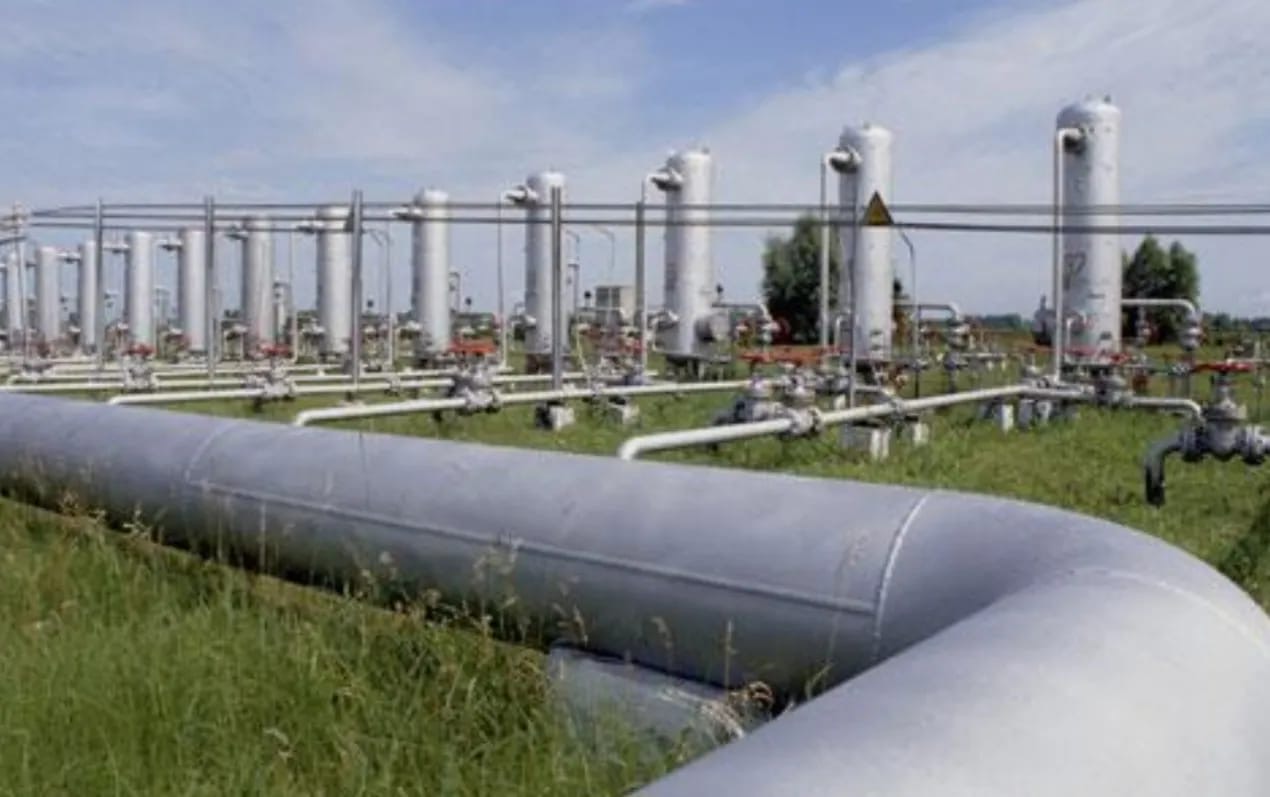
Nigeria’s oil infrastructure has a habit of telling uncomfortable truths. Not just about barrels and flow rates, but about how a country chooses to value what it cannot afford to lose, and what it risks when it gets that calculation wrong.

Take the Amukpe-Escravos Pipeline, for example. A syndicate of lenders, led by Sterling Bank, is pushing back against efforts to revive a collapsed transaction involving a 40% stake in the asset. Their argument is not complicated. It is rooted in numbers and contractual discipline.

To be clear, a deal that fell apart in 2024 is being reconsidered using a valuation from that same year. However, since then, the asset has proved its worth. Independent assessments now place that stake closer to $600 million. The earlier benchmark sits far below that. The gap is not cosmetic. It is material. And if left unaddressed, it becomes a cost.

The original $243 million offer did not collapse by accident. It was terminated in October 2024 after Conpurex Limited failed to meet payment obligations, breached key terms, and sought to shift risk back to the seller. By the time the Technical Committee closed the process, confidence had already drained out of it. That much is settled.

Ordinarily, that should have been the end. Instead, there are moves to return to a September 2025 approval linked to that same process. The lenders describe this as an administrative carryover. Their response is simple. Start again. Set aside the old approval. Bring in an independent adviser. Return the asset to the market and let current value speak.

What is striking is not just the position itself, but how unusual it sounds in the Nigerian context. In a system where strategic assets have too often travelled through corridors of convenience, an insistence on valuation and process can sound almost rebellious. It should not be so.

Maduka College Advert

Because this is not entirely about one pipeline. It is about whether a terminated deal remains terminated. Whether contracts still mean what they say. Whether performance counts for anything once the paperwork has been filed away. And, crucially, who bears the cost when value is ignored.

The numbers, as always, are blunt. A 2025 independent valuation, referenced in the March 2026 edition of Africa Oil+Gas Report, places the 40% stake at a mid-case of $372 million, a high case of $544 million, and an upside of $641 million. These are not speculative figures. They reflect an asset that has quietly done its job in a difficult environment.

With a capacity of 160,000 barrels per day and uptime consistently above 95%, the Amukpe-Escravos Pipeline has become one of the more reliable evacuation routes in a system where reliability is often in short supply. While other corridors struggle with theft and disruption, this one works.

That fact matters a great deal. Because when an asset proves itself under pressure, its value does not stand still. It moves. To price it as though nothing has changed is not just a technical choice. It is a financial one. And every financial choice has consequences.

It says performance can be ignored. It says time does not count. It says administrative continuity can outrun economic reality. To be fair, the earlier process gave enough warning signs. Lenders questioned the assumptions. Coordination was weak. When Continental Oil and Gas stepped back, Conpurex entered without a clean transition and soon began to reopen settled terms, shifting obligations and introducing new conditions that unsettled the commercial balance. The eventual termination was not dramatic. It was inevitable.

What unsettles stakeholders now is the possibility that a process that ran its course may still shape the outcome. If a concluded transaction can reappear without a clear restart, the line between closure and continuity begins to blur. Once that line blurs, contractual uncertainty follows. And when certainty weakens, serious capital takes notice.

This is where the issue widens beyond the pipeline itself. Back in March, Africa Oil+Gas Report described the Amukpe-Escravos matter as no longer just a transaction story, but a test of how Nigeria governs, values, and safeguards strategic oil infrastructure. That reading feels even more relevant now.

Because what is at stake is not simply who acquires a stake in a pipeline. It is how the country signals to those willing to invest in its most critical assets. It is about whether value is recognised only in theory, or protected in practice. It is about whether losses are acknowledged, or quietly absorbed.

The lenders’ position is often described as resistance. It is better understood as discipline. Reset the process. Revisit the approval. Bring in independent oversight. Return the asset to the market through a transparent and competitive process that reflects present realities. Ensure capable counterparties. Align all stakeholders.

These are not extravagant demands. They are the basics. Nigeria has seen too many assets drift from promise to regret. Too many structures that once worked reduced to cautionary tales. When something works, when something proves resilient in a difficult system, the least that can be done is to treat it with the seriousness it has earned.

Moments like this do not announce themselves as turning points. They arrive quietly, dressed as routine decisions.

But they reveal everything. For an economy seeking disciplined capital and trying to rebuild confidence, the signal matters. Let the process be reset. Let valuation reflect reality. Let the outcome show that when Nigeria recognises value, it also knows how to protect it, and what it stands to lose when it does not.

Until then, the lenders’ position stands as a reminder that in a system where too much has been taken for granted, some lines are too important to be crossed and must be held.

● Sufuyan Ojeifo publishes THE CONCLAVE online newspaper.

Business

Nova Bank Appoints Jude Anele as Managing Director/CEO

Published

on

Jude Anele, Managing Director/CEO, NOVA Bank Ltd
Spread the love

Meets CBN Capital Requirements, to Open Eight New Branches in 2026.

NOVA Bank Limited has announced the appointment of Jude Anele as its Managing Director and Chief Executive Officer, following the approval of the Central Bank of Nigeria.

The appointment comes at a pivotal moment in the Bank’s evolution, following its transition from merchant banking to commercial banking and the successful completion of its recapitalisation programme ahead of the March 31, 2026, regulatory deadline.

Anele brings more than 33 years of banking experience across West and Central Africa, with deep expertise in retail /commercial banking, corporate banking, risk management, institutional transformation and executive leadership. Over the course of his career, he has led complex banking operations, strengthened governance frameworks, delivered sustainable revenue growth and built high-performance teams.

The appointment reflects the Board’s strategic commitment to consolidating NOVA Bank’s commercial banking platform while accelerating growth across its Corporate, Commercial and Retail segments, as well as priority markets.

Speaking on his appointment, Anele said he was honoured to assume leadership of the Bank at a defining stage of its growth.

“Nova Bank has built a strong institutional foundation defined by regulatory compliance, capital strength, disciplined governance and a clear commercial mandate. Our focus now is execution deepening customer relationships, expanding responsibly across priority markets, strengthening risk discipline and delivering sustainable value to our shareholders, he said.

Maduka College Advert

The Bank’s Chairman, Phillips Oduoza, also expressed confidence in the new leadership.

“The Board is pleased to welcome Mr. Jude Anele as Managing Director and Chief Executive Officer. His depth of experience, strategic clarity and proven leadership record align strongly with NOVA Bank’s growth ambitions,” Oduoza said.  He added that with recapitalization completed ahead of the regulatory timeline, the Bank is entering a new phase defined by scale, stability and structured expansion.

NOVA Bank also confirmed that it has met the recapitalization requirements set by the Central Bank of Nigeria ahead of the regulatory deadline, reinforcing its capital adequacy and long-term financial stability. The capital raise, supported by new and existing shareholders, further strengthens the Bank’s balance sheet and positions it for disciplined growth.

In 2025, Global Credit Rating reaffirmed NOVA Commercial Bank’s national scale long- and short-term issuer ratings of BBB(NG) and A3(NG) respectively, while Agusto & Co. reaffirmed the Bank’s “Bbb” rating with a stable outlook, reflecting its strong capital base, sound liquidity position and resilient asset quality relative to its risk profile.

NOVA Bank currently maintains operations in Lagos, Abuja, Owerri and Port Harcourt, with plans to open eight additional branches across key commercial hubs in 2026 as part of its expansion strategy.

The commissioning of the Bank’s regional office in Owerri marked a significant milestone in its South-East and South-South growth strategy. The event attracted government officials’business leaders and Nigerians in diaspora and underscored NOVA Bank’s commitment to supporting enterprise development and economic growth.

NOVA Bank Limited is a commercial bank licensed and regulated by the Central Bank of Nigeria. Commencing operations in 2018 as a merchant bank, the institution transitioned to a commercial bank in 2024 and provides retail, SME, corporate and commercial banking services through its Phygital modelan integrated approach combining physical branch presence with digital banking infrastructure.

Continue Reading

Business

Dangote reduces fuel price by N100 as global crude slumps

Published

on

Spread the love

The Dangote Refinery on Tuesday reduced its petrol gantry price by N100, from N1,175 to N1,075 per litre.

The move followed a slump in global oil prices, with Brent crude dropping to $89 per barrel from over $100 on Monday.

Officials of the refinery confirmed the development to newsmen, adding that diesel prices have also been reduced.

They stated that petrol supplied via coastal distribution channels will now sell for N1,050 per litre, reflecting a slight differential for marine logistics.

Similarly, diesel is now N1,430 per litre at the gantry, representing a N190 reduction from the earlier price of N1,620 per litre.

According to oilprice.com, Brent crude prices witnessed a dramatic reversal on Tuesday, plunging nearly 27 per cent from the previous day’s high of $119 per barrel to as low as $87 per barrel.

Maduka College Advert

The Dangote Refinery reportedly blamed global crude volatility for the repeated price hikes, citing tensions arising from the US-Iran conflict.

Continue Reading

Business

BREAKING: Soludo shuts Onitsha market for one week over prolonged sit-at-home

Published

on

Anambra State Governor, Chukwuma Soludo
Spread the love

Anambra State Governor, Professor Chukwuma Soludo, has ordered the closure of the Onitsha Main Market for one week following traders’ failure to comply with the state government’s directive to disregard the Monday sit-at-home order.

The governor gave the directive on Monday during an on-site visit to the market, along with some of his aides and other government officials.

Soludo warned that the closure could be extended if traders fail to comply with the directive, adding that security agencies have sealed the market to enforce the order.

Anambra state governor, Chukwuma Soludo

The governor described the development as the latest—and perhaps most drastic—salvo in a protracted struggle over control of economic life in the South-East on Monday.

Soludo said that despite repeated assurances of enhanced security and appeals to reclaim public spaces, many traders at the iconic market once again chose to keep their stalls locked.

Maduka College Advert

According to him, their absence amounted to a quiet rebellion that nonetheless spoke volumes about the lingering climate of fear.

Soludo said, “The government cannot stand by while a few individuals willfully undermine public safety and disregard official directives meant to restore normalcy. This is plain economic sabotage.

“We are not going to allow this. The closure is a protective measure for law-abiding citizens.”

He, however, issued a stern warning that if the market fails to reopen after the one-week shutdown, it will be sealed for one month.

Related News
Monday sit-at-home peaceful civil protest, not a crime, IPOB tells Soludo
Nigeria in safe hands under Tinubu, says Ekwunife
Anambra to deduct workers’ salaries over IPOB sit-at-home
“You either decide that you are going to trade here or you go elsewhere. I am very serious about this,” the governor added.

The scene at the market on Monday was marked by tense enforcement, as a joint task force comprising police, army, and other security agencies was seen securing the perimeter.

As the gates remain locked this week, the standoff in Onitsha highlights the broader struggle to abolish the Monday sit-at-home.

When the market is scheduled to reopen next Monday, attention will be on the traders—whether they will return to their stalls following the state’s show of force, or whether empty aisles will deliver a different verdict.

The outcome may determine not just the fate of the market, but the rhythm of economic life in Anambra State on Mondays.

The state government had earlier directed traders and businesses to continue normal activities on Mondays as part of efforts to restore economic stability and end disruptions caused by recurring sit-at-home observances.

Meanwhile, PUNCH Online had reported on Saturday that the state government would begin pro-rata salary payments for workers across the state as part of efforts to end the Monday sit-at-home.

The state Commissioner for Information, Law Mefor, disclosed this to journalists in Awka, noting that effective February 2026, civil servants’ salaries would be paid according to attendance on Mondays.

Mefor said the decision was reached during the end-of-tenure retreat of the Anambra State Executive Council held in Awka, which reviewed the administration’s activities over its concluding four-year tenure and outlined priorities for the new term beginning on March 17, 2026.


According to government sources, the shutdown will initially last one week. However, authorities warned that if the market fails to fully reopen by next Monday, the closure will be extended to one month, a move that could have far-reaching economic consequences for traders and supply chains across the South-East and beyond.

“This is no longer about fear or compliance under duress. It is about restoring law, order, and economic sanity,” a senior government official said.

Onitsha Main Market serves as a commercial nerve centre for millions of traders and consumers nationwide.

The state government insists that continued observance of sit-at-home undermines public safety efforts, emboldens criminal elements, and projects Anambra as unsafe for business and investment.

The government also issued a stern warning to market unions, transport operators, and individuals suspected of enforcing or promoting the sit-at-home order, stating that anyone found aiding or abetting the practice would face legal and regulatory sanctions.

Security agencies have reportedly been placed on alert to ensure compliance and protect traders willing to open their shops.

While some traders welcomed the government’s firm stance, describing it as long overdue, others expressed fear and uncertainty, citing security concerns and past incidents of violence linked to defiance of sit-at-home orders.

The Anambra State Government, however, reassured residents that adequate security measures are being put in place to protect lives and property, urging traders to cooperate in the interest of collective economic survival.

As the countdown to next Monday begins, all eyes are now on Onitsha Main Market—where the decision to reopen or remain shut could shape the economic direction of Anambra State in the weeks ahead.

Continue Reading

Trending

Maduka College Advert