Connect with us

News

Insecurity: FG approves 94,000 new enlistments into security services

Published

on

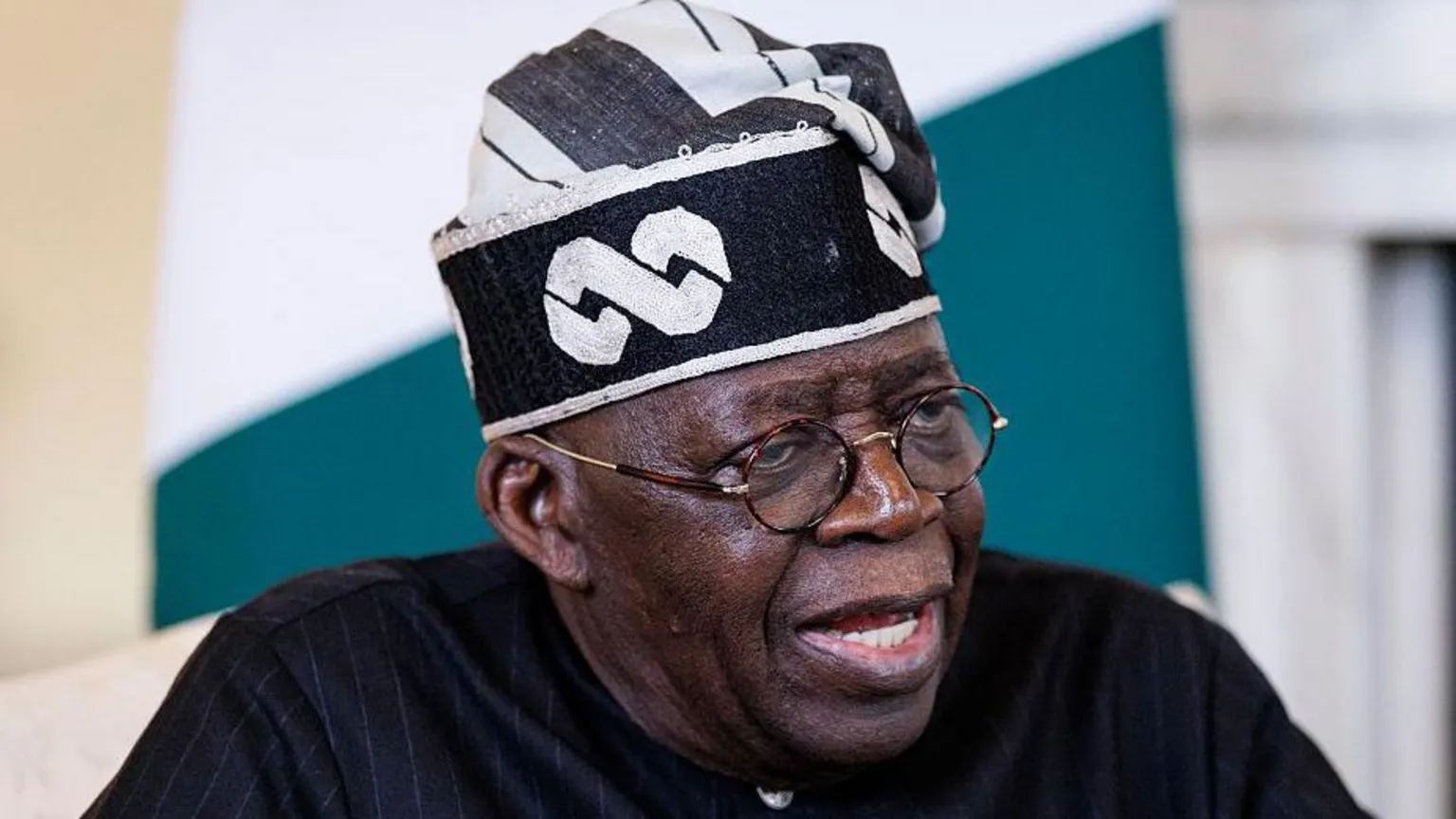
President Bola Tinubu
Spread the love

The Federal Government will recruit over 94,000 new personnel into Nigeria’s security services as part of measures to tackle rising insecurity across the country.

Under the plan, the Police Service Commission and the Nigeria Police Force will recruit 50,000 police constables.

The recruitment portal is expected to be open to eligible Nigerians from December 15, 2025, to January 25, 2026.

In a statement on Thursday by the Head of Protocol and Public Affairs, Torty Kalu, the Commission said the recruitment portal would open to eligible Nigerians from December 15, 2025, to January 25, 2026.

The statement partly read, “The PSC, in collaboration with the NPF, is pleased to announce the commencement of recruitment of 50,000 Police Constables into the Nigeria Police Force, as directed by President Bola Tinubu. Following this Presidential directive aimed at strengthening community policing, enhancing internal security and expanding the manpower base of the Nigeria Police Force, the Commission has approved the opening of the recruitment portal for applications from eligible Nigerians.

“For the General Duty cadre, applicants are required to possess GCE Ordinary Level, SSCE/NECO or equivalent qualifications with at least five credits, including English Language and Mathematics, in no more than two sittings.

Maduka College Advert

“Applicants for the Specialists cadre must possess a minimum of four credits, including English and Mathematics, also in no more than two sittings, and must have at least three years of experience and relevant trade test certifications.”

He said eligible applicants must be Nigerian citizens by birth.

An official of the Nigerian Army, speaking off the record because he was not authorised to speak to the press, said the Army may recruit about 14,000 new soldiers following the President’s directive.

“You know the President recently gave an order; based on that we might probably recruit 14,000,” the official said.

The Navy and Nigerian Air Force did not provide exact numbers, but sources said both services will increase their intakes.

In June, the Ministry of Interior announced a nationwide recruitment of 30,000 personnel across the four paramilitary agencies.

Our correspondent, however, gathered from ministry officials that the process was being expedited to inject the recruited personnel into the system.

On November 26, 2025, President Bola Tinubu declared a nationwide security emergency and directed the Nigeria Police and Armed Forces to recruit more personnel to confront the escalating insecurity.

The planned recruitments follow a surge in violence across the country, with the expectation that increased manpower will help strengthen security operations.

Plateau State Governor, Caleb Mutfwang, welcomed the Federal Government’s decision to recruit massively, stating that the country was in dire need of more boots on the ground.

He said the intervention came at a time when security concerns were mounting across the country.

He stated this during his visit to the Minister of Defence, Gen. Christopher Musa (retd.) in Abuja to discuss ways to address the lingering insecurity in Plateau State.

Mutfwang expressed delight over Musa’s appointment, describing it as a strategic and timely decision in confronting the country’s intricate and evolving security challenges.

He assured the minister of his total and unwavering support in the collective effort to defeat insecurity in Plateau State and across Nigeria.

This was disclosed by Mutfwang’s Director of Press and Public Affairs, Gyang Bere, in a statement on Thursday.

The governor noted that the minister’s vast experience and proven professionalism would significantly strengthen ongoing national security interventions.

Reiterating his long-standing position, he once again declared his support for the establishment of state police.

Mutfwang noted, “The decision is timely, and I believe that overtaxed security personnel will be having a sigh of relief very soon. One thing that is very important is that states have serious areas that are really threatened and require attention. So, we just need to expand and give more impetus.

‘’For me, if there is a window to get more security personnel, then the Plateau State Government is quite ready to key in. If we have the right manpower, equipment and motivation as some of the basics, the security situation in the country will improve.”

Mutfwang added that Nigeria needed to recruit enough manpower to achieve not only the UN ratio of one police officer to 500 citizens, but also to ensure that every village with over 100 people had at least one police officer—even if that meant the Nigeria Police Force would need more than one million personnel.

“Where we are going is that even if we have 100 people in a village, let at least one policeman be posted there. But to achieve that, we need one million police personnel or more. But at least let us begin with what we have and see what we can do. Once we do that, we can move forward.”

On the state police framework, he noted, “This will require careful planning with workable legislative structures put in place to avoid misuse, but I believe that with a clear operational model, we can make it work perfectly.”

Responding to the recruitment plan, Brig. Gen. Peter Aro (retd.) said the injection of over 94,000 personnel was a welcome recognition of the scale of the country’s security crisis, but warned that numbers alone were insufficient.

Aro said, “The Federal Government’s plan to inject over 94,000 new personnel into the security architecture is a welcome signal. This shows that the country finally recognises the scale of our internal security crisis. But numbers alone do not guarantee security; what matters is who we recruit, how we train them, and the doctrine that guides their deployment.

“For the police, recruiting 50,000, on paper, sounds impressive. In reality, Nigeria is under-policed by almost 120,000 officers when compared to the UN benchmark. So 50,000 is not an excess: if anything, it is simply a first down-payment on what we truly need. But the key is thorough vetting. If we merely pour quantity into a structure already battling corruption, poor discipline and weak community relations, we will only multiply the old problems. What Nigeria needs is fewer bad officers and more good ones, not raw numbers.’’

“For the paramilitary, 30,000 recruits. This can strengthen border protection, immigration control, civil defence and corrections. But again, the logic must be clear: these agencies should not become ‘parking lots’ for political favours. Their usefulness depends entirely on professional training, proper equipment and strict role clarity. Paramilitary forces only add value when they reduce pressure on the Police and Armed Forces, not when they duplicate functions.

“For the Army, this is where the numbers fall short. For a country of Nigeria’s size, population and multi-theatre conflicts, the Army is dangerously understaffed. A modest intake of 14,000 barely covers attrition: retirements, casualties, medical discharges and resignations. If we are sincere about restoring national power and deterrence capability, the Army should be growing by 30,000–40,000 annually for the next 5 years. Nigeria cannot project strength with a force that is smaller than that of countries with half our population.

“The 94,000-personnel boost is a good start, but it only becomes meaningful if recruitment is clean, training is modern, and the Armed Forces—especially the Army—receive the scale, structure and tools worthy of a nation of 220 million people. We must, however, recruit, but vet rigorously; train for the threats we actually face; modernise equipment and doctrine; and expand the Army more aggressively: it is the backbone of Nigeria’s hard power; without it, every other security agency fights with limitations.”

Brig. Gen. Bashir Adewinbi (retd.) described the increase in manpower as necessary given Nigeria’s population and ungoverned spaces, but stressed the need for rigorous recruitment to ensure committed personnel are employed rather than political appointees.

“The increase in manpower is a welcome development given the size of the population and the number of ungoverned spaces. I think it is a decision taken to address the shortage of security personnel.

‘’But most importantly, they must ensure they employ the right people—those who are committed, not politically selected. They should look for individuals who are genuinely dedicated and whose aim is to serve the nation. The recruitment must be very thorough. If we get it right at this stage, everything else will follow.”

Commenting on the development, the Chairman of the Committee of Chairmen of the Nigerian Bar Association, Benin Zone, Adebanjo Ebhoade, said politicians must not be allowed to use the increase in manpower to settle political IOUs.

He noted that only those who deserved the job through merit should be recruited.

Ebhoade added, “The recruitment process should be carried out by an independent committee drawn from retired men of the armed forces and other relevant agencies. There should not be political influence. Let the best candidates be recruited. We need to have the best hands recruited so that we can have a sufficient workforce to deal with the issues affecting this country.”

A member of the Oyo State Community Policing Advisory Committee, Segun Ebenezer, urged the Federal Government to ensure the massive recruitment did not replicate past practices in which some security agencies were flooded with unvetted personnel.

Ebenezer said, “It is a great initiative and will help the supply side of personnel deployment in combating insecurity. However, recruitment needs to be on merit, and the quality of personnel taken in should be thoroughly gauged.

“When recruitment is massive, the temptation for nepotism and political compensation is high. The process must be transparent and fair. After recruitment, what becomes important is training. It should not only be a normal onboarding programme, but a real and thorough training exercise that equips them mentally, physically and psychologically.”

State police are now a national necessity

The Attorney-General and Commissioner for Justice in Ondo State, Mr Kayode Ajulo (SAN), declared that the country needs state police to effectively tackle the security challenges facing it.

Ajulo, who countered critics of state police creation, said the current central policing system was no longer effective in addressing criminal activities across the states of the federation.

In a statement on Thursday, Ajulo noted that Nigeria’s security challenges differed across regions — herder–farmer conflicts in the North, cultism in the South, kidnapping in the Middle Belt and oil theft in the Niger Delta, saying “a centralised police force could not effectively tailor solutions to all, but the state police can.”

The attorney-general said, “President Tinubu’s ‘innocuous insertion’ inviting National Assembly review of state police laws is no artifice, it is an overdue gauntlet thrown to lawmakers to codify Amotekun’s virtues nationwide.

“It is pragmatic. It is constitutional, and it is a call to respond to a nation in distress.”

Okpebholo charges the military with Edo security

Edo State Governor, Monday Okpebholo, urged the new Commander of the 4 Brigade, Nigerian Army, General Ahmed Balogun, to help free Edo from insecurity.

The governor, who stated this in Benin while receiving Balogun on Thursday, assured the Nigerian Army of the state government’s cooperation and support in the fight against insecurity and other crimes.

Okpebholo, in a statement by his Chief Press Secretary, Patrick Ebojele, reaffirmed his administration’s strong commitment to securing the lives and property of citizens.

The governor said, “Let me welcome you to Edo. In truth, we had a very good relationship with the outgoing commander, and I believe we will continue from where he stopped.

“The security and protection of the people and properties of Edo State are very important to us. I want you to know that we are going to work with you wholeheartedly to ensure Edo remains secure.

“In the area of drones, we are procuring multifunctional ones with good capabilities. Very soon, we will deliver on that. I want you to help us secure a new Edo, free from insecurity,” he added.

The governor also encouraged the new commander to communicate any operational challenges requiring the state’s intervention.

He said, “You talked about school, hospital, and road. These are areas we are already working on. In the next few days, you will see improvements around the office.

“At the Ekenwa Barracks, we are taking the road project to Gele-Gele, spanning about 36km. In that vicinity, you can see the good work already ongoing,”

Balogun said he considered it necessary to visit the governor shortly after assuming command.

“I took over 4 Brigade barely a week ago, and I deemed it fit to pay this courtesy visit to inform His Excellency of the change in command.

“Permit me to sincerely appreciate you for the work you have been doing for the brigade. I see the passion and drive His Excellency has for security, it is top-notch, and I must commend you.”

He pledged to consolidate the existing cooperation between the military and the state government.

“My passion is to work towards making Edo State safer, ensuring citizens sleep with both eyes closed and go about their businesses without fear,” he said.

The commander also highlighted areas needing prompt attention, including the completion of the Ekenwa Barracks Road, the stalled renovation of the brigade school, and the need for drones to enhance technology-driven operations.

Lawyers ask Makinde to rebuild Oyo security

The Chairman of Ibadan Branch of the Nigerian Bar Association, Oyo State, Ibrahim Lawal, on Thursday, called on Governor Seyi Makinde and security agencies in the state to urgently rebuild the state’s security system before matters escalate further.

He advised a press conference, held at the Afe Babalola NBA House, Ibadan, the state capital, ahead of the 2025 NBA Ibadan Law Week scheduled to run from December 12 to 17.

Lawal said, “Oyo used to be the most secure state in Nigeria. The security architecture was very tight, but I think the present administration has relaxed, and that’s the effect we are seeing. We can only urge the government to come together, look at the security architecture, and return it to where it was so we can build on it.”

The PUNCH reports that suspected gunmen recently kidnapped Wale Oriade, a chieftain of the All Progressives Congress in the state, in his office around 7:06pm in Ibadan. The attackers arrived in a blue Micra car with two occupants — a driver and an armed gunman — who forcibly seized Oriade and whisked him away.

However, the state government during its Expanded Security Council Meeting presided over by Governor Makinde on Wednesday, assured residents of maximum security of lives and property.

The meeting had service commanders, local government chairmen and traditional rulers in attendance.

Lawal said, “We know the security situation is bad. The Federal Government and the military are doing their best, but the State Government must sit down and look for the best solutions. It is getting very close to us. The kidnapping of the lady shows that nobody is safe.”

The chairman also appealed to the state Commissioner of Police to urgently overhaul the state’s security framework. (PUNCH)

Health

NAFDAC urges Stakeholders to lead vigilance on Antimicrobial Resistance, Adverse Drug Reactions

Published

on

Spread the love

The National Agency for Food and Drug Administration and Control (NAFDAC) has called on stakeholders and Nigerians to lead vigilance against Antimicrobial Resistance (AMR) to medicines/drugs and Adverse Drug Reactions (ADR).

The Director-General of NAFDAC, Prof. Mojisola Adeyeye, made the call on during a one-day Pharmacovigilance Workshop and Stakeholders Town Hall Meeting in Enugu.

Represented by NAFDAC’s Director, South-East Zone, Dr Festus Ukadike, the director-general noted that the gravest consequences of irrational medicine use today is AMR.

She explained that the misuse and overuse of antibiotics had accelerated the emergence of resistant microorganisms that no longer respond to conventional treatment.

“This means that infections previously treatable with common antibiotics are becoming increasingly difficult and expensive to manage.

“If urgent action is not taken, antimicrobial resistance may reverse decades of medical progress and place humanity at serious risk.

Maduka College Advert

“This is why Pharmacovigilance is extremely important. Pharmacovigilance refers to the science and activities relating to the detection, assessment, understanding, and prevention of adverse effects or any other medicine-related problems.

“In simple terms, Pharmacovigilance helps us ensure that medicines remain safe and effective even after they have been approved and released into the market,” she said.

Adeyeye noted that no medicine is completely free from side effects.

“However, through effective Pharmacovigilance systems, healthcare professionals and patients can identify harmful reactions early, report them appropriately, and help regulatory authorities take necessary actions to protect the public,” she said.

She said that Pharmacovigilance remained a core mandate of the agency, adding that stakeholders and general public should play active part in monitoring AMR and ADR to ensure effectiveness of medicine and treatment.

Speaking, the Chairman, Enugu State Traditional Rulers’ Council, Igwe Samuel Asadu, commended NAFDAC for the workshop, while urging the agency to put more effort in curbing sales of fake medicines in the hinterlands.

Asadu said that Pharmacovigilance was needed more in the hinterlands of the state to stop people paddling fake medicines and “selling outright chalk as medicine in villages in the state”.

He gave the commitment of royal fathers in the state in providing necessary support to NAFDAC to check paddlers of fake medicines, “as we see our people die due to their activities.”

Corroborating, the State Coordinator of World Health Organization (WHO), Dr Adaeze Ugwu, said that the organisation would continue to support NAFDAC in the agency’s resolve to strengthen food and healthcare in the country.

Also, Dr Oliver Ezemba, Chairman, Nigerian Association of Patent and Proprietory Medicine Dealers (NAPPMED), urged everybody to get concerned on the issues of AMR and ADR to guarantee quality medicines for everyone.

Ezemba called on Nigerians to imbibe the habit of reporting any irregularities observed while using a medicine to NAFDAC for proper investigation, which would serve the benefit of many Nigerians using same medicine.

The participants asked questions on AMR and ADR as well as made pledge on reporting any suspectable AMR or ADR case through the NAFDAC’s Med Safety Mobile App using their cellphone or computer set.

In the workshop, a presentation was made on “Need for Effective Pharmacovigilance by All’, delivered by Mr Chidi Uche and Mrs Ogechi Udeh, who are NAFDAC officials.

Continue Reading

News

Coup trial: Accused colonel rejects military court

Published

on

Col Mohammed Ma’aji
Spread the love

The second accused person in the charges brought against 36 persons accused of alleged mutiny and plot to overthrow the government of President Bola Tinubu, Col Mohammed Ma’aji, has challenged the jurisdiction of the Defence Headquarters Garrison General Court Martial sitting in Asokoro, Abuja, to hear the case.

Ma’aji, in a preliminary objection filed before the court martial in charge No: DHQ/GAR/ABJ/49/ADM, between the Armed Forces of Nigeria and Brig Gen M.A. Sadiq, Col Ma’aji, alongside 35 others, urged the court martial to strike out the charges instituted against him, arguing that the military tribunal lacked the jurisdiction to entertain the case.

Ma’aji, in the objection, contended that the charges were fundamentally defective and incompetent in law.

The objection, brought pursuant to Rules 36(1) and 37(1) of the Rules of Procedure Army 1972, urged the tribunal to make an order striking out and/or dismissing the charges against the 2nd Accused.

“Take notice that the 2nd accused hereby objects to the jurisdiction of the General Court Martial to entertain Counts One to Nine of the charges preferred against the 2nd Accused in Charge No: DHQ/GAR/ABJ/49/ADM, namely ARMED FORCES OF NIGERIA V. BRIG. GEN. M. A. SADIQ (N/10321) & 35 ORS and hereby prays the General Court Martial for the following reliefs:

“An Order striking out and/or dismissing the charges against the 2nd Accused in Charge No: DHQ/GAR/ABJ/49/ADM for lack of jurisdiction. An order declining jurisdiction to entertain the charge as constituted.

Maduka College Advert

“And for such further order(s) as the Honourable General Court Martial may deem fit to make in the circumstances.”

The second accused in the charge also argued that the complainant, listed as the Armed Forces of Nigeria, lacked the legal capacity to institute criminal proceedings.

According to Ma’aji, “The complainant (Armed Force of Nigeria) is not a juristic person and thereby lacks the requisite competence to initiate and prosecute the criminal proceedings in Charge No: DHQ/GAR/ABJ/49/ADM.”

Ma’aji further maintained that because the complainant allegedly lacked legal personality, the General Court Martial was equally deprived of jurisdiction to hear the matter.

Citing several Supreme Court and Court of Appeal authorities, including Green v. Green, Fawehinmi v NBA, and Mothercat Nig Ltd v Reg. Trustees of the Full Gospel Assembly Nig, the defence argued that only natural persons or entities expressly recognised by law could sue or be sued.

The written address submitted in support of the objection stated, “The name ‘Armed Forces of Nigeria’ described as ‘complainant’ in Charge No: DHQ/GAR/ABJ/49/ADM is unknown to law and destitute of any legal capacity to exercise Prosecutorial powers in respect of the charges preferred against the 2nd Accused.”

The second accused also challenged the competence of counts one to nine of the charge, which allegedly accused him of inciting other officers to join a plot to overthrow President Tinubu.

Ma’aji insisted that the allegations contained in the particulars of the charges did not fall within the offence of mutiny as contemplated under Section 52(1)(b) of the Armed Forces Act, 2004.

He argued that the particulars of the charge “disclose offences against the Sovereign State otherwise known as the Federal Republic of Nigeria and constitutional order rather than offences relating to military or service discipline or command structure.”

He maintained that the phrase “plot to overthrow the government of the Federal Republic of Nigeria” contained in the charge could not be equated with “lawful authority in the Federation” as envisaged under Section 52(3) of the Armed Forces Act.

“It is submitted that the Federal Republic of Nigeria does not fall within the phrase ‘a lawful authority in the Federation’ as used in Section 52(3) of the Armed Forces Act, Laws of Federation, 2004,” Ma’aji contended.

Relying on constitutional provisions and judicial precedents, he argued that the court-martial, being a tribunal of limited jurisdiction, could not extend its powers beyond what was expressly granted by statute.
Ma’aji also cited the Supreme Court’s warning against judicial expansion of statutory provisions, insisting that any ambiguity in penal legislation must be resolved in favour of the accused persons.

Quoting the Supreme Court decision in Nigerian Navy v. Lambert, the second accused submitted: “It is settled law that penal statutes are to be construed strictly to the benefit of the accused person and that where there is a reasonable construction that avoids the penalty in any particular case, the court must adopt that construction.”

The preliminary objection further contended that for a charge of mutiny or incitement to mutiny to stand, there must be allegations of concerted insubordination, defiance of military authority or refusal of lawful command or organised military rebellion against superior military command.

According to the defence, the particulars supplied by the prosecution failed to disclose those essential ingredients.

On this ground, he urged the General Court Martial to uphold his preliminary objection and dismiss the charges against him for want of jurisdiction.

Meanwhile, a witness in the ongoing trial of six alleged coup plotters before the Federal High Court in Abuja, on Wednesday, told investigators that Ma’aji allegedly threatened to force his way into the Presidential Villa, even if insiders refused to cooperate.

The fourth defendant, Zekeri Umoru, made the allegation in a video previewed in court during proceedings in the trial-within-trial over the admissibility of the defendants’ extrajudicial statements.

Umoru and five others in April were arraigned before Justice Joyce Abdulmalik on 13 counts of criminal charges over alleged complicity in an alleged coup plot to overthrow Tinubu’s government.

The six defendants: Maj Gen Mohammed Ibrahim Gana (retd), Capt Erasmus Victor (retd), Insp Ahmed Ibrahim, Zekeri Umoru, Bukar Kashim Goni and Abdulkadir Sani, however, pleaded not guilty to all the counts after the charge was read to them.

At the resumed sitting, Umoru, who worked with Julius Berger on the Presidential Villa clinic project, alleged that Ma’aji, through the third defendant, Insp Ibrahim, asked him to recruit between 18 and 19 persons working inside the Villa, including soldiers, Department of State Service personnel and Julius Berger staff.

According to the video evidence played in court, Umoru alleged that plans were discussed to switch off electricity within the Presidential Villa to aid the operation, but he warned that such an action would immediately trigger investigations and lead to the detention of workers on duty.

He further claimed that Insp Ibrahim later demanded N100m from Ma’aji to facilitate access into the Villa through an ambulance route, but Ma’aji allegedly rejected the amount as excessive, insisting he could still gain entry by force, although “there would be bloodshed.”

The witness also told investigators that he became uncomfortable with the alleged plan and repeatedly attempted to return the money given to him, insisting that the Presidential Villa “was not child’s play.”

He denied having access to the Villa’s solar power plant, despite allegations that he intended to sabotage the electricity supply within the complex.

The court further heard that Umoru did not immediately report the alleged plot to authorities because Insp Ibrahim allegedly advised him to delete messages and avoid contacting Ma’aji due to an ongoing audit in their office.

Following the screening of the video evidence, Justice Abdulmalik adjourned the matter until May 21 for continuation of the trial-within-trial.

Continue Reading

News

Terrorists have infiltrated no less than 40 South-West LGs — Gani Adams

Published

on

Gani Adams
Spread the love

Aare Ona Kakanfo of Yorubaland, Gani Adams, has raised fresh concerns over insecurity in the South-West, claiming that terrorists have infiltrated at least 40 local government areas across the region.

While speaking in a recent interview with The Punch, Adams said the threat in the South-West has become more serious than many people realise.

“We have 137 local government areas in the South-West, and we spotted not remnants of terrorists, but a lot of terrorists in no fewer than 40 local governments. We have many terrorists that have infiltrated those local government areas,” he said.

Adams revealed that his group had documented the development but chose not to make the information public immediately because they hoped to work directly with state governments to tackle the problem.

“We kept that document to ourselves because we were more confident that working with state governments, which are the institutions governing the states, would yield results compared to working with law enforcement agents,” he stated.

The Yoruba leader, however, expressed disappointment over what he described as the refusal of governors in the region to engage with his organisation despite repeated warnings over the past two years.

Maduka College Advert

“As a result, we called for collaboration with state governments for the past two years. This is a government that knows your antecedents, knows that you have a structure across Yorubaland, even beyond Yorubaland and in some northern states, yet refuses to talk to you, refuses to agree with you, or even assist you, despite being in power and benefitting from security votes,” Adams said.

“Yet they didn’t call to discuss with you. So, you have to bear in mind that the only assistance you can give to Yoruba people is to talk to the media and give little information that some states have been infiltrated and that there would be attacks in those states, because you are not helping matters by divulging the entire information,” he added.

Reacting to the recent abduction of pupils, teachers and residents in Oriire Local Government Area of Oyo State, Adams said local hunters and vigilante groups may not possess sophisticated weapons but still have a critical role to play in combating insecurity.

According to him, all factions of the Oodua Peoples Congress (OPC) and other local security groups in the South-West are ready to collaborate against criminal elements.

“All hands must be on deck to confront these criminals. You can have less potential and still know the criminals in your area. Security is not always about carrying sophisticated arms,” he said.

“You need intelligent people. You need people who can infiltrate enemy territories. You need multilingual people who can speak different languages and use that advantage to gather intelligence.

“You also need people with spiritual potential. You even need clerics who will pray for the success of your mission. So, the issue of security has different sectors. By combining those sectors, you can achieve victory against criminals,” Adams added.

His comments come days after gunmen attacked schools and surrounding communities in the Ogbomoso axis of Oyo State, abducting several pupils, students and teachers from Baptist Nursery and Primary School in Yawota, Community Grammar School and L.A Primary School in Esin Ele.

Ondo State and several other communities in the South-West have also witnessed repeated attacks by suspected kidnappers and armed groups in recent months.

Continue Reading

Trending

Maduka College Advert