News
‘Service chiefs should honourably resign if they can’t fix insecurity’ – Reps

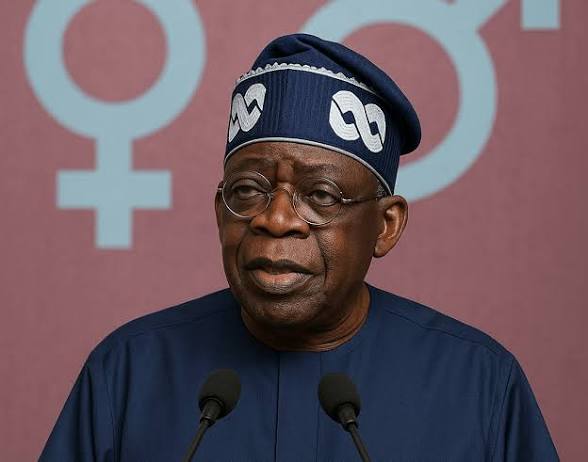
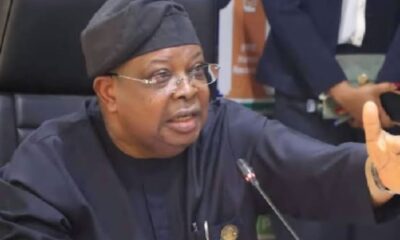
The House of Representatives has warned the service chiefs to step down honourably if the country’s deteriorating security situation persists and public confidence in the government’s efforts is not restored within a clearly defined period.
It also urged President Bola Tinubu to come up with a comprehensive and aggressive security strategy to flush out bandits, terrorists and kidnappers from their hideouts in Nigeria.

The call followed the adoption of a motion of urgent public importance moved by Rep. Ibe Osonwa, who represents the Arochukwu/Ohafia Federal Constituency of Abia, during plenary on Tuesday.
The motion is titled, “A Call for Immediate Executive Action on the Surge in Banditry, the Daily Abduction of Schoolchildren and the Perilous Security Situation in Nigerian Schools and Places of Worship.”
Osonwa, however, reiterated calls on the president by several other sources to restore safety across the country amid worsening insecurity.

He expressed concern over the escalating wave of kidnappings, banditry, terrorism and attacks on vulnerable communities nationwide.
Osonwa reminded the federal government of its constitutional responsibility to protect citizens, citing Section 14(2)(b) of the 1999 Constitution (as amended).
The lawmaker explained that the section as cited provides that “the security and welfare of the people shall be the primary purpose of government.”
He lamented the growing trend of attacks on schools, noting that “the abduction of schoolchildren across several parts of the country has disrupted education and deepened Nigeria’s out-of-school children crisis.
According to him, thousands of children have been forced out of classrooms due to fear of attacks, while many families continue to grapple with the trauma of kidnappings.
Osonwa decried the systematic targeting of schools and places of worship by criminal elements, warning that institutions traditionally regarded as safe havens have increasingly become soft targets for bandits and kidnappers.
He said worshippers across the country now face the risk of attacks, abductions and killings while observing religious activities, which undermines citizens’ constitutional rights to freedom of thought, conscience and religion.
The lawmaker also painted a grim picture of the economic consequences of insecurity, stating that “many businesses have shut down, farming communities have been deserted and families plunged into poverty.”
Osonwa argued that the current security response appeared largely reactive and insufficient to stem the operations of criminal groups.
He warned that the apparent inability to decisively confront bandits and terrorists had created the impression that the government was losing control of parts of the country to criminal elements.
Following deliberations, the House condemned in “the strongest possible terms” the continued banditry, mass abductions and attacks on schools and churches across Nigeria.
The lawmakers resolved to transmit “an urgent and solemn appeal” to President Tinubu, as Commander-in-Chief of the Armed Forces, “reminding him of his oath to protect the lives and property of Nigerians”.
The House specifically demanded the immediate deployment of “an aggressive, unrelenting and comprehensive security strategy” to dismantle bandits’ strongholds, secure vulnerable schools and places of worship.
They also pledged to ensure the unconditional release of citizens held captive by criminal groups.
The House also mandated its Committees on Defence, National Security and Intelligence and the Army to intensify oversight of the implementation of the resolutions and report back within two weeks for further legislative action.
NAN reports that Nigeria has continued to battle multiple security challenges, including banditry, terrorism, kidnapping for ransom and communal violence, particularly in parts of the North-West, North-Central and North-East zones.
In recent years, mass abductions of students from schools in Kaduna, Niger, Zamfara and other states have drawn widespread national and international concerns.
This has prompted repeated calls for stronger security measures to protect educational institutions and vulnerable communities. (NAN)











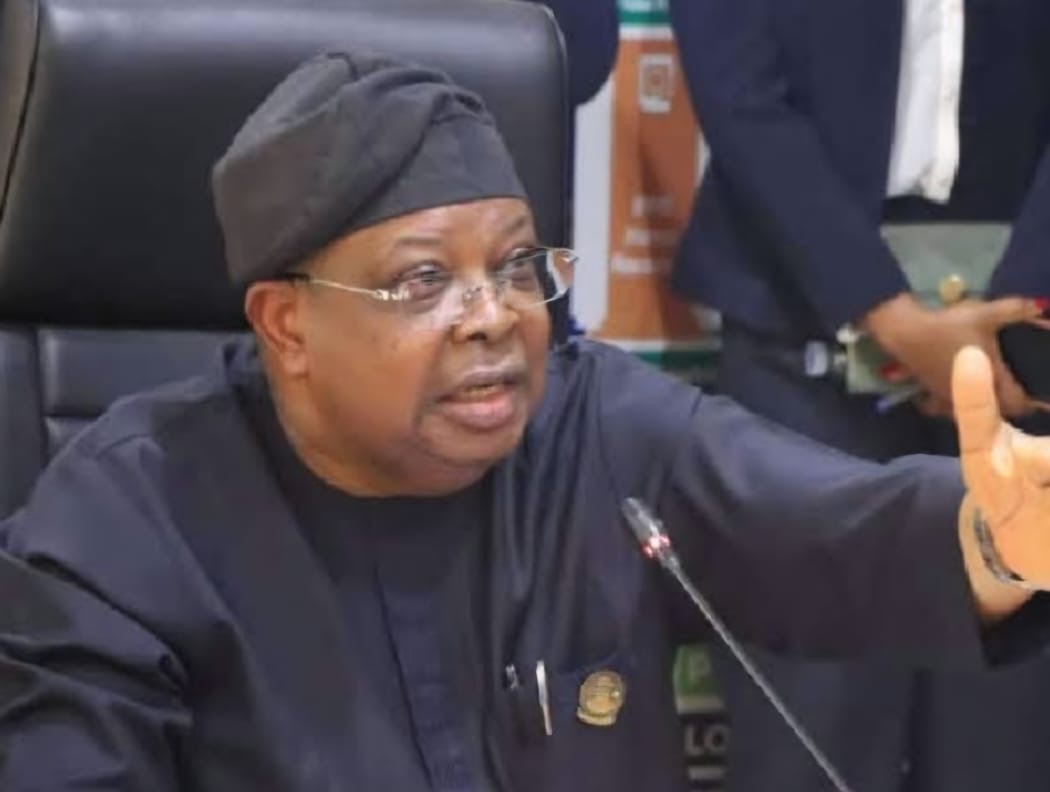
The Federal Government has secured fresh commitments from major Chinese power companies and financial institutions to accelerate critical electricity projects and deepen Chinese investment across Nigeria’s power value chain.
The commitments, which cover generation, transmission, equipment manufacturing, renewable energy and grid digitalisation, followed a high-level Nigeria-China power sector mission to Beijing led by the Minister of Power, Joseph Tegbe.
Tegbe disclosed this in Abuja while presenting his scorecard for his first 100 days in office, saying the government was seeking to move beyond conventional contractor arrangements to partnerships that would bring additional capital, technology and technical expertise into the sector.
Among the companies involved are Sinomach, China Machinery Engineering Corporation (CMEC), China National Electric Engineering Company (CNEEC) and TBEA, alongside Chinese financial institutions.
CMEC has reaffirmed its commitment to the 1.9GW Presidential Power Initiative, with the first transmission lines under the programme expected to be delivered in the first quarter of 2027.
CNEEC, the minister said, is advancing financing of $116 million for the Zungeru power evacuation project, while TBEA has proposed a $500 million industrial park for the local manufacture of power equipment.
The Chinese engagements also cover accelerated development of the East-West Super Grid, the Omotosho-Epe transmission line, cable supply and local assembly, a 300MW distributed renewable-energy programme and waste-to-energy pilot projects.
Tegbe said the government was also working with Huawei on grid digitalisation, Supervisory Control and Data Acquisition (SCADA) systems and technical training.
He said the objective was to ensure that foreign partnerships translated into bankable projects and completed infrastructure capable of delivering measurable improvements to the power system.
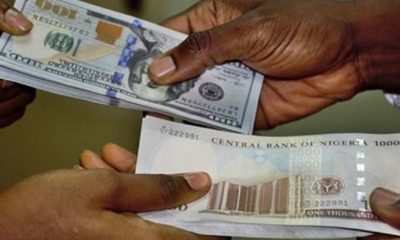
The minister’s disclosure comes against the backdrop of the Federal Government’s wider effort to restore financial stability to the electricity market, including the mobilisation of ₦1.23 trillion through two bond issuances to settle verified legacy obligations owed to power generation companies
₦120bn Annual Leakage Blocked
Tegbe also disclosed that interventions along the Ikorodu-Sagamu industrial corridor were expected to block energy theft and related revenue leakages estimated at about ₦120 billion annually.
He said improved billing, collection and remittance remained critical to restoring the financial viability of the electricity market and ensuring that resources generated within the sector were available for continued investment.
The minister said the government was also preparing a new phase of investment in transmission infrastructure, including the proposed Transmission Super Grid and the East-West Grid, while exploring bilateral generation-distribution arrangements to improve the utilisation of existing power assets.
Mambila Project Gets Fresh Impetus
Tegbe said the government’s recent victory in the long-running arbitration over the Mambila hydropower project had removed a major obstacle to the development of the massive scheme in Taraba State.
An International Chamber of Commerce arbitration tribunal in Paris last week rejected claims totalling about $3.38 billion brought against Nigeria by Sunrise Power and Transmission Company in disputes connected with the project.
The minister said the government was now exploring a pragmatic, potentially phased approach to delivering the Mambila project, alongside smaller hydropower schemes that could serve agricultural and industrial corridors.
He identified the next phase of the government’s power programme as one focused on converting agreements and ongoing reforms into bankable projects, additional transmission capacity and infrastructure capable of supporting future electricity demand.
Among the priorities, he said, were the East-West Grid, the Transmission Super Grid, Mambila and small hydropower projects.
Tegbe said the government would also continue to pursue greater private-sector participation in the electricity market, insisting that new generation capacity must be matched by viable demand and infrastructure.
“An inch of improvement is better than a mile of intentions,” he said, quoting Steve Maraboli as he reaffirmed the administration’s commitment to reforming the power sector under President Bola Tinubu’s Renewed Hope Agenda.
A Nigerian cleric wanted by Cameroonian authorities has gone into hiding after a mummified body was discovered buried beneath a concrete slab at a property linked to his church in Yaoundé.
Cameroon Tribune reports on Tuesday that the body was found on September 19 at about 9am by officers of the Nkoabang Special Police Station during an ongoing investigation involving Kedi Samuel Kenechukwu, also known as Ekedi Samuel.
Kenechukwu is the founder of Mercy of God Ministry and is currently wanted by security authorities over allegations including human trafficking, arrest and kidnapping.
Several Cameroonian news outlets have reported on the case, with Camer.be describing Kenechukwu as “a Nigerian prophet operating in Cameroon since 2018.”
According to Cameroon Tribune, investigators discovered a white-and-gold coffin buried about 1.5 metres beneath a concrete slab at the property in Nkoabang.
The body was described as being in a state of mummification.
“The lid is broken. Inside, a body, a lady at first sight, dressed in a traditional blue outfit with gold embroidery, in a state of mummification, rests on a padding. This is not a normal grave,” the newspaper said.
Cameroon Tribune reported that the discovery was made after residents vandalised parts of the property, leading investigators to uncover the concealed underground area.
At the time of the newspaper’s report, security officers were still awaiting authorisation to conduct further searches of the site for possible remains.
The identity of the deceased and the circumstances surrounding the death had not been established.
The discovery came about 10 days after a search of the same Nkoabang property on September 9.
During that operation, investigators reportedly found five vehicles, several hundred kilogrammes of food, functioning freezers and about 30 rooms on the property.
They also discovered a pit about two metres deep, although its purpose had not been established at the time.
The Nkoabang investigation followed an earlier operation at a property associated with Mercy of God Ministry in Ngousso, Yaoundé, on September 6.
Twenty people — 10 women, eight men and two children aged six and seven — were reportedly found in a basement at the property.
The discoveries prompted security agencies to investigate other locations allegedly connected to the ministry.
Kenechukwu remains at large, with Cameroonian authorities reportedly alerting border police and involving Interpol in efforts to locate him.
The investigation into the activities at the properties and the circumstances surrounding the newly discovered body is ongoing. (PUNCH)
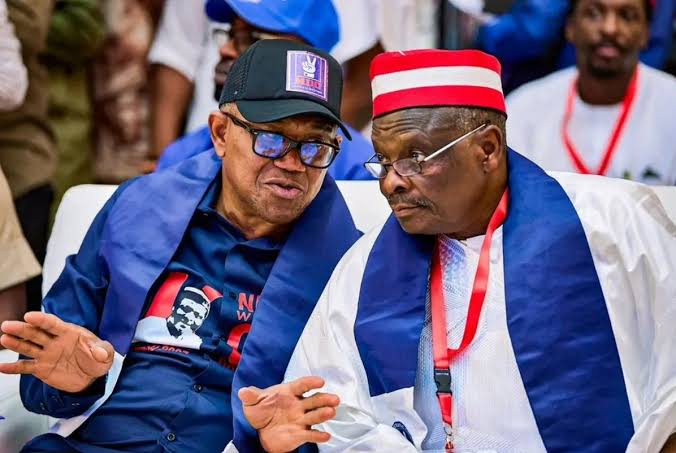
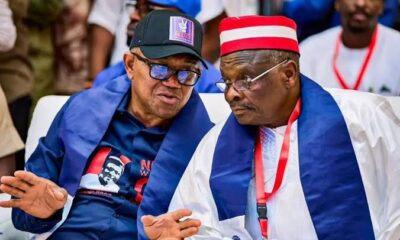
The Vice Presidential candidate of the Nigeria Democratic Congress (NDC), Rabiu Kwankwaso, has said a government led by the party’s presidential candidate, Peter Obi, would reintroduce fuel subsidy, but through a different approach.
Kwankwaso, a former Kano State governor, said this during an interview with Arise News while discussing fuel pricing and the economic policies of President Bola Tinubu’s administration.
He said the NDC would seek ways to reduce the cost of petrol for Nigerians, including increased investment in domestic refining.
“No, no, no, look. We are bringing subsidy in our own way,” Kwankwaso said when asked whether the party’s position on subsidy would affect its campaign in the North-West.
Explaining the proposed approach, he said government could establish more refineries to boost local production and reduce dependence on imported petroleum products.
According to him, the expansion of domestic refining capacity would help ensure that Nigerians can purchase petrol at what he described as a reasonable price.
“Now, if individuals in this country could build refineries, I see no reason why government, under certain circumstances, will not build a refinery or refineries to the extent that we achieve the minimum requirement,” he said.
Kwankwaso said the NDC would prioritise measures aimed at lowering fuel prices.
“What is the minimum requirement? The minimum requirement is for the people across the country to go to the filling stations and buy fuel at a reasonable price,” he added.
“We, in the NDC, will do whatever it takes, really, to put the price of oil down.”
The NDC chieftain also criticised how Tinubu removed the petrol subsidy shortly after assuming office in 2023.
He noted that the major presidential candidates in the 2023 election had supported subsidy removal but faulted Tinubu for implementing the policy immediately.
According to him, the decision was taken without adequately addressing the consequences associated with subsidy removal.
“And not only he decided to remove the subsidy, what he did was to remove it immediately — in fact, day one — without looking at all those possible issues that were associated with that,” Kwankwaso said.
-
 Politics2 days ago
WHEN PRIVACY BECOMES CONTENT: The Dangerous Normalisation of Leaked Private Conversations
-
News1 day ago
UK excludes Nigerian, Ghanaian-trained teachers from teaching qualification list
-
News2 days ago
BREAKING: Gov Mbah appoints 101 new aides
-
News3 days ago
Former Kogi Gov, Ibrahim Idris, dies in UK at 77
-
Opinion1 day ago
Who is in Charge of Nigeria?
-
News3 days ago
NDLEA intercepts N3.4bn drugs, arrests fake police officer
-
News2 days ago
Flood Alert: 8,000 communities, 4,500 schools at risk – FG
-
Business1 day ago
Enugu Air Launches New Website