News
Anambra Poll: Soludo in early lead as INEC uploads 99% results


The candidate of the All Progressives Grand Alliance in the Anambra State Governorship Election, Prof. Chukwuma Soludo, is leading other candidates as the Independent National Electoral Commission continues uploading results of Saturday’s election in the state.
The incumbent governor, Charles is leading in the election results so far collated and announced with 389,789 votes. Other top contenders include Nicholas Ukachukwu of the APC with 91,592 votes, George Moghalu of the LP with 10,366 votes, and Jude Ezenwafor of the PDP with 1,230 votes.

More results are being uploaded to INEC’s result viewing portal, IReV ¹.
As at press time, INEC had uploaded over 99 per cent of election results onto its Results Viewing Portal, amid widespread accusations of vote-buying and other electoral infractions.
Despite the early arrival of election materials in many polling units, voter turnout was relatively low across the state, even though more voters collected their Permanent Voter Cards ahead of the election.

A preliminary analysis of election results so far obtained across the polling units indicated that the APGA candidate was leading in his stronghold areas such as Aguata LGA in Anambra South Senatorial District and some parts of Anambra Central Senatorial District.
Anambra State has 21 LGAs, divided into Anambra North, Central, and South.
According to INEC, 2,802,790 registered voters were eligible to participate in the poll, including 140,370 newly registered voters across 326 wards.
The election was held in 5,718 polling units, as two of the expected 5,720 had no registered voters. Sixteen political parties fielded candidates, including two women.
Soludo, Ukachukwu win, LP loses polling unit
Soludo won his Umuezeadigo Street Polling Unit 002 in Isuofia, Oguata LGA.
He polled a total of 417 votes while his closest rival, the candidate of the All Progressives Congress, Nicholas Ukachukwu, got four votes.
The APC candidate equally won his polling Unit.
Ukachukwu voted at Polling Unit 12, Ward 2, Umudiala village in Osumenyi, Nnewi South LGA.
He got 108 votes, while APGA got four votes in booth 1, and in booth 2, APC secured 126 votes while APGA got 6 votes.
But the Labour Party candidate, Dr George Moghalu, lost his polling unit.
The LP candidate polled 22 votes to emerge runner up to Soludo, who won by 57 votes.
APGA in early lead
As of 10pm on Saturday, INEC had uploaded 99.14 per cent of results from the election on its IReV portal.
A review of results across several LGAs showed that APGA was leading in most polling units uploaded so far with the canddiate of the APC, Ukachukwu, trailing.
In Ekwusigo LGA, both parties dominated results in at least 17 polling units across three wards.
At Obi Nza Square Polling Unit, APGA polled 212 votes, while APC got 13. In Ezeokpo Central School I, APGA had 169 votes to APC’s 12, and in Nza Central School II, APGA scored 231 against APC’s 18. In the 17 polling units, APGA led with 1,548 votes, while APC trailed with 599.
A similar pattern was recorded in Njikoka LGA, where APGA polled 3,452 votes across three wards, while APC had 666.
In Aguata LGA, APGA dominated polling units across Umuchu II, Uga I, Ikenga, Isuofia, and Oraeri wards. The party secured 165 votes at Ozalla/Akukwa PU, 285 at Umugama Hall, and 302 at Ihuowele Hall, while APC’s votes ranged between 5 and 30 in most units.
In Ogbaru LGA (Ward 16), APGA maintained its momentum with 61 votes at Okpoko IV, 103 at Umuobom Hall II, and 144 at Umuobom Hall VIII, compared to APC’s 6, 4, and 9, respectively.
Onitsha North and South LGAs reflected a similar trend. In Onitsha South, APGA led with 1,548 votes across three wards, while APC recorded 599. In Onitsha North, APGA polled 103 votes at Inland Town IV and 157 at Inland Town V, while APC managed 13 and 27 respectively.
Oyi LGA also showed APGA leading with 190 votes at Umuokweanya Hall PU and 135 at Eke Olise Central School PU, while APC followed with 42 and 48 votes.
In Ayamelum LGA, APGA recorded 35 votes at Akojo Village Square III and 45 at F/S Village Square II, ahead of APC’s 8 and 30.
Across Orumba South LGA, APGA extended its lead, winning 547 votes in Umuchukwu Ward 09, 532 in Ogbunka II, and 707 in Nawfija Ward 08, while APC scored 87, 74, and 123 respectively.
In Anaocha LGA, Governor Soludo of APGA led with 2,419 votes, while the APC candidate, Nicholas Ukachukwu, polled 724 votes from the three wards uploaded as of press time.
Overall, early results from across the state indicate a clear two-horse race between APGA and APC, with APGA maintaining a wide margin.
Vote-buying: Candidates trade tackles, EFCC nabs suspects
A former Anambra State governor and Labour Party leader, Mr Peter Obi, decried rampant vote-buying during the election.
Speaking after voting at 11.46am at Polling Unit 019, Umudim Akasi, Agulu 2, Ward 8, Obi said democracy was “deteriorating” in Nigeria.
He stated, “Vote-buying is on the scale of N20,000 to N30,000. The victims of bad governance are the ones fuelling it. If a young man sells his vote for N30,000, what is his future? You are selling no school, no hospital, no job—selling your future.”
Governor Soludo, who voted around 1.30pm at his polling unit in Isuofia, expressed confidence of winning all 21 LGAs once the process worked smoothly.
He said, “Reports from across the state indicate that the election has been peaceful and smooth. We have no doubt we are going to win by a landslide.”
Soludo, however, alleged vote-buying in Nnewi South, claiming some voters were paid N15,000 each.
“It doesn’t matter for us. We are confident that with one man, one vote, we will win landslide,” he said.
The Young Progressives Party candidate, Paul Chukwuma, commended INEC and the police but accused local government chairmen of intimidating voters with thugs.
He said, “In some LGAs, mayors moved around with thugs and state-funded militia, intimidating voters with tacit support from the governor.”
But Soludo’s spokesman, Mr Chris Aburime, dismissed the claim.
“This is not true. APGA and Governor Soludo do not believe in vote-buying. Our philosophy is one man, one vote,” he said.
The APC’s Ukachukwu also alleged “widespread vote-buying” and intimidation of his supporters.
He described the development as a “dangerous norm” undermining democracy.
“Vote-buying robs citizens of their right to choose credible leaders,” Ukachukwu said.
Despite this, he expressed optimism, saying, “Winning is still possible. INEC is doing its best, and I believe in God’s will.”
The Labour Party candidate, Moghalu, lamented that monetisation had “weaponised poverty.”
While voting at Uruagu Ward 1, Nnewi, he said the process was relatively smooth but marred by apathy.
He added, “You can’t say it’s free and fair if you monetise the process. INEC must restore public confidence because voter apathy shows loss of trust in the system.”
Meanwhile, the Economic and Financial Crimes Commission arrested three political party agents for alleged vote-buying in different parts of the state.
The EFCC spokesman, Dele Oyewale, said the suspects—Emeka Ilokasia, Nwachukwu Loretta, and Emuka Chuwudi—were caught in Njikoka, Oyi, and Dunukofia LGAs, respectively.
He noted that they would be charged at the conclusion of investigation.
Councillor killed, corps member, observer injured
Tragedy struck in Orumba South LGA where a councillor representing Owerre Ezukala community was shot dead by gunmen around 1.30pm while trying to vote.
Eyewitnesses said security operatives were nearby but couldn’t stop the assailants.
A community leader, Odogwu Odemenna, who confirmed the killing, faulted security lapses.
He said, “The election was peaceful until this incident happened.”
The police spokesperson, SP Tochukwu Ikenga, did not respond to calls or messages on the incident as of press time.
Tension also broke out in Ihiala after policemen reportedly fired teargas canisters at the INEC secretariat, injuring a corps member and a Yiaga Africa observer.
Eyewitnesses said the officers, allegedly under the influence of alcohol, began shooting tear gas without provocation.
The police spokesperson, SP Ikenga, confirmed the scuffle but said it was resolved, describing it as a “rift between observers and ad hoc staff.”



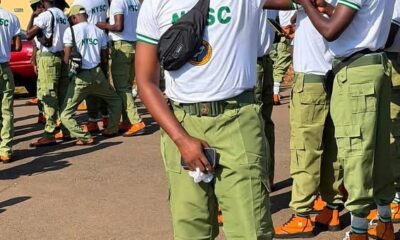








The Senate on Thursday called for an investigation into the circumstances surrounding the death of a corps member, Etimbuk Daniel, at an NYSC orientation camp in Enugu.
The resolution followed a motion of urgent public importance moved by Sen. Aniekan Bassey (APC-Akwa Ibom North-East) during plenary.
Bassey said the Senate received with shock and profound grief the news of Daniel’s death while undergoing the mandatory National Youth Service Corps (NYSC) programme in Enugu.

Etimbuk Daniel
He described the deceased as an outstanding student leader and former Students’ Union Government (SUG) president of Akwa Ibom State University who had embarked on national service.
Bassey expressed concern over reports that Daniel died following complications from a minor headache after allegedly experiencing delays in receiving adequate medical attention at the camp’s clinic.
He said the incident raised concerns about healthcare services in NYSC orientation camps, particularly the availability of qualified medical personnel, functional facilities and effective emergency referral systems.
The senator said the reported lapses highlighted the need to review healthcare delivery in orientation camps to prevent similar tragedies and protect corps members.
He emphasised that the government had a constitutional responsibility to safeguard citizens’ welfare, adding that young graduates mobilised for national service deserved adequate medical care throughout their service.
Bassey said Daniel’s death had plunged his family, the Akwa Ibom State University community and the entire state into mourning.
Seconding the motion, Sen. Mohammed Monguno (APC-Borno North) supported the call for an investigation, emphasising the importance of establishing the circumstances surrounding Daniel’s death and ensuring accountability.
The Senate observed a minute of silence in honour of the deceased and prayed that God would grant his family the strength to bear the loss.
It also called for a thorough investigation to establish the facts surrounding Daniel’s death and determine whether negligence contributed to the incident.
The Senate directed its committees on Police, Judiciary, Human Rights and Legal Matters, Youth Development, and Health to investigate the matter alongside the Nigeria Police Force and the Department of State Services (DSS).
Deputy Senate President Barau Jibrin, who presided over the proceedings, thanked Bassey for bringing the matter before the Senate and urged the relevant committees to conduct a thorough investigation. (NAN)
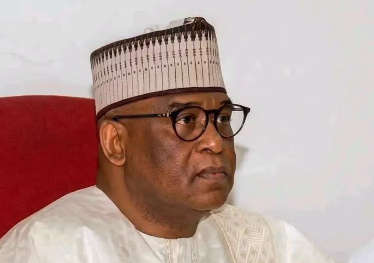
Senator Abdul Ningi has recounted how his colleague, Bello Mandiya, reportedly died after slipping in his bathroom and hitting his head, with his body discovered about 72 hours later in his Abuja residence.
Ningi, who represents Bauchi Central Senatorial District, said neighbours discovered Mandiya’s lifeless body after a foul smell began emanating from his apartment and residents became concerned about his prolonged absence.
Speaking during a Senate plenary session, Ningi said he was in Saudi Arabia when he received a telephone call from his son informing him of Mandiya’s death.
He said his son was among those who discovered the former lawmaker’s body on Monday, September 7, 2026.
Recounting the events leading to the discovery, Ningi said a colleague had last seen Mandiya at about 11am on Friday, September 4, before the former senator returned to his residence, where he lived alone.
According to him, Mandiya was preparing to attend the Friday congregational prayer when he reportedly slipped and hit his head after bathing.
“He brought out his cap, his phones, and put them on the bed, and went into the bathroom to take his bath,” Ningi said.
“After taking his bath, when he was out of the bathroom, then he slipped and knocked his head in the bathroom.”
Ningi said nobody realised what had happened until the stench from Mandiya’s apartment began spreading to neighbouring properties.
“For 72 hours, Mr President, nobody knew where Bello Mandiya was,” he told the Senate.
He said the chief imam of Apo also raised the alarm after noticing that Mandiya, who regularly joined other Muslims for the five daily prayers, had been absent for three consecutive days.
The combination of the imam’s concern and the foul smell prompted residents to investigate the apartment.
Ningi said those who went to the residence eventually broke open the door and found Mandiya’s body in the bathroom.
“And there lies Bello Mandiya in the bathroom, lifeless. Seventy-two hours, and that’s a simple tragedy,” he said.
Expressing sadness over the circumstances of his colleague’s death, Ningi said the incident highlighted the uncertainty of life, noting that nobody could predict when death would come.
He also expressed condolences to Mandiya’s family, the people of Katsina State and the constituents he represented in the Senate.
Before his election to the Senate, Mandiya served as chief of staff to former Katsina State Governor Aminu Bello Masari.
He was elected in 2019 on the platform of the All Progressives Congress to represent Katsina South Senatorial District and served in the ninth National Assembly until 2023. He also chaired the Senate Committee on Water Resources.
Mandiya’s death prompted tributes from political leaders and former colleagues, who remembered him for his contributions to public service in Katsina State and at the national level.
Ningi, who said he had known Mandiya since 2002, described the loss as a reminder that political office, wealth and social status could not shield anyone from the fragility of life.
“There is nothing permanent about anything. Nothing permanent about our position, nothing permanent about our wealth,” he said.
He prayed for Allah to grant the deceased eternal rest and give his family the strength to bear the loss. (Daily Trust)
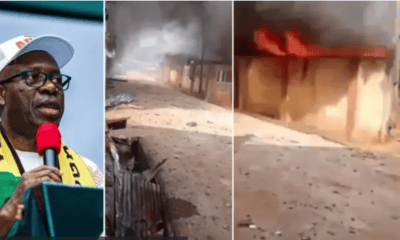
Suspected political thugs have attacked the secretariat of the Nigeria Democratic Congress (NDC) in Ikpoba-Okha Local Government Area of Edo State, destroying property at the facility.
The attack, reported on Wednesday, October 14, comes barely a week after NDC complained of a similar incident in Enugu.
A video circulating on social media showed damage to property within the Edo secretariat, although no casualties had been reported as of the time of filing this report.
In the footage, a woman accused the ruling All Progressives Congress (APC) of being responsible for the attack, linking the incident to the earlier violence in Enugu, which is being investigated by the police.
“The last one happened in Enugu, where one person allegedly died. Now they have brought it to Edo. APC, your end is here,” she said.
Her allegation against the APC has not been independently verified, while the identities of those responsible for the attack remain unknown.
The reported incident follows growing concerns over political violence ahead of the 2027 general elections.
The earlier incident in Enugu had prompted Governor Peter Mbah to demand an impartial police investigation, warning that anyone found responsible would face prosecution regardless of political connections.
It was not immediately clear whether security agencies had commenced an investigation into the Edo attack or identified any suspects.
-
 News1 day ago
2027: Why I wont attend every campaign rally – Tinubu
-
Features1 day ago
Aguleri/Umuoba Anam Crisis: The Bloody Battle Between Close Neighbours
-
News1 day ago
EFCC probes Atiku over alleged corruption committed as Vice President
-
News5 hours ago
How Senator Mandiya died after bathroom fall in Abuja Home – Ningi
-
News1 day ago
‘Anyone who attempts suicide and fails will go to jail,’ says Akpabio
-
News3 days ago
Mbah orders impartial Police Probe into Enugu political violence, vows accountability
-
News3 hours ago
Senate fumes over death of NYSC Corps member at Enugu Camp, orders probe
-
News3 days ago
BREAKING: Soludo, Wike, Adeleke, others appointed member of APC Presidential Campaign Council