News
Anambra introduces new burial law, bans presentation of cows, goats as condolence gifts


• Public display of caskets, dancing with caskets, others abolished
The Anambra State Government has introduced strict new legislation regulating funeral rites, effectively outlawing midweek burials and banning the presentation of items such as cows, goats and other expensive gifts during condolence visits.
The law, enacted by the Anambra State House of Assembly, is aimed at regulating burial and funeral ceremony activities in the state.

According to the law obtained by our correspondent on Monday, the state described the move as a major step towards curbing extravagant funeral practices that have long placed heavy financial burdens on bereaved families.
The regulations are also aimed at boosting economic productivity, reducing extravagant spending and stopping prolonged, lavish funeral activities from disrupting working days.
Under the legislation, “No person shall give to the deceased person’s family, as a condolence gift, any item exceeding money, one jar of palm wine, one carton of beer and one crate of soft drinks.

“All burial and funeral ceremonies are now restricted to Saturdays only. Midweek (Monday to Friday) burials are prohibited. All burial ceremonies must be completed within one day.”
The burial law also contains far-reaching provisions aimed at reducing ostentatious funeral ceremonies across the state, stating that offenders are liable to a fine of ₦100,000, or six months’ imprisonment, or both.
By the law, the common practice of presenting cows, goats, bags of rice and other expensive items at funerals and condolence visits is banned.
The law is intended to remove financial burden and pressure on bereaved families and to curb oppressive practices during burials.
It states, “All burial ceremonies must be completed within one day, while wake-keep ceremonies have been abolished entirely.
“Vigil masses, services of songs and related religious activities must end by 9pm, and no food, drinks, live bands or cultural entertainment may be provided during such events.
“The law also prohibits the erection of billboards, banners and posters of deceased persons anywhere in the state.
“Only directional signs leading to burial venues are permitted, and they cannot be displayed earlier than seven days before the burial date.
“Public display of caskets for advertisement or sale is barred, and dancing with caskets is prohibited.
“Undertakers are limited to six persons during funeral activities.
“Corpses are not to remain in mortuaries beyond two months from the date of death.
“Any corpse kept longer risks being classified as a ‘rejected corpse’ and may be buried in government-designated burial grounds to be established in every community.”
The legislation also seeks to limit excessive spending by making food and drinks optional for guests and banning the sharing of souvenirs during funerals.
“Second funeral rites are prohibited except in legacy-related cases.
“The wearing of uniform attire, popularly known as ‘aso ebi’, is restricted to immediate family members, church groups, ‘umunna’, ‘umuada’ and ‘iyom di’, where applicable.
“To enforce compliance, the state will establish monitoring and implementation committees in various communities to oversee the registration of deaths, approve burial ceremonies and monitor adherence to the law.
“Traditional youth practices deemed disruptive have also been outlawed, including public display of photographs of the deceased, destruction of crops or household property, and unauthorised use of firearms during burials,” it added.
The government’s latest move is aimed at restoring order to burial ceremonies and easing the financial burden on families.
The law also warns against the blocking of roads and streets during burial ceremonies.








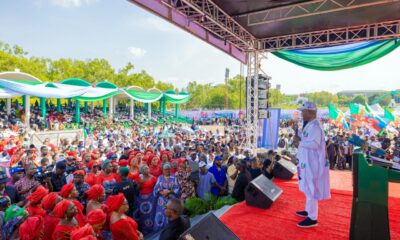

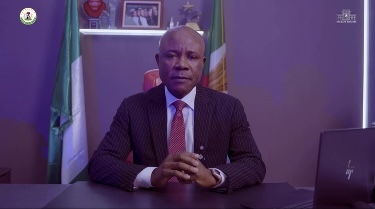
Enugu State Governor, Dr Peter Mbah, has called for a thorough and impartial police investigation into the recent violence surrounding a political gathering in the state, assuring that anyone found responsible will face the law regardless of political affiliation.
Mbah, in an address to the people of Enugu State, expressed concern over reports of violence, particularly a shooting incident that left a citizen injured.
The governor said his immediate concern was the welfare of those injured, residents who experienced fear during the incident, and families affected by the violence.
He assured the victims and affected residents that their safety and well-being remained a priority for his administration.
“I know how much our people value the peace and security we have worked so hard to establish in Enugu. Incidents such as these cause anxiety and deserve our full attention,” the governor said.
Mbah stressed that every citizen, irrespective of political affiliation, must be able to exercise their political rights without fear, intimidation or violence.
He reiterated the state government’s commitment to protecting lives, upholding the law and ensuring that justice was served without favour.
The governor also stated that, in view of the preliminary findings regarding the incident, he expected the police to conduct a comprehensive and impartial investigation to establish the circumstances surrounding the violence and identify those responsible.
According to him, anyone found culpable would be held accountable through the appropriate legal process, irrespective of their political connections.
“The Enugu State Government has made its position clear regarding allegations of involvement in this violence,” Mbah stated, reaffirming his administration’s responsibility to maintain peace and security across the state.
The incident has raised concerns over political tolerance and the safety of citizens participating in political activities in Enugu State.
The governor’s call for an impartial investigation underscores the need for the relevant security agencies to establish the facts surrounding the shooting and ensure that those responsible are brought to justice.
He concluded his address by thanking the people of Enugu State and praying for God’s continued blessings upon the state.
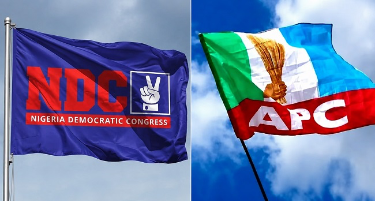
Enugu APC urges NDC to apologise for observing a minute silence
All Progressives Congress (APC) has picked holes in the reaction of the Nigeria Democratic Congress (NDC) to the position of the Enugu State Government on the airport and party secretariat incidents involving the NDC at the weekend.
The party said that “persons and institutions that lay claim to integrity should be able to admit their mistakes, confess their transgressions, and apologise to the people.”
The Enugu NDC had, at a press conference addressed by its State Party Chairman, Emmanuel Chukwujekwu Nebo, in Enugu faulted some of the positions of the Enugu State Government on the weekend incident as were marshalled by the Secretary to the Enugu State Government (SSG), Prof. Chidiebere Onyia, on Sunday.
Principally, the NDC claimed that it had only planned an airport reception for its governorship candidate, Chinyeaka Ohaa, not a ‘Grand Statewide Campaign Flag-off’ at the airport as stated by the government.
The party added that it notified various law enforcement agencies of its plans and made payments to the Federal Airports Authority of Nigeria (FAAN).
On the alleged shooting at NDC’s state secretariat, the party said that the NDC was “still verifying the final medical status of all injured persons.”
However, responding to NDC, the state Publicity Secretary of Enugu State chapter of the APC, Chief Uche Obute, insisted the NDC must tender unreserved apologies to the people of Enugu and Nigerians in general “for lying to them for political gains.”
“The question is: since the NDC was still verifying the final medical status of person or persons injured in their party fracas, how come they declared and observed a minute’s silence to mourn the living?
“The answer is simple: it was true to the factionalised Enugu NDC’s pattern to orchestrate violence among themselves and attribute it to Enugu APC to extract cheap political capital.
“It is also a validation of the commonly held view among the people that the Enugu State NDC and their governorship candidate, Chinyeaka Ohaa, would stop at nothing in their quest for power,” Obute said.
The party’s spokesman equally faulted NDC’s claim that it only planned to hold an airport reception, not a mega rally.
Supporting the party’s position with a screenshot of a Facebook post by NDC’s governorship candidate, Chinyeaka Ohaa, Obute said, “Promotional materials and posts by Ohaa clearly read, ‘Grand Statewide Campaign Flag-off 2026. Date: Saturday, 10th October 2026; Venue: Akanu Ibiam International Airport, Enugu; Time: 9:00am,’” he added.
The party commended the Governor Peter Mbah Administration for upholding the freedom and democratic rights of the good people of Enugu State, irrespective of political affiliation.
“Rather than stoking political tension to undermine the security and peace built by the Mbah Administration, we advise the Enugu opposition parties to present their manifestoes and campaign on them,” he stated.
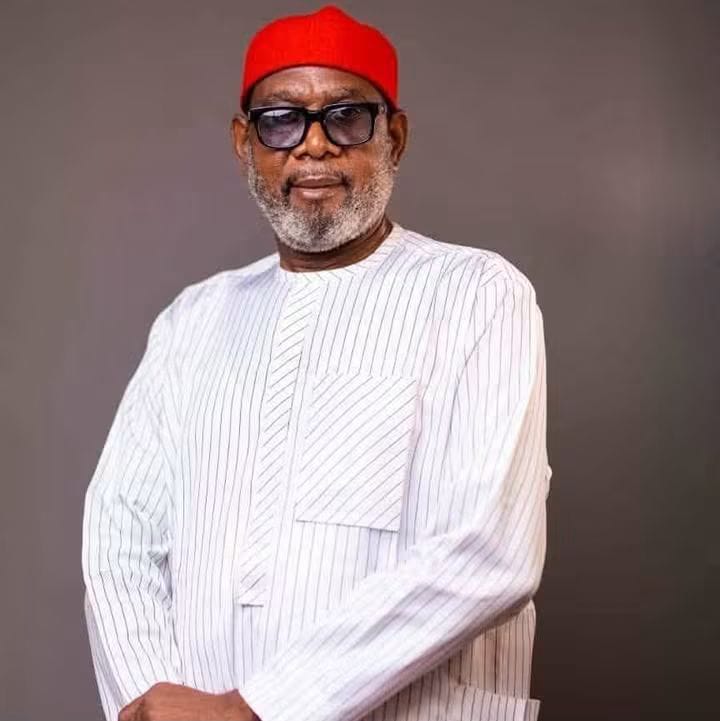
Hon. Chief Barrister Lucky Chukwu, Senior Special Assistant on Public Affairs to Enugu State Governor Peter Mbah, has died
His death was announced in October 2026 by the office of his younger brother, Senator Kelvin Chukwu, who represents Enugu East Senatorial District.
Lucky Chukwu was an elder brother of the late Labour Party senatorial candidate, Oyibo Chukwu, and Senator Kelvin Chukwu, a former member of the Enugu State House of Assembly.
He was appointed Senior Special Assistant on Public Affairs to Governor Mbah in August 2026, having previously been involved in political activities in the state.
Following his elder brother’s death, Senator Kelvin Chukwu suspended his political activities and engagements for one week to mourn the loss.
The senator’s office announced the temporary suspension in a statement issued on October 11, 2026.
The death is another loss for the Chukwu family, which had earlier lost Oyibo Chukwu, who was the Labour Party’s candidate for the Enugu East Senatorial District in the 2023 general election before he was assassinated during the campaign.
Following Oyibo Chukwu’s death, Kelvin Chukwu emerged as the Labour Party’s replacement candidate and went on to win the senatorial election.
-
 News2 days ago
Why UK varsities are cancelling Nigerians’ admission — Report
-
News3 days ago
US asks American business executives to be wary of insecurity, corruption, detention risk in Nigeria
-
News1 day ago
2027: Enugu Accuses Opposition of Plotting to Import Armed Thugs, Bandits
-
News2 days ago
Alleged Magistrate Court Order To Arrest Araraume, Okorocha Is Fake, Non-Existent — Imo First Group
-
News2 days ago
Benue APC Delegation Involved in Ghastly Accident En Route to Rally
-
News2 days ago
2027: Over 30,000 Enugu Teachers Endorse Mbah, Tinubu, List Welfare, Increased Education Funding
-
News2 days ago
Why men with braids, tattoos were banned from mosque, Ogun Chief Imam clarifies
-
News3 days ago
Petrol hits N1,900/litre as depot prices surge despite NNPC cut