News
New Tax ID Law: Nigeria’s Boldest Step Yet to Fix a Broken Tax Culture

By Princess G. Adebajo-Fraser
Introduction: A Turning Point for Nigeria

Beginning January 1, 2026, Nigerians will face a new reality: no bank account, no business operation, and no access to financial services without a Taxpayer Identification Number (Tax ID or TIN). This reform is anchored in the Nigeria Tax Administration Act, 2025, signed into law by President Bola Ahmed Tinubu in August. It is already being hailed as the most significant financial reform in decades.
The law makes tax compliance a precondition for participating in the financial system. While some citizens may initially view this as burdensome, the truth is that this policy represents a necessary, bold step toward building a sustainable national economy. For the first time, Nigeria is moving away from its dependency on oil revenues toward a citizen-driven taxation culture that is the backbone of prosperous nations.
Why This Law Matters

For decades, Nigeria has had one of the weakest tax compliance records in the world. Out of a population of more than 200 million, only about 10 million are registered taxpayers, while more than 60 million Nigerians operate bank accounts. This mismatch has crippled government revenue and left the nation overly dependent on oil earnings, which are volatile and shrinking in relevance in a climate-conscious global economy.
The numbers speak for themselves:
Nigeria’s tax-to-GDP ratio is a mere 10%.
Ghana stands at 13%, Kenya at 16%, South Africa at 27%, and the global average is 34%.
In practical terms, this means that while Nigeria has the largest economy in Africa, it collects far less in taxes compared to its peers, leaving public finances in a constant state of crisis. This explains why Nigeria’s budget deficits have widened, borrowing has increased, and infrastructure remains underfunded.
By mandating Tax IDs for all financial transactions, the Federal Government hopes to close this dangerous gap, expand the tax net, and secure revenue to fund critical services such as healthcare, education, and infrastructure.
What the Law Says
The Nigeria Tax Administration Act, 2025 introduces sweeping changes:
1. Individuals: No bank account can be opened or operated without a Tax ID.
2. Businesses: From small informal traders to multinationals, every enterprise must register.
3. Government Agencies (MDAs): Must obtain Tax IDs before entering contracts.
4. Foreign Suppliers: Cannot transact in Nigeria without registering with the new Nigeria Revenue Service (NRS).
5. Financial Institutions: Banks, insurers, and stockbrokers are barred from serving anyone without a Tax ID (Section 8(2)).
The Act also abolishes the Federal Inland Revenue Service (FIRS) and establishes the Nigeria Revenue Service (NRS) as the new tax authority. This institutional restructuring signals government’s determination to enforce compliance and build a modern, digitized tax regime.
Call for Support
“This reform is long overdue. For too long, Nigeria has depended almost entirely on oil revenues while big multinationals operating in our country — companies generating billions — have escaped proper taxation. The new Tax ID law means such companies must now give back fairly to the nation whose resources and infrastructure they benefit from.
Take for example our federal highways, many of which are damaged daily by heavy-duty trucks, including those of major corporations like Dangote. Proper tax contributions from these companies could fund the repair and maintenance of such roads, improve public services, and even cover the budgets of entire states. Multinationals like MTN, DSTV, and large banks, who are generating so much revenue quarterly, ought to pay the correct amount of tax to the government. Those revenues can fund free healthcare and education initiatives for the people, as seen in other countries.
The low-income earners need not fear — they will not be eligible to pay tax, but they will still need to register for transparency. The real target is wealthy corporations and high-net-worth individuals who must now fulfill their civic responsibility to the Nation.
This is how it works in advanced nations like the United Kingdom, where the government relies heavily on tax to provide free healthcare, education, and world-class infrastructure. Why should Nigeria be different?
President Bola Ahmed Tinubu’s administration has taken a bold step to strengthen accountability and reduce dependence on borrowing. As patriots, we must all support this move and demand transparency in its implementation so that Nigeria can finally build a taxation culture that delivers for her people.” – Princess G. Adebajo-Fraser MFR.
Lessons from Around the World
The argument for a strong taxation system is not theoretical; it is proven globally. Nations that thrive do so because they fund their budgets through taxes, not unsustainable borrowing or overreliance on natural resources.
United States: Tax revenues account for around 27% of GDP, funding Social Security, Medicare, infrastructure, and public services.
United Kingdom: About 33% of GDP is raised from taxes, paying for the National Health Service (NHS), free education, and public transport.
Scandinavian countries: In Norway, Denmark, and Sweden, tax-to-GDP ratios exceed 40%, allowing governments to deliver world-class healthcare, free universities, affordable housing, and generous social security.
The common denominator is simple: citizens pay taxes, and governments are held accountable to deliver welfare in return. Nigeria’s weak tax culture has prevented this social contract from taking root.
Implications for Nigerians
Bank Customers
From January 2026, no deposits, withdrawals, or transfers will be possible without a Tax ID. Citizens must register in advance to avoid disruption.
Small Businesses
Informal traders, who make up a huge part of Nigeria’s economy, will face new compliance obligations. However, proper registration may also grant them access to loans, credit, and formal recognition.
Corporate Nigeria
Large corporations will face stricter oversight to prevent tax evasion. Multinationals like MTN, DSTV, and major banks, whose revenues run into trillions of naira, will finally be compelled to pay their fair share.
Foreign Companies
Non-resident suppliers must register with the NRS before doing business in Nigeria, leveling the playing field for local companies.
Risks and Challenges
No reform comes without risks. Nigerians must be aware of the potential pitfalls:
1. Exclusion of the Poor: With 38 million adults unbanked, some may be excluded if the process is not inclusive.
2. Corruption and Bureaucracy: Without strong oversight, corrupt officials may exploit the registration process.
3. Awareness Gap: Millions risk missing the deadline if public education campaigns are not robust.
The success of this reform will depend on whether the NRS can build a transparent, efficient, digital-first system that minimizes human contact, speeds up processing, and ensures fairness.
Building a New Tax Culture
Nigeria must seize this moment to build a new taxation culture where:
Citizens understand tax as a civic duty, not punishment.
Government delivers value in return — better roads, schools, hospitals, and jobs.
Corporations are held accountable to contribute fairly to the economy.
This reform, if well-implemented, will reduce Nigeria’s reliance on borrowing, cut waste, and strengthen national sovereignty. It will also give citizens leverage to demand accountability, since the government will now be directly funded by the people.
What Nigerians Must Do
1. Register early: Do not wait until the last minute.
2. Gather required documents: NIN, BVN, ID, address, and business records (if applicable).
3. Stay informed: Follow NRS guidelines and updates.
4. Think beyond today: Taxes are an investment in collective welfare.
Conclusion: A Bold Step Toward Progress
The New Tax ID Law represents more than a bureaucratic change. It is a test of whether Nigeria can move beyond oil dependency into a sustainable, people-driven economy. It is also a chance to demand that the government fulfill its part of the social contract by delivering visible, measurable improvements in public welfare.
If successful, this reform will mark a turning point in Nigeria’s history — the birth of a true tax culture where every citizen and corporation contributes fairly, and the nation prospers as a result.
The National Patriots, emphasizes:
“This is a bold step and deserves the support of all Nigerians. It is time for every citizen, every company, and every leader to recognize that taxation is the foundation of national progress. With accountability, fairness, and transparency, this reform can deliver a better Nigeria for generations to come.”
•Princess Gloria Adebajo-Fraser MFR, The National Patriots.









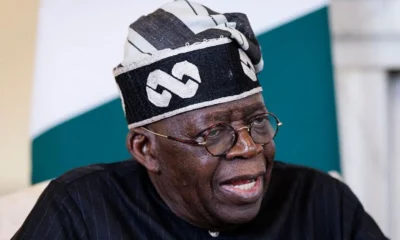


The Vice Presidential candidate of the Nigeria Democratic Congress (NDC), Rabiu Kwankwaso, has said a government led by the party’s presidential candidate, Peter Obi, would reintroduce fuel subsidy, but through a different approach.
Kwankwaso, a former Kano State governor, said this during an interview with Arise News while discussing fuel pricing and the economic policies of President Bola Tinubu’s administration.
He said the NDC would seek ways to reduce the cost of petrol for Nigerians, including increased investment in domestic refining.
“No, no, no, look. We are bringing subsidy in our own way,” Kwankwaso said when asked whether the party’s position on subsidy would affect its campaign in the North-West.
Explaining the proposed approach, he said government could establish more refineries to boost local production and reduce dependence on imported petroleum products.
According to him, the expansion of domestic refining capacity would help ensure that Nigerians can purchase petrol at what he described as a reasonable price.
“Now, if individuals in this country could build refineries, I see no reason why government, under certain circumstances, will not build a refinery or refineries to the extent that we achieve the minimum requirement,” he said.
Kwankwaso said the NDC would prioritise measures aimed at lowering fuel prices.
“What is the minimum requirement? The minimum requirement is for the people across the country to go to the filling stations and buy fuel at a reasonable price,” he added.
“We, in the NDC, will do whatever it takes, really, to put the price of oil down.”
The NDC chieftain also criticised how Tinubu removed the petrol subsidy shortly after assuming office in 2023.
He noted that the major presidential candidates in the 2023 election had supported subsidy removal but faulted Tinubu for implementing the policy immediately.
According to him, the decision was taken without adequately addressing the consequences associated with subsidy removal.
“And not only he decided to remove the subsidy, what he did was to remove it immediately — in fact, day one — without looking at all those possible issues that were associated with that,” Kwankwaso said.

…moves online services to www.enuguairlines.ng
Enugu Air has announced the launch of its new official website, enuguairlines.ng, as part of efforts to provide passengers and customers with a better, safer and more convenient digital experience.
The airline said the migration to the new website is designed to improve how passengers connect with Enugu Air and access its services online, including flight bookings, schedules and the latest updates.
Announcing the development, the airline said: “We’ve moved! We’re innovating! We’ve migrated to a better, safer and convenient website to connect you to the world.”
Passengers can now access Enugu Air’s online services through its new web address, enuguairlines.ng, which the airline described as its new digital home.
The airline urged passengers and prospective travellers to save the new web address and use it for flight bookings, checking schedules and obtaining the latest information about its operations.
“Same Enugu Air. New web address,” the airline stated, emphasising that the change represents an improvement in its digital platform while retaining the Enugu Air brand and services.
The airline further encouraged customers to visit, www.enuguairlines.ng for all flight-related information and online services.
It further stated that the old website, enuguairlines•com has been discarded and no longer in use.
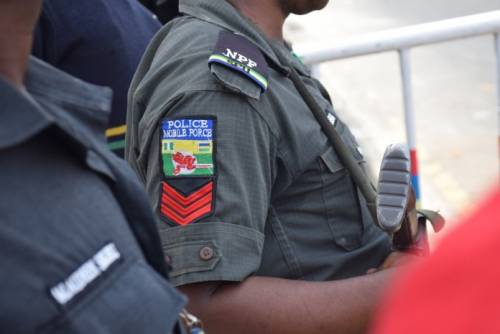
A kidnapped female police officer has been found dead in Ebonyi State after a suspected member of a kidnapping syndicate was arrested and led police operatives to the scene where her remains were recovered.
The Nigeria Police Force disclosed this in its state-by-state operational update issued by Force Public Relations Officer
Force Headquarters, Ani Iniedu on Monday, detailing several arrests, rescues and recoveries recorded across the country between September 19 and 20, 2026.
According to the police, the suspect was arrested following a sustained intelligence-led and technology-based investigation into the kidnapping of the female officer.
The suspect reportedly led combined police teams to the crime scene, where the remains of the officer were recovered.
The police said the case is being investigated by the State Criminal Investigation Department (SCID) in Abakaliki.
In a separate operation in Adamawa State, police operatives rescued two kidnapped victims from a suspected kidnappers’ hideout in Shako Forest, Toungo Local Government Area.
The operation, carried out on September 20 following actionable intelligence, also led to the recovery of two magazines containing 10 rounds of 7.62×39mm live ammunition.
A National Identification Number (NIN) card, mobile phone, passport and chain were also recovered from the suspected hideout.
In the Federal Capital Territory, police arrested 334 suspects during coordinated raids on criminal hotspots, black spots and uncompleted buildings across several locations.
The operation, conducted on September 19, also resulted in the recovery of various quantities of substances suspected to be illicit drugs.
Meanwhile, police in Anambra State arrested a suspected child trafficker who was allegedly intercepted while travelling with a six-month-old baby boy.
The baby was recovered and handed over to the appropriate authorities for necessary action, according to the police.
In Kaduna State, four suspected members of a kidnapping syndicate were arrested following intelligence-led operations.
Police said the suspects confessed to their alleged involvement in kidnapping and provided information about fleeing accomplices. A locally made Dane gun was recovered.
Another suspected kidnapping syndicate member was arrested at Soba Market in the state. Police said the suspect also confessed and gave information implicating five fleeing accomplices.
In Ogun State, police arrested a suspect linked to a fatal shooting incident in Isara, Remo North Local Government Area.
One single-barrel gun, one live cartridge and one expended shell were recovered during the operation.
In Imo State, a suspect was arrested during a raid on a suspected criminal gathering at Nekede, Owerri West Local Government Area, with police recovering a locally made cut-to-size single-barrel gun.
Police in Ekiti State also arrested two suspects linked to multiple shop-breaking and stealing incidents in Ado-Ekiti and recovered suspected stolen iron rods.
In another operation in Ado-Ekiti, police recovered an abandoned white sack containing a pump-action gun loaded with two live cartridges and a locally made single-barrel gun from a farmland.
In Benue State, police tactical teams, supported by personnel of the Police Mobile Force and military, intervened in a renewed communal conflict at Akpa-Mbakor Community in Tarka Local Government Area.
The security teams dispersed the rampaging youths and restored normalcy in the area, according to the police.
In Oyo State, police arrested a truck driver allegedly involved in a fatal road traffic incident along the Ijebu-Ode/Idi Ayunre Road.
The truck was impounded for further inspection and investigation.
The police said all the cases remain under investigation by the respective State Criminal Investigation Departments.
-
 Politics1 day ago
WHEN PRIVACY BECOMES CONTENT: The Dangerous Normalisation of Leaked Private Conversations
-
News1 day ago
BREAKING: Gov Mbah appoints 101 new aides
-
News20 hours ago
UK excludes Nigerian, Ghanaian-trained teachers from teaching qualification list
-
News3 days ago
Former Kogi Gov, Ibrahim Idris, dies in UK at 77
-
Opinion1 day ago
Who is in Charge of Nigeria?
-
News3 days ago
NDLEA intercepts N3.4bn drugs, arrests fake police officer
-
News3 days ago
Woman allegedly kills husband over plans to marry second wife
-
News2 days ago
Flood Alert: 8,000 communities, 4,500 schools at risk – FG