Politics
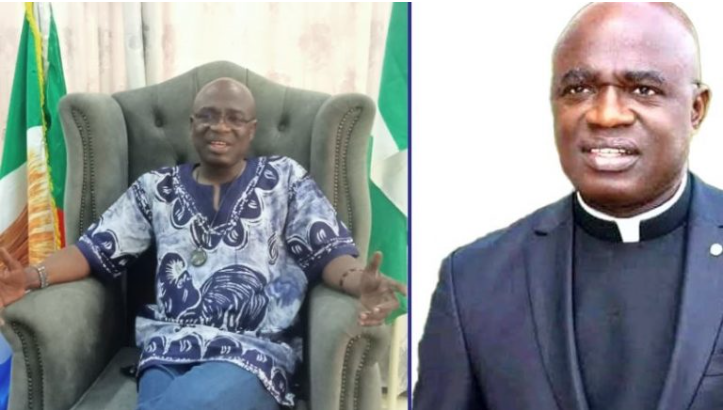
Why I dumped priesthood for politics – Benue Gov

• Reason some people call me Mr 25
• Says Tinubu deserves national applause for his tough choices
What informed your decision to drop priesthood for a part in the murky waters of politics?
Many people have asked similar questions. But the one that thrilled me most was Governor Charles Soludo of Anambra State, who taunted me at a time, asking why I temporarily left the cassock to take on the headache of governance. I told him that the answer is quite simple. The church generally has an aim, which is to save souls. The church does not want people to be lost. The aim of my coming into partisan politics is exactly to fulfill that purpose. I came in to save the poor masses of Benue.
Before my advent into partisan politics, too many things were wrong. I had lived a functional 33 years as a priest with my locals. I’ve been in the trenches with them, and the people I love working for the most are the destitute, the poor masses, those who do not have a voice in our society, who are oppressed, suppressed and neglected. God loves everyone and He does not want anybody, particularly the vulnerable groups in any society, abandoned and lost. These are the people that I felt were never cared for.

How would you describe Benue at the time you took over as governor?
When I took over, I met the state in a pitiable condition. Pensioners were regarded as dead people; they were not remembered. Their entitlements were not paid for years. Local government teachers and the rest of the civil servants were nearly totally forgotten. My father was a local government teacher and I felt his pains when his entitlements were not given to him.
The state, since its creation, was just a glorified village. We didn’t even have light on the streets in the state capital. Our internal roads were minimally tarred. So many things were not just in place. Benue has more ghost schools and workers than the real ones. You come into the state capital, Makurdi, and it is like you come into a village. I felt there was a need for us to change that narrative.
But the church stood against your ambition and consequently suspended you from priesthood…
The church is not against her priests joining partisan politics. Where it is a case of plurality of parties, the church will hold her reservation. But at the same time, there is a leeway that if the church judges that the society is too dysfunctional and that the only person to salvage the situation is a priest, then the church is given that allowance. Someone can spring up via the church to save the rest of the people.

Not many people understand this, and this is why I had to come in and save the souls. We had to take care of the human beings that are out there.
You have had about 10 months in the saddle. What would you say your administration has been able to do?
Since we came in, we’ve been caring for the human beings in the state. We have been trying to fix several dysfunctional sectors. The first thing we did was introduce a policy of meritocracy, meaning you only earn or get what you earn. And having understudied the system in the last 10 months, we were able to record huge financial shift.
We are constructing roads to boost our agricultural market and food production. One of the areas we are looking at is improving the public primary schools. Can you imagine the primary school I attended having only a teacher with dilapidated infrastructure? That is a replica of many primary schools in the rural areas. We’re talking about the future of Benue, the future of Nigeria.
These are vulnerable groups who can’t fight for themselves; we need to fight for them. It is like fighting for democracy, which does not just happen; it has to be fought for. To ensure that the schools are working, there must be infrastructural traction and functionality. This is what we have been doing since we came in.
When we fight for democracy, then we’ll be fighting against food insecurity that exists because farmers are on the farms and encouraging them to go into mechanized farming. I came in to assure them that God loves them in a way they can have their liberality of thoughts, they can know that they and their children owe the future.
So, I came in so that the state will have the fullness of democracy and the fullness of life. People need to understand that government is an opportunity to protect peoples’ lives and ensure that the people go back to their agrarian society.
On May 29 last year, you promised massive infrastructural development and later declared a state of emergency on infrastructure. With the challenging economy, do you think you would be able to deliver on your projection?
We had declared a state of emergency on our infrastructure. Our primary schools were in decay. We had weeded out ghost schools in that unit. Benue had more ghost workers. For instance, we had these ghost schools with 95 teachers and the least teacher was on Grade Level 10. This had been on for a very long time. Can you imagine what the state had been losing to that alone?
So, what we did was that we were able to save N1.4 billion the first month we came on board. By the second month, we saved over N2 to 3 billion from ghost workers alone. We then shifted into the civil service where we saw some other things. The state had more casual staff than the permanent staff. These casual staff were paid between N10,000 and N15,000 a month. The entire ministry of works didn’t have up to 12 staff. This was quite unheard of. We had to weed out some of them and it is just now that we are coming to terms with reality. That is what we are doing. By this, we were able to fine-tune the system to work.
In terms of infrastructure, we are an agrarian state and over 80 per cent of the people here are farmers. But unfortunately, they were never incentivised to be the best they would be on the farms. So, we set out to do the roads that could lead from their farms to the market squares and back here to the centre. I’m glad to tell you that in the last few months, we have fixed 16 roads and we’re at the point of unveiling another 31 street roads within the capital city, Makurdi.
At the same time, other contractors are working on rural roads across the state where we have most of our food production, because that is where we want the impact to be first felt.
There are talks that you give contractors 70 per cent up front, which is unprecedented in Nigeria. What is the guarantee that these contractors will deliver on their projects?
Yes, we wrote down that 70 per cent be given to them, which we do on installments basis. We decided to be doing this to arrest the challenges of inflation and foreign exchange. For the records, we do not give 70 per cent at a go.
Let me also inform you that many of our contractors are locally sourced. These contractors have built themselves up and also because we have received other testimonials from other states. But with the agreement to sign with them, there’s no way any of them can perform below expectation. And where we sense that, we’ll hold them by the jugular. It is not as if we just give them the contracts.
It is not true that we give them 70 per cent. But because the State Executive Council said 70 per cent should be given to them because of inflation, it is segmented. That is why most contractors are scrambling for Benue State. And those who took projects and money and didn’t do the work, their day is coming as we are counting for them. They’ll have some questions to answer on why they took jobs they didn’t do.
What steps are you taking to address the security situation in your state, especially in the rural areas?
Before we were ushered in on May 29, 2023, the security reports on our insecurities were horrible. It is also on record that hundreds of people were being killed in one local government area. Before you took that to heart, you heard of another one. We had tonnes of these deaths on our hands. But since we came in, it is on record that there has been relative peace. How do we know the indices? By the same security apparatus that we have and by the reports we get from our vigilantes, forest guards and other security apparatus who are working in sync with the security of our people.
By the situation report we receive every day, we are able to measure that. Overall, we have relative peace. But at the same time, relative peace does not mean we have absolute peace.
But there are still reports of attacks and killings in the state…
It is true that we have had pockets of attacks in recent times. What we discovered was that of late, we had a large influx of armed herders that flocked in some local government areas of the state. These local governments are prone to insecurity because they share borders with a number of states.
Despite your achievements in a few months and to the delight of many Benue residents, there are still dissenting voices in your party against your administration. What are the issues?
Well, in every administration, you expect those who oppose you. I came in with a plan to rebuild our state. Some people are at their best when there is a crisis, and there are some political leaders who dug a hole and kept everyone in the state down there and they don’t want anyone to see the light of day. There were no infrastructure and no one knew where the monies given to the state were going to. They did not better anyone’s lives; they took care of their individual families. We have a conscience and a report card we must present to the people. So, if a select few say they are in charge of the state and that before development comes, they must know, when FAAC allocations come, it must be given to them first, who does that? It is not for anyone to be inciting the masses against the government.
Who gains more if all the political gladiators come together with ideologies that will take the state forward? It is regressive for anyone to be thinking of sharing the state’s money. That would not work at all. This is what some of them have been doing that has not taken us anywhere. Benue, though created in 1976, is far behind on all fronts.
Look at Nasarawa that was just created, can we consider the development in that state with what we have in Benue? Everywhere in Lafia its capital city is lit up, structures have come up. The people brought me to the seat, they ensured that I present to them the merits of democracy. They voted me on trust. Let all political gladiators come up with ideologies and not dysfunctionality that will consume everyone. So, for those who want the state’s money to be shared with them, sorry, that can’t happen anymore. This has been the practice for more than two decades and where has that taken us? I feel it is just high time everybody got on board with me.
Besides, I have my character and reputation and I came into this game with a defined intention to work with and for the people and accommodate everyone. That is what we will continue to do, because at the end of it all, I am going to be responsible for everything. I am for the people, with the people and working for them. The people of Benue gave me their trust.
You campaigned and won the election on APC’s ticket. Should there not be a well-defined arrangement to take care of party machinery?
I am not denying the understanding of doing what we should do by taking care of our statesmen. We have been doing that. I am a moderate person, it will be childish of me to go on television and say we are giving money to some people. And as much as the law allows us, we will continue to do the needful.
My predecessor plunged Benue into a huge debt hanging on my head.
It is disheartening to know that few indigenes of the state want to be known as Benue APC and they want all the funds in the state to be handed over to them. If that is done, can the state function that way? For us, we consider the masses and that is why you see all the projects going on in the state, and we will continue on that path. Anything short of that will be detrimental to the state and I am not prepared to settle for less.
Those who criticise every policy we bring out are the beneficiaries of the dysfunctional system. These are cohorts who move in their own gangs. These are social media bandits and we need to get rid of them by executing the projects we had promised to do that will benefit everyone. Some of these people come to me privately to hail me but when they come, I say to them to make their kudos known to the public. Some of them take it as a business.
It is in the news that you have a frosty relationship with the Secretary to the Federal Government, Senator George Akume. Will this not affect the party and the state?
As regards my relationship with the SGF, Senator George Akume, for the records, I don’t have any differences with him. He was the leader of the APC in the state and he ensured that everything was done for me to win, and we won. There is no way I will talk ill of him or complain. He was the one encouraging me to break all the records of my predecessor. I am also happy when I read where Akume said that he has no problem with me. We don’t have issues. But then, it is granted that social media is a new world on its own where some miscreants flourish.
Some people accuse me of pinching Benue money. They say I run the state like I ran the church. I hear them saying that since the church does not have money, priests are already used to money pinching. They are not happy with me because they expected me to keep the state’s treasury open for everyone to take what they can. If that is the grouse, I thank the church for giving me such discipline. Without the pinching, you cannot rule a state like Benue. I feel that if we consider the masses, APC will do great things for this state. I can tell you authoritatively that everybody is benefiting from the programmes and projects we are doing.
If you say you and the SSG have no differences, what about several court cases against Benue APC that made the national leadership of the party to order withdrawal of all litigations?
For the records, I never took the APC to court. So, the letter is not talking about me. Those who are working for the APC in the state have not taken the party to court. Let me be clear on this.
Are you not distracted?
I am not distracted in any form or fashion because I came into the bidding of the party and above all, the people. We are executing that script as planned, so, there are no distractions whatsoever, and that is why I am doing the work I am doing. In some places, you hear people calling me Mr. 25 because their salaries are being paid on the 25th of each month. People need to understand the stability of governance, they worked for it and they earned it. Why should they be denied?
NLC is agitating for a pay rise. Is Benue prepared to key into the new minimum wage demand?
We are prepared. As one of the sub-nationals, why can’t we be in sync with what the entire nation is doing? We must and I am prepared to go for that. Once the minimum wage is agreed upon, we must also follow. So far, salaries are being paid and we are doing well with the payment of pensions of the people as well. Their lives are back and I am willing to do more for them.
What have you done to better the lots of workers with Benue Links Transportation Company?
We met nothing on ground, I mean total zero. Those who owned Benue Links before May 29, 2023, were individual private persons. They brought in a few of their buses that used to be known as a fleet for the company. Benue Links had no cars. When we came in, we saw the need to revamp the establishment. With our location as a state, people come into the state from all directions. So, we need to ease the movement of people who need to go to other parts of the country. This was why we did some investment by buying 100 buses at a time and thank God, it was effective. We subsidised that so that the fuel subsidy removal will not have any effect on the people. I was happy with the result. I am happy that the buses are running to a good number of states. The establishment is trying to do some addition that will encourage competition towards improving our transportation and I’m looking up to that.
You have embarked on several infrastructural projects. How are you sourcing the fund? Also, your predecessor was owing workers, have you been able to clear the debts?
Though we met a huge debt, we have been able to invest in health, roads, and some other infrastructure. Unfortunately, we have not been able to offset the arrears because it runs into hundreds of billions of naira. I cannot take care of that now, but what I have done is to take care of their salaries. Under my watch, our civil servants will not lose any of their salaries.
With the pensioners, their situation was more critical, but we are trying to take care of the pensions and continue to scale down. Governance deals with prioritization.
In the medical sector, we have invested heavily in our teaching hospital. We also gave some form of incentive to our medical personnel and the student population there, many of whom we are encouraging to give back to the state. We were the first to take care of the medical doctors’ residency last year. So, we understand that many doctors are now longing for Benue to hire them. We’ll give similar attention to general hospitals and clinics in the local governments.
Government is an opportunity where the unemployed will be given some form of training and exposure to acquiring skills.
Apart from pinching the state’s resources, are there other ways your government has been raising funds to meet the state’s needs?
I’m trying to raise internally generated revenue. Our treasury had too many holes and we are making some parchments on it. If anyone accuses you of pinching, well, I thank God and the church for that training. Do you know that I got only one car just last month for the state’s business as sitting governor? I have to make some tough choices too. Though I know what the book provides and I know what others will do, I’ve got to make some tough choices. For now, I need just that one car and that is good enough for us. This can be a platform for luxury, but we don’t have that means for now.
Our President had to make tough choices, I mean tough choices. We should be clapping for him for taking the boldness to remove the fuel subsidy. He was attacked and some are still attacking him. If he didn’t make that tough choice then, where would we be now as a nation?
What is your take on the calls for a return to the parliamentary system of government?
We need to get this right. We need some education and re-education. The system of governance is not the problem; we the people are the problem. Politics is not a bad game, it is the players that are bad. God forbid, if I play bad, it doesn’t mean that politics is a bad game, it simply means that the players are the bad players who are not promoting the good spirit of democracy. It is not the form of government that is bad, but it is the people, who have their own different modes of thinking.
Take for instance, state police. It is not a new idea. We have had it in the past, but why did we jettison it? Why are we projecting its re-establishment now? Why do we have large appetite for money? Why are we too greedy? Why are we not thinking of the masses? Why do some politicians make promises of what they didn’t intend to provide during campaign? The problem is the man and not the system. This is why we need this new orientation.
Benue is an agrarian state, but she is not occupying this role. What will your government do to make the state feed the nation?
We will do all that we need to do to ensure that agriculture takes its pride of place in Benue again. I have promised financial support to those farmers who are ready to return to their farmlands, and I mean it. The state had agricultural development programmes and I’m waiting for those with requisite knowledge and techniques to come in there and take it up. The state will provide the capital to do whatever they intend to do. The state will provide the capital and the farm tools. The state can also be the off-takers of your farm products. We in the state have no reason to talk about food insecurity. We have all it takes to feed the state and the nation.
What’s your stance on the push for the autonomy of the local government?
Yes, granting autonomy to the local government will make things work better for the people. Again, it is not the system that is bad, but the individuals. So, if the managers of the local government become irresponsible, autonomy won’t make any difference.
At the moment in Benue, we are checking because we have discovered that a lot got missing from the treasury through the local government, as many of them became conduit pipes of corruption. Granting local government autonomy is the springboard of development and growth. We are already on this track of autonomy as both the judiciary and the legislature have their full autonomy. The executive does not intervene in their business.
You have some IDPs in the state. How soon would they be returning to their homes?
As soon as possible. We thank the Federal Government’s intervention. In fact, there are a number of programmes the federal government has shifted to us to impact skills and resettle the displaced persons. This particular programme is for the Northwest and Northeast, and I thank God that President Bola Ahmed Tinubu gave us, I mean Benue and Niger, to key in into this programme. The programme is going to enable us to get the IDPs back to their homes and enable them to take back their lives and businesses.
Where do you see Benue State by 2027?
By 2027, the entire nation will be making reference to the infrastructural development that Benue would have recorded. Having come from grass, we are headed to grace and there’s no stopping at all. By 2027, the Yes Father dynamism you’re hearing will be the sound bite on the lips of the opposition. They’ll first say yes Father before the legitimate Yes Father will say it. This is because we are doing what we promised the people we will do.
It excites me when I get reports of people coming from neighbouring states to Benue for medication. That is the new dream I have for Benue. I want to deliver a Benue that everybody will be proud of. (The NATION)



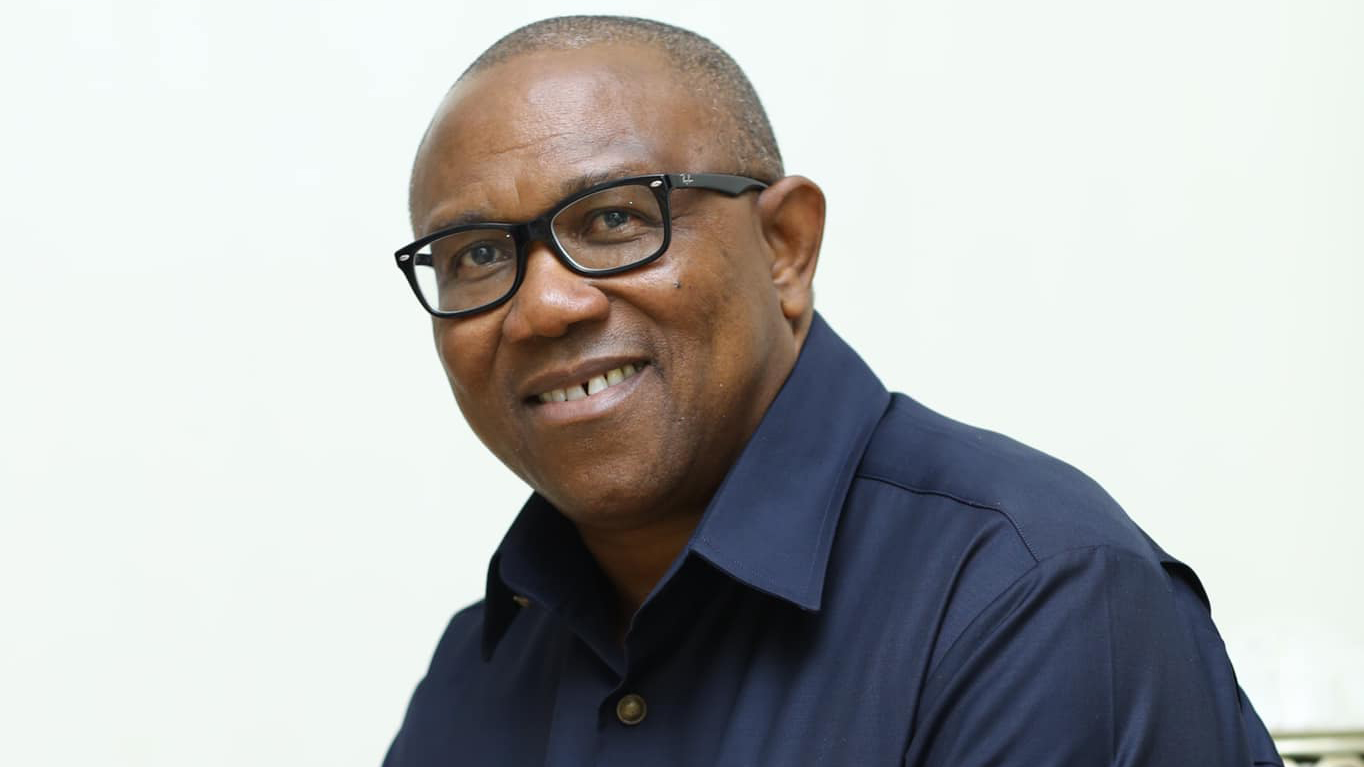
The Peter Obi Media Office has accused Vice-President Kashim Shettima of applying double standards in his treatment of opposition leaders, questioning why he would demand respect for former Vice-President Atiku Abubakar while reportedly describing Peter Obi as “diminished”.
In a statement issued on Sunday, October 18, 2026, the spokesman of the Peter Obi Media Office, Idris Zekeri Jnr., criticised Shettima’s reported remarks, describing them as contrary to the principles of political decency and mutual respect.
The office said the apparent contrast between Shettima’s call for respect for Atiku and his alleged disparagement of Obi raised questions about consistency, political tolerance and the treatment of opposition figures in Nigeria’s political space.
Zekeri argued that although Shettima had the right to disagree with Obi politically, such differences should not prevent him from extending the same courtesy he demanded for Atiku to other opposition leaders.
“Although Shettima has the right to oppose Obi, it is difficult to understand why he would demand respect for one opposition leader while casually dismissing another,” the statement said.
The media office questioned what it described as selective respect, insisting that political disagreements should not determine which opposition figures deserve dignified treatment.
According to the statement, the issue was not whether Shettima supported Atiku or opposed Obi, but whether the principle of respecting political opponents should apply equally, regardless of their regional backgrounds, political affiliations or electoral ambitions.
The office also maintained that Obi had conducted his political engagements with decorum, focusing on governance and public policy rather than personal attacks against political opponents.
It challenged Shettima to compare their respective records as former governors of Borno and Anambra states, claiming that Obi’s performance in key areas of governance surpassed that of the Vice-President.
The statement highlighted Obi’s record in fiscal discipline and investments in education and healthcare during his tenure as governor of Anambra State, arguing that his achievements should be assessed on the basis of verifiable facts.
It urged Shettima to provide evidence to counter Obi’s record if he disagreed with the former Anambra governor’s achievements, rather than resorting to personal descriptions.
“If Shettima contests any aspect of Obi’s record, he should present the facts rather than resort to political name-calling,” the statement added.
The media office further called on political leaders from the South-East, particularly members of the All Progressives Congress (APC), to reflect on the implications of the Vice-President’s reported comments.
It criticised South-East political figures who had allegedly shown disrespect towards Obi, arguing that political loyalty should not come at the expense of defending the dignity of fellow Nigerians.
The office insisted that no political affiliation should justify a situation in which respect was demanded for one opposition leader but withheld from another.
“Nigeria needs a contest based on records and ideas, not selective respect and political denigration,” the statement said.
It added that the Nigerian electorate, rather than political rhetoric or dismissive remarks by public office holders, would ultimately determine Obi’s political relevance.

The All Progressives Congress (APC) has won all chairmanship and councillorship positions in the just-concluded local government election in Kogi State.
The Chairman of the Kogi State Independent Electoral Commission (KOSIEC), Mamman Nda Eri, announced the results at the commission’s secretariat in Lokoja.
Speaking after the announcement, Eri emphasised that elections should not be seen as battles between enemies but as democratic contests among citizens with a shared destiny.
He noted that although political parties might differ in ideology and approach, the people of Kogi State had a collective responsibility to sustain peace and promote the development of the state.
The KOSIEC chairman urged residents to remain peaceful, law-abiding and united to accelerate the state’s development.
According to him, the election has produced representatives who now face the greater responsibility of building stronger communities and improving the living conditions of the people.
Eri also reaffirmed the commission’s commitment to protecting the integrity of the electoral process and strengthening grassroots democracy in the state.
Thirteen political parties participated in the local government election, which was described as generally peaceful across Kogi State.
Politics
Nigeria’s Weak Opposition and the Cost of One-Party Dominance: Can the Opposition Rebuild Before 2027?
THE SUNDAY DISCOURSE
By Tony Edike
As political defections, internal party crises and leadership struggles reshape Nigeria’s political landscape, the inability of opposition parties to organise a credible alternative raises troubling questions about democratic accountability, the future of multiparty politics and the welfare of millions of citizens.
Nigeria’s democracy faces a fundamental contradiction. While the country operates a multiparty political system in which citizens are constitutionally entitled to choose their leaders, the political forces expected to hold the ruling class accountable are struggling to organise themselves into a coherent and credible opposition.
The consequences extend beyond party headquarters, political rallies and the ambitions of presidential aspirants. They reach the markets where traders struggle with rising costs, the homes where families worry about feeding their children, the communities threatened by insecurity and the streets where unemployed young people search for opportunities that remain elusive.
When government policies produce hardship, citizens naturally look towards the opposition for scrutiny, alternative proposals and political accountability. Yet what happens when the opposition itself is weakened by factional disputes, defections, personal ambitions and an inability to agree on a common direction?
That question has become increasingly urgent as Nigeria approaches the 2027 general elections.
The ruling All Progressives Congress (APC), under President Bola Ahmed Tinubu, is preparing for another electoral contest, while several opposition parties are grappling with internal divisions and negotiations over possible cooperation. Recent reporting by Channels Television on October 17, 2026, highlighted the contrast between the APC’s expanding political alliances and the continuing consultations among opposition parties seeking a framework for cooperation ahead of the elections.
The challenge is no longer simply whether Nigeria has opposition parties. It is whether those parties can develop the organisation, credibility and public confidence required to hold the government accountable and offer voters a convincing alternative.
The roots of Nigeria’s opposition crisis
Nigeria’s opposition problem did not begin with the Tinubu administration. It is rooted in a political culture in which parties frequently function more as vehicles for acquiring political power than as institutions built around clearly defined ideologies, policy commitments and long-term national development programmes.
Since the return to democratic rule in 1999, political parties have often been shaped by powerful individuals, influential financiers, regional calculations and negotiations among political elites.
In such an environment, disagreements over leadership or the distribution of political positions can quickly threaten the survival of an entire party. When a powerful politician loses control of a party structure, the response is often to defect, establish a faction or negotiate a new political arrangement rather than submit to transparent internal competition.
This weakness is particularly damaging to opposition parties. A ruling party may retain considerable institutional advantages, access to an established political network and the influence associated with incumbency. An opposition party, by contrast, must persuade voters that it can govern differently while simultaneously building the organisation required to compete.
When its leaders spend more time fighting one another than interrogating government policies, the ruling party benefits from a political environment in which its opponents struggle to sustain a coherent challenge.
The crisis within the Peoples Democratic Party (PDP), which governed Nigeria from 1999 to 2015, illustrates this difficulty. The party’s internal disputes and the movement of prominent members to other platforms have weakened its position as a major opposition institution. Similar leadership and organisational challenges have affected other opposition platforms.
The Guardian, in its October 15, 2026 report on the PDP crisis ahead of 2027, highlighted the implications of factionalisation, defections and leadership disputes for the choices available to voters.
The lesson is clear: a party cannot effectively hold the government accountable nationally if it cannot establish discipline, resolve internal disagreements and maintain confidence among its own members.
Why politicians abandon the opposition
One of the most visible features of Nigerian politics is the movement of politicians from opposition parties to the ruling party, particularly as elections approach.
Such defections are often announced with claims of political realignment, development, unity or a desire to support the government of the day. Politicians may also argue that joining the ruling party will improve their ability to attract projects and opportunities for their constituencies.
However, repeated defections raise an important question about the strength of Nigeria’s political institutions.
If party loyalty is constantly subordinated to the search for political advantage, parties become unstable and voters struggle to identify what distinguishes one platform from another.
The problem is not that politicians must remain permanently in one party. Freedom of political association is a legitimate democratic principle, and individuals may leave parties over genuine disagreements. The concern arises when defections become a substitute for internal democracy, ideological consistency and accountability to the electorate.
A democracy needs politicians who can disagree with the government, challenge its decisions and propose alternatives without feeling compelled to join the ruling party to remain politically relevant.
When too many influential figures abandon opposition platforms, those platforms lose organisational capacity, experienced personnel, financial support and public visibility. Their remaining members may become increasingly discouraged, creating a cycle in which every departure makes the next one easier.
Ultimately, the electorate bears the cost when political competition weakens.
The danger of a dominant ruling party
A strong ruling party is not inherently undemocratic. Governments need sufficient political support to implement policies, pass legislation and fulfil their electoral mandates.
The danger emerges when dominance becomes so extensive that effective scrutiny and competition begin to deteriorate.
A functioning democracy requires more than periodic elections. It requires a legislature capable of examining government decisions, opposition parties capable of presenting alternatives, courts able to adjudicate disputes independently, journalists able to investigate public affairs and citizens able to organise peacefully.
Without these checks, poor policies may persist for too long, public expenditure may receive inadequate scrutiny and those entrusted with public resources may face weaker political pressure to explain their decisions.
Opposition parties therefore perform a public service even when they do not control government. They can expose inconsistencies in official claims, demand explanations for public spending, scrutinise appointments and challenge policies whose consequences disproportionately affect vulnerable citizens.
But opposition must also be responsible. Criticising every government decision without examining the evidence, spreading unverified allegations or promising unrealistic solutions does not strengthen democracy. It merely replaces meaningful scrutiny with political noise.
Nigeria needs an opposition that is both critical and credible: one that can identify failures, acknowledge legitimate achievements and explain how proposed alternatives would work.
Economic hardship and the accountability question
For millions of Nigerians, political debates are ultimately judged by their consequences for daily life.
The cost of food, transportation, electricity, housing, education and healthcare shapes how citizens experience government. Insecurity, unemployment and the difficulties confronting small businesses further influence public confidence in political leadership.
The Tinubu administration’s economic reform programme, including the removal of the petrol subsidy and changes to foreign-exchange arrangements, has generated extensive public debate over economic adjustment, inflationary pressures and the distribution of costs and benefits.
Supporters of the reforms argue that they address longstanding structural distortions and could improve public finances over time. Critics question the speed and social consequences of implementation and argue that relief measures have not adequately protected vulnerable households.
These competing arguments should be examined through evidence, measurable outcomes and the lived experiences of Nigerians.
The responsibility of the opposition is to move beyond slogans and establish a serious public examination of the reforms. How have they affected household purchasing power? What has happened to employment, wages, agricultural production and small businesses? Which social-protection measures have reached intended beneficiaries? What should be changed, and how would proposed changes be financed?
Such questions matter because hardship alone does not automatically produce an effective political alternative. Voters need to understand not only what opposition parties believe the government has done wrong but also what they would do differently, how quickly their proposals could deliver results and what trade-offs might arise.
Without that level of policy detail, political criticism risks becoming an expression of public frustration without a practical route to improvement.
Why the opposition keeps missing opportunities
The opposition’s difficulties can be traced to several interconnected weaknesses.
First, personal ambition often overwhelms collective purpose.
Political leaders may agree that the country needs change but disagree over who should lead that change. Negotiations then become contests over candidacies, influence and political positions rather than discussions about a common national programme.
Second, ideological differences remain poorly defined.
Nigerians should be able to distinguish parties by their approaches to taxation, education, healthcare, industrialisation, security, social welfare and the management of public resources. Where parties offer similar slogans but few clearly differentiated policies, political competition becomes a contest of personalities.
Third, internal democracy remains a challenge.
Disputed primaries, opaque candidate-selection processes and leadership struggles weaken trust within parties. Candidates who believe they have been unfairly excluded may defect, litigate or undermine the eventual nominee.
Fourth, opposition activity is often too concentrated around elections.
Effective opposition requires continuous engagement with communities, legislative scrutiny, policy research, public education and monitoring of government performance. Parties that become visible only during election campaigns surrender much of their opportunity to build enduring relationships with citizens.
Fifth, opposition parties struggle to convert public dissatisfaction into a coherent programme.
Economic hardship and dissatisfaction with government do not necessarily translate into support for any particular alternative. Citizens may distrust the opposition, remember the shortcomings of previous administrations or question whether new political coalitions represent genuine reform.
A credible opposition must therefore earn public confidence rather than assume that dissatisfaction with the ruling party will automatically benefit its rivals.
The 2027 test: Can political rivals agree on a common framework?
Recent consultations among opposition parties suggest that some leaders recognise the danger posed by fragmentation.
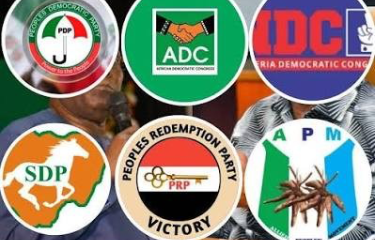
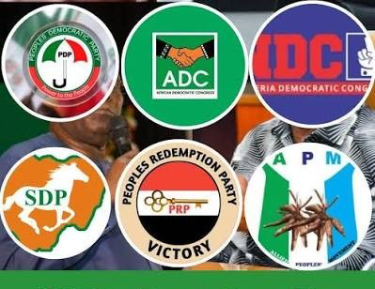
According to Vanguard on October 14, 2026, six parties—the African Democratic Congress (ADC), Allied Peoples Movement (APM), Nigeria Democratic Congress (NDC), Social Democratic Party (SDP), PDP and Peoples Redemption Party (PRP)—were involved in consultations with presidential aspirants on possible cooperation ahead of the elections.
However, the existence of discussions does not guarantee agreement, and agreement among political leaders does not automatically translate into support from their respective voters.
The opposition must resolve several difficult questions.
Can its parties agree on transparent rules for cooperation? Will they support common positions on major national issues? Can they manage disagreements over presidential and legislative nominations without destroying the coalition? How will they protect the autonomy of participating parties while coordinating their efforts?
Most importantly, will their cooperation be built around a national programme or simply around the shared desire to defeat the ruling party?
A coalition formed primarily to distribute political offices may struggle to survive after an election. A coalition built around measurable public commitments has a stronger basis for accountability, regardless of the election’s outcome.
Opposition leaders should also recognise that a single presidential candidate is not the only possible form of cooperation. Depending on the applicable electoral laws and the decisions of the parties, coordination may include common policy commitments, agreements on legislative priorities, joint monitoring of elections and cooperation on protecting votes.
Where a common candidate is pursued, the selection process must be transparent, lawful and sufficiently credible to secure the acceptance of participating parties and their supporters.
A consensus imposed by powerful individuals without broad acceptance could reproduce the same internal problems the coalition is trying to overcome.
What must the opposition do differently?
The approaching election provides an opportunity for Nigeria’s opposition parties to address the structural weaknesses that have repeatedly undermined their political relevance.
1. Put the national interest ahead of individual ambition
Opposition leaders must recognise that no individual politician owns the votes of party members or the support of the Nigerian people.
Where a common electoral arrangement is considered necessary, leaders should establish clear rules for selecting candidates and resolving disputes before negotiations reach their most contentious stage.
A credible process should include agreed criteria, independent oversight where appropriate, transparent communication and a commitment by participants to respect the outcome.
The objective should be to build a durable political arrangement rather than a temporary alliance that collapses when an individual loses a nomination.
2. Develop a practical national recovery programme
Opposition parties need a detailed, costed and publicly accessible programme addressing the issues that most directly affect citizens.
Such a programme should explain their proposed approaches to:
- Cost of living: Measures to improve food affordability, household purchasing power and access to essential services.
- Employment and industrialisation: Policies to support manufacturing, agriculture, small businesses and productive investment.
- Electricity: A credible plan to improve generation, transmission, distribution and the affordability of power.
- Education and healthcare: Funding priorities, measurable service-delivery targets and plans to improve access and quality.
- Security: Strategies for intelligence-led policing, community safety, conflict prevention and accountability for security agencies.
- Public finance: Transparent budgeting, responsible borrowing, procurement reforms and the publication of measurable expenditure outcomes.
Every major promise should be accompanied by an explanation of its cost, financing, implementation timetable and expected results.
Nigerians deserve policies that can be examined, challenged and measured—not merely declarations of good intentions.
3. Rebuild from the wards and communities
Political strength cannot be sustained through Abuja meetings alone.
Opposition parties need functioning ward, local government and state structures capable of listening to residents, documenting local problems and communicating policy proposals.
In communities across Enugu State and the wider South-East, for example, political engagement should address electricity, road infrastructure, agricultural productivity, healthcare, education, security and the constraints confronting small businesses.
The same principle applies throughout the federation: political parties should demonstrate that they understand local concerns while presenting a coherent national vision.
Community engagement must be continuous, not activated only when politicians require campaign crowds.
4. Make internal democracy non-negotiable
A party that cannot manage its own internal competition will struggle to convince the public that it can govern a complex country fairly.
Opposition parties should establish transparent membership records, credible primaries, clear disciplinary procedures and mechanisms for resolving disputes before they escalate into prolonged litigation.
Party constitutions should be respected, and leadership positions should not become permanent possessions of political patrons.
Candidates who emerge through credible processes are better placed to build legitimacy among party members, although a fair nomination process alone cannot guarantee electoral success.
5. Present a credible new generation of leadership
Nigeria’s political future should not be restricted to a recurring contest among familiar political figures.
Parties should create meaningful opportunities for younger Nigerians, women, professionals, entrepreneurs, community organisers and people with demonstrable records of public service.
This should not mean selecting candidates simply because they are young or popular on social media. Integrity, competence, experience, policy understanding and accountability must remain central considerations.
The country needs political institutions capable of discovering and developing talent rather than depending indefinitely on a small circle of powerful individuals.
6. Protect the credibility of the electoral process
Political competition is meaningful only when voters can exercise their rights and have their votes accurately counted and reported.
Opposition parties should invest in voter education, accredited polling-unit agents, lawful election observation, reliable incident reporting and the preservation of evidence needed to challenge genuine irregularities.
They should engage the Independent National Electoral Commission (INEC) on electoral preparedness and insist on transparent, consistent application of the law.
Any allegations of electoral malpractice should be supported by verifiable evidence and pursued through lawful channels.
Equally, opposition leaders must discourage political violence, intimidation, misinformation and attempts to undermine confidence in legitimate electoral procedures without evidence.
Protecting the vote is a democratic responsibility shared by political parties, electoral institutions, security agencies, the media, civil society and citizens.
7. Establish a permanent opposition accountability mechanism
Opposition parties should not wait for election campaigns before examining government performance.
They can publish periodic assessments of federal and state budgets, track major infrastructure projects, investigate implementation gaps through lawful means and explain how public policies affect citizens.
Where they control state governments or local institutions, they should apply the same standards to their own administrations.
This is crucial. An opposition that condemns a practice nationally but tolerates it where its own members exercise power undermines its credibility.
Consistency between criticism and conduct is one of the foundations of public trust.
The role of Nigerians: Citizens must demand more than political change
Although opposition parties carry substantial responsibility, Nigeria’s democratic weaknesses cannot be blamed on politicians alone.
Citizens also have a role in strengthening accountability by demanding evidence, examining policy proposals, attending public meetings, monitoring elected representatives and rejecting political violence.
Voters should ask every candidate difficult questions: What are your priorities? How will you finance them? What will you accomplish in your first year? How will citizens verify your progress? What consequences will follow if you fail to deliver?
Political parties should not be permitted to escape scrutiny simply because they oppose the government of the day.
The media also has a responsibility to examine the records, claims and proposals of all major political actors. Political reporting should go beyond rallies, defections and campaign personalities to investigate policy consequences, campaign financing, public expenditure and the practical implications of competing programmes.
Civil society organisations, professional associations, traditional institutions and community groups can contribute by promoting informed public debate and demanding transparency from political leaders.
The ultimate objective should be to make every government answerable to the people, regardless of the party in power.
Can Nigeria prevent the erosion of multiparty democracy?
The concentration of political influence in a dominant party can become a serious democratic concern when opposition institutions lose the ability to scrutinise government effectively or compete on fair terms.
However, the existence of a dominant party does not automatically mean that Nigeria has become a one-party state. The more important questions concern the freedom of political association, the fairness of electoral competition, the independence of democratic institutions and the ability of citizens to choose among credible alternatives.
Opposition parties must take responsibility for their own failures, including internal conflicts and poor organisation. At the same time, the government and relevant institutions have a responsibility to uphold the rules that permit genuine political competition.
A democratic system should not depend on the goodwill of a ruling party to remain accountable. It should contain institutional safeguards that apply regardless of which political organisation controls the executive or legislature.
The judiciary, electoral authorities, legislature, media and civil society must all be able to perform their lawful functions without improper interference.
The remedy, therefore, lies in strengthening institutions as well as improving the quality of political leadership.
Conclusion: The opposition must offer more than a promise to replace the APC
As Nigeria approaches the 2027 general elections, the opposition faces a test that extends beyond the fate of individual politicians and political parties.
Its task is to demonstrate that it can organise itself democratically, resolve disputes peacefully, develop practical policies and sustain accountability beyond election day.
The APC administration, like any government, should be judged through evidence of its policies, performance, costs and consequences for Nigerians. Opposition parties should be judged by the quality of the alternatives they offer, the integrity of their internal processes and their willingness to submit their own records to scrutiny.
A change of government, by itself, cannot guarantee better governance. Without stronger institutions, transparent public finance, accountable leadership and sustained citizen participation, the same weaknesses can survive under a different political platform.
But neither can a democracy function properly when opposition parties are too divided, disorganised or distrusted to provide meaningful scrutiny.
The central question for 2027 is therefore not simply whether the opposition can wrest power from the ruling party. It is whether Nigeria’s political system can produce genuine competition in which parties must earn public confidence through credible policies, democratic conduct and measurable commitments.
For the opposition, the opportunity is to transform political fragmentation into principled cooperation and public frustration into a serious programme of reform. For the ruling party, the responsibility is to demonstrate that its policies and performance can withstand scrutiny. For the electorate, the task is to demand evidence and accountability from every contender.
Ultimately, the strength of Nigeria’s democracy will not be measured solely by which party wins the next election, but by whether the political system gives citizens a meaningful choice, protects their votes and compels those in power to govern in the public interest.
-
 Faith3 days ago
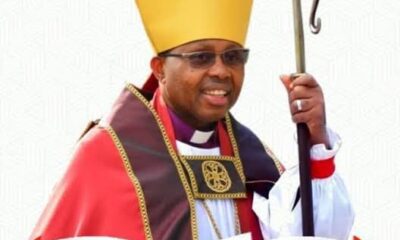
BREAKING: Anglican Church Places Archbishop Ibezim on Six-Month Leave, Bars Him From Church Duties
-
News3 days ago
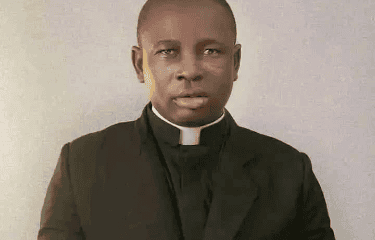
Gunmen Abduct Catholic Priest in Benue, Police Launch Rescue Operation
-
News3 days ago
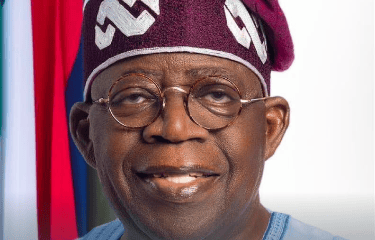
Tinubu Orders Rescue of Kidnap Victims, Demands Peaceful 2027 Elections
-
Faith23 hours ago
Awka Anglican Diocese Rejects Ibezim’s Suspension, Threatens to Leave Church of Nigeria
-
News1 day ago
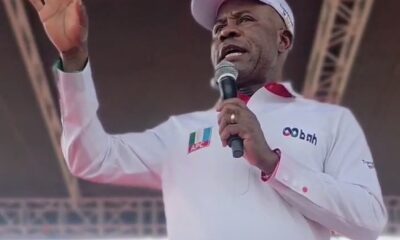
BREAKING: Mbah Extends Enugu Movement Restriction to 10pm, Scraps Keke Ticketing
-
Politics21 hours ago
Nigeria’s Weak Opposition and the Cost of One-Party Dominance: Can the Opposition Rebuild Before 2027?
-
News1 day ago
2027: Keke Riders Endorse Mbah, Tinubu
-
News2 days ago
Enugu Approves ₦32bn Legacy Gratuity Payment, Begins Disbursement Next Week