Politics
David Mark @ 76 : Bestriding Two Worlds


“There is no cure for birth and death, save to enjoy the interval”
– George Santayana
By Paul Mumeh & Law Mefor
The wise words, “Live your life so that the Preacher won’t have to lie at your funeral,” were displayed in a particular pastor’s office sentinel. The pastor expressed his admiration for the way it would loom large over the heads of people who came to confess yet another transgression, hoping that it would persuade them to change their ways and begin to act morally upright without him having to persuade them. The man said that the longer he had been a pastor, the more he had come to understand the peculiar theology the sign represented.

It suggests to him, that some people have lived such morally upright lives that preachers don’t need to tell lies at their funerals, and that some people have also led terrible lives that leave funeral orators in a difficult situation.
David Mark’s life has always been an open book. Even his detractors have to admit that he is a man who has elevated his life to such an extent that he has left profound imprints on the sands of time.
Given David Mark’s sprawling personality, it would take many books to tell his entire narrative. Mark has essentially dominated two worlds like a colossus; politics and the military, where he has played prominent and historic roles. He left the military after attaining the rank of a Brigadier General. He was a military governor of Niger state and a minister of the federal republic in charge of communications.
Holding the positions of chairman of the National Assembly and Senate President for two terms of eight uninterrupted years, [2007–2011 & 201 5], he oversaw politics as the head of the legislative arm of the government in the nation’s presidential democracy.
This made him the most tenured senate president in Nigerian history. David Mark stands out as exceptional and singular because he is most likely the only Nigerian to have achieved the combined rankings so far.

Indeed, how one chooses to tell his story will depend on both the main thrust and point of view of the storyteller. John Godfrey Saxe (1816–1887), an American poet, provides related useful insights in The Blind Men and the Elephant. In the fable of The Blind Men and the Elephant, a group of blind men who had never seen an elephant before learnt about it and develop an imaginary image of it through touch. Though only one section of the elephant’s body — the side or the tusk, for example — each blind guy senses a distinct part of it. Published in 1873, The Blind Men and the Elephant, is a poetry and rhyme collection by John Godfrey Saxe. The poet based his moral tale, which is really more of a parable disguised as a rhyme; on an Indian fable he dubbed a “Hindoo Fable.” That ballad was really lovely. It tells a story and offers a framework that bestows on the narrative its intended, deep lesson—just as David Mark’s current account portends.
The story of The Blind Men and The Elephant serves as an example of how conflict and misunderstanding can result from our unique perspectives, or what Peter Senge refers to as our “mental models.” The purpose of this account on David Mark is to provide
an alternative viewpoint to those provided by previous and subsequent writers on this quiet and gentle giant.
It is acknowledged that although an individual’s subjective experience and opinion may be accurate, they may still be constrained by a lack of comprehensive knowledge about the subject. Because of this, the blind men’s accounts of the elephant varied from one another and were based on their limited experience. The blind men did not exchange blows because of this understanding. The parable’s lesson is that people often assert absolute truth based on their own constrained, subjective experiences while ignoring the constrained, subjective experiences of others that may be just as accurate. The tale was first popularised in the ancient Indian subcontinent, from whence it spread abroad.
If this description of David Mark turns out to be only a portion of the gentle giant and his amazing times, be willing to overlook its shortcomings.
Let researchers and histographers of the future fill in the blanks. We also think that David Mark would compose a note on himself before going away at the end of life, which is an inescapable fate that awaits all mortals at some point.
Suffice to submit that Mark’s accomplished sojourn in the military, his political engagement and achievements as a leader of the legislative arm of government is a study in brinkmanship.
On April 8, 1948, Pa Mark Aikuta and Madam Eyum Mark welcomed a baby boy into their home. He was given the name Alechenu, which means “the unexpected.” Later on, the local Catholic Church baptised him as David. The parents worked in farming and trading, which were typical vocations of the Serene Otukpo community in Benue State.
David Mark was raised as a devoted Catholic Christian, a faith he has adhered to throughout his military service, career in politics, and retirement. Aware that childhood is the foundation of life; his parents took great care in raising him as their first child.
David Mark, as he is more commonly known in adult life, is a unique individual who was shaped by a combination of hard work, good upbringing, divine providence, military training, and intellectual rigor. He is like an octopus with numerous tentacles. His extraordinary life story serves as a powerful reminder that anything is possible for someone who works hard and has faith in God.
David Mark would undoubtedly have passed as just another one of the many people who came through this life unheard and unsung if he had accepted his father’s origins and decided not to battle for a noble name. Instead, he fought for the opportunity to earn a noble name. He has elevated his fame to the point where, when the time comes, he would have left deep indelible imprints in the sands of time, making him a household name today.
Given his birth circumstances, Mark knew that no one achieves overnight success without hard work, diligence, and perseverance. While others slept, he was working hard. And in the end, his diligence paid off, with heavenly hands acting as his engine.
St. Francis Catholic Practising School, Otukpo was where the young David Mark enrolled and completed his elementary education. Mark received excellent formative years at the Catholic school, which helped him lay the solid intellectual, philosophical, and educational foundations of his future.
David Mark’s military training and foundational education began at the Nigerian Military School (NMS), Zaria, which was where his tough, uncompromising discipline style originated.
David Mark’s set arrived at the Nigerian Military School (NMS) in May 1961 where his early years were further shaped. He was among the first group of boys to take the WAEC examination in 1965, and they did remarkably well.
David Mark was among the best graduates of the NMS, and after graduating with flying colours from that institution, everything was in place for him to enlist in the Nigerian Army . To adequately develop his military career as an officer, Mark was admitted to the Nigerian Defence Academy (NDA, 3rd Regular Course), Kaduna as cadet in 1967. He graduated from the academy in 1970. As it happened, his NDA graduation marked just the start of an extensive journey through the world of military elite training in his field of study — military communication and engineering.
When young Mark came to NDA as a cadet, the basic knowledge he had gained at NMS proved to be quite helpful. He was well aware of the fundamental principles of army culture, which include honour, integrity, bravery, responsibility, devotion, and selflessness.
In 1970, Lieutenant David Mark continued his education at the School of Signals in Blandford, England. Part of the Defence School of Communications and Information Systems in the United Kingdom is the military training facility known as the Blandford School of Signals.
After being promoted to Captain and given a new commission upon his return to Nigeria in 1971, he enrolled in combined training programmes at the Military College of Telecommunication Engineering Mhow and the College of Military Engineering Poona in India. He completed this training between 1971 and 1975, earning a B Eng. – Telecoms and becoming qualified to work as both a military and telecommunication engineer in 1975.
When Captain David Mark completed his Militating Engineering course in India, he returned to Nigeria. At the age of 27, he received a promotion to the rank of Major and was assigned to the 3rd Marine Division at Port Harcourt, where he was Commander of the Division’s Signals, under Lieutenant General Theophilus Yakubu Danjuma, the General Officer Commanding (GOC). His duties were expanding, and this time they included organising the commanders and men in the Brigade in addition to sports and welfare.
In addition to leading the way in educating other officers in a variety of roles, Mark made a strong push for more professional training in the UK, India, and Nigeria. In addition to this, he holds the following degrees: B Engr – Telecoms – 1975′ , Psc+ – 1979, fwc, fss, a Diploma in Defence Studies (1991), a Diploma in Senior Defence Studies (1992), and more.
Later on, Major General Muhammadu Buhari and Brigadier General Tunde Idiagbon came to power during the military takeover in December 31, 1983. David Mark, who by then had already been promoted to Lieutenant Colonel, was chosen by Buhari to serve as the military governor of Niger State because of his exceptional leadership abilities.
Few people in Niger State’s history of leadership are as warmly remembered as David Mark.” This encapsulates the significance of Lt Col David Mark’s groundbreaking tenure as governor of Niger state.
His influence in Niger state is still visible today, many years later, in a variety of fields, including education, infrastructure, industrialisation, agriculture, sports, health, and media development.
As the Military Governor of Niger State, Governor Mark’s leadership style was distinguished by audacious plans, deeds, and gallant endeavours. He disregarded unproductive custom, bureaucracy, and other inconsequential factors in order to attain tangible results. He is a man of integrity and a fearless strategist who was committed to achieving goals at all costs and by all means necessary and lawful.
Following yet another military coup in Nigeria in 1985, General IBB was installed as the country’s military president. He put together an excellent team to handle all aspects of Nigeria’s economy, politics, and well-being, including the type of government the country would resume after the military leaves office.
Babangida sought for the brightest minds capable of innovation to further his ambition of taking Nigeria in a totally new direction and opening up its economy to the outside world. One of the persons Babangida chose was David Mark, who was redeployed from Niger State.
Babangida needed a true specialist to revamp the nation’s communications system and introduce the technologies required to get the nation into the emerging digital and global information networks since communication was essential to his ambitions. Babangida, the previous military ruler, displayed his ability to fit round pegs into round holes when he appointed Col. Mark as the minister of communications.These were some of the best appointments in the country’s political history.
As was to be expected, Col. Mark brought about drastic changes, innovations, and reforms after being appointed Federal Minister of Communications.
David Mark was retired from the Nigerian Army by General Sani Abacha, the supreme military leader of Nigeria in 1993. After going into exile in Ghana and then England, Mark returned to the country upon Abacha’s death in 1998.
When Mark returned from exile on September 5, 1998, his Idoma people of Benue state welcomed him with great fervor and he became their leader, expected to fulfil their hopes and dreams and win their support to run for the senate and represent them.
The Idoma elites rolled out the drums to welcome the soldier from exile; the masses and the progressives wing of the political elite were part of the frenzied reception that attended his home-coming. They knew that being in exile for five years only confirmed him as firm believer in democracy and true son of Idoma land.
After Mark became a member of the Peoples Democratic Party (PDP), he was eligible to run for Senate. He was chosen to represent the Benue South Senatorial District under the PDP’s banner in the April 1999 senatorial election, which he easily won. He was sworn in as a Federal Republic senator in June 1999, 2003, 2007, 2011, and 2015. During his tenure in the Senate, he held a number of responsibilities, including chairman of the Joint National Assembly and Senate President, which he held for a record eight years.
Sen. Mark prevailed over George Akume, the previous governor of his State, in a keenly contested Senate election on June 5th , 2007 to become the President of the Senate . He polled 69 votes against Akume’s 39. One senator was absent. As a result, he took the oath of office as the Federal Republic of Nigeria’s 12th President of the Senate.
As Senate President, Mark exuded a strong character and dignity, elevating the position to the highest regard that the public has ever given it. He so cleared the Senate of the “banana peels.” His administration was the first to return billions of Naira (28 billion) of unspent public fund to the national treasury in 2008. Significantly, Senator Mark demonstrated a shared preference for excellent legislation, manners, social elegance, and the guts to stand up for what is right and follow his conscience. Mark was seen by Nigerians as the embodiment of the country’s presidential democracy.
On Tuesday, February 9, 2010, a new terminology was added to Nigeria’s political lexicon. This date will remain a significant landmark in Nigeria’s political history as Senator Mark put the existing laws to the test in order to create a safety net for Nigeria’s ongoing existence as a single nation through the Doctrine of Necessity. The impending constitutional crisis, political unrest or a deadlock that had engulfed the country prior to the installation of a new leadership was broken by just one act. The “DOCTRINE OF NECESSITY” authorised Vice President Goodluck Jonathan to act as president in order to address the constitutional crisis orchestrated by the absence of ailing President Musa Yar’Adua.
The Doctrine of Necessity serves as the foundation for the legitimacy of extraordinary measures taken by the administrative authority to maintain or restore order, even when those measures were not contemplated by established constitution, laws, customs, or norms.
When Senate President Mark took office in 2007, he demonstrated an extraordinary level of dedication and perseverance to the promise he made to Nigerians to offer meaningful legislative leadership.
Under his leadership, the Nigerian National Assembly broke the jinx by altering the 1999 constitution for the first time, which set the stage for the nation’s democracy to flourish and gradually return to federalism. This wasn’t achieved by the two previous senates preceding his.
Senator Mark, a former president of the Senate who was still serving at the time, announced his plan to run for president in 2019 on the platform of PDP. He sparked a lot of curiosity when he picked up his Presidential expression of interest and nomination forms at the party’s national secretariat in Abuja.
After purchasing his forms, he spoke with journalists and pledged to address the socio-political, economic, and security issues endangering the nation if elected. Additionally, he pledged that if given the chance, he would start the process of reorganising the nation. Though he lost in the PDP’s primary elections, he continues to serve the party and the nation at large as a peace ambassador .
Ado, Apa, Agatu, Obi, Oju, Ohimini, Ogbadibo, Okpokwu, and Otukpo are the nine local governments that make up the Benue south senatorial zone . At least one developmental project targeting the generation of jobs for rural areas and addressing the nation’s high rate of youth unemployment was established by Mark in each of the local government areas.
Mark placed a high value on economic empowerment. He created a revolving trader’s loan programme with zero interest to help the women expand their enterprises. He knew that in order to be supported, the majority of small business concerns required an improvised capital base. This action significantly enhanced inclusive growth and economic development.
Mark prioritised education when it came to youth development. With a focus on youth education, he established the David Mark Scholarship Scheme (DMSS), under which, since 1999, annual scholarships have been given to students enrolled in primary school through universities which has benefitted thousands.
Senator Mark constructed and donated a building for the National Open University of Nigeria (NOUN) study centre in Otukpo, Benue State, as a symbol of his dedication to providing education to his people. Within his Benue South Senatorial District, he has constructed and refurbished numerous school blocks in each of the nine local government areas.
Senator Mark sponsored numerous projects in the Senate, chief of which was the Act for the Establishment of the Federal University of Health Sciences, Otukpo (FUHSO). The university was eventually established as a result of President Muhammadu Buhari’s approval of this bill. The establishment is transforming Otukpo into a medical tourism centre and is the first of its kind in Nigeria.
Mark is an avid sportsman believes that sports should be a source of both entertainment and employment. Among many other initiatives, he founded the Apa United Football Club (male) to play in the State and National League, as well as MarkMentors Basketball Club, which is currently rated second in the National Basketball League, to support young people who aspire to advance in sports .
His annual Mark D’Ball basketball competition, has transformed the lives of numerous young people who are pursuing professional basketball careers. He also founded the football teams “Apa Queens” (female) in the same spirit.
Additionally, Mark built an 18-hole public golf course at Otukpo Golf & Country Club St. Mark Akpegede, Otukpo of Benue State, which employs a good number of people. One unique feature of this golf course is that till date, nobody pays the green fee to play. Golfers use the golf course gratis, which is unprecedented.
He equally established the Otukpo radio station Joy FM 96.5, which also provides jobs for his people and other Nigerians and has grown to be a major hub for news, entertainment, and education in the community. In Nigeria’s North Central Region, this FM is the first radio station that is privately owned.
Mark accomplished a great deal for the zone during his record- breaking eight years as Senate President. Among the projects were about 17 billion naira Otukpo Multi-Purpose Dam in Otobi-Akpa which has the dual benefits of supplying Benue South and its surrounding areas with electricity and water.
In a similar vein, students of the Mark International Golf Academy have competed internationally on behalf of Nigeria. Professional golfers provide these young men and women, affectionately known as “The Lion Cubs,” with extensive training, and they have demonstrated complete supremacy in every event in which they have competed.
On infrastructure, Mark attracted and the construction of the Loko-Oweto bridge and the road networks that connect Benue, Nasarawa, and Abuja. This project serves as a bridge connecting Nigeria’s Northern and Southern regions.
Under the Rural Electrification Projects, Mark also gave numerous towns in each of Benue South’s nine local government areas several 300KVA transformers. He believes that this would help the locals in the district thrive economically.
It is indisputable that Mark would go down in Nigerian history as a true nationalist, social and political strategist of great stature, detribalised Nigerian, and patriot. The people of Idoma and the country as a whole will always have nostalgic memories of him.
After taking stock of his political journey; senator and senate president for 20 eventful years, Mark declared that God has greatly favoured him and that he will carry on serving God and humanity in the years to come. He also said that Nigeria has treated him fairly and that he would continue to advance the course for peace and peaceful coexistence in the country whether in or out of office.
• By Paul Mumeh and Law Mefor



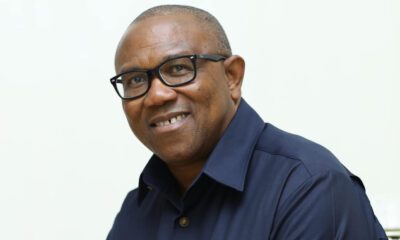







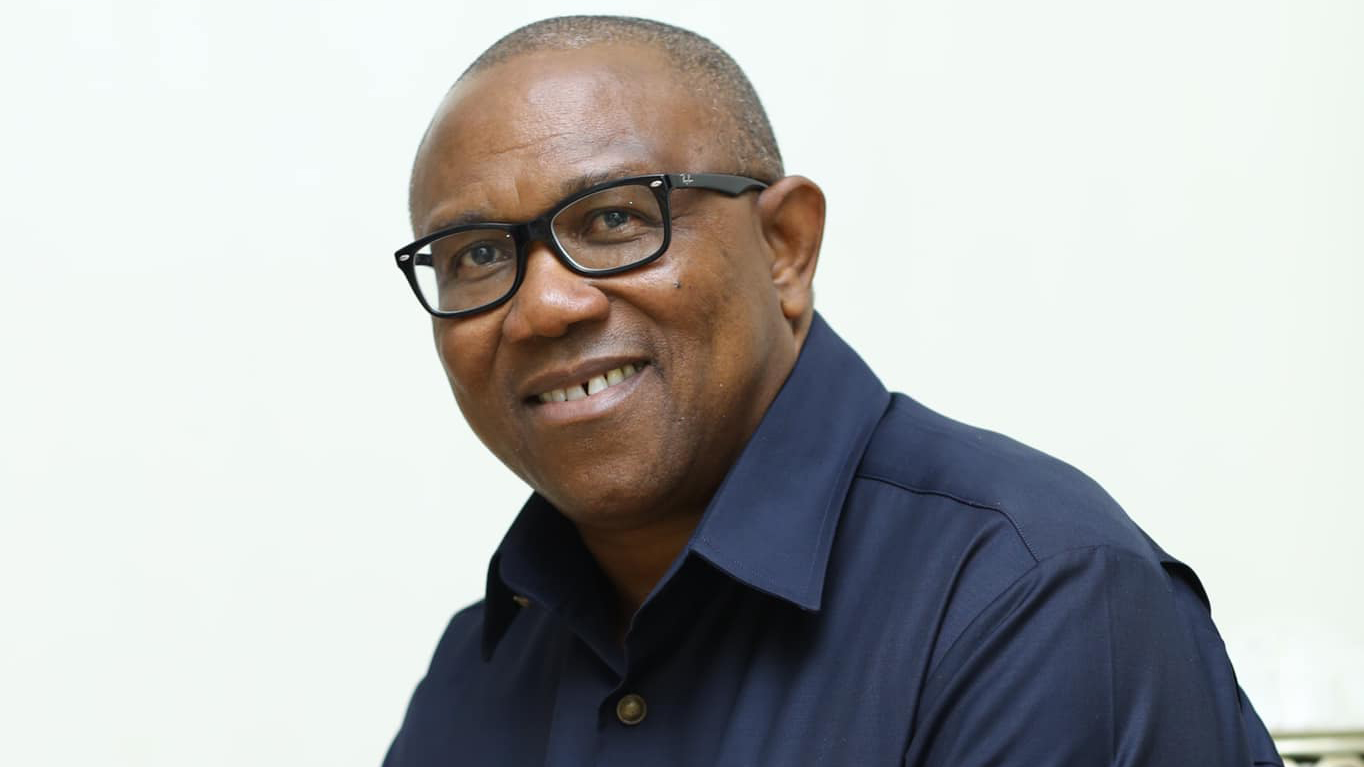
The Peter Obi Media Office has accused Vice-President Kashim Shettima of applying double standards in his treatment of opposition leaders, questioning why he would demand respect for former Vice-President Atiku Abubakar while reportedly describing Peter Obi as “diminished”.
In a statement issued on Sunday, October 18, 2026, the spokesman of the Peter Obi Media Office, Idris Zekeri Jnr., criticised Shettima’s reported remarks, describing them as contrary to the principles of political decency and mutual respect.
The office said the apparent contrast between Shettima’s call for respect for Atiku and his alleged disparagement of Obi raised questions about consistency, political tolerance and the treatment of opposition figures in Nigeria’s political space.
Zekeri argued that although Shettima had the right to disagree with Obi politically, such differences should not prevent him from extending the same courtesy he demanded for Atiku to other opposition leaders.
“Although Shettima has the right to oppose Obi, it is difficult to understand why he would demand respect for one opposition leader while casually dismissing another,” the statement said.
The media office questioned what it described as selective respect, insisting that political disagreements should not determine which opposition figures deserve dignified treatment.
According to the statement, the issue was not whether Shettima supported Atiku or opposed Obi, but whether the principle of respecting political opponents should apply equally, regardless of their regional backgrounds, political affiliations or electoral ambitions.
The office also maintained that Obi had conducted his political engagements with decorum, focusing on governance and public policy rather than personal attacks against political opponents.
It challenged Shettima to compare their respective records as former governors of Borno and Anambra states, claiming that Obi’s performance in key areas of governance surpassed that of the Vice-President.
The statement highlighted Obi’s record in fiscal discipline and investments in education and healthcare during his tenure as governor of Anambra State, arguing that his achievements should be assessed on the basis of verifiable facts.
It urged Shettima to provide evidence to counter Obi’s record if he disagreed with the former Anambra governor’s achievements, rather than resorting to personal descriptions.
“If Shettima contests any aspect of Obi’s record, he should present the facts rather than resort to political name-calling,” the statement added.
The media office further called on political leaders from the South-East, particularly members of the All Progressives Congress (APC), to reflect on the implications of the Vice-President’s reported comments.
It criticised South-East political figures who had allegedly shown disrespect towards Obi, arguing that political loyalty should not come at the expense of defending the dignity of fellow Nigerians.
The office insisted that no political affiliation should justify a situation in which respect was demanded for one opposition leader but withheld from another.
“Nigeria needs a contest based on records and ideas, not selective respect and political denigration,” the statement said.
It added that the Nigerian electorate, rather than political rhetoric or dismissive remarks by public office holders, would ultimately determine Obi’s political relevance.

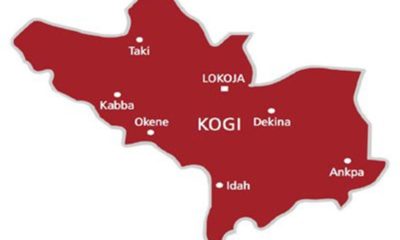
The All Progressives Congress (APC) has won all chairmanship and councillorship positions in the just-concluded local government election in Kogi State.
The Chairman of the Kogi State Independent Electoral Commission (KOSIEC), Mamman Nda Eri, announced the results at the commission’s secretariat in Lokoja.
Speaking after the announcement, Eri emphasised that elections should not be seen as battles between enemies but as democratic contests among citizens with a shared destiny.
He noted that although political parties might differ in ideology and approach, the people of Kogi State had a collective responsibility to sustain peace and promote the development of the state.
The KOSIEC chairman urged residents to remain peaceful, law-abiding and united to accelerate the state’s development.
According to him, the election has produced representatives who now face the greater responsibility of building stronger communities and improving the living conditions of the people.
Eri also reaffirmed the commission’s commitment to protecting the integrity of the electoral process and strengthening grassroots democracy in the state.
Thirteen political parties participated in the local government election, which was described as generally peaceful across Kogi State.
Politics
Nigeria’s Weak Opposition and the Cost of One-Party Dominance: Can the Opposition Rebuild Before 2027?
THE SUNDAY DISCOURSE
By Tony Edike
As political defections, internal party crises and leadership struggles reshape Nigeria’s political landscape, the inability of opposition parties to organise a credible alternative raises troubling questions about democratic accountability, the future of multiparty politics and the welfare of millions of citizens.
Nigeria’s democracy faces a fundamental contradiction. While the country operates a multiparty political system in which citizens are constitutionally entitled to choose their leaders, the political forces expected to hold the ruling class accountable are struggling to organise themselves into a coherent and credible opposition.
The consequences extend beyond party headquarters, political rallies and the ambitions of presidential aspirants. They reach the markets where traders struggle with rising costs, the homes where families worry about feeding their children, the communities threatened by insecurity and the streets where unemployed young people search for opportunities that remain elusive.
When government policies produce hardship, citizens naturally look towards the opposition for scrutiny, alternative proposals and political accountability. Yet what happens when the opposition itself is weakened by factional disputes, defections, personal ambitions and an inability to agree on a common direction?
That question has become increasingly urgent as Nigeria approaches the 2027 general elections.
The ruling All Progressives Congress (APC), under President Bola Ahmed Tinubu, is preparing for another electoral contest, while several opposition parties are grappling with internal divisions and negotiations over possible cooperation. Recent reporting by Channels Television on October 17, 2026, highlighted the contrast between the APC’s expanding political alliances and the continuing consultations among opposition parties seeking a framework for cooperation ahead of the elections.
The challenge is no longer simply whether Nigeria has opposition parties. It is whether those parties can develop the organisation, credibility and public confidence required to hold the government accountable and offer voters a convincing alternative.
The roots of Nigeria’s opposition crisis
Nigeria’s opposition problem did not begin with the Tinubu administration. It is rooted in a political culture in which parties frequently function more as vehicles for acquiring political power than as institutions built around clearly defined ideologies, policy commitments and long-term national development programmes.
Since the return to democratic rule in 1999, political parties have often been shaped by powerful individuals, influential financiers, regional calculations and negotiations among political elites.
In such an environment, disagreements over leadership or the distribution of political positions can quickly threaten the survival of an entire party. When a powerful politician loses control of a party structure, the response is often to defect, establish a faction or negotiate a new political arrangement rather than submit to transparent internal competition.
This weakness is particularly damaging to opposition parties. A ruling party may retain considerable institutional advantages, access to an established political network and the influence associated with incumbency. An opposition party, by contrast, must persuade voters that it can govern differently while simultaneously building the organisation required to compete.
When its leaders spend more time fighting one another than interrogating government policies, the ruling party benefits from a political environment in which its opponents struggle to sustain a coherent challenge.
The crisis within the Peoples Democratic Party (PDP), which governed Nigeria from 1999 to 2015, illustrates this difficulty. The party’s internal disputes and the movement of prominent members to other platforms have weakened its position as a major opposition institution. Similar leadership and organisational challenges have affected other opposition platforms.
The Guardian, in its October 15, 2026 report on the PDP crisis ahead of 2027, highlighted the implications of factionalisation, defections and leadership disputes for the choices available to voters.
The lesson is clear: a party cannot effectively hold the government accountable nationally if it cannot establish discipline, resolve internal disagreements and maintain confidence among its own members.
Why politicians abandon the opposition
One of the most visible features of Nigerian politics is the movement of politicians from opposition parties to the ruling party, particularly as elections approach.
Such defections are often announced with claims of political realignment, development, unity or a desire to support the government of the day. Politicians may also argue that joining the ruling party will improve their ability to attract projects and opportunities for their constituencies.
However, repeated defections raise an important question about the strength of Nigeria’s political institutions.
If party loyalty is constantly subordinated to the search for political advantage, parties become unstable and voters struggle to identify what distinguishes one platform from another.
The problem is not that politicians must remain permanently in one party. Freedom of political association is a legitimate democratic principle, and individuals may leave parties over genuine disagreements. The concern arises when defections become a substitute for internal democracy, ideological consistency and accountability to the electorate.
A democracy needs politicians who can disagree with the government, challenge its decisions and propose alternatives without feeling compelled to join the ruling party to remain politically relevant.
When too many influential figures abandon opposition platforms, those platforms lose organisational capacity, experienced personnel, financial support and public visibility. Their remaining members may become increasingly discouraged, creating a cycle in which every departure makes the next one easier.
Ultimately, the electorate bears the cost when political competition weakens.
The danger of a dominant ruling party
A strong ruling party is not inherently undemocratic. Governments need sufficient political support to implement policies, pass legislation and fulfil their electoral mandates.
The danger emerges when dominance becomes so extensive that effective scrutiny and competition begin to deteriorate.
A functioning democracy requires more than periodic elections. It requires a legislature capable of examining government decisions, opposition parties capable of presenting alternatives, courts able to adjudicate disputes independently, journalists able to investigate public affairs and citizens able to organise peacefully.
Without these checks, poor policies may persist for too long, public expenditure may receive inadequate scrutiny and those entrusted with public resources may face weaker political pressure to explain their decisions.
Opposition parties therefore perform a public service even when they do not control government. They can expose inconsistencies in official claims, demand explanations for public spending, scrutinise appointments and challenge policies whose consequences disproportionately affect vulnerable citizens.
But opposition must also be responsible. Criticising every government decision without examining the evidence, spreading unverified allegations or promising unrealistic solutions does not strengthen democracy. It merely replaces meaningful scrutiny with political noise.
Nigeria needs an opposition that is both critical and credible: one that can identify failures, acknowledge legitimate achievements and explain how proposed alternatives would work.
Economic hardship and the accountability question
For millions of Nigerians, political debates are ultimately judged by their consequences for daily life.
The cost of food, transportation, electricity, housing, education and healthcare shapes how citizens experience government. Insecurity, unemployment and the difficulties confronting small businesses further influence public confidence in political leadership.
The Tinubu administration’s economic reform programme, including the removal of the petrol subsidy and changes to foreign-exchange arrangements, has generated extensive public debate over economic adjustment, inflationary pressures and the distribution of costs and benefits.
Supporters of the reforms argue that they address longstanding structural distortions and could improve public finances over time. Critics question the speed and social consequences of implementation and argue that relief measures have not adequately protected vulnerable households.
These competing arguments should be examined through evidence, measurable outcomes and the lived experiences of Nigerians.
The responsibility of the opposition is to move beyond slogans and establish a serious public examination of the reforms. How have they affected household purchasing power? What has happened to employment, wages, agricultural production and small businesses? Which social-protection measures have reached intended beneficiaries? What should be changed, and how would proposed changes be financed?
Such questions matter because hardship alone does not automatically produce an effective political alternative. Voters need to understand not only what opposition parties believe the government has done wrong but also what they would do differently, how quickly their proposals could deliver results and what trade-offs might arise.
Without that level of policy detail, political criticism risks becoming an expression of public frustration without a practical route to improvement.
Why the opposition keeps missing opportunities
The opposition’s difficulties can be traced to several interconnected weaknesses.
First, personal ambition often overwhelms collective purpose.
Political leaders may agree that the country needs change but disagree over who should lead that change. Negotiations then become contests over candidacies, influence and political positions rather than discussions about a common national programme.
Second, ideological differences remain poorly defined.
Nigerians should be able to distinguish parties by their approaches to taxation, education, healthcare, industrialisation, security, social welfare and the management of public resources. Where parties offer similar slogans but few clearly differentiated policies, political competition becomes a contest of personalities.
Third, internal democracy remains a challenge.
Disputed primaries, opaque candidate-selection processes and leadership struggles weaken trust within parties. Candidates who believe they have been unfairly excluded may defect, litigate or undermine the eventual nominee.
Fourth, opposition activity is often too concentrated around elections.
Effective opposition requires continuous engagement with communities, legislative scrutiny, policy research, public education and monitoring of government performance. Parties that become visible only during election campaigns surrender much of their opportunity to build enduring relationships with citizens.
Fifth, opposition parties struggle to convert public dissatisfaction into a coherent programme.
Economic hardship and dissatisfaction with government do not necessarily translate into support for any particular alternative. Citizens may distrust the opposition, remember the shortcomings of previous administrations or question whether new political coalitions represent genuine reform.
A credible opposition must therefore earn public confidence rather than assume that dissatisfaction with the ruling party will automatically benefit its rivals.
The 2027 test: Can political rivals agree on a common framework?
Recent consultations among opposition parties suggest that some leaders recognise the danger posed by fragmentation.
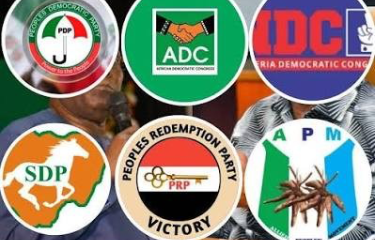
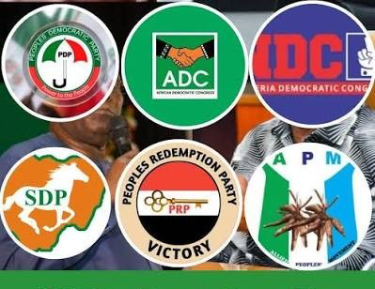
According to Vanguard on October 14, 2026, six parties—the African Democratic Congress (ADC), Allied Peoples Movement (APM), Nigeria Democratic Congress (NDC), Social Democratic Party (SDP), PDP and Peoples Redemption Party (PRP)—were involved in consultations with presidential aspirants on possible cooperation ahead of the elections.
However, the existence of discussions does not guarantee agreement, and agreement among political leaders does not automatically translate into support from their respective voters.
The opposition must resolve several difficult questions.
Can its parties agree on transparent rules for cooperation? Will they support common positions on major national issues? Can they manage disagreements over presidential and legislative nominations without destroying the coalition? How will they protect the autonomy of participating parties while coordinating their efforts?
Most importantly, will their cooperation be built around a national programme or simply around the shared desire to defeat the ruling party?
A coalition formed primarily to distribute political offices may struggle to survive after an election. A coalition built around measurable public commitments has a stronger basis for accountability, regardless of the election’s outcome.
Opposition leaders should also recognise that a single presidential candidate is not the only possible form of cooperation. Depending on the applicable electoral laws and the decisions of the parties, coordination may include common policy commitments, agreements on legislative priorities, joint monitoring of elections and cooperation on protecting votes.
Where a common candidate is pursued, the selection process must be transparent, lawful and sufficiently credible to secure the acceptance of participating parties and their supporters.
A consensus imposed by powerful individuals without broad acceptance could reproduce the same internal problems the coalition is trying to overcome.
What must the opposition do differently?
The approaching election provides an opportunity for Nigeria’s opposition parties to address the structural weaknesses that have repeatedly undermined their political relevance.
1. Put the national interest ahead of individual ambition
Opposition leaders must recognise that no individual politician owns the votes of party members or the support of the Nigerian people.
Where a common electoral arrangement is considered necessary, leaders should establish clear rules for selecting candidates and resolving disputes before negotiations reach their most contentious stage.
A credible process should include agreed criteria, independent oversight where appropriate, transparent communication and a commitment by participants to respect the outcome.
The objective should be to build a durable political arrangement rather than a temporary alliance that collapses when an individual loses a nomination.
2. Develop a practical national recovery programme
Opposition parties need a detailed, costed and publicly accessible programme addressing the issues that most directly affect citizens.
Such a programme should explain their proposed approaches to:
- Cost of living: Measures to improve food affordability, household purchasing power and access to essential services.
- Employment and industrialisation: Policies to support manufacturing, agriculture, small businesses and productive investment.
- Electricity: A credible plan to improve generation, transmission, distribution and the affordability of power.
- Education and healthcare: Funding priorities, measurable service-delivery targets and plans to improve access and quality.
- Security: Strategies for intelligence-led policing, community safety, conflict prevention and accountability for security agencies.
- Public finance: Transparent budgeting, responsible borrowing, procurement reforms and the publication of measurable expenditure outcomes.
Every major promise should be accompanied by an explanation of its cost, financing, implementation timetable and expected results.
Nigerians deserve policies that can be examined, challenged and measured—not merely declarations of good intentions.
3. Rebuild from the wards and communities
Political strength cannot be sustained through Abuja meetings alone.
Opposition parties need functioning ward, local government and state structures capable of listening to residents, documenting local problems and communicating policy proposals.
In communities across Enugu State and the wider South-East, for example, political engagement should address electricity, road infrastructure, agricultural productivity, healthcare, education, security and the constraints confronting small businesses.
The same principle applies throughout the federation: political parties should demonstrate that they understand local concerns while presenting a coherent national vision.
Community engagement must be continuous, not activated only when politicians require campaign crowds.
4. Make internal democracy non-negotiable
A party that cannot manage its own internal competition will struggle to convince the public that it can govern a complex country fairly.
Opposition parties should establish transparent membership records, credible primaries, clear disciplinary procedures and mechanisms for resolving disputes before they escalate into prolonged litigation.
Party constitutions should be respected, and leadership positions should not become permanent possessions of political patrons.
Candidates who emerge through credible processes are better placed to build legitimacy among party members, although a fair nomination process alone cannot guarantee electoral success.
5. Present a credible new generation of leadership
Nigeria’s political future should not be restricted to a recurring contest among familiar political figures.
Parties should create meaningful opportunities for younger Nigerians, women, professionals, entrepreneurs, community organisers and people with demonstrable records of public service.
This should not mean selecting candidates simply because they are young or popular on social media. Integrity, competence, experience, policy understanding and accountability must remain central considerations.
The country needs political institutions capable of discovering and developing talent rather than depending indefinitely on a small circle of powerful individuals.
6. Protect the credibility of the electoral process
Political competition is meaningful only when voters can exercise their rights and have their votes accurately counted and reported.
Opposition parties should invest in voter education, accredited polling-unit agents, lawful election observation, reliable incident reporting and the preservation of evidence needed to challenge genuine irregularities.
They should engage the Independent National Electoral Commission (INEC) on electoral preparedness and insist on transparent, consistent application of the law.
Any allegations of electoral malpractice should be supported by verifiable evidence and pursued through lawful channels.
Equally, opposition leaders must discourage political violence, intimidation, misinformation and attempts to undermine confidence in legitimate electoral procedures without evidence.
Protecting the vote is a democratic responsibility shared by political parties, electoral institutions, security agencies, the media, civil society and citizens.
7. Establish a permanent opposition accountability mechanism
Opposition parties should not wait for election campaigns before examining government performance.
They can publish periodic assessments of federal and state budgets, track major infrastructure projects, investigate implementation gaps through lawful means and explain how public policies affect citizens.
Where they control state governments or local institutions, they should apply the same standards to their own administrations.
This is crucial. An opposition that condemns a practice nationally but tolerates it where its own members exercise power undermines its credibility.
Consistency between criticism and conduct is one of the foundations of public trust.
The role of Nigerians: Citizens must demand more than political change
Although opposition parties carry substantial responsibility, Nigeria’s democratic weaknesses cannot be blamed on politicians alone.
Citizens also have a role in strengthening accountability by demanding evidence, examining policy proposals, attending public meetings, monitoring elected representatives and rejecting political violence.
Voters should ask every candidate difficult questions: What are your priorities? How will you finance them? What will you accomplish in your first year? How will citizens verify your progress? What consequences will follow if you fail to deliver?
Political parties should not be permitted to escape scrutiny simply because they oppose the government of the day.
The media also has a responsibility to examine the records, claims and proposals of all major political actors. Political reporting should go beyond rallies, defections and campaign personalities to investigate policy consequences, campaign financing, public expenditure and the practical implications of competing programmes.
Civil society organisations, professional associations, traditional institutions and community groups can contribute by promoting informed public debate and demanding transparency from political leaders.
The ultimate objective should be to make every government answerable to the people, regardless of the party in power.
Can Nigeria prevent the erosion of multiparty democracy?
The concentration of political influence in a dominant party can become a serious democratic concern when opposition institutions lose the ability to scrutinise government effectively or compete on fair terms.
However, the existence of a dominant party does not automatically mean that Nigeria has become a one-party state. The more important questions concern the freedom of political association, the fairness of electoral competition, the independence of democratic institutions and the ability of citizens to choose among credible alternatives.
Opposition parties must take responsibility for their own failures, including internal conflicts and poor organisation. At the same time, the government and relevant institutions have a responsibility to uphold the rules that permit genuine political competition.
A democratic system should not depend on the goodwill of a ruling party to remain accountable. It should contain institutional safeguards that apply regardless of which political organisation controls the executive or legislature.
The judiciary, electoral authorities, legislature, media and civil society must all be able to perform their lawful functions without improper interference.
The remedy, therefore, lies in strengthening institutions as well as improving the quality of political leadership.
Conclusion: The opposition must offer more than a promise to replace the APC
As Nigeria approaches the 2027 general elections, the opposition faces a test that extends beyond the fate of individual politicians and political parties.
Its task is to demonstrate that it can organise itself democratically, resolve disputes peacefully, develop practical policies and sustain accountability beyond election day.
The APC administration, like any government, should be judged through evidence of its policies, performance, costs and consequences for Nigerians. Opposition parties should be judged by the quality of the alternatives they offer, the integrity of their internal processes and their willingness to submit their own records to scrutiny.
A change of government, by itself, cannot guarantee better governance. Without stronger institutions, transparent public finance, accountable leadership and sustained citizen participation, the same weaknesses can survive under a different political platform.
But neither can a democracy function properly when opposition parties are too divided, disorganised or distrusted to provide meaningful scrutiny.
The central question for 2027 is therefore not simply whether the opposition can wrest power from the ruling party. It is whether Nigeria’s political system can produce genuine competition in which parties must earn public confidence through credible policies, democratic conduct and measurable commitments.
For the opposition, the opportunity is to transform political fragmentation into principled cooperation and public frustration into a serious programme of reform. For the ruling party, the responsibility is to demonstrate that its policies and performance can withstand scrutiny. For the electorate, the task is to demand evidence and accountability from every contender.
Ultimately, the strength of Nigeria’s democracy will not be measured solely by which party wins the next election, but by whether the political system gives citizens a meaningful choice, protects their votes and compels those in power to govern in the public interest.
-
 Faith3 days ago
BREAKING: Anglican Church Places Archbishop Ibezim on Six-Month Leave, Bars Him From Church Duties
-
News3 days ago
Gunmen Abduct Catholic Priest in Benue, Police Launch Rescue Operation
-
News3 days ago
Tinubu Orders Rescue of Kidnap Victims, Demands Peaceful 2027 Elections
-
News1 day ago
BREAKING: Mbah Extends Enugu Movement Restriction to 10pm, Scraps Keke Ticketing
-
Faith22 hours ago
Awka Anglican Diocese Rejects Ibezim’s Suspension, Threatens to Leave Church of Nigeria
-
News1 day ago
2027: Keke Riders Endorse Mbah, Tinubu
-
Politics20 hours ago
Nigeria’s Weak Opposition and the Cost of One-Party Dominance: Can the Opposition Rebuild Before 2027?
-
News2 days ago
Enugu Approves ₦32bn Legacy Gratuity Payment, Begins Disbursement Next Week