News
Senate asks FG to scrap Terrorists’ Rehabilitation Programme

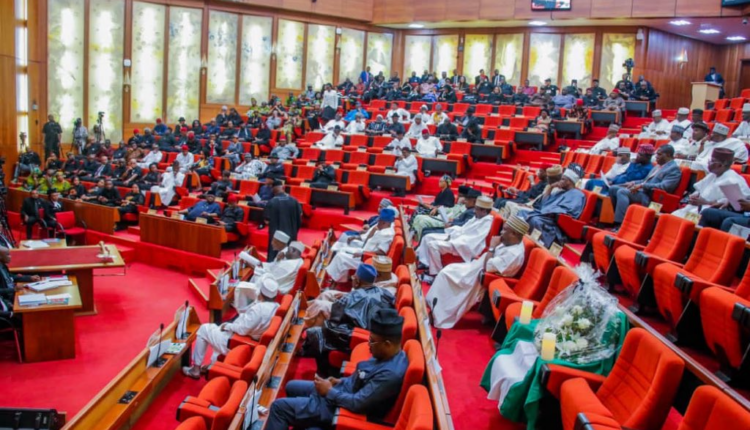
The Senate has called on the federal government to discontinue the rehabilitation programme for repentant Boko Haram members following the abduction and killing of military officers.
The decision followed the adoption of an additional prayer on Tuesday during deliberations on the country’s security situation.

The prayer, proposed by Joseph Ikpea, senator representing Edo Central, was adopted through a voice vote during consideration of a motion on the escalating attacks, abductions and killings of serving and retired military personnel.
Supporting the proposal, Adams Oshiomhole, senator representing Edo North, said: “It does not make even common sense to grant pardon and rehabilitate criminals”.
The motion, sponsored by Abdulaziz Yar’Adua, Senator representing Katsina Central and Chairman, Senate Committee on the Nigerian Army, was prompted by the abduction and death of Rabe Abubakar, a retired Major General and former Director of Defence Information.

Abubakar died in captivity after he was kidnapped alongside his wife in Katsina State.
Leading the debate during Tuesday’s plenary, Yar’Adua described the country’s security situation as a “national emergency”.
He said insecurity had assumed “increasingly complex, persistent and alarming dimensions”, manifesting through terrorism, insurgency, banditry, kidnapping, violent attacks on communities and the destruction of livelihoods across several parts of the country.
“The death of the retired Major General and others in the custody of terrorists represents not only personal tragedies but also a painful national loss and a stark reminder of the scale and persistence of insecurity confronting the nation,” he said.
Yar’Adua said terrorists had become increasingly sophisticated and emboldened, extending their attacks beyond civilian communities to serving and retired military officers.
“The increasing frequency with which serving and retired military personnel are being targeted by criminal and terrorist groups represents a dangerous evolution in the nation’s security challenges,” he said.
The senator warned that attacks on current and former military personnel undermine the morale of security agencies, weaken public confidence in the state’s ability to provide security and embolden criminal groups.
He listed a series of attacks on senior military officers, including the abduction of Rabiu Garba Yandoto, a retired colonel, in Zamfara in January 2023; the kidnap and killing of Richard Duru, retired major general, in Imo in September 2023 despite the payment of ransom; the murder of Uwem Udokwere, retired brigadier general, in Abuja in June 2024; the abduction of Maharazu Tsiga, former NYSC director-general, in Katsina in February 2025; the death of Joe Ajayi, a retired major, in captivity in Kogi in May 2025; the abduction and rescue of Joseph Ajanaku, a retired colonel, in Plateau in January 2026.
’PERPETRATORS MUST BE ARRESTED’
Seconding the motion, Osita Izunaso, Senator representing Imo West, urged security agencies to ensure those responsible for the attacks were arrested.
“We have to mandate them to ensure that these people are arrested because we are all following the incident. The perpetrators must be arrested and brought to book,” he said.
Senate Minority Leader, Abba Moro, said insecurity had made travelling unsafe even for public office holders.
“It’s becoming increasingly dangerous for people, even like us who are protected by the government, to move around the roads these days,” Moro said.
He recounted the killing of a professor near a police checkpoint in Benue State.
“They just shot him dead right there, very close to a police checkpoint. If people can conveniently be killed like that, then it becomes increasingly scary that we are all walking corpses,” he said.
Moro urged the Senate leadership to meet with President Bola Tinubu to brief him on lawmakers’ concerns over the security situation.
Senator representing Bauchi Central, Abdul Ningi, questioned why criminal groups were controlling parts of the country.
“Is this country at war? If we are not at war, why are non-government bodies controlling parts of this country?” Ningi asked.
He also called for an investigation into the number of security personnel killed across the country and the support available to their families.
Responding to the debate, the Deputy Senate President, Barau Jibrin, defended the efforts of the armed forces and other security agencies.
“Our men in uniform are doing their best. They are working very hard,” Barau said.
He added that terrorism and banditry had become regional challenges affecting several West African countries.
“The issue of banditry and terrorism has a global dimension. The entire West African region is confronted with this sad reality, from Mali to Burkina Faso, Niger and beyond,” he said.
OTHER RESOLUTIONS
The Senate also urged security and intelligence agencies to strengthen intelligence gathering, intelligence sharing, surveillance operations, threat assessment mechanisms and early warning systems.
Lawmakers called for deeper collaboration with local communities, traditional institutions and religious leaders to improve community-based intelligence and trust-driven security partnerships.
The upper legislative chamber further urged the federal government to accelerate the deployment of modern security technologies, including unmanned aerial systems, geospatial intelligence capabilities, integrated command and control platforms and advanced communications systems to combat terrorism, banditry and kidnapping.
Lawmakers also mandated the Senate leadership to constitute a delegation to visit the family of the late Abubakar, the Katsina state government and the Nigerian Army to convey the condolences of the Senate.













…rallies personnel on professionalism, intelligence gathering, human rights compliance
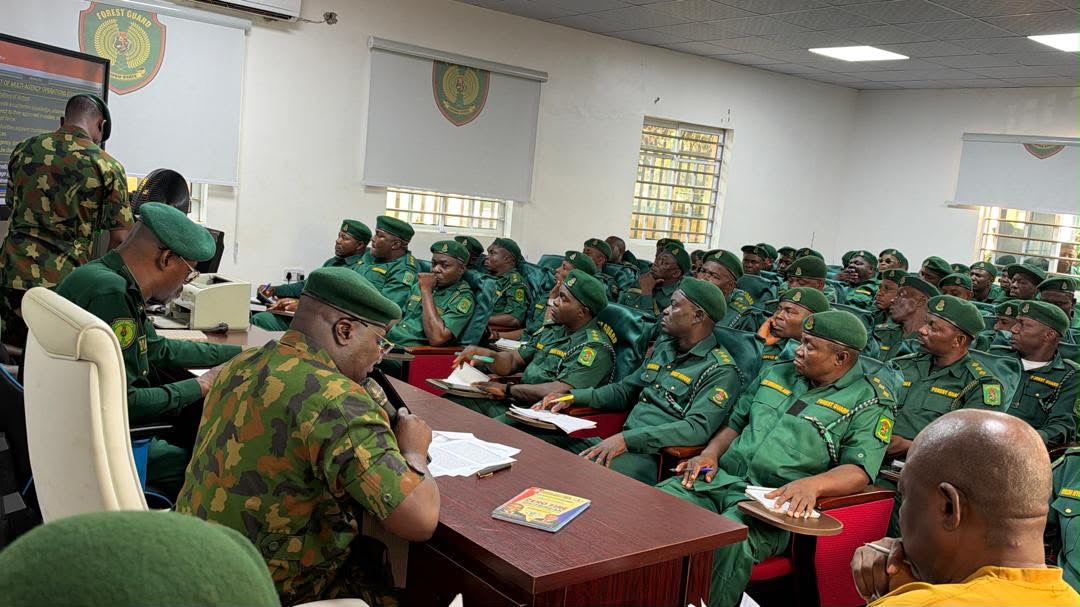
The Enugu State Forest Guard Command has reaffirmed its commitment to securing forests and rural communities across the state following the successful completion of a week-long training programme designed to enhance personnel professionalism, operational readiness and inter-agency cooperation.
In a press statement issued in Enugu on Saturday by the Commander of the National Forest Guard, Enugu Command, Dr. Akinbayo Olasoji, the training, which concluded on October 23, 2026, equipped personnel with enhanced professional competencies, including sophisticated techniques for handling assorted rifles, alongside other operational skills required for responsible security duties and the protection of forest environments.

The programme also focused on joint military guard operations, intelligence analysis, leadership, human rights, crime-scene preservation, emergency coordination and professional report writing.
Olasoji said the initiative was part of its sustained efforts to ensure that Enugu’s forests remain safe for farmers, residents, travellers and rural community dwellers, while protecting wildlife, natural resources and critical infrastructure from criminal activities.
A major highlight was the lecture on joint military guard operations delivered by Lieutenant Colonel Solomon Kure Shekarau of the Nigerian Army, 82 Division Garrison, Enugu which emphasised effective command coordination, clearly defined responsibilities and cooperation among security agencies during forest deployments.
Similarly, senior police officers, including ACP Suraju Kehinde Oyewole and ACP Oliver Odimega, trained participants on intelligence gathering, incident documentation, crime-scene preservation, first-response procedures and the appropriate referral of suspected criminal cases to the police.
The programme further addressed the protection of critical national assets, with Nwatu Emmanuel Amechi of the Nigeria Security and Civil Defence Corps highlighting vigilance, incident-scene safety and emergency coordination.
On legal compliance, the Command’s Legal Officer, Barr. Amaka Mandy, reinforced the importance of operating within the provisions of the Enugu State Forest Guard Law, 2020, and respecting the fundamental rights of citizens.
The training also stressed emotional discipline, accountability and respectful engagement with members of the public, underscoring the principle that effective security operations must be supported by professionalism and public trust.
Speaking on the development, Olasoji, reaffirmed the Command’s determination to discharge its responsibilities diligently, lawfully and professionally.
He emphasised that sustainable forest security requires continuous training and collaboration among the government, security agencies, traditional institutions, community leaders and residents.
He further disclosed that another week of training was planned for November 2026, alongside a proposed 30-day improvement framework to strengthen personnel performance, reporting standards and accountability.
Reiterating the resolve to translate the knowledge acquired into effective field operations, the Commander said he would ensure that forests and surrounding communities across Enugu State remain protected, secure and accessible for legitimate economic and social activities.
He also commended Governor Peter Mbah for his unwavering support, encouragement and commitment to strengthening the operational capacity of the Forest Guard in the state, noting that the Governor’s support had continued to inspire the Command’s determination to discharge its responsibilities effectively, enhance forest security and protect farmers, travellers, rural communities and other residents from security threats.

The gruesome killing of 23-year-old Mmesoma Umeorini in Anambra State has sparked outrage, reigniting conversations about possessiveness, relationship violence, women’s right to walk away from failed relationships, and the dangerous belief that financial investment in love confers ownership over another person’s life.
By Our Correspondent
The news of the gruesome murder of 23-year-old Mmesoma Umeorini has sent shock waves across Anambra State and beyond, leaving a community in mourning and raising disturbing questions about the nature of love, the limits of emotional attachment, and the growing concern over violence against women.
Mmesoma, a young woman from Uga, in Aguata Local Government Area of Anambra State, reportedly lost her life in circumstances that have provoked widespread condemnation and renewed calls for stronger action against gender-based violence.

Chima with Mmesoma’s body in a sack after he was caught
The police have arrested Chima Ofoeke, her alleged former boyfriend, in connection with the killing. The suspect is native of Ebonyi state. According to the Anambra State Police Command, the suspect allegedly confessed during preliminary investigations that he murdered Mmesoma because she ended their romantic relationship.
The allegation, if established in court, represents a particularly disturbing manifestation of relationship violence: the transformation of rejection into a perceived justification for taking another person’s life.
For a young woman who should have had years ahead of her to pursue her ambitions, build relationships, contribute to society and determine the direction of her future, the circumstances surrounding Mmesoma’s death have become a painful reminder of the consequences that can follow when possessiveness overwhelms respect for another person’s freedom.
Beyond the immediate outrage, her death presents society with difficult but necessary questions. Why should a person lose their life for ending a relationship? When does affection become an obsession? And what must families, communities, religious institutions and government do to prevent similar tragedies?
These questions deserve more than temporary outrage on social media. They demand honest reflection and practical action.
A Disappearance That Ended in Tragedy
According to the police, the case began when Mmesoma’s mother reported to the Divisional Police Officer in Umuchu that her daughter had been missing since October 16.
The report prompted an investigation that eventually led to the arrest of Ofoeke, who was identified as the deceased’s alleged former boyfriend.
The police spokesperson in Anambra State, Superintendent of Police Tochukwu Ikenga, disclosed that operatives, acting on intelligence and working with members of the Agunechemba security outfit in Uga, apprehended the suspect.
During preliminary investigations, the police said, the suspect allegedly admitted killing Mmesoma because she had ended their romantic relationship.
He reportedly led detectives to the location where her remains were recovered.

Chima in handcuffs
A video circulating on social media has further intensified public anger. In the footage, the suspect is seen being questioned by security operatives while holding a sack said to contain the victim’s body. He allegedly explained that he strangled her with her clothing until she collapsed.
The footage, and the allegations surrounding the circumstances of the killing, have left many people struggling to comprehend the reported brutality of the incident.
However, while the public has a legitimate interest in the case, the circulation of disturbing images and videos raises additional concerns about the dignity of the deceased and the privacy of her grieving family.
Mmesoma should not be remembered merely through the horrifying circumstances of her death. She was a human being whose life had value beyond the tragedy that ended it.
Her family deserves compassion, privacy and justice, not repeated exposure to distressing material circulating online.
The Anambra State Commissioner of Police, Nnanna Ama, has directed that the case be transferred to the State Criminal Investigation Department in Awka for comprehensive and diligent investigation.
The investigation and subsequent judicial proceedings will be essential in establishing the facts and determining criminal responsibility.
The Dangerous Belief That Rejection Is an Offence
At the centre of the outrage surrounding Mmesoma’s death is a troubling question: why would the end of a romantic relationship allegedly provoke such a violent response?
Relationships can involve deep emotional attachment, financial sacrifices, shared ambitions and expectations about marriage. When they end, one or both partners may experience disappointment, anger, grief or a sense of betrayal.
These emotions can be painful, but they do not give anyone the right to threaten, assault or kill another person.
The decision to end a romantic relationship is a personal choice. It does not require the other party’s permission, nor does it create an obligation to remain with someone against one’s wishes.
A relationship is sustained by mutual consent. When that consent is withdrawn, the other person must respect the decision, however painful it may be.
The alleged motive in Mmesoma’s killing, as reported by the police, therefore strikes at a fundamental principle of human relationships: love does not confer ownership, and heartbreak does not justify violence.

Murdered Mmesoma
No person owns a partner simply because they have shared years together, made promises about marriage or provided financial assistance.
The idea that a former partner must remain in a relationship because the other person is emotionally attached, financially invested or unwilling to accept rejection is dangerous.
It turns affection into entitlement and treats the other person’s freedom as a personal possession.
Such attitudes can create the conditions for coercive behaviour, including intimidation, stalking, threats and physical violence.
Not every difficult breakup results in violence, and disappointment alone does not make a person dangerous. Nevertheless, society must take threats, controlling behaviour and attempts to prevent a partner from leaving seriously.
The warning signs should not be dismissed as evidence of excessive love or romantic passion.
Financial Support Is Not Ownership
One of the issues raised in public discussions following Mmesoma’s death is the suggestion that the suspect may have contributed significantly to her education and welfare while hoping to marry her.
This claim appeared in a social media commentary by Nonso Ezechi. It remains an allegation circulating online and should not be treated as an established fact unless supported by credible evidence.
Nevertheless, the discussion highlights a recurring problem in some romantic relationships: the belief that financial investment creates an entitlement to marriage, continued affection or permanent access to another person’s life.
Financial support can be a meaningful expression of care. Partners may help one another pay school fees, meet living expenses, develop businesses or pursue educational opportunities.
Such assistance can strengthen a relationship when it is freely given and accompanied by mutual respect.
Problems arise, however, when support is treated as a transaction that obliges the recipient to surrender personal freedom.
A person who pays another person’s school fees does not acquire ownership of that person’s future. Someone who supports a partner financially does not automatically earn the right to determine whom that partner marries or whether the relationship continues.
If money was freely given as assistance or a gift, it cannot reasonably become a justification for violence when a relationship ends.

Where there is a genuine financial dispute, the appropriate response is dialogue, mediation or lawful civil action, depending on the circumstances.
Violence is never a legitimate means of recovering money, enforcing romantic expectations or punishing disappointment.
This distinction is important for both men and women.
Those entering relationships should communicate honestly about their expectations, particularly where financial support, marriage plans and long-term commitments are involved.
At the same time, people providing assistance must understand that generosity does not create an entitlement to another person’s affection.
A relationship is not a debt contract, and a human being is not collateral.
Even where one partner believes that the other has acted dishonestly, that grievance must be addressed through lawful means. No perceived betrayal can justify taking a life.
What Mmesoma’s Death Says About Women’s Safety
The circumstances surrounding the killing have also renewed concerns about the safety of women in romantic relationships, particularly when they decide to leave partners who refuse to accept the separation.
Women should be able to end relationships without fearing that the decision could cost them their lives.
This is not a demand for special privileges. It is a basic expectation of personal safety and human dignity.
A woman does not have to prove that her reasons for ending a relationship are sufficiently important before she is entitled to leave.
She may decide that the relationship is no longer healthy, that her feelings have changed, that her future lies elsewhere or that she simply no longer wishes to continue.
Whatever her reason, the decision must be respected.
The same principle applies to men. Nobody should be threatened, assaulted or killed because they have chosen to end a relationship.
However, where women face threats or violence associated with separation, the risks must be taken seriously by their families, friends, communities and law enforcement agencies.
One of the challenges in preventing relationship-related violence is that controlling behaviour can initially be mistaken for affection.
A partner who demands constant updates, restricts friendships, monitors movements, insists on controlling personal decisions or threatens harm when challenged may be exhibiting behaviour that deserves serious attention.
Jealousy is not proof of love. Constant surveillance is not necessarily care, and threats are not expressions of devotion.
When a partner responds to disagreement with intimidation, or repeatedly threatens violence if the relationship ends, the situation should not be romanticised.
Families and friends can play an important role by listening without judgement, taking concerns seriously and helping an endangered person seek appropriate assistance.
Where there is an immediate threat, the priority should be safety and prompt contact with the police or other appropriate emergency services.
No one should have to remain in a dangerous relationship merely because they fear the consequences of leaving.
The Social Media Reactions: Outrage, Grief and Calls for Reflection
The killing has generated emotional responses from people who have condemned the reported act and called for greater awareness of the value of human life.
Among those who reacted was Dr Uche Nworah, who described the incident in a Facebook post as a crime of passion.
Dr Nworah expressed sadness over the reported circumstances of Mmesoma’s death, stressing that no disagreement, rejection or heartbreak could justify taking another person’s life.
He also expressed relief over the suspect’s reported arrest while acknowledging that the development could not restore the young woman’s life.
His message was accompanied by condolences to Mmesoma’s family, friends and loved ones.
The expression “crime of passion”, however, requires careful consideration. Although it is sometimes used to describe violence arising from intense emotions, it should not obscure personal responsibility or suggest that violent conduct is an inevitable consequence of heartbreak.
Strong emotions do not remove an individual’s obligation to respect the life and safety of another person.
Describing violence as passion can also unintentionally romanticise conduct that should instead be recognised as a serious violation of another human being’s rights.
The essential lesson is that emotional distress must be managed without harming others.
Another reaction came from Nonso Ezechi, who condemned the alleged killing and questioned the idea that financial assistance or emotional investment could justify violence against a former partner.
Ezechi urged young women to exercise care when entering relationships and encouraged partners to be honest about their intentions.
His commentary also contained an important qualification: spending money on another person does not confer ownership over that person’s life or freedom to choose a partner.
Both reactions reflect widespread grief and anger over the tragedy. They also point towards a broader conversation about the expectations people bring into relationships and the importance of understanding that romantic commitment must be voluntary.
However, caution is necessary when discussing the victim’s conduct or the alleged circumstances of the relationship.
Advice about honesty, financial boundaries and responsible relationships may be useful, but it must never shift responsibility for violence onto the person who is killed.
Even if a relationship ends painfully, even if promises are broken, and even if one partner believes that they have made significant sacrifices, the responsibility for an alleged act of violence rests with the person who commits it.
Mmesoma had the right to make decisions about her relationship. Her decision to leave, if that was the motive for the killing as alleged, cannot be treated as an offence deserving punishment.
A Message to Young People: Learn to Accept Rejection
For young people navigating romantic relationships, Mmesoma’s death offers painful lessons about emotional maturity, personal boundaries and the responsibility that accompanies affection.
First, young people must understand that relationships do not always end in marriage.
Two people may begin a relationship with sincere intentions and later discover that they are incompatible. Their feelings may change, their priorities may differ, or circumstances may make continuing the relationship impossible.
Such outcomes can be disappointing, but they are part of human relationships.
The ability to accept an unwanted outcome without threatening or harming another person is a sign of emotional maturity.
Second, young people should learn to distinguish love from possession.
A healthy relationship allows both partners to retain their dignity, personal identity and freedom to make decisions. It does not depend on fear, coercion or the threat of punishment.
Third, financial support should be discussed honestly.
Partners should be clear about whether money is being provided as a gift, a loan or an agreed contribution to shared expenses. Financial arrangements should not be used to pressure anyone into marriage or continued romantic involvement.
Fourth, young people must learn to seek help when emotions become overwhelming.
Rejection can cause genuine distress. People experiencing intense anger, despair or an inability to cope with a breakup should seek support from trusted friends, family members or qualified mental health professionals.
Anyone who feels tempted to harm a former partner should immediately create distance from that person and seek urgent professional assistance.
Threats of violence must never be dismissed as empty words simply because the people involved once loved each other.
Finally, young people should understand that ending a relationship is not an invitation to revenge.
The appropriate response to heartbreak is acceptance, reflection and, where necessary, seeking support to move forward.
No relationship is worth destroying another person’s future or one’s own.
What Parents, Schools, Churches and Communities Must Do
Preventing relationship-related violence requires more than condemning individual incidents after lives have been lost.
Families, educational institutions, religious organisations, community leaders and government agencies must help young people develop healthier attitudes towards relationships.
Parents should create environments in which children can discuss emotional difficulties without fear of ridicule or punishment.
Young people who feel safe speaking to trusted adults may be more willing to seek help when they encounter controlling or threatening partners.
Schools and tertiary institutions should also incorporate practical discussions about consent, emotional regulation, healthy relationships, conflict resolution and the dangers of gender-based violence into relevant educational and counselling programmes.
These discussions should involve both male and female students.
Boys and young men must be taught that masculinity does not depend on controlling women, retaliating against rejection or proving authority through aggression.
Girls and young women should be equipped with information about recognising abusive behaviour, setting boundaries and accessing support.
Religious leaders also have an important responsibility.
In communities where religious institutions influence social attitudes, sermons and counselling sessions can reinforce the principles of mutual respect, non-violence and personal freedom.
Marriage should not be presented as an obligation that a woman must fulfil because a man has spent money on her. Nor should men be encouraged to regard financial provision as a licence to exercise control over their partners.
Community leaders and local security organisations must also respond appropriately to credible threats and reports of violence.
The objective should be prevention, early intervention and accountability, rather than waiting until a situation ends in tragedy.
Justice Must Follow Due Process
Murder is a grave criminal offence under Nigerian law, and the circumstances surrounding Mmesoma’s death warrant a thorough investigation.
The police have said that the suspect was arrested following an investigation and that the case has been referred to the State Criminal Investigation Department in Awka.
The next steps should include the careful gathering of evidence, proper documentation of forensic findings, witness interviews and other investigative procedures necessary to establish what happened.
Any prosecution must be conducted in accordance with the law, with the evidence tested before a competent court.
Section 315 of the Criminal Code Act addresses the offence of murder, while Section 319(1) provides for the death penalty upon conviction for murder in cases governed by that provision.
The precise applicable law and any relevant legal issues must be determined in the context of the case and the jurisdiction.
Public anger is understandable, but the administration of justice must be guided by evidence and due process.
The suspect is entitled to a fair trial, while Mmesoma and her family are entitled to a diligent investigation and the lawful pursuit of justice.
An arrest and an alleged confession are important developments, but they do not replace the need for the prosecution to establish its case before the court.
The police and other relevant authorities must therefore ensure that the investigation is comprehensive, credible and free from avoidable delays.
Justice in this case should not be reduced to public demands for punishment alone. It must also demonstrate that allegations of serious violence are investigated properly and that the law is applied through established judicial procedures.
Beyond Outrage: Remembering the Life That Was Lost
Public outrage following violent incidents is often intense, but it can fade as attention shifts to other news.
The challenge is to ensure that Mmesoma’s death does not become another disturbing headline that generates temporary anger without producing meaningful reflection or change.
Behind the name Mmesoma Umeorini is a family that has lost a daughter, relatives who have lost a loved one, and friends who must now confront an absence they may struggle to understand.
For them, the tragedy is not a social media discussion or a passing news story. It is a painful reality that will remain long after public attention has moved elsewhere.
Their grief deserves compassion.
The dignity of the deceased must also be protected. Graphic footage, unverified allegations and sensational descriptions should not be allowed to turn her suffering into a spectacle.
Responsible journalism requires the public to be informed about the circumstances of a serious crime while avoiding unnecessary details that may retraumatise the family or compromise the investigation.
Mmesoma’s story should be told in a manner that honours her humanity and reinforces the importance of protecting life.
Her death should also encourage more people to recognise that the warning signs of relationship violence must be taken seriously.
Where there are threats, intimidation or attempts to control another person’s movements and choices, intervention may be necessary before the situation escalates.
Families should listen. Friends should pay attention. Institutions should respond. Law enforcement agencies should investigate credible reports promptly.
Above all, society must reject the notion that a person’s refusal to continue a relationship is a provocation that warrants punishment.
Conclusion: Love Must Never Become a Death Sentence
The killing of Mmesoma Umeorini, as alleged by the police, is a painful reminder of the devastating consequences that can follow when a relationship is treated as a claim of ownership rather than a bond between two people who remain free to make their own choices.
Her death has left a community mourning and a wider public asking questions about relationships, rejection, financial expectations and the safety of women.
The answers must begin with a simple principle: nobody has the right to take another person’s life because a relationship has ended.
Love may involve sacrifice, but sacrifice does not create ownership. Financial support may express commitment, but it does not purchase another person’s freedom. Emotional pain may be real, but it cannot excuse violence.
For young people, the lesson is to build relationships on mutual respect, honest communication and consent.
For families and communities, the lesson is to take threats and controlling behaviour seriously.
For government and law enforcement agencies, the responsibility is to strengthen prevention, protect those at risk and ensure that allegations of serious violence receive diligent investigation.
And for society as a whole, the duty is to move beyond outrage towards a culture in which rejection is accepted without violence and every person is free to leave a relationship without fearing for their life.
Mmesoma deserved the opportunity to determine her own future. She deserved safety, dignity and the freedom to make personal choices.
Her life cannot be restored, but her death must not be allowed to pass without lessons being learnt and action being taken.
May her family find the strength to bear their loss, and may justice be pursued through the lawful process.
No heartbreak is worth a human life. No financial sacrifice grants ownership over another person. And no woman should have to die because she chooses to walk away.

A 21-year-old butcher, identified as Selim Ayodele, has allegedly stabbed his 26-year-old colleague, Ibrahim Wasiu, to death following a disagreement over sweeping their workplace in Ogun State.
The incident reportedly occurred on Sunday, October 18, at a cow meat-selling outlet in the Alagbole area of the Akute/Ajuwon satellite towns in Ifo Local Government Area of the state.
According to reports, trouble started after the day’s business activities when the two colleagues disagreed over the cleaning of their sales outlet, with the argument allegedly escalating into a fatal confrontation.
The Ogun State Police Command’s Public Relations Officer, Oluseyi Babaseyi, confirmed the incident to journalists in Abeokuta on Friday, disclosing that the suspect had been arrested.
Babaseyi said the incident was reported at the Ajuwon Police Divisional Headquarters on Sunday night, prompting police operatives to commence an investigation.
He explained that preliminary findings indicated that the disagreement began after the two men had concluded their day’s work at the meat-selling outlet.
During the altercation, Ayodele allegedly picked up a knife and stabbed Wasiu in the left side of his chest before twisting the weapon.
The victim was reportedly rushed to a nearby hospital for medical attention but was pronounced dead on arrival.
The police spokesperson added that the suspect remained in custody as investigations continued ahead of his prosecution.
He further disclosed that the deceased’s body had been deposited in the morgue of a private hospital for an autopsy.
The Commissioner of Police in Ogun State, Bode Ojajuni, reaffirmed the command’s commitment to prompt response to criminal incidents, thorough investigations and the prosecution of offenders in accordance with the law.
The police commissioner also urged residents to exercise restraint, resolve disagreements peacefully and promptly report criminal incidents to the appropriate authorities.
-
 Features11 hours ago
Mmesoma Umeorini: When Love Turns Deadly, and a Young Woman Pays With Her Life
-
Features3 days ago
Kogi’s Kidnapping Crisis: Why Do Forests Remain Safe Havens for Criminals Under Ododo’s Watch?
-
News3 days ago
Kidnappers kill seven-year-old boy after ransom demand
-
Features9 hours ago
Why Igbos Celebrate New Yam Festival Worldwide: The History, Cultural Significance and Lessons For The Younger Generation
-
News1 day ago
Mbah: Why We Built 268 Smart Green Schools Across Enugu State
-
News2 days ago
UBA Commences Contempt Proceedings Against WEMPCO Directors over Alleged Disobidence of Court Order
-
News2 days ago
Macron Postpones Planned Visit to Nigeria Until 2027
-
News2 days ago
Enugu CP Orders Probe into Death of Izuchukwu During Police Raid