News
Lightning killed 16 members of my family on my wedding day – Groom

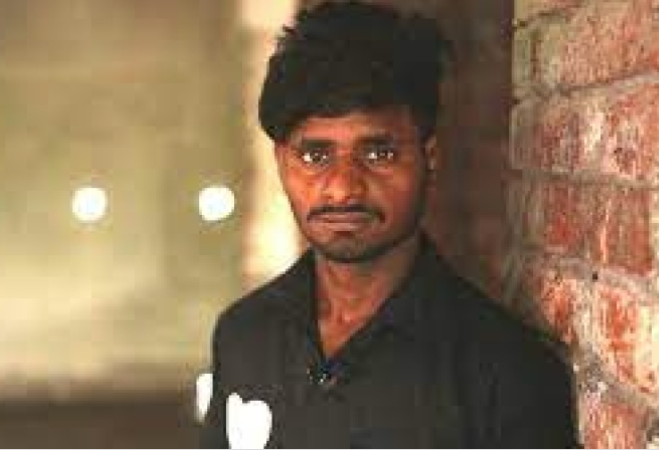
They had been killed by lightning on the way to the ceremony.
Dressed in their finest saris and suits, his family members boarded a boat to join Mamun, when a heavy storm struck. As the rain lashed down the boat pulled over and they took shelter under a tin shed on the riverbank, when they were hit.

Bangladesh, which is blighted by extreme weather and heavy storms, suffers an average of 300 deaths by lightning every year, according to the UN.
That’s compared with fewer than 20 annually in the United States, which has almost double the population.
It’s a heavy burden for the South Asian nation, and for many like Mamun, who is speaking for the first time about what happened on that day in August 2021.

The 21-year-old was getting ready at his in-laws’ home in the Shibganj area in the country’s north-west, when he heard the crackle of thunder, minutes before he got the gut-wrenching news.
He rushed to his family, where he was confronted with a scene of chaos and confusion.
“Some people were hugging the bodies,” Mamun recalls, “the injured were crying out in pain… children were screaming. I was at a loss. I could not even decide who I should go to first.”
Mamun lost his father, grandparents, cousins, uncles and aunts. His mother wasn’t on the boat and survived the lightning attack.
“When I found my father’s dead body I simply burst into tears. I was so shocked I fell sick,” Mamun says.
Later that evening, the funerals of his relatives took place – the wedding feast they were meant to enjoy was instead distributed to the homeless.
Mamun later got married, but says he doesn’t celebrate his wedding anniversary as it triggers painful memories. “After the tragic incident, now I am really scared of rain and thunder.”
Lightning is a big killer in Bangladesh, claiming more lives annually than floods.
The number of reported deaths due to lightning has also risen steeply, from just dozens per year in the 1990s.
Nasa, the UN and the government of Bangladesh cite increased storminess due to climate change as a reason for the increase in deadly strikes.
“Global warming, environmental changes, living patterns are all factors for the increasing death toll due to lightning,” Md Mijanur Rahman, the director general of Bangladesh’s disaster management division, told the BBC.
Such is the seriousness, that the government has added lightning strikes to the official list of natural disasters the country faces which includes floods, cyclones, earthquakes and droughts.
The majority of victims of lightning are farmers, who are vulnerable to the elements as they work the fields through the rainy monsoon months in the spring and summer.
A football shirt, hanging on a rickety fence, overlooking a field in the Satkhira region of Bangladesh is a poignant reminder of one of the victims.
Just days earlier, the shirt had been worn by Abdullah as he went into the vast rice fields to do his day’s work.
Now, draped over the wooden barrier, the Barcelona football shirt is singed and frayed, the burnt edges of thread show where the lightning left its mark in May this year.
Abdullah’s wife of three decades, Rehana, took me to the field to tell me what happened the day she lost her husband.
It was bright and sunny as Abdullah and a group of farmers went to harvest rice. By late afternoon a heavy storm began, and a lightning bolt struck her husband.
“Some of the other farmers brought him to this roadside shop,” Rehana says, pointing to a small shack along the lane. “By then he was already dead.”
The couple had recently taken out a loan to build a second room to extend their modest home.
Inside, the couple’s 14-year-old son Masood is reading a book. With no primary earner, Rehana fears she will be left with a lifetime of debt and wonders how she will pay for his studies.
“The fear gripped me so deeply that now if I see a cloud in the sky, I don’t even dare to let my son go outside any more,” she says consumed by tears.
Lightning is a growing concern in other countries too – including neighbouring India which has also seen a rise in the number of strikes in recent years, but a significant reduction in the number of fatalities due to a number of initiatives.
There are efforts in Bangladesh to do more to reduce the number of deaths due to lightning.
Activists say more tall trees need to be planted in remote rural areas to absorb the impact of the strikes, especially in places which have borne the brunt of deforestation.
They also call for a large-scale programme to build lightning sheds, so farmers can take safe shelter, and for broader early warning systems to alert people about possible storms.
One challenge is the poor connectivity and lack of mobile usage in the areas where people are the most vulnerable.
A lack of awareness is also a challenge. Many in the country don’t realise how dangerous lightning can be – few people anywhere in the world expect to be hit by a thunderbolt.
Farmer Ripon Hossen – who was with Abdullah the day he was killed – never imagined what lightning would look like up close, until it struck.
“There was a big loud sound, and then I saw lots of flashing lights,” he recalled. “It was as if a disk of fire had fallen on us. I felt a great electric shock and fell to the ground.
“After a while, I opened my eyes and saw that Abdullah was dead.”
Ripon can’t believe he survived. He says he’s terrified to work in the open, but in this impoverished agricultural area farming is the only source of income for him.
“I cry whenever I think of my friend Abdullah,” he says.
“When I close my eyes at night, all the memories of that day return like a flashback. I can’t console myself.”















The All Progressives Congress (APC) Presidential Campaign Council has denied allegations of a plot to assassinate former Vice-President Atiku Abubakar, the African Democratic Congress (ADC) presidential candidate for the 2027 general election.
Dele Alake, spokesperson for the APC Campaign Council, made the denial while reacting to the allegation raised by Timi Frank, a member of the ADC.
The council urged Frank to submit any evidence in his possession to the relevant law enforcement agencies for investigation, stressing that any credible threat to life must be treated seriously, irrespective of political affiliation.
It categorically denied any involvement by President Bola Tinubu, the Presidency or the APC in an alleged plot targeting Atiku or any other opposition figure.
The council also dismissed reports that security personnel attached to the former vice-president had been withdrawn, insisting that Atiku remained protected by the Nigeria Police Force and the Department of State Services (DSS).
According to the statement, President Tinubu recently directed security agencies to strengthen security arrangements for all presidential, vice-presidential, governorship and deputy governorship candidates ahead of the 2027 general elections.
Reacting to the political implications of the allegation, Alake described the assassination claims as “typical opposition rabble-rousing”, accusing those behind them of attempting to heighten political tension and attract international attention through social media.
“Let our political competition be peaceful, lawful, and focused on the big issues that matter to Nigerians, not character assassination or wild, baseless allegations,” the statement read.
The APC Campaign Council further highlighted Tinubu’s longstanding experience in opposition politics, urging candidates, political parties and their supporters to remain factual and responsible in their public statements.
It called on political actors to uphold democratic values and ensure that the build-up to the 2027 general elections remains peaceful, lawful and focused on issues affecting Nigerians.
News
Court Orders Interior Minister Tunji-Ojo to Respond to Suit Seeking Release of His NYSC Records

The Federal High Court in Abuja on Monday ordered the Minister of Interior, Olubunmi Tunji-Ojo, to respond to a suit seeking to compel the release of records of his National Youth Service Corps (NYSC) scheme.
Justice Salim Ibrahim gave the order when the matter came up for hearing.
The Incorporated Trustees of Pathway to Equity and Charity Foundation had filed the suit, marked FHC/ABJ/CS/1812/2026.
The group prayed the court to compel the NYSC to disclose documents supporting the minister’s claim that he completed the mandatory one-year national service.
The foundation also sought an order of mandamus directing the Federal Capital Territory Administration (FCTA), the 2nd respondent, to produce records showing that the minister did his primary assignment at the FCTA.
When the case was called, counsel to the applicant, Chief Solomon Akuma, SAN, told the court he was ready to proceed with the hearing.
However, Abiola Olaniji, who appeared for the minister, said he had filed an application for Tunji-Ojo to be joined as the 3rd respondent.
Olaniji said the applicant (foundation) had responded with a counter affidavit raising serious issues, to which he needed time to reply.
The lawyer stated that the minister was ready to take part in the proceedings as an interested party.
But Akuma opposed the application, arguing that the minister was not a proper party.
He said the suit only sought an order of mandamus compelling the respondents (NYSC and FCTA) to produce documents that are not in the minister’s custody.
Justice Ibrahim directed the minister to file and serve his reply to the applicant’s counter affidavit, which opposed his application to be joined as a party in the suit before the next hearing date.
The judge then adjourned the matter until Oct. 18 for hearing.
The applicant had sought from the NYSC the mobilisation or call-up letter issued to Tunji-Ojo in 2006 or any other year; the posting letter to the FCTA in 2006 or any other year; and his application for mobilisation.
It also sought the evidence of approval of his remobilisation by the NYSC’s Director-General; evidence of payment of allowances to him; the record of his Community Development Service and his discharge certificate.
The foundation equally sought from the FCTA, the mobilisation or call-up letter, the posting letter, his attendance record during the service year, evidence of any allowance paid to him, among others.
It said the application was brought under Section 14 of the Federal High Court Act, Order 34 Rules 1, 2 and 5 of the Federal High Court (Civil Procedure) Rules 2019.
It also cited Sections 20, 21 and 25 of the Freedom of Information (FOI) Act, 2011.
(NAN)

The presidential candidate of the Nigeria Democratic Congress, Peter Obi, has advised Nigerians residing in the United Kingdom to stop sending money to people who seek financial help at home.
Obi also advised them to urge their relatives to vote for productive leaders.
He made the remarks at a town hall meeting with diaspora supporters in Manchester, United Kingdom, on Sunday.
He stressed that Nigeria’s prevailing economic hardship resulted from bad leadership, arguing that continuous financial assistance only cushions the effects of poor governance without addressing the root causes.
“You have people at home in Nigeria today who are begging you for money. Tell them no!” he said.
The former Anambra State governor insisted that his record in public office distinguished him from other governors, claiming none of them matched his achievements in saving public funds.
“I’m not saying I’m a saint, but I saved money. I’ve not seen one governor who has saved 10 per cent of what I saved. No governor has done it.
“Let’s start with this one that is less corrupt. That’s how other countries change.”
He maintained that his conversations with the people reinforced the need for collective responsibility, stressing that building a new Nigeria would require citizens to take an active role in addressing challenges facing the country.
Obi also urged Nigerians to take the 2027 election seriously, describing the contest as a critical moment for the nation.
-
 News1 day ago
JUST IN: Former Delta Governor, Uduaghan, dies
-
Faith3 days ago
Awka Anglican Diocese Rejects Ibezim’s Suspension, Threatens to Leave Church of Nigeria
-
News3 days ago
BREAKING: Mbah Extends Enugu Movement Restriction to 10pm, Scraps Keke Ticketing
-
Politics3 days ago
Nigeria’s Weak Opposition and the Cost of One-Party Dominance: Can the Opposition Rebuild Before 2027?
-
News3 days ago
2027: Keke Riders Endorse Mbah, Tinubu
-
News1 day ago
Federal High Court Upholds ENSSAA’s N150m Political Campaign Billboard Fee, CTC Reveals
-
News2 days ago
Corruption turning Nigerian Courts to ‘market stalls’ — Retired Justice Augie
-
Politics1 day ago
AA Assembly Candidate, Ugbaje Friday, Unveils Development Agenda for Ibaji