Connect with us
Maduka University Advert

Editorial

FULL TEXT: President Tinubu’s New Year broadcast to Nigerians

Published

on

Why we increased price of petrol — President Tinubu
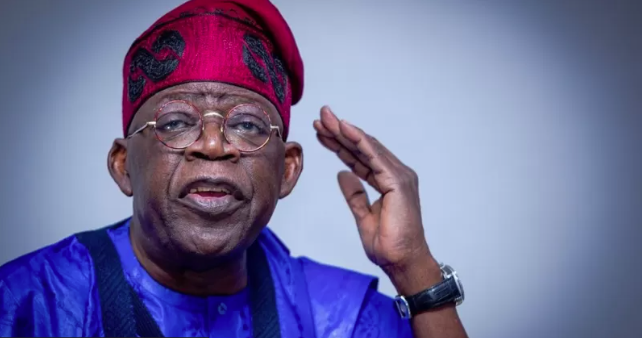
• President Bola Tinubu
Spread the love

Dear Compatriots,

It gives me immense joy to welcome each and every one of you – young and old- to this brand new year 2024. We must lift up our hands to Almighty God, in gratitude, for his grace and benevolence to our country and our lives in the year 2023 that has just gone by.

Though the past year was a very challenging one, it was eventful in so many ways. For our country, it was a transition year that saw a peaceful, orderly and successful transfer of power from one administration to another, marking yet another remarkable step in our 24 years of unbroken democracy.

It was a year, you the gracious people of this blessed nation, entrusted your faith in me with a clear mandate to make our country better, to revamp our economy, restore security within our borders, revitalise our floundering industrial sector, boost agricultural production, increase national productivity and set our country on an irreversible path towards national greatness that we and future generations will forever be proud of.

The task of building a better nation and making sure we have a Nigeria society that cares for all her citizens is the reason I ran to become your President. It was the core of my Renewed Hope campaign message on the basis of which you voted me as President.

Everything I have done in office, every decision I have taken and every trip I have undertaken outside the shores of our land, since I assumed office on 29 May 2023, have been done in the best interest of our country.

Maduka College Advert

Over the past seven months of our administration, I have taken some difficult and yet necessary decisions to save our country from fiscal catastrophe. One of those decisions was the removal of fuel subsidy which had become an unsustainable financial burden on our country for more than four decades. Another was the removal of the chokehold of few people on our foreign exchange system that benefited only the rich and the most powerful among us. Without doubt, these two decisions brought some discomfort to individuals, families and businesses.

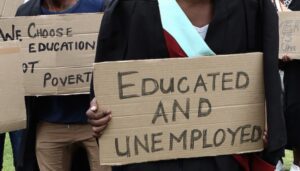
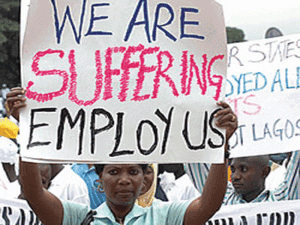
I am well aware that for some time now the conversations and debates have centred on the rising cost of living, high inflation which is now above 28% and the unacceptable high under-employment rate.

From the boardrooms at Broad Street in Lagos to the main-streets of Kano and Nembe Creeks in Bayelsa, I hear the groans of Nigerians who work hard every day to provide for themselves and their families.

I am not oblivious to the expressed and sometimes unexpressed frustrations of my fellow citizens. I know for a fact that some of our compatriots are even asking if this is how our administration wants to renew their hope.

Dear Compatriots, take this from me: the time may be rough and tough, however, our spirit must remain unbowed because tough times never last. We are made for this period, never to flinch, never to falter. The socio-economic challenges of today should energize and rekindle our love and faith in the promise of Nigeria. Our current circumstances should make us resolve to work better for the good of our beloved nation. Our situation should make us resolve that this new year 2024, each and everyone of us will commit to be better citizens.

Silently, we have worked to free captives from abductors. While we can’t beat our chest yet that we had solved all the security problems, we are working hard to ensure that we all have peace of mind in our homes, places of work and on the roads.

Having laid the groundwork of our economic recovery plans within the last seven months of 2023, we are now poised to accelerate the pace of our service delivery across sectors.

Just this past December during COP28 in Dubai, the German Chancellor, Olaf Scholz, and I agreed and committed to a new deal to speed up the delivery of the Siemens Energy power project that will ultimately deliver reliable supply of electricity to our homes and businesses under the Presidential Power Initiative which began in 2018.

Other power installation projects to strengthen the reliability of our transmission lines and optimise the integrity of our National grid are ongoing across the country.

My administration recognises that no meaningful economic transformation can happen without steady electricity supply. In 2024, we are moving a step further in our quest to restart local refining of petroleum products with Port Harcourt Refinery, and the Dangote Refinery which shall fully come on stream.

To ensure constant food supply, security and affordability, we will step up our plan to cultivate 500,000 hectares of farmlands across the country to grow maize, rice, wheat, millet and other staple crops. We launched the dry season farming with 120,000 hectares of land in Jigawa State last November under our National Wheat Development Programme.

In this new year, we will race against time to ensure all the fiscal and tax policies reforms we need to put in place are codified and simplified to ensure the business environment does not destroy value. On every foreign trip I have embarked on, my message to investors and other business people has been the same. Nigeria is ready and open for business.

I will fight every obstacle that impedes business competitiveness in Nigeria and I will not hesitate to remove any clog hindering our path to making Nigeria a destination of choice for local and foreign investments.

In my 2024 Budget presentation to the National Assembly, I listed my administration’s 8 priority areas to include national defence and internal security, job creation, macro-economic stability, investment environment optimization, human capital development, poverty reduction and social security. Because we take our development agenda very seriously, our 2024 budget reflects the premium we placed on achieving our governance objectives.

We will work diligently to make sure every Nigerian feels the impact of their government. The economic aspirations and the material well-being of the poor, the most vulnerable and the working people shall not be neglected. It is in this spirit that we are going to implement a new national living wage for our industrious workers this new year. It is not only good economics to do this, it is also a morally and politically correct thing to do.

I took an oath to serve this country and give my best at all times. Like I said in the past, no excuse for poor performance from any of my appointees will be good enough.

It is the reason I put in place a Policy Coordination, Evaluation, Monitoring and Delivery Unit in the Presidency to make sure that governance output improves the living condition of our people.

We have set the parameters for evaluation. Within the first quarter of this new year, Ministers and Heads of Agencies with a future in this administration that I lead will continue to show themselves.

Fellow Nigerians, my major ambition in government as a Senator in the aborted Third Republic, as Governor of Lagos State for eight years and now as the President of this blessed country is to build a fair and equitable society and close the widening inequality. While I believe the rich should enjoy their legitimately-earned wealth, our minimum bargain must be that, any Nigerian that works hard and diligent enough will have a chance to get ahead in life. I must add that because God didn’t create us with equal talents and strengths, I can not guarantee that we will have equal outcomes when we work hard. But my government, in this new year 2024 and beyond, will work to give every Nigerian equal opportunity to strive and to thrive.

For the new year to yield all its good benefits to us as individuals and collectively as a people we must be prepared to play our part. The job of building a prosperous nation is not the job of the President, Governors, Ministers, Lawmakers and government officials alone. Our destinies are connected as members of this household of Nigeria. Our language, creed, ethnicity and religious beliefs even when they are not same should never make us work at cross purposes.

In this new year, let us resolve that as joint-heirs to the Nigerian Commonwealth, we will work for the peace, progress and stability of our country. I extend this call to my political opponents in the last election. Election is over. It’s time for all of us to work together for the sake of our country.

We must let the light each of us carries – men and women, young and old – shine bright and brighter to illuminate our path to a glorious dawn.

I wish all of us a happy and prosperous year 2024.

May God continue to bless the Federal Republic of Nigeria.

Bola Ahmed Tinubu, GCFR
1 January 2024

Editorial

Governor Mbah at 54: Disruptive Innovations Redefining Governance in Enugu State

Published

on

Enugu gov't approves establishment of army barracks in Isi-Uzo LGA
Enugu State Governor, Dr Peter Mbah @ 54
Spread the love

BY TONY EDIKE

As Governor and Peter Ndubuisi Mbah marks his 54th birthday today, it is both timely and compelling to reflect on a leadership journey that is steadily redefining governance in Enugu State. In under two years, his administration has charted a bold course—one that departs from incrementalism and embraces disruptive, results-oriented governance driven by innovation, speed, and accountability.

At the heart of this transformation lies an ambitious economic vision. Initially, Governor Mbah set out to grow Enugu into a $30 billion economy. However, in a demonstration of confidence rooted in ongoing reforms and early gains, he has recently raised the bar—pledging to double that target. This upward revision is not mere rhetoric; it reflects a strategic recalibration backed by aggressive investments in infrastructure, productivity, and institutional efficiency.

Roads Infrastructure 

Road infrastructure remains one of the clearest indicators of this shift. Through initiatives such as the “Zero Pothole Initiative,” the administration has significantly improved the quality of roads within Enugu metropolis. Many residential layouts in Enugu which roads were abandoned by successive administrations now enjoy asphalt roads with quality drainages on both sides to ensure durability. Beyond urban renewal, the government’s focus on rural access roads—especially those linking agricultural zones to markets—underscores a deliberate strategy to unlock economic value across the state. Roads, under Mbah, are not just pathways; they are economic lifelines.

Transformation of Transport Sector 

In tandem with road development is a bold transformation in the transport sector. A standout innovation is the launch of Enugu Air, a state-backed aviation initiative designed to position Enugu as a regional transportation hub. This move signals a forward-thinking approach to connectivity—enhancing both passenger movement and economic linkages with other parts of Nigeria and beyond. Alongside this, the administration is modernizing the broader transport ecosystem through structured mass transit schemes, digitization, and the development of integrated transport terminals.

Tackling Age-long Water Challenge

Water provision, long a challenge in the state, is receiving overdue attention. The rehabilitation of major water schemes such as Ajali and Oji River marks a critical step toward restoring potable water supply to homes and businesses. More importantly, the government is adopting a sustainability-focused model that prioritizes efficient distribution and long-term maintenance—ensuring that access to clean water becomes consistent rather than episodic.

Maduka College Advert

Security Reforms

Security reforms under Governor Mbah reflect a decisive embrace of technology and intelligence-led strategies. The establishment of a modern Command and Control Centre, supported by surveillance systems, CCTV installations, and improved inter-agency coordination, has enhanced the state’s capacity to prevent and respond to crime. This has contributed to a safer environment, essential for both citizens’ well-being and investor confidence.

Wealth Creation

On wealth creation, the administration is shifting the economic base from consumption to production. Agro-industrial processing zones are being developed to add value to agricultural produce, reduce post-harvest losses, and create jobs. At the same time, investor-friendly policies are opening up opportunities in sectors such as technology, manufacturing, and commerce. These efforts collectively position Enugu as a competitive destination for business and innovation.

Tax Reform

Tax reforms have also played a crucial role in supporting this transformation. By digitizing revenue collection and strengthening compliance mechanisms, the government is reducing leakages and enhancing transparency. The objective is clear: to grow internally generated revenue in a manner that is efficient, fair, and sustainable. The government recently took steps to eliminate multiple taxation by introducing a bill at the State House of Assembly to harmonize various taxes payable in the state. The law has already been made and it is expected to give serious relief to tax payers in the state.

President Tinubu lauds Mbah’s achievements 

These sweeping reforms have attracted national recognition. President Bola Ahmed Tinubu has commended Governor Mbah for his bold vision and tangible developmental strides, highlighting Enugu State as an emerging model for effective subnational governance.

President Tinubu while felicitating Dr Peter Mbah on his 54th birthday, celebrated the lawyer and philanthropist, highlighting the tremendous progress recorded in Enugu State under his leadership over the past two years.

He particularly lauded Dr Mbah’s bold commitment to the ideals of progressive governance and constitutional democracy, as exemplified in his administration’s transformational projects and programmes.

Dr Mbah was a private-sector player who had achieved success in the oil and gas sector before he was elected governor of Enugu State in 2023. According to Tinubu: “During my official visit to Enugu in 2025, I witnessed firsthand what good and competent leadership, as demonstrated by Mbah, can accomplish when anchored on vision and service to the people.

“Dr Mbah’s inclusive governance and partnership with other Southeast governors is repositioning the region for economic and political transformation.”

Mbah: A Distinguished Leader

What distinguishes Governor Mbah’s leadership is not just the scale of his ambition, but the discipline of execution. Projects are pursued with urgency, monitored with precision, and delivered with accountability. This governance style is gradually reshaping public expectations—proving that transformational leadership is both possible and achievable.

As he celebrates his birthday, Dr. Peter Ndubuisi Mbah stands as a symbol of a new governance paradigm in Nigeria—one defined by innovation, courage, and a relentless pursuit of progress. His administration’s disruptive reforms are not only transforming Enugu State but also offering a compelling blueprint for sustainable development across the nation.

If sustained, this bold vision—now recalibrated toward an even larger economic horizon—could firmly establish Enugu as one of Nigeria’s foremost economic powerhouses.

With the commitment and determination already demonstrated by the Governor, Enugu is undoubtedly on the path to economic prosperity, and its citizens will continue to declare: ‘OUR TOMORROW IS HERE.’”

 • Tony Edike is a renowned journalist and public analyst 

Continue Reading

Editorial

The Revolution Nigeria Deserves

Published

on

Spread the love

By Valentine Obienyem

The true revolution Nigeria needs is a break with the past, a transformation of civic culture, ethics of leadership, and public participation. This is the revolution that undermines corruption, enthrones accountability, and restores hope.

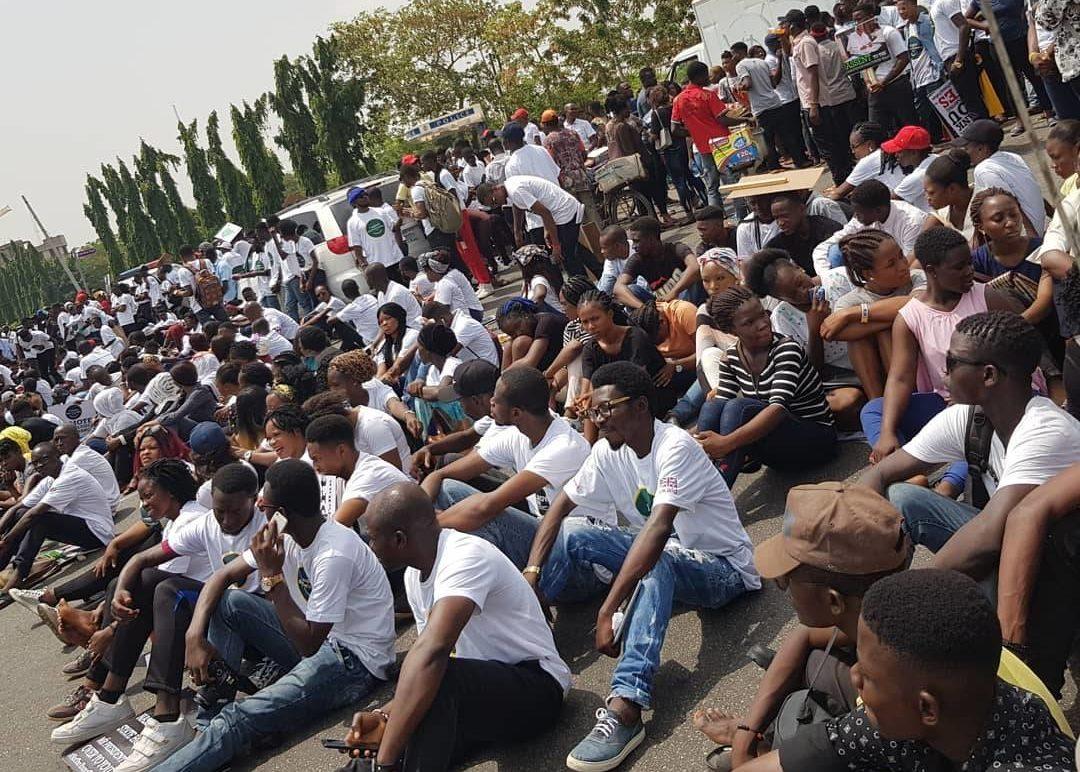
Revolution is not merely a dramatic or violent overthrow of governments; it is, more profoundly, a warning signal that societies emit, like a volcano emitting lava, when injustice, corruption, exclusion, and moral or material degradation have reached intolerable levels. It arises when established institutions lose their legitimacy – and of which institution is this not true in Nigeria? – and when the social contract between rulers and the ruled collapses. In such moments, revolution becomes the language of a people who have exhausted peaceful avenues of redress and can no longer endure the weight of systemic failure.

In other words, revolution functions as a painful but necessary process of renewal. It is the weeding out of entrenched falsehoods, surgical removal of decayed structures, and destructive habits that choke the life of a society. By clearing away what has become irredeemably dysfunctional, revolution creates the possibility – though not the guarantee – of a fresh beginning. It offers a chance for a nation to rediscover its values, reconstruct its institutions, and realign power with justice, dignity, and the common good.

History offers powerful illustrations of this truth. In the French Revolution, the accumulated suffering of ordinary people eventually broke the bonds of obedience and unleashed one of the most consequential upheavals in modern history. The careless speech of Marie Antoinette was merely a trigger. Reflecting on this process, Mirabeau posed a piercing question: “Have these men studied, in the history of any people, how revolutions commence and how they are carried out? Have they observed by what a fatal chain of circumstances the wisest men are driven far beyond the limits of moderation, and by what terrible impulses an enraged people is precipitated into excesses at the very thought of which they would have shuddered?” His warning exposed a central truth of revolutionary moments – that upheavals are not initially driven by extremists, but by the steady pressure of injustice and neglect, which, when left unchecked, push even the most moderate societies and individuals toward desperate and radical ends.

What happened in France was not unique. Throughout history, revolutions have erupted because ordinary people were pushed to the breaking point by unbearable conditions. Recently, I met a lawyer who had been detained by security agencies for months over a matter that could have been resolved in less than a week. In his own case, he had a wealthy brother who supported him. What, then, of those who do not have an “Abraham” to stand by them? When he was finally released, he was so frustrated and disillusioned that he expressed a willingness to join any revolutionary movement he could find, eager to fight against the injustices that had made life in Nigeria so difficult for many.

The American Revolution burned with resentment against colonial exploitation and denial of political representation; the Haitian Revolution erupted under the brutal yoke of slavery and racial dehumanization; the Chinese Revolution was powered by deep poverty, social exploitation, and foreign domination; and the Arab Spring sprang from frustration with corruption, unemployment, repression, and stolen futures. These historical moments share common causes: inequality, systemic corruption, political exclusion, economic hardship, abuse of power, suppression of basic freedoms, erosion of dignity, and, above all, the collapse of hope – just like our computer collapsed under “Mohmoodian” glitch – in the possibility of reform within existing systems.

Maduka College Advert

Even in our own time, this pattern continues to repeat itself. Today, a different kind of revolution is unfolding thousands of miles away in Iran, where widespread protests have erupted across cities like Tehran, Isfahan, Shiraz, and Mashhad, driven by soaring inflation, deepening economic crisis, and public anger at entrenched political and religious leadership. Demonstrations began with economic grievances – skyrocketing prices and a collapsing currency – but have swiftly grown into broader challenges to the regime’s authority and legitimacy. Authorities have responded with force, internet shutdowns, and mass arrests, reflecting how desperate governments react when people reach their limits.

Against this global background, Nigeria’s situation becomes even clearer. In Nigeria, too, the conditions for revolutionary pressure exist. Corruption has become systemic; public resources are routinely plundered, basic services are missing, and inequality grows every year. Economic hardship is now a daily reality for millions of citizens. The failures of leadership—political, economic, and moral—have left ordinary Nigerians with shrinking opportunities, growing insecurity, and diminishing trust in the state. Meaningful change cannot come through polite silence alone—it will require the righteous indignation of citizens who refuse to accept mediocrity and corruption as normal.

Yet, despite this growing pressure, the people of Nigeria today are disillusioned. The conditions that Mirabeau described—a fatal chain of circumstances driving citizens beyond moderation—are visible in the everyday struggles of Nigerians who wrestle with unemployment, insecurity, inflation, and political exclusion. Many who once placed their trust in peaceful, constitutional change now question whether the system can be transformed from within without a fundamental break with past habits of governance.

However, at this point, an important caution must be introduced. But here we must recognize a vital point captured by Durant: violent revolution often destroys more than it creates, and only a profound shift in national character and values can build lasting progress. Durant argued that revolutions that fail to transform the underlying moral and intellectual principles of a society often lead to new forms of corruption or stagnation. The true revolution Nigeria needs is a break with the past, a transformation of civic culture, ethics of leadership, and public participation. This is the revolution that undermines corruption, enthrones accountability, and restores hope.

Therefore, Nigeria today stands at such a crossroads. Economic decay, political mismanagement, and social despair could drive people to extremes that few would have imagined: exactly what Mirabeau warned against. But the choice is not merely between chaos and calm; it is between a revolution of character and purpose and a slow descent into disorder. What Nigeria needs is a revolution of renewal, exemplified by strong, ethical leaders like Peter Obi, and a citizenry determined to reclaim its future not through destruction, but through restoration and reform.

This brings us directly to why Obi is mentioned. The reference to Obi is grounded in his antecedents. We know what Anambra State used to be before he governed it, precisely under Mbadinuju, and that memory reminds us of what Nigeria has become today. Things have gone terribly wrong. Anambra itself had drifted into decay until 2006, when a disruptive meteor entered and altered its orbit. He introduced policies that stimulated inventiveness, industry, and thrift. He marched through the fisc with an economizing scythe, abolishing offices that carried emoluments without duties and restoring discipline, purpose, and direction to governance.

In the same spirit, only by breaking decisively with the patterns that have held us back can a new Nigeria that is possible begin. Just as Obi, our meteor, altered the orbit of Anambra, so does Nigeria now need a leader like him capable of altering her own trajectory. By confronting and dismantling Nigeria of corruption, impunity, and complacency that has taken root at the national level, Nigeria can truly transform.

Ultimately, the world has witnessed revolutions that toppled regimes, but history teaches that lasting change does not come merely from the fall of governments; it comes from a transformation in a society’s values, priorities, and collective will. Let that be the revolution Nigeria seeks today, not a revolution of burning buildings, but one fuelled by a burning desire for justice, integrity, discipline, and a shared sense of national purpose.

Consequently, to achieve it, the country definitely does not need the likes of President Ahmed Bola Tinubu. Each day he remains as president, arising from a stolen mandate, brings untold hardship upon the people. Nigerians are tired and are just waiting for 2027 to do the needful. Indeed, there is nothing revulsive in the history of governance in Nigeria than the rise of PBAT, or more comforting than the thought of Mr. Peter Obi becoming the next president.

Continue Reading

Editorial

How We Are Revolutionising Public Transport In Enugu

Published

on

Governor Peter Mbah inaugurating the ultramodern Enugu Bus Terminals
Spread the love

By PETER MBAH

It is often said that when you arrive in a great city for the first time, before you see its tallest building or its finest restaurant, before you even hear its music or taste its food, you notice its transport system. The way a city moves tells you how it thinks, works, and cares for its people. In many ways, transport is the heartbeat of civilisation, and if the heartbeat is strong, the body thrives.

About two years ago, this location was practically a synonym for chaotic traffic and general disorderliness. Aside from the fact it constituted a major municipal blight, we knew we could not attain our audacious economic goals if we lacked an efficient public transport system that offered both comfort and dignity. We knew that our goal to make Enugu the most livable city in Nigeria will be a futile bid, if we were unable to tackle problems such as persistent traffic gridlock.

Governor Peter Mbah

So, from the very first day of this administration, we made a promise: to build a world-class transport system that moves people, connects businesses and communities, and, crucially, that rightfully positions Enugu State as a model of modern governance, sustainable growth, and human dignity.
Today’s commissioning of the newly completed world-class terminals and the CNG Bus Mass Transit Scheme is indeed, beyond a ribbon-cutting exercise. It ushers in a whole new experience; fundamentally connecting our vision to action, and our action to the daily lives of the over seven million residents of Enugu State. It is about ensuring the people commute in dignity and comfort.

It is a key part of our integrated five-terminal Transport Infrastructure Project’s Phase 1: Holy Ghost Terminal 1 (Enugu Central Station 1) – designated for interstate transport; Holy Ghost Terminal 2 (Enugu Central Station 2) for intercity transport; Gariki Terminal (Gariki Central Station); Abakpa Terminal (Abakpa Central Station); and Nsukka Terminal (Nsukka Central Station). Today, these terminals stand as inspiring reminders of the power of vision.

Maduka College Advert

The Holy Ghost/Ogbete axis is the heartbeat of Enugu’s urban mobility. With over 50% of the city’s commuter traffic passing through here daily, its transformation signals our commitment to world-class standards. By modernising the area, we are creating a downtown experience that will anchor business, tourism, and urban renewal. The completion of these facilities teaches us that true development might yield some discomfort. But it always creates an outcome that benefits all.

Alongside the CNG Rapid Bus Service (Mass Transit Scheme), these terminals are central pillars of our transport agenda – a multimodal highway to the future – integrating road, rail, air, and waterways into one seamless, safe, and efficient ecosystem.

With regard to roads, we have rehabilitated, built and expanded critical routes, improved junctions, and opened new corridors that connect communities and markets.

In aviation, we have launched Enugu Air and secured strategic partnerships to strengthen our position as a regional aviation hub.

We have advanced discussions in rail to reconnect Enugu State to the regional and national rail grids for cheaper, faster freight and passenger movement.

With waterways, we are exploring viable inland water transport routes to boost trade and tourism.

The thrill that these projects give is beyond sheer aesthetic delight. They are engines of economic revival. They represent our capacity to deliver projects that empower Ndi Enugu and set our state on a robust trajectory of growth.

Our vision for these projects was clear: to create a modern, integrated transport system that will spur economic growth, create jobs, and improve the overall standard of living. By enhancing connectivity within Enugu State and beyond, we are laying the foundation for a more vibrant and competitive economy. This will, ultimately, make Enugu a gateway to economic opportunities.

Last month, we witnessed the inaugural flight of Enugu Air, a significant economic enabler conceived to move us closer to the goal of making Enugu the premier destination for investment, living, and tourism in Nigeria.

Infrastructure, particularly transport, remains a catalyst for economic transformation. From the farmer in Nsukka to the trader in Ogbete, from the manufacturer in Emene to the investor in Enugu CBD, opportunities will multiply.


Already, this project is creating jobs, stimulating SMEs, and positioning Enugu to compete with Africa’s best. Through it, we are creating over 20,000 jobs across BRT, 2,000 hybrid city taxis, airport operations, ride-hailing and support services.

This CNG rollout begins with the first 100 buses serving our markets and neighbourhoods, especially for all Enugu students, because our state is a city of universities, polytechnics, and colleges.
Dedicated routes will connect campuses with major residential and commercial areas, ensuring a safer, more reliable, and more affordable travel for students.

With special student discounts, as well as reduced fares for the elderly and young children, we are making sure our transport system is inclusive, equitable, and supportive of education. Remarkably, this will reduce transport costs for the average family by over 40%.

Comfort and safety are irreducible minimums on which modern public transport is built. Our multi-modal transport system ticks all the boxes. The way a city organises its transport, to a large extent indicates how it organises its society.

In Enugu, we are showing the world that we value safety, order, and accountability. We have carried out a state-wide biometric capture of commercial vehicle owners and drivers. This initiative has strengthened our data intelligence, making it easier to identify and track operators, and has already contributed to reducing transport-related crimes.

We have integrated our transport system into the State’s security framework. The Command and Control Centre, equipped with surveillance cameras installed in strategic locations across Enugu, ensures that our streets, terminals, and junctions remain under constant watch — providing both a guide and a guard for our people.

Our cashless e-ticketing system eliminates leakages, guarantees transparency, and ensures every payment is accounted for. Commuters simply need to purchase a ticket and top-up as they find suitable. Remarkably, a single valid ticket grants the holder access to other buses.

Again, our comprehensive insurance coverage protects both the assets and the people who use them. Our 80 bus shelters (to be clearly marked with arrival time), lay-bys, and junction improvement projects mean passengers and commuters travel with more comfort, dignity, and safety.

I am proud to announce that Enugu is the first State in Nigeria to proactively adopt and implement a State Climate Action Policy in line with national and global goals. The CNG Mass Transit Scheme we commission today is a major step in that direction – cutting carbon emissions, reducing dependence on petrol, and lowering transport costs for Ndi Enugu. We are proving that environmental responsibility and economic growth can complement each other.

There is often a common flaw in our nature as humans; it is the tendency to quickly forget the previous state of things once situations improve. Building these facilities required grit, sacrifice, painstaking patience, collaboration and support.
These projects would not have been possible, barring the bold decision taken by His Excellency, President Bola Ahmed Tinubu, GCFR, to remove oil subsidies. This policy – and several other well-thought actions – has ensured that developments such as we are witnessing was possible. It is indeed remarkable that the President understands that much of the economic activities that will spur Nigeria into a $1 trillion economy would come from the states.
He has demonstrated this, through the recent launch of the WARD Development Project, an idea conceived to create 8.8 million jobs across the 8,800 wards in Nigeria. It is obvious His Excellency, the President is committed to grassroots development – just as we are in Enugu State.

Through words and deeds, the President has demonstrated a sincere love and support towards Enugu’s and indeed the South East’s progress. An example is the concession of the Akanu Ibiam International Airport, which would clearly re-position Enugu as an aviation and economic hub. So, we commend the President, and will continue to support him and the Federal Government, because no administration has given as much support to the sub-nationals as this President has done.
This is also an auspicious moment to thank Mr. President for his recent appointment of one of our sons as the Vice Chancellor of the University of Nigeria, Nsukka.

I wish to acknowledge and thank, as well: the transport operators, unions, market leaders and the business community. And all good men and women, who responded to the call for development, and partnered with the State to see the success of today.

I should also commend the Commissioner for Transport and his team for their hardwork and resilience. Change is never easy, but the benefits are often generally felt. Today, as we commission these terminals, we recommit to our promise: to build modern, efficient systems that serve the people, unlock economic potential, and extend the frontiers of development.

Our Transport Infrastructure Project is a legacy that will be remembered by future generations as one of several turning points in the history of Enugu State. This moment is about the Enugu of tomorrow; it reflects our resolve to grow our economy seven-fold. This is what enabling environment looks like.
We will continue to build and deliver world-class infrastructure. And together, we will make Enugu a premier destination with global reckoning.

Tomorrow is here!

Being Governor Mbah’s speech at the launch of five modern transport terminals and 100 CNG buses in Enugu, recently.

Continue Reading

Trending

Maduka College Advert