By Tony Edike
There are journeys Nigerians make every day without giving much thought to the danger involved.
We enter a car, fasten—or sometimes do not fasten—our seat belts, tell the driver where we are going and assume that we will arrive safely.
But increasingly, driving on Nigerian roads feels like an exercise in uncertainty.
The reckless overtaking.
The speeding.
The sudden lane changes.
The driver overtaking on a blind bend.
The motorist beating a red light.
The commercial bus forcing its way into traffic.
The driver using a mobile phone while driving.
The young man who bought a car yesterday and is driving it today as though years of experience came with the vehicle.
The question that should concern every Nigerian is simple:
How many people on our roads have actually demonstrated that they are competent to drive?
That question becomes even more important when we consider that the Federal Road Safety Corps recorded 10,446 road traffic crashes and 5,289 deaths in Nigeria in 2025.

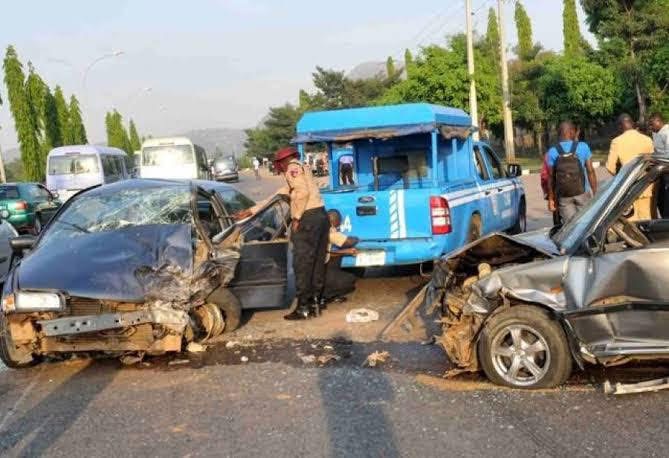
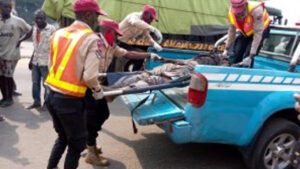
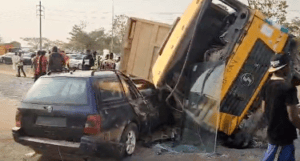
FRSC officials rescuing accident victims
Compared with 2024, the total number of crashes increased by 9.2 per cent, from 9,570 to 10,446. The number of people injured also increased by 7.2 per cent, from 31,154 to 33,400. Fatal crashes rose from 2,532 to 2,608, even though the overall number of deaths fell slightly from 5,421 to 5,289. (Nan News)
These are not merely statistics.
Behind every number is a person.
A father.
A mother.
A child.
A breadwinner.
A student.
A passenger.
A pedestrian.
A motorcyclist.
Somebody who left home expecting to return.
When a licence becomes a piece of plastic
Nigeria’s official driver-licensing system does require training.
The FRSC’s current driver’s licence portal states that a first-time applicant must be at least 18 years old and must have completed driving school. The application process also involves a driving test through the relevant Vehicle Inspection Office process. (Nigeria Driver’s Licence)
The FRSC’s Driving School Standardization Programme is even more specific.
A certified driving school is expected to have roadworthy dual-control training vehicles, licensed instructors, a classroom, Highway Code materials, traffic-law materials, first-aid facilities, a fire extinguisher and a driving range, among other requirements.
FRSC’s operating procedure states that certified schools are expected to train students for at least 26 sessions of a minimum of one hour each, with training sessions recorded on the FRSC system. (FRSC)
So the problem is not that Nigeria has no rules.
The problem is whether the rules are being followed rigorously enough.
A law that exists on paper but is poorly implemented cannot adequately protect the public.
A driving-school certificate should mean that somebody actually learned to drive.
A driving test should mean that somebody actually demonstrated competence.
And a driver’s licence should mean something more than the possession of a plastic card.
The young man who bought a car today
There is a growing phenomenon that deserves serious attention.
A young Nigerian saves money or makes money through unconventional means, obtains a car—or receives one from his parents—and suddenly becomes a driver.
Sometimes the person has never received formal driving instruction.
Sometimes a friend gives a few lessons.
Sometimes the person learns by watching someone else drive.
Then, almost immediately, the vehicle enters one of Nigeria’s busiest roads including the highways.
That is dangerous.
A car is not a bicycle.
It is a machine capable of weighing more than a tonne and travelling at speeds at which a mistake can become fatal within seconds.
The ability to start an engine, move a vehicle forward and turn a steering wheel does not constitute driving competence.
Driving requires judgment.
It requires hazard perception.
It requires understanding right of way.
It requires knowing when not to overtake.
It requires knowing how to react when another driver makes a mistake.
It requires understanding braking distances.
It requires lane discipline.
It requires the ability to remain calm when confronted with unexpected situations.
And, perhaps most importantly, it requires experience.
The embarrassment of the learner’s sign
There is another attitude we must confront.
Some new drivers are reluctant to identify themselves as learners.
They consider displaying a learner’s sign on their vehicles embarrassing.
There is an unfortunate social perception that says:
“If I have bought a car, why should people know that I am still learning?”
But learning is not shameful.
In fact, identifying a learner should be seen as an act of responsibility.
Other motorists need to know that the person behind the wheel may still be developing confidence and road experience.
Britain takes this principle seriously.
Learners in Great Britain must display L plates at the front and rear of the vehicle, and failure to display the required plate can attract penalty points. (GOV.UK)
Nigeria should consider a similarly serious approach to learner identification.
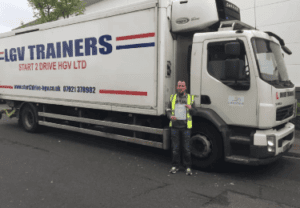
A standard training school for Truck Drivers
If a person is still learning, let the road know.
There is nothing shameful about saying:
“I am learning. Please give me room.”
Britain does not treat driving as automatic
There is an important lesson Nigeria can draw from the British system.
In Great Britain, becoming a driver involves several stages.
A learner obtains a provisional licence and learns under the prescribed conditions.
The driver must then pass a theory test before taking the practical driving test. The theory examination includes knowledge and hazard-perception components. (GOV.UK)
The practical test then determines whether the applicant can actually drive safely.
This distinction is important.
Knowing the Highway Code is one thing.
Applying it while controlling a moving vehicle in real traffic is another.
Nigeria should strengthen that distinction.
A person should not merely be able to answer questions about road signs.
The person should demonstrate that he or she can safely operate a vehicle around pedestrians, motorcycles, buses, trucks, traffic lights, intersections and other motorists.
America has another lesson: don’t rush beginners
The United States offers another interesting model.
The National Highway Traffic Safety Administration describes Graduated Driver Licensing, or GDL, as a three-stage system:
Learner’s permit → Intermediate licence → Full licence.
During the learner stage, driving is supervised.
During the intermediate stage, the new driver is allowed greater independence but may face restrictions on high-risk situations such as night driving and carrying young passengers.
Only later does the driver receive an unrestricted licence. (NHTSA)
The reasoning is straightforward.
A new driver needs experience.
But experience should be acquired progressively.
The NHTSA says the strongest GDL programmes are associated with substantial reductions in crashes among young drivers. It cites research associating the most restrictive programmes with a 38 per cent reduction in fatal crashes and a 40 per cent reduction in injury crashes among 16-year-old drivers. (NHTSA)
Nigeria may not need to reproduce the American system exactly.
But the principle is highly relevant:
Do not give inexperienced drivers unrestricted exposure to every dangerous driving situation immediately.
Nigeria needs a “graduated driver” system
Nigeria should seriously consider introducing a stronger graduated licensing arrangement for new and young drivers.
For example:
Stage One: Learner
The applicant would:
● obtain a learner permit;
● pass a theory examination;
● complete mandatory practical training;
● display a learner identification sign;
● drive only under prescribed supervision;
● complete a minimum number of verified training hours.
Stage Two: Provisional Driver
After passing the practical test, the driver would receive a provisional licence.
During this period, there could be restrictions appropriate to novice drivers, particularly around high-risk behaviours.
Stage Three: Full Licence
After completing the required period without serious traffic violations, the driver would graduate to a full licence.
Such a system would introduce an important principle:
A driving licence should be earned progressively, not simply obtained.
But who is teaching the drivers?
This is another question that deserves national attention.
Who owns some of Nigeria’s driving schools?
Who teaches there?
What qualifications do the instructors possess?
How often are the schools inspected?
Are training hours genuinely completed?
Are students actually taught road safety or merely given certificates?
These questions matter because FRSC itself recognises the need for standardisation.
Its Driving School Standardization Programme says schools are assessed on their facilities and trainers and that certification can be suspended or withdrawn when minimum standards are compromised. (DSSP)
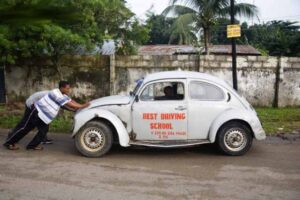
A Nigerian driving school operator
That means enforcement should be visible.
Nigeria should maintain and regularly publish an updated national register of approved driving schools and licensed instructors.
A prospective student should be able to enter a website, type the name of a driving school and immediately know:
● whether the school is accredited;
● when its accreditation expires;
● whether its instructors are certified;
● how many vehicles it has;
● whether the vehicles are roadworthy;
● whether the school has been sanctioned.
Transparency would help drive bad operators out of the industry.
The examiner must be independent
There is another reform worth serious consideration.
The person who teaches a candidate should not be the person whose word alone determines that the candidate is ready for an unrestricted licence.
Nigeria needs a strong, independent and standardised practical examination.
The test should assess actual competence, including:
● vehicle control;
● reversing;
● parking;
● lane discipline;
● turning;
● signalling;
● mirror use;
● speed management;
● safe overtaking;
● traffic-light compliance;
● pedestrian awareness;
● hazard perception;
● emergency braking;
● interaction with motorcycles and commercial vehicles.
And the examination should be digitally recorded.
Why?
Because once the examination is recorded, an applicant can challenge an unfair result and authorities can investigate suspicious patterns.
If one examiner passes virtually everyone, that should trigger an audit.
If another examiner fails almost everyone, that should also trigger an audit.
Technology can make the licensing system more transparent.
The problem is not only drivers
We must also resist the temptation to blame every road crash entirely on motorists.
Road safety is a system.
The driver matters.
The vehicle matters.
The road matters.
Traffic enforcement matters.
Emergency medical services matter.
Urban planning matters.
Road signs and markings matter.
Public transport regulation matters.
A competent driver can still encounter a mechanically defective truck.
A careful motorist can still meet a dangerously designed intersection.
A pedestrian can still be exposed to a road without adequate crossing facilities.
And a crash victim’s chances of survival can depend on how quickly emergency medical assistance arrives.
Consequently, Nigeria needs a comprehensive road-safety strategy rather than periodic enforcement campaigns.
Speed is not a small matter
One of the most dangerous behaviours on Nigerian roads is excessive speed.
At high speed, the driver has less time to react and the vehicle requires a greater distance to stop.
The consequences of a collision are also more severe.
Nigeria should therefore expand intelligent speed enforcement.
Speed cameras and red-light cameras can complement human enforcement.
But technology must be transparent.
There must be proper calibration.
There must be reliable evidence.
There must be procedures for challenging erroneous penalties.
And enforcement should be designed primarily around saving lives, not generating revenue.
We need to know where crashes are happening
Nigeria also needs better public crash data.
The 2025 FRSC figures tell us the national picture, but policymakers need much more.
Every serious crash should produce a standardised record showing, where available:
● location;
● time;
● road condition;
● vehicle type;
● driver age;
● licence status;
● training status;
● estimated speed;
● weather;
● road design;
● injuries;
● fatalities;
● vehicle condition;
● suspected impairment;
● emergency response time.
FRSC already operates a Road Safety Observatory and has identified high-risk locations from its crash database.
The country should build on that work.
If a particular junction produces repeated fatal crashes, authorities should not simply erect another sign and move on.
They should ask:
What exactly is wrong with this location?
Is it the road design?
The speed?
Poor visibility?
Pedestrian movement?
Lack of traffic control?
Illegal parking?
Poor lighting?
The answer should determine the intervention.
Road safety should begin in school
We also need to change the culture before young Nigerians become motorists.
Screenshot
Road safety education should become a serious part of secondary-school education.
Young people should understand:
● road signs;
● pedestrian safety;
● seat belts;
● speed;
● distracted driving;
● alcohol and drugs;
● motorcycle safety;
● emergency response;
● responsible vehicle ownership.
By the time a Nigerian buys a first car, road safety should not be a new concept.
And commercial drivers need special attention
The risks associated with commercial buses, tankers and heavy trucks require particular attention.
These vehicles carry more passengers or impose greater physical force in a collision.
Commercial drivers should therefore face rigorous professional requirements, periodic medical assessments, skills testing and stronger sanctions for serious violations.
Companies operating large fleets should also be held accountable for driver working conditions.
Pls
A driver who is pressured to drive excessively long hours without adequate rest can become a danger to himself and other road users.
Road safety therefore extends into transport-company management.
The licence should mean something
Perhaps the most important reform Nigeria can make is cultural.
We must restore the meaning of a driver’s licence.
A licence should be evidence that the holder has demonstrated:
knowledge + practical competence + road awareness + responsibility.
It should not simply be evidence that an application was processed.
Nigeria already has the foundation.
The FRSC’s licensing portal requires first-time applicants to complete driving school. The official framework provides for testing, and FRSC operates a standardisation system for driving schools. (Nigeria Driver’s Licence)
The challenge is to make those requirements real, consistent, transparent and difficult to circumvent.
The way out
Nigeria does not need another slogan telling motorists:
“Drive safely.”
We have heard that for years.
What Nigeria needs is a system that makes competent driving a requirement rather than an aspiration.
A person buying a first car should be encouraged—not embarrassed—to learn properly.
A learner should display the appropriate identification.
A driving school should be genuinely accredited.
An instructor should be properly qualified.
A practical test should be meaningful.
An examiner should be independent.
A vehicle should be roadworthy.
A dangerous driver should face predictable consequences.
A repeat offender should face escalating sanctions.
A dangerous road should be redesigned.
And every serious crash should teach the authorities something that can prevent the next one.
The statistics demand action.
Nigeria recorded 10,446 road crashes in 2025, with 5,289 people killed and 33,400 injured, according to FRSC figures reported by the News Agency of Nigeria. (Nan News)
But behind those numbers is something more profound.
Every road user is somebody’s child.
Somebody’s parent.
Somebody’s spouse.
Somebody’s friend.
Somebody’s employee.
Somebody’s future.
The ultimate question, therefore, is not whether Nigeria can reduce the number of road crashes.
It is whether Nigeria is prepared to change the way it thinks about driving.
Because a driver’s licence should never be merely a document that says:
“This person is legally allowed to drive.”
It should also give the public reasonable confidence that:
“This person has demonstrated that he or she knows how to drive.”
Until that confidence exists, every Nigerian who enters a vehicle is entitled to ask a difficult question:
Who exactly tested the person behind the wheel—and did that test really prove that the person can drive?



















 Pls
Pls