Connect with us
Maduka University Advert

News

Tariff: EERC, SEECA, ANED, Mainpower lock horns over ₦160/kWh Order

Published

on

Spread the love
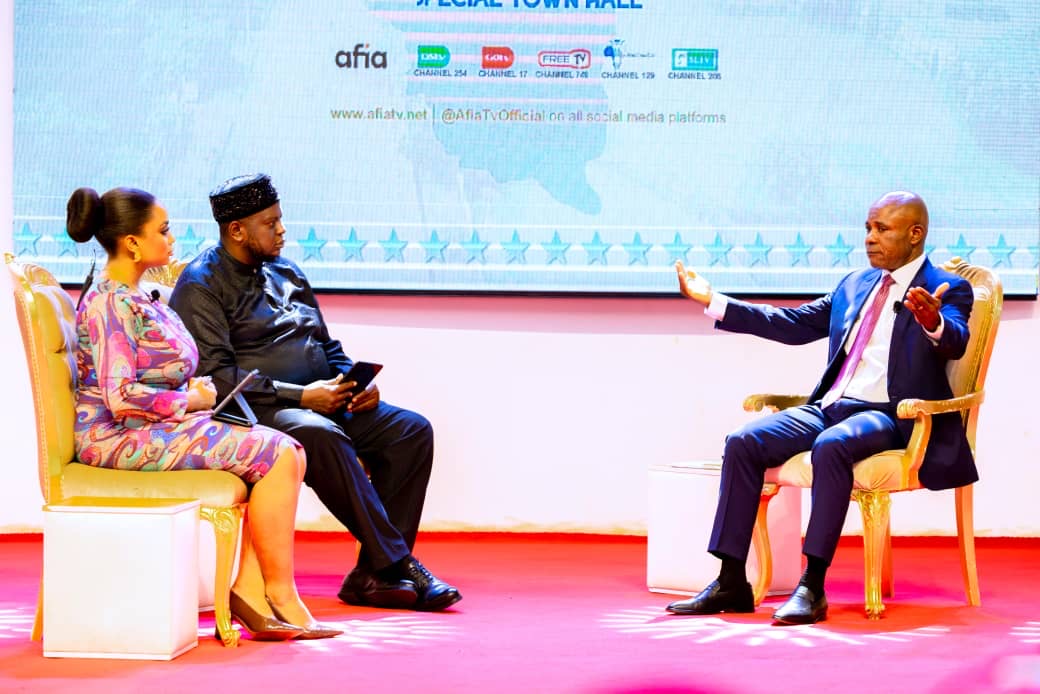
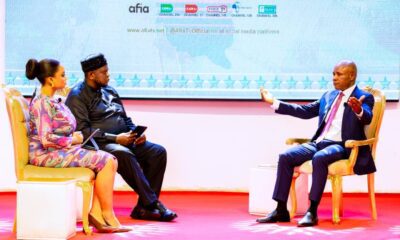
Enugu Electricity Regulatory Commission (EERC), on  Thursday held a public hearing on the petition filed by MainPower Electricity Distribution Limited, which is seeking a review of the Commission’s Tariff Order issued in July 2025.

The event, which took place at the International Conference Centre (pICC), Enugu, brought together major stakeholders in the state’s power sector, including representatives of the Association of Nigerian Electricity Distributors (ANED), consumer advocacy groups, and regulatory officials.

Speaking at the occasion, the Chief Executive Officer of the Enugu Electricity Regulatory Commission,  Chijioke Okonkwo, outlined the historical and regulatory context that led to the current tariff structure.

He recalled that following the enactment of the Electricity Act, 2023, which empowered states to regulate electricity generation, transmission, and distribution within their territories, Enugu State therefore established its own regulatory framework.

Okonkwo pointed out that  the Enugu State government first prepared a policy document which led to the passage of the Enugu State Electricity Law, specifically designed for the benefit of Enugu citizens. “Pursuant to that law, commissioners for the Enugu Electricity Regulatory Commission were appointed, enabling the state to formally seek regulatory transfer from the Nigerian Electricity Regulatory Commission (NERC).”

According to him, Enugu officially assumed full regulatory responsibility for electricity services on October 22, 2024, after a six-month transition period approved by NERC.

He explained that part of the transition process required the creation of MainPower Electricity Distribution Limited, a subsidiary that took over the assets, liabilities, and operations of the Enugu Electricity Distribution Company (EEDC) within the state.

“We subsequently licensed MainPower and issued it a tariff order governing electricity operations in Enugu State,” Okonkwo said, pointing out, “That order, issued on July 18, 2025, and effective August 1, 2025, was the result of extensive assessment and fair consideration of the company’s assets and liabilities.”

Maduka College Advert

He said the ₦160 per kilowatt-hour tariff was “prudently determined” after examining various cost parameters, including customer numbers and distribution efficiency.

“However, MainPower later petitioned against the order, expressing disagreement with some of the assumptions and parameters used,” he said. “We considered it inappropriate to amend the order unilaterally and instead opted for this public hearing in line with our business rules — to ensure transparency, fairness, and public participation.”

In his presentation, the Managing Director, Mainpower Electricity Distribution Limited.Dr. Ernest Mupwaya,  argued that the EERC did not follow due process in issuing the July 18, 2025 tariff order.

The company maintained that the Commission ignored its own business rules by releasing a tariff order without a bilateral agreement between both parties and by “cherrypicking numbers” that did not reflect operational realities.

“An independent audit firm, KPMG, reviewed the process and confirmed that the parameters used by EERC were wrong,” Mupwaya said.

“We urge the Commission to adopt the actual data presented to it, rather than assumptions, to ensure a fair and sustainable tariff framework.”

The firm claimed that the current ₦160/kWh tariff was inconsistent with prevailing costs in the national electricity market and was unsustainable for its operations.

Siding Mainpower that EERC’s was arbitrary, Barr. Sunday Oduntan, Chief Executive Officer of the Association of Nigerian Electricity Distributors (ANED), cautioned against setting tariffs below the actual cost of energy supplied to the state.

“In this industry, we are distributors, not generators,” Oduntan noted. “We buy electricity from those who produce it, and there is always a landing cost associated with that product.”

He explained that while the Electricity Act 2023 allows states to regulate electricity within their borders, they must still respect market realities when sourcing power from the national grid.

“Until Enugu begins generating its own electricity — for instance, from coal — it cannot fix arbitrary prices for a product that comes from outside its borders,” he said. “The cost must reflect the true landing cost, which the NERC currently calculates at about ₦209 per kilowatt-hour for Band A customers.”

Oduntan warned that setting tariffs below cost could reintroduce the burden of subsidies.

“If the cost price is higher than the regulated price, we must ask who pays the shortfall — are we going back to the era of subsidy?” he queried.

Touched by high electricity tariff, the South-East Electricity Consumers Association (SEECA), in its submission to the Commission, strongly opposed MainPower’s petition, insisting that the ₦160/kWh tariff should be retained.

In a memorandum signed by its Enugu State Chairperson, Patience Ifebuche Chukwu, SEECA argued that the EERC followed due process and provided fair hearing before issuing the tariff order.

“Records show that before the Tariff Order was made, a series of meetings and submissions were held between EERC and MainPower,” SEECA stated. “Fair hearing is not an automatic principle to be invoked at convenience. A party that had the opportunity to be heard cannot later claim denial.”

The association dismissed MainPower’s claim of ₦1.3 billion monthly losses, countering that electricity consumers had endured greater hardships due to erratic power supply, estimated billing, and poor service delivery.

“Consumers have suffered loss of lives, spoiled goods, and business closures. These losses far outweigh any purported loss claimed by the petitioner,” the group said, calling for the abolition of the controversial Band classification system, which it described as “discriminatory.”

SEECA recommended that if any review must be done, the tariff should not exceed ₦165/kWh.

On the way forward, the EERC said the submissions made at the public hearing would be thoroughly reviewed before any final decision is taken on the petition.

Mr. Okonkwo reaffirmed the Commission’s commitment to balancing the interests of both operators and consumers through fair, transparent, and evidence-based regulation.

“Our goal,” he said, “is to ensure that operators receive fair value for their services while consumers get commensurate value for every naira they pay. Whatever decisions we make will be guided by fairness, transparency, and sustainability.”


News

Ojukwu was fighter for justice, Man of ideas — Bianca

Published

on

File Photo: Late Chukwuemeka Ojukwu and Bianca
Spread the love

Wife of Dim Chukwuemeka Odumegwu-Ojukwu and Minister of State for Foreign Affairs, Ambassador Bianca Odumegwu-Ojukwu, has said that the ex-Biafra leader was not just synonymous with fight for justice but also a strong believer in the power of knowledge.

This is as the European Union Ambassador to Nigeria and ECOWAS, Mr. Gautier Mignot, called for climate action, pointing out that it was more detrimental to do nothing.

He delivered the guest lecture on the theme- “Sustainable and Climate Resilience Future: Beyond Rhetorics,” on Wednesday, April 22, 2026, at the 4th Annual Chukwuemeka Odumegwu-Ojukwu Memorial Lecture.

The event was organised by the Chukwuemeka Odumegwu Ojukwu University (COOU), Igbariam, Anambra State, on its Founders’ Day as part of the 16th convocation ceremony.

The minister said the event was not a mere ceremony but a convergence of history, intellect, and legacy.

She said: “We gather to honour and reflect on the life of Chukwuemeka Odumegwu Ojukwu, a towering figure whose contributions to Nigeria’s political evolution and whose unwavering commitment to the dignity of his people remain indelible. He was not only a soldier and statesman, but also a man of ideas, a leader who believed in the power of knowledge, justice, and principled leadership.

Maduka College Advert

“Dim Ojukwu’s legacy compels us to ask difficult questions about nationhood, equity, inclusion, and the responsibilities of leadership. His life reminds us that leadership is not defined by convenience, but by courage, sacrifice, and the willingness to stand for what is just, even in the face of overwhelming odds.”

The minister stated that the university was promoting climate resilience, the same way Odumegwu-Ojukwu did.

According to her, the Igbo leader loved planting trees, and understood long before many others, even before climate action became more amplified, that respecting nature’s balance was important and that “trees were the silent guardians of our air, our soil and our future.

“Ladies and gentlemen, as we reflect on the life and legacy of Dim Ojukwu, let us recommit ourselves to building a Nigeria anchored on justice, unity, and shared prosperity. Let us invest in education, empower our youth, and strengthen our institutions, for these are the pillars upon which sustainable development rests.”

She also charged the graduating students to be good ambassadors of the institution, urging them to see the knowledge they had acquired as mere foundation because their character, resilience, and integrity will define their journey.

“Be ambassadors of this great institution, uphold its values, and contribute meaningfully to national and global development,” she stated while further highlighting the importance of strengthening the nexus between academia and policy.

The minister said that universities must continue to serve as think tanks, generating ideas and research that can inform government policies, particularly in areas of foreign relations, economic diplomacy, and national development strategies.

She said that the Ministry of Foreign Affairs would remain open to such collaborations, as they work towards projecting Nigeria’s image positively on the global stage.

She wished the University and its brand new Governing Council, a highly successful founders’ day celebrations.

The EU Ambassador, Mignot described the minister as a major promoter of Nigeria-EU partnership.

The Vice Chancellor of COOU, Prof Kate Omenugha extolled the Minister for the leverage she had given the university by facilitating their reach especially in the diplomatic community.

Continue Reading

News

Power Minister Adelabu tenders resignation letter

Published

on

Spread the love

The Minister of Power, Chief Adebayo Adelabu, has formally tendered his resignation and proposed the establishment of a Coordinating Minister for Energy to drive integrated reforms across Nigeria’s power, gas, and related sectors.

Adelabu announced his resignation in a letter dated April 22, 2026, and signed by Bolaji Tunji, his Special Adviser on Strategic Communications and Media Relations.

In the letter addressed to President Bola Tinubu, Adelabu stated that his resignation will take effect on April 30, 2026, to enable him to focus on his governorship ambition in Oyo State.

He, however, emphasised that sustaining and consolidating the gains recorded in the power sector requires stronger coordination at the highest level, including the appointment of a central authority to harmonise policy direction and execution.

Speaking further on the development, Tunji said the minister expressed deep appreciation to President Tinubu for the opportunity to serve, describing his tenure as a privilege to contribute to national development.

Adelabu noted that his decision aligns with the provisions of the Amended Electoral Act 2026, which precludes serving political office holders from contesting elections. He further disclosed that his gubernatorial aspiration dates back to 2016 during his tenure as Deputy Governor of the Central Bank of Nigeria.

Maduka College Advert

In his three-page letter, the minister outlined key achievements recorded during his tenure, including the implementation of the Electricity Act 2023, which decentralised the electricity market and improved the investment climate.

He highlighted that peak power generation rose to over 6,000 megawatts, driven by the integration of the Zungeru Hydropower Plant and the rehabilitation of thermal power plants. Transmission capacity was also strengthened through grid upgrades under the Presidential Power Initiative.

Adelabu further cited notable improvements in the distribution segment, including enhanced regulatory oversight, improved revenue collection, and progress in reducing Aggregate Technical, Commercial and Collection (ATC&C) losses.

Efforts to close the metering gap, he added, gained momentum through the Presidential Metering Initiative and the World Bank-supported Distribution Sector Recovery Programme (DISREP).

On the financial front, Adelabu stated that tariff reforms and a ₦4 trillion debt restructuring programme increased market revenues from ₦1 trillion in 2023 to ₦2.3 trillion in 2025, restoring investor confidence and placing the sector on a path to sustainability.

Despite these gains, the minister acknowledged persistent challenges, including gas supply constraints, infrastructure vandalism, and the need for full commercialisation of the electricity value chain.

He therefore proposed key measures to sustain progress, including the implementation of cost-reflective tariffs with targeted subsidies, recapitalisation of distribution companies, accelerated nationwide metering, sustained transmission investments, and strengthened regulatory enforcement.

“Central to his recommendations is the creation of a Coordinating Minister for Energy to provide strategic oversight and ensure synergy across power, gas, water resources, and environmental sectors,” Tunji said.

“According to him, this approach is critical to improving gas supply for thermal generation, optimising hydroelectric resources, and accelerating renewable energy deployment.”

Tunji added that Adelabu remains committed to ensuring a smooth and seamless handover process, while expressing gratitude to the President for the confidence and support extended to him throughout his tenure.

Continue Reading

News

Boko Haram suspect makes explosive claim, says ‘top soldier’ behind Abuja terror attacks

Published

on

The suspect
Spread the love

A man identified as a suspected member of Boko Haram has made startling claims during an interrogation, alleging that his group operates under the influence of a senior military figure based in Abuja.

In a video circulating online, the suspect, tied to a tree while being questioned by security personnel, repeatedly referred to an unnamed figure he described as “Manga Manga” and “Baban soja,” a Hausa phrase meaning “big soldier.”

Speaking in a mix of Hausa and Nigerian Pidgin, the man claimed his immediate commander works directly under the alleged figure.

“My oga dey work for that big soldier for Abuja,” he said, insisting that their operations are connected to the high-ranking officer.
The suspect also alleged that his superior’s family is currently with the same individual in Abuja, adding that he could lead security forces to the person if certain conditions were met.

“If una loose me, I go show everything,” he said, repeatedly asking to be untied before revealing more details.

Despite persistent questioning, the suspect maintained his stance, refusing to provide further information unless his demand was granted.

Maduka College Advert

When asked about weapons, he denied possessing any firearm.
“I no get gun,” he said.

Tied Boko Haram suspect makes explosive claim, says ‘top soldier’ behind terror attacks in Abuja pic.twitter.com/Kv1OiWZEwa
— Temitope Hassan (@temihat) April 22, 2026

The claims have not been independently verified, and authorities have yet to issue an official statement regarding the allegations or the identity of the individuals mentioned.

Meanwhile, security experts often caution that statements made under duress during interrogations should be treated carefully until properly investigated.

However, experts say the real battle may now be one of credibility.

“The biggest threat is not just the insurgents,” one security analyst noted, “but the erosion of trust in the system meant to defeat them.”

Here are some topical reactions on the development:

@kayceelopezpc: “We all know they are linked to high class men and even the federal government knows but won’t do nothing cos you can’t shoot your self.”

@mechetenco_wine: “The real issue is that no investigation will be carried out. Nothing will happen to whoever he is referring to. I pity the men on the field who are a bullet away from joining their ancestors.”

@pegasus9060 : “This is exactly why insecurity will never be solved. Every one in government is complicit. Everyone of them has to go.”

@LionelKuti10 : “We all act like we don’t know these boys are sponsored by politicians and military heads. Lots of public informations backed it up. The body language of the government and their policies.”

@247humour: “You will likely hear that those soldiers that captured him have been sacked soon.”

@vhiktri : “I’m not surprised tho, if a top military will call them their brothers abi wetin sef, why will I be surprised.” (accompanied by an image)

@stanleyjonas: “Their confidence couldn’t have been in their arms alone. They definitely have some ‘backbone’.”

Continue Reading

Trending

Maduka College Advert