News
BREAKING: Court asked to stop Ex-President Jonathan from contesting 2027 election

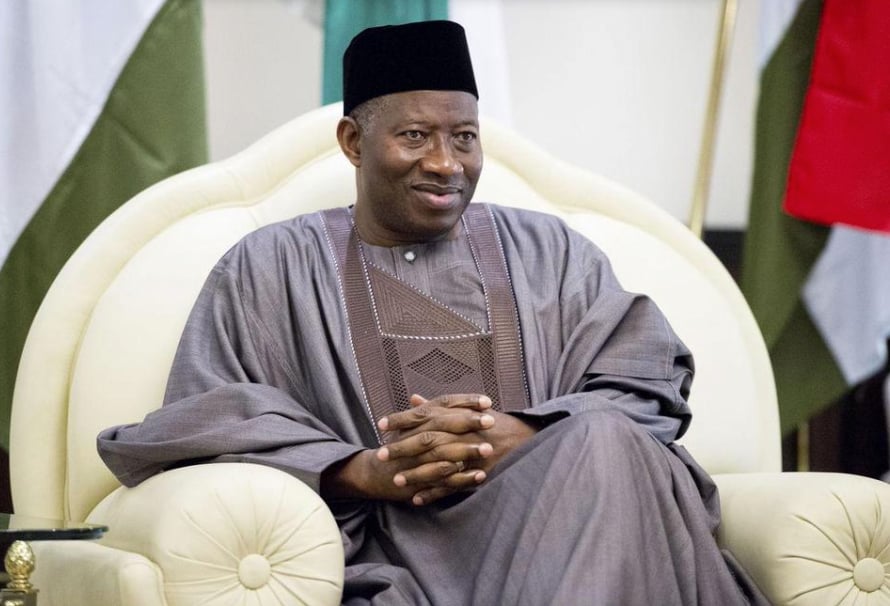
A move by political opponents to stop former President Goodluck Jonathan from seeking another term in 2027 election has commenced at the judiciary.
On Monday the Federal High Court in Abuja, was asked to issue an order of perpetual injunction, restraining Jonathan from presenting himself to any political party in the country for the purpose of contesting the 2027 presidential election.

The court was equally urged to bar the Independent National Electoral Commission, INEC, from accepting from any political party, Jonathan’s name or publishing same as a duly nominated candidate for the presidential contest.
While ex-President Jonathan was cited as the 1st defendant in the matter, both INEC and the Attorney General of the Federation, were listed as 2nd and 3rd defendants, respectively.
Specifically, the suit, marked: FHC/ABJ/CS/2102/ 2025, hich was brought before the court by a lawyer, Mr. Johnmary Chukwukasi Jideobi, posed a lone question for the court to determine:

“Whether in view of the combined provisions of the entirety of Sections 1(1), (2) & (3) and 137(3) of the 1999 Constitution of the Federal Republic of Nigeria as amended and their conflated interpretation, the 1st Defendant is eligible, under any circumstances [whatsoever] to contest for the office of the President of the Federal Republic of Nigeria?”
Upon the determination of the question, the plaintiff, sought four principal reliefs, to wit:
“A declaration of this Honourable Court that upon an intimate reading and complete understanding of the entirety of Sections 1(1), (2) & (3) and 137(3) of the 1999 Constitution of the Federal Republic of Nigeria as amended the first Defendant [GOODLUCK EBELE JONATHAN] is ineligible to stand for or occupy the office of the President of the Federal Republic of Nigeria.
“A declaration of this Honorable Court that in view of the entirety of Sections 1(1), (2) & (3) and 137(3) of the 1999 Constitution of the Federal Republic of Nigeria as amended the 2nd Defendant [the INEC] lacks the constitutional power to receive from any political party the name of the first defendant or publish same as the candidate of any political party for the election into the office of the President of the Federal Republic of Nigeria holding in 2027 and other years to come.
“An order of perpetual injunction of this Honourable Court restraining the first Defendant [Goodluck Ebele Jonathan] from presenting himself to any political party in Nigeria for nomination as its candidate for the general election into the office of the President of the Federal Republic of Nigeria holding in 2027 and other years to come.
“An order of perpetual injunction of this Honourable Court restraining the 2nd Defendant [INEC] from either accepting from any political party in Nigeria the name of the 1st Defendant [Goodluck Ebele Jonathan] or publishing same as a candidate for election into the office of the President of the Federal Republic of Nigeria holding in 2027 and other years to come.”
As well as, “an order of this Honourable Court directing the 3rd Defendant [Honourable Attorney-General of the Federation] to ensure compliance with the decisions and Orders of this court.”
In an affidavit of facts that was deposed to in support of the suit by one Emmanuel Agida, the plaintiff told the court that he is an advocate of constitutionalism and the rule of law.
He told the court that the 1st defendant was first sworn in as President on May 6, 2010, following the death of then President Umaru Musa Yar’Adua on the May 5,2010, having previously been the Vice-President.
The plaintiff said he recently saw on various national dailies and television stations, reports on Jonathan’s intention to contest for the presidency in 2027.
“That the Plaintiff believes that the 1st defendant, having completed the unexpired term of late President Yar’Adua and subsequently served a full term after the 2011 election, has exhausted the constitutional limit of two tenures as President.
“That if the court does not intervene timeously, a political party may present the 1st defendant as its presidential candidate in the 2027 general election, thereby breaching the Constitution.”
On his locus standi (legal right) to institute the action, the plaintiff maintained that part of his duties, as a lawyer, is to forestall a violation of the constitution and to uphold the rule of law.
“There are chances that one of the political parties in Nigeria may favour the 1st defendant to stand as its presidential candidate in the forthcoming 2027 general elections to be conducted and overseen by the 2nd Defendant.
“If unchallenged, the 1st defendant may enter the 2027 presidential race on the platform of one of the political parties in Nigeria and may possibly emerge the winner of the said election.
“In the event the 1st defendant is returned as elected and sworn as the President of the Federal Republic of Nigeria come in 2027, it will mark the 3rd time the 1st defendant will be taking oath of office as the President of the Federal Republic of Nigeria.
“In the event the 1st defendant is returned as elected and sworn as the President of the Federal Republic of Nigeria come in 2027, the plaintiff as a Nigerian citizen, would become one of the those under the governance control of the 1st defendant [who by virtue of his office would be saddled with the responsibility of executing the laws of the country].
“As a Nigerian lawyer trained in Nigerian constitutional law, the plaintiff has come across a provision in the Nigerian constitution stating that a person who was sworn-in as President to complete the term for which another person was elected as President shall not be elected to such office for more than a single term.
“The plaintiff knows that the 1st defendant was indeed, on the 6th May, 2010, sworn in as President to complete the term for which (former) President Umaru Musa Yar’Adua was elected as President as a consequence of the demise of the former President on the 5th day of May, 2010.
“The 1st defendant after being sworn in on 6th May, 2010 to complete the term of late Umaru Musa Yar’Adua, was subsequently elected into the office of the President of the Federal Republic of Nigeria and sworn in on the 27th May, 2011.
“I know that if the 1st defendant eventually wins the forthcoming 2027 general election as President of the Federal Republic of Nigeria (which is for a term of 4 years spanning 2027 to 2031), he will have exceeded 8 years being the cumulative maximum years a Nigerian President is to stay in office.
“As a Nigerian Lawyer trained in Nigerian constitutional law, the plaintiff knows of a provision in the Nigerian constitution stating that the Federal Republic of Nigeria shall not be governed, nor shall any persons or group of persons take control of the Government of Nigeria or any part thereof, except in accordance with the provisions of the same Constitution.
“The plaintiff being a lawyer committed to the reign of constitutionalism, an unrepentant apostle of the rule of law and a known crusader for democratic governance especially in Nigeria, does not wish to be governed by any person or group of persons who may have taken control of the Government of Nigeria in a manner not contemplated by the Nigerian constitution.
“The plaintiff has instituted this suit in the public interest, in the defence of the rule of law and accentuation of the supremacy of the Constitution and to preserve the integrity of the Nigerian Constitutional order.
“It will be in the interest of justice for this Honourable Court to grant the prayers contained on the face of this Originating Summons,” the affidavit further read.
No date has been fixed for hearing of the suit.










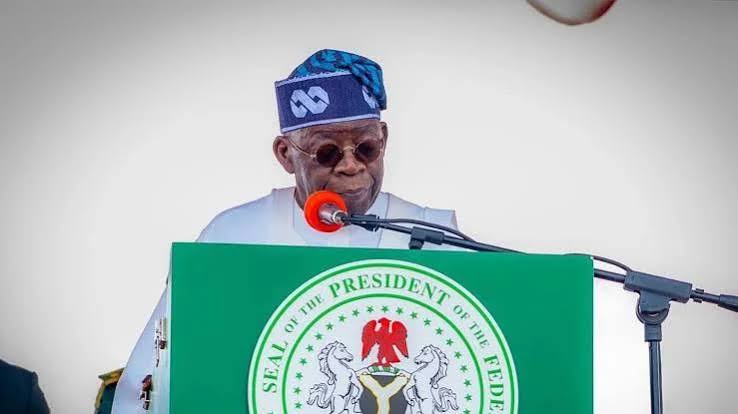
President Bola Tinubu has explained why he will not accompany members of the All Progressives Congress (APC) Presidential Campaign Council to every campaign event ahead of the 2027 general election, saying he must balance the demands of the re-election campaign with the responsibilities of governance.
Tinubu spoke on Wednesday in Abuja during the inauguration of the APC Presidential Campaign Council, where he charged members to take the party’s message to Nigerians across the states and local government areas while he concentrated on running the country.
The President said he agreed with concerns that the rigours of campaigning should not distract him from governance, insisting that Nigeria required his attention at a time when the administration was managing economic responsibilities and international financial obligations.
“You’ve warned me not to allow the rigour of the campaign to distract me from governance, I hear you. I am in full agreement with your decision. Nigeria needs more attention now,” he said.
Explaining further, Tinubu asked campaign council members to excuse him from attending every campaign event, pointing to the need to meet the country’s financial obligations.
“So, you will excuse me from going everywhere with you, we have bills to pay. The American creditors cannot wait,” the President said.
He also emphasised the importance of attracting investors willing to make long-term commitments to Nigeria, arguing that investment was necessary to secure a better future for the country’s children.
“We want those investors to come in, be here to stay, to invest for the future of our children,” he said.
Tinubu, however, assured Nigerians that his decision not to attend every campaign event would not prevent him from engaging directly with voters.
“However, I will still make time to speak directly with Nigerians, even as you lead the campaign in the states and local government areas,” he added.
Describing the inauguration as more than a routine political gathering, the President said the council represented a renewed commitment to Nigerians and the responsibilities entrusted to the APC as the governing party.
“We have not gathered merely to inaugurate a council. We have gathered to renew a covenant. A covenant with Nigerian people and the historic responsibility they have entrusted to us as Nigeria’s governing party,” he said.
He charged council members to communicate the administration’s vision, record and agenda to Nigerians nationwide, expressing confidence in their ability to take the party’s message to every ward.
“This council will carry our vision, our records and our agenda to every Nigerian, and it will carry them to victory every ward of this country,” Tinubu said.
The President also commended APC members for successfully completing the party’s congresses, recalling predictions that the exercise would trigger an internal crisis.
According to him, the party had overcome the challenges and emerged united, with members participating in the process from the ward level to the national leadership.
“They said there will be implosion. We passed through it. We did not fail. You didn’t let us down. We got here together,” he said.
Tinubu’s remarks place governance and economic management at the centre of his stated approach to the coming campaign, while assigning the campaign council the responsibility of coordinating the party’s nationwide mobilisation ahead of the 2027 election.
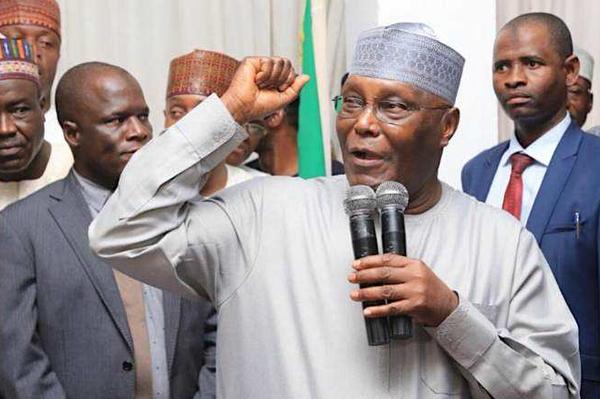
The Economic and Financial Crimes Commission (EFCC) has reopened an investigation into allegations involving former Vice-President Atiku Abubakar following a petition by a former member of the House of Representatives, Hon. Ehiozuwa Johnson Agbonayinma.
The commission acknowledged receipt of the petition, dated August 27, 2026, and received on September 1, 2026, confirming that investigation has commenced.
The former lawmaker through his lawyer, Chief Hannibal Uwaifo (SAN), is seeking a review of the allegations arising from an earlier investigation involving the former vice-president.
As part of the process, the EFCC invited Agbonayinma to its headquarters in Jabi, Abuja, on October 12, where he adopted his petition and responded to questions from investigators.
He arrived at about 9:58 a.m. and left at approximately 4:07 p.m. after the interview.
The commission’s acknowledgement letter, referenced CR:3000/EFCC/HQ/SDC-2/VOL.3/398, forms part of the ongoing investigative process.
He told newsmen that his petition sought to revisit an investigation conducted by the former EFCC chairman, Mallam Nuhu Ribadu, involving Atiku.
He argued that the matter deserved renewed attention in the interest of accountability and the rule of law.
“I want to thank Nigerians, the EFCC and those praying for me in this struggle. The laws are meant for both the rich and the poor. After the EFCC has done a fantastic job, it should not be kept under the table,” he said.
Agbonayinma added that he considered reporting alleged wrongdoing a constitutional responsibility, insisting that nobody was above the law.
He also disclosed that he had written a petition on the matter to United States President Donald Trump, calling for attention to the allegations.

The Senate has passed, for second reading, a bill seeking to establish a national framework for suicide prevention, decriminalise attempted suicide and provide rehabilitation for survivors, despite opposition from Senate President Godswill Akpabio, who insists that the act should remain punishable by imprisonment.
Sponsored by Senator Asuquo Ekpenyong, representing Cross River South, the bill seeks to address what he described as a contradiction in Nigeria’s laws.
Ekpenyong argued that while the National Mental Health Act recognises attempted suicide as a psychiatric emergency requiring treatment, Section 327 of the Criminal Code and Section 231 of the Penal Code still criminalise the act.
He said decriminalisation without accessible care would be incomplete, stressing that suicide has complex causes and requires a humane, health-focused response.
“At the heart of this bill is a simple question: when a Nigerian survives a suicide attempt, should the first response of the state be prosecution or protection?” he asked.
He warned that continued punishment could create a situation in which people experiencing distress feel compelled to ensure their attempts are fatal to avoid prosecution.
The bill proposes replacing imprisonment with mandatory assessment, referral, treatment and follow-up support. It also provides for crisis helplines, training for police officers, teachers and health workers, public education and a national data system for suicide prevention.
However, Akpabio maintained that attempted suicide should remain a criminal offence, arguing that removing the penalties could encourage the act.
“If you attempt suicide, make sure you die. Anyone who attempts and fails will go to jail,” the Senate President said.
Akpabio added that the issue involves both the Criminal Code and the Penal Code, requiring input from State Houses of Assembly during a public hearing to avoid legal conflicts.
The bill has been referred to the Senate Committees on Judiciary and Health for further legislative action and a public hearing.
-
 News2 days ago
Mbah orders impartial Police Probe into Enugu political violence, vows accountability
-
News2 days ago
BREAKING: Soludo, Wike, Adeleke, others appointed member of APC Presidential Campaign Council
-
Features2 days ago
Enugu Political Flashpoint: Mbah orders Impartial Probe as NDC Incidents Trigger Controversy
-
News2 days ago
Rochas Okorocha arrested, released after one-hour Interrogation — Police
-
News2 days ago
Enugu APC demands NDC apology over minute’s silence
-
News1 day ago
Alleged $1bn arms fraud: Funds given to Defence Ministry, not military — Gen. Buratai
-
News2 days ago
Enugu Governor’s Aide, Lucky Chukwu is dead
-
Features7 hours ago
Aguleri/Umuoba Anam Crisis: The Bloody Battle Between Close Neighbours