Politics
2027: Politicians with presidential ambition in ADC Coalition

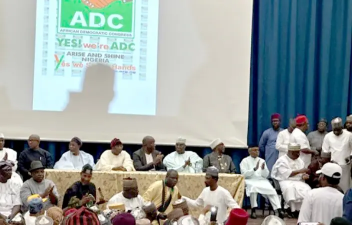
The new opposition coalition on the platform of the African Democratic Congress (ADC), continues to make headlines in Nigeria following its unveiling at the Yar’Adua Centre in Abuja earlier this week.
Following the adoption of the ADC as the coalition party, former Senate President, David Mark, and former Minister of Interior, Ogbeni Rauf Aregbesola, were appointed interim National Chairman and interim National Secretary respectively.

The ADC Coalition, which includes prominent political figures from the Peoples Democratic Party (PDP), All Progressives Congress (APC), Labour Party (LP), and Social Democratic Party (SDP), among others, has as its members, politicians like the former Vice President, Atiku Abubakar; former Labour Party presidential candidate, Peter Obi; former Minister of Transportation, Rotimi Amaechi; former Governor of Kaduna State, Nasir El-Rufai; former Attorney General of the Federation, Abubakar Malami; former APC National Chairman, John Oyegun; and former Imo State governor, Emeka Ihedioha, among others.
While the list of notable politicians with presidential ambition currently in the coalition seems inexhaustible, the unveiling of the coalition against President Bola Ahmed Tinubu sparked strong criticisms from the Presidency, the ruling APC, and, most recently, the Federal Capital Territory (FCT) Minister, Nyesom Wike.
As the coalition party continues to gather momentum across the country, there seems to be more possible alignments and realignments across party lines ahead of the 2027 general elections.

Therefore, Tribune Online takes a look at this coalition party of familiar faces and those who are likely to seek the party’s presidential ticket for a ‘showdown’ with the ruling APC’s President Tinubu:
1. Atiku Abubakar
Former Vice President Atiku Abubakar is a very familiar face in the race for Aso Rock before Nigeria’s return to democratic rule in 1999.
In 1993, Atiku contested the SDP presidential primaries but lost to Moshood Kashimawo Abiola and Baba Gana Kingibe.
Atiku, who ruled the country as the number two citizen alongside then President Olusegun Obasanjo from 1999 to 2007, left the PDP and contested the presidential election under the platform of the Action Congress (AC), against Shehu Musa Yar’Adua of the PDP who won the election.
The former Vice President showed interest in the number one seat in 2011 but lost the PDP ticket to Goodluck Ebele Jonathan. Ahead of the 2015 elections, Atiku also contested and lost the presidential ticket of the newly formed APC to General Muhammadu Buhari (rtd).
For another shot at the presidency in 2019, Atiku returned to the PDP and secured the party’s ticket but lost to the APC’s Buhari, who secured re-election.
In the last general elections — precisely 2023 — Waziri Adamawa ran again on the platform of the PDP, against Bola Ahmed Tinubu of the APC. Atiku was defeated by the incumbent President.
While Atiku has not openly declared his intention to let go of his over 20-year ambition of attempting to be Nigeria’s President, many consider him a possible candidate to fly the flag of the ADC Coalition in the 2027 presidential elections.
2. Peter Obi
This former Anambra State governor ran alongside Atiku Abubakar, as running mate, in the 2019 general elections where Nigerians re-elected the APC’s Muhammadu Buhari.
For 2023, Peter Obi joined the Labour Party and turned the presidential election into a three-horse race — keenly contested between himself, Atiku Abubakar of the PDP, and the winner, Bola Ahmed Tinubu of the APC.
Peter Obi’s first direct shot at the presidency made him a thorn in the flesh of the ruling APC due to his youth-led support base dubbed the ‘Obidient Movement’. Many also believe Obi’s candidacy was considered a South-East chance to rule the country since the return to democracy.
While Obi has not officially left the embattled Labour Party, his romance with the ADC Coalition positions him as one possible candidate for the party in 2027.
Tribune Online reports that the 2023 LP presidential candidate has submitted a proposal to the Opposition Coalition seeking a one-term presidency if given the ticket.
3. Rotimi Amaechi
Amaechi is one of the politicians in the ADC who had been in positions of power until 2023. Amaechi won a seat in the Rivers State House of Assembly in 1999 and subsequently became the House Speaker until 2007.
After his time as speaker, Amaechi became the Rivers State governor in 2007 and spent eight years in charge of the oil-rich state.
As one of the G-7 governors who worked against Jonathan for the 2015 general election, Amaechi joined President Buhari’s cabinet as a minister in 2015 and continued until 2023.
But ahead of the 2023 poll, precisely on April 9, 2022, Amaechi also declared his interest to contest the presidential primary of the APC but lost the ticket to Bola Ahmed Tinubu, who is now the incumbent president.
Like Peter Obi, Tribune Online reports that Amaechi has also declared readiness to serve a one-term presidency if considered to fly the flag of the opposition coalition against President Tinubu in 2027.
4. Aminu Waziri Tambuwal
Like Amaechi, Tambuwal has also been in position for over two decades. While Amaechi left in 2023, Tambuwal is still a serving Senator.
The man who spent 12 years in the country’s green chamber, the House of Representatives, was first elected in 2003. In 2011, Tambuwal became the 12th Speaker of the House and served until 2015.
Following his time as Speaker of the House of Representatives, Tambuwal returned to Sokoto to become governor — a position which he held until 2023.
Ahead of the 2023 general elections, Tambuwal also declared interest in gunning for the number one political office in the country but later stepped down for Atiku at the May 2022 primaries of the PDP.
Subsequently, Tambuwal was given the party’s senatorial ticket for Sokoto South and has been at the Senate since 2023.
5. Dele Momodu
As a veteran journalist and politician, Dele Momodu was a chieftain of the opposition PDP until recently, when he disclosed his readiness to pitch a tent with the coalition against Tinubu.
The publisher of Ovation Magazine also ran for the presidential ticket of the Peoples Democratic Party (PDP) ahead of the 2023 general elections. However, he lost to Atiku Abubakar, who flew the party’s flag against Tinubu in 2023.
Although Dele Momodu has not declared whether he will also contest the ADC Coalition ticket against the likes of Atiku, Obi, and Amaechi, his previous attempt to secure the PDP ticket makes him one of the politicians with presidential ambition currently in the ADC.
While the above are listed based on their past declarations of interest in the presidency, there are many other politicians with presidential ambition currently in the ADC Coalition whose interest in the number one seat will be made known ahead of the party primaries. (Nigerian Tribune)













The presidential campaign council of former Vice President Atiku Abubakar under the African Democratic Congress (ADC) has criticised President Bola Tinubu’s 90-day cost-of-living relief plan, describing it as “election bait” and demanding details of how the proposed measures would ease the economic hardship facing Nigerians.
The council’s Director of Strategic Communication, Phrank Shaibu, stated this on Friday during a world press conference at the party’s secretariat, questioning the timing of the initiative and the government’s ability to deliver meaningful relief within the proposed timeframe.
Shaibu argued that with the presidential election reportedly 86 days away, the 90-day timeline would extend beyond the poll, raising concerns that Nigerians might not experience the promised benefits before deciding whether to renew the administration’s mandate.
“After three and a half years of hardship, this government is asking families to carry another promise into the polling booth and wait for relief until the votes are counted,” he said.
He urged Nigerians to judge the Tinubu administration by its economic performance and the impact of its policies on household incomes rather than promises announced ahead of the election.
The Federal Government’s 90-day plan identifies five priority areas: food affordability, tax harmonisation, completion of key projects, removal of investment bottlenecks and household support.
However, Shaibu maintained that these issues had remained unresolved for too long, citing rising food and transportation costs, growing pressure on manufacturers and the closure of businesses.
He also criticised the government’s handling of petrol subsidy removal, arguing that adequate measures to protect vulnerable households should have accompanied the policy from the outset.
According to him, Nigerians were made to bear the immediate economic consequences of the reform while being asked to wait for its promised benefits.
“A government cannot put a 90-day deadline on hunger, the cost-of-living crisis and insecurity and call it an economic policy,” he said.
ADC Questions Tinubu’s Planned Kaduna Visit
The ADC campaign official also questioned President Tinubu’s planned visit to Kaduna State to launch his re-election campaign, citing concerns over insecurity, civilian casualties from military airstrikes, abductions and natural disasters in the state.
He recalled the December 3, 2023, military drone strike on civilians attending a Maulud celebration in Tudun Biri, which killed at least 85 people.
He also referenced a reported military airstrike in Giwa in September 2024 that allegedly killed at least 24 civilians, as well as reported kidnappings in Kachia in September 2025 and the impact of storms and flooding on communities across the state.
Shaibu challenged the President to explain what his administration had done to support victims of the incidents and what concrete measures had been introduced to protect residents from abductions and other security threats.
Demands Transparency Over NNPC Fuel Discount
Shaibu also questioned the effectiveness of a fuel discount promotion reportedly introduced by the Nigerian National Petroleum Company Limited (NNPC) on October 1.
He claimed that he visited NNPC retail outlets but was told that no discount was available, adding that he subsequently purchased petrol at ₦1,405 per litre.
He challenged the company to publish comprehensive details of the promotion, including the number of motorists who benefited, the participating stations and the volume of petrol sold at discounted prices.
The ADC official further questioned the reach of a reported ₦66-per-litre discount, arguing that the impact of the initiative needed to be assessed against the number of NNPC retail outlets and the country’s wider fuel retail network.
Demands Details of Five-Point Relief Plan
On food affordability, Shaibu asked the government to explain which production and distribution costs would be reduced for farmers, transporters and traders, when consumers should expect lower market prices and how the reductions would be sustained beyond the 90-day period.
He also demanded the publication of the proposed tax harmonisation measures, a list of projects scheduled for completion within the timeframe and details of the government’s plans to remove obstacles affecting manufacturers and investors.
Regarding household support, Shaibu called for disclosure of the eligibility criteria, payment amounts, commencement dates, funding arrangements and plans for beneficiaries after the initiative expires.
He argued that without clear implementation details and measurable targets, the plan risked becoming another government announcement without demonstrable benefits for ordinary Nigerians.
Raises Concerns Over ‘Arise for Tinubu 2027’ Registration Form
Shaibu also raised concerns about a registration form circulating under the name “Arise for Tinubu 2027”, which he said requested voter identification, bank details and phone numbers.
He demanded clarification on the identity of those collecting the information, the purpose of the exercise and whether it was connected to the proposed household support programme.
He insisted that Nigerians should not be required to surrender sensitive personal information to a political organisation as a condition for accessing public relief.
He further urged the government to explain what safeguards would prevent the misuse of personal data or the diversion of public assistance for political purposes.
Atiku’s Alternative Economic Position
Shaibu said Atiku had pledged to make Nigeria more affordable through disciplined public spending, targeted household assistance, lower production and transportation costs for essential goods, and policies designed to help local manufacturers expand and create jobs.
He maintained that the success of economic policies should be measured by improvements in household purchasing power, reduced living costs and increased economic opportunities, rather than official announcements.
The ADC campaign council urged Nigerians to demand verifiable evidence that the proposed relief measures would reach intended beneficiaries, deliver measurable improvements and remain effective beyond the election period.

The Chairman of Ezza South Local Government Area in Ebonyi State, Hon. Chinedu Mkpuma, has directed political parties and groups to obtain prior approval from his office before organising political campaigns and gatherings in the area.
The directive follows a recent security breach in Amaezekwe community amid growing concerns over political violence ahead of the 2027 general elections.
In a statement made available to journalists in Abakaliki, Mkpuma expressed concern over the security situation, saying the measure was necessary to protect lives and property, maintain public order and prevent further security breaches.
While acknowledging the constitutional rights of citizens to freedom of association and peaceful assembly, the chairman insisted that all political gatherings within the local government area must receive prior approval from his office.
He warned that anyone who violates the directive would face appropriate action in accordance with the law.
Meanwhile, the Labour Party governorship candidate, Eze Oko, has condemned the reported killings and alleged attacks on opposition parties in the state, calling on political leaders to end violence and intimidation.
Oko questioned the alleged targeting of opposition members and urged youths to resist attempts by politicians to use them as instruments of violence.
He called for a level playing field for all political parties and candidates, insisting that political competition should be based on ideas, manifestos and records of performance rather than violence.
The Labour Party candidate also cautioned political leaders against making inflammatory statements capable of escalating tensions during the electioneering period.
He urged candidates seeking re-election to allow their achievements to speak for them rather than allegedly engaging political thugs to intimidate opponents.
Oko further appealed to youths to reject political thuggery and violence, while extending his condolences to the families of those reportedly killed in the incident.
The development comes as political activities gather momentum ahead of the 2027 general elections, amid renewed calls for security agencies to investigate reported attacks and ensure that all political parties can operate without intimidation.
The directive applies specifically to Ezza South Local Government Area. The information available does not establish that the Ebonyi State Government has imposed a statewide ban on political campaigns and gatherings.
Opposition leaders under the G-100 coalition have said discussions among major presidential hopefuls on the emergence of a consensus candidate to challenge President Bola Tinubu in the 2027 general election are progressing steadily.
The coalition said leading opposition candidates had begun engaging one another on possible cooperation ahead of the polls, expressing optimism that a common candidate would emerge from the ongoing negotiations.
The group disclosed this in Abuja on Thursday during the inauguration of its legal and media committees, established to provide the necessary framework for inter-party negotiations and collaboration.
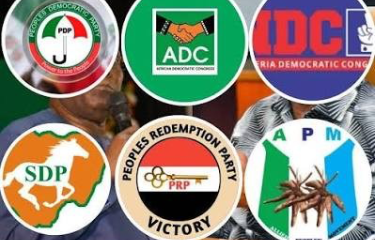
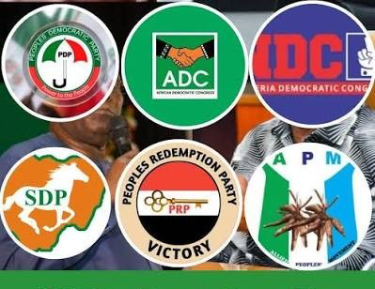
The parties participating in the initiative are the African Democratic Congress (ADC), Nigeria Democratic Congress (NDC), Peoples Redemption Party (PRP), Social Democratic Party (SDP), Peoples Democratic Party (PDP) and Allied Peoples Movement (APM).
Among the presidential hopefuls being considered are former Vice-President Atiku Abubakar of the ADC, Peter Obi of the NDC, Donald Duke of the PRP and Adewale Adebayo of the SDP.
National chairmen of the participating parties and other representatives attended the meeting.
Speaking at the event, SDP National Chairman, Prof. Sadiq Umar Abubakar Gombe, who inaugurated the committees, said the coalition was putting in place the structures required to facilitate negotiations and cooperation among the parties.
He disclosed that party leaders had been engaging presidential aspirants, adding that the candidates themselves had also commenced discussions on possible collaboration before the end of the year.
“Our ambition is to present a candidate that can defeat APC and form the next government. And we’re making very good progress,” Gombe said.
He described the feedback from the participating parties and presidential hopefuls as encouraging, expressing confidence that outstanding issues would be resolved before the 2027 general election.
Although the coalition has yet to disclose the formula for selecting its preferred candidate, Gombe said it was moving beyond political declarations to establish a structured process for achieving its objective.
“Today, we take a deliberate step from intention to structure. The work of this coalition will be judged not only by the strength of our convictions, but by the discipline, precision and unity with which we carry it out,” he said.
Legal Committee to Address Electoral and Constitutional Issues
Gombe described the legal committee as a critical component of the coalition’s efforts to establish a workable and legally sound framework for cooperation.
The committee, comprising national legal advisers of the participating parties and other senior legal representatives, is expected to review outstanding legal disputes involving the parties, examine the actions of the Independent National Electoral Commission (INEC) in relation to relevant Supreme Court judgments and advise the coalition on available legal options.
It will also scrutinise working-group documents and negotiated agreements, identify potential legal risks, recommend safeguards and establish mechanisms for resolving disputes before any coalition agreement is adopted.
Gombe warned that overlooking critical legal provisions could jeopardise the entire process.
“We cannot afford surprises. A single overlooked clause can undo months of honest negotiation,” he said, urging members to demonstrate diligence, transparency and independent judgment.
Media Committee to Coordinate Coalition’s Messaging
The media and publicity committee, comprising national publicity secretaries and spokespersons of the presidential campaign councils of the participating parties, will coordinate the coalition’s public communication strategy.
Its responsibilities include harmonising public statements, coordinating media engagements and announcements, and ensuring consistency in the coalition’s positions.
The committee is also expected to establish procedures for authorising joint statements and consult the legal committee on sensitive constitutional and legal issues.
Gombe urged members of both committees to operate within their respective mandates, coordinate their activities and submit regular reports to the coalition’s leadership.
Coalition Cites Economic Hardship, Insecurity
The SDP chairman said the coalition was responding to the need for credible political alternatives amid the country’s economic and security challenges.
He noted that insecurity, rising living costs, unemployment and declining purchasing power continued to affect Nigerians, adding that the performance of the Tinubu administration should be assessed against its record and policy outcomes.
According to him, persistent policy failures, declining public confidence, institutional weaknesses and inadequate accountability could become entrenched if the concerns of citizens were not adequately addressed.
“Any decision concerning the continuation of the present administration under President Bola Ahmed Tinubu must be assessed against its record, its policy outcomes, and its capacity to address the country’s pressing problems,” he said.
Gombe maintained that no administration was above public scrutiny, stressing that political office should be regarded as a responsibility entrusted by the electorate rather than an entitlement.
He said the opposition was committed to presenting credible alternatives, defending constitutional democracy and ensuring that political debates remained peaceful, informed and focused on the national interest.
“The strength of this coalition will not be measured by the number of parties represented here, but by our unity of purpose, discipline, credibility, and commitment to the Nigerian people,” he said.
He urged the participating parties to place national interest above personal ambitions and partisan differences, warning that the coalition’s success would depend on their ability to work together towards a common objective.
-
 Features2 days ago
Kogi’s Kidnapping Crisis: Why Do Forests Remain Safe Havens for Criminals Under Ododo’s Watch?
-
News2 days ago
Kidnappers kill seven-year-old boy after ransom demand
-
News1 day ago
Macron Postpones Planned Visit to Nigeria Until 2027
-
News1 day ago
UBA Commences Contempt Proceedings Against WEMPCO Directors over Alleged Disobidence of Court Order
-
News1 day ago
Enugu CP Orders Probe into Death of Izuchukwu During Police Raid
-
Politics1 day ago
2027: Atiku, Obi, Duke, Others in Talks on Single Opposition Candidate – Coalition
-
News1 day ago
$242m Petroleum Products Diversion Claim: UBA Secures Court Order Against Vitol, Four Others
-
News18 hours ago
Mbah: Why We Built 268 Smart Green Schools Across Enugu State