





News
FG screens Ambassadorial nominees, Fani-Kayode, former Dep Gov Pedro on the list
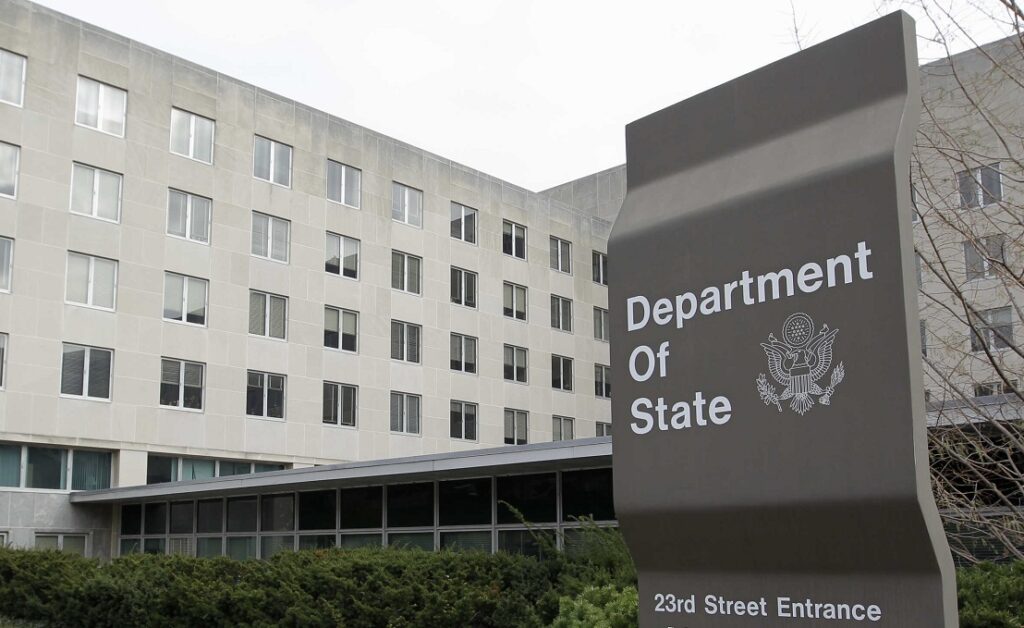
The Federal Government is vetting potential candidates to fill diplomatic roles in its 109 missions, 76 embassies, 22 high commissions, and 11 global consulates.
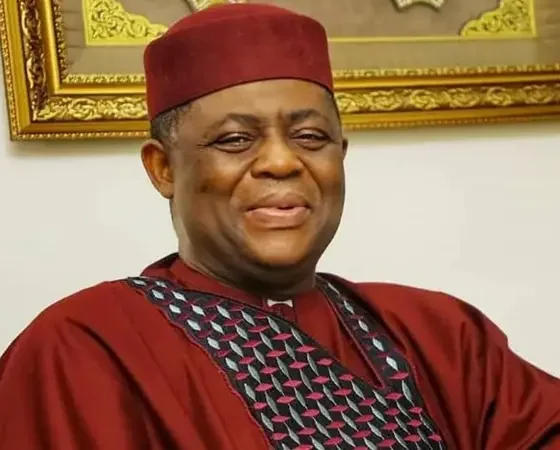
Impeccable sources familiar with the developments revealed that a former Minister of Aviation under the Obasanjo administration, Mr Femi Fani-Kayode, and a former Deputy Governor of Lagos State, Femi Pedro, are among the nominees.
The vetting is not conducted centrally, as nominees are being asked to report to the DSS offices nearest to them.
Presidency officials confirmed to Sunday PUNCH correspondent that several candidates had been contacted to provide personal education and work history.
“They’re already doing security checks with DSS. When they have cleared security checks, we will release the list.
“Only those who have been cleared are announced. The process is ongoing. I know that we should have a list before the end of this month (April),” one official revealed, preferring to remain anonymous as he was not authorised to speak to the press.

A second source said, “The vetting is not done centrally. It is based on the location of the nominees. Nominees have been reached to provide personal history and information such as where they attended school, what appointments they have held, and the like. So, it is by location.”
Tinubu’s 4Ds and funding issues
Since September 2023, President Bola Tinubu has operated his 4Ds—Democracy, Development, Demography, and Diaspora—foreign policy without ambassadors.
That month, he concluded a sector-wide reassessment of Nigeria’s foreign policy, which saw over 83 career and non-career ambassadors recalled from their stations.
Last December, reliable sources close to the President confirmed that Tinubu spent part of his holiday reviewing the names of nominees with plans to transmit a consolidated list to the National Assembly before the end of the month.
However, updates in January revealed that the President changed his mind.
Our correspondent gathered that the process suffered delays due to the paucity of funds—to the tune of $1bn —required to pay arrears of foreign service officials, settle a backlog of overheads, replace ageing vehicles and renovate embassy buildings.
One official, who spoke on condition of anonymity, said, “You see, the major issue is money. Not money to pay them [ambassadors], because how much is their salaries and benefits? The main money is CAPEX [Capital Expenditure]. By the time they put the cost together to fix the issues, it is running to almost $1bn.
“Most of those embassies, almost 90 per cent, are rundown. Either the residence is not good, the embassy does not have a functional office, or their rent has expired. The embassies that are buoyant may not be up to 10 as we speak.
“I understand that some of them don’t have serviceable vehicles. The last vehicles they bought were from 10 years ago. Some of them are broken down, and ambassadors cannot use such vehicles because they carry the image of the country. Some of them don’t even have power and running water. So, if you post ambassadors there today, you’re sending them to trouble.”
The Minister of Foreign Affairs, Yusuf Tuggar, also attributed the delay to financial constraints.
“It is a money problem,” Tuggar said during a ministerial briefing in Abuja last May.
He argued that appointing ambassadors without the financial resources to support their travel and the effective running of missions abroad was pointless.
“We met a situation where foreign affairs was not being funded like it should be. Some loopholes are exploited by the likes of Binance. It is a money problem.
“There is no point sending out ambassadors if you do not have the funds for them to even travel to their designated countries and to run the missions effectively, one needs funding. Mr President is working on it, and it will be done in due course,” Tuggar said.
A foreign service official explained that though provisions had been made in the 2025 budget to cover some of that cost, the funds were hardly enough.
Nominees on the list
Senior Presidency and foreign service officers say although the complete list of nominees is highly classified, some prominent and controversial figures are being screened.
One official said, “They’re going to announce the appointments soon. They are being screened as we speak. The names of the nominees are highly classified for now because not every one of the names listed will eventually make it through.
“FFK [Femi Fani-Kayode] is on the list. These are some of the controversial names that have been put forward as well. Then there is Fola Adeola [founder of Guaranty Trust Bank Plc] and Femi Pedro too. They’re moving on with the process more quickly this time.”
Giving reasons for the slow process, another official explained that the vetting was necessary to avoid complications that might hurt the country’s standing on the global scene.
“The nominees are being vetted, and background checks are being conducted on them. It is usually done so that the nominees will not have any security issues and their deployment will not have a negative impact on the country,” the official said.
There was also a claim that Reno Omokri, a former aide of former President Goodluck Jonathan, was on the list.
But a credible source in the Presidency denied it.
“Reno is not on the list. But FFK is there,” the source said.
The President’s Special Adviser on Information and Strategy, Mr Bayo Onanuga, who earlier spoke about the delays, said nominations for ambassadorial roles must be thorough before a final list is transmitted to the National Assembly.
“Don’t forget that the ambassadorial list has two components. There are career ambassadors and political ambassadors. The foreign affairs list and the consolidated list will still go through certain processes before they are released,” he explained.

News
Workers crown Mbah Top Governor, Commend Security, Infrastructure, Welfare Reforms
Governor of Enugu State, Dr. Peter Mbah, has been honoured with two major awards by organised labour, emerging as the “Most Labour-Friendly Governor” and “Best Performing Governor” in Nigeria.
The recognition came as thousands of workers across the state commended his administration’s sweeping reforms, security measures, infrastructural expansion, and improved welfare policies.
The recognitions were made on Friday at the Michael Okpara Square in Enugu during the 2026 Workers’ Day celebration, organised by the Nigeria Labour Congress (NLC) and the Trade Union Congress (TUC), which attracted a large turnout of workers from both the public and private sectors, gathered to mark the annual May Day and reflect on labour conditions in the country.

In his address, the NLC Chairman in the state, Comrade Fabian Nwigbo, said the honours were in recognition of Governor Mbah’s deliberate efforts to transform Enugu into a modern, secure, and worker-friendly state, noting that while insecurity and poverty remain major challenges across Nigeria, the governor had “changed the narrative” in Enugu through decisive leadership and targeted reforms.
Nwigbo highlighted key achievements of the administration, particularly the restoration of security, which he said has enabled workers to carry out their duties without fear.

He pointed to the successful eradication of destructive sit-at-home orders and the deployment of real-time surveillance systems, which have significantly reduced crime and improved economic activity over the past few years.

Beyond security, the labour leader praised the governor’s expansive infrastructure drive, citing the construction of Smart Green Schools and Type-2 Primary Healthcare Centres in all 260 political wards, describing them as “enviable investments” in human capital development.
He also commended the ongoing road construction and rehabilitation projects across the state, saying they have improved connectivity and enhanced productivity.
On workers’ welfare, Nwigbo listed several landmark policies, including the implementation of an ₦80,000 minimum wage, above the national benchmark, payment of wage awards for 12 months, and the approval of a ₦32,000 minimum pension, stressing the settlement of pension arrears, regular promotions, and improved allowances for health workers as evidence of the administration’s labour-friendly posture.
Similarly, the TUC Chairman, Comrade Simeon Akaeme, applauded Mbah for what he described as “bold and pragmatic leadership” that has delivered tangible results across multiple sectors.
He stressed that the administration’s projects were not abstract but have directly impacted the lives of workers and residents.
Akaeme highlighted major infrastructure milestones, including the construction of a 40-kilometre dual carriageway linking Nkanu East, Isi-Uzo, and Udenu local government areas; the development of the 300-bed Enugu International Hospital for advanced medical care; and the completion of a 5,000-capacity International Conference Centre.
The labour leader also stated that the modernisation of public transportation through the rollout of CNG buses, the construction of state-of-the-art bus terminals, and the soon-to-be-rolled-out taxis have eased movement and reduced travel costs.
In the area of economic transformation, the TUC chairman commended the launch of Enugu Air, the revitalisation of key state assets such as Hotel Presidential and Niger Gas, and ongoing investments in tourism and agro-industrial development, including a 300,000-hectare land bank for smart farm estates across the 17 local government areas.
He further praised the government’s commitment to transparency and digitalisation, noting that reforms in revenue collection have boosted internally generated revenue without increasing the burden on citizens.
According to him, the deployment of a tech-driven security architecture has led to a significant reduction in violent crime and safe living.
Speaking earlier, the Commissioner for Labour, Employment and Productivity, Dr. Felix Nnamani, praised the governor for transforming the state’s civil service through digitisation and e-governance, noting that the reforms have improved efficiency, transparency, and service delivery.
He also commended the administration’s strong commitment to workers’ welfare, including prompt salary payments, regular promotions, and an enhanced minimum wage.
While urging workers to remain dedicated and expressing confidence that the administration’s policies would sustain growth and deliver long-term benefits for the people, Nnamani lauded Mbah’s strides in strengthening security and fostering accountability, insisting that the safer environment has boosted productivity and economic activities across the state.
Responding, Governor Mbah thanked workers for their support and reiterated his administration’s commitment to prioritising their welfare.
Mbah, who was represented by the Deputy Governor, Barr. Ifeanyi Ossai, described workers as the “engine room of government” and assured that all entitlements would continue to be treated as a first-line charge.
The governor emphasised that his administration’s reforms are driven by a people-first philosophy and pledged to sustain efforts to build a secure, prosperous, and inclusive economy.
He also called for greater collaboration, urging workers to provide data and feedback that would enable the government to address workplace challenges more effectively.

News
May Day: Labour rejects FG’s growth claims, says economy favors 1% as millions suffer
…says Nigeria is at ‘war’
*Declares Nigeria one of world’s most dangerous places to live
*Threatens to direct workers to stay at home over killings, kidnappings nationwide
In a sweeping, fiery, and deeply critical address that touched virtually every sector of national life, Nigeria’s organised labour on Thursday declared that the country is drifting toward a dangerous tipping point, warning of a collapsing social contract, a failing economy, and a worsening security crisis that could force workers off their jobs nationwide.
At the 2026 May Day celebration held at Eagle Square, Abuja, leaders of the Nigeria Labour Congress, NLC, and the Trade Union Congress of Nigeria, TUC, Joe Ajaero and Festus Osifo, delivered a joint speech that combined stark economic analysis, political warnings, and an unmistakable threat of mass action if conditions do not improve.
They described Nigeria as a nation where “poverty tightens its grip daily,” institutions are weakening, and citizens are increasingly left to fend for themselves in the face of violence and economic hardship.
Workers create wealth, live in poverty
Setting the tone early, labour leaders reminded the nation of the central role workers play in sustaining the economy, contrasting it sharply with their current condition.
They said: “Workers remain at the very heart of every industry, every economy, and every success story known to humanity. Without workers, no wheel can turn; without workers, no nation can be built.”
Yet, they lamented, those same workers “create immense wealth yet receive only a fraction of it,” enduring exploitation while “poverty tightens its grip around them.”

They described Nigerian workers as people who “rise before dawn and return home at dusk, exhausted yet unbroken,” but increasingly unable to meet basic needs despite their efforts.
Growth without relief, reform without impact
Labour took direct aim at the government’s economic narrative, arguing that macroeconomic indicators have become disconnected from reality.
According to them; “We are told that GDP growth may reach about 3.6%… yet poverty continues to rise. We hear official inflation figures… but these numbers do not reflect the reality experienced daily by workers.”
NLC and TUC argued that Nigeria’s economic model has produced a distorted outcome, saying “Paper growth without jobs, stability without prosperity, and reform without relief.”
They insisted that the benefits of economic policies are being captured by a narrow elite, noting that “An economy that serves only the top 1% while leaving the 99% behind cannot be sustainable. Perhaps, it is working for the ultra-few 1% and not the 99% majority.”
Nation sliding deeper into poverty
Labour painted a bleak picture of living conditions across the country, citing data that shows poverty now affects about 65% of Nigerians — roughly 150 million people.
“Approximately 10,000 people are pushed into poverty every day,” they said, warning that deprivation has reached “alarming levels.”
They described overcrowded cities strained by rural displacement, rising food insecurity, and the re-emergence of diseases linked to extreme poverty in internally displaced persons camps.
“In these camps and communities, diseases such as Kwashiorkor, Craw-craw, and Marasmus are re-emerging,” they noted, calling it “a grim picture of a nation under severe strain.”
Minimum Wage: Labour draws the line
Against this backdrop, labour announced that negotiations for a new national minimum wage will begin in July 2026.
“We will commence the process early to avoid the painful delays of the past,” they said.
But beyond future negotiations, the unions demanded immediate intervention:
“We demand that from July of this year, every worker be paid 100% of his basic salary… to cushion the effects of the renewed crisis of survival. We demand a living wage, not a minimum wage.”
Nigeria is at War
On insecurity, labour delivered perhaps its most alarming assessment, declaring that Nigeria is effectively in a state of war.
“The scale of violence, the frequency of attacks, and the mounting loss of lives… place Nigeria among the most dangerous places to live on earth,” they said.
Rejecting the characterization of attacks as isolated incidents, they insisted: “It is not. It is a war against our people.”
They cited killings, bombings, and abductions across multiple states, noting that thousands have died and millions displaced.
“People are no longer safe in their homes, on the roads, or even in their workplaces. Daily life has become a gamble with fate”, they lamented.
Workers may stay at home
In a major escalation, labour warned that it may take the unprecedented step of directing workers to stay home if insecurity persists.
They said “Nigerian workers may no longer continue going to work with this level of insecurity. We may be forced to advise our members… to stay at home to avoid being kidnapped, abducted or killed.”
They stressed that such a decision would not be taken lightly but could become unavoidable if the situation does not improve.
“The safety of workers is non-negotiable,” they added.
Energy sector under fire
Labour also delivered a scathing critique of Nigeria’s power and oil sectors, describing them as symbols of policy failure and elite capture.
“Over a decade after privatisation, Nigerians have little to show but deepening darkness,” NLC and TUC said of the electricity sector.
They pointed out that despite over N10 trillion in public spending, power supply remains unreliable.
“What was promised as reform has become a burden,” they said, adding that consumers now pay more for less.
On fuel, they highlighted the paradox of an oil-rich nation unable to protect its citizens from price shocks.
“The contradiction is stark and disheartening,” they said.
Governance under scrutiny
Labour raised serious concerns about governance, accusing political leaders of being disconnected from the realities of ordinary Nigerians.
“When leaders seek better education abroad for their children while neglecting domestic schools… it raises fundamental questions about commitment,” they said.
They warned that governance risks becoming “an extractive enterprise” serving narrow interests rather than the public good.
Labour also criticized weakening democratic institutions, warning that the erosion of checks and balances threatens national stability.
A system that bleeds nation
The unions described corruption and illicit financial flows as one of the greatest threats to Nigeria’s future.
“This is not mere corruption; it is a system… one that bleeds the nation continuously,” they said.
They cited trillions lost to subsidy fraud and billions to illicit flows, arguing that such losses directly translate into poor services and low wages.
To confront this, they launched a nationwide campaign: “Stop the Bleeding. Every stolen Naira is a stolen future.”
2027 elections: Labour draws battle lines
Looking ahead, labour signaled a more assertive political role as the 2027 general elections approach.
“2027 will be different. No more will we be voting fodder”, they warned.
NLC and TUC vowed to support only candidates committed to workers’ welfare and national development.
“Those who have undermined workers’ rights cannot expect our support,” they said.
Despite the dire warnings, labour ended on a note of defiance and resolve, urging workers to recognize their collective power.
They said : “You are not victims. You are the engine of this nation. And engines do not beg; they move.”
They called for unity, organisation, and sustained action: “The change we seek will not come from elsewhere; it must come from us.”
Among others, NLC and TUC added: “Let this May Day mark the turning point; where Nigerian workers stopped asking and started demanding… Our nation can be saved! But only by us! Only together! Only now!” (Vanguard)

News
Bandits kidnap Sokoto Deputy Governor’s relatives, others in fresh attack
At least eight residents, including relatives of Sokoto State Deputy Governor Idris Muhammad Gobir, have been reportedly kidnapped in Garin Idi village, Sabon Birni Local Government Area of Sokoto State.
According to eyewitness accounts, the attackers arrived around 1:00am on Thursday on about eight motorcycles, shooting sporadically as they invaded the community.
The gunfire forced residents to flee into nearby bushes and other safe areas to escape.
A local source told Daily Trust that the attackers operated freely in the village for nearly two hours without any immediate security intervention.
The resident described the incident as one of the most intense attacks the community has experienced, adding that fear has become a constant part of daily life.
Another witness said the assailants initially abducted about 30 people, mostly women and children, but later released some due to limited space on their motorcycles.

Ultimately, they left with eight victims—three men and five women.
Those kidnapped were identified as Hassana Adare Maifata, Rabi Alhaji Ishaqa, Kwamuso Umar, Yar’aji Garba, Kabiru Alkasim, Sani Muazu, Jadi Alkasim (a patient), and a woman believed to be related to the deputy governor.
The attackers were also reported to have raided a phone charging shop in the village, stealing over 100 mobile phones, power banks, and about ₦40,000 in cash after the operator fled the scene.
Residents expressed deep concern over the worsening insecurity in the area, calling on authorities, including the deputy governor, to urgently intervene and strengthen security presence.
One resident lamented that despite their ties to the deputy governor, they feel abandoned in the face of repeated attacks, urging immediate action to prevent further incidents.

-
News3 days agoTinubu names Bianca Odumegwu-Ojukwu as Minister of Foreign Affairs
-
Politics2 days agoBREAKING: Supreme Court restores David Mark-led ADC leadership
-
News2 days agoAttorney General asks Court to deregister ADC, Accord, three other parties
-
News3 days agoSupreme Court fixes Thursday for judgement on ADC leadership dispute
-
News1 day agoChurch suspends Priest over alleged fake miracles, prophecies
-
News3 days ago
Awka blacksmiths lament neglect by Govt, indigenes
-
Politics1 day agoSupreme Court Judgment: BoT now in charge of PDP – Wabara
-
Politics1 day agoINEC restores David Mark, Aregbesola’s names as ADC National Chairman, Secrtetary