News
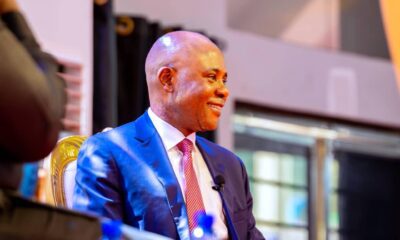
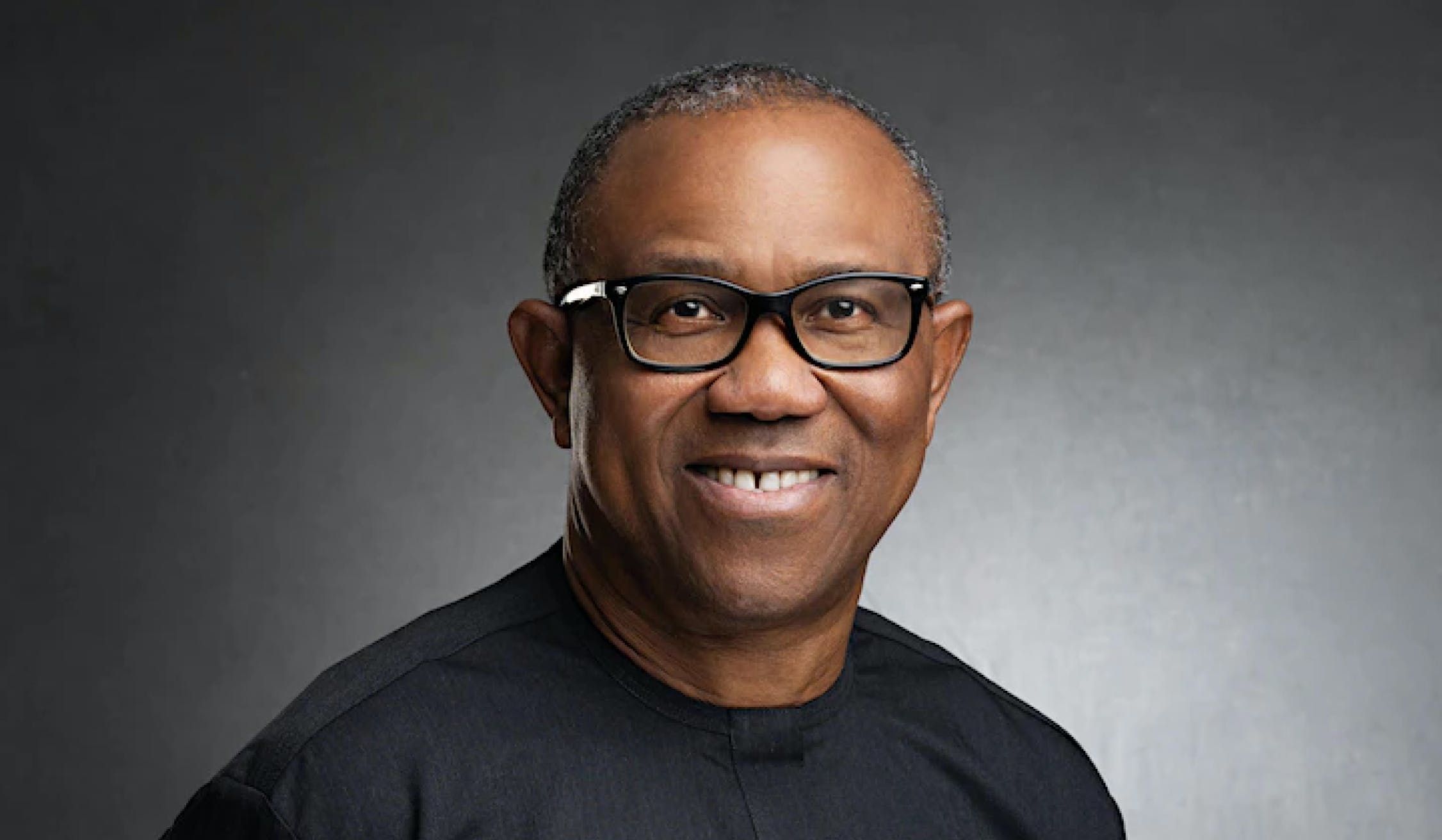
ACCEPTANCE SPEECH BY MR. PETER OBI FOLLOWING HIS NOMINATION AS THE PRESIDENTIAL CANDIDATE OF THE NIGERIAN DEMOCRATIC COALITION (NDC) – MAY 30, 2026

Protocols,
Esteemed citizens of Nigeria,

It is with deep humility that I accept the role of presidential candidate for our party.
I express my profound gratitude to the leaders of our party. His Excellency Seriake Dickson, the National Chairman, National Secretary and the National Working Committee, NWC members and members of our relentless supporters, and the Nigerian populace who have steadfastly kept the spirit of hope alive. I commend those who have made the journey from every region of our nation to convene here in Abuja.
I wish to assert unequivocally: a New Nigeria is Possible. This conviction has united us; it must serve as our compass on the challenging road ahead and sustain us through all trials we may face. This pivotal moment transcends the individual ambitions of Peter Obi; it concerns the essence of our nation and the future of our children. It is about rekindling hope for millions who have faced adversity yet remain committed to Nigeria.
Today, our nation finds itself at a crucial juncture, enveloped in uncertainty. Families are anxious about their safety; parents are concerned for their children’s futures; and talented youth increasingly question their prospects in their homeland.

Businesses are struggling, communities are suffering, and an alarming number of citizens have lost faith in the very concept of governance. Yet, I stand before you filled with optimism and strong faith in the resilience of our people, for I firmly believe that a New Nigeria is possible.
UNITY
To realise this New Nigeria, we must first mend the foundational elements essential for the success of any nation.
Nigeria cannot advance while fragmented by ethnic, religious, regional, or narrow political divides. We may communicate in different languages and practise diverse faiths, but we share a singular destiny under one flag. Our diversity should not be a source of division; rather, it is among our greatest strengths.
We should build bridges where others erect barriers, replace mistrust with confidence, division with understanding, and resentment with a collective purpose. A united Nigeria is indispensable. As Will Durant wisely pointed out, “A great civilisation is not conquered from without until it has destroyed itself from within.” We must never self-destruct. We must heal, unify, and progress together.
INSECURITY
In terms of security, the situation in Nigeria has considerably worsened. The global terrorism impact assessments ranked Nigeria as the 8th most affected nation in 2022, 6th in 2024, and 4th in 2026.
Yet, for many years, Nigeria garnered global recognition as a reliable contributor to peacekeeping, regional stabilisation, and conflict resolution. Our troops have not only displayed bravery but have also shown professionalism, discipline, resilience, and empathy in the most challenging operational contexts. Our officers and personnel have successfully commanded multiple international forces, safeguarded vulnerable civilian populations, monitored ceasefires, reinstated constitutional order, and contributed to rebuilding efforts.
Nigeria became one of the leading contributors of troops from Africa to UN peacekeeping missions and earned widespread admiration for operational effectiveness and leadership in various countries, including Rwanda, Sudan, Liberia, Sierra Leone, Mali, Western Sahara, Congo, Lebanon, Cambodia, Haiti, and Kuwait. At one point, a Nigeria, Lt. General Isaac Obiakor (retd) even led global peacekeeping initiatives.
We must address insecurity with resolve and urgency, for no nation can thrive while its citizens live in trepidation. The primary responsibility of government is to ensure the safeguarding of lives and property. Farmers must be able to return to their fields securely; students must be able to learn without fear; communities must be able to rest peacefully; and investors must regain their confidence in Nigeria.
Our strategy will be intelligence-driven, technology-enhanced, proactive, and community-focused. We will fortify our security institutions, enhance operational coordination, support our courageous personnel, and tackle the underlying causes of insecurity—namely poverty, unemployment, and marginalisation.
HEALTHCARE
Regarding health, Nigeria is currently ranked 157th globally, placing it in the lower echelon of healthcare worldwide. Primary healthcare, the cornerstone of our medical system, remains severely not functional with only 10% to 20% of approximately 30,000 primary healthcare centres operational.
As a result, Nigeria suffers from one of the highest infant mortality rates in the world. Furthermore, health insurance coverage in Nigeria hovers around a mere 10%, in stark contrast to countries like Indonesia, which boast over 90% coverage. This situation is regrettable.
I pledge that within four years, our health insurance coverage will more than double to over 20%.
Within these four years, we will increase our healthcare budget to a minimum of 10% of our GDP, up from the current level of below 5%. We will invest heavily in and support our healthcare institutions to ensure the massive training of our healthcare workers, including nurses and other professionals. We shall also adequately staff our medical facilities.
In four years, there will be a fully functional and properly managed primary healthcare centre in all 8,809 wards across the nation. By the conclusion of our term, Nigeria will ensure that at least 50% of its 30,000 primary healthcare centres are fully functional, properly manned, and dedicated to serving the populace.
EDUCATION
Education will remain at the forefront of our national revival, as no country can grow beyond its educational system. Nations that have transformed successfully have done so through sustained investment in human capital. Our children are not burdens; they represent our most valuable assets. We will invest heavily in schools, teachers, technology, and vocational training, ensuring that education equips our youth not only to seek employment but also to generate it. We must pivot Nigeria from a cycle of shared poverty to one of collective prosperity through knowledge, innovation, and productivity.
HUNGER AND AGRICULTURE
In 2023, when the present government took office, Nigeria ranked 109 out of 150 nations on the Global Hunger Index.
And by 2025, our ranking further plunged to 115th, placing us among the hungriest nations globally. Currently, the World Food Programme estimates that over 35 million Nigerians will face acute hunger and food insecurity this year. This is unconscionable, given our vast expanses of uncultivated land.
Rice remains the most consumed food in Nigeria. To illustrate our level of unproductivity, let us compare our capabilities with those of leading rice-producing nations. India is the largest producer of rice, yielding approximately 200 million tonnes of unmilled rice.
Bangladesh is the third largest producer, produces around 60 million tonnes of unskilled Rice, while Vietnam is the 5th, produces about 42 million tonnes.
Let us consider the land-to-population ratios:
India has a landmass of 3,287,263 square kilometres. Distributed across its population of 1.4 billion people, this equals roughly 2. 34 Square meter per person.
Bangladesh, with a landmass of around 148,460 square kilometres and a population of 170 million, has less than 1 square metres per person.
Vietnam’s landmass covers 331,000 square kilometres. Divided by a population of 102 million, it yields about 3.25 square metres per person.
Nigeria has a massive landmass of 923,768 square kilometres. Divided by our population of approximately 230 million, this results in about 4.00 square metres per person.
The foregoing clearly illustrates that we have absolutely no justification for being among the world’s hungriest nations.
Transitioning our nation from a state of consumption to one of production, through significant investments in agriculture, is the sole dependable strategy to escape the current depths of hunger and poverty. As I often emphasise, the uncultivated lands in our northern region represent our most substantial tangible assets. Transforming this sector is our direct pathway to prosperity.
ENERGY SECTOR
Nigeria today is the nation with the highest number of citizens lacking access to electricity globally. We currently generate and distribute a mere 4,000 megawatts (MW) of electricity for a population exceeding 200 million. In contrast, comparable nations worldwide – including several African peers such as South Africa and Egypt – each generate and distribute over 40,000 MW, despite both countries having less than half of our population. This considerable power shortfall continues to cripple businesses, choke industries, and stall overall economic growth.
Over the next four years, I commit to ensuring a minimum of 10,000 MW power increase generation and distribution.
UNEMPLOYMENT AND UNDEREMPLOYMENT
Our large pool of talented youth remains largely unemployed. The current official unemployment rate of 4% grossly misrepresents the true situation; actual underemployment and unemployment in Nigeria exceeds 30%, with youth unemployment sitting at over 40% – among the highest globally, necessitating urgent intervention. We will address this by aggressively supporting the growth of micro, small, and medium enterprises (MSMEs) through targeted tax incentives, special interest rates, and accessible funding in sectors such as agriculture, manufacturing, entertainment, sports, and distribution. These improvements will be both measurable and verifiable.
CORRUPTION AND GOVERNANCE COSTS
Nigerians will witness a tangible and verifiable reduction in corruption and the baseline costs associated with governance. Public resources will be managed with absolute transparency, prudence, and accountability to ensure that every naira spent yields demonstrable value for the citizenry.
RULE OF LAW
The rule of law will be fiercely upheld, and adherence to it will be sacrosanct for both government officials and citizens alike, strictly in accordance with our constitutional frameworks.
DEMOCRACY
Our democracy will exemplify true governance of the people, by the people, and for the people, completely free from interference by the ruling party. Instead, we will institutionalise deep respect for opposition parties and foster constructive engagement in governance.
Under my leadership, democracy will be pursued with integrity, fairness, and transparency.
May God bless you all, and may God bless the Federal Republic of Nigeria.








…Sen. Nnamani, Nwobodo, Dr. Nnamani, Chime, Ugwuanyi, Prof. Nnaji, Arthur Eze, Frank Nweke, Madueke, others get advisory roles
…Udeh, Nwoye, Utazi, Egumgbe, Ben Collins Ndu, Onyia, others head 51 Directorates
…Council to be inaugurated on Tuesday
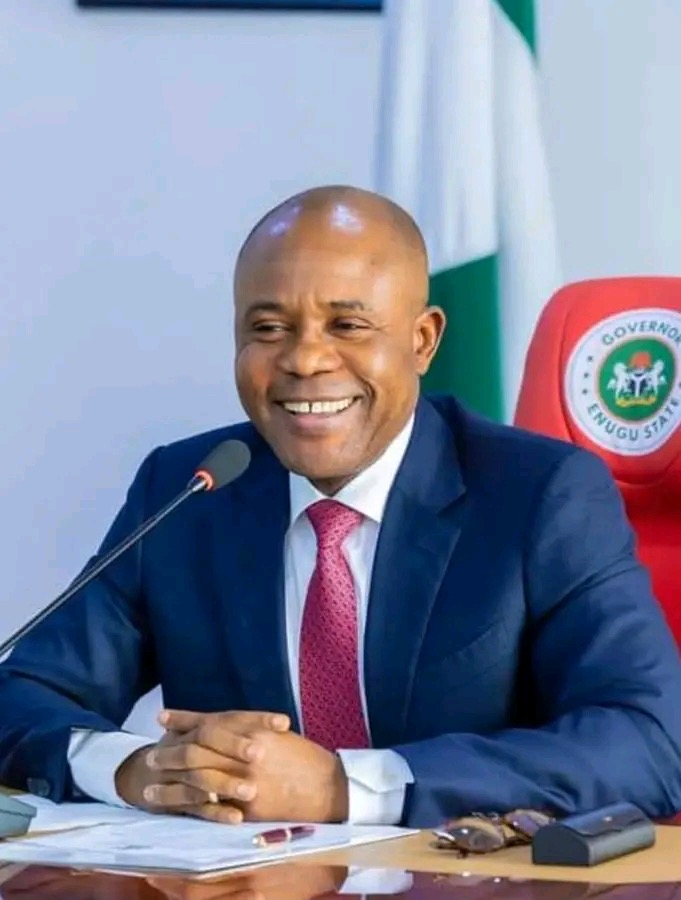
The Enugu State Chapter of the All Progressives Congress (APC), on Monday, unveiled the party’s Campaign Council ahead of the 2027 general elections.
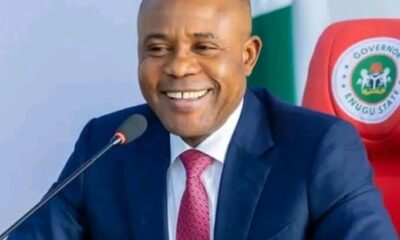
The Campaign Council, comprising 51 Directorates, is chaired by the Governor of the state, Dr. Peter Mbah, while the Deputy Governor, Barr. Ifeanyi Ossai; Deputy National Chairman, APC (South); Speaker, Enugu State House of Assembly, Hon. Uchenna Ugwu; and the Chairman of the party in the state, Dr. Martin Chukwunweike, are Vice Chairmen.
The list signed by Chukwunweike and the Secretary of Enugu APC, Hon. Chukwudi Nnadozie, also has Chief Charlie Mbah as the Director-General of the Campaign Organisation and Dr. Eric Oluedo as the Secretary-General.
Deacon Okey Ogbodo, Dr. Dan Shere, and Hon. S.K.E. Udeh-Okoye are Deputy Campaign DGs for Enugu East Senatorial District, Enugu North Senatorial District, and Enugu West Senatorial District, respectively.
Barr. Steve Oruruo is the Campaign Spokesperson and Director of the Public Communication Committee, with Dr. Austin Okolie as co-spokesperson and Dr. Malachy Agbo as Secretary.
Mazi Uche Anichukwu and Dan Nwomeh, both drawn from the Governor’s media team, head the Directorate of New Media and Strategic Communication and the Directorate of Mainstream Media, respectively. Dr. Collins Ogbu is the Secretary of the former, while Dr. Reuben Onyishi is the Secretary of the latter.
Barr. Victor Udeh leads the Administration Directorate, while Dr. Ben Nwoye and Arc. Uche Nwatu are the Director and Co-Director of the Fundraising Committee, respectively.
Former Chief of the Naval Staff, Vice Admiral Ikechukwu Ogalla (Rtd.), chairs the Security Directorate, while former Inspector General of Police, Ogbono Onovo (Rtd.), is the Secretary.
The Minister of Innovation, Science and Technology is in charge of the Directorate of Government Appointees Coordination (Federal and State), with Prof. Chidiebere Onyia as Secretary, while former Speaker of the Enugu State House of Assembly, Rt. Hon. Eugene Odoh, heads Inter-Party Affairs.
Senator Osita Ngwu, Senator Ikeje Asogwa, and Senator Kelvin Chukwu are Coordinators of the Campaign Council in Enugu West, Enugu North, and Enugu East, respectively.
Meanwhile, in their co-signed statement, Chukwunweike and Nnadozie said the size of the Campaign Council was a reflection of “the conviction that every community, ward, local government area, professional group, support organisation, youth body, women’s group, elder, party faithful and person of goodwill must be seen, heard and meaningfully engaged.”
“Appointment into the campaign structure is therefore not merely an honour; it is a call to duty, accountability and measurable contribution,” they stated.
The Council will be inaugurated at the International Conference Centre, Enugu on Tuesday, October 27, 2026.
All members of the Campaign Council are to be seated before 3pm.
CLICK LINK BELOW TO SEE FULL LIST:
APC ENUGU CAMPAIGN COUNCIL COMPOSITION-1
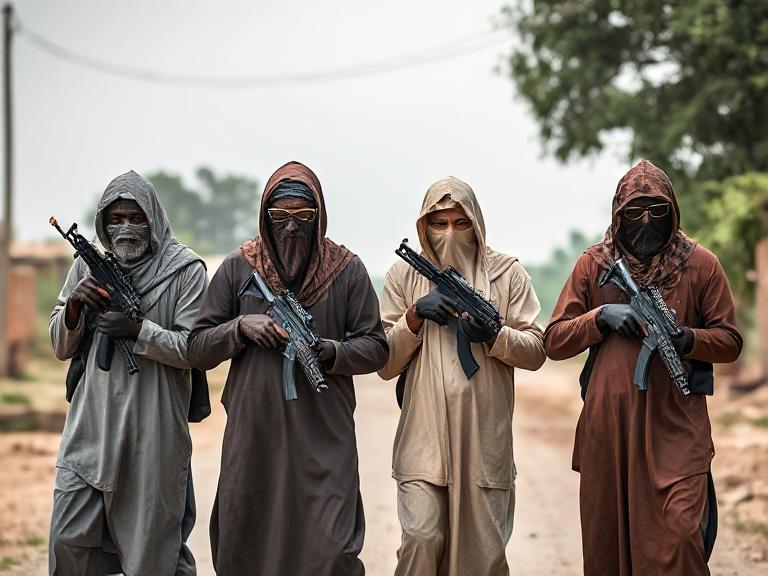
Tension has gripped parts of Kwara State following the reported abduction of members of the Iru Ekun Security Group, a security outfit spearheaded by Yoruba nation agitator Sunday Adeyemo, popularly known as Sunday Igboho.
The assailants reportedly abducted the security operatives and forced them to renounce their activities of protecting communities in the state.
According to reports, the abducted members pleaded for their release and were compelled to renounce their community protection activities.
The Iru Ekun Security Group was established to protect Yoruba communities in Kwara State against terrorist attacks and kidnappings.
The reported abduction has sparked fear among residents who rely on the group for protection against insecurity in their communities.
As of the time of filing this report, Igboho had yet to issue a statement on the reported abduction of the security group members.
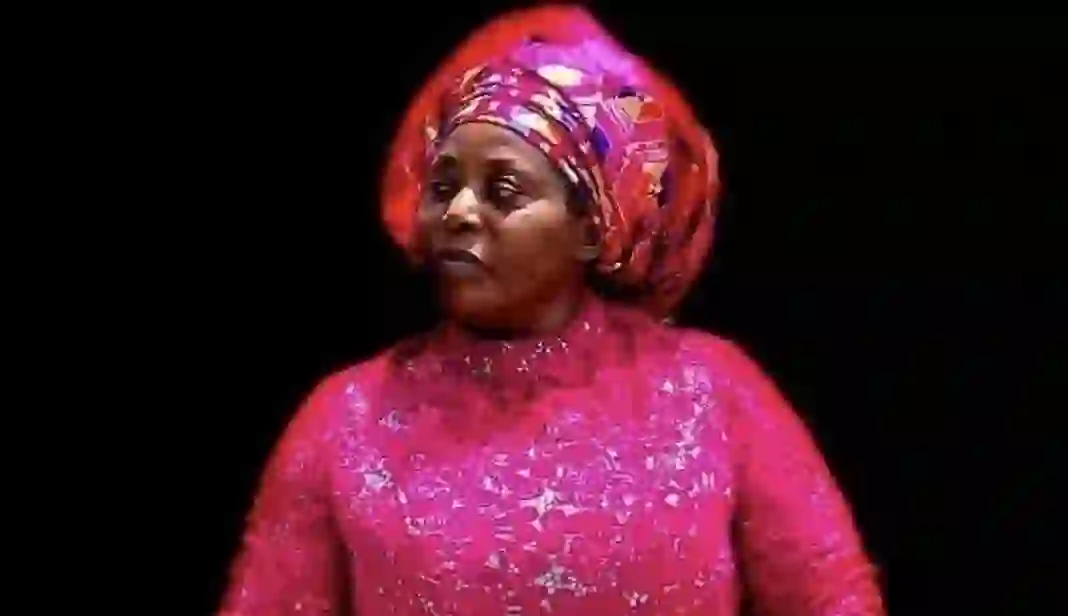
Fidelia Ezinwanne Chigbogu, the immediate elder sister of the late Senator Ifeanyi Ubah, has died at the age of 61.
Mrs Chigbogu, fondly called “Darling” by her husband, reportedly slumped and died on Sunday morning in Lagos while preparing to attend church.
Her husband, Chudi Chidinma Chigbogu, a native of Nnewi in Nnewi North Local Government Area of Anambra State, described her death as a devastating shock, saying she had shown no signs of illness before the incident.
“It was like a shock to me because, even as I am talking to you now, I never believed it,” he said.
Narrating the circumstances surrounding her death, Mr Chigbogu said the family had experienced an electrical incident the previous Thursday when their electricity meter exploded and burnt their changeover room.
He said they had contacted officials of the electricity distribution company, who promised to visit on Monday to replace and relocate the meter.
“We were busy waiting for them. My wife said she would give testimony in church on Sunday, and we were preparing for that,” he said.
According to him, his wife woke up on Sunday morning without any apparent health complaints and was preparing to leave for church when the incident occurred.
“That Sunday morning, she woke up. There was nothing like a headache, nothing like fever, nothing. She finished bathing and was preparing to go to church. She usually leaves home between 7 a.m. and 7:30 a.m. because of the roles she plays in the church,” he said.
Mr Chigbogu explained that he was washing his car because of dust when he became concerned that his wife had not come downstairs.
“I went to wash the car because of dust. Around 8 a.m., I called my son and said, ‘Why has mummy not come down? Go and check.’
“Only for the boy to go and start screaming that he called his mummy and she did not answer. He lifted her hand, and her hand dropped,” he recounted.
He said he immediately rushed upstairs and found his wife lying unresponsive on the bed.
“I called her names, no way. I alerted neighbours, and we carried her to six hospitals. Anywhere we went, they would take me aside and say I didn’t bring her on time, that she had passed on.
“I said no, it was not possible, until we got to Navy Hospital, where they refused to admit her,” he said.
Mr Chigbogu said prayers continued at their home for several hours as the family struggled to come to terms with the tragedy.
He recalled that around 4 p.m., someone told him she had seen his wife in a vision, moving swiftly without looking back, which she interpreted as a sign that the deceased had made it to heaven.
“That was when I changed my mind and allowed an ambulance to come. She left here after 6 p.m. and got to the village around 7 a.m. the next day,” he said.
Describing his late wife, Mr Chigbogu said she was a natural leader, peacemaker and philanthropist who played a significant role in her family, church and community.
“Aside from calling her Darling, I called her many names because she was a leader. No matter the case in the family, she would settle it.
“She is the founder of a women’s group, played a very big role in the church and was known for her charitable work. Before her passing, she was working on her orphanage.
“Even though she is no more, I will not let her down. I will make sure that project comes to pass,” he said.
On her family background, Mr Chigbogu said her parents had seven children—three boys and four girls—and that his late wife was the second daughter.
He added that she was also one of the trustees of the Ubah family.
-
 Features2 days ago
Mmesoma Umeorini: When Love Turns Deadly, and a Young Woman Pays With Her Life
-
Features2 days ago
Why Igbos Celebrate New Yam Festival Worldwide: The History, Cultural Significance and Lessons For The Younger Generation
-
News1 day ago
Kogi Police Probe Alleged Murder-Suicide Involving Two Officers
-
News17 hours ago
BREAKING: Tension as Video Shows Islamic Group Members Allegedly Calling for AK-47 to Kill Christians in Enugu, Jos
-
News3 days ago
Mbah: Why We Built 268 Smart Green Schools Across Enugu State
-
News1 day ago
NCDC Reports Two Suspected Ebola Cases as Contacts Rise to 53
-
News3 days ago
Anambra Police Arrest Suspect Over Murder of 23-Year-Old Woman in Uga
-
News2 days ago
Enugu Traders Pledge Support for Mbah’s Second Term, Cite Market Reforms