News
Soyinka’s Metamorphosis, Echoes from “The Peoples Mandate! This is my story


Today I formally announce the publication of my book, titled: Soyinka’s Metamorphosis: Echoes from “The People’s Mandate,” a copy of which I have just received on arrival from the UK where it was published. It is a direct response to the book: Baiting Igbophobia, The Sunny Igboanugo Thesis, authored by Prof. Wole Soyinka and released sometime in January this year.
This 2024 marks my 33 years of practice as a journalist, starting from my debut with The Guardian in 1991 to joining Daily Independent in 2001 as pioneer staff and now Publisher of Whirlwindnews, an online newspaper.

My career, like those of many of my colleagues, has been marked with the ups and downs prevalent with the practice of the profession in Nigeria. For instance, as a cub reporter still learning the ropes, I was nearly mobbed by some angry civil service workers at St. Bridget College, Asaba where some of them who left Benin after the creation of Delta State from the old Bendel, by the Ibrahim Babangida regime in 1991, were quartered for lack of accommodation.

One evening, few days after arriving the city as the first reporter of The Flagship, posted to the new state, I had undertaken a discreet, but purely noble mission to investigate and ascertain the condition of the workers in their temporary abode. But the mission, purely part of my job as a reporter, soon blew into my face. The affected workers whose emotional state of reasoning appeared to have been held in place by a thin fibre due to the sudden change in their condition, and threatening to snap at any moment, soon became suspicious.

The line of my inquiry and general mannerism, which betrayed my level as a rookie, had triggered off a volley of questions from some of them, palpably, but understandably on the edge. They began to suspect I might be a criminal on a recce mission to survey their territory for later night attack, especially, as I was to discover later, as they received their salaries on the same day. It was only by the intervention of providence that I was saved from the obvious lynching. That fate could probably have included being ringed with tyre, laced with petrol and set on fire, a popular scene that portrays a sendoff party to criminals in Nigeria, known as “jungle justice.”
Again, today, I carry the physical and psychological lacerations of the aftermaths of the annulled June 12, 1993 presidential elections as a believer and direct participant in the attempt to revalidate that historic mandate, which has since been achieved today. So involved was I that when the UN Special rapporteurs arrived Enugu where I was later transferred, to investigate the rights abuses associated with the June 12 struggle, I was one of the candidates they interviewed privately.
Yet again, in 2007, a state governor took four pages each in virtually all newspapers in Nigeria to denigrate me as blackmailer. His effort was to warn Nigerians about this unscrupulous journalist who went to government houses around Nigeria harassing governors for money. Ironically, this was a governor, unlike many in my line of duty, I never ever met in person, either in his private or official capacity even till date. My only crime was insisting on the sanctity of the tenure of the leadership of Ohanaeze Ndigbo during their crisis that year and thereabouts, when it was being manipulated by some powers outside the Igbo space, with the damning effect of corralling, or should I say, plunging the collective will of the people into an unnecessary suicide.
This same governor, even took out a lawsuit against me some years after and was sustaining the move to have me jailed on no account order than my purely professional duties, until providence – that fate that helps tailless-cow to chase away flies – ensured that he never made it back for a second term to continue the onslaught.
Why did I travel this far through the route of memory? It is to underscore the fact that I am not new to the travails embedded in this profession, which I love so much that I beg my creator that should I return to this part of life again, I should be allowed to practice again.
The three examples above are just samples of them. Though the joy of the glorious moments, sometimes far outweighs the pains, trials and tribulations, they are still numerous and, in many cases, life-threatening.
Yet, none of these, has brought me to the devastating level of distress I experienced in the last few months, since this book by Prof. Soyinka came to my attention. It almost brought me to the state of emotional wreck. The said book, under his INTERVENTION SERIES, was in response to my article of September 19, 2023. In the said opinion piece that triggered the mighty pen of the literary giant, I had tried, purely in line of duty, to establish the motive behind the Prof’s posturing about the 2023 presidential election, particularly with reference to Peter Obi and the Labour Party. In expounding my logic, I tried to stay the course, as a professional ought to, never delving into personal attacks or insinuating anything untoward against the revered sage.
But what did I get in reply? In his riposte via the book, the Prof. only made a scant mention of the content of the article in question. Instead, he devoted the rest to attacking my Igbo identity. Surely, if the sage, had descended on me as a person, if he had reduced me as less than Nebuchadnezzar, as he once labelled, former President Goodluck Jonathan, I would have remained mute and probably continued with my trade the way I know it.
Reading the book itself, he did exactly that. He treated me to a lavish buffet of his legendary tongue-lashing. But he did not stop at describing my persona in the most terrible terms or attacking my professional competence. For this alone there would not have been any form of contest in the form of a riposte.
My pain was the attempt by the Prof. to strip me of my identity as a Nigerian and closet me in purely ethnic straightjacket. There was nothing in the original piece from me that suggested any ethnic link by any stroke imagination. The only link I tried to establish was that the NADECO affinity the Nobel Laureate shares with President Bola Tinubu as veterans of the June 12 struggle. My take was that it was the binding factor.
I tried to explain how, having struggled together through the thick and thin of the NADECO era they had developed the compelling need to watch each other’s back no matter the circumstances. I argued that such relationship would naturally create personal indebtedness too difficult to break.
That was all my piece was all about. Even though the said article had one or two factual errors which the Prof. did not fail to point out in his book, they did not detract from the texture of the reasoning that formed the basis for holding my views. The emphasis was on the affinity that existed between him and Tinubu.
I was therefore completely aghast when the Prof. took the issue completely out of context and veered into ethic labelling. That the Prof. would take that route is my idea of a complete metamorphosis. I would not in my wildest imagination assume that the Soyinka of The Man Died fame would descend into such arena occupied by less-endowed in the society. Ordinarily, I would have depended on him to defend my right and freedom to speak my mind. But that did not happen.
That informed my determination to reply through this effort. I have decided to tell my own story to establish my true identity and insist on it. The content of this book, my own riposte, is to reveal that the Prof. is totally wrong on this.
In fact, some people still latching on similar ethnic sentiments, tried to dissuade me by pulling up what they advertised as the pro-Biafra sentiments of the Prof. They raised the issue of how he tried to help the Igbo during the civil war advising that I should ignore him.
That even strengthened my position, because I believe keeping silent would help in strengthening the ethnic slurs that have now become the burden of the Igbo man, because the likes of the Prof. are keeping silent and, in some cases promoting it. Those who read his book will not miss this trend. I believe that such a figure who stood against the bad hand dealt the Igbo people of Biafra at such a young age, should even do more now that age has added more insight and knowledge to him.
I believe my reply would reactivate his memory and remind him of who he truly is in the history of Nigeria. It was a duty I felt compelled to do. How did the Igbo come into such a plain discourse? So, an Igbo man cannot contribute to any subject in today’s Nigeria without being told from whence he is coming? Even a journalist? This is the essence of this book. This book is therefore a PROTEST! I am not only protesting with this book as an individual, but to draw global attention to the dangerous trend that has become the lot of Ndigbo today, where they are being deliberately targeted as the culprits to anything that goes wrong in the country.
I am insisting that nobody can take away my Nigerianess. I am aware that I am a global dwarf compared to the dominating image of Prof. Wole Soyinka globally. I do not compete with him or attempt to do so in any way. His own book, as usual, is already making waves nationally and internationally like many other of his works.
Mine may make little impact. But whatever impact it makes, even if it is read by one person, I will be glad that someone outside myself would have heard my story. That is why I am happy today. For the first time in months, I have once again regained some level of personal calm. I have told my story, from my little corner of the world space. Let Prof. Wole Soyinka have the world stage, but allow me to have my corner where my voice, no matter how tiny will be allowed to echo. That is my prayer.
Of course, aside my protest, I have also used this book to try and tell the full story based on my views and how I captured the 2023 general election, particularly that of the presidential polls of February 25. It is a full package that tried to puncture some of the assertions out there in the public domain, including those made by the Nobel Laureate made regarding the election.
I tried to capture the full sequence of events, their meaning and how they affected the outcome of the election in the most unbiased manner and in the end declared who I believe won the election between Tinubu, Atiku Abubakar of the PDP and Peter Obi of the Labour Party.
In the end, just as I spoke some 31 years ago on June 12, I spoke as professionally as any individual in the book. I shall continue to do so in the future. I spoke yesterday, I am speaking today and I shall speak tomorrow. I shall not only speak as an Igbo, I shall speak as a Nigerian – Nigerian with my full chest. Just like Prof. Wole Soyinka, a Yoruba or Adamu, an Hausa will speak.
Igboanugo, a reporter and Editor-in-Chief of Whirlwindnews.com.ng can be reached on ezekeoku1@gmail.com









…CMD: Upgrades have strengthened specialist care and postgraduate training, as ESUTH secures multiple five-year accreditations
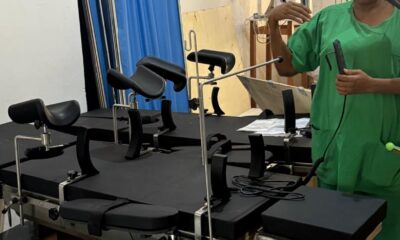
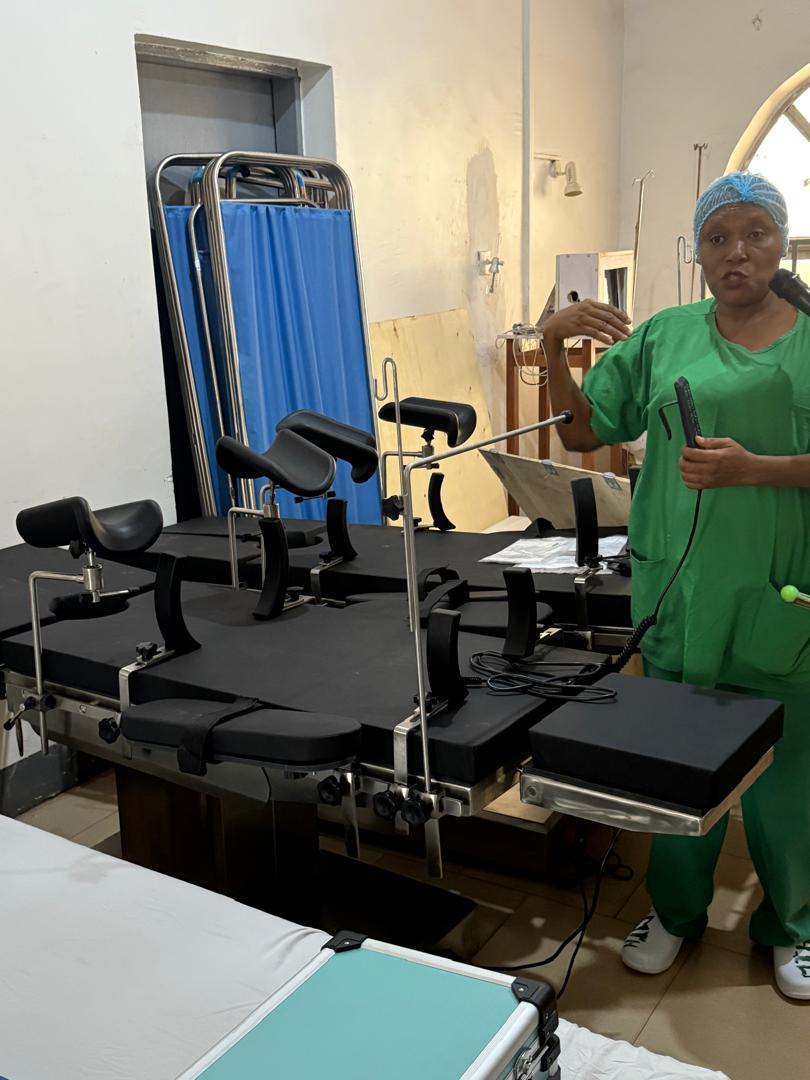
The administration of Governor Peter Ndubuisi Mbah has installed new surgical equipment and upgraded medical facilities valued at over N500 million at the Enugu State University Teaching Hospital (ESUTH), Parklane, Enugu, as part of efforts to transform the institution into a world-class tertiary healthcare and specialist training centre, with the ultimate goal of making it one of the best teaching hospitals in Nigeria.
The Chief Medical Director of ESUTH, Prof. Bethrand Ngwu, disclosed this over the weekend when he conducted Government House Correspondents on an inspection of the newly installed facilities, including the main theatre, Accident and Emergency Department and specialised equipment for complex surgical procedures.
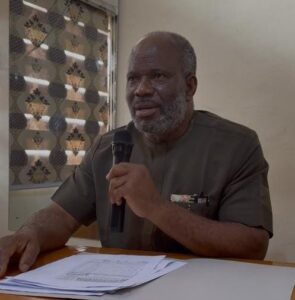
Chief Medical Director of ESUTH, Prof. Bethrand Ngwu
Prof. Ngwu said the upgrades were strengthening the hospital’s capacity to provide faster and more specialised care to patients, while also supporting postgraduate medical training and accreditation.
“Those machines provided by His Excellency, Dr Peter Ndubuisi Mbah, are all aimed at postgraduate accreditation by these two big institutions, the National Postgraduate Medical College and the West African College of Surgeons,” he said.
But beyond professional requirements, the CMD said the upgrades were designed to make a tangible difference in the treatment of patients, particularly those arriving in emergencies.
He said the upgraded Accident and Emergency Department was being developed to function as an autonomous unit where patients could undergo necessary investigations and receive immediate treatment without being moved unnecessarily between different sections of the hospital.
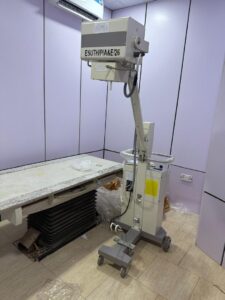
“When he came, the Accident and Emergency was empty. But now you can see how beautiful it is looking. That is what he wants. He wants here to look beautiful, efficient and functional. And that is where we are going,” Ngwu said.
According to him, the arrangement would enable emergency patients to undergo necessary tests and receive immediate treatment within the unit, while those requiring surgery could be operated on there and later transferred to the ward after stabilisation.
Prof. Ngwu said the new equipment had also expanded the hospital’s capacity to undertake highly specialised procedures such as neurosurgery.
He disclosed that the neurosurgical theatre had received new operating tables, ventilators and specialised anaesthetic equipment fitted with capnography, which enables doctors to monitor carbon dioxide levels during complex operations.
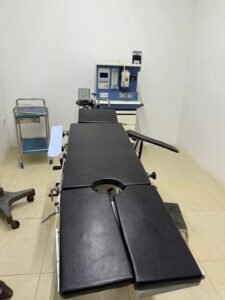
Ngwu said ESUTH had recorded several accreditation successes across its specialist programmes since 2023, while explaining that accreditation was essential because resident doctors must train in accredited programmes before proceeding to their professional examinations.
“Accreditation is a regular thing. Because if you do not have accreditation, you cannot even go for professional examination,” he said.
He noted that ESUTH had also recently received accreditation from the Medical and Dental Council of Nigeria (MDCN), which oversees undergraduate medical training, with the hospital’s MBBS quota subsequently increased to 350 medical students.
According to him, the hospital had secured five-year accreditations from the National Postgraduate Medical College and the West African College of Surgeons in areas including Family Medicine, Anaesthesia, Physiotherapy and Radiography, while its School of Nursing had also been upgraded to a College of Nursing.
Also, the hospital is preparing for another round of postgraduate accreditations in October, with the Accident and Emergency and Surgery departments among the areas to undergo review by the relevant professional bodies.
Prof. Ngwu said Parklane’s specialist manpower was another major strength of the institution, disclosing that the hospital had approximately 126 full-time consultants as of December 2025 and 50 part-time consultants currently, covering different fields of specialty, including paediatric surgery and neurosurgery.
He disclosed further that the hospital had nearly 300 resident doctors, 540 nurses and 120 house officers, adding that Governor Mbah had also granted approval for a further increase in the hospital’s manpower.
On reports of an ongoing strike by resident doctors, the CMD confirmed that they had indeed embarked on a partial strike, but said the action lasted less than three weeks before it was called off following the resolution of the misunderstanding.
The CMD said the hospital’s resident doctors were benefiting from the Medical Residency Training Fund (MRTF), introduced by the Mbah administration to support specialist training and professional examinations. He said the government had this year paid the MRTF for 266 resident doctors, at nearly N1 million per doctor.
“This Medical Residency Training Fund was not in place before Governor Mbah came. He introduced it. He said every doctor should go for more training,” Ngwu said.
Prof. Ngwu said the administration had also invested in the training and welfare of interns across different health professions, including medicine, nursing, physiotherapy, pharmacy and radiology, providing them with the necessary environment for their compulsory one-year professional training.
He said the interns had expressed appreciation for the intervention and were planning a statewide sporting championship in honour of the governor.
The CMD further disclosed that the hospital was working towards completing a new multi-storey medical and diagnostic complex containing several theatres, advanced laboratories, intensive care units and recovery rooms.
He explained that management had decided to refurbish the existing theatre complex rather than wait for the new building to be completed because postgraduate doctors currently undergoing training needed the facilities for their examinations and accreditation exercises.
According to him, the existing theatre building had been refurbished and modified in line with requirements raised by the National Postgraduate Medical College, including improvements to its access points, lighting and other essential facilities.
He said the new medical complex would eventually provide expanded capacity for surgical procedures, intensive care and post-operative recovery, while the existing facility could subsequently be removed, converted to another use or further modernised.
Prof. Ngwu also outlined measures being put in place to ensure that the multimillion-naira equipment would remain functional and deliver value over the long term.
He said the hospital was training biomedical engineers and technicians while also entering into service agreements with equipment suppliers to provide maintenance for between two and three years after installation.
“The whole essence is that if an equipment is bought or installed, and is maintained for two or three years, before the end of that period, we must have had or trained people who will continue to maintain and manage it,” he said.
The CMD added that the hospital was also adopting a backup strategy for critical equipment to ensure that services would not be disrupted when a machine was undergoing servicing or developed a fault.
He cited imaging equipment as an example, saying some machines were currently undergoing servicing while additional equipment supplied by the state government provided backup capacity.
Prof. Ngwu said the upgraded facilities were available to all patients, regardless of their social or economic status, dismissing reports that the new Accident and Emergency building was reserved for VIPs.
“Whether you are rich or poor, we accept you, and no part of this hospital is reserved for VIPs. Reports that the new Accident and Emergency building is exclusively reserved for VIPs are false and should be disregarded. This is our hospital,” he said.
He expressed appreciation to the state government for its interventions at Parklane, saying the upgrades had significantly changed the physical and professional environment at the hospital.
“The upgrades we have witnessed in this hospital over the past three years of Governor Mbah’s administration have been substantial and cut across every sector. But His Excellency prefers to let his work speak for itself. He does not make noise about what he does. He simply focuses on getting things done and done properly,” he said.
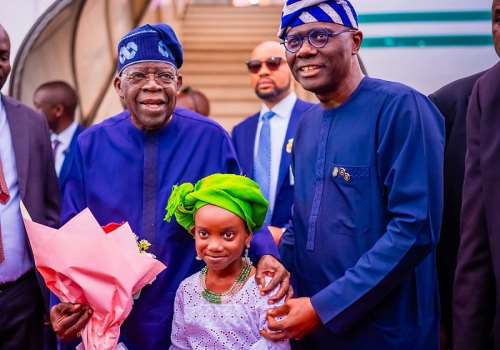
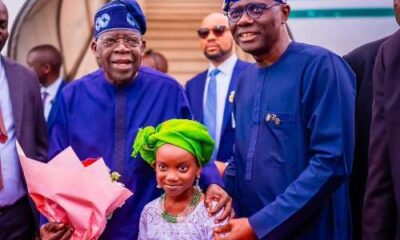
President Bola Ahmed Tinubu has returned to Nigeria after spending about four weeks in Europe, declaring that he is hale, healthy and ready to resume work.
Tinubu made the remarks on Tuesday evening after arriving in Lagos from Paris, where he had spent the latter part of his working vacation.
Responding to journalists who asked about concerns raised about his health condition, the President said he remained fit and prepared to continue his duties.
“Rumours will always emanate from politics. I am hale and strong. I am ready to work. The fact remains that I am here, healthy, sound and ready to go,” Tinubu said.
The President had departed Nigeria on August 30 for London before travelling to Paris, with the Presidency describing the trip as a working vacation.
He later extended his stay by a few days before returning to Nigeria on Tuesday.
His prolonged absence from the country had generated public and political debate, with opposition figures questioning the length of his stay abroad and his decision not to personally attend the 81st United Nations General Assembly in New York.
The Presidency, however, maintained that Tinubu remained in touch with officials in Nigeria and continued to direct government affairs while abroad.
Vice President Kashim Shettima represented him at several official engagements, including the UN General Assembly.
During his time in France, Tinubu met French President Emmanuel Macron and businessman Vincent Bolloré.
The Presidency also linked his stay to engagements with investors and discussions around major investment projects, including the proposed Gateway Deep Sea Port in Ogun State.
The President is expected to remain in Lagos for the 66th Independence Anniversary celebrations.
He is scheduled to attend official engagements in the state, including activities marking Nigeria’s independence on October 1, before returning to Abuja.
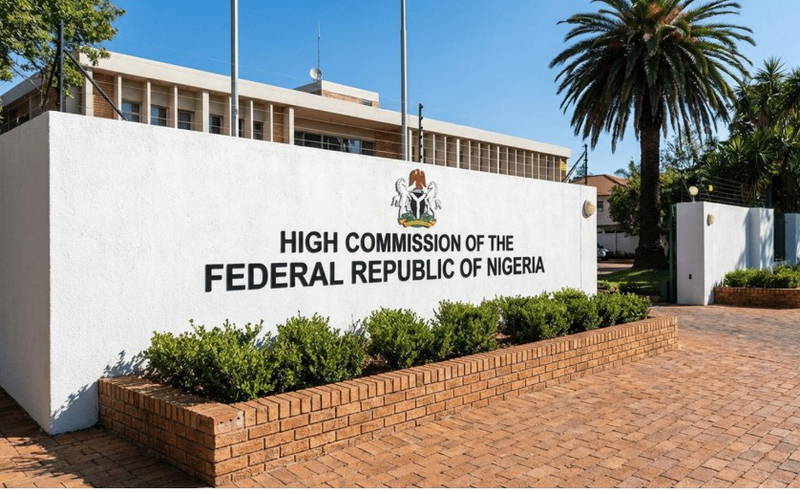
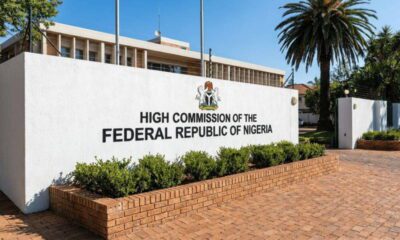
The Consulate General of the Federal Republic of Nigeria in Johannesburg has condemned the deaths of three Nigerian nationals killed in different parts of South Africa in less than one week, between September 18 and 21, 2026.
In a statement issued today, the Consulate said the killings raise fresh concerns over the safety of Nigerians and other foreigners in South Africa and point to what seems to be a pattern of targeting Nigerians.
According to the Consulate, on September 18, 2026, one Kenechukwu Christopher Igwemadu allegedly jumped to his death while trying to escape police harassment and brutality at Kenlin Court on Douglas Street, Central Business District (CBD), Bloemfontein.
On September 20, 2026, another Nigerian, Olaniyi Olaleye Olatunde, was shot dead at Spanata Bar and Grill Night Club in Mamelodi East, Pretoria, by an unidentified South African.
The deceased, who worked as a security guard at the club located in Summer Event Centre, was said to have attempted to stop a customer from leaving the club with a cup belonging to the club.
The encounter degenerated into an altercation, and the customer pulled out his firearm and shot Olatunde in the lower body, leading to serious injury and profuse loss of blood.
“The shooter immediately fled the scene. However, on realising that his identity was known by many at the Club, he later returned to the Club and threatened to also kill any witnesses who dare to report the case and identify him to the Police,” the statement said.
Olatunde was rushed to Mamelodi Hospital, where he was confirmed dead on the morning of September 21, 2026.
The third incident occurred on September 21, 2026, in Primrose, Ekurhuleni, where South African politician-cum-investigative content creator, Xolani Khumalo, and his content creation team, Sizok’thola, allegedly tortured and killed Christian Hillary Nnaemeka.
The Consulate said that, despite not finding anything incriminating on the deceased, the crew beat and tortured him before he attempted to escape by jumping over a fence, after which he collapsed from injuries and exhaustion and was pronounced dead on arrival at the hospital.
The Consulate recalled that on February 9, 2026, another Nigerian, Emeka Clement Uzor, was also shot dead by the same Khumalo’s reality TV crew in Windsor East, Randburg, yet no arrests have been made and Khumalo is currently running for election to become Mayor of Ekurhuleni.
“Reports of these continuous incidents are deeply troubling and continue to raise numerous questions over the safety of Nigerians and other foreigners in South Africa,” the Consulate said, calling on relevant South African authorities to investigate the deaths thoroughly and bring perpetrators to justice.
“Our position remains that Nigerian and all lives matter. In cases where allegations may exist, no matter what they are, there are processes and steps to justice. All should be presumed innocent,” it added.
-
 News3 days ago
‘Where is Nigeria’s president?’, Peter Obi questions Tinubu’s absence from UNGA
-
News1 day ago
2027: How Atiku told me to persuade Peter Obi to accept VP slot – Babachir Lawal Ex-SGF Babachir Lawal
-
News3 days ago
Europe-based newlywed arrested with cocaine at Enugu airport
-
News19 hours ago
Ojukwu Property Dispute: OTL petitions IGP over demolition, construction at Macpherson Avenue Property
-
News3 days ago
Woman arrested for allegedly smuggling alcohol to inmate in Ogun prison
-
News3 days ago
APC wins all Chairmanship, Councillorship seats in Enugu
-
News2 days ago
SDGs: Mbah moves Enugu beyond projects, targets lasting development impact
-
News3 days ago
Soldiers kill terrorist, rescue six family members in Sokoto, Zamfara