News
Nnaji to FG: Return Power Purchasing Agreements to Boost Electricity Generation


Former Minister of Power, Prof. Barth Nnaji, has urged the Federal Government to resume signing of Power Purchase Agreements (PPAs) with private sector investors to enhance Nigeria’s electricity generation.
Currently, Nigeria has a nameplate capacity of about 13,000 megawatts but generates only around 5,000 MW, primarily due to insufficient natural gas for the gas-fired plants that supply 80% of the national grid.

Nnaji, founder and chairman of Geometric Power, addressed a gathering of professionals in the electricity value chain, including bankers and lawyers, at a meeting organized by the Udo Udoma and Belo-Osagie law firm in Lagos. He emphasized that without resuming PPAs, it would be challenging for investors to finance grid power generation, stating that these agreements “provide comfort to investors.” He cited the example of the 450 MW Azura power plant in Edo State, which cost approximately $900 million to construct.
He noted that creditors were willing to provide long-term funding due to the partial risk guarantee (PRG) established in 2012 when he served as power minister under President Goodluck Jonathan.
Nnaji pointed out that no new plants have been developed by the private sector since the PPA was suspended in 2015. He highlighted that ExxonMobil and General Electric have halted their plans for a 1,000 MW thermal plant in Aba, despite investing hundreds of millions of dollars.

According to Cliff Eneh, a former engineer with Texas Power and Light, constructing a one-megawatt gas plant costs between $1.3 million and $1.5 million. Eneh, also a former manager with the defunct National Electric Power Authority (PHCN), stated that the Federal and state governments lack the resources to address the over 50,000 MW power gap in the country.
While Egypt and South Africa each generate 58,000 MW, South Africa has faced load shedding since 2007 due to inadequate power supply. Eneh argued that this indicates that 58,000 MW is insufficient for Nigeria, echoing Nnaji’s call for reinstating PPAs.
Nnaji also stressed the urgent need to resolve the ongoing gas supply crisis. He remarked, “A situation where Nigeria, the world’s ninth-largest gas producer, can’t provide gas for domestic consumption isn’t justifiable.” He mentioned that his 188 MW Geometric Power Plant, commissioned on February 26 by Vice President Kashim Shettima on behalf of President Bola Tinubu, has faced gas shortages, at times going weeks without supply, despite a newly built 27-kilometer gas pipeline from Aba to Owaza in Abia State.
He observed that the challenges in the power sector reflect Nigeria’s broader economic crisis and urged the political class to embrace patriotism in addressing these issues. He recalled that when he was Minister of Science and Technology in 1993, government officials used locally assembled Peugeot vehicles, creating jobs for many citizens and businesses. He noted that officials in countries like the U.S., France, and Germany primarily use domestically manufactured vehicles.
“At Geometric Power, we prioritize locally produced vehicles like Innoson and Peugeot, and we source Cutix and Coleman wires and cables made in Nnewi and Arepo, respectively,” he said.
Participants at the forum included Dafe Akpeneye, a commissioner with the Nigeria Electricity Regulatory Commission (NERC); Kola Adesina, chief executive of Sahara Energy; and Nicholas Okafor, head of the energy team at the Udo Udoma and Belo-Osagie law firm.



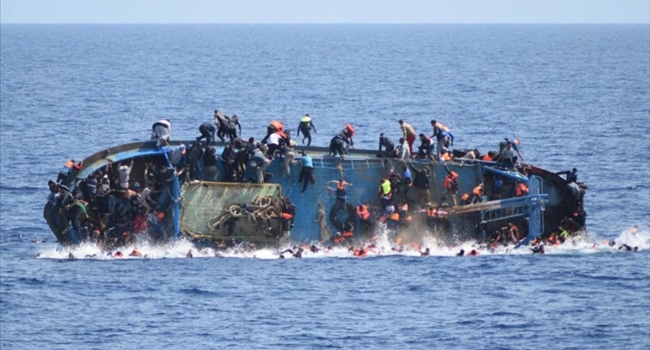
Six mourners are reportedly missing after a boat carrying more 70 people capsized on the Buruku River in Buruku Local Government Area of Benue State on Saturday.
The incident reportedly occurred around 11am as the mourners, who were from neighbouring Gboko Local Government Area, were returning from a burial ceremony.
The Chairman of Buruku Local Government Area, Raymond Zege, confirmed the incident, saying the boat’s engine reportedly developed a fault while it was on the river.
According to him, the occupants struggled to manoeuvre the boat and remain afloat before another boat arrived to rescue them.
He said the boat was overloaded and the occupants reportedly panicked as they encountered water waves, causing the vessel to sink.
Zege said, “There are over 70 people on board but we have not seen about six persons.”
The chairman also expressed concern over compliance with safety measures among commuters using the river crossing, noting that authorities had provided life jackets but enforcement had been difficult because some passengers complained that wearing them was uncomfortable.
Meanwhile, the Commissioner for Marine and Blue Economy, Denis Iyaghigba, said preliminary reports indicated that a strong water current swept the boat into an abandoned barge at a corner of the river, causing it to overturn.
Iyaghigba urged families and members of the public to remain calm while authorities continued efforts to establish the facts and locate those still missing.
He said he had directed boat operators and their union downstream to mobilise and support the ongoing search and rescue operation.
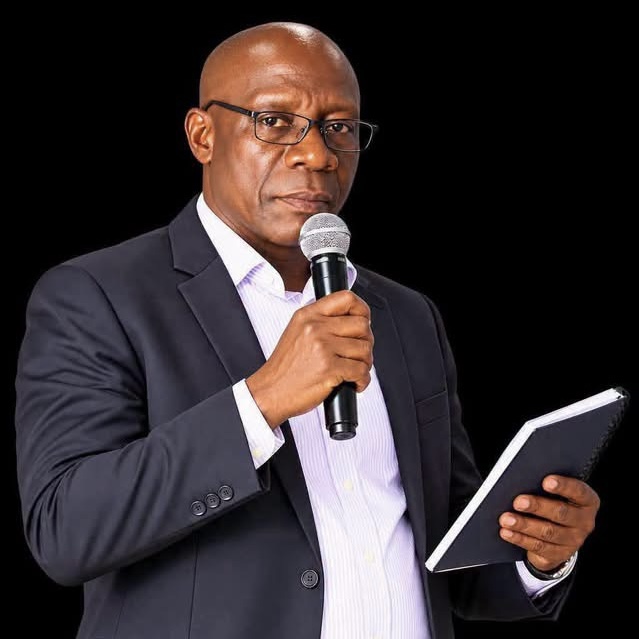
A funeral ceremony in Aleto, Eleme Local Government Area of Rivers State, reportedly turned tragic on Friday after a pastor collapsed and died while delivering a sermon on the certainty of death.
The cleric was identified as Deacon Steve Eyo, the Resident Pastor of the Redeemed Christian Church of God (RCCG), Aleto.
He was preaching before more than 300 mourners when he suddenly collapsed as he was concluding his message.
Eyo’s sermon was titled “The Certainty of Death and Hope Beyond.”
According to eyewitness accounts cited by multiple local news outlets, he began preaching at about 1:10 p.m., speaking about the inevitability of death and urging those present to live their lives with the awareness that nobody knows when death will come.
In illustrating his message, the pastor reportedly compared life to going to the market, explaining that some people leave early while others remain until later, just as some people die young while others live longer.
About 15 minutes into the sermon, at approximately 1:25 p.m., Eyo reportedly collapsed while rounding off his message.
His sudden fall initially confused some mourners, with eyewitnesses saying some thought the pastor was demonstrating the suddenness of death as part of his sermon.
The situation quickly became clear, however, as church ministers, choir members and others rushed to his aid.
People at the scene reportedly prayed for him while individuals with medical knowledge attempted to administer first aid.
He was subsequently taken to a nearby medical facility in the same ambulance that had been hired to convey the remains of the deceased person whose burial was taking place.
He was reportedly confirmed dead at the hospital, after which his remains were taken to a mortuary.
The circumstances surrounding Eyo’s death have not been publicly established in the reports reviewed, and no specific medical cause of death was disclosed.
However, the timing of the incident has left mourners and members of the Aleto community deeply shocked because of the subject of his final sermon.
According to eyewitness accounts, Eyo had urged the congregation to “number your days and prepare, for it can happen anytime” shortly before he collapsed.
The incident transformed what had begun as a solemn farewell for one deceased person into another moment of mourning, as attendees were confronted with the sudden death of the minister delivering the funeral sermon.p pm
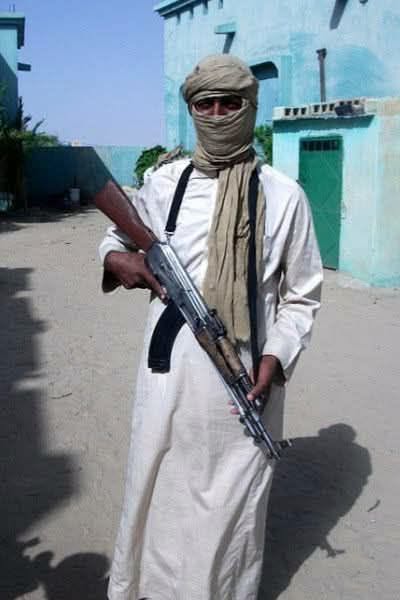
Mahmoud Adam, a suspected militant allegedly linked to deadly attacks on Christian communities in Nigeria’s Middle Belt, has reportedly been arrested in Plateau State.
The arrest was disclosed in an exclusive report published on Friday by the US-based Daily Caller, which identified Adam as an alleged secret leader of the Fulani Ethnic Militia (FEM) operating in Plateau State and surrounding parts of the Middle Belt.
According to the report, Adam was arrested in the early hours of September 12 at his compound in Plateau State, where he was known as a prominent Fulani community leader.
A former US intelligence officer with expertise in Islamist terrorism reportedly confirmed Adam’s alleged role in FEM, while Nigerian journalist Masara Kim of Truth Nigeria was also cited as having reported evidence allegedly linking him to deadly attacks in Plateau State.
The Daily Caller said information from a whistleblower indicated that Adam had previously established contacts with senior Nigerian military figures and had allegedly received high-value gifts from military officers.
The report also alleged that a serving senator had intervened in 2024 to secure Adam’s release following an earlier arrest.
The senator, Shehu Buba, has previously denied allegations of links to criminal networks. Separate reports said photographs showing Buba and Adam together have emerged, prompting calls for further investigation.
The Daily Caller reported that Adam was previously released from custody several days after his 2024 arrest following the alleged intervention.
Photographs cited by the publication reportedly show Adam meeting a Nigerian major general in 2023. According to the account accompanying the photographs, the military officer handed over five motorcycles to Adam and associates as part of efforts described as aimed at restoring peace in Plateau State.
The latest arrest comes amid renewed security concerns in Plateau State, where several communities have experienced deadly attacks in recent weeks. Local reports have linked some of the violence to armed groups, although attribution for individual attacks remains subject to confirmation by security authorities.
Reports of Adam’s arrest have also generated reactions in the United States. US Representative Riley Moore welcomed the reported arrest, describing it as evidence of increased US-Nigeria security cooperation, while the circumstances surrounding the allegations against Adam remain subject to official investigation and clarification.
As of the latest reports, the Nigerian security agencies had not publicly released a detailed statement outlining the charges against Adam or the evidence being relied upon in the investigation.
-
 News23 hours ago
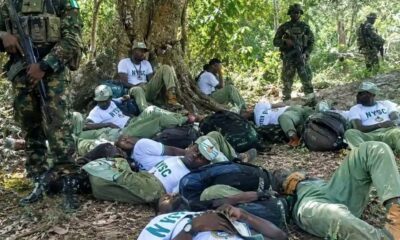
NYSC Abduction: Families panic over N950m ransom demand
-
News1 day ago
I fought to save passengers, says Flydubai pilot
-
News2 days ago
How I killed my girlfriend after HIV dispute — Suspect
-
News13 hours ago
Tragedy as RCCG pastor collapses, dies during sermon at funeral in Rivers
-
News2 days ago
NYSC members, other travellers ‘abducted’ along Owerri-Onitsha Expressway
-
News2 days ago
Police confirm NYSC members among abducted passengers on Owerri-Onitsha Road, rescue 10
-
Features21 hours ago
Mbah Lists Projects Driving Enugu’s Revenue Growth, Says Less Than 13% Comes From Taxation
-
News3 days ago
We can’t erase decades-long problems in 4 years, says Tinubu