News
Ajuri Ngelale Vs Bayo Onanuga: ‘Why Tinubu sacked Chief Spokesman’ – Sources

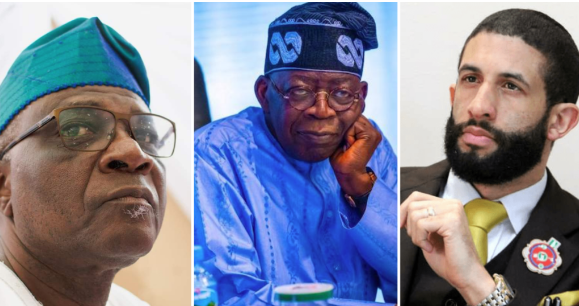
President Bola Ahmed Tinubu’s Special Adviser on Media and Publicity, Ajuri Ngelale, did not resign as an aide to the president to address a “vexatious medical situation” in his family as he claimed.
According to the Foundation of Investigative Journalism (FIJ), sources revealed that he was dismissed by the presidency, but was given the opportunity to publicly resign after pleading for a softer exit.

Ngelale, who also served as the special presidential envoy on climate action, shocked Nigerians on Saturday when he abruptly announced his departure, citing “medical matters presently affecting my immediate, nuclear family.”
He had said in a statement: “On Friday, I submitted a memo to the Chief of Staff to the President informing my office that I am proceeding on an indefinite leave of absence to frontally deal with medical matters presently affecting my immediate, nuclear family.
“While I fully appreciate that the ship of state waits for no man, this agonising decision — entailing a pause of my functions as the Special Adviser to the President on Media & Publicity and Official Spokesperson of the President; Special Presidential Envoy on Climate Action, and Chairman, Presidential Steering Committee on Project Evergreen — was taken after significant consultations with my family over the past several days as a vexatious medical situation has worsened at home.”

However, sources within the presidency revealed to FIJ that Ngelale’s departure was not due to a family health crisis, but rather the culmination of a power struggle with Bayo Onanuga, the Special Adviser on Information and Strategy.
According to insiders, following the election of Bola Tinubu as Nigeria’s president in 2023, Ngelale and Onanuga did not get along, largely because Ngelale, who had been appointed by President Muhammadu Buhari in 2019 as a senior special adviser on public affairs, considered himself superior to Onanuga.
Ngelale, 38, began his career with Africa Independent Television (AIT) in the 2000s, while Onanuga, 67, a former Managing Director of the News Agency of Nigeria (NAN), started his career in the 1980s.
Although Ngelale served as special adviser on media and publicity, and Onanuga as special adviser on information and strategy, civil servants found their roles confusing.
In the previous administration, Femi Adesina was the special adviser on media and publicity, while Garba Shehu was the senior special assistant. Everyone knew Adesina, as SA, was senior, and Shehu, as SSA, was subordinate.
With both Ngelale and Onanuga holding special adviser roles, the distinction wasn’t as clear. By default, the civil service structure reported to Ngelale, as SA on media.
“Ngelale considered himself untouchable because he had the backing of the president’s son Seyi and Femi Gbajabiamila, the president’s chief of staff,” a source disclosed. “He was fired; I became aware of this on Tuesday, but I won’t rule out the possibility that it happened earlier. When he got the letter, he started to plead to be allowed to resign as a soft landing. He was eventually given a soft landing, which is understandable. News of his sacking in public would have thoroughly embarrassed not just Ngelale but the presidency too.”
The source added that despite efforts by several top appointees and ministers to intervene in the feud between Ngelale and Onanuga, the conflict escalated.
“The Ngelale-Onanuga feud was no secret in the villa, so several top appointees and cabinet members attempted to intervene at separate times; and while Onanuga was open to peace talks, Ngelale wasn’t,” the source continued. “For example, Mohammed Idris Malagi, the minister of information and national orientation, called for talks four times. Onanuga was willing to attend but Ngelale snubbed them all, always claiming he was busy.”
Civil servants also noted that Onanuga, despite being appointed in October 2023, did not have his own office for months, while Ngelale had ensured his authority remained intact.
One insider explained, “When Onanuga was appointed, he had no office. He was squatting in Tunde Rahman’s office. It was just recently that he eventually got an office that belonged to either Wale Edun or Zacheus Adedeji when they were still advisers.”
Rahman, the senior special assistant to the president on media and publicity, had been appointed in July 2023, three months before Onanuga’s appointment.
Meanwhile, Zacheus Adedeji, who was appointed special adviser on revenue, and Wale Edun, special adviser on monetary policy, had both secured their roles in June 2023, months ahead of Onanuga.
Another source revealed that Ngelale’s powerful position was largely attributed to his backing from Seyi Tinubu and Gbajabiamila.
“During the 2023 presidential electioneering, Jumoke Oduwole, the special adviser on the Presidential Enabling Business Environment Council (PEBEC), introduced Ngelale to Gbajabiamila,” said the source. “When Ngelale got there, he met Seyi. He told Seyi he would facilitate a CNN interview during which Tinubu’s presidential ambition would be discussed. Seyi thought it was impossible, but Ngelale did it. He secured the interview on CNN. He then told Seyi the time and date it would air. Seyi promised Ngelale that Tinubu would phone him if he pulled it off. Immediately after the interview was aired, Tinubu called Ngelale.”
Following Tinubu’s election victory, Ngelale’s appointment was secured soon after his return to Nigeria. In contrast, Onanuga’s appointment was delayed for at least two months and required intervention from Chief Bisi Akande, a close ally of Tinubu.
Sources confirmed that Ngelale’s directive that no statement from Onanuga could be released without his approval had aggravated the situation.
The internal conflict and Ngelale’s difficult relationship with journalists and the media eventually damaged his standing with the presidency.
“He did not have a good relationship with journalists. Ask the reporters; ask the state house correspondents. And also ask editors,” one source said. “Many people consider him disrespectful and arrogant, even the editors. You can hardly find any important editor in Nigeria who likes or regards Ngelale.”
Efforts by FIJ to reach both Ngelale and Onanuga for comments were unsuccessful, as neither responded to messages or calls.




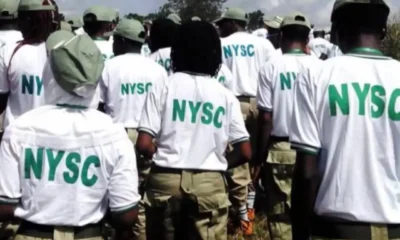







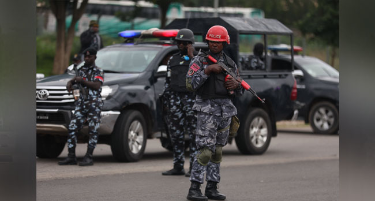
The Imo state police command says members of the National Youth Service Corps (NYSC) were among those abducted along the Owerri-Onitsha expressway on Thursday morning.
Okoye Henry, police spokesperson in Imo, said in a statement that 10 of the victims had been rescued.
He said the exact number of persons abducted was still being verified and would be made public once confirmed.
Reports said that there was tension on the road in the early hours of Thursday after gunmen attacked two 18-seater buses carrying passengers and took them into the bush.
According to a viral video circulated on X, the victims were travelling to Akwa Ibom and Abia states in buses branded with the Abia state government logo when the attackers intercepted the vehicles and robbed the passengers.
Okoye said the incident occurred around 6:30am, adding that NYSC members were among those abducted.
“The incident occurred at about 0630hrs on 1st October, 2026, along the Owerri-Onitsha Road, by Umunoha. Two buses conveying NYSC corps members and other passengers from Ibadan to Uyo, Akwa Ibom State, and Bende, Abia State, respectively, were attacked by suspected armed men,” the statement reads.
“Following a swift response by the Police and other security agencies, both buses have been recovered and 10 victims were rescued at the scene.
“The rescued victims are in safe hands and are being attended to. The exact number of persons abducted is being verified and will be made public once confirmed.”
The police spokesperson said operatives were still conducting coordinated search and rescue operations, backed by intelligence to track the suspects and rescue the remaining victims.
He said the commissioner of police in Imo, alongside other service commanders, have visited the scene for an on-the-spot assessment and to give operational direction.
“He assured the public that the Command will sustain the operation until all victims are safely recovered and the suspects are brought to justice,” Okoye said.
He said the command was working with the NYSC directorate to reach the families of the affected corps members, who would be kept informed as the situation developed.
He added that the affected section of the expressway had been reopened and traffic was flowing, while security personnel remained deployed to protect commuters.
The command appealed for calm and urged the public to remain vigilant, adding that anyone with credible information should report to the nearest police station or contact the command’s emergency lines.
“All information will be treated in confidence,” Okoye added.
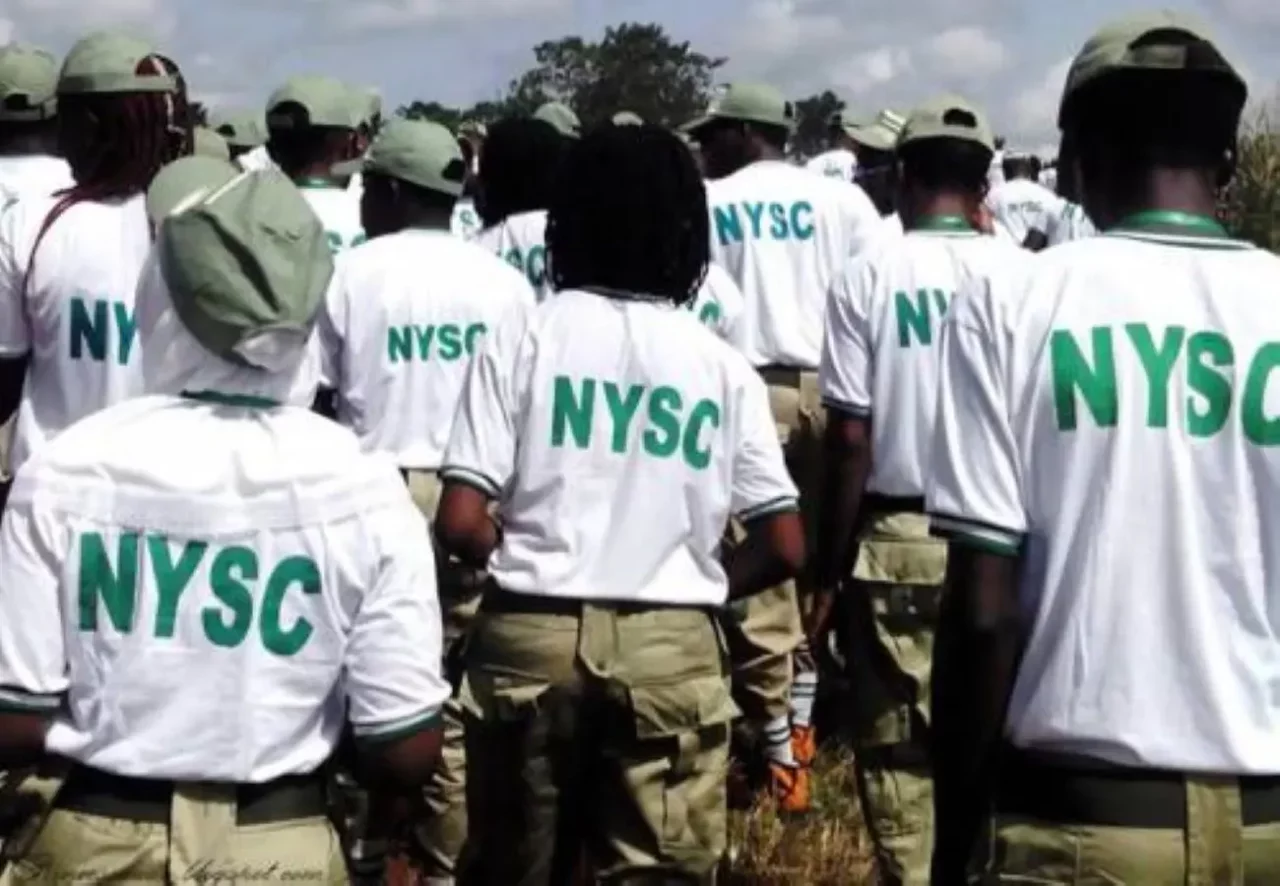
An unspecified number of travellers, including National Youth Service Corps members, have reportedly been abducted by armed men along the Owerri-Onitsha Expressway in Imo State on Thursday, October 1.
The incident reportedly occurred around 5:30am when at least two commercial buses were attacked, with passengers allegedly robbed and taken into the bush. The exact number of people affected remains unclear.
According to reports and videos circulating online, some of the passengers were corps members who had departed from Samonda, Ibadan, in buses operated by Uko Akwa Ibom Motors.
The corps members were reportedly travelling to their assigned orientation camps in states across the South-East and South-South, including Akwa Ibom, Enugu, Imo and Abia.
An eyewitness, in a video shared online, said the attackers intercepted buses travelling from Lagos towards Anambra State and took passengers into the bush after dispossessing them of their belongings.
“Good morning, my fellow Nigerians. I am reporting from the Owerri-Onitsha Road. This happened this morning,” the eyewitness said.
He added that security personnel had arrived at the scene, while soldiers reportedly entered the bush in an attempt to locate and rescue the victims.
“The police came this morning, and the army has already entered the bush to see if they can rescue the victims,” he said.
Footage from the scene showed two buses abandoned by the roadside, with one bearing the inscription “Uko Akwa Ibom Motors Nig. Ltd” and the number Uko/133.
The reported attack has heightened concerns among families whose relatives were travelling to NYSC orientation camps in different parts of the South-East and South-South.
In a separate video shared by Agidigbo FM Ibadan, a distressed woman appealed for assistance, saying her daughter was among the corps members whose whereabouts had become unknown.
According to the woman, her daughter left the Samonda park in Ibadan on Wednesday alongside other corps members travelling to the eastern part of the country.
She said the family received a message from her daughter in their WhatsApp group shortly after 6am on Thursday. The message reportedly contained the word “kidnapper”, after which her daughter’s phone became unreachable.
Describing the family’s distress, the woman said: “Since past 6am, I have not been able to hear from my child, and we couldn’t get her exact location anymore. Please, federal government, help us. I only have the two of them.”
She identified the missing corps member as Kehinde and said her twin sister, Taiwo, had already arrived in Enugu for her orientation camp.
Other relatives reportedly visited the park where their loved ones had boarded buses in Ibadan as they sought information about the missing travellers.
However, the identities and number of people allegedly abducted, as well as their current whereabouts, remained unclear at the time of reporting.
The Imo State Police Command had yet to issue an official statement confirming the incident. Its spokesperson, Henry Okoye, had also not responded to requests for comment at the time of the reports.
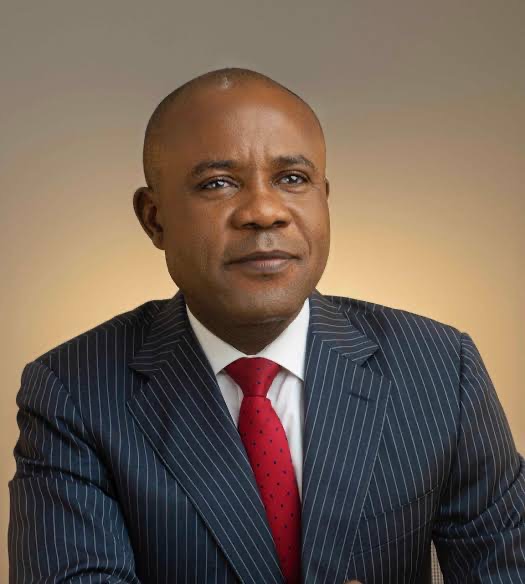
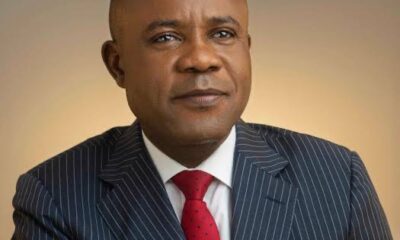
In commemoration of Nigeria’s 66th independence anniversary, Governor Peter Mbah of Enugu State has approved the pardon, release, and commutation of sentences of 13 inmates of the Nigerian Correctional Centres, Enugu State.
This is in the exercise of his power of Prerogative of Mercy under Section 212 of the 1999 Constitution (as amended) and in consultation with the Advisory Council on Prerogative of Mercy, Enugu State.
According to a statement released by the Mbah’s media aide, Uche Anichukwu, on Independence Day, the Governor’s approval was conveyed to the Comptroller, Nigerian Correctional Service, Enugu State Command by the Chief of Staff to the Attorney General and Commissioner for Justice, Barr. Osinachi Nnajieze.
The beneficiary inmates are Kenneth Ozioko, Moses Saliyat, Promise Ndudim Olung, Chijioke Ugwu, Samuel Ani, and Eugene Odo.
Others are Celsus Emeachi, Caleb Jatto, Calistus Eze, Gabriel Onu, Timothy Ani, Ernest Okeke, and Ejike Nwodo.
While some of the inmates were pardoned and released, some had their death sentence commuted to life imprisonment.
Mbah’s decision was predicated on reports of ill health and or proven reform in character, and following recommendation by the Correctional Services to the Advisory Council on Prerogative of Mercy, chaired by the State Attorney-General and Commissioner for Justice.
Membership of the Council equally comprises representatives of the Nigerian Correctional Service, Carmelite Prisoners Interest Organisation (CAPIO), and the Catholic Institute for Development, Justice and Peace (CIDJAP), among other reputable bodies in the justice sector.
Section 212 (1) of the 1999 Constitution (as amended) provides that: “The Governor may (a) Grant any person concerned with or convicted of any offence created by any law of a state a pardon, either free or subject to lawful conditions; (b) grant to any person a respite, of the execution of any punishment imposed on that person for such an offence; (c) substitute a less severe form of punishment for any person for such an offence; or (d) remit the whole or any part of punishment for any punishment imposed on that person for such any offence or of any penalty forfeiture otherwise due to the state on account of such an offence.”
Section 212 (2), however, provides that the powers of the governor under subsection (1) shall be exercised after consultation with an advisory council of the state on the prerogative of mercy as may be established by law of the state.
-
 News2 days ago
Ojukwu Property Dispute: OTL petitions IGP over demolition, construction at Macpherson Avenue Property
-
News1 day ago
Fuel Price Hike: Workers to begin strike in October
-
News2 days ago
‘I’m strong, ready to work’ – Tinubu speaks after return from vacation
-
News24 hours ago
We can’t erase decades-long problems in 4 years, says Tinubu
-
News2 days ago
Xenophobia: Nigerian Consulate condemns killing of three Nigerians in South Africa
-
News2 days ago
Military records 367 attacks, kills 52 terrorists in September
-
News1 day ago
Enugu leads as four states cut domestic debt by over 20% in six months
-
News22 hours ago
Stop bringing cows, rams to judges, retiring S’Court Justice tells politicians