News
NCDMB lauds Nigerian Content achievements in NLNG’s Train 7 Project, Calls for greater industry collaboration

THE Executive Secretary of the Nigerian Content Development and Monitoring Board (NCDMB), Engr. Felix Omatsola Ogbe has commended the significant Nigerian Content strides achieved in the Nigeria LNG Limited (NLNG) Train 7 Project.
Speaking on Friday during a visit to the NLNG six-train plant, Train 7 Project construction site, and the NLNG Shipping and Marine Services Limited (NSML) training centre, Maritime Centre for Excellence (MCOE) in Finima, Bonny Island, Rivers State, Engr. Ogbe emphasised the need for increased collaboration and advocacy for Nigerian Content in the oil and gas industry.

Engr. Ogbe was received by Mr. Olakunle Osobu, Deputy Managing Director; Engr. Nnamdi Anowi, General Manager of Production; Engr. Ali Uwais, Train 7 Project Director; Mr. Abdulkadir Ahmed, NSML Managing Director/CEO; and other senior management officials of the company.
During his address, the Executive Secretary highlighted how the Train 7 Project has significantly boosted local capacity through the production of ancillary components and accessories within Nigeria, contributing directly to the project’s successful execution. He commended the recent Presidential Directives on Local Content implementation, which mandate that contracts in the oil and gas sector be awarded exclusively to local companies with proven in-country capabilities, as instrumental to these achievements.
Reflecting on the progress made, Engr. Ogbe stated, “The accomplishments we are witnessing today at the NLNG Train 7 Project are a testament to the NLNG’s unwavering commitment to Nigerian Content. This project stands as a beacon of what we can achieve when we prioritise our local industries and talents.”

Speaking further, the NCDMB boss lauded NLNG’s management for achieving 52 million man-hours on the Train 7 project with zero lost time injury (LTI). He assured that “we will support you to achieve everything you desire to accomplish for the overall development of Nigeria.”
The NCDMB boss also commended his immediate predecessor, Engr. Simbi Kesiye Wabote, for his immense contributions to the approval, take-off and success of the Train 7 project.
Commenting on the Maritime Centre for Excellence (MCOE), Engr. Ogbe expressed delight that it is the first training centre in Africa to receive accreditation from the UK Maritime and Coastguard Agency (UK MCA) to deliver and issue certificates for the STCW 2010 Electronic Chart Display and Information System (ECDIS) and Basic Liquefied Gas Tanker Cargo Operations courses.
The MCOE, a maritime training and research facility, aims to enhance maritime expertise in Nigeria and the West African region. It currently hosts a specialised training programme for marine services providers in the upstream oil and gas sector, with the support of NCDMB.
In his comments, NLNG’s Deputy Managing Director, Mr. Olakunle Osobu, who represented Dr. Philip Mshelbila, NLNG’s MD/CEO, lauded the NCDMB’s unwavering support for the Train 7 Project, describing the partnership as a shining example of the public-private collaboration that can drive Nigeria’s industrial growth. He emphasised that NLNG’s Nigerian Content deliverables showcase the power of strategic collaboration and capacity building, aligning with the NCDMB’s broader objectives and contributing to national development goals.
Mr. Osobu further reiterated that Nigerian Content was not just a regulatory requirement for NLNG but a core business strategy. “We are committed to going beyond compliance, embracing Nigerian Content as a fundamental part of our vision of helping to build a better Nigeria,” he added.
He also highlighted the economic impact of the Train 7 Project, stating that the addition of Train 7 will expand Nigeria’s LNG production capacity from 22 Metric Tons (MT) to 30MT per annum, which will not only boost the nation’s economy by creating jobs and driving sustainable development but also reinforce Nigeria’s position as a formidable player in the global energy market.
Engr. Ogbe’s visit comes on the heels of a recent tour of BEAMCO Limited, where pumps and valves are locally assembled for the Train 7 Project, and the commissioning of the Daewoo Galvanising Plant at Abam-ama, Okrika, Rivers State.



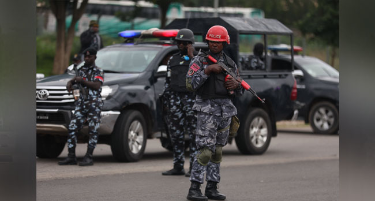
The Imo state police command says members of the National Youth Service Corps (NYSC) were among those abducted along the Owerri-Onitsha expressway on Thursday morning.
Okoye Henry, police spokesperson in Imo, said in a statement that 10 of the victims had been rescued.
He said the exact number of persons abducted was still being verified and would be made public once confirmed.
Reports said that there was tension on the road in the early hours of Thursday after gunmen attacked two 18-seater buses carrying passengers and took them into the bush.
According to a viral video circulated on X, the victims were travelling to Akwa Ibom and Abia states in buses branded with the Abia state government logo when the attackers intercepted the vehicles and robbed the passengers.
Okoye said the incident occurred around 6:30am, adding that NYSC members were among those abducted.
“The incident occurred at about 0630hrs on 1st October, 2026, along the Owerri-Onitsha Road, by Umunoha. Two buses conveying NYSC corps members and other passengers from Ibadan to Uyo, Akwa Ibom State, and Bende, Abia State, respectively, were attacked by suspected armed men,” the statement reads.
“Following a swift response by the Police and other security agencies, both buses have been recovered and 10 victims were rescued at the scene.
“The rescued victims are in safe hands and are being attended to. The exact number of persons abducted is being verified and will be made public once confirmed.”
The police spokesperson said operatives were still conducting coordinated search and rescue operations, backed by intelligence to track the suspects and rescue the remaining victims.
He said the commissioner of police in Imo, alongside other service commanders, have visited the scene for an on-the-spot assessment and to give operational direction.
“He assured the public that the Command will sustain the operation until all victims are safely recovered and the suspects are brought to justice,” Okoye said.
He said the command was working with the NYSC directorate to reach the families of the affected corps members, who would be kept informed as the situation developed.
He added that the affected section of the expressway had been reopened and traffic was flowing, while security personnel remained deployed to protect commuters.
The command appealed for calm and urged the public to remain vigilant, adding that anyone with credible information should report to the nearest police station or contact the command’s emergency lines.
“All information will be treated in confidence,” Okoye added.
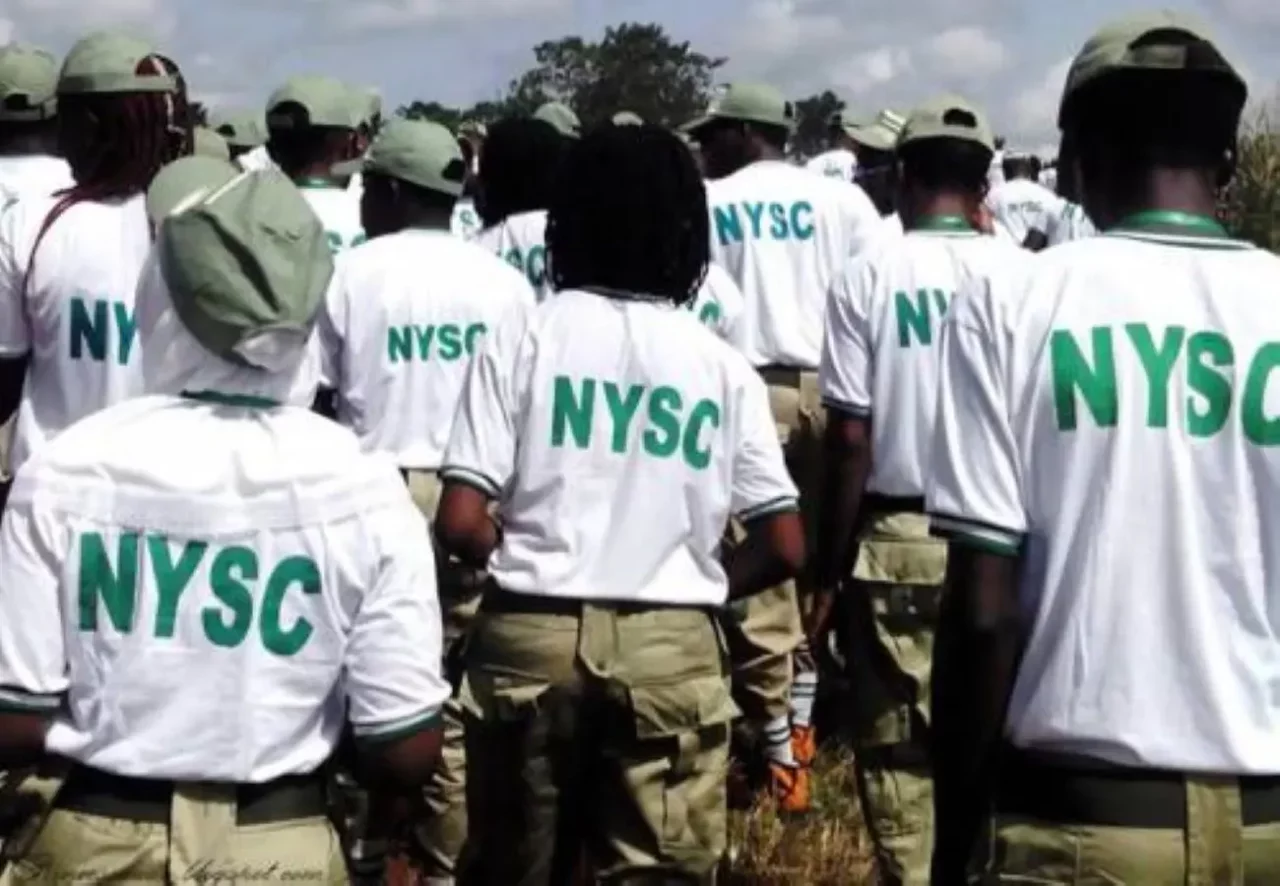
An unspecified number of travellers, including National Youth Service Corps members, have reportedly been abducted by armed men along the Owerri-Onitsha Expressway in Imo State on Thursday, October 1.
The incident reportedly occurred around 5:30am when at least two commercial buses were attacked, with passengers allegedly robbed and taken into the bush. The exact number of people affected remains unclear.
According to reports and videos circulating online, some of the passengers were corps members who had departed from Samonda, Ibadan, in buses operated by Uko Akwa Ibom Motors.
The corps members were reportedly travelling to their assigned orientation camps in states across the South-East and South-South, including Akwa Ibom, Enugu, Imo and Abia.
An eyewitness, in a video shared online, said the attackers intercepted buses travelling from Lagos towards Anambra State and took passengers into the bush after dispossessing them of their belongings.
“Good morning, my fellow Nigerians. I am reporting from the Owerri-Onitsha Road. This happened this morning,” the eyewitness said.
He added that security personnel had arrived at the scene, while soldiers reportedly entered the bush in an attempt to locate and rescue the victims.
“The police came this morning, and the army has already entered the bush to see if they can rescue the victims,” he said.
Footage from the scene showed two buses abandoned by the roadside, with one bearing the inscription “Uko Akwa Ibom Motors Nig. Ltd” and the number Uko/133.
The reported attack has heightened concerns among families whose relatives were travelling to NYSC orientation camps in different parts of the South-East and South-South.
In a separate video shared by Agidigbo FM Ibadan, a distressed woman appealed for assistance, saying her daughter was among the corps members whose whereabouts had become unknown.
According to the woman, her daughter left the Samonda park in Ibadan on Wednesday alongside other corps members travelling to the eastern part of the country.
She said the family received a message from her daughter in their WhatsApp group shortly after 6am on Thursday. The message reportedly contained the word “kidnapper”, after which her daughter’s phone became unreachable.
Describing the family’s distress, the woman said: “Since past 6am, I have not been able to hear from my child, and we couldn’t get her exact location anymore. Please, federal government, help us. I only have the two of them.”
She identified the missing corps member as Kehinde and said her twin sister, Taiwo, had already arrived in Enugu for her orientation camp.
Other relatives reportedly visited the park where their loved ones had boarded buses in Ibadan as they sought information about the missing travellers.
However, the identities and number of people allegedly abducted, as well as their current whereabouts, remained unclear at the time of reporting.
The Imo State Police Command had yet to issue an official statement confirming the incident. Its spokesperson, Henry Okoye, had also not responded to requests for comment at the time of the reports.
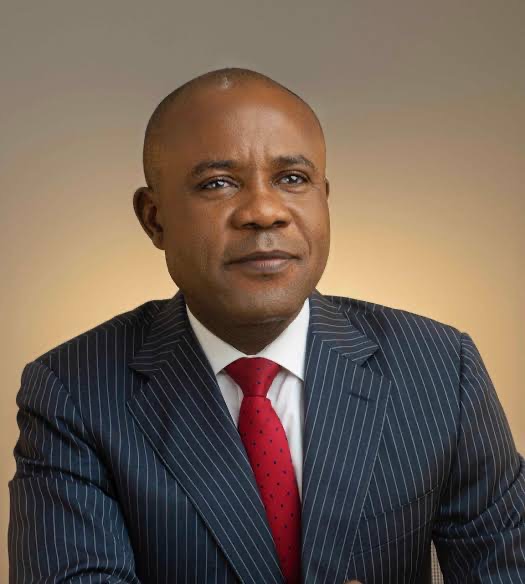
In commemoration of Nigeria’s 66th independence anniversary, Governor Peter Mbah of Enugu State has approved the pardon, release, and commutation of sentences of 13 inmates of the Nigerian Correctional Centres, Enugu State.
This is in the exercise of his power of Prerogative of Mercy under Section 212 of the 1999 Constitution (as amended) and in consultation with the Advisory Council on Prerogative of Mercy, Enugu State.
According to a statement released by the Mbah’s media aide, Uche Anichukwu, on Independence Day, the Governor’s approval was conveyed to the Comptroller, Nigerian Correctional Service, Enugu State Command by the Chief of Staff to the Attorney General and Commissioner for Justice, Barr. Osinachi Nnajieze.
The beneficiary inmates are Kenneth Ozioko, Moses Saliyat, Promise Ndudim Olung, Chijioke Ugwu, Samuel Ani, and Eugene Odo.
Others are Celsus Emeachi, Caleb Jatto, Calistus Eze, Gabriel Onu, Timothy Ani, Ernest Okeke, and Ejike Nwodo.
While some of the inmates were pardoned and released, some had their death sentence commuted to life imprisonment.
Mbah’s decision was predicated on reports of ill health and or proven reform in character, and following recommendation by the Correctional Services to the Advisory Council on Prerogative of Mercy, chaired by the State Attorney-General and Commissioner for Justice.
Membership of the Council equally comprises representatives of the Nigerian Correctional Service, Carmelite Prisoners Interest Organisation (CAPIO), and the Catholic Institute for Development, Justice and Peace (CIDJAP), among other reputable bodies in the justice sector.
Section 212 (1) of the 1999 Constitution (as amended) provides that: “The Governor may (a) Grant any person concerned with or convicted of any offence created by any law of a state a pardon, either free or subject to lawful conditions; (b) grant to any person a respite, of the execution of any punishment imposed on that person for such an offence; (c) substitute a less severe form of punishment for any person for such an offence; or (d) remit the whole or any part of punishment for any punishment imposed on that person for such any offence or of any penalty forfeiture otherwise due to the state on account of such an offence.”
Section 212 (2), however, provides that the powers of the governor under subsection (1) shall be exercised after consultation with an advisory council of the state on the prerogative of mercy as may be established by law of the state.
-
 News2 days ago
Ojukwu Property Dispute: OTL petitions IGP over demolition, construction at Macpherson Avenue Property
-
News1 day ago
Fuel Price Hike: Workers to begin strike in October
-
News2 days ago
‘I’m strong, ready to work’ – Tinubu speaks after return from vacation
-
News23 hours ago
We can’t erase decades-long problems in 4 years, says Tinubu
-
News2 days ago
Xenophobia: Nigerian Consulate condemns killing of three Nigerians in South Africa
-
News2 days ago
Military records 367 attacks, kills 52 terrorists in September
-
News1 day ago
Enugu leads as four states cut domestic debt by over 20% in six months
-
News22 hours ago
Stop bringing cows, rams to judges, retiring S’Court Justice tells politicians