News
Govt opens Nigerians’ access to consumer credit with N100b

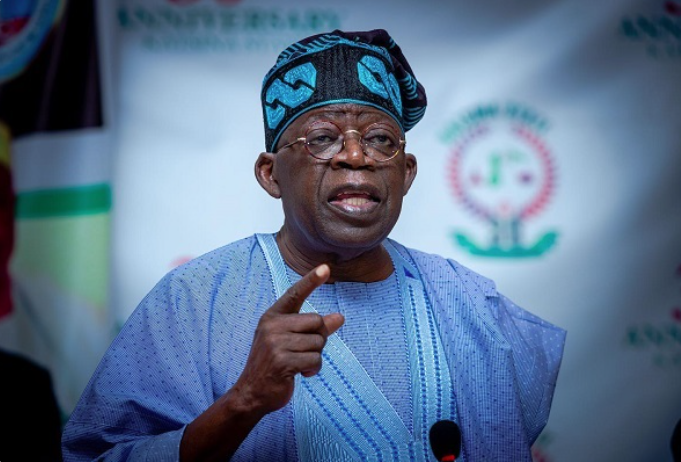
• Govt opens Nigerians’ access to consumer credit with N100b
A Consumer Credit Scheme to put money in the pockets of Nigerians, boost manufacturing and stimulate economic growth has been rolled out by the Federal Government.
Presidential spokesman Ajuri Ngelale on Wednesday announced the beginning of the plan following its approval by President Bola Ahmed Tinubu.

It is a cardinal campaign promise by the President.
According to Ngelale, apart from empowering Nigerians to improve their quality of life, the programme will also lead to access to goods and services.
The first phase of the programme will be available to civil servants before its extension to other Nigerians.

Ngelale explained: “Consumer credit serves as the lifeblood of modern economies, enabling citizens to enhance their quality of life by accessing goods and services upfront, paying responsibly over time.
“It facilitates crucial purchases, such as homes, vehicles, education, and healthcare, essential for ongoing stability to pursue their aspirations.
“Through responsible repayment, individuals build credit histories, unlocking more opportunities for a better life.
“Additionally, the increased demand for goods and services will stimulate local industry and job creation.
“The President believes every hardworking Nigerian should have access to social mobility, with consumer credit playing a pivotal role in achieving this vision.
“The Nigerian Consumer Credit Corporation (CREDICORP), which will drive the scheme, will achieve its mandate through the following:
*Strengthening Nigeria’s credit reporting systems, ensuring every economically active citizen has a dependable credit score. This score becomes personal equity they build, facilitating access to consumer credit.
*Offering credit guarantees and wholesale lending to financial institutions dedicated to broadening consumer credit access.
*Promoting responsible consumer credit as a pathway to an improved quality of life, fostering a cultural shift towards growth and financial responsibility.
“In line with the President’s directive to expand consumer credit access to Nigerians, CREDICORP has launched a portal for Nigerians to express interest in receiving consumer credit.
“This initiative, in collaboration with financial institutions and cooperatives nationwide, aims to broaden consumer credit availability.
“Working Nigerians interested in receiving consumer credit can visit www.credicorp.ng to express interest. The deadline is on May 15.”
In an earlier comment on the scheme, Minister for Budget and Economic Planning, Abubakar Bagudu, noted that N100 billion is included in this year’s budget for the programme
He said: “We put N100 billion fund in the budget to support consumer credit.
“This is important because the manufacturing sector is struggling with two challenges: efficiency of production and finding someone who can buy.
“The introduction and support of consumer credit, we believe, will help in the revival of our manufacturing sector to meet international standards. It is a catalytic fund that is expected to have significant growth.”
House of Representatives Speaker Tajudeen Abbas, and economic experts, such as Dr. Muda Yusuf, Mr. Olatunde Amolegbe and Mr. David Andori, gave kudos to the scheme.
The absence of recent and relevant credit demand data poses challenges to operators and investors, leaving them “market-blind” in estimating Nigeria’s actual consumer credit market size, according to experts.
To address this issue, Stears, a leading data analysis firm, has developed a credit market mapping model that leverages robust data and innovative methodologies to comprehensively understand Nigeria’s consumer credit market.
This includes not only assessing the formal market but also offering insights into the substantial informal credit market, thus identifying opportunities for credit providers and investors within this segment.
The experts added that consumer credit can have both positive and negative impacts on the economy.
On the positive side, it can stimulate economic growth by increasing consumer spending. When individuals have access to credit, they are more likely to make purchases, driving demand for goods and services and leading to increased production and job creation.
This, in turn, can boost overall economic activity and contribute to higher levels of economic growth.
However, it is crucial to manage consumer credit responsibly to avoid negative consequences.
Excessive consumer debt can lead to financial instability, as individuals may struggle to repay their debts, resulting in defaults and bankruptcies.
These repercussions can have a ripple effect on the economy, causing lenders to incur losses and reducing their willingness to extend credit in the future.
Moreover, high levels of consumer debt can hinder long-term economic growth by reducing savings and investment.
Yusuf, Amolegbe, Andori on the scheme
Economic and finance experts described the takeoff of the consumer credit scheme as laudable.
They noted that it has the potential to stimulate the economy and enhance the quality of living of average Nigerians.
They said a functional credit scheme not only provides an opportunity to lift a substantial part of the population from poverty but also to create massive opportunities for the development of the productive and financial services sectors.
They, however, called for supportive regulatory and policy frameworks to make the scheme sustainable and successful.
The experts that spoke yesterday include Chief Executive Officer of the Centre for Promotion of Private Enterprise (CPPE); Dr Muda Yusuf; Managing Director, Arthur Steven Asset Management, Mr Olatunde Amolegbe and Managing Director, HighCap Securities, Mr David Adonri.
Yusuf said the introduction of the consumer credit scheme is a welcome development as it would boost consumer demand.
“One of the major shortcomings of our financial system is the absence of consumer credit. Where it exists, the conditions are often very difficult to meet.
“The resultant enhancement of purchasing power would be beneficial to other sectors of the economy. We need robust consumption capabilities to complement production.
“But the implementation framework should be such that would deliver the desired outcomes,” Yusuf said.
Amolegbe noted that the Nigerian economy cannot reach its full potential if it remains a largely informal and cash-based economy.
According to him, the availability of credit means consumers can leverage their incomes in other to buy more, thus indirectly boosting production, capacity utilisation and employment
“It will also have a significant social economic impact as it has the potential to lift many people out of poverty by providing them credit to finance their small businesses and trades,” Amolegbe, a past president of the Chartered Institute of Stockbrokers (CIS), said.
He, however, pointed out the need to ensure a proper and workable framework, especially when the scheme becomes accessible to operators in both formal and informal sectors.
“The pitfalls include: how do you properly capture and monitor borrowers to ensure they make good on their commitments in a country dominated by people operating in a largely unstructured and informal environment?
“If we can overcome this hurdle, then the benefits of this scheme will be clear for all to see within a short period,” Amolegbe said.
Adonri said the scheme was in line with the global operating environment, noting that it has the potential to boost the economy if well managed.
“Modern economies run on credit. Therefore, it is a commendable initiative to make consumer credit readily available in Nigeria.
“However, it may aggravate the galloping inflation in Nigeria now. The main economic challenge facing Nigeria comes from the excessive supply gap due to the near collapse of domestic agricultural and industrial production.
“Consumer credit is a potent tool for stimulating consumer pull, especially when an economy is be-labored with unsold inventory,” Adonri said.
He said macroeconomic policy thrust now ought to be focused on the mobilisation of credit to boost local production to close the yawning supply gap, as a condition precedent to support the consumer credit system.
















The Federal Government has confirmed a case of Ebola disease in the Federal Capital Territory (FCT), identifying 44 close contacts as health authorities intensify efforts to contain the infection and prevent further spread.
The Coordinating Minister of Health and Social Welfare, Professor Muhammad Ali Pate, disclosed this in a statement issued on Tuesday, October 20, 2026, following laboratory confirmation of the case.
According to the statement, the patient is a woman who recently arrived in Nigeria on an international flight from Uganda.
She was admitted to a private hospital in the FCT, where she received treatment for several days before the diagnosis was confirmed.
The Minister said the patient was currently in isolation and receiving medical care.
He added that the Federal Ministry of Health and Social Welfare, the Nigeria Centre for Disease Control and Prevention (NCDC), the FCT Health Services Secretariat and other relevant authorities were working together to contain the infection.
Contact tracing has commenced, with public health teams identifying and monitoring individuals who may have been exposed to the patient, including healthcare workers, patients, caregivers and travel contacts.
The government has also intensified disease surveillance, while the hospital where the patient received treatment is being supported to strengthen its infection prevention and control measures.
The Federal Government called on public and private healthcare facilities across the country to remain on high alert and promptly report suspected cases to public health authorities.
It urged healthcare workers to maintain a high index of suspicion, identify and isolate suspected cases without delay, and strictly observe infection prevention and control protocols.
The government also explained that Ebola spreads through direct contact with the blood or other body fluids of an infected person who is sick or has died from the disease, as well as contact with contaminated materials.
It further clarified that a person infected with Ebola cannot transmit the disease before symptoms develop.
The government urged Nigerians to remain informed and follow public health guidance as authorities continue efforts to contain the confirmed case and prevent further transmission.

Pa Reuben Famuyide Fasoranti, the revered Yoruba elder statesman and national leader of the pan-Yoruba socio-political organisation, Afenifere, has died at the age of 100.
Announcing the death of the centenarian, Governor Lucky Aiyedatiwa, in a statement personally signed on Tuesday, mourned the death of the elder statesman and community leader.
Aiyedatiwa described the late Fasoranti as a symbol of wisdom, integrity and selfless service whose contributions to the development of Ondo State, Yorubaland and Nigeria would remain indelible.
The governor, in a condolence message issued on Tuesday, said the centenarian’s fatherly counsel, guidance and principled positions on justice and good governance would be sorely missed.
He said Fasoranti lived a fulfilled life and left behind an enduring legacy that would continue to inspire generations.
“Pa Fasoranti was a patriarch, a beacon of wisdom, integrity and selfless service whose century-long life was marked by uncommon commitment to the development of our dear State, Yorubaland and Nigeria at large,” Aiyedatiwa said.
Aiyedatiwa, who expressed sadness over the elder statesman’s death, said his administration and the people of Ondo State shared in the grief of the deceased’s family and associates.
On behalf of the state government and its people, the governor extended his condolences to the Fasoranti family, the people of Akure Kingdom, and the entire state over the loss.
He prayed for the peaceful repose of the deceased’s soul.

The All Progressives Congress (APC) Presidential Campaign Council has denied allegations of a plot to assassinate former Vice-President Atiku Abubakar, the African Democratic Congress (ADC) presidential candidate for the 2027 general election.
Dele Alake, spokesperson for the APC Campaign Council, made the denial while reacting to the allegation raised by Timi Frank, a member of the ADC.
The council urged Frank to submit any evidence in his possession to the relevant law enforcement agencies for investigation, stressing that any credible threat to life must be treated seriously, irrespective of political affiliation.
It categorically denied any involvement by President Bola Tinubu, the Presidency or the APC in an alleged plot targeting Atiku or any other opposition figure.
The council also dismissed reports that security personnel attached to the former vice-president had been withdrawn, insisting that Atiku remained protected by the Nigeria Police Force and the Department of State Services (DSS).
According to the statement, President Tinubu recently directed security agencies to strengthen security arrangements for all presidential, vice-presidential, governorship and deputy governorship candidates ahead of the 2027 general elections.
Reacting to the political implications of the allegation, Alake described the assassination claims as “typical opposition rabble-rousing”, accusing those behind them of attempting to heighten political tension and attract international attention through social media.
“Let our political competition be peaceful, lawful, and focused on the big issues that matter to Nigerians, not character assassination or wild, baseless allegations,” the statement read.
The APC Campaign Council further highlighted Tinubu’s longstanding experience in opposition politics, urging candidates, political parties and their supporters to remain factual and responsible in their public statements.
It called on political actors to uphold democratic values and ensure that the build-up to the 2027 general elections remains peaceful, lawful and focused on issues affecting Nigerians.
-
 News2 days ago
JUST IN: Former Delta Governor, Uduaghan, dies
-
News18 hours ago
FG confirms Ebola case in FCT, identifies 44 contacts
-
News2 days ago
Federal High Court Upholds ENSSAA’s N150m Political Campaign Billboard Fee, CTC Reveals
-
Politics2 days ago
AA Assembly Candidate, Ugbaje Friday, Unveils Development Agenda for Ibaji
-
News3 days ago
Corruption turning Nigerian Courts to ‘market stalls’ — Retired Justice Augie
-
News3 days ago
Catholic priest dies as crucifix falls on him during Mass
-
Gallery2 days ago
PHOTO NEWS: Emadeb Energy CEO Gives Back to Alma Mater in Show of Gratitude
-
News2 days ago
Reject money requests from home, Obi tells UK-based Nigerians