News
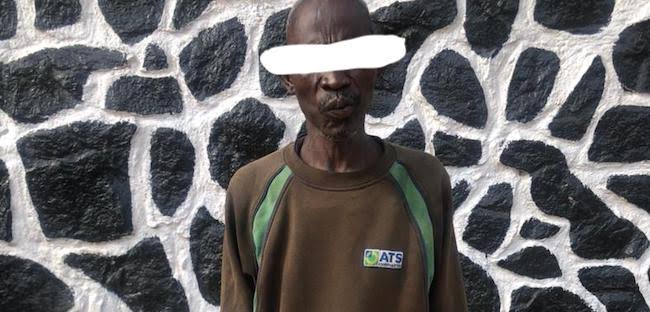
Native doctor found with fresh human corpse detained in Ogun
News
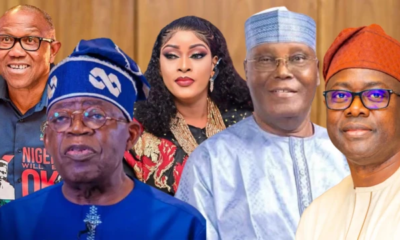
Attorney General asks Court to deregister ADC, Accord, three other parties
The Attorney General of the Federation has urged the Federal High Court in Abuja to compel the Independent National Electoral Commission (INEC) to deregister five political parties, arguing that their continued existence violates constitutional provisions and undermines Nigeria’s electoral integrity.
In court filings, the Attorney General contended that unless the court intervenes, INEC would “continue to act in breach of its constitutional duty” by retaining parties that have failed to meet the minimum requirements prescribed by law.
The filing stressed that the right to associate as a political party is not absolute and must be exercised within constitutional limits. It further argued that it is in the interest of justice for the court to grant the reliefs sought by the plaintiffs.
The suit, marked FHC/ABJ/CS/2637/2026 and filed at the Abuja Judicial Division of the Federal High Court, lists the Incorporated Trustees of the National Forum of Former Legislators as the plaintiff.
The defendants include INEC as the first defendant and the Attorney General of the Federation as the second defendant, alongside five political parties: African Democratic Congress (ADC), Action Alliance (AA), Action Peoples Party (APP), Accord (A), and Zenith Labour Party (ZLP).
At the center of the issue in the case is whether INEC has a constitutional obligation to remove parties that fail to meet electoral performance thresholds set out in Section 225A of the 1999 Constitution (as amended) and reinforced by the Electoral Act 2022 and INEC’s own regulations.

The plaintiffs argue that the affected parties have persistently failed to satisfy the constitutional benchmarks required to retain their registration. These include winning at least 25 per cent of votes in a state during a presidential election or securing at least one elective seat at the national, state or local government level.
They contend that the parties performed poorly in the 2023 general elections and subsequent by-elections, failing to win seats across key tiers of government, yet continue to be recognised by INEC as eligible political platforms.
The plaintiffs maintain that this continued recognition is unlawful and undermines the integrity of Nigeria’s electoral system.
In the affidavit supporting the suit, the forum’s national coordinator, Igbokwe Raphael Nnanna, states that allowing parties that have not met constitutional requirements to remain on the register “is unconstitutional, illegal and a violation” of the governing legal framework.
The suit asks the court to declare that INEC is duty-bound to deregister such parties and to compel the commission to do so before preparations for the 2027 elections advance further.
Beyond declaratory reliefs, the plaintiffs are also seeking far-reaching orders that would bar the affected parties from participating in the next general elections or engaging in political activities such as campaigns, rallies and primaries. They further request injunctions restraining INEC from recognising or dealing with the parties in any official capacity unless and until they comply strictly with constitutional provisions.
Central to the plaintiffs’ argument is their interpretation of the law as imposing a mandatory duty on INEC. They argue that the use of the word “shall” in the Constitution leaves no room for discretion once a party fails to meet the stipulated thresholds.
In their written address, they rely on statutory provisions and judicial precedents to contend that electoral performance is an objective condition that must be enforced to maintain discipline, transparency, and accountability in the political system.
Attorney General backs plaintiff
In a notice filed pursuant to Order 15 Rule 1 of the Federal High Court (Civil Procedure) Rules, 2019, the Attorney General, who is a defendant in the suit, formally admitted the plaintiff’s case to the extent of his constitutional responsibilities.
He maintained that, as the chief law officer of the federation, he is duty-bound to defend and uphold the Constitution, including ensuring compliance with the Electoral Act and other laws governing elections in Nigeria.
The filing emphasised that the Attorney General’s role extends beyond litigation to preventive oversight, ensuring that laws are faithfully implemented to maintain public confidence in the electoral process. It described the case as a public interest litigation aimed at safeguarding democratic integrity and promoting constitutional observance.
According to the document, the Attorney General argued that citizens, including the plaintiff group, have the right to challenge constitutional breaches, particularly where electoral processes are concerned. He added that supporting such litigation aligns with his dual role as both a defender of the state and an advocate for citizens’ rights.
The submission also highlighted the broader implications of non-compliance by political parties. It argued that the continued existence of parties that fail to meet constitutional thresholds contributes to ballot congestion, increases the cost of election administration, and undermines the intent of Section 225A of the 1999 Constitution (as amended), which empowers INEC to deregister underperforming parties.
The plaintiff further contended that INEC has no residual discretion to retain parties that do not satisfy the constitutional criteria, insisting that failure to deregister them constitutes a continuing breach of constitutional duty. The suit warned that such inaction could be challenged through public interest litigation, as is the case before the court.
Additionally, the filing noted that the plaintiff, comprising former legislators, possesses the requisite standing to institute the action, having been directly involved in the enactment and oversight of Nigeria’s constitutional and electoral framework.
The Attorney General also underscored the importance of access to justice, arguing that his support for the suit would help bridge gaps faced by citizens seeking to enforce constitutional rights. He maintained that collaboration between government institutions and civic actors is essential to strengthening legal literacy, accountability, and democratic participation.
The Attorney General of the Federation is represented in the suit by a team of lawyers led by Prof. J. O. Olatoke, SAN, alongside O. J. David, U. O. Olufadi, D. O. Bamidele, V. D. Maiye, Waheed Abdulraheem and A. K. Abdulmumin, all of whom signed the court filing before the Federal High Court in Abuja.
The case, which has drawn significant attention within political and legal circles, could have far-reaching implications for Nigeria’s party system ahead of future elections, particularly if the court grants the request to compel INEC to act against the affected parties. (TRIBUNE)

News
Tinubu names Bianca Odumegwu-Ojukwu as Minister of Foreign Affairs
…Nominates Amb. Sola Enikanolaiye as Minister of State
President Bola Tinubu has appointed Ambassador Bianca Odumegwu-Ojukwu as Nigeria’s new Minister of Foreign Affairs after the resignation of Ambassador Yusuf Tuggar, who is reportedly preparing for a political move ahead of the 2027 general elections.
The President also forwarded the name of Ambassador Sola Enikanolaiye for appointment as Minister of State for Foreign Affairs, pending approval by the Senate.
The appointments were disclosed in a statement released on Wednesday by presidential spokesman Bayo Onanuga.
According to the statement, the reshuffle is aimed at improving Nigeria’s diplomatic strategy and ensuring that the country’s foreign policy supports the administration’s economic agenda more effectively.
“These adjustments are part of ongoing efforts to reposition Nigeria’s foreign policy architecture for greater efficiency, strategic engagement, and stronger global partnerships,” the statement read.
Odumegwu-Ojukwu, who previously served as Minister of State for Foreign Affairs and has years of diplomatic experience, is expected to oversee Nigeria’s international relations as the government intensifies focus on economic diplomacy, regional peace, and wider global partnerships.

The presidency highlighted her long-standing involvement in global affairs, stating:
“Ambassador Odumegwu-Ojukwu brings decades of diplomatic experience and a deep understanding of Nigeria’s engagement with the global community,” the statement read.
Enikanolaiye, a seasoned career diplomat, had earlier worked as Senior Special Assistant to the President on Foreign Affairs and International Relations.
He has represented Nigeria in several cities around the world, including Addis Ababa, London, Ottawa, Belgrade, and New Delhi.
The statement noted that his nomination is expected to strengthen institutional continuity within the foreign service.
“Ambassador Enikanolaiye’s extensive experience across multiple diplomatic missions will support Nigeria’s evolving foreign policy objectives,” the statement added.
President Tinubu congratulated the two diplomats and urged them to place national interest at the forefront while promoting economic diplomacy and improving the welfare of Nigerians living abroad.

News
Awka blacksmiths lament neglect by Govt, indigenes
….Call for establishment of Uzu Oka Centre (Awka Blacksmiths Centre)
For generations, the rhythmic clang of hammers in Awka was the heartbeat of a craft that could mold iron into anything the mind could imagine. But today, that sound is fading into a bitter silenceIn the heart of Anambra State, the legendary Awka blacksmiths, men who once held the secrets of spiritual and technical mastery, feel like relics in their own home. After decades of being used as “local colour” for TV cameras and being bypassed by a government that praises their history but ignores their hunger, the masters of the forge have had enough.
Behind the soot and the charcoal, this isn’t just a story about failing industry; it is about the wounded pride of craftsmen who have watched their legacy being exploited for research and “culture” while they remain in the shadows. From the chairman who started at age nine, to the elders who now charge for their stories to protect what’s left of their dignity, the Uzu Awka are staging a quiet, desperate rebellion to save an ancient art from becoming a ghost
The chairman of Awka Blacksmiths Association, Obiorah Okafor, agreed that they are not encouraged by the government or organisations to better their skills.
Okafor described the blacksmiths’ organisation as a spiritual body, with the members well grounded in tradition, lamented government and their people’s neglect of blacksmith, which Awka is known for.
Okafor said that due to the unfair treatment and neglect, they decided to charge those who seek information about Uzu Awka, (Awka blacksmithing) N50,000. He explained that they took the decision because they have been deceived for too long by people who tapped their knowledge for personal gain.
“I have been here for over 40 years and have been the chairman for over 25 years. Uzu Awka is spiritual, and those involved in it are linked with tradition. There was an attempt to move it from its present location to Umuokpu Awka, but the spirit behind Uzu Awka resisted it. The then local government chairman, who tried to relocate it to create more space for the present Odera market, experienced the danger of his action and was forced to return it to its original place. He thereafter fenced the place, but we had to remove part of the fence so that people would see what we do here,” Okafor said, stressing the link between the craft and tradition.

The association calls on the government of Uzu Oka Center, where everything pertaining to the Awka blacksmiths will be located.
“We now charge anyone who seeks information from us N50,000, whether you are a TV station or a newspaper house, because we believe people are using the information we give them to make money from investors, while we are here suffering. The oldest man in Awka is our member, and those seeking information from us can only speak with him after payment of N50,000.
“If you don’t pay, you don’t get information from us. A television station came here, and when we asked them to pay, they refused and started filming our shops from a distance, only for the camera to crash immediately,” Okafor added.
Reminded that the information they provide could be an advantage to them as investors will become aware of their needs, the chairman said they no longer care.
Essentially, the blacksmiths make metallic musical instruments (gongs), iron pots, and other items, with customers coming from different states to place orders. Okafor’s greatest worry is that prominent people in Awka have not been supporting blacksmiths, but only attach the prefix, Uzu to their names.
According to Okafor, people come to learn blacksmithing, after which they go to other towns to practise. In fact, SEV sighted many youths at the blacksmith center beside the popular Odera market in the heart of the state capital, taking directives from the chairman. A first-time visitor would think that nothing much is happening there, but a lot is, indeed, happening, and money is exchanging hands, despite the unkept nature of the cente
“There are stringent rules governing blacksmith business, the most important being that guns are no longer made there.
It used to be the major product, but was stopped after the Nigerian civil war to control arms circulation in this part of the country”, Okafor explained.
He said that because the government has neglected them, they therefore look at anyone who comes to make inquiries about their trade with suspicion. Blacksmith used to be somewhat exclusive to Awka people, but things have changed as not only Awka people are in it currently.
Many people in the business say they are still in the trade because they could not find an alternative job to do. The place where the blacksmiths occupy in Awka used to be a beehive of activities, and customers used to come from many parts of the country and even beyond to buy short guns that were synonymous with Awka. However, after the Nigerian civil war, production of guns, the most lucrative of all products manufactured by the blacksmiths in Awka, became illegal, such that security operatives were often carrying out raids in the area. Out of fear, many of them withdrew and learnt other trades.
Over the years, however, those who endured adjusted and concentrated on making items other than guns. But gradually, many of them began to lose interest in the job and finally withdrew. When SEV visited the blacksmith center in the heart of Awka in 2019, not more than 20 people were seen, and most of them were men above 60 years old. The only young people among them were apprentices from other parts of Anambra, as well as Akwa Ibom and Cross River states. However, during a recent visit, many youths were seen, with the chairman explaining that many of them have discovered that the blacksmith business is very lucrative.
at the center were the traditional blacksmith tools like tongs, anvils, chisels, a hammer, and charcoal. Even as ramshackle as the center looks, it was gathered that many tertiary institutions use it for their scientific research. Though there is modern-day form of blacksmith, the Awka blacksmiths still use the traditional tools due to a lack of financial support to acquire modern equipment.
Because of what they described as their ugly experiences with some people who pretended to connect them with the government for assistance, the blacksmiths decided to take their destiny into their own hands by registering Awka Blacksmiths Association with the Corporate Affairs Commission, CAC, as a rallying organisation to protect their interests.
As it stands , only the chairman of the association, Mr. Obiorah Okafor, is permitted to speak for the blacksmiths because they have become disenchanted with people coming to ask them questions about the Awka blacksmith.
Okafor, whose late father introduced him into the business at the age of nine, said the most worrisome aspect of their plight was that all those who came in the name of helping them to modernize the business were only there for their personal interests.
He said: “Before the civil war, blacksmithing was a thriving business in Awka, and buyers were coming for the popular Awka short gun. But after the war, there was an embargo on the manufacturing of guns, and we concentrated on making other items
“Unfortunately, subsequent governments have not been helping us. Some people would come and claim that they would connect us with the government, not knowing that they were only concerned with their own pockets. It was because of that experience that we decided to register the association. Even after the registration, the help did not come.”
Okafor said that because of blacksmith, Awka was a big market in the old Eastern region because of the products such as gongs, guns, hoes, machetes, keys, pots, among other items, adding that if the right support had been received, blacksmith would have been a big industry in Nigeria. He regretted that many of the items are no longer produced because of a lack of encouragement.
“After the war, government officials started harassing us because they alleged that we were making guns for armed robbers. We then concentrated on making other items, expecting that the government would come to our assistance. Unfortunately, no assistance has come. Now, youths are not interested in learning and continuing this profession, which Awka is known for. After our generation, there will be no one to take over from us.
“At one time, someone promised to assist us, and he suggested that we should mount an exhibition to let the world know what we are doing. We held several meetings with him, and after the exhibition, he didn’t get back to us. We later discovered that his intention was to take over our business and convert all of us to his workers, which we objected to. That is why we have decided not to allow people to come here and ask us questions or to take photographs. We are used to seeing ourselves on television, but that is where it ends.
“Even our traditional ruler is known as Eze Uzu, which is a title derived from blacksmith, but he has not been here to see how blacksmithing works
The other one that holds the title of Uzu Awka is priding himself that he is from Awka, but he has not been here also and has not done anything to encourage us, he stated.”
Okafor said that although he learnt the blacksmith business from his father, who was very proud that his son took over from him, he does not pray that his son will come here because there is no encouragement. But he admitted that there is a ready market for their products, adding that they do not even meet the demands of their customers.
Despite the complaints and difficulties associated with the business, some of the blacksmiths said they cannot fit into any other trade. “As their chairman”, Okafor said, “I started this from my childhood, and I have done it for more than 45 years. It is a lucrative venture. For instance, it is from this blacksmith that I got married, built a three-storey house, bought cars, and trained my children. I have not done any other business in my life.” (Vanguard)

-
News1 day agoHow Pastor Jerry Eze was investigated for money laundering claims — EFCC Chair, Olukoyede
-
News20 hours agoTinubu names Bianca Odumegwu-Ojukwu as Minister of Foreign Affairs
-
News2 days agoEffurun Shooting: Police arrest officer, assures justice
-
News21 hours agoSupreme Court fixes Thursday for judgement on ADC leadership dispute
-
News2 days agoBoko Haram threatens execution of 176 Kwara abductees within one week – Monarch
-
Politics1 day agoCourt stops INEC from recognizing congresses conducted by David Mark-led ADC
-
News2 days ago
Zamfara residents abandon 30 villages over withdrawal of troops
-
News3 days agoEnugu North Zone to host Mega Endorsement Rally for Mbah, Tinubu May 2