Connect with us
Maduka University Advert

News

Menstruating women, twin mothers denied access to stream water in Akwa Ibom

Published

on

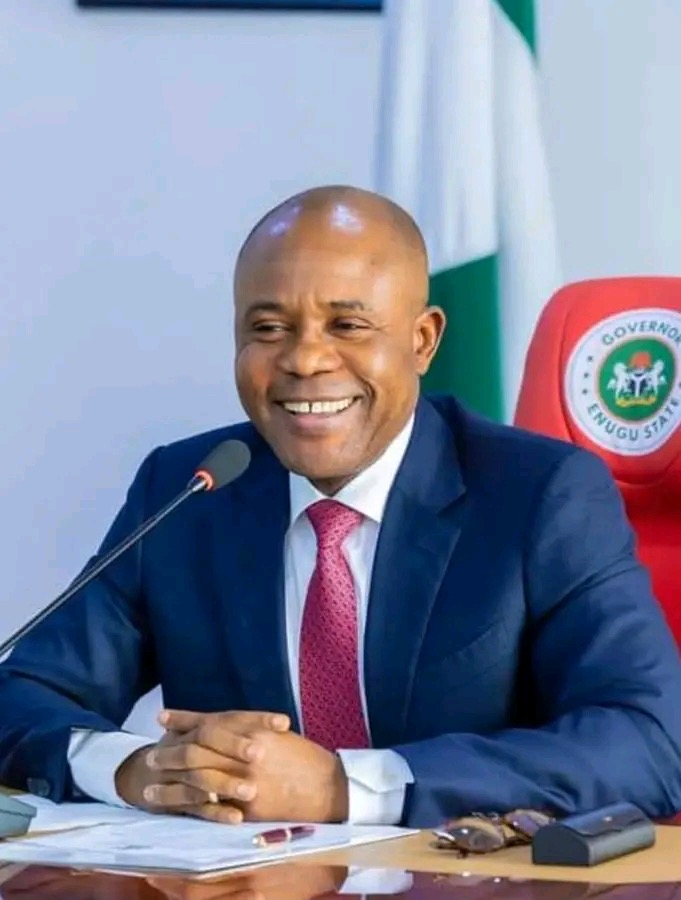
Akwa Ibom Governor, Umo Eno
Spread the love

Mbiabet Ikot Udo community in Ini Local Government Area, Akwa Ibom State has barred menstruating women and mothers of twin babies from accessing a stream; its only source of drinking water.

The Coordinator Water, Sanitation and Hygiene (WaSH)-Gender Project Team, Prof. Emmanuel Akpabio, who disclosed this yesterday, said the community believes that the water would dry up if twin mothers and menstruating women access water from the stream.

Prof. Akpabio, who is the Director, Directorate of International Programmes, Univeristy of Uyo, said the discovery was a product of research conducted in three local government areas of the state.

He said the belief has been perpetrated over generations unchallenged in the affected community due to the shortage of drinking water and fear that the sole source of drinking water in the areas would be contaminated.

The professor, who noted that the lack of access to WaSH constrains women, girls and other vulnerable individuals from engaging in economic and educational activities, called for strong public intervention in providing water for such communities, adding that it would also tackle the problem of open defecation.

“For Mbiabet Ikot Udo, there is only a single source of drinking but stagnant water (idim Affia) sustained through under surface outflow with brown coloration.

Maduka College Advert

“This serves an estimated population of 1,200 and six more villages (over 6,000 people) in the dry season when other available sources would have dried off. This water source is also obtained for domestic and other needs.

“Mothers of twin children are restricted from accessing this water. We were told the stream would spew all manner of impurities and strange substances and gradually dry off any time it is accessed by a mother of twins, and only comes back to normalcy once sacrifices/rituals are performed by the community.

“Women in their menstrual cycles are also traditionally restricted from having access to the stream, and the consequence for violation is prolonged blood discharge.

“The victims can only get water through their spouses, children, paid services or voluntary support from members of the community.

“Where they cannot get any support, they will stay without water for that period,” Akpabio said.

He disclosed that the practice has fueled gender-based discrimination in access to WaSH services and subjected women to psycho-social and other forms of gender-based violence, which would in turn affect their health.

According to him, the discrimination was pronounced in ecologically fragile and difficult areas where WaSH infrastructures for public use are severely limited, adding that intersectional factors like biology, disability, socio-cultural norms and economic circumstances also complicate the problem.

“Our attention was drawn to the challenges of menstrual hygiene management (MHM) in the study communities. There have been so much misconception, myths and gaps in knowledge and awareness around MHM for women and girls.

“When women and girls are denied access to water on account of menstruation, when they have to walk long distances to access WaSH facilities, or when acute water scarcity forces reliance on available but usually of degradable quality sources, their right to decent, hygienic and sanitary living is severely compromised, creating avenues for possibilities for diseases outbreaks.

“The stress of having to contend with stigmatization and extra physical and mental efforts to secure sanitary living translates to serious psychosocial violence.

“MHM needs adequate access to water, soap, sanitary towels and safe space for using water and changing menstrual towels. Majority of women and girls in our rural areas neither afford nor have access to these basic necessities.

“When women in their menstrual cycles are denied access to water and safe spaces for menstrual hygiene management as in Mbiabet Ikot Udo, they are directly and indirectly subjected to psychosocial and other forms of gender-based violence, as well as affect their health, as they struggle to make up for such deprivation.

“Their human dignity is severely violated, and they lack the voice and capacity to surmount such challenges,” Akpabio said.


News

Bandits kidnap Sokoto Deputy Governor’s relatives, others in fresh attack

Published

on

Over 100 peasants abducted as gunmen invade Zamfara communities
Spread the love

At least eight residents, including relatives of Sokoto State Deputy Governor Idris Muhammad Gobir, have been reportedly kidnapped in Garin Idi village, Sabon Birni Local Government Area of Sokoto State.

According to eyewitness accounts, the attackers arrived around 1:00am on Thursday on about eight motorcycles, shooting sporadically as they invaded the community.

The gunfire forced residents to flee into nearby bushes and other safe areas to escape.

A local source told Daily Trust that the attackers operated freely in the village for nearly two hours without any immediate security intervention.

The resident described the incident as one of the most intense attacks the community has experienced, adding that fear has become a constant part of daily life.

Another witness said the assailants initially abducted about 30 people, mostly women and children, but later released some due to limited space on their motorcycles.

Maduka College Advert

Ultimately, they left with eight victims—three men and five women.

Those kidnapped were identified as Hassana Adare Maifata, Rabi Alhaji Ishaqa, Kwamuso Umar, Yar’aji Garba, Kabiru Alkasim, Sani Muazu, Jadi Alkasim (a patient), and a woman believed to be related to the deputy governor.

The attackers were also reported to have raided a phone charging shop in the village, stealing over 100 mobile phones, power banks, and about ₦40,000 in cash after the operator fled the scene.

Residents expressed deep concern over the worsening insecurity in the area, calling on authorities, including the deputy governor, to urgently intervene and strengthen security presence.

One resident lamented that despite their ties to the deputy governor, they feel abandoned in the face of repeated attacks, urging immediate action to prevent further incidents.

Continue Reading

News

Church suspends Priest over alleged fake miracles, prophecies

Published

on

Herdsmen attack Seminary in Agenebode, kidnap Rector Rev. Fr. Oyode
Spread the love

The Church of Nigeria (Anglican Communion) has taken disciplinary action against a member of the clergy, Reverend Ifunaya Maduka, following allegations bordering on staged miracles and questionable prophetic activities at St Paul’s Parish, Nteje, in Anambra State.

The suspension was announced by the Diocese on the Niger under the leadership of the Bishop, Rt. Rev. Owen Nwokolo, who confirmed that the priest has been removed from his duties for a period of six months without salary while further investigations continue.

According to the church authorities, the decision followed reports that the cleric allegedly conducted arranged prophetic sessions and miracle displays involving individuals said to have been coordinated or financially induced to participate. These activities were reportedly presented to worshippers as divine interventions.

The Diocese further stated that Reverend Maduka was confronted with the allegations and, based on their account, admitted involvement in the incidents after being presented with supporting information.

The suspension was formally communicated in a letter signed by Bishop Nwokolo and dated April 27, in which the Church expressed deep concern over what it described as conduct inconsistent with the expectations of ordained ministry within the Anglican Communion.

The letter outlined that the priest’s actions raised serious concerns, including false prophecy, misuse of spiritual authority, and conduct capable of misleading members of the congregation and the wider public.

Maduka College Advert

Church leadership noted that prior to the development, the cleric had been engaged on several occasions regarding his ministerial conduct and had maintained that his practices aligned with Christian doctrine and Anglican standards.

However, the Diocese said recent findings contradicted those assurances.

Describing the situation as damaging to the image of the Church, the leadership stated that the conduct had undermined trust, brought disrepute to the ministry, and created grounds for disciplinary intervention in line with ecclesiastical rules.

As part of the suspension directives, Reverend Maduka has been instructed to hand over all church property, financial records, and official documents in his possession to the appropriate parish authorities and vacate the premises within a specified timeframe.

The Church also confirmed that a disciplinary panel will be set up within the coming weeks to conduct a further review of the allegations and determine any additional measures in line with church regulations.

The Diocese concluded its communication by expressing hope for reflection and repentance, urging the suspended cleric to return to the core values of his calling and ministry.

Continue Reading

News

Attorney General asks Court to deregister ADC, Accord, three other parties

Published

on

The Attorney General of the Federation and Minister of Justice, Prince Lateef Fagbemi, SAN
Spread the love

The Attorney General of the Federation has urged the Federal High Court in Abuja to compel the Independent National Electoral Commission (INEC) to deregister five political parties, arguing that their continued existence violates constitutional provisions and undermines Nigeria’s electoral integrity.

In court filings, the Attorney General contended that unless the court intervenes, INEC would “continue to act in breach of its constitutional duty” by retaining parties that have failed to meet the minimum requirements prescribed by law.

The filing stressed that the right to associate as a political party is not absolute and must be exercised within constitutional limits. It further argued that it is in the interest of justice for the court to grant the reliefs sought by the plaintiffs.

The suit, marked FHC/ABJ/CS/2637/2026 and filed at the Abuja Judicial Division of the Federal High Court, lists the Incorporated Trustees of the National Forum of Former Legislators as the plaintiff.

The defendants include INEC as the first defendant and the Attorney General of the Federation as the second defendant, alongside five political parties: African Democratic Congress (ADC), Action Alliance (AA), Action Peoples Party (APP), Accord (A), and Zenith Labour Party (ZLP).

At the center of the issue in the case is whether INEC has a constitutional obligation to remove parties that fail to meet electoral performance thresholds set out in Section 225A of the 1999 Constitution (as amended) and reinforced by the Electoral Act 2022 and INEC’s own regulations.

Maduka College Advert

The plaintiffs argue that the affected parties have persistently failed to satisfy the constitutional benchmarks required to retain their registration. These include winning at least 25 per cent of votes in a state during a presidential election or securing at least one elective seat at the national, state or local government level.

They contend that the parties performed poorly in the 2023 general elections and subsequent by-elections, failing to win seats across key tiers of government, yet continue to be recognised by INEC as eligible political platforms.

The plaintiffs maintain that this continued recognition is unlawful and undermines the integrity of Nigeria’s electoral system.

In the affidavit supporting the suit, the forum’s national coordinator, Igbokwe Raphael Nnanna, states that allowing parties that have not met constitutional requirements to remain on the register “is unconstitutional, illegal and a violation” of the governing legal framework.

The suit asks the court to declare that INEC is duty-bound to deregister such parties and to compel the commission to do so before preparations for the 2027 elections advance further.

Beyond declaratory reliefs, the plaintiffs are also seeking far-reaching orders that would bar the affected parties from participating in the next general elections or engaging in political activities such as campaigns, rallies and primaries. They further request injunctions restraining INEC from recognising or dealing with the parties in any official capacity unless and until they comply strictly with constitutional provisions.

Central to the plaintiffs’ argument is their interpretation of the law as imposing a mandatory duty on INEC. They argue that the use of the word “shall” in the Constitution leaves no room for discretion once a party fails to meet the stipulated thresholds.

In their written address, they rely on statutory provisions and judicial precedents to contend that electoral performance is an objective condition that must be enforced to maintain discipline, transparency, and accountability in the political system.

Attorney General backs plaintiff
In a notice filed pursuant to Order 15 Rule 1 of the Federal High Court (Civil Procedure) Rules, 2019, the Attorney General, who is a defendant in the suit, formally admitted the plaintiff’s case to the extent of his constitutional responsibilities.

He maintained that, as the chief law officer of the federation, he is duty-bound to defend and uphold the Constitution, including ensuring compliance with the Electoral Act and other laws governing elections in Nigeria.

The filing emphasised that the Attorney General’s role extends beyond litigation to preventive oversight, ensuring that laws are faithfully implemented to maintain public confidence in the electoral process. It described the case as a public interest litigation aimed at safeguarding democratic integrity and promoting constitutional observance.

According to the document, the Attorney General argued that citizens, including the plaintiff group, have the right to challenge constitutional breaches, particularly where electoral processes are concerned. He added that supporting such litigation aligns with his dual role as both a defender of the state and an advocate for citizens’ rights.

The submission also highlighted the broader implications of non-compliance by political parties. It argued that the continued existence of parties that fail to meet constitutional thresholds contributes to ballot congestion, increases the cost of election administration, and undermines the intent of Section 225A of the 1999 Constitution (as amended), which empowers INEC to deregister underperforming parties.

The plaintiff further contended that INEC has no residual discretion to retain parties that do not satisfy the constitutional criteria, insisting that failure to deregister them constitutes a continuing breach of constitutional duty. The suit warned that such inaction could be challenged through public interest litigation, as is the case before the court.

Additionally, the filing noted that the plaintiff, comprising former legislators, possesses the requisite standing to institute the action, having been directly involved in the enactment and oversight of Nigeria’s constitutional and electoral framework.

The Attorney General also underscored the importance of access to justice, arguing that his support for the suit would help bridge gaps faced by citizens seeking to enforce constitutional rights. He maintained that collaboration between government institutions and civic actors is essential to strengthening legal literacy, accountability, and democratic participation.

The Attorney General of the Federation is represented in the suit by a team of lawyers led by Prof. J. O. Olatoke, SAN, alongside O. J. David, U. O. Olufadi, D. O. Bamidele, V. D. Maiye, Waheed Abdulraheem and A. K. Abdulmumin, all of whom signed the court filing before the Federal High Court in Abuja.

The case, which has drawn significant attention within political and legal circles, could have far-reaching implications for Nigeria’s party system ahead of future elections, particularly if the court grants the request to compel INEC to act against the affected parties. (TRIBUNE)

Continue Reading

Trending

Maduka College Advert