News
Cash Crunch: Rural dwellers resort to trade by barter

Amidst the scarcity of both new and old naira notes in the country, residents of rural communities have adopted the ancient trade by barter to survive, Daily Trust reports.
Petty traders of perishable goods have also opened a ledger for their customers who are unable to pay for what they buy, hoping that they would sort it out when the cash crunch improves.

Nigerians are experiencing scarcity of the naira following the introduction of the redesigned N200, N500 and N1, 000 notes by the Central Bank of Nigeria (CBN), which fixed February 10 as the deadline to phase out of old notes before some governors dragged the federal government to the Supreme Court that temporarily stopped the process of declaring the old notes illegal tender.
Borno, Yobe villagers resort to barter, Niger’s currency
Villagers in Buhari and Damasak towns in Yusufari and Mobbar local government areas of Yobe and Borno states have resorted to trade by barter and using Niger’s CFA franc to transact businesses as naira notes cease to exist in the areas in the last two weeks.

These villages are far into the desert, bordering Diffa Province in Niger Republic.
Residents of the towns said they were already benefiting from the telecommunication and hospital services of the neighbouring country.
One of the residents, Modu Buhari, told our correspondent that a week before the earlier old currency swap deadline lapsed, many people that had reasonable cash deposited the money into their relative’s accounts to avoid losing them.
He said the account owners promised to help them withdraw the new notes to continue with their businesses.
“Unfortunately, we are in the third week now but the relatives still couldn’t withdraw the cash.
“Last week, some of us went to Gaidam with our grains and livestock to sell in exchange for cash for our daily spending, but we got into trouble instead.
“The buyers said they would only pay through bank transfer and none of us have bank accounts.
“In fact, we became stranded because the driver did not have money to refuel the car back home as he was waiting for us to sell our goods and settle him.
“Luckily, one of our customers stood for us before the car was refuelled and we returned home. We are stuck here; nobody goes anywhere.”
He said the situation was worse in adjoining villages because provision stores were forced out of business.
“To get condiments is now a problem. Oil, seasoning, detergent, rice, sugar, salt, matches and other essential items are not available because traders don’t have the cash to buy them,” he said.
He said people in villages had resorted to trade by barter.
“Initially, we would just ask if someone had what you wanted and he would gladly give it to you, but as the situation persisted, we started the exchange of foodstuffs and condiments amongst ourselves, which for now, has brought succour to many of us,” he said.
Another resident of the village, Mohammad Barama, told our correspondent that some residents and traders in border villages started using Niger Republic’s currency (CFA franc) to transact business.
“This has eased our suffering. Unfortunately, we are totally neglected by the Nigerian government; no one considers the kind of hardship we would go through if this policy continues,” he said.
Trade-by-barter becoming popular in South too
Daily Trust observed that traders in most neighbourhood markets in Lagos, the commercial hub of Nigeria, have decided to sell their goods on credit to customers owing to the scarcity of the old and new naira notes. Petty traders dealing in perishable goods are the most affected.
“We have decided to open debtors’ books for our customers. This is a neighbourhood market and we know customers who will pay when they have the naira notes,” Kafilat Ebiseni, a trader at Oto market, Agbara area of Lagos, said.
Ebenezer Ayantunde, who sells plantain at a neighbourhood market at the Ijoko area of Lagos, said he had to sell out the goods at a cheaper rate before they would get spoiled.
“I had no option but to sell the plantain at a reduced rate because it was almost ripe. I don’t have a bank account but I know the people that bought them. I was also lucky to get N1, 000 from one of them, who promised to pay the balance later.
“I needed N1, 000 to take home to my family,” he said.
In Bayelsa State, rural dwellers have adopted the oldest form of commerce by exchanging goods for goods owing to the scarcity of naira notes in their communities.
Daily Trust gathered that most residents in the rural and coastal communities exchange goods such as fish with garri, yam and pepper, among others, to have what to eat.
According to a local fisherman in the Ayama-Ijaw community, Austin Ebiere, since there was no money in circulation and customers hardly buy his fish, he rather used the fish for other food commodities with others who might not have the cash to buy.
He said, “It is a strategy for survival. They told us that the old naira note would not be used by the end of January, so we found a way and deposited what we had at the bank, but after the extension of the deadline, we could not even remove our money from the bank again.
“That’s why we think that instead of dying of hunger, let us use what we have to survive – if you have garri and I have fish, we can exchange part of it so that both of us will have garri and fish. Even if you want to drink it, it is better than eating fish alone.”
He lamented that there was no bank in the community, noting that they always travelled to the state capital, Yenagoa to access banking services.
“You can see how frustrating it would be if you used the little money you had to pay for transport down there and at the end of the day you would not be able to withdraw your money,” he said.
Another resident from Agu community in Yenagoa Local Government Area, Kingsley Taribowei, said that due to the scarcity of naira notes, he exchanged the plantain he planted at his farm with other food items to survive.
He said, “This is better for us because we use the little cash we have to pay bills while we source what we eat around our neighbourhood here.
“Our prayer is that this current situation would not lead to a crisis in Nigeria. People are really suffering.”
A civil rights activist, David-West Bekinwariy David, said that people were passing through hardship due to difficult procedures in getting their money.
He urged the government to intervene for the good of the masses.
He wondered why people could be rich in the bank and poor at home due to the policy of the CBN.
He said, “If those of us in urban areas can find it difficult getting our money, be it at Point of Sale (POS), Automated Teller Machine (ATM) or even at banking halls, imagine what those in rural areas are passing through. They are really suffering.”
Meanwhile, the CBN has been using agents to drive its cash swap policy in Bayelsa communities to ensure availability of the newly redesigned notes to rural communities.
The apex bank, which recently made arrangements with super agents, as well as mobile money operators, to swap the old N200, N500 and N1, 000 for the new redesigned notes under the policy, said they would sanction any operator that hoards the new naira notes.
According to the apex bank, they were expected to swap up to N10, 000 per person, while amounts above N10, 000 would be treated as deposits, an initiative aimed at increasing circulation of the new naira dominations, particularly in the rural areas.
A manager at the CBN, Abuja branch, Mr Nweke Jude, during a visit to commercial banks in Yenagoa, the Bayelsa State capital to monitor compliance, said the critical part of the assignment was to actually assess the newly introduced cash swap policy introduced by the CBN to ensure that ordinary people and the under-banked, especially in rural areas, would also have access to new notes through super agents and the banks.
Nweke said the goal was to reverse the trend of having much currency outside the banking sector stashed in houses and other areas, which has impacted negatively on the economy, causing inflation in the process.
Daily Trust













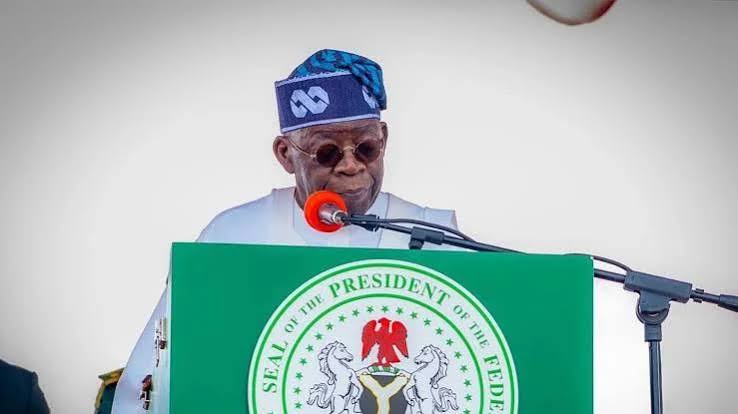
President Bola Tinubu has explained why he will not accompany members of the All Progressives Congress (APC) Presidential Campaign Council to every campaign event ahead of the 2027 general election, saying he must balance the demands of the re-election campaign with the responsibilities of governance.
Tinubu spoke on Wednesday in Abuja during the inauguration of the APC Presidential Campaign Council, where he charged members to take the party’s message to Nigerians across the states and local government areas while he concentrated on running the country.
The President said he agreed with concerns that the rigours of campaigning should not distract him from governance, insisting that Nigeria required his attention at a time when the administration was managing economic responsibilities and international financial obligations.
“You’ve warned me not to allow the rigour of the campaign to distract me from governance, I hear you. I am in full agreement with your decision. Nigeria needs more attention now,” he said.
Explaining further, Tinubu asked campaign council members to excuse him from attending every campaign event, pointing to the need to meet the country’s financial obligations.
“So, you will excuse me from going everywhere with you, we have bills to pay. The American creditors cannot wait,” the President said.
He also emphasised the importance of attracting investors willing to make long-term commitments to Nigeria, arguing that investment was necessary to secure a better future for the country’s children.
“We want those investors to come in, be here to stay, to invest for the future of our children,” he said.
Tinubu, however, assured Nigerians that his decision not to attend every campaign event would not prevent him from engaging directly with voters.
“However, I will still make time to speak directly with Nigerians, even as you lead the campaign in the states and local government areas,” he added.
Describing the inauguration as more than a routine political gathering, the President said the council represented a renewed commitment to Nigerians and the responsibilities entrusted to the APC as the governing party.
“We have not gathered merely to inaugurate a council. We have gathered to renew a covenant. A covenant with Nigerian people and the historic responsibility they have entrusted to us as Nigeria’s governing party,” he said.
He charged council members to communicate the administration’s vision, record and agenda to Nigerians nationwide, expressing confidence in their ability to take the party’s message to every ward.
“This council will carry our vision, our records and our agenda to every Nigerian, and it will carry them to victory every ward of this country,” Tinubu said.
The President also commended APC members for successfully completing the party’s congresses, recalling predictions that the exercise would trigger an internal crisis.
According to him, the party had overcome the challenges and emerged united, with members participating in the process from the ward level to the national leadership.
“They said there will be implosion. We passed through it. We did not fail. You didn’t let us down. We got here together,” he said.
Tinubu’s remarks place governance and economic management at the centre of his stated approach to the coming campaign, while assigning the campaign council the responsibility of coordinating the party’s nationwide mobilisation ahead of the 2027 election.
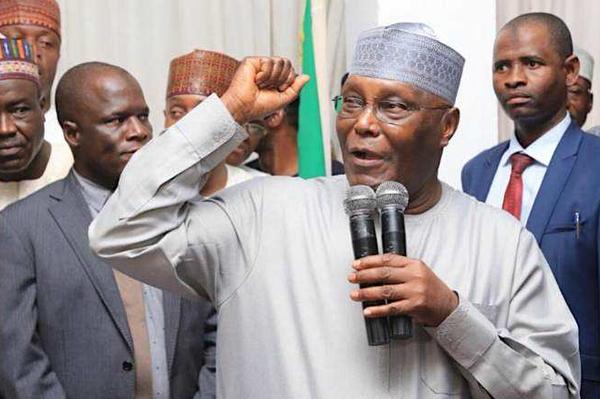
The Economic and Financial Crimes Commission (EFCC) has reopened an investigation into allegations involving former Vice-President Atiku Abubakar following a petition by a former member of the House of Representatives, Hon. Ehiozuwa Johnson Agbonayinma.
The commission acknowledged receipt of the petition, dated August 27, 2026, and received on September 1, 2026, confirming that investigation has commenced.
The former lawmaker through his lawyer, Chief Hannibal Uwaifo (SAN), is seeking a review of the allegations arising from an earlier investigation involving the former vice-president.
As part of the process, the EFCC invited Agbonayinma to its headquarters in Jabi, Abuja, on October 12, where he adopted his petition and responded to questions from investigators.
He arrived at about 9:58 a.m. and left at approximately 4:07 p.m. after the interview.
The commission’s acknowledgement letter, referenced CR:3000/EFCC/HQ/SDC-2/VOL.3/398, forms part of the ongoing investigative process.
He told newsmen that his petition sought to revisit an investigation conducted by the former EFCC chairman, Mallam Nuhu Ribadu, involving Atiku.
He argued that the matter deserved renewed attention in the interest of accountability and the rule of law.
“I want to thank Nigerians, the EFCC and those praying for me in this struggle. The laws are meant for both the rich and the poor. After the EFCC has done a fantastic job, it should not be kept under the table,” he said.
Agbonayinma added that he considered reporting alleged wrongdoing a constitutional responsibility, insisting that nobody was above the law.
He also disclosed that he had written a petition on the matter to United States President Donald Trump, calling for attention to the allegations.

The Senate has passed, for second reading, a bill seeking to establish a national framework for suicide prevention, decriminalise attempted suicide and provide rehabilitation for survivors, despite opposition from Senate President Godswill Akpabio, who insists that the act should remain punishable by imprisonment.
Sponsored by Senator Asuquo Ekpenyong, representing Cross River South, the bill seeks to address what he described as a contradiction in Nigeria’s laws.
Ekpenyong argued that while the National Mental Health Act recognises attempted suicide as a psychiatric emergency requiring treatment, Section 327 of the Criminal Code and Section 231 of the Penal Code still criminalise the act.
He said decriminalisation without accessible care would be incomplete, stressing that suicide has complex causes and requires a humane, health-focused response.
“At the heart of this bill is a simple question: when a Nigerian survives a suicide attempt, should the first response of the state be prosecution or protection?” he asked.
He warned that continued punishment could create a situation in which people experiencing distress feel compelled to ensure their attempts are fatal to avoid prosecution.
The bill proposes replacing imprisonment with mandatory assessment, referral, treatment and follow-up support. It also provides for crisis helplines, training for police officers, teachers and health workers, public education and a national data system for suicide prevention.
However, Akpabio maintained that attempted suicide should remain a criminal offence, arguing that removing the penalties could encourage the act.
“If you attempt suicide, make sure you die. Anyone who attempts and fails will go to jail,” the Senate President said.
Akpabio added that the issue involves both the Criminal Code and the Penal Code, requiring input from State Houses of Assembly during a public hearing to avoid legal conflicts.
The bill has been referred to the Senate Committees on Judiciary and Health for further legislative action and a public hearing.
-
 News11 hours ago
2027: Why I wont attend every campaign rally – Tinubu
-
News2 days ago
Mbah orders impartial Police Probe into Enugu political violence, vows accountability
-
Features16 hours ago
Aguleri/Umuoba Anam Crisis: The Bloody Battle Between Close Neighbours
-
Features2 days ago
Enugu Political Flashpoint: Mbah orders Impartial Probe as NDC Incidents Trigger Controversy
-
News2 days ago
BREAKING: Soludo, Wike, Adeleke, others appointed member of APC Presidential Campaign Council
-
News12 hours ago
EFCC probes Atiku over alleged corruption committed as Vice President
-
News2 days ago
Rochas Okorocha arrested, released after one-hour Interrogation — Police
-
News16 hours ago
‘Anyone who attempts suicide and fails will go to jail,’ says Akpabio