Connect with us

News

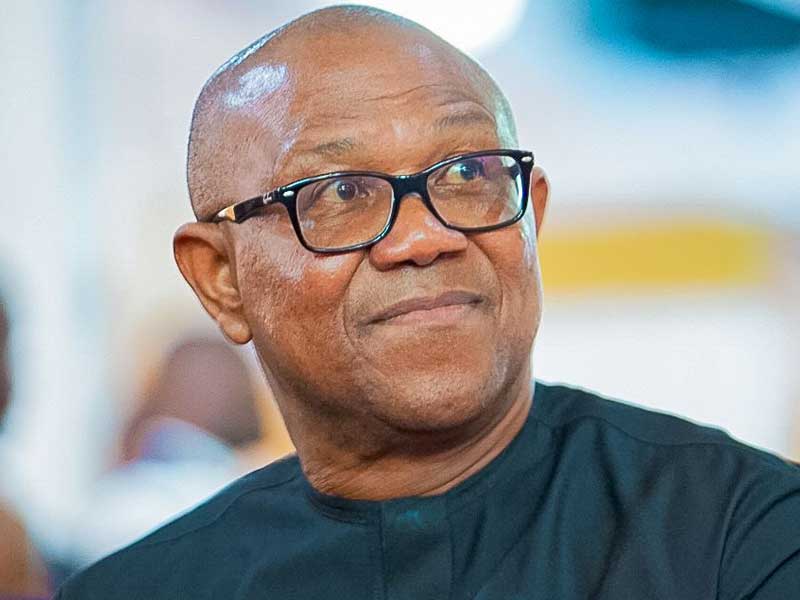
Nigeria is bleeding, insecurity now national emergency — Peter Obi

Published

on

Peter Obi not arrested by DSS – Aide
Spread the love

“This is a national emergency. Nigeria is bleeding, and the situation is worsening and increasingly helpless,” he said in a post on his X handle titled, “‘This Experience Will Not Repeat Itself’—Another Presidential Promise Fails in Less Than 24 Hours.”

Obi, who was the Labour Party (LP) presidential candidate in the 2023 general elections, cited recent reports of killings, abductions, and destruction by gunmen in Plateau, Nasarawa, Zamfara, Borno, Benue, and Kaduna states, following President Bola Ahmed Tinubu’s assurance that the violence in Plateau would not recur.

The former Anambra State governor said the situation reflects a failure of leadership, lamenting that Nigerians are paying for it with their lives.

According to him, the attackers are not invisible, stressing that inaction has emboldened them. He questioned how such a firm assurance could be made, only for the country to witness fresh killings within hours.

Maduka College Advert

Obi reiterated that the primary responsibility of any government is the protection of lives and property, adding that this duty is being undermined as Nigerians are attacked in their homes, communities, and places of worship.

He also questioned the level of safety in the country, noting concerns over access to affected communities.

Despite his concerns, Obi maintained that a new Nigeria remains possible.

In the post, he wrote: “Less than 24 hours after President Tinubu stood at the Jos, Plateau State airport on April 2, 2026, and promised grieving Nigerians, ‘I promise you that this experience will not repeat itself,’ another brutal attack occurred in Nyamgo Gyel, Jos South LGA, resulting in the deaths of several innocent citizens.

“Since then, and only a week after that reassurance, Nasarawa State has been plunged into grief as the Akyawa and Udege Kasa communities fled for their lives after gunmen killed at least 11 people. Many homes were burnt, and numerous families remain missing.

“In Zamfara State, about 150 Nigerians were abducted from the Kurfa Danya and Kurfan Magaji communities in one of the largest mass kidnappings in recent times. On the same day, terrorists in Borno State attacked Chibok, killing four officers and burning homes.

“On Easter Sunday, Benue State was again hit by violence, with over 17 people killed, communities destroyed, and many still unaccounted for.

“In Kaduna State, several citizens were killed in attacks on churches, while others were abducted in Ariko community, Kachia LGA.

“Yet we were told, ‘This experience will not repeat itself.’”

Former Labour Party presidential candidate, and chieftain of the African Democratic Congress, ADC, Mr Peter Obi, has raised fresh concerns over Nigeria’s worsening security situation, declaring that the country is “bleeding” amid continuous attacks and killings across several states.

Obi made the remark in a statement shared on his official X handle, where he lamented the continued wave of violence and killings despite assurances from the presidency.

He went further to criticize President Bola Ahmed Tinubu over the worsening security situation in the country, saying the President’s recent promise that killings would not reoccur has already been contradicted by fresh attacks across several states.

According to Obi, “less than 24 hours after Tinubu visited Jos, Plateau State, on April 2, 2026, and assured grieving citizens that this experience will not repeat itself, another deadly attack occurred in Nyamgo Gyel community in Jos South Local Government Area, resulting in the deaths of several residents.”

He further stated that within a week of the President’s promise, violence continued to spread to other parts of the country.

The former Anambra State governor noted that Nasarawa State was also thrown into mourning after gunmen attacked the Akyawa and Udege Kasa communities, killing at least 11 people and forcing residents to flee their homes while several houses were burnt and many persons declared missing.

Obi also referenced reports from Zamfara State, where about 150 people were allegedly abducted from Kurfa Danya and Kurfan Magaji communities in what he described as one of the largest recent mass kidnappings.

He added that on the same day, terrorists reportedly attacked Chibok in Borno State, killing four officers and burning homes.

The former presidential candidate also decried fresh violence in Benue State on Easter Sunday, where more than 17 people were reportedly killed, with many others still unaccounted for.

Obi further claimed that another attack occurred in Kaduna State where several worshippers were killed inside churches while others were abducted in the Ariko community of Kachia Local Government Area.

Describing the situation as a failure of leadership, Obi said Nigerians are paying the price with their lives.

“Yet we were told, ‘This experience will not repeat itself.’ This represents a failure of leadership and responsibility, and sadly, Nigerians are paying for it with their lives,” he wrote.

He added that the continued attacks show that the perpetrators are emboldened by what he described as government inaction.

According to him, the protection of lives and property remains the fundamental responsibility of any government, warning that the persistent killings across the country signal a national emergency.

Obi concluded by stating that Nigeria is “bleeding” and called for urgent and decisive action to address the worsening security crisis.”

News

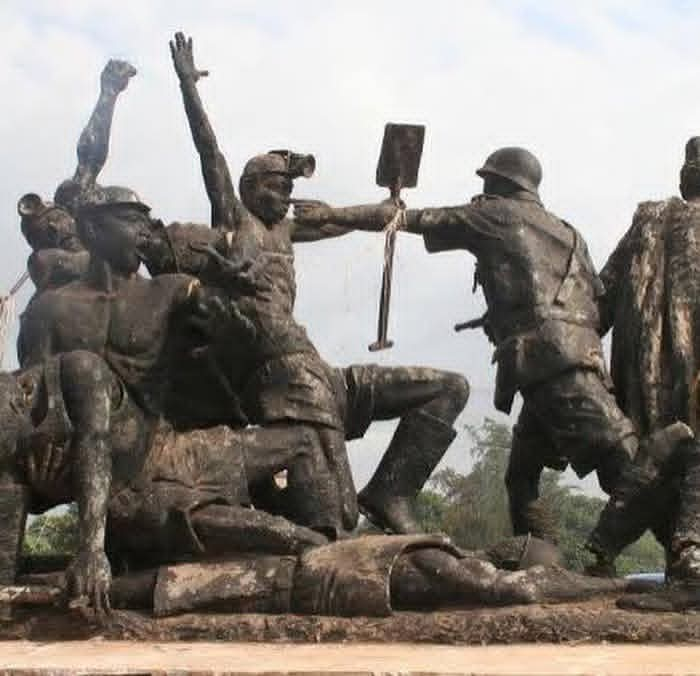
Iva Valley Massacre: 77 Years After, Enugu Demands Justice for 21 Miners Shot Dead by British Colonial Police

Published

on

Spread the love

The Enugu State Government has renewed its demand for justice, historical recognition and reparations for the families of 21 coal miners killed by British colonial police during a protest at the Iva Valley coal mine on November 18, 1949.

The government restated its commitment on Wednesday, November 18, 2026, during the 77th anniversary commemoration of the massacre held at the International Conference Centre, Enugu, where families of the victims also renewed their calls for redress over the decades-old tragedy.

The event, attended by government officials, historians, cultural organisations, former coal miners, relatives of the victims and members of the public, featured a stage adaptation of IVA 21: The Incarnations, a book written by the Executive Secretary of the Enugu State Council for Arts and Culture, Laurence Ani.

Representing Governor Peter Mbah, the Secretary to the State Government, Prof. Chidiebere Onyia, said the anniversary should serve as more than an annual remembrance, stressing that the sacrifice of the slain miners deserved lasting recognition and justice.

Maduka College Advert

Speaking on the theme, “Beyond Remembrance: Justice, Colonial Accountability and the Imperative of Reparations for the Iva Coal Mine Massacre,” Onyia said the commemoration was a moral obligation to preserve history and pursue justice.

“For this administration, this anniversary is not an event to be held merely as an annual ritual. It is an obligation to history,” he said.

He described the 21 victims as fathers, husbands, brothers and members of their communities whose lives were cut short while demanding improved working conditions and payment of their legitimate wages.

According to him, the Mbah administration provided substantial support for the commemoration because the massacre represents a defining chapter in Enugu’s history and Nigeria’s broader struggle for human dignity, workers’ rights and justice.

Onyia urged young people to take a deeper interest in the state’s history, warning that the passage of time must not be allowed to erase unresolved historical injustices from public consciousness.

Delivering the keynote address, a lecturer in Arts and Culture at Godfrey Okoye University, Dr Ozo Ferdinand Aniekwe, traced European colonial expansion in Africa to economic interests, arguing that the pursuit of wealth and control of natural resources, rather than a purported civilising mission, largely shaped imperial activities on the continent.

He examined the connections between capitalism, colonialism and imperialism, calling for more deliberate efforts to document African history and challenge the dominance of European perspectives in historical records.

Aniekwe also urged Nigerians to seek justice for historical wrongs while ensuring that past grievances did not hinder constructive relationships or efforts to address their enduring consequences.

Meanwhile, the Governor’s Special Adviser on Soil, Mineral Resources and Mining, Hon. Samuel Onyinye Okoro, said the anniversary had renewed discussions on compensation for the victims’ families and environmental reparations for communities affected by mining activities.

Okoro stressed that the consequences of colonial-era mining extended beyond the 1949 killings, citing abandoned underground tunnels, structural deterioration and the dangers confronting residents of communities built around former mining sites.

He said the state and federal governments were aware of the risks and that efforts were underway to conduct a comprehensive audit of abandoned mining locations to determine appropriate remediation measures.

The special adviser explained that the government was also examining ways to address the dangers without unnecessarily demolishing homes and other structures built over the abandoned tunnels.

On plans to establish a school of mining in Enugu, Okoro disclosed that discussions were ongoing, describing the proposed institution as crucial to reviving the state’s mining industry and equipping young people with the technical skills required to participate in the sector.

In his remarks, Ani said the stage production was designed to preserve the tragedy through creative storytelling and introduce its historical significance to a wider audience.

He explained that IVA 21: The Incarnations sought to portray the miners beyond their identities as coal workers by bringing to life their humanity, family relationships, personal ambitions and aspirations before their untimely deaths.

Ani also disclosed that the production was being developed into an international motion picture in collaboration with German filmmakers, with Nigerian and German professionals expected to participate.

According to him, preparations for the film, including visits to the old mining sites, would commence shortly, while the production was expected to be completed within 18 months and premiered in Enugu.

Also speaking, a representative of the Coal Miners Foundation, Hyacinth Ohagwu, said efforts were being made to document families affected by the massacre and preserve the history of Enugu’s underground mining industry.

Ohagwu warned that abandoned mining tunnels remained a serious threat to communities, particularly in areas where residential buildings had been erected over hollow underground passages.

He called for the identification of vulnerable locations and urgent preventive measures to avert possible tunnel collapses. He also proposed the restoration of the old mining school and the preservation of mining-era structures as archives and exhibition centres.

The foundation representative further advocated the introduction of mining history into the state’s school curriculum to ensure that future generations understood the contribution of coal mining to Enugu’s development and the sacrifices made by the workers.

Speaking on behalf of the victims’ families, Ihedube Chima and Steven Agu recounted the lasting impact of the massacre on their respective families.

Chima said he gradually came to understand the tragedy through accounts passed down by older members of his family, while Agu called for fairness in the treatment of miners and expressed satisfaction with the government’s recognition of the victims.

Other relatives also shared testimonies about the massacre and its enduring consequences across generations.

The commemoration came against the backdrop of an earlier landmark judgment by an Enugu State High Court concerning compensation and reparations for the families of the slain miners.

The Iva Valley massacre occurred on November 18, 1949, when British colonial police opened fire on coal miners protesting harsh working conditions and unpaid wages at the Iva Valley mine, killing 21 workers.

Seventy-seven years later, the tragedy remains a painful reminder of colonial exploitation and the sacrifices made by Nigerian workers in the struggle for dignity, fair treatment and justice.


Continue Reading

Education

Covenant University Retains Africa’s Top Spot as Nigeria Records 27 Varsities in 2027 THE Rankings

Published

on

Spread the love

Covenant University, Ota, Ogun State, has retained its position as Africa’s highest-ranked institution in the 2027 Times Higher Education (THE) Interdisciplinary Science Rankings, as Nigeria recorded its highest-ever number of universities in the global ranking.

The 2027 edition, released on Wednesday, November 18, featured 27 Nigerian universities, representing a 50 per cent increase from the 18 institutions ranked in 2026.

Covenant University placed joint 49th globally, retaining its position as the only African university among the world’s top 50 for the second consecutive year.

The private institution ranked ahead of Egypt’s Cairo University, which placed joint 52nd globally.

Maduka College Advert

Chairman of the Nigerian Tertiary Education Ranking Advisory Committee (NiTERAC), Professor Emeritus Peter Okebukola, disclosed the figures in a statement issued in Abuja on Wednesday.

He said Nigeria’s performance represented an improvement from the 19 universities ranked in the maiden 2025 edition, while another seven institutions were accorded Reporter status after submitting their data.

This brought the total number of Nigerian universities participating in the 2027 exercise to 34, compared with 30 in 2026 and 27 in 2025.

Okebukola, a former Executive Secretary of the National Universities Commission (NUC), said Nigeria had moved from 16th to 11th position globally in terms of the number of ranked universities, while retaining its second position in Africa behind Egypt, which has 37 institutions.

The ranking, produced by THE in partnership with Schmidt Science Fellows, assessed 1,058 universities across 102 countries and territories.

It evaluates universities’ capacity to fund, support and deliver research cutting across scientific disciplines, using 11 performance indicators grouped into three categories: inputs, processes and outputs.

Inputs account for 19 per cent of the assessment, processes 16 per cent, while outputs carry the highest weight at 65 per cent.

The Massachusetts Institute of Technology retained the global first position for the third consecutive year.

In Nigeria, Landmark University, Omu-Aran, emerged as the second-highest ranked institution, placing in the 251–300 band, while Ahmadu Bello University, Zaria, and the University of Ilorin occupied the 351–400 band.

The University of Calabar, University of Lagos and University of Nigeria, Nsukka, were placed in the 401–500 band.

Ladoke Akintola University of Technology, Obafemi Awolowo University and the University of Benin completed Nigeria’s top 10, placing in the 501–600 band.

Okebukola, a former Chairman of the Governing Board of the National Open University of Nigeria (NOUN), particularly commended Ahmadu Bello University and the University of Calabar for their significant improvements in the latest edition.

According to him, ABU moved from the 601–800 band in 2026 to the 351–400 band, while the University of Calabar improved from the 601–800 band to the 401–500 category.

Eight universities made their debut in the ranking. They are the Federal University of Technology, Minna; Michael Okpara University of Agriculture, Umudike; Joseph Sarwuan Tarka University, Makurdi; University of Jos; Rivers State University; Babcock University; Bells University of Technology; and Nile University of Nigeria.

Osun State University also returned to the ranking after a year’s absence.
Of the 27 Nigerian universities ranked, 14 are federal institutions, seven are state-owned, while six are privately owned.

Reacting to the performance, Okebukola described the growing number of Nigerian universities participating in the exercise as encouraging, particularly with Covenant University maintaining its continental leadership.

He, however, cautioned that increased participation must be matched with improved performance, noting that Nigeria had two universities in the global top 300 in 2027, compared with five in the previous edition.

Similarly, seven Nigerian universities featured in the top 500, against eight in 2026.

The former NUC boss identified inadequate funding for interdisciplinary science research, limited dedicated research facilities, insufficient administrative support and weak institutional policies as some of the areas requiring urgent attention.

According to him, many Nigerian universities recorded low scores in the inputs and processes categories, which assess funding for interdisciplinary research and institutional structures supporting collaboration across scientific disciplines.

He said universities could improve their rankings through proper reporting of research grants, income from industry partnerships and the adoption of clear institutional policies that encourage interdisciplinary research.

Okebukola commended the Minister of Education, Dr Tunji Alausa, for prioritising the global competitiveness of Nigerian tertiary institutions and establishing NiTERAC to drive the agenda.

He disclosed that the committee had submitted a comprehensive report on the latest ranking, alongside recommendations, to the minister.

He added that NiTERAC, working through the League of Directors of Academic Planning and the Virtual Institute for Capacity Building in Higher Education, would support participating universities and prospective entrants in preparing stronger submissions for the 2028 edition.

The chairman also urged research-intensive Nigerian universities yet to participate in the exercise to take advantage of the opportunity.

He further disclosed that the 2026 national ranking of universities, polytechnics and colleges of education was nearing completion, with the results scheduled for unveiling at a national conference on December 15, 2026.

He expressed optimism that the national ranking exercise would strengthen institutional data management and healthy competition, ultimately improving the performance of Nigerian tertiary institutions in international rankings.

Continue Reading

News

Enugu CP Ogarabe Seeks Stronger Security Partnership with ESUT, Meets AIG Zone 13

Published

on

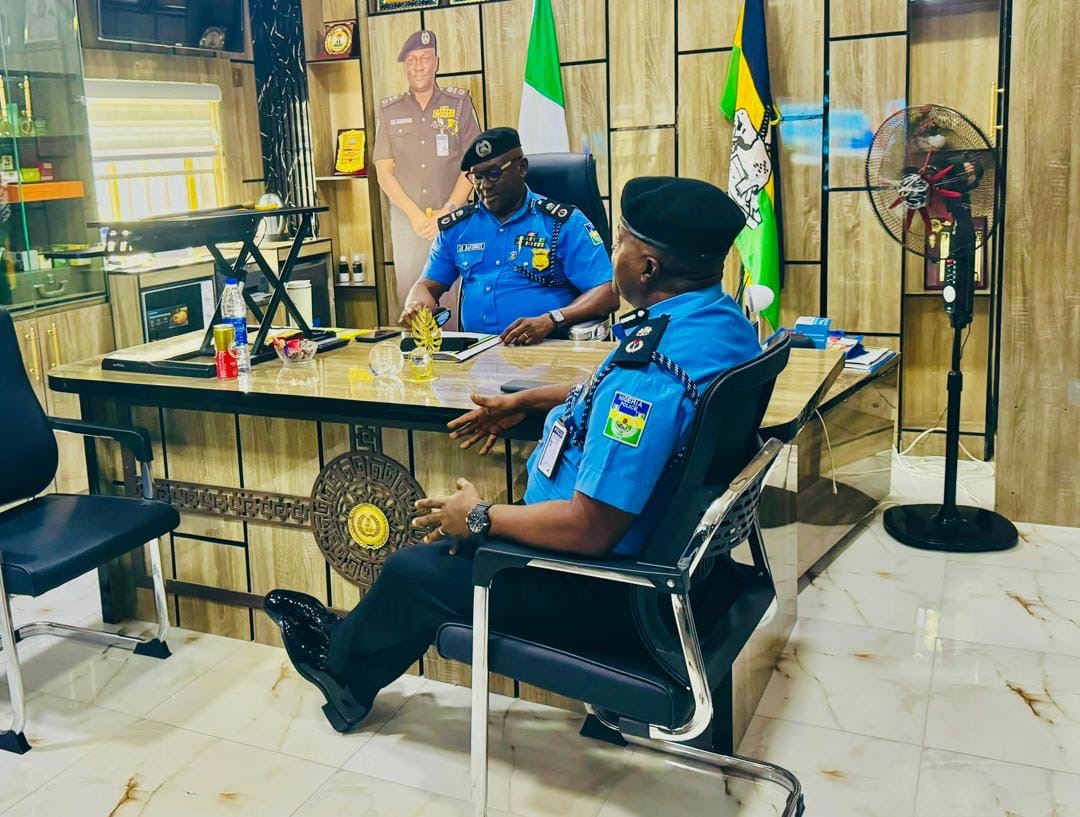
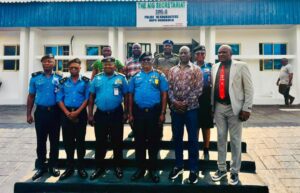
Enugu CP, Fidelis Ogarabe with the AIG Zone 13, Miller Dantawaye during the visit
Spread the love

The Commissioner of Police in Enugu State, CP Fidelis Ndubuisi Ogarabe, has intensified efforts to strengthen security and inter-agency collaboration following separate meetings with the Assistant Inspector-General of Police (AIG), Zone 13, Miller Gajere Dantawaye, and the Vice Chancellor of Enugu State University of Science and Technology (ESUT), Professor Aloysius-Michaels Nnabugwu Okolie.

Ogarabe, who recently assumed duty as the 30th Commissioner of Police in Enugu State, held the meetings on Wednesday, November 18, 2026, as part of engagements aimed at strengthening policing and security cooperation in the state.

During a courtesy visit to AIG Dantawaye at his office in Ukpo, Dunukofia Local Government Area of Anambra State, the commissioner formally notified his supervising officer of his assumption of duty.

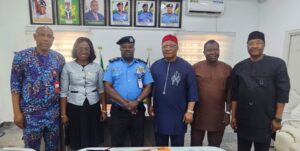
CP Ogarabe and ESUT Vice, Michaels Okolie

Maduka College Advert

In response, the AIG congratulated him and wished him success in his new assignment, charging him to sustain professional, disciplined, proactive and effective community-driven policing in Enugu State.

In a related development, Ogarabe received the ESUT Vice Chancellor, Professor Okolie, alongside other principal officers of the university, at the Police Command Headquarters in GRA, Enugu.

The commissioner, an alumnus of ESUT, expressed appreciation to the university management for the visit and assured it of the command’s commitment to strengthening the existing partnership between the police and the institution.

He particularly pledged enhanced security within the university and its surrounding communities, with emphasis on tackling cultism and other related criminal activities.

Earlier, Professor Okolie congratulated Ogarabe on his deployment as Commissioner of Police in Enugu State and assured him of the university’s support in advancing security and public safety.

The Vice Chancellor also called for stronger collaboration between the university and the police to address security concerns within the institution and its environs.

He further extended a formal invitation to the police commissioner to attend the university’s forthcoming 22nd Convocation Ceremony.

The engagements underscore the new police commissioner’s focus on strengthening institutional relationships and community-based security partnerships as he begins his tenure in Enugu State.

The Commissioner of Police in Enugu State, CP Fidelis Ndubuisi Ogarabe, has intensified efforts to strengthen security and inter-agency collaboration following separate meetings with the Assistant Inspector-General of Police (AIG), Zone 13, Miller Gajere Dantawaye, and the Vice Chancellor of Enugu State University of Science and Technology (ESUT), Professor Aloysius-Michaels Nnabugwu Okolie.

Ogarabe, who recently assumed duty as the 30th Commissioner of Police in Enugu State, held the meetings on Wednesday, November 18, 2026, as part of engagements aimed at strengthening policing and security cooperation in the state.

During a courtesy visit to AIG Dantawaye at his office in Ukpo, Dunukofia Local Government Area of Anambra State, the commissioner formally notified his supervising officer of his assumption of duty.

In response, the AIG congratulated him and wished him success in his new assignment, charging him to sustain professional, disciplined, proactive and effective community-driven policing in Enugu State.

In a related development, Ogarabe received the ESUT Vice Chancellor, Professor Okolie, alongside other principal officers of the university, at the Police Command Headquarters in GRA, Enugu.

The commissioner, an alumnus of ESUT, expressed appreciation to the university management for the visit and assured it of the command’s commitment to strengthening the existing partnership between the police and the institution.

He particularly pledged enhanced security within the university and its surrounding communities, with emphasis on tackling cultism and other related criminal activities.

Earlier, Professor Okolie congratulated Ogarabe on his deployment as Commissioner of Police in Enugu State and assured him of the university’s support in advancing security and public safety.

The Vice Chancellor also called for stronger collaboration between the university and the police to address security concerns within the institution and its environs.

He further extended a formal invitation to the police commissioner to attend the university’s forthcoming 22nd Convocation Ceremony.

The engagements underscore the new police commissioner’s focus on strengthening institutional relationships and community-based security partnerships as he begins his tenure in Enugu State.

Continue Reading

Trending

Maduka College Advert