Connect with us
Maduka University Advert

News

Nigeria paid Boko Haram ransom for kidnapped pupils – Intel sources

Published

on

Terrorists
Spread the love

The Nigerian government paid Boko Haram militants a “huge” ransom of millions of dollars to free up to 230 children and staff the jihadists abducted from a Catholic school in November, intelligence sources told AFP.

Two Boko Haram commanders were also freed as part of the deal, which goes against the country’s own law banning payments to kidnappers.

The money was flown on a helicopter to Boko Haram’s Gwoza stronghold in northeastern Borno state on the border with Cameroon and delivered to Ali Ngulde, a militant commander in the area, three sources told AFP.

Due to the lack of communications cover in the remote area, Ngulde had to cross into Cameroon to confirm delivery of the ransom before the first group of 100 children were released.

The decision to pay the jihadists, who sparked worldwide protests after they kidnapped 276 mostly Christian girls in Chibok in 2014, is also likely to irritate the US and President Donald Trump, who has cast himself as a defender of the country’s Christians.

Nigerian government officials deny any ransom was paid to the armed gang that snatched close to 300 schoolchildren and staff from St. Mary’s boarding school in Papiri in central Niger state on November 21.

Maduka College Advert

At least 50 later managed to escape their captors.

Boko Haram has not been previously linked to the kidnapping, but sources told AFP one of its most feared commanders was behind the mass abduction.

The notorious jihadist known as Sadiku is also suspected of leading a spectacular 2022 gun and bomb attack on a train between the capital Abuja and Kaduna, which also netted hefty payments in ransoms for scores of well-off passengers that included bankers and government officials.

The St. Mary’s pupils and staff were freed after two weeks of negotiations led by Nuhu Ribadu, Nigeria’s National Security Adviser (NSA), with the government insisting no ransom was paid.

However, four intelligence sources familiar with the talks told AFP the government paid a “huge” ransom to get the pupils back.

– Govt ‘agents don’t pay ransoms’ –

One source put the total ransom at 40 million naira per head — around $7 million in total.

Another put the figure lower at two billion naira overall.

The NSA did not reply to multiple AFP requests for comment.

Nigeria’s State Security Service flatly denied paying any money, saying: “Government agents don’t pay ransoms.”

But a spokesperson said that if a family wants to free their relatives, no one can stop them paying.

Boko Haram, which has waged a bloody insurgency since 2009, is strongest in northeast Nigeria. But a cell in central Niger state also operates under Sadiku’s leadership.

His gang kept the children in a camp in Borgu local government area, 370 kilometres from the state capital Minna, intelligence sources said.

Vincent Foucher, a specialist on Nigerian conflicts with France’s National Centre for Scientific Research, told AFP that he believes Sadiku was responsible after speaking with a source affiliated with the jihadists as well as a Nigerian government source.

“It makes total sense, given Sadiku’s history,” Foucher said.

– Pressure from Trump –

The attack on St. Mary’s came as Nigeria was under diplomatic pressure with Trump alleging “persecution” of Christians in Africa’s most populous nation.

Washington said it killed “multiple” Islamic State militants in a series of strikes in northwest Nigeria on Christmas Day.

But analysts and the authorities reject Trump’s framing of Nigeria’s complex, overlapping security crises, with Muslims accounting for the vast majority of kidnap victims.

The country has long been plagued by mass abductions, with criminals and jihadist groups sometimes working together to extort millions from hostages’ families, and authorities seemingly powerless to stop them.

Laws criminalising payments have not stopped the “kidnapping epidemic”, with 828 abductions in the past year alone — many involving multiple victims — according to the US-based monitor Armed Conflict Location & Event Data (ACLED).

That was more than Mexico and Colombia combined. The kidnappings “often involve multiple victims”, said senior ACLED Africa analyst Ladd Serwat. Only neighbouring Cameroon and scam-centre-plagued Myanmar saw more.

The St. Mary’s mass abduction came amid reports that Sadiku’s faction has relocated from its stronghold in Shiroro, and needs funds amid the move, Foucher said.

“Their task has always been to get money” for Boko Haram’s leadership in the northeast, he added.

As a part of the deal for the St. Mary’s children, sources said Boko Haram also demanded that the Nigerian military allow residents of Audu Fari village in the Borgu area to return home after they were driven out by troops.

Audu Fari served as a supply route for Sadiku and his fighters as well as a transit point for their families travelling to his camps from Boko Haram’s northeastern strongholds.

– ‘Kidnap industry’ –

In 2022 Nigeria passed a law criminalising ransom payments, with jail sentences of up to 15 years.

But individual Nigerians continue to pay to free relations while authorities look the other way.

The crisis has “consolidated into a structured, profit-seeking industry” that raised some $1.66 million between July 2024 and June 2025, according to a recent report by SBM Intelligence, a Lagos-based consultancy.

Armed groups and criminals have turned to kidnapping as a way to make quick cash in a country where millions live in poverty amid stifling inequality.

In a kidnapping in Kaduna, where scores of Christian worshippers were taken last month, the local governor ruled out paying a ransom. The victims were later freed, but no details of the negotiations were made public.

Authorities have also paid ransoms to rescue other victims of mass abductions and high-profile hostages, security sources said.

In December 2020 authorities in Katsina state paid 30 million naira (the equivalent of $78,000 at the time) for the release of 340 schoolchildren seized from a boarding school in Kankara town.

Bandit chief Awwalun Daudawa, who masterminded the attack, confirmed the payment in a leaked recording of a phone conversation with a go-between.

National Security Advisor Ribadu’s office insisted he has several times secured the release of victims from bandits with no money changing hands.

– Go-betweens –

Another state security spokesperson dismissed as “fake news” the idea that the ransom for the St. Mary’s pupils was dropped by a chopper.

“Let’s be rational about this. This is a fallacy. It’s laughable. It’s almost unimaginable,” they said.

But an analyst in the kidnap-hit northwestern state of Zamfara — who asked not to be named — said “there is no way bandits can keep releasing people they kidnapped to the government without getting payment in return.

“The government is denying what we all know — that it pays ransom when schoolchildren and high-profile victims are involved,” he said.

In some cases, security personnel act as go-betweens in delivering ransoms to kidnappers, families of victims told AFP.

Abubakar Abdulkarim, who lives in Minna, told AFP he sought the help of security personnel to get $4,000 to the bandits who kidnapped his elder brother while he was working on his farm in Kontagora.

Families of victims who do not have the money often resort to crowdfunding.

One recent online appeal displayed the picture of a traditional chief in his regalia from southwestern Nigeria who was kidnapped on New Year’s Eve. It sought donations to raise the $11,400 demanded by his kidnappers.


News

Attorney General asks Court to deregister ADC, Accord, three other parties

Published

on

The Attorney General of the Federation and Minister of Justice, Prince Lateef Fagbemi, SAN
Spread the love

The Attorney General of the Federation has urged the Federal High Court in Abuja to compel the Independent National Electoral Commission (INEC) to deregister five political parties, arguing that their continued existence violates constitutional provisions and undermines Nigeria’s electoral integrity.

In court filings, the Attorney General contended that unless the court intervenes, INEC would “continue to act in breach of its constitutional duty” by retaining parties that have failed to meet the minimum requirements prescribed by law.

The filing stressed that the right to associate as a political party is not absolute and must be exercised within constitutional limits. It further argued that it is in the interest of justice for the court to grant the reliefs sought by the plaintiffs.

The suit, marked FHC/ABJ/CS/2637/2026 and filed at the Abuja Judicial Division of the Federal High Court, lists the Incorporated Trustees of the National Forum of Former Legislators as the plaintiff.

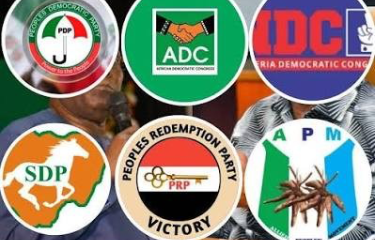
The defendants include INEC as the first defendant and the Attorney General of the Federation as the second defendant, alongside five political parties: African Democratic Congress (ADC), Action Alliance (AA), Action Peoples Party (APP), Accord (A), and Zenith Labour Party (ZLP).

At the center of the issue in the case is whether INEC has a constitutional obligation to remove parties that fail to meet electoral performance thresholds set out in Section 225A of the 1999 Constitution (as amended) and reinforced by the Electoral Act 2022 and INEC’s own regulations.

Maduka College Advert

The plaintiffs argue that the affected parties have persistently failed to satisfy the constitutional benchmarks required to retain their registration. These include winning at least 25 per cent of votes in a state during a presidential election or securing at least one elective seat at the national, state or local government level.

They contend that the parties performed poorly in the 2023 general elections and subsequent by-elections, failing to win seats across key tiers of government, yet continue to be recognised by INEC as eligible political platforms.

The plaintiffs maintain that this continued recognition is unlawful and undermines the integrity of Nigeria’s electoral system.

In the affidavit supporting the suit, the forum’s national coordinator, Igbokwe Raphael Nnanna, states that allowing parties that have not met constitutional requirements to remain on the register “is unconstitutional, illegal and a violation” of the governing legal framework.

The suit asks the court to declare that INEC is duty-bound to deregister such parties and to compel the commission to do so before preparations for the 2027 elections advance further.

Beyond declaratory reliefs, the plaintiffs are also seeking far-reaching orders that would bar the affected parties from participating in the next general elections or engaging in political activities such as campaigns, rallies and primaries. They further request injunctions restraining INEC from recognising or dealing with the parties in any official capacity unless and until they comply strictly with constitutional provisions.

Central to the plaintiffs’ argument is their interpretation of the law as imposing a mandatory duty on INEC. They argue that the use of the word “shall” in the Constitution leaves no room for discretion once a party fails to meet the stipulated thresholds.

In their written address, they rely on statutory provisions and judicial precedents to contend that electoral performance is an objective condition that must be enforced to maintain discipline, transparency, and accountability in the political system.

Attorney General backs plaintiff
In a notice filed pursuant to Order 15 Rule 1 of the Federal High Court (Civil Procedure) Rules, 2019, the Attorney General, who is a defendant in the suit, formally admitted the plaintiff’s case to the extent of his constitutional responsibilities.

He maintained that, as the chief law officer of the federation, he is duty-bound to defend and uphold the Constitution, including ensuring compliance with the Electoral Act and other laws governing elections in Nigeria.

The filing emphasised that the Attorney General’s role extends beyond litigation to preventive oversight, ensuring that laws are faithfully implemented to maintain public confidence in the electoral process. It described the case as a public interest litigation aimed at safeguarding democratic integrity and promoting constitutional observance.

According to the document, the Attorney General argued that citizens, including the plaintiff group, have the right to challenge constitutional breaches, particularly where electoral processes are concerned. He added that supporting such litigation aligns with his dual role as both a defender of the state and an advocate for citizens’ rights.

The submission also highlighted the broader implications of non-compliance by political parties. It argued that the continued existence of parties that fail to meet constitutional thresholds contributes to ballot congestion, increases the cost of election administration, and undermines the intent of Section 225A of the 1999 Constitution (as amended), which empowers INEC to deregister underperforming parties.

The plaintiff further contended that INEC has no residual discretion to retain parties that do not satisfy the constitutional criteria, insisting that failure to deregister them constitutes a continuing breach of constitutional duty. The suit warned that such inaction could be challenged through public interest litigation, as is the case before the court.

Additionally, the filing noted that the plaintiff, comprising former legislators, possesses the requisite standing to institute the action, having been directly involved in the enactment and oversight of Nigeria’s constitutional and electoral framework.

The Attorney General also underscored the importance of access to justice, arguing that his support for the suit would help bridge gaps faced by citizens seeking to enforce constitutional rights. He maintained that collaboration between government institutions and civic actors is essential to strengthening legal literacy, accountability, and democratic participation.

The Attorney General of the Federation is represented in the suit by a team of lawyers led by Prof. J. O. Olatoke, SAN, alongside O. J. David, U. O. Olufadi, D. O. Bamidele, V. D. Maiye, Waheed Abdulraheem and A. K. Abdulmumin, all of whom signed the court filing before the Federal High Court in Abuja.

The case, which has drawn significant attention within political and legal circles, could have far-reaching implications for Nigeria’s party system ahead of future elections, particularly if the court grants the request to compel INEC to act against the affected parties. (TRIBUNE)

Continue Reading

News

Tinubu names Bianca Odumegwu-Ojukwu as Minister of Foreign Affairs

Published

on

Bianca Odumegwu-Ojukwu, Minister of Foreign Affairs
Spread the love

…Nominates Amb. Sola Enikanolaiye as Minister of State

President Bola Tinubu has appointed Ambassador Bianca Odumegwu-Ojukwu as Nigeria’s new Minister of Foreign Affairs after the resignation of Ambassador Yusuf Tuggar, who is reportedly preparing for a political move ahead of the 2027 general elections.

The President also forwarded the name of Ambassador Sola Enikanolaiye for appointment as Minister of State for Foreign Affairs, pending approval by the Senate.

The appointments were disclosed in a statement released on Wednesday by presidential spokesman Bayo Onanuga.

According to the statement, the reshuffle is aimed at improving Nigeria’s diplomatic strategy and ensuring that the country’s foreign policy supports the administration’s economic agenda more effectively.

“These adjustments are part of ongoing efforts to reposition Nigeria’s foreign policy architecture for greater efficiency, strategic engagement, and stronger global partnerships,” the statement read.

Odumegwu-Ojukwu, who previously served as Minister of State for Foreign Affairs and has years of diplomatic experience, is expected to oversee Nigeria’s international relations as the government intensifies focus on economic diplomacy, regional peace, and wider global partnerships.

Maduka College Advert

The presidency highlighted her long-standing involvement in global affairs, stating:

“Ambassador Odumegwu-Ojukwu brings decades of diplomatic experience and a deep understanding of Nigeria’s engagement with the global community,” the statement read.

Enikanolaiye, a seasoned career diplomat, had earlier worked as Senior Special Assistant to the President on Foreign Affairs and International Relations.

He has represented Nigeria in several cities around the world, including Addis Ababa, London, Ottawa, Belgrade, and New Delhi.

The statement noted that his nomination is expected to strengthen institutional continuity within the foreign service.

“Ambassador Enikanolaiye’s extensive experience across multiple diplomatic missions will support Nigeria’s evolving foreign policy objectives,” the statement added.

President Tinubu congratulated the two diplomats and urged them to place national interest at the forefront while promoting economic diplomacy and improving the welfare of Nigerians living abroad.

Continue Reading

News

Awka blacksmiths lament neglect by Govt, indigenes

Published

on

Spread the love

Continue Reading

Trending

Maduka College Advert