News
Ayatollah Khamenei, who battled the US and Israel for decades as Iran’s supreme leader, killed


Ayatollah Ali Hosseini Khamenei, who ruled Iran with an iron fist as its supreme leader for nearly four decades, facing off against the US and Israel while crushing dissent and advancing a controversial nuclear program at home, has been killed, a seismic development that plunges his nation and the region into uncharted territory.
Multiple Iranian state media outlets confirmed Khamenei’s death on Sunday morning, hours after US and Israeli officials declared he had been killed in their joint strikes targeting his regime.

One of the Middle East’s most powerful men, Khamenei dominated Iran during a reign defined by resistance and resilience — standing firm against decades of Western and Israeli pressure aimed at forcing the Islamic Republic to bend to their will. Under his leadership, Iran expanded its influence far beyond its borders, earning a reputation as a formidable and dangerous regional power to be reckoned with.
But his death comes at a time when Iran is arguably at its weakest since he took power in 1989. Decades of Western sanctions had already left the country isolated and economically battered before American and Israeli strikes in June 2025 dealt his rule a severe blow.
New attacks launched on February 28 specifically targeted Khamenei and other top leaders, devastating his residence and offices in Tehran.

“The Supreme Leader of Iran Has Reached Martyrdom,” state broadcaster IRIB reported Sunday morning.
Itanian state media confirms Khamenei’s death
Iranian state media confirmed the death in the early hours on Sunday after US President Donald Trump said that Khamenei had been killed in a joint US-Israeli air strike that hit his compound on Saturday.
“It is announced to the Iranian people that His Eminence Grand Ayatollah Imam Sayyid Ali Khamenei, Leader of the Islamic Revolution, was martyred in the joint attack launched by America and the Zionist regime on the morning of Saturday, February 28,” Iran’s semi-official Tasnim News Agency reported.
Iranian state media said that Khamenei’s daughter, son-in-law, and grandson were also killed.
Trump said earlier that Khamenei and other Iranian officials ”couldn’t escape US intelligence and the advanced tracking systems”.
Khamenei died at 86. He took the helm in Iran in 1989, following the death of Ayatollah Ruhollah Khomeini, the charismatic leader who had spearheaded the Islamic revolution a decade earlier.
While Khomeini was the ideological force behind the revolution that ended the rule of the Pahlavi monarchy, it was Khamenei who shaped the military and paramilitary apparatus that forms both Iran’s defence against its enemies and provides it with influence well beyond its borders.
Before becoming the supreme leader, he had led Iran as president through a bloody war with Iraq in the 1980s. The grinding conflict, coupled with a sense of isolation among many Iranians as Western countries backed Iraqi leader Saddam Hussein, deepened Khamenei’s distrust of the West, generally, and the US, in particular, analysts say.








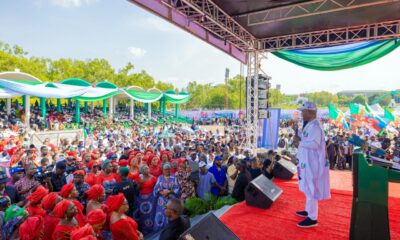

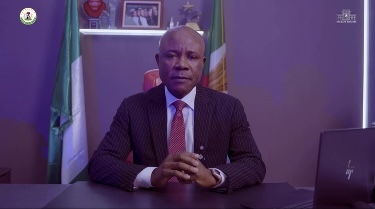
Enugu State Governor, Dr Peter Mbah, has called for a thorough and impartial police investigation into the recent violence surrounding a political gathering in the state, assuring that anyone found responsible will face the law regardless of political affiliation.
Mbah, in an address to the people of Enugu State, expressed concern over reports of violence, particularly a shooting incident that left a citizen injured.
The governor said his immediate concern was the welfare of those injured, residents who experienced fear during the incident, and families affected by the violence.
He assured the victims and affected residents that their safety and well-being remained a priority for his administration.
“I know how much our people value the peace and security we have worked so hard to establish in Enugu. Incidents such as these cause anxiety and deserve our full attention,” the governor said.
Mbah stressed that every citizen, irrespective of political affiliation, must be able to exercise their political rights without fear, intimidation or violence.
He reiterated the state government’s commitment to protecting lives, upholding the law and ensuring that justice was served without favour.
The governor also stated that, in view of the preliminary findings regarding the incident, he expected the police to conduct a comprehensive and impartial investigation to establish the circumstances surrounding the violence and identify those responsible.
According to him, anyone found culpable would be held accountable through the appropriate legal process, irrespective of their political connections.
“The Enugu State Government has made its position clear regarding allegations of involvement in this violence,” Mbah stated, reaffirming his administration’s responsibility to maintain peace and security across the state.
The incident has raised concerns over political tolerance and the safety of citizens participating in political activities in Enugu State.
The governor’s call for an impartial investigation underscores the need for the relevant security agencies to establish the facts surrounding the shooting and ensure that those responsible are brought to justice.
He concluded his address by thanking the people of Enugu State and praying for God’s continued blessings upon the state.
Enugu APC urges NDC to apologise for observing a minute silence
All Progressives Congress (APC) has picked holes in the reaction of the Nigeria Democratic Congress (NDC) to the position of the Enugu State Government on the airport and party secretariat incidents involving the NDC at the weekend.
The party said that “persons and institutions that lay claim to integrity should be able to admit their mistakes, confess their transgressions, and apologise to the people.”
The Enugu NDC had, at a press conference addressed by its State Party Chairman, Emmanuel Chukwujekwu Nebo, in Enugu faulted some of the positions of the Enugu State Government on the weekend incident as were marshalled by the Secretary to the Enugu State Government (SSG), Prof. Chidiebere Onyia, on Sunday.
Principally, the NDC claimed that it had only planned an airport reception for its governorship candidate, Chinyeaka Ohaa, not a ‘Grand Statewide Campaign Flag-off’ at the airport as stated by the government.
The party added that it notified various law enforcement agencies of its plans and made payments to the Federal Airports Authority of Nigeria (FAAN).
On the alleged shooting at NDC’s state secretariat, the party said that the NDC was “still verifying the final medical status of all injured persons.”
However, responding to NDC, the state Publicity Secretary of Enugu State chapter of the APC, Chief Uche Obute, insisted the NDC must tender unreserved apologies to the people of Enugu and Nigerians in general “for lying to them for political gains.”
“The question is: since the NDC was still verifying the final medical status of person or persons injured in their party fracas, how come they declared and observed a minute’s silence to mourn the living?
“The answer is simple: it was true to the factionalised Enugu NDC’s pattern to orchestrate violence among themselves and attribute it to Enugu APC to extract cheap political capital.
“It is also a validation of the commonly held view among the people that the Enugu State NDC and their governorship candidate, Chinyeaka Ohaa, would stop at nothing in their quest for power,” Obute said.
The party’s spokesman equally faulted NDC’s claim that it only planned to hold an airport reception, not a mega rally.
Supporting the party’s position with a screenshot of a Facebook post by NDC’s governorship candidate, Chinyeaka Ohaa, Obute said, “Promotional materials and posts by Ohaa clearly read, ‘Grand Statewide Campaign Flag-off 2026. Date: Saturday, 10th October 2026; Venue: Akanu Ibiam International Airport, Enugu; Time: 9:00am,’” he added.
The party commended the Governor Peter Mbah Administration for upholding the freedom and democratic rights of the good people of Enugu State, irrespective of political affiliation.
“Rather than stoking political tension to undermine the security and peace built by the Mbah Administration, we advise the Enugu opposition parties to present their manifestoes and campaign on them,” he stated.
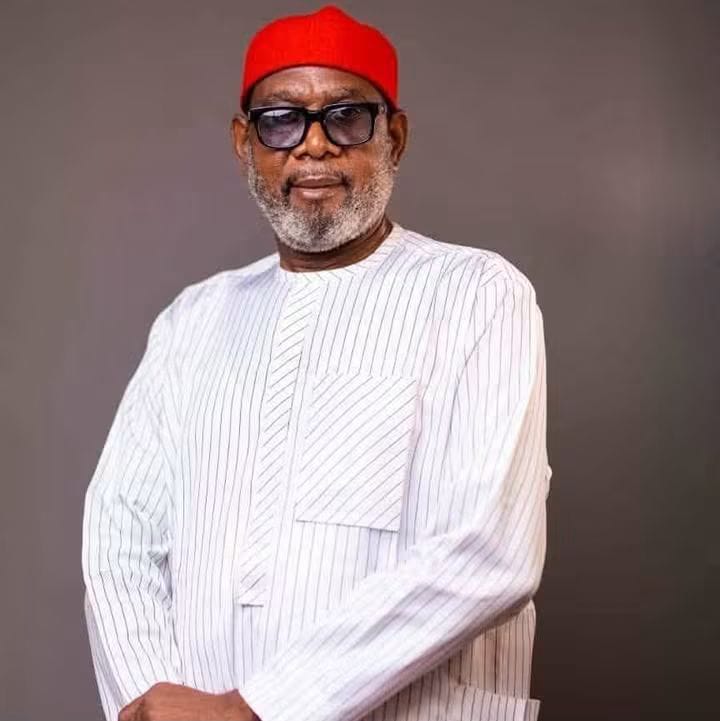
Hon. Chief Barrister Lucky Chukwu, Senior Special Assistant on Public Affairs to Enugu State Governor Peter Mbah, has died
His death was announced in October 2026 by the office of his younger brother, Senator Kelvin Chukwu, who represents Enugu East Senatorial District.
Lucky Chukwu was an elder brother of the late Labour Party senatorial candidate, Oyibo Chukwu, and Senator Kelvin Chukwu, a former member of the Enugu State House of Assembly.
He was appointed Senior Special Assistant on Public Affairs to Governor Mbah in August 2026, having previously been involved in political activities in the state.
Following his elder brother’s death, Senator Kelvin Chukwu suspended his political activities and engagements for one week to mourn the loss.
The senator’s office announced the temporary suspension in a statement issued on October 11, 2026.
The death is another loss for the Chukwu family, which had earlier lost Oyibo Chukwu, who was the Labour Party’s candidate for the Enugu East Senatorial District in the 2023 general election before he was assassinated during the campaign.
Following Oyibo Chukwu’s death, Kelvin Chukwu emerged as the Labour Party’s replacement candidate and went on to win the senatorial election.
-
 News2 days ago
Why UK varsities are cancelling Nigerians’ admission — Report
-
News2 days ago
2027: Enugu Accuses Opposition of Plotting to Import Armed Thugs, Bandits
-
News3 days ago
US asks American business executives to be wary of insecurity, corruption, detention risk in Nigeria
-
News2 days ago
Alleged Magistrate Court Order To Arrest Araraume, Okorocha Is Fake, Non-Existent — Imo First Group
-
News2 days ago
2027: Over 30,000 Enugu Teachers Endorse Mbah, Tinubu, List Welfare, Increased Education Funding
-
News2 days ago
Benue APC Delegation Involved in Ghastly Accident En Route to Rally
-
News2 days ago
Why men with braids, tattoos were banned from mosque, Ogun Chief Imam clarifies
-
News2 days ago
Man stabs wife in Anambra community, kills himself with poison