News
29 DIGs, AIGs may go as Tinubu appoints Disu to replace Egbetokun

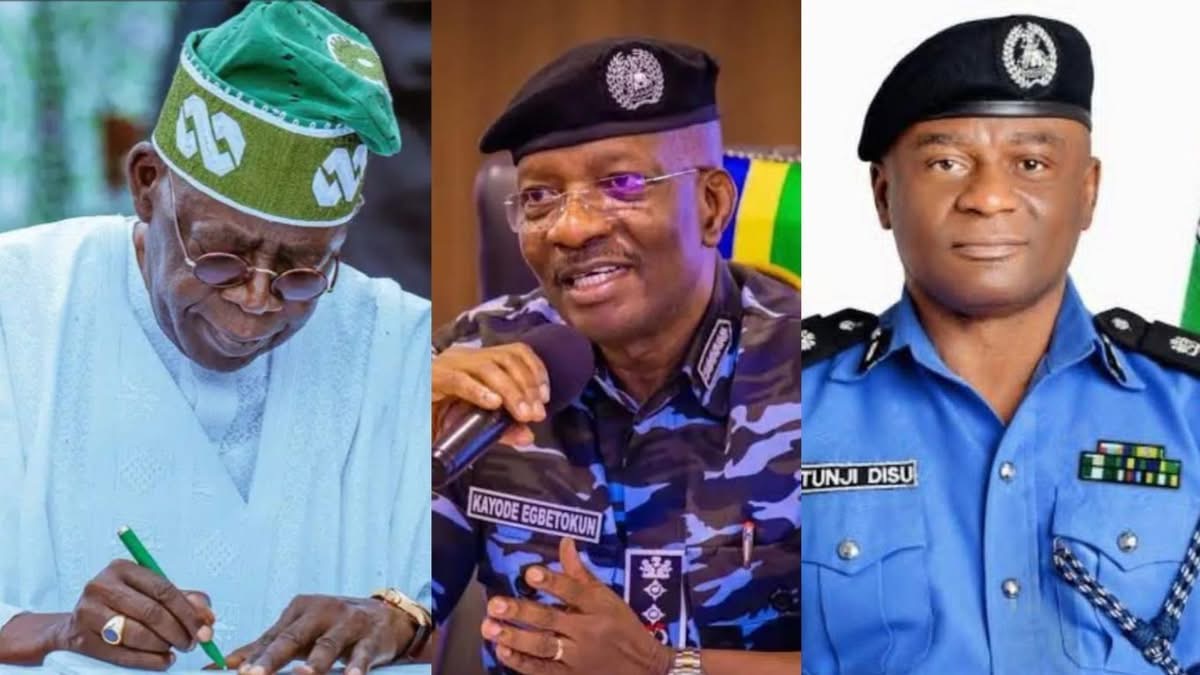
No fewer than 29 senior police officers are likely to be retired following the appointment of Tunji Disu as an Acting Inspector-General of Police, Daily Trust has learnt.
It was gathered that the officers to exit the Force include 8 Deputy Inspectors-General of Police (DIGs) and 21 Assistant Inspectors-General of Police (AIGs) who got promoted before Disu became AIG.

In line with the tradition of the police, when a subordinate is appointed IGP, the superior officers could be affected.
Our correspondent reports that Egbetokun, who was appointed in June 2023, was serving a four-year term scheduled to conclude in June 2027, in line with the amended provisions of the Police Act.
There are reports on Tuesday that the former police boss was on Monday evening asked to resign his position as the Inspector-General of Police, after a meeting at the Presidential Villa.

‘Why Egbetokun resigned as IG’
Confirming Egbetokun’s resignation earlier, the Presidency said the former top cop resigned from office over family issues that require his undivided attention.
Bayo Onanuga, the Special Adviser to the President on Information and Strategy, said, “The IGP resigned in a letter today (Tuesday), citing family issues which require his undivided attention.”
However, multiple sources within the Presidency confided in Daily Trust that Egbetokun was asked to step down during a meeting with President Bola Tinubu at the Presidential Villa, Abuja, on Monday evening.
One correspondent observed the IGP’s official vehicle, a Toyota Land Cruiser with number plate NPF-01, was parked at the forecourt of the Presidential Villa around 6:40 pm on Monday.
Egbetokun, clad in his black uniform without his cap, disembarked from the vehicle and turned back to ask for his notepad from an aide who briskly reached into the vehicle and handed it over to him.
The former IG arrived at approximately the same time governors were arriving for an interfaith breaking of fast with the President, raising initial uncertainty about the purpose of his visit.
A source, however, at the Villa confirmed that Egbetokun was specifically summoned on Monday evening by the president.
But Onanuga later said in a statement issued afterwards that the President received Egbetokun’s letter earlier on Tuesday and expressed appreciation for his service to the nation.
Tinubu commended Egbetokun’s “decades of distinguished service to the Nigeria Police Force and the nation,” while acknowledging his “dedication, professionalism, and steadfast commitment to strengthening internal security architecture during his tenure.”
“In view of the current security challenges confronting the nation, and acting in accordance with extant laws and legal guidance, President Tinubu has approved the appointment of Assistant Inspector-General of Police Tunji Disu to serve as Acting Inspector-General of Police with immediate effect.
“The president is confident that AIG Disu’s experience, operational depth, and demonstrated leadership capacity will provide steady and focused direction for the Nigeria Police Force during this critical period,” the statement read.
It added that in compliance with the provisions of the Police Act 2020, the President will soon convene a meeting of the Nigeria Police Council to formally consider Disu’s appointment as substantive Inspector-General of Police, after which his name will be forwarded to the Senate for confirmation.
The President reaffirmed his administration’s commitment to enhancing national security, strengthening institutional capacity, and ensuring that the Nigeria Police Force remains professional, accountable, and fully equipped to discharge its constitutional responsibilities.
Who is Tunji Disu?
Disu was born in Lagos Island, Lagos State, on the 13th of April 1966.
Disu holds a Bachelor of Arts in English from the Lagos State University (LASU) and a Master’s Degree in Public Administration from the Adekunle Ajasin University, Ondo State.
Disu joined the Nigeria Police Force on May 18, 1992, beginning a professional journey that has now stretched beyond three decades.
Over the years, he has served in a range of operational and administrative roles, steadily building a reputation as an officer shaped by field experience rather than desk assignments.
A career officer, his rise through the ranks has been closely followed within security circles.
He has also attended several professional courses both at home and abroad, including Small Arms Smuggling Training in Botswana; Internet Fraud Training at Cambridge University, UK; Strategic Leadership Command Course at the Police Staff College, Jos; Forensic Investigations and Criminal Intelligence Course at the University of Lagos, amongst others.
Disu was a former Commander of the Rapid Response Squad (RRS), Lagos State, where he led a team that made several arrests of criminals, especially fraudsters.
After a brief stint, a former IGP, Usman Alkali Baba, appointed him as the Head of the Police Intelligence Response Team (IRT), on August 2, 2021, following the suspension of DCP Abba Kyari.
He was at the time the Deputy Commissioner of Police, Department of Operations, Force Headquarters, Abuja.
Disu had also previously served at the State Criminal Investigation and Intelligence Department, Rivers State, as the second in command of the unit.
He later served as Commissioner of Police in Rivers State and subsequently in the Federal Capital Territory, two commands that require both tactical firmness and political sensitivity.
His postings to these strategic jurisdictions reflected the confidence of the police hierarchy in his capacity to manage high pressure security environments.
He was also a commander of the Nigeria Police Contingent to the African Union (AU) Peace Keeping Mission in Darfur, Sudan.
He is a member of the International Association of Chiefs of Police, the Nigeria Institute of Public Relations and the Chartered Institute of Personnel Management, amongst other professional bodies.
Four years ago, one of the headlines that dominated sports sections of newspapers was the 33rd US Open, which was held in Brookline, Massachusetts. The veteran Judoka won a silver medal in that competition, which was held in the United States.
With his elevation to Assistant Inspector General, Disu joined the upper command structure of the force at a time when the country faces persistent security challenges and growing public demand for reform, professionalism and accountability within the police system.
The appointment of Olatunji Disu as acting Inspector General of Police has brought renewed attention to one of the Nigeria Police Force’s most visible operational commanders.
Senior officers to go
Daily Trust spotlights that Disu’s emergence, though in acting capacity, could affect some Deputy Inspectors-General of Police and AIGs.
Until his appointment, Disu was the Assistant Inspector-General of Police (AIG) in charge of the Force Criminal Investigation Department (FCID) Annex, Alagbon, Lagos.
Adebola Hamzat
DIG Hamzat currently serves as the Deputy Inspector-General of Police (DIG) in charge of the Department of Logistics and Supply (DLS) of the Nigeria Police Force. He was appointed and decorated as a Deputy Inspector-General of Police in March 2025.
As the head of the Department of Logistics and Supply (DLS), he oversees the technical, administrative, and logistical needs of the entire Nigeria Police Force, including procurement, works, housing, and the Force Quarter-Master.
Previous Roles: Before his elevation to DIG, he served as the Assistant Inspector-General of Police (AIG) in charge of Zone 16, Yenagoa (covering Bayelsa and Rivers States). He was also the Commissioner of Police for Oyo State and the former AIG in charge of the Counter Terrorism Unit. He is an indigene of Ifelodun L.G.A of Kwara State.
Yahaya Abubakar
He is a senior Deputy Inspector-General of Police (DIG) in the Nigeria Police Force (NPF) who most recently served as the Head of the Department of Finance and Administration at Police Force Headquarters, Abuja. He was appointed to lead the Department of Finance and Administration (DFA), which oversees the financial management, budgeting, human resources, and administrative processes of the Force.
DIG Abubakar was appointed to the position following his promotion by the Police Service Commission (PSC) in 2024, having previously served in senior roles such as Assistant Inspector-General (AIG) and Zone Commander.
Bzigu Kwazhi
He is a senior officer in the Nigeria Police Force, currently serving as the Deputy Inspector-General of Police (DIG) in charge of the Department of Operations. He is responsible for leading, coordinating, and implementing operational activities, crime prevention strategies, and maintaining law and order across Nigeria. As the head of the Department of Operations (DOPs), he manages tactical operations, joint security operations (with the military) and policies for controlling incidents like riots, disasters, and elections.
In 2025, he has been actively involved in high-level security assessments, including leading operations to restore peace in Plateau State and Adamawa State. He is a seasoned officer with extensive field experience, having previously served as the Commissioner of Police in both Osun and Akwa Ibom states.
Adebowale Williams
Williams is a senior Nigerian police officer serving at the rank of Deputy Inspector-General of Police (DIG) in the Nigeria Police Force (NPF). He held/has held a key leadership role as the Head of the Department of Information and Communication Technology (ICT) at the Force Headquarters in Abuja.
He was appointed to lead the Department of Information and Communication Technology (ICT) within the NPF. This department is responsible for managing and advancing the Force’s technological infrastructure, systems, and digital tools to support modern policing.
Idris Abubakar
Abubakar was appointed into the Nigeria Police Force as a cadet ASP on 18/5/1992. He hails from Garko LGA of Kano State. He holds B.Sc Edu from Utman Danfodiyo University, Sokoto, Msc.Edu. in Psychology and a PhD in Psychology from the University of Abuja.
Frank Mba
Mba began his policing career as an Inspector and steadily rose through the ranks. In 1999, he was promoted to Assistant Superintendent of Police (ASP), followed by Deputy Superintendent of Police (DSP) in 2003.
He was promoted to Superintendent of Police (SP) in 2008, Chief Superintendent of Police (CSP) in 2012, Assistant Commissioner of Police (ACP) in 2014, Deputy Commissioner of Police (DCP) in 2018, and Commissioner of Police (CP) in December 2020.
In March 2023, he was decorated as an Assistant Inspector-General of Police (AIG).
Mba is a three-time National Spokesman of the Nigeria Police Force and has received the UN Medal for his service as a member of the Nigeria Police Contingent to the United Nations Mission in Liberia from 2006 to 2007.
Basil Idegwu
Idegwu was appointed to lead the Department of Research and Planning (R&P) at the Force Headquarters in Abuja as of March 2025. He is responsible for strategic planning,, policy formulation, and enhancing the Force’s operational efficiency.
He holds a Doctorate degree (PhD) in Peace and Security Studies. Idegwu heads a key department focused on ensuring standards, uniformity, and modernization in policing services.
He leads initiatives on community policing, engages with stakeholders to strengthen trust, and represents the IGP at various security engagements. He served in various operational and administrative capacities.
Mohammed Gumel
He assumed duty as the 4th Deputy Inspector-General of Police (DIG) in charge of the Force Intelligence Department (FID) at the Force Headquarters in Abuja in late December 2025/early January 2026. He is a seasoned officer, known for community policing.
The Force Intelligence Department (FID) is the apex intelligence-gathering arm of the Nigeria Police Force. He formerly served as a Commissioner of Police (CP) and was notably recognised as the best Community Policing Advocate of the Year (2024).
He holds the FIPMA (Fellow, Institute of Professional Managers and Administrators) and (Police Staff College) designations.
I won’t stop fighting security agencies’ heads due for retirement – Sowore
Reacting to the development, a former Presidential Candidate of AAC in the 2023 general elections, Omoyele Sowore, described Egbetokun’s removal as a victory for Nigerians.
Sowore, also a human rights activist, vowed that he would not relent in demanding the exit of Customs, NSCDC, Immigration and other para-military agencies’ bosses who are due for retirement but still staying put.
He said, “If you go to the airport, the Nigerian Air Force has taken over our traffic duties from the police. So, the police are failing because you have a guy who has retired and he’s tired, and you keep him as a police IG.
“That tells you what is happening with even the person who claims he’s president of Nigeria. He doesn’t know his left from his right. He’s just rewarding loyalty, even if it’s against the interests of the Nigerian country and its people.
“The same thing applies to the guys in Customs. It applies to immigration. It applies to civil defence. All of them have their tenure extended.
“And these are guys who are targeted. That’s the reason why they said if you are 60-years-old and you are 35 years old, you should let go. Because that is biologically when people can no longer function as they should.” (Daily Trust)








…Sen. Nnamani, Nwobodo, Dr. Nnamani, Chime, Ugwuanyi, Prof. Nnaji, Arthur Eze, Frank Nweke, Madueke, others get advisory roles
…Udeh, Nwoye, Utazi, Egumgbe, Ben Collins Ndu, Onyia, others head 51 Directorates
…Council to be inaugurated on Tuesday
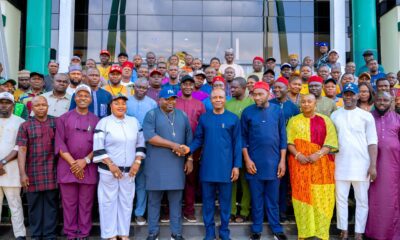
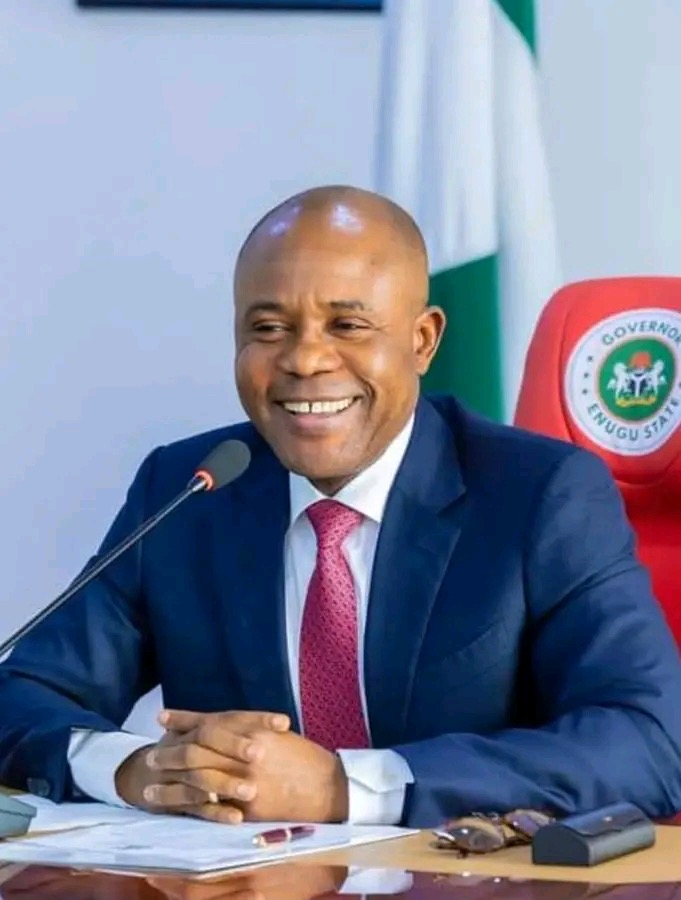
The Enugu State Chapter of the All Progressives Congress (APC), on Monday, unveiled the party’s Campaign Council ahead of the 2027 general elections.
The Campaign Council, comprising 51 Directorates, is chaired by the Governor of the state, Dr. Peter Mbah, while the Deputy Governor, Barr. Ifeanyi Ossai; Deputy National Chairman, APC (South); Speaker, Enugu State House of Assembly, Hon. Uchenna Ugwu; and the Chairman of the party in the state, Dr. Martin Chukwunweike, are Vice Chairmen.
The list signed by Chukwunweike and the Secretary of Enugu APC, Hon. Chukwudi Nnadozie, also has Chief Charlie Mbah as the Director-General of the Campaign Organisation and Dr. Eric Oluedo as the Secretary-General.
Deacon Okey Ogbodo, Dr. Dan Shere, and Hon. S.K.E. Udeh-Okoye are Deputy Campaign DGs for Enugu East Senatorial District, Enugu North Senatorial District, and Enugu West Senatorial District, respectively.
Barr. Steve Oruruo is the Campaign Spokesperson and Director of the Public Communication Committee, with Dr. Austin Okolie as co-spokesperson and Dr. Malachy Agbo as Secretary.
Mazi Uche Anichukwu and Dan Nwomeh, both drawn from the Governor’s media team, head the Directorate of New Media and Strategic Communication and the Directorate of Mainstream Media, respectively. Dr. Collins Ogbu is the Secretary of the former, while Dr. Reuben Onyishi is the Secretary of the latter.
Barr. Victor Udeh leads the Administration Directorate, while Dr. Ben Nwoye and Arc. Uche Nwatu are the Director and Co-Director of the Fundraising Committee, respectively.
Former Chief of the Naval Staff, Vice Admiral Ikechukwu Ogalla (Rtd.), chairs the Security Directorate, while former Inspector General of Police, Ogbono Onovo (Rtd.), is the Secretary.
The Minister of Innovation, Science and Technology is in charge of the Directorate of Government Appointees Coordination (Federal and State), with Prof. Chidiebere Onyia as Secretary, while former Speaker of the Enugu State House of Assembly, Rt. Hon. Eugene Odoh, heads Inter-Party Affairs.
Senator Osita Ngwu, Senator Ikeje Asogwa, and Senator Kelvin Chukwu are Coordinators of the Campaign Council in Enugu West, Enugu North, and Enugu East, respectively.
Meanwhile, in their co-signed statement, Chukwunweike and Nnadozie said the size of the Campaign Council was a reflection of “the conviction that every community, ward, local government area, professional group, support organisation, youth body, women’s group, elder, party faithful and person of goodwill must be seen, heard and meaningfully engaged.”
“Appointment into the campaign structure is therefore not merely an honour; it is a call to duty, accountability and measurable contribution,” they stated.
The Council will be inaugurated at the International Conference Centre, Enugu on Tuesday, October 27, 2026.
All members of the Campaign Council are to be seated before 3pm.
CLICK LINK BELOW TO SEE FULL LIST:
APC ENUGU CAMPAIGN COUNCIL COMPOSITION-1
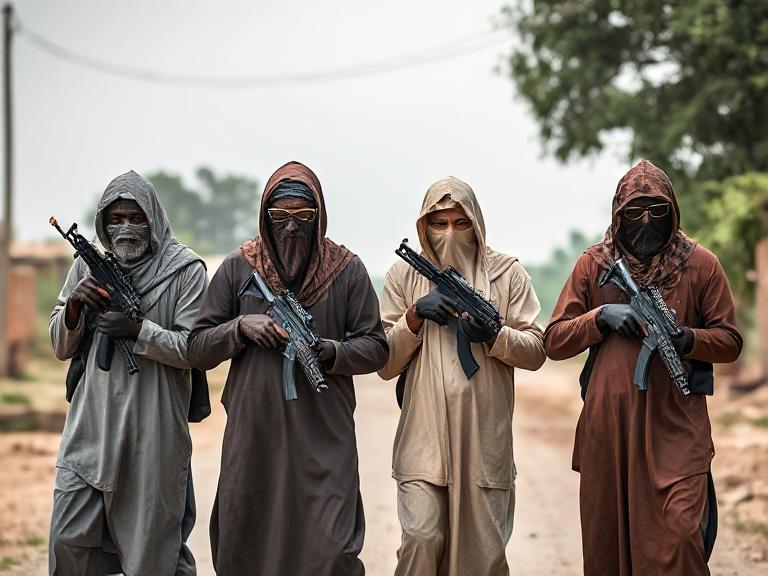
Tension has gripped parts of Kwara State following the reported abduction of members of the Iru Ekun Security Group, a security outfit spearheaded by Yoruba nation agitator Sunday Adeyemo, popularly known as Sunday Igboho.
The assailants reportedly abducted the security operatives and forced them to renounce their activities of protecting communities in the state.
According to reports, the abducted members pleaded for their release and were compelled to renounce their community protection activities.
The Iru Ekun Security Group was established to protect Yoruba communities in Kwara State against terrorist attacks and kidnappings.
The reported abduction has sparked fear among residents who rely on the group for protection against insecurity in their communities.
As of the time of filing this report, Igboho had yet to issue a statement on the reported abduction of the security group members.
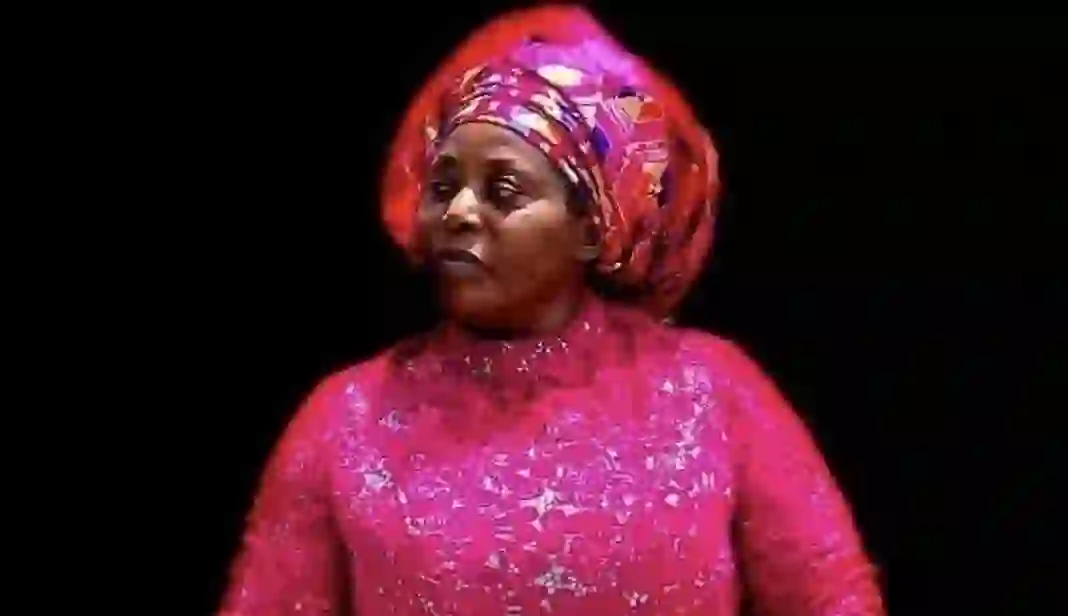
Fidelia Ezinwanne Chigbogu, the immediate elder sister of the late Senator Ifeanyi Ubah, has died at the age of 61.
Mrs Chigbogu, fondly called “Darling” by her husband, reportedly slumped and died on Sunday morning in Lagos while preparing to attend church.
Her husband, Chudi Chidinma Chigbogu, a native of Nnewi in Nnewi North Local Government Area of Anambra State, described her death as a devastating shock, saying she had shown no signs of illness before the incident.
“It was like a shock to me because, even as I am talking to you now, I never believed it,” he said.
Narrating the circumstances surrounding her death, Mr Chigbogu said the family had experienced an electrical incident the previous Thursday when their electricity meter exploded and burnt their changeover room.
He said they had contacted officials of the electricity distribution company, who promised to visit on Monday to replace and relocate the meter.
“We were busy waiting for them. My wife said she would give testimony in church on Sunday, and we were preparing for that,” he said.
According to him, his wife woke up on Sunday morning without any apparent health complaints and was preparing to leave for church when the incident occurred.
“That Sunday morning, she woke up. There was nothing like a headache, nothing like fever, nothing. She finished bathing and was preparing to go to church. She usually leaves home between 7 a.m. and 7:30 a.m. because of the roles she plays in the church,” he said.
Mr Chigbogu explained that he was washing his car because of dust when he became concerned that his wife had not come downstairs.
“I went to wash the car because of dust. Around 8 a.m., I called my son and said, ‘Why has mummy not come down? Go and check.’
“Only for the boy to go and start screaming that he called his mummy and she did not answer. He lifted her hand, and her hand dropped,” he recounted.
He said he immediately rushed upstairs and found his wife lying unresponsive on the bed.
“I called her names, no way. I alerted neighbours, and we carried her to six hospitals. Anywhere we went, they would take me aside and say I didn’t bring her on time, that she had passed on.
“I said no, it was not possible, until we got to Navy Hospital, where they refused to admit her,” he said.
Mr Chigbogu said prayers continued at their home for several hours as the family struggled to come to terms with the tragedy.
He recalled that around 4 p.m., someone told him she had seen his wife in a vision, moving swiftly without looking back, which she interpreted as a sign that the deceased had made it to heaven.
“That was when I changed my mind and allowed an ambulance to come. She left here after 6 p.m. and got to the village around 7 a.m. the next day,” he said.
Describing his late wife, Mr Chigbogu said she was a natural leader, peacemaker and philanthropist who played a significant role in her family, church and community.
“Aside from calling her Darling, I called her many names because she was a leader. No matter the case in the family, she would settle it.
“She is the founder of a women’s group, played a very big role in the church and was known for her charitable work. Before her passing, she was working on her orphanage.
“Even though she is no more, I will not let her down. I will make sure that project comes to pass,” he said.
On her family background, Mr Chigbogu said her parents had seven children—three boys and four girls—and that his late wife was the second daughter.
He added that she was also one of the trustees of the Ubah family.
-
 Features2 days ago
Mmesoma Umeorini: When Love Turns Deadly, and a Young Woman Pays With Her Life
-
Features2 days ago
Why Igbos Celebrate New Yam Festival Worldwide: The History, Cultural Significance and Lessons For The Younger Generation
-
News2 days ago
Kogi Police Probe Alleged Murder-Suicide Involving Two Officers
-
News22 hours ago
BREAKING: Tension as Video Shows Islamic Group Members Allegedly Calling for AK-47 to Kill Christians in Enugu, Jos
-
News14 hours ago
Ifeanyi Ubah’s Elder Sister, Fidelia Chigbogu, Dies Suddenly at 61
-
News2 days ago
NCDC Reports Two Suspected Ebola Cases as Contacts Rise to 53
-
News2 days ago
Enugu Traders Pledge Support for Mbah’s Second Term, Cite Market Reforms
-
News3 days ago
Four Shot as NDC Convoy Attacked in Ebonyi, Campaign Vehicle Burnt