News
Gov Mbah signs N1.62Trn Enugu 2026 Budget into Law, Says N870Bn IGR target realisable


…As House retains N1.3Trn Capital Expenditure, N321 billion Recurrent Expenditure
…Economic sector tops sectoral allocations with N825.9% of total budget
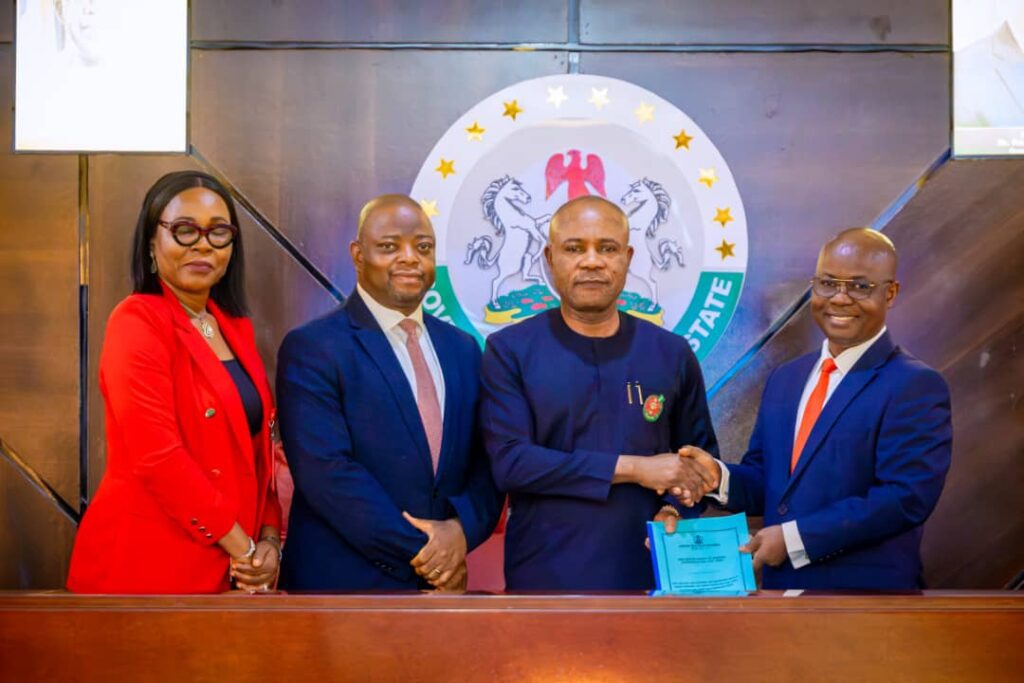
Governor of Enugu State, Dr. Peter Mbah, has signed the Enugu State 2026 Appropriation Bill into Law, restating his administration’s resolve to redouble the transformations recorded across every sector so far.
Appending his signature to the document at the Executive Chamber, Government House, Enugu, on Wednesday, Mbah thanked Members of the Enugu State House of Assembly for their diligent and expedited consideration of the budget.

He promised to immediately commence implementation of the Appropriation Law tagged “Budget of Renewed Momentum.”
Out of the N1.62 trillion budget, the sum of N1,296,092,465,000,b representing 80 per cent of the budget was allocated to Capital Expenditure, while N321,305,000,000, representing 20 per cent of the budget goes to Recurrent Expenditure.

This follows the established budgeting tradition under the Mbah Administration as the 2024 budget comprised 79 per cent Capital Expenditure and 21 per cent Recurrent Expenditure per cent, while the 2025 budget comprised 86 per cent Capital Expenditure and 14 per cent Recurrent Expenditure.
Also, the Economic Sector leads with N825.9 billion, which represents 51 per cent of the total budget. The Social Sector is next with N644.7 billion, representing 40.1 per cent of the budget, while Administration Sector, Justice Sector and Regional Sector follow with N128 billion, N15.8 billion, and N2 billion, respectively.
Education got the lion’s share of 32.27 per cent, with N30 billion earmarked for schools feeding in the 260 Smart Green Schools, thus maintaining the administration’s tradition of over 30 per cent allocation to the sector in 2024 and 2025.
The budget funding comprises N870 billion Internally Generated Revenue, IGR, N387 billion from Federal Account Allocation Committee, FAAC, and N329 billion from Capital Receipts.
Mbah said the 2026 budget was built on the philosophies of inclusivity, accountability, transparency, traceability, and strong institutions that assures that there is value for every kobo spent.
The governor maintained that the projected N870 IGR target was realisable, saying it only required discipline, creativity, and hard work.
He also cited the administration’s turnaround of the state’s IGR from below N30 billion it met in 2023 to over N180 billion in 2024 and N400 billion in 2025.
“We will be ending this year 2025 with an IGR of N400 billion, which is more than 83 per cent of our projected domestic revenue or IGR of N507 billion for this year.
“However, we are confident that we are not only going to achieve the over N800 billion revenue for next year, but we are also even going to overshoot it. We believe that with the unlocking of the different streams of economic potentials in Enugu State, we will realise our domestic revenue projection,” he explained.
Mbah said his dream was to make the state’s FAAC allocations a saving for the future.
“If you also look at the ratio to our expected Federal Allocation, it would be barely 27 to 28 per cent. It means that if we stay the course and realise this projected revenue for 2026, we can effectively govern Enugu State without recourse to our FAAC allocation. FAAC allocation becomes something we may just save for our children and for the rainy days,” he stated.
The governor, however, emphasised that the ambitious IGR projection could not be wished into existence, reminding appointees to perish the idea of yuletide holiday this year.
“We have projected an IGR of over N800bn. It translates to generating over N70 billion every month. And if you push further, it translates to over N18 billion every week. Again, if you drill down even further, it means we have to make over N2.5 billion every day.
“It is something we have to work extremely hard to realise. So, we do not have the luxury of wasting even one day, because it will be our billions that are being wasted. We feel the weight of the expectations on our shoulders and we are committed to it. We are going to suspend the Christmas for this year to ensure that we secure the future of our children,” he concluded
In his remark, the Speaker of the Enugu State House of Assembly, Hon. Uchenna Ugwu, said that Governor Mbah’s involvement of the legislature right from the budget formation made its consideration seamless and people-centric.
“Therefore, Enugu people should expect numerous and earthshaking projects like the roads, the 135.5 rail project, 14 more aircraft, more transport terminals, Smart Secondary Schools, completion of the 260 Farm Estates, among others in 2026,” he added.



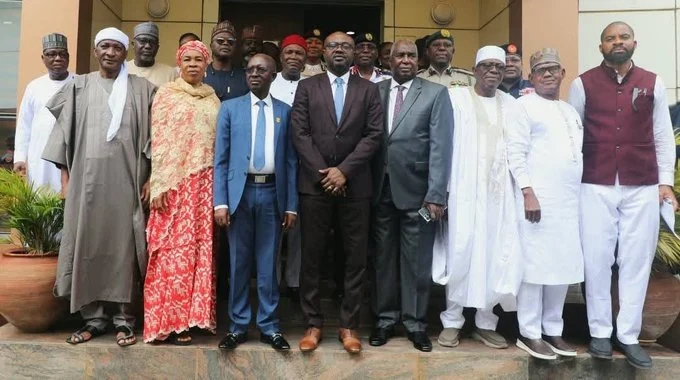
The Federal Government’s Independent Investigative Committee probing the deaths of 37 persons in the custody of the Nigeria Security and Civil Defence Corps in Niger State has found that the deceased died from asphyxiation.
The committee Chairman and former Deputy Director-General of the Department of State Services, Jonathan Kure, disclosed this on Tuesday while presenting the panel’s report to the Minister of Interior, Olubunmi Tunji-Ojo, in Abuja.
Kure stated that the panel recommended that one point four billion be paid to the families of 33 victims and forty-four survivors.
The committee chairman added that the deaths were avoidable as the victims, inclng 14 minors, were held in inhuman conditions.
The committee also recommended summary dismissal of the state commandant of the Niger State Command of the Nigeria Security and Civil Defence Corps and all other officers who were directly involved in the detention and eventual death of the miners
The committee equally recommended institutional reforms for the Nigeria Security and Civil Defence Corps in order to strengthen the leadership of the corps.
The Minister of Interior, who received the report, promised to implement the recommendations of the committee in order to ensure justice for all affected persons.
Tunji-Ojo also directed the commandant of the Corps to immediately suspend all officers who cleaned up the detention centre in order to destroy evidence.
The finding marks a major development in the investigation into the deaths of the suspected illegal miners, who died on September 17, 2026, while in the custody of the NSCDC Niger State Command in Minna.
The victims were among dozens of persons arrested during operations against suspected illegal mining in the M.I. Wushishi and Lukoto areas of the state. (PUNCH)
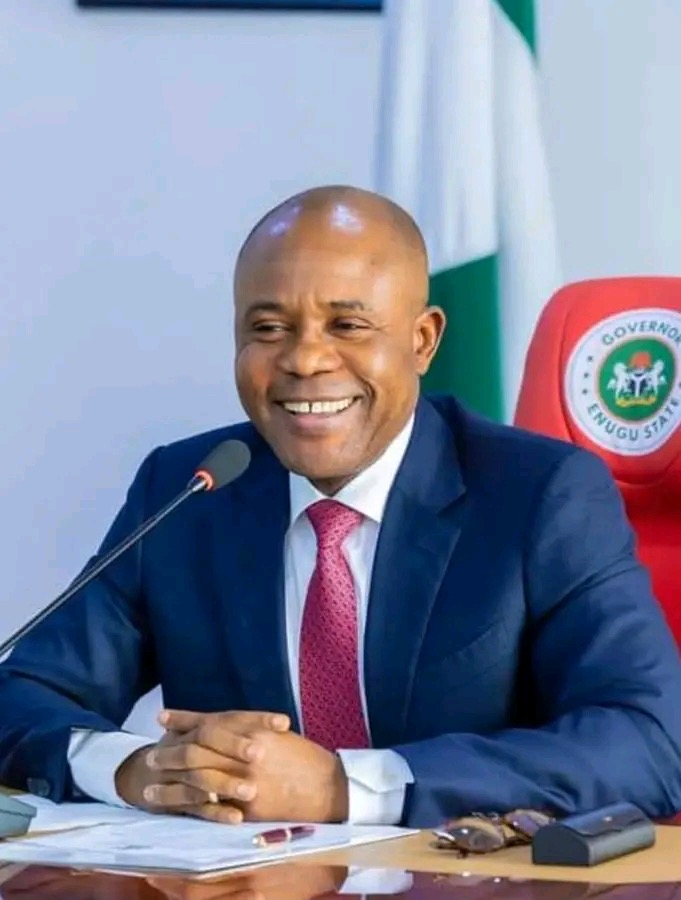
…Sen. Nnamani, Nwobodo, Dr. Nnamani, Chime, Ugwuanyi, Prof. Nnaji, Arthur Eze, Frank Nweke, Madueke, others get advisory roles
…Udeh, Nwoye, Utazi, Egumgbe, Ben Collins Ndu, Onyia, others head 51 Directorates
…Council to be inaugurated on Tuesday
The Enugu State Chapter of the All Progressives Congress (APC), on Monday, unveiled the party’s Campaign Council ahead of the 2027 general elections.
The Campaign Council, comprising 51 Directorates, is chaired by the Governor of the state, Dr. Peter Mbah, while the Deputy Governor, Barr. Ifeanyi Ossai; Deputy National Chairman, APC (South); Speaker, Enugu State House of Assembly, Hon. Uchenna Ugwu; and the Chairman of the party in the state, Dr. Martin Chukwunweike, are Vice Chairmen.
The list signed by Chukwunweike and the Secretary of Enugu APC, Hon. Chukwudi Nnadozie, also has Chief Charlie Mbah as the Director-General of the Campaign Organisation and Dr. Eric Oluedo as the Secretary-General.
Deacon Okey Ogbodo, Dr. Dan Shere, and Hon. S.K.E. Udeh-Okoye are Deputy Campaign DGs for Enugu East Senatorial District, Enugu North Senatorial District, and Enugu West Senatorial District, respectively.
Barr. Steve Oruruo is the Campaign Spokesperson and Director of the Public Communication Committee, with Dr. Austin Okolie as co-spokesperson and Dr. Malachy Agbo as Secretary.
Mazi Uche Anichukwu and Dan Nwomeh, both drawn from the Governor’s media team, head the Directorate of New Media and Strategic Communication and the Directorate of Mainstream Media, respectively. Dr. Collins Ogbu is the Secretary of the former, while Dr. Reuben Onyishi is the Secretary of the latter.
Barr. Victor Udeh leads the Administration Directorate, while Dr. Ben Nwoye and Arc. Uche Nwatu are the Director and Co-Director of the Fundraising Committee, respectively.
Former Chief of the Naval Staff, Vice Admiral Ikechukwu Ogalla (Rtd.), chairs the Security Directorate, while former Inspector General of Police, Ogbono Onovo (Rtd.), is the Secretary.
The Minister of Innovation, Science and Technology is in charge of the Directorate of Government Appointees Coordination (Federal and State), with Prof. Chidiebere Onyia as Secretary, while former Speaker of the Enugu State House of Assembly, Rt. Hon. Eugene Odoh, heads Inter-Party Affairs.
Senator Osita Ngwu, Senator Ikeje Asogwa, and Senator Kelvin Chukwu are Coordinators of the Campaign Council in Enugu West, Enugu North, and Enugu East, respectively.
Meanwhile, in their co-signed statement, Chukwunweike and Nnadozie said the size of the Campaign Council was a reflection of “the conviction that every community, ward, local government area, professional group, support organisation, youth body, women’s group, elder, party faithful and person of goodwill must be seen, heard and meaningfully engaged.”
“Appointment into the campaign structure is therefore not merely an honour; it is a call to duty, accountability and measurable contribution,” they stated.
The Council will be inaugurated at the International Conference Centre, Enugu on Tuesday, October 27, 2026.
All members of the Campaign Council are to be seated before 3pm.
CLICK LINK BELOW TO SEE FULL LIST:
APC ENUGU CAMPAIGN COUNCIL COMPOSITION-1
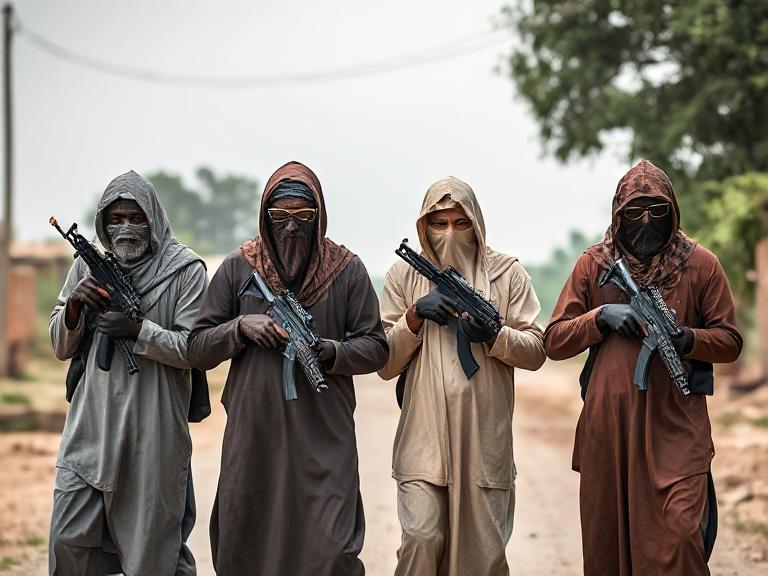
Tension has gripped parts of Kwara State following the reported abduction of members of the Iru Ekun Security Group, a security outfit spearheaded by Yoruba nation agitator Sunday Adeyemo, popularly known as Sunday Igboho.
The assailants reportedly abducted the security operatives and forced them to renounce their activities of protecting communities in the state.
According to reports, the abducted members pleaded for their release and were compelled to renounce their community protection activities.
The Iru Ekun Security Group was established to protect Yoruba communities in Kwara State against terrorist attacks and kidnappings.
The reported abduction has sparked fear among residents who rely on the group for protection against insecurity in their communities.
As of the time of filing this report, Igboho had yet to issue a statement on the reported abduction of the security group members.
-
 Features2 days ago
Mmesoma Umeorini: When Love Turns Deadly, and a Young Woman Pays With Her Life
-
Features2 days ago
Why Igbos Celebrate New Yam Festival Worldwide: The History, Cultural Significance and Lessons For The Younger Generation
-
News1 day ago
BREAKING: Tension as Video Shows Islamic Group Members Allegedly Calling for AK-47 to Kill Christians in Enugu, Jos
-
News2 days ago
Kogi Police Probe Alleged Murder-Suicide Involving Two Officers
-
News20 hours ago
Ifeanyi Ubah’s Elder Sister, Fidelia Chigbogu, Dies Suddenly at 61
-
News2 days ago
NCDC Reports Two Suspected Ebola Cases as Contacts Rise to 53
-
News2 days ago
Enugu Traders Pledge Support for Mbah’s Second Term, Cite Market Reforms
-
News20 hours ago
Terrorists Abduct Sunday Igboho’s Iru Ekun Security Group Members in Kwara