By Engr. Prince Wilfred Ifenjika Edeoga
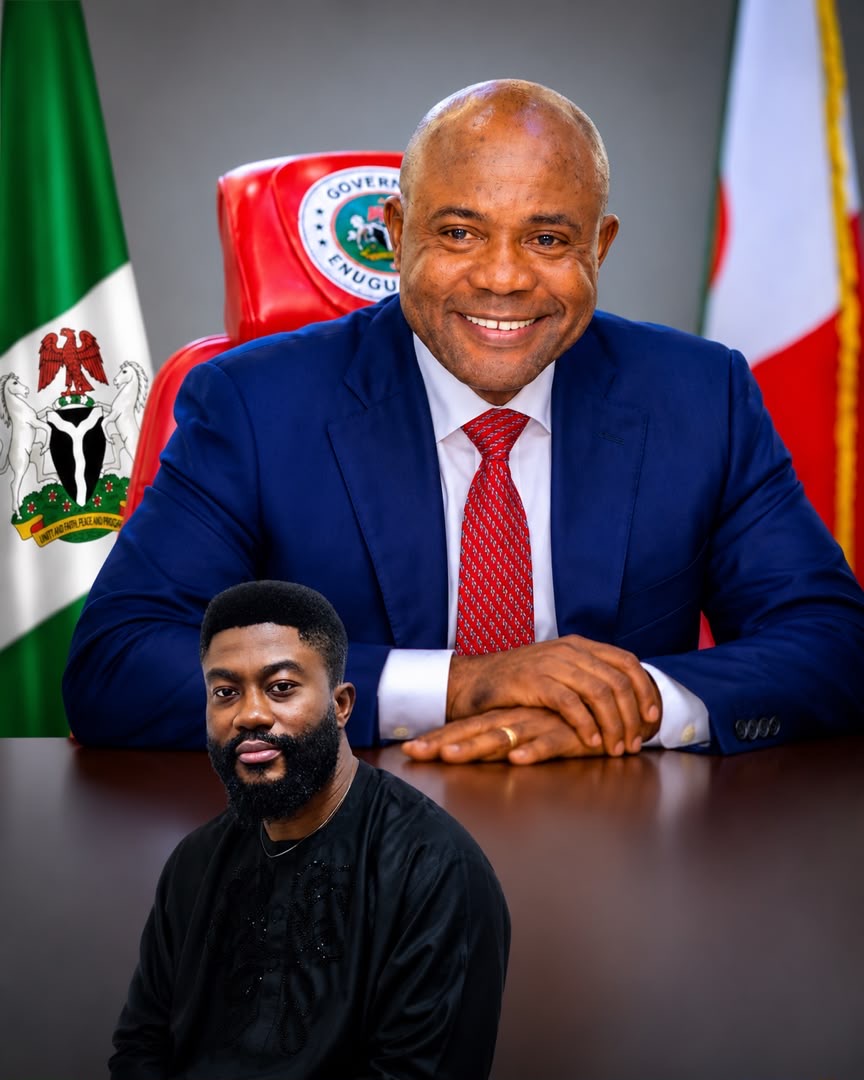
In the enduring theatre of politics, resistance is not an exception but a rule. Every leader who dares to deviate from the path of mediocrity, or chooses to dismantle the architecture of decay that were hitherto inherent in a bid to replace it with the scaffolding of hope, will inevitably provoke the ire of those who benefited from the old order. Progress is never silent, It is noisy, disruptive, and most times resentful to those whose comfort was built on existing stagnation of development. Reform does not negotiate with vested interests, it displaces them. And that, perhaps more than any policy or project, explains why the clamouring across Enugu State today about whether Governor Peter Ndubuisi Mbah deserves a second term and in the affirmative, he meritoriously qualify for that as well as other higher public duties.

So who, in the fullness of their senses, with all the glaring catalogue of verifiable achievements, could stand against the continuity of a government that has redefined what governance means in the South-East and indeed across Nigeria.
When Dr. Peter Mbah mounted the podium on May 29, 2023, to take the oath of office as the 5th democratically elected Governor of Enugu State, he did not come making the usual rhetorics of political campaigns. He came with a covenant; a mantra wrapped in three simple but revolutionary words: “Our Tomorrow Is Here.” To the untrained ear, it sounded like campaign poetry, the kind of phrase that is uttered at rallies and forgotten at the gates of Government House. To the political scientist, it was a social contract written in real time. To the economist, it was a key performance indicator. To the ordinary citizen in Udi, Nsukka, Nkanu, Aninri, Awgu, etc, it was a promise that the future had been told to wait; the future that had always been deferred from one administration to another generation, to begin immediately. And indeed, it began with speed, precision, and intentionality that has left even skeptics scrambling for new adjectives to describe what is happening in Enugu State.
Without painting an ornamentation of partisan loyalty, facts are eloquently abound that when Governor Mbah assumed office, Enugu’s Gross Domestic Product stood at approximately $4.4 billion; a figure not just negligible, but too migre to drive the economic potential of a state blessed with enormous human and material resources.
Rather than accept this as destiny, the Mbah administration set its sights on a target that many dismissed as audacious, if not impossible: to grow Enugu’s economy to 30 billion dollars by the year 2031. That is not a usual campaign slogan, but an excellentlly articulated economic blueprint being executed in real time through deliberate policies, aggressive reforms, and a development philosophy.
This is an idea of inclusive prosperity, where a state rises with all its component parts rising together.
What makes Mbah’s administration different is not just the scale of ambition, but the method of execution wherein the administration treated governance as serious business, not as a ceremonial pageant.
He came into office not as a career politician seeking relevance, but as a consummate technocrat, a respected legal luminary, and a tested grassroots mobilizer who sat at top echelon of management of Pinnacle Oil and Gas from a two-room apartment in Lagos to a multi-billion-naira enterprise from where he brought to Enugu State the discipline of the boardroom and the sensitivity of a man who understands that public office is a trust, not a trophy. His Midas touch is not myth, it is visible in the revival of moribund projects that had become monuments of governmental failure. These institutions and projects include the Presidential Hotel, once a symbol of Enugu’s hospitality and tourism which was reduced to a skeleton but has now been rebuilt to assume it’s former status. The International Conference Centre, abandoned for over two decades, has been redesigned and delivered with a speed and quality that defy the old stereotyped public sector lethargy. Niger Gas Company Limited, dormant for over thirty years, has been fully upgraded and returned to production with many on it’s employ. These are not isolated interventions, they are statements of intent, signaling to investors that Enugu is open for business and that contracts with government will no longer end in the graveyard of abandoned projects.
But the true measure of any administration is not found in the grandeur of flagship projects alone. It is found in the daily lives of the people. It is found in whether the farmer in Isi-Uzo can move his produce to market without transportation vehicle sinking into crater-like portholes on various portions of the road. It is found in whether the pregnant woman in Uzo-Uwani can access antenatal care without traveling thirty kilometers to the city. It is found in whether the child in a remote village in Nkerefi can sit in a classroom that has light, internet, and a teacher who is motivated and equipped. On all these counts, the Mbah administration is not just performing, it is redefining a standard that is engraved in the sand of time.
Considering infrastructure, the skeleton upon which every developing economy is built, , this government commenced construction of over 800 kilometers of roads across the state, some of which have been completed. These are not vanity roads that begin and end at the governor’s hometown. They are strategic arteries designed to integrate the state, open up rural economies, and reduce the cost of doing business. The Enugu-Ugwogo-Opi-Nsukka dual carriageway will bring unprecedented transformation to the Enugu North senatorial zone while linking agricultural communities directly to urban markets and to the university town of Nsukka. The Owo-Ubahu-Amankanu-Ikem-Isi-Uzo corridor is opening up communities that were once cut off during the rainy seasons. Others are the Ugwogo to Awhum Udi local government, the Ugwogo, Agbogazi, Amankanu, Umualor, brand new roads that never existed before and over 100k in Enugu North senatorial zone that is also on-going. There also many link roads that are on-going in Enugu East senatorial zone which will also connect Nkanu agro corridor there. In Enugu metropolis alone, 90 urban roads with drainages have been completed and commissioned, ending decades of flooding, traffic gridlock, and vehicular damage that had made commuting a nightmare. And beyond roads, the administration has delivered five ultra-modern transport terminals at Holy Ghost, Gariki, Abakpa, and Nsukka, complete with CNG-powered buses, digital timetables, standardized bus shelters, and a transport management system that brings order to what was once like a chaos in these places. This is not just road construction, it is economic integration given the role of transportation in every economy. However, one may not completely chronicle the numerous capital projects Mbah’s administration has done or is doing June 2023 till date and the aftermath is the clamour for continuity of his leadership of the state till 2031.
A cursory look at Enugu healthcare sector, unveils a government disposition to humane principles which manifests on it’s level of care for the wellness of it’s people. The philosophy of this administration is disarmingly simple: where you live should not determine whether you live. To give life to that philosophy, Governor Mbah is building 260 Type-2 Primary Healthcare Centres across all 260 wards in Enugu State. As of early 2025, sixty of these facilities have been completed and commissioned, with the remainder at various stages of completion. Each PHC is designed as a 24-hour facility, equipped with solar power, staff quarters, laboratories, pharmacy, perimeter fencing, and modern medical equipment. For a mother in labor at 2 a.m. in a village in Igbo-Eze South, this means she no longer has to pray that a commercial bus will be available to take her to Parklane. For the elderly man managing hypertension in a remote part of Nkanu East, this means he can have his blood pressure checked and his drugs refilled within walking distance from his home. This is what equitable development looks like. This is what it means to govern with empathy.
At the secondary and tertiary levels, the transformation is equally profound. The 300-bed Enugu International Hospital, designed to provide specialized and advanced medical care, is being equipped to reverse the humiliating trend of medical tourism that has drained billions of dollars from Nigeria annually. The Parklane Specialist Hospital, Enugu’s flagship tertiary facility, is undergoing structural and equipment upgrades. Three Type-3 hospitals at Adani, Agbogugu, and Nara have been re-equipped to offer surgical and emergency services. When these facilities are fully operational, Enugu will not just be treating patients. It will be training doctors, conducting research, and positioning itself as a medical hub for the entire South-East. That is the difference between building a clinic and instituting a virile healthcare system.
Education in the view of every serious leader, is the most powerful weapon for the overall development of every human society. Governor Mbah has placed education at the center of his development agenda, allocating 33 percent of the 2025 budget to the sector; a figure that surpassed the UNESCO recommendation and exceeds what many developed nations spend. It is an obvious fact that Mba’s administration believes the future of Enugu is not forged in Government House, but in the classroom. The Smart Green Schools initiative is the most ambitious education reform in any Nigeria state’s history. Two hundred and sixty schools, one in every ward, are being built or upgraded to feature digital whiteboards, robotics and artificial intelligence laboratories, science laboratories, renewable energy systems, and free daily meals for over 300,000 pupils. The objective is not merely to teach children how to read and write. It is to produce a generation of Enugu children who are digitally literate, scientifically curious, and globally competitive. Alongside this, the Government Technical College in Enugu is being reconstructed repositioned to produce technicians, craftsmen and artisans that a 21st century economy demands. For too long, we have produced graduates without skills. This administration is correcting that imbalance by investing in technical and vocational education with the same seriousness it invests in universities. The achievements in education sector is incomplete without recourse to the award of scholarships to many tertiary undergraduate and post graduate students from 17 local government areas of Enugu State to study various degrees and disciplines that will contribute in future development of the state.
And because no development can thrive in an atmosphere of insecurity, the administration has made security a foundational pillar. A state-of-the-art Command and Control Centre has been launched, integrating thousands of CCTV cameras across the state into a central surveillance grid. One hundred and fifty AI-driven security patrol vehicles, equipped with facial and license plate recognition technology, have been deployed. These are not ordinary patrol vans. They are intelligent, data-driven assets that can detect threats in real time, track criminal movement, and respond with precision. And in a historic first for the south east, the Governor commissioned the first ever DNA Forensic and Criminal Investigation Centre in Enugu State. This is a massive epochal step that moves criminal investigation from conjecture to science. It strengthens deterrence, accelerates justice delivery and restore public confidence in law and order. A state that can forensically secure investment. The result is not propaganda. It is measurable. Violent crime has declined. Farmers have returned to their farms. Night travel has resumed on highways that were once no-go areas after dusk. When people feel safe, they invest. When they invest, the economy grows. That is the chain of cause and effect that Governor Mbah understands better than most.
But Governor Mbah is not stopping at security and roads. He understands that no modern economy can grow without power, and no industry can compete without electricity. In another to actualize his avowed resolve and vision, Mbah has gone ahead to implement construction of an Enugu Power Generation Plant to ensure uninterrupted power supply across the state. This is not a promise made in passing, instead, it is a commitment born from the understanding that industry, innovation, and investment all depend on stable electricity. For the welder in Gariki who loses hours of work to blackout, for the small business owner in Nsukka whose freezer spoils goods every time NEPA fails and for the student who cannot read at night, this power plant will be more than infrastructure. It will be freedom. It will power homes, factories, schools, and hospitals with reliability that Enugu has never known. When that plant comes online, darkness will no longer dictate the pace of our progress.
Mbah’s vision to reinvent production inorder to create jobs for the greater unemployed population culminated in the making of Enugu an electronics producing state instead of a consumer state. In a world driven by technology, Enugu state is not just hosting a company that assemble phones, computers, solar panels, and other electronic components, but it has pinned the state on the global map as well as positioned it for international economic identity.
Mbah has created all enabling environment to change the narrative to make Enugu a manufacturing hub as it was during the M I Okpara industrial era. It is the kind of vision that could transform the state from the consumption of imported goods to producer of goods of global value.
With the resolve and commitment for Enugu Power generating Plant, which the governor is vigorously pursuing, the electronics ecosystem will develop a taproot; a boost to effective technological take off that will open a gateway to industrialization for the purpose of driving the state’s economic sustainability.
Mbah ardently believe that the economy will obviously thrive if it is agro based as was the vision of the first republic leaders in Nigeria. As a result his administration made huge investments in the agricultural sector in a bid create the needed jobs for the teaming population. His core achievements include a N2 billion “One Ward, One Farm Estate” project, distribution of subsidized agro-inputs to over 60,000 farmers, and the construction of sub-Saharan Africa’s first tractor assembly plant which is a step towards the realization of mechanised agriculture in state.
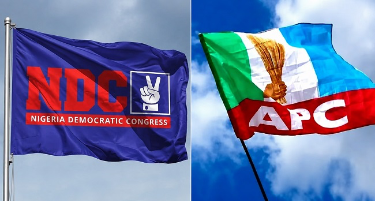
But beyond the concrete and steel, beyond the budgets and blueprints, what truly distinguishes this administration is its political philosophy of inclusiveness in the system. The rear combination of true ability and diligence that enabled Mbah’s conquest of both private and public duty gave him the quantum leap to manage the fractious politics of Enugu State. His move into the All Progressives Congress, APC, was not out of desperation, rather a strategic calculation for the good of Ndi Enugu. People are wondering why he switched to APC, and the answer is simple: there is no full life without a primary source. With the massive vision and projects he has for the state, he needs to position Enugu well with the power at the center which has eventually paid off in attracting goodies like elevating the Enugu airport to a truly international status, plus the many other Federal government presence in the State.
In view of the good relationship that Enugu State enjoy with the present Federal government, it is a partnership of wisdom, meant to attract a lot of goodies to the state. A lot of federal projects are ongoing: the Onitsha to Enugu dual carriageway, the Enugu to Ebonyi expressway, and the Enugu-Abia-Port Harcourt expressway are all under construction by the federal government with a 30-year road quality guarantee. To oppose alignment with central government at this moment is to oppose progress.
Strategic partnership is power. Therefore since the political defection of Mbah has not in any way negatively affected his delivery of democracy dividends, any person driven by unusual political sentiment to discredit him has lost touch with reason.
And speaking of development that touches every home, which include water supply, if one move around Enugu, it will be seen that imported sumo pipes being laid to tackle the issue which has been the oppositions critical anchor point. His Excellency has decided that water supply in Enugu will be finally fixed.
For decades, residents woke up to dry taps and bought water from vendors but that story is changing because the governor chose to attack the problem from its root. With laying of pipes, rebuilding of reservoirs and engineering works, better stories will be told about supply of water in Enugu.
Now, with all this evidence before us, the question must be asked again, and this time with greater audacity: who, then, is against the second-term bid of Governor Peter Mbah? The answer, when stripped of political pretensions, is clear. Opposition in this context is not ideological. It is existential. It comes from three categories of people. First, the displaced, those who benefited from the old system where access to state resources was determined by proximity to power rather than merit or need. Reform has closed those loopholes, and those who thrived in opacity are uncomfortable with transparency. Second, the impatient, political actors who believe that governorship is a rotational entitlement that must change hands every four years regardless of performance. They confuse democracy with rotation, and rotation with justice. Third, the contrarians, a small but vocal minority who oppose for the sake of opposition, mistaking cynicism for sophistication and criticism for contribution. None of these groups represent the market woman at Ogbete Main Market whose stall is now accessible by a paved road. None of them represent the teachers and pupils/students in Smart Green Schools who now have digital whiteboards and reliable electricity. None of them represent the nurses at the new PHC in their wards who can now offer delivery services at night without fear. None of them represent the graduates who see Enugu Air taking off from Akanu Ibiam International Airport and believes that there future need not be in Lagos or abroad. Nowhere is the administration’s strategic foresight more evident than in aviation and logistics, the Governor in agreement with federal minister to partner with Aero Alliance Limited to assume stewardship of the Akanu Ibiam International Airport under a landmark 30 years public/private partnership concession. This singular act has laid the foundation for an airport that truly connects people to opportunities. By concessioning this critical national asset to a competent private operator, Enugu has unlocked direct access to global markets, strengthened cargo connectivity with international trade hubs such as Guangzhou, China, lowered logistics costs for our vast trading community, and created the infrastructure backbone to support our ambition of welcoming over 3 million visitors annually. None of these represent the technician who dreams of working in an Enugu electronics factory powered by Enugu electricity. None of them represent the family that now sees water pipes being laid on their street after years of waiting. The real Ndi Enugu, the pragmatic, hardworking, God-fearing people who constitute the soul of this state, are not looking for promises. They are looking for performance. And they have seen it.
This is why the second-term bid of Governor Peter Mbah is not about ambition. It is about continuity. It is about completing what has been started. The 260 PHCs must be fully staffed and operational. The 260 Smart Schools must be fully equipped and populated. The 30 billion dollar economy must be realized. The Enugu International Airport fully concessioned must work for good of Enugu state, and Enugu Air must expand to a fleet of 20 aircraft to make Enugu the true aviation and logistics hub of the South-East. The Enugu Power Plant must be built to end the tyranny of darkness. The electronics manufacturing vision must move from blueprint to factory floor. The water infrastructure must be completed so that no street goes thirsty again. These are not tasks for a new administration to learn from scratch. They are tasks for a team that has already built the foundation, understood the terrain, and demonstrated the capacity to deliver.
And this is where the conversation must expand beyond Enugu. Because what Governor Mbah is doing is not just state governance. It is a demonstration model for what Nigeria can become when leadership is driven by competence, data, and discipline. He has shown that a state can grow its IGR geometrically without crushing its citizens with taxes. He has shown that public projects can be delivered on time and on budget. He has shown that political unity and administrative performance are not mutually exclusive. He has shown that security can be intelligent, power can be homegrown, and manufacturing can be localized. He has shown that alignment with the center, when done in the interest of the people, accelerates good governance. These are lessons the nation needs at the highest level. These are the reasons why, after his second tenure in 2031, the nation must look at Mbah not just as an ex-governor, but as a national asset. Nigeria at that time will need leaders who have proven that development is possible, that institutions can work, that public funds can be managed with integrity, and that governance can be compassionate and efficient at the same time. The man who is transforming Enugu from a 4.4 billion dollar economy with a clear path to 30 billion dollars, the man who is building healthcare and education system from the ward level up, the man who restored confidence in government through transparency and delivery, the man who brought AI-driven security and promised homegrown power and electronics manufacturing, and who had the courage to align with the federal government for the sake of his people, is precisely the kind of leader Nigeria will need to consolidate its own national transformation. Projecting him for higher office after 2031 is not flattery. It is strategic foresight. It is recognizing that the template he has created in Enugu can and must be scaled to the national stage.
So, to every son and daughter of Enugu, to every voter in the 17 local government areas, to every youth wondering if politics can still deliver, the message is simple: Tomorrow Is Here, but Tomorrow must be allowed to finish its work. Do not interrupt a rebirth mid-delivery. Do not trade proven performance for untested promises. Do not let partisan sentiment blind you to visible progress. Do not let the forces of the past hijack the future of your children. Stand with Governor Peter Mbah. Vote for continuity. Vote for completion. And when the time comes, let Nigeria also benefit from the leadership that has made Enugu a reference point for good governance.
Finally, history will be kind to those who stood with this administration. Their names will be recorded among those who chose progress over paralysis, development over decay, and courage over complacency. But history will be unkind to those who stood in the way of this development and progress. The will of the people, once awakened by performance, is the most unstoppable force in democracy as Ndi Enugu, having tasted purposeful governance, will not return to darkness.
Peter Mbah has not just governed, he has shown that governance can be fruitful to the people.
Consequently he must be supported by all good loving people to continue and also woo him after 2031 as our nation must be considering him for a national duty.
Engr. Prince Wilfred Ifenjika Edeoga
(Ceo: CACU & CO GROUP)