News
Intersociety raises alarm, releases details of alleged killing of 113 Christians in 2 weeks, abduction of 135 others


LThe International Society for Civil Liberties and Rule of Law (Intersociety), has raised the alarm over the killing of 113 Christians and abduction of 135 others.
The group stated that the incidents occurred between the October 28 and November 17, 2025 across the Christian communities of Nigeria.

The attacks according to the group, were carried out predominantly by Jihadist Fulani Militants, who accounted for 106 of the killings, while Boko Haram was responsible for four. The figures revealed an average of five Christians killed and seven abducted every day during the three-week period.
The human Rights body stated that the killings occurred across Taraba (34 deaths), Benue (23), Plateau (22), Kaduna (17), Borno (4), Kwara (3) and Edo (1).
Intersociety also identified 10 additional likely deaths, representing unreported victims believed to have been executed while in jihadist captivity.

The abductions were widespread, with 61 recorded in Kaduna, 30 in Taraba, 12 in Kogi/Kwara, 10 in Kebbi, and six each in Plateau and Benue, alongside ten unreported cases.
Among those abducted were 25 senior secondary school students taken from a Christian-majority community in Kebbi State.It further said that, at least ten of the abducted girls are believed to be Christians. Christian clerics and places of worship were also heavily targeted.
Four clergymen were killed—in Kaduna, Benue, Edo, and Kwara—while seven others were abducted, including four pastors in Kaduna, two in Kogi and one in Kwara. During the same period, six churches were attacked and sacked in Benue, Borno, Kaduna, and Taraba.
This is contained in a statement issued on Wednesday by Emeka Umeagbalasi, criminologist and Researcher, Head, for lnternational Society for Civil libraries and rule of law, Obianuju Joy Igboeli Esquire, Human Rights Lawyer/ head department Civil libraries and rule of law, Ogochukwu Obi, Esquire Deputy Head, department of international justice and Human Rights and Comrade Samuel Kamanyaoku, Head, field Data collection and Documentation department.
Intersociety warns that Nigeria has become a major hub for at least 24 Islamist terrorist groups now operating within the country. These groups include the Sahel-based JNIM, which recently announced the establishment of a brigade inside Nigeria, and Fulani-linked networks such as WULOWULO, the Lakaruwa group, and the Bororo faction.
According to the organization, these actors share a long-term objective of erasing Christian identity, culture, and heritage in Nigeria over the next 50 years if decisive action is not taken.
The report strongly criticizes the Nigerian Government for failing to confront the threat. Intersociety notes the continued refusal to overhaul the defense, interior, and intelligence establishments and adds that security forces often arrive only after attacks to retrieve bodies.
In many cases, troops reportedly arrest community members under allegations of reprisals while failing to pursue the perpetrators. Allegations of security forces complicity continue to rise across multiple states.
The organization also condemns the government’s alleged spending of large sums—reportedly borrowed public funds—on international public relations campaigns aimed at denying or downplaying the crisis.
Intersociety maintains that these resources could have rehabilitated over one million displaced Christians and moderate Muslims, rebuilt homes and churches, restored schools and hospitals, and provided critical trauma care.
“The severity of the crisis is further illustrated by the situation in Taraba State, where a November 2025 Truth-Nigeria report found that 335 Catholic churches under the Wukari Diocese have been destroyed between 2015 and 2025.
“More than 300,000 Christians have been displaced, and 201 or no fewer than 400 Christian villages completely sacked—an ongoing situation described by church leaders as a hidden genocide.
“Intersociety concludes that the pattern of killings, abductions, destruction of worship centers, and mass displacement shows no sign of abating. With jihadist networks expanding and government response faltering, the organization warns that Christian communities across Nigeria face an existential crisis with grave implications for the nation’s stability and human rights landscape,” Intersociety said.









News
UBA Commences Contempt Proceedings Against WEMPCO Directors over Alleged Disobidence of Court Order
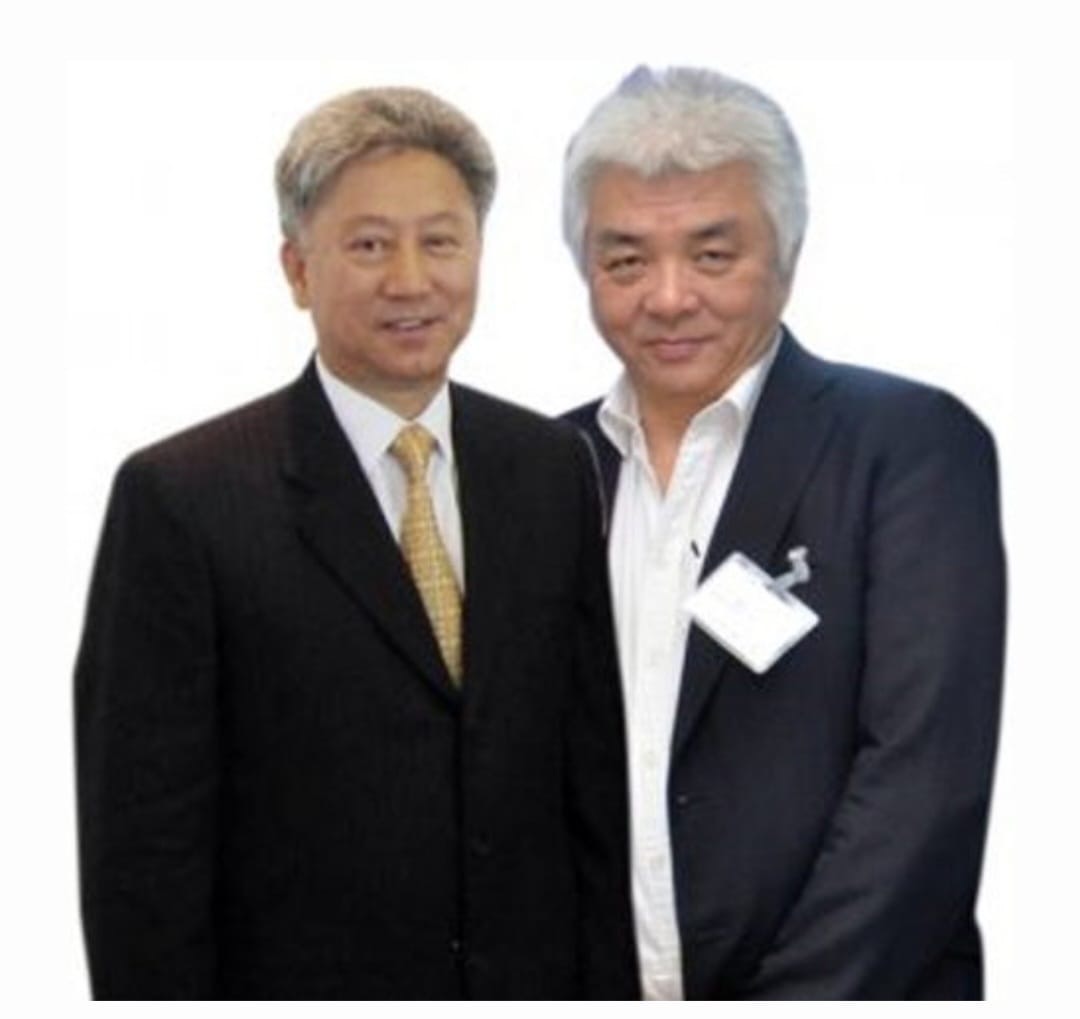
The Federal High Court, presided over by Honourable Justice Aluko, has granted an application by United Bank for Africa (UBA) Plc for substituted service of Form 49 on directors of Wempco named as alleged contemnors in the case of UBA v. Wempco.
The application forms part of proceedings seeking to determine whether the named individuals disobeyed an order of the court and whether they should be committed to prison for contempt.
The directors named as alleged contemnors are Lewis Shui Ngor Tung, Phillip Shui Chei Tung, M.A. Ola Yusuf, Tung Lawrence Blake, Aali Aare Hadji Tokunbo, Paul Shui Po Tung, Tung Robert, C.L. Ip and Taiwo Alli.
In advancing the application, counsel to UBA argued that service of Form 49 on the alleged contemnors was necessary to enable them to appear before the court and show cause why an order of committal should not be made against them.
He also argued that the Directors of Wempco and some members of staff took illegal steps in an attempt to disobey the Order of Court.
The court’s decision to grant substituted service provides a procedural step towards bringing the notice to the attention of the individuals concerned in accordance with the court’s directions.
Form 49 is a notice requiring an alleged contemnor to show cause why an order of committal to prison should not be made against them for alleged disobedience of a court order.
The Federal High Court had earlier made an Order of Mareva Injunction and appointed a Receiver/Manager over some of the Assets of Wempco following the indebtedness of Wempco to UBA in the sum of N61,445,695,993.76 (Sixty One Billion FourHundred and Forty-Five Million Six Hundred and Ninety Five Thousand, Nine Hundred and Ninety Three Naira, Seventy Six Kobo).

A Lagos State High Court has granted interim preservative orders, including a Mareva injunction, in favour of United Bank for Africa (UBA) Plc in a dispute involving the alleged diversion of petroleum products valued at $242 million.
The orders, granted last Thursday by Justice K. A. Jose, followed allegations by UBA that Vitol SA, a Switzerland-based energy trading company, wrongfully released cargoes of petroleum products consigned to the bank in the bills of lading.
UBA’s lead counsel, Bode Olanipekun, SAN, urged the court to grant the interim orders to preserve assets and prevent the dissipation of funds pending the determination of the substantive dispute.
In her ruling, Justice Jose granted three of the prayers sought by the bank, including requests to restrain dealings with assets and funds up to the disputed amount.
“Prayers 1–3 are granted as prayed against the 2nd Respondent only,” the judge ruled.
The application was brought pursuant to Order 43 Rule 1 of the High Court of Lagos State (Civil Procedure) Rules 2019 and the Lagos State High Court Practice Direction No. 2 of 2019.
In the substantive proceedings, UBA is seeking to establish the liability of Vitol SA and the owners of the vessels over alleged conversion, misrepresentation and negligence arising from the non-delivery of the petroleum products.
The bank also cited 34 financial institutions and public agencies, including commercial banks, merchant banks, microfinance banks, the Nigerian Ports Authority and the Nigeria Customs Service, in connection with the application.
In an affidavit supporting the application, UBA’s Group Head of Recoveries and Remedial Management, Anthony Chilaka, stated that the bank had issued a letter of credit in favour of Vitol SA to facilitate petroleum products transactions.
According to the affidavit, the cargoes were transported to Nigeria, and the masters of the vessels issued several bills of lading.
UBA alleged that Vitol subsequently endorsed the bills of lading “to the order of” the bank and handed over the original documents to it.
The bank maintained that the endorsement entitled it to take possession of the cargoes upon completion of the voyages.
However, Chilaka stated that UBA had not received the gasoil despite the completion of the voyages.
“The applicant has not been given possession of the gasoil despite completion of the voyage,” the affidavit stated.
UBA alleged that the cargoes were instead diverted for the use of another party, arguing that the failure to deliver the products amounted to conversion and negligence.
The bank further contended that the respondents had obligations arising from the transactions and the endorsement of the shipping documents but failed to fulfil them.
UBA also alleged that cargoes linked to the transactions were diverted to other parties after the completion of their voyages rather than delivered to the bank as stipulated in the shipping documents.
The allegations are expected to be determined in the substantive proceedings.
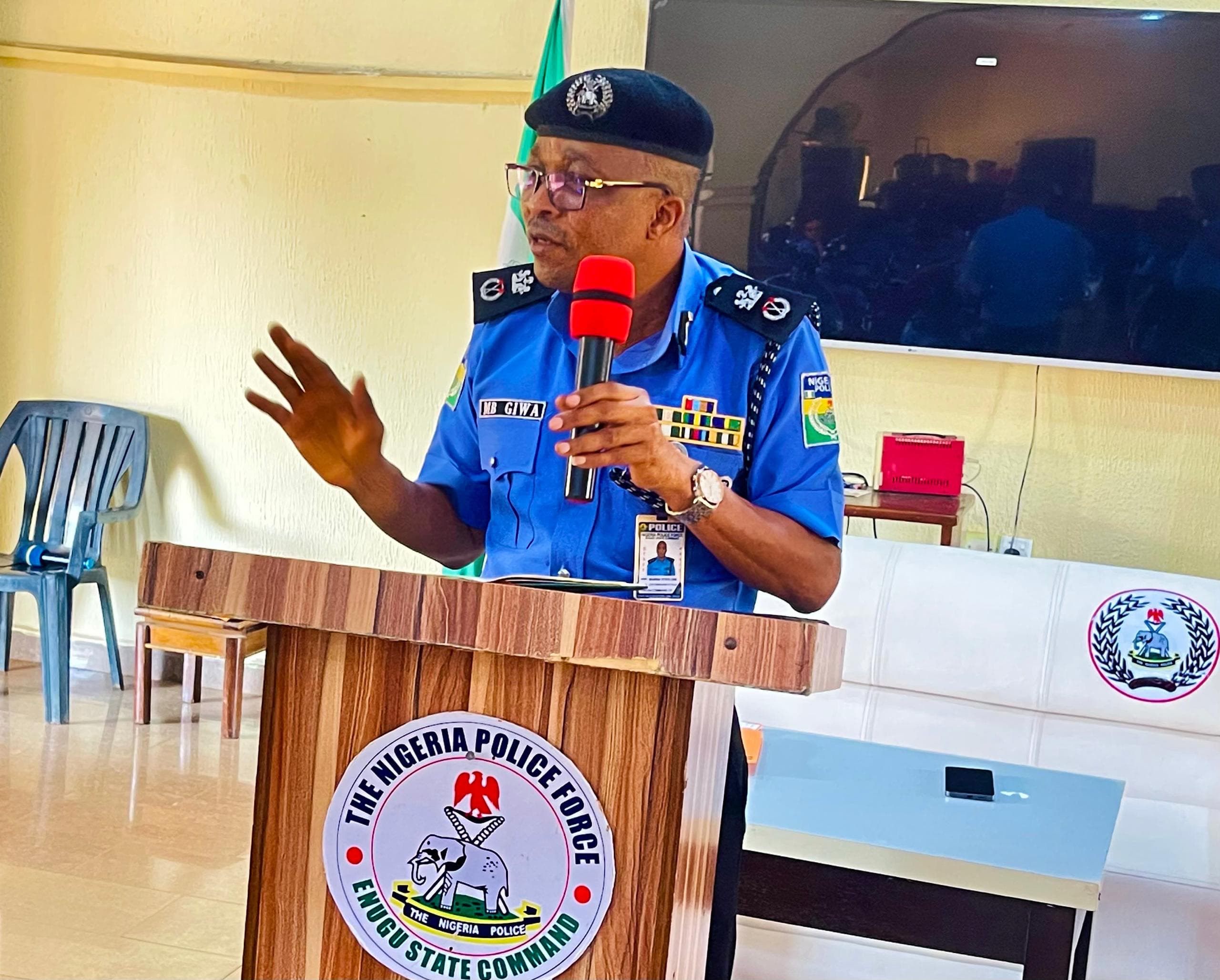
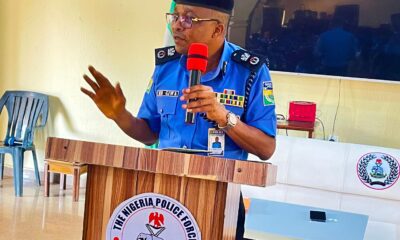
The Commissioner of Police in Enugu State, Mr Mamman Giwa, has warned police officers against degrading treatment of citizens, extortion and other forms of unprofessional conduct.
Giwa gave the warning on Wednesday during an emergency conference with senior officers at the Senior Police Officers’ Mess, Agbani Road, Enugu.
He also directed senior and supervisory officers to strengthen oversight of personnel and improve security management for political and election-related activities ahead of the 2027 General Elections.
The commissioner said the conference followed directives issued by the Inspector-General of Police, Mr Olatunji Disu, during a virtual strategic meeting with senior officers on October 20.
According to him, the I-G emphasised professionalism, compliance with the Nigeria Police Force’s social media policies, adapting policing to contemporary realities, respectful treatment of citizens, and effective management of political activities and election security.
“It is clear that officers cannot effectively discharge their policing responsibilities without treating citizens with respect and conducting their duties in accordance with extant laws and established professional standards,” Giwa said.
He charged senior officers to take responsibility for the conduct of personnel under their supervision, warning that any officer found engaging in misconduct would face the consequences.
The conference also featured a health talk on the Ebola virus, focusing on its symptoms and preventive measures.
Those in attendance included Deputy and Assistant Commissioners of Police, Area Commanders, Divisional Police Officers, heads of formations, tactical and operational units, and heads of various sections of the Enugu State Police Command.
-
 Features2 days ago
Kogi’s Kidnapping Crisis: Why Do Forests Remain Safe Havens for Criminals Under Ododo’s Watch?
-
News1 day ago
Kidnappers kill seven-year-old boy after ransom demand
-
News2 days ago
“It’s not debatable, we can’t go back,” Mbah Backs Tinubu on Fuel Subsidy Removal
-
News3 days ago
Mbah: Enugu Now Produces 120 Million Litres of Water Daily, Expands Agricultural Investment
-
Politics3 days ago
Mike Igini: Politicians Infiltrate Agencies Responsible for Election Personnel as Electoral Laws Go Unenforced
-
Politics15 hours ago
2027: Atiku, Obi, Duke, Others in Talks on Single Opposition Candidate – Coalition
-
News14 hours ago
Macron Postpones Planned Visit to Nigeria Until 2027
-
News12 hours ago
Enugu CP Orders Probe into Death of Izuchukwu During Police Raid