News
Visa cancellation: Why I snubbed US Embassy’s summons – Soyinka

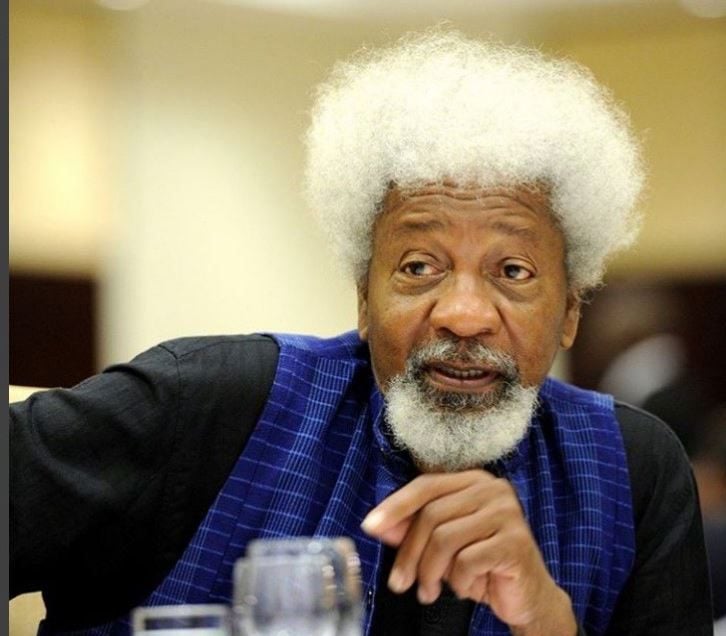
Nobel laureate, Prof. Wole Soyinka, explained on Tuesday that he shunned an invitation by the US embassy for a visa re-interview in September because he was not comfortable with the September 11 date fixed for the exercise.
September 11 became a symbolic date in the US after the September 11, 2001, devastating terror attack on the Twin Towers of the World Trade Centre in New York City and other locations.

Soyinka, who described himself as superstitious, said he found it odd that the embassy would choose September 11 for his visa re-interview.
The world-acclaimed writer gave the explanation during a media parley, titled “Unending Saga: Idi Amin in Whiteface” which was held at Kongi’s Harvest Gallery, Freedom Park, Lagos Island.
At the gathering, Soyinka disclosed that the US embassy had revoked his visa, saying the media parley was necessary to let those expecting him in the US to know that he had been “banned”.

Soyinka, who is a vocal critic of the US President Donald Trump, said he got the notice of his visa revocation in a letter dated October 23, 2025, and wondered what could have led to it.
In the letter, the US Consulate stated that the Nobel laureate’s non-immigrant visa “has been revoked pursuant to the authority contained in the U.S. Department of State regulations 22 CFR 41.122 and is no longer valid for application for entry into the United States. Additional information became available after the visa below was issued. This revocation refers only to the visa listed below.”
The Consulate further requested Soyinka to bring his visa to the Lagos embassy “for physical cancellation,” a request the Nobel laureate described as humorous, asking if anyone in the audience would volunteer to deliver it to the embassy on his behalf.
“If you have plans to travel to the United States, you must apply again to re-establish your qualifications for a new non-immigrant visa,” the letter, issued by the NIV Section of the Consulate, added.
Soyinka’s B1/B2 visa was issued on April 2, 2024, in Lagos, according to the letter.
Soyinka said the media parley was necessary so that people expecting him in the US would know that he had been “banned”.
“It is necessary for me to hold this press conference so that people in the United States who are expecting me for this event or that event do not waste their time. I have no visa; I am banned, obviously, from the United States. And if you want to see me, you know where to find me,” the 91-year-old author, playwright, and poet told journalists at the upper chamber of the art gallery.
Soyinka expressed surprise over the development, saying, “I’ve started looking back—have I ever misbehaved toward the United States of America? Do I have a history? Have I been convicted? Have I gone against the law anywhere?”
He, however, noted that the development would not affect his relationship with US citizens.
“I assured them that both he and his staff are given permanent visas anytime they want to visit the Autonomous Republic of Ijegba, situated in Abeokuta. There will be no reciprocal conduct from my principalities,” Soyinka said, making reference to a recent conversation he had with the US ambassador in Lagos over the revocation.
When asked if he would be willing to travel to the United States in the near future, Soyinka responded in the affirmative but ruled out the possibility of him making the move to seek his visa reinstatement.
According to him, given his age and contributions to the U.S., he owes the country nothing and vice versa.
“How old am I now? What am I looking for anywhere? Like I said, I have nothing against the American citizens. Human beings live there — friends, families, and colleagues. There are a lot of art productions going on there, and there are philosophers. There are remarkable beings in that place.
“So, if circumstances change, yes (I will), and (if) I were invited. But I won’t make the effort myself. I won’t take the initiative myself because there is nothing I’m looking for there. I’ve been responsible for the creation of some institutions in that place. I’ve given as much as I’ve taken from that place. They owe me nothing, and I owe them nothing.”
On September 10, 2025, Soyinka told PM News that he would not honour an invitation by the U.S. Consulate in Nigeria for a visa re-interview, which was scheduled for Thursday, September 11.
Making reference to the invitation on Tuesday, Soyinka said he did not honour the invitation because, on one hand, he had a problem with the date, and on the other hand, he was not interested.
He said, “I don’t know if any of you read the statement I made when I received a letter asking me to bring back my passport because certain facts may have come out since the visa was issued.
“And I was given a date to report to their consulate with my passport. I declined the invitation. First of all, I didn’t like the date. Everybody knows what happened on that date, 9/11, many years ago, so it is rather unfortunate that they picked that date. So I said, ‘Sorry, I’m superstitious; I’m not coming on that day.’ And ultimately, I made it clear I was not going to apply for another date to bring in my passport. So I travelled out.
“When I came back — even before I came back — I got a letter from the ambassador. I wish to always stress that I have absolutely nothing against individual citizens. I have a continuing good relationship with members of the U.S. embassy.”
He continued, “So we arranged a call, and I explained. Again, he offered a special visit by me at the consulate, and they would ask a few questions about the possible facts that existed that they didn’t know about when this visa was issued. We spoke, and I said, ‘Shall I be equally frank with you? I’m not interested.’”
Best known as a playwright, Soyinka won the Nobel Prize in Literature in 1986. He had lived abroad, primarily in the U.S., for a long time, where he held professorships at several universities, according to The Nobel Prize.
Soyinka’s visa revocation sparks fresh conversation about recent steps taken by the U.S. to check migrant influx into the country, especially from Africa.
The U.S. Department of State had in July announced an update to its non-immigrant visa policy for Nigerian citizens.
According to a press release issued by the U.S. Embassy in Abuja, “most non-immigrant and non-diplomatic visas issued to citizens of Nigeria will be single-entry visas with a three-month validity period.”
However, the embassy clarified that “those U.S. non-immigrant visas issued before July 8, 2025, will retain their status and validity.”
In August, the U.S. Mission in Nigeria also issued a directive to visa applicants mandating the disclosure of all social media usernames and handles used over the past five years as part of the visa application process.
The directive, announced in a post on the Mission’s official X account, came as the U.S. Department of State reiterated its commitment to bolster national security through enhanced screening measures. (PUNCH)



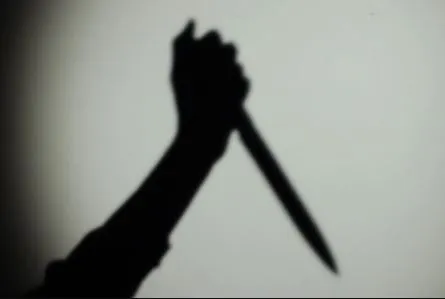
A 21-year-old butcher, identified as Selim Ayodele, has allegedly stabbed his 26-year-old colleague, Ibrahim Wasiu, to death following a disagreement over sweeping their workplace in Ogun State.
The incident reportedly occurred on Sunday, October 18, at a cow meat-selling outlet in the Alagbole area of the Akute/Ajuwon satellite towns in Ifo Local Government Area of the state.
According to reports, trouble started after the day’s business activities when the two colleagues disagreed over the cleaning of their sales outlet, with the argument allegedly escalating into a fatal confrontation.
The Ogun State Police Command’s Public Relations Officer, Oluseyi Babaseyi, confirmed the incident to journalists in Abeokuta on Friday, disclosing that the suspect had been arrested.
Babaseyi said the incident was reported at the Ajuwon Police Divisional Headquarters on Sunday night, prompting police operatives to commence an investigation.
He explained that preliminary findings indicated that the disagreement began after the two men had concluded their day’s work at the meat-selling outlet.
During the altercation, Ayodele allegedly picked up a knife and stabbed Wasiu in the left side of his chest before twisting the weapon.
The victim was reportedly rushed to a nearby hospital for medical attention but was pronounced dead on arrival.
The police spokesperson added that the suspect remained in custody as investigations continued ahead of his prosecution.
He further disclosed that the deceased’s body had been deposited in the morgue of a private hospital for an autopsy.
The Commissioner of Police in Ogun State, Bode Ojajuni, reaffirmed the command’s commitment to prompt response to criminal incidents, thorough investigations and the prosecution of offenders in accordance with the law.
The police commissioner also urged residents to exercise restraint, resolve disagreements peacefully and promptly report criminal incidents to the appropriate authorities.
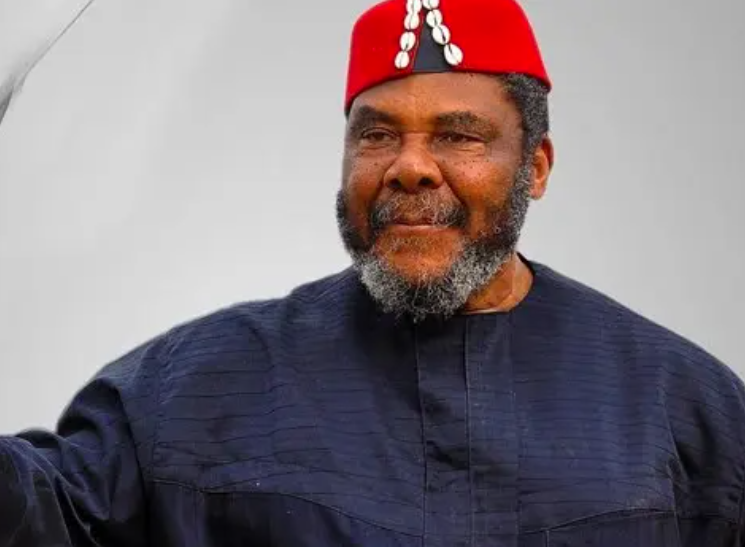
FRED IWENJORA reports that very brave Okonkwo of “Things Fall Apart”, Ebubedike, the Ononenyi of Nteje, Anambra State, and Ibobo Oyi na Omambala shed tears uncontrollably during this tour especially when students and pupils of Knutsford University used his name for different forms of recitations and poetry.
One may ask why Pete Edochie traveled to Ghana?
This visit was for the launching of the Pete Edochie Legacy project, themed “Celebrating the Africa legend; The lion that needs not to roar”.
It is “a cultural initiative created to honor and celebrate one of Africa’s most revered figures” according to the Ghanaian project organisers.
The Legacy project includes a biographical book, a documentary series and international tour with Ghana serving as the launch pad.
The publishers, KPL publishers had noted that the contributions of the 79-year-old screen star to Africa cinema are very noteworthy.
At the end of it all, the star actor had, aside unveiling his autobiography in a gala event, paid courtesy calls to industry and policy makers in Ghana including the visit to Ghana’s Goldbod, the body regulating everything gold in Ghana. Organisers saw the visit as an important segment of the tour because a visit to Ghana may have been incomplete without seeing first hand the reason the country was called Gold Coast.
He had also met and greeted select fans and featured in a public lecture and colloquium in his honor before returning to Nigeria.
From when he landed at Kotoka International Airport Tuesday 29th September, 2026 till his departure from Ghana on Wednesday 7, October 2026, there was no dull moment.
Reception was top notch and indeed out of this world.
Ghanaians as well as Nigerians left businesses and trouped out to see “the president of African screen” according to Elizabeth Ama Tetteh, one of his numerous Ghanaian fans who noted that she had been resident in Enugu, Nigeria. It was indeed heartwarming to see Ghanaian as well as Igbo cultural groups on hand to welcome him to the old Gold Coast. Dispatch riders led his motorcade out of the airport.
On arrival, he first paid a courtesy visit to Eze Dr. Chukwudi Jude Ihenetu, Onyendu Ndi igbo, Ghana and sued for peace between Nigeria and Ghana. The respected Eze Ihenetu had organised a congregation of Igbo and Ghanaian leaders for a traditional cocktail reception.
According to the major propeller of the project Kelvin King Dawie of King Dawie Publishing Ltd (KPL) “When people ask why Pete Edochie, I tell them that no honor for Pete Edochie is too big. He has very much distinguished himself on the continent of Africa and beyond as a custodian of the cultural heritage of Africa and has been consistent in it for decades since mounting the stage at the tender age of 15. He is well known and received a lot of honors and awards globally including Nigeria’s national honor of merit; MON.
“We also looked at the way he has distinguished himself on stage and in communication which has warranted him receiving Honorary Doctorate in Literature and creative arts.
On this continent, Pete Edochie is one of a kind and he needs to be projected and celebrated as that icon of Africa who has held high the heritage of Africa for over six decades of his acting life.
King Dawie, an accountant, business strategist and social impact leader also hinted that “the project is in four phases, the autobiography, a 16-episode documentary to properly chronicle his life’s journey and then also the African youth mentorship initiative to help him pass on information to the next generation and an international tour. It took a lot of several efforts from several people too numerous to mention to set this ball rolling and hopefully achieving. We also remain very grateful to our star guest for accepting our proposal. ” However, there are major take-aways from these nine days Pete Edochie “Presidential visit” to Ghana.
Cultural diplomacy at its highest African peak
Years back, Africa viewers had voted Pete Edochie as their main choice in (AMVCA).
However, this Ghana visit is International cultural diplomacy at its highest African peak.
It seems first in history that a film star would make so much impression in another country that a book would be written and unveiled on him in that country.
It also reveals that Nigeria and Ghana have co-existed as West Africa’s beloved Anglophone countries despite hiccups occasioned by various ‘Ghana must go’ or ‘Nigeria must go’ agitations.
And to see both Nigerians and Ghanaians under one roof because of Pete Edochie, animosities may have been doused even if for a moment.
The unveiling of the autobiographical book; Titan of Africa, the story of Pete Edochie, published by KPL Publishers was a big attraction on its own and first of its kind for a Nigerian actor. The event which held at Kempiski Accra drew together distinguished Ghanaians with highlights including his meeting with Ghanaian legendary actress, broadcaster and musician Grace Omaboe, known to many as Maame Dokono. He also met with 102 years old Warrant Officer 1 and WW2 veteran, Pa Joseph Ashitey Hammond. Their tight hug meant that this meeting for the WW2 veteran was highly anticipated like the story of the nunc dimitis contained in the synoptics.
There are pointers to the huge respect that he commands in the so called Gold Coast and that Africa is so culturally connected in many ways.
Another take away from the tour was that the man Pete Edochie is very well blessed and his star never seems to dim as years roll by.
Despite that he is bound to the wheelchair and could barely walk or sits on the chair in his current films, fans continue to adore him from far and near. (Saturday Vanguard)
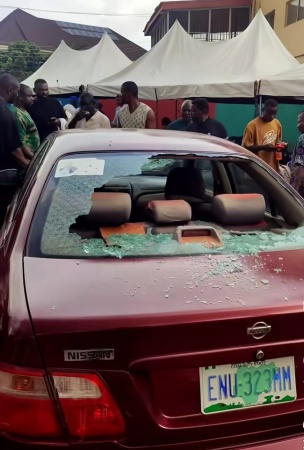
Four people were reportedly shot when a convoy of the National Democratic Congress (NDC) came under attack in Ebonyi State, with one of the campaign vehicles set ablaze.
The incident occurred during a campaign movement in the state, according to sources familiar with the development.
The identities and conditions of those injured were not immediately available at the time of filing this report.
The motive for the attack remained unclear, while the attackers had yet to be identified.
Security agencies were expected to investigate the incident and determine the circumstances surrounding the shooting and burning of the campaign vehicle.
Further details were awaited from the NDC, the Ebonyi State Government and the relevant security authorities.
-
 Features2 days ago
Kogi’s Kidnapping Crisis: Why Do Forests Remain Safe Havens for Criminals Under Ododo’s Watch?
-
News2 days ago
Kidnappers kill seven-year-old boy after ransom demand
-
News1 day ago
Macron Postpones Planned Visit to Nigeria Until 2027
-
News1 day ago
UBA Commences Contempt Proceedings Against WEMPCO Directors over Alleged Disobidence of Court Order
-
News1 day ago
Enugu CP Orders Probe into Death of Izuchukwu During Police Raid
-
Politics2 days ago
2027: Atiku, Obi, Duke, Others in Talks on Single Opposition Candidate – Coalition
-
News21 hours ago
Mbah: Why We Built 268 Smart Green Schools Across Enugu State
-
News1 day ago
$242m Petroleum Products Diversion Claim: UBA Secures Court Order Against Vitol, Four Others