Connect with us
Maduka University Advert

News

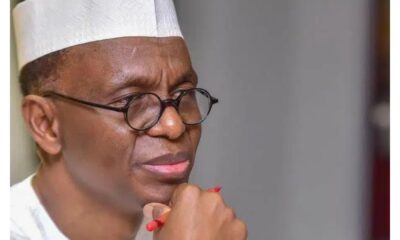
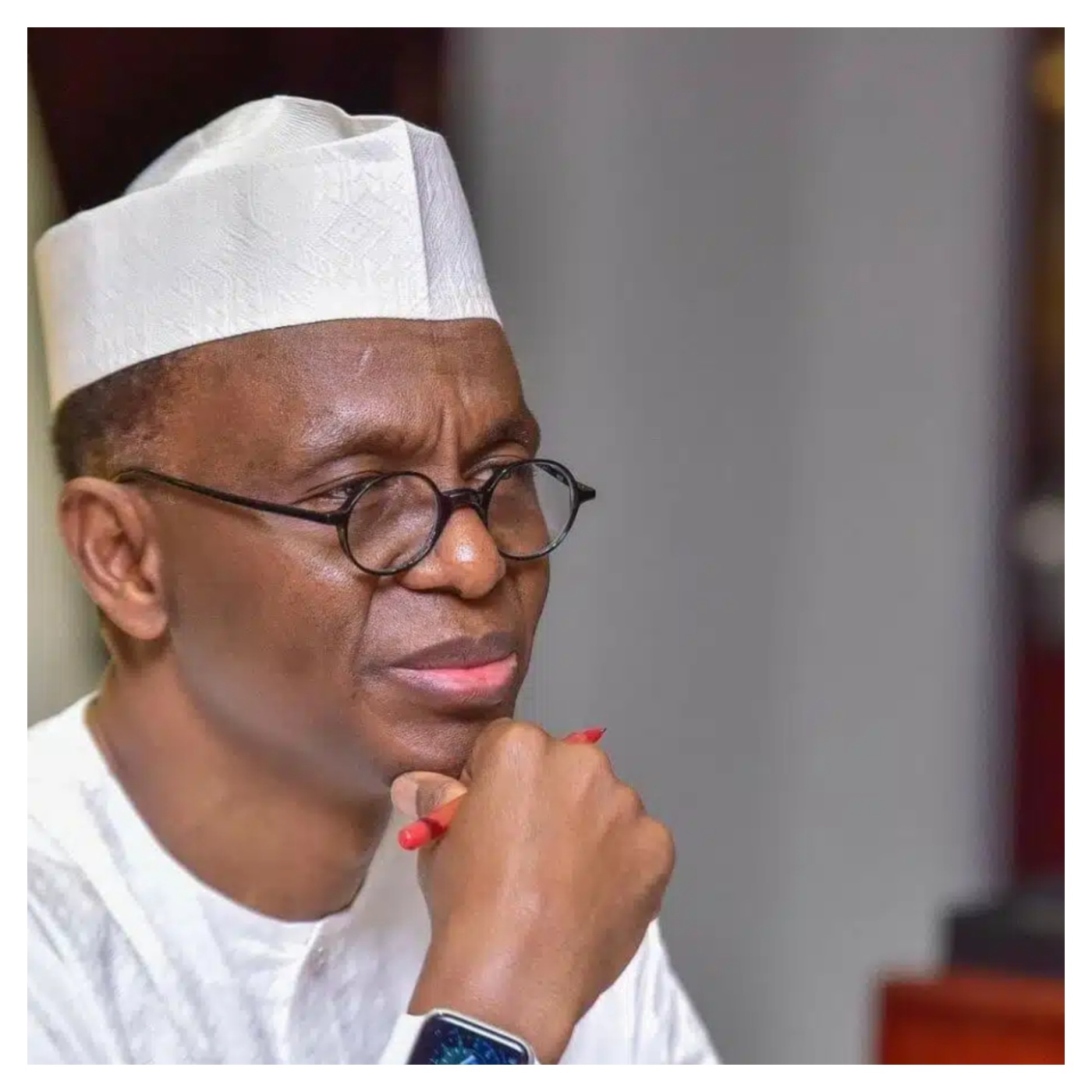
Five Years After #EndSARS: Aisha Yesufu says Nigerian govt behaved like terrorist regime

Published

on

Aisha Yesufu
Spread the love
Political and civil rights activist Aisha Yesufu has described the Nigerian government’s handling of the October 20, 2020 #EndSARS protest as an act of state terrorism, saying the movement was “not a protest that died down, but one that was killed off with guns and bullets.”

Speaking on ARISE News on Monday, to mark five years since security forces opened fire on peaceful demonstrators at the Lekki Toll Gate in Lagos, Yesufu said the events of that night remain one of the darkest moments in Nigeria’s democratic history.

“It was killed off,” Yesufu said. “Guns were brought in, and military officers who should be protecting Nigerians and the territorial integrity of this nation decided to turn their guns on citizens — Nigerian youths who were merely reciting the national anthem and waving the Nigerian flag. It is heartbreaking that Nigeria could do this to its young ones.”

She said the #EndSARS shootings confirmed long-held fears among citizens that law enforcement officers could kill and face no consequences.

“On October 20th, 2020, we saw clearly that indeed, they can kill Nigerians and nothing would happen,” she said. “It’s so sad that the Nigerian government decided to behave like a terrorist government by killing its own citizens.”

Reflecting on her decision to join the protests, Yesufu explained that her participation was not driven by excitement but by a duty to protect young Nigerians facing police brutality.

“I came out because Nigerian youths were being attacked by the police,” she said. “I was there to give them moral support, to say, ‘If you’re going to shoot them, then you’ll have to put a bullet through me first.’ These were young people who were thriving despite the odds, being harassed simply because they had dreadlocks, laptops, or nice cars. That’s not a crime.”

Maduka College Advert

She recalled that the 2020 protests were not the first of their kind, noting that she had also joined similar demonstrations in 2017.

“When the 2020 protest began, I joined from the first day in Abuja,” she said. “The protesters owned it. They were organised. It was their protest, not anyone’s to control.”

Yesufu described the #EndSARS movement as “a protest of survivors” — distinct from earlier protests that were often born of empathy.

“It wasn’t people fighting on behalf of others,” she explained. “These were victims of police brutality, or people who had lost loved ones. They came out to fight for their own survival in their own country.”

According to her, the movement also revealed the government’s brutality to a younger generation that had never experienced military rule.

“Those of us who grew up during the military era were used to this kind of repression,” she said. “But many of the #EndSARS protesters were born after democracy returned. For the first time, they saw what government could do to its own citizens.”

Asked whether the protest achieved any lasting change, Yesufu said the movement transformed civic consciousness and political participation, even if immediate reforms were not achieved.

“Nation-building is a marathon, not a sprint,” she said. “Before #EndSARS, only a few of us spoke up. Today, many more voices are challenging injustice, especially from the younger generation. There’s more political awareness now than ever before.”

She credited the protests with sparking the political awakening that led to the 2023 “Obidient” movement.

“After #EndSARS, when politicians mocked the youths and said, ‘If you don’t like what we did, remove us,’ young people took up the challenge,” she said. “That spirit birthed the Obidient movement. Yes, the election was rigged, but the awareness remains — and that’s a win.”

Yesufu, however, said she has refused to join public demonstrations under the current administration, which she described as “illegitimate.”

“I’ve said since they came in, I won’t protest to a government I don’t believe should be there,” she said. “That would be legitimising illegitimacy.”

She condemned the continued use of force against peaceful protesters and the government’s misplaced priorities.

“You see helicopters hovering over innocent citizens exercising their constitutional right to protest,” she said. “Yet these same forces cannot go after terrorists and kidnappers who are terrorising Nigerians. It’s an anomaly.”

Responding to criticisms that the #EndSARS movement lacked leadership, Yesufu argued that its horizontal structure was strategic and effective.

“There was leadership — just not the traditional kind,” she said. “People were organising, crowdfunding, managing health and security. They learned from Occupy Nigeria, where identifying leaders made it easy for government to negotiate or neutralise them. With #EndSARS, if you took one person out, the protest went on.”

She urged Nigerians to understand that protests extend beyond the streets to the ballot box.

“Citizens must realise that protest is also political,” she said. “If you vote and don’t protect your vote, you didn’t really vote. We need to elect leaders with competence, character, capacity, and patriotism — people who respect the rule of law.”

Yesufu said the persistence of state repression stems from institutional capture and citizens’ failure to hold leaders accountable.

“Institutions have been captured,” she said. “Even when the judiciary gives orders, they’re ignored. Until citizens start demanding accountability — both in the streets and at the polls — we’ll keep having criminals in office who destroy the country just to stay in power.”

Despite the painful memories of October 2020, Yesufu said she remains hopeful that the resilience of Nigeria’s youth will eventually force change.

“Yes, it’s slow,” she said, “but the young generation has been emboldened. They’re taking on issues, speaking out, and pushing back. That’s how nations are built — one act of courage at a time.” (AriseTv)


News

Burkina Faso releases 11 Nigerian officers after Abuja claims the aircraft was en route to Portugal

Published

on

Spread the love

Burkina Faso has released the 11 Nigerian military officers who were detained after their Nigerian Air Force (NAF) C-130 aircraft made what authorities described as an unauthorised landing in Bobo-Dioulasso on Monday.

According to Business Insider, the officers — two crew members and nine military passengers — were allowed to return to Nigeria after Burkinabè authorities completed preliminary security checks amid suspicions that the team may have been linked to Nigeria’s involvement in the Benin coup response.

The Nigerian government had maintained that the landing was purely a technical emergency while the aircraft was en route to Portugal. However, Burkina Faso countered this explanation, saying the aircraft violated national protocols by entering its airspace without permission.

Territorial Administration Minister Emile Zerbo said the unexpected arrival of the aircraft triggered an immediate and heightened security response.

“The aircraft flew into Burkina Faso without clearance,” Zerbo stated, noting that defence and intelligence units were deployed promptly to assess the situation.

The Alliance of Sahel States (AES) — comprising Burkina Faso, Mali, and Niger — issued a joint statement late Monday describing the incident as a confirmed “airspace violation” and an “unfriendly act.” The bloc further announced that its air forces had been placed on maximum alert with orders to neutralise any aircraft that breached AES-controlled airspace.

Maduka College Advert

Despite the strong language, Burkinabè security officials told the BBC that the Nigerian officers were questioned, cleared, and later permitted to leave.

The Nigerian Air Force, in its own account, stressed that a technical fault necessitated the diversion and that the emergency landing followed standard international aviation safety procedures. While the NAF confirmed its personnel were safe and treated respectfully, it did not directly acknowledge their detention.

The episode comes amid worsening relations between Nigeria and the AES governments. Burkina Faso, Mali, and Niger — all under military rule — have repeatedly accused Nigeria of overstepping in regional security matters, particularly in Benin, where Nigeria has coordinated responses to coup attempts.

The three Sahel states formally withdrew from ECOWAS earlier this year, alleging political interference and the bloc’s inability to effectively tackle jihadist violence. Since then, they have strengthened military ties within the AES, distanced themselves from Western partners such as France, and expanded security cooperation with Russia.

In a related development, Niger has imposed new restrictions on goods entering from Nigeria, citing growing security concerns and suspicion over Nigerian military activities across the Sahel.

“For security requirements, all goods originating from Nigeria must be unloaded and inspected at the entry offices before any transit formalities,” announced Colonel Mohamed Yacouba Siddo in a Tuesday directive.

SaharaReporters had earlier revealed that Burkina Faso’s junta detained the 11 Nigerian officers and impounded the NAF C-130 after its emergency landing — an incident now adding to the escalating tension between Abuja and the Sahel military regimes.

Continue Reading

News

Senate approves Tinubu’s request to deploy troops to Benin for peace mission

Published

on

The Nigerian Senate
The Nigerian Senate
Spread the love
The Senate on Tuesday approved President Bola Ahmed Tinubu’s request to deploy Nigerian troops to the Republic of Benin on a peace mission aimed at restoring democratic order and stability.

The resolution followed the Senate’s consideration of the President’s request in the Committee of the Whole during plenary.

Tinubu had, in a letter read on the floor by Senate President Godswill Akpabio on Tuesday, urged the Senate to approve the troop deployment to help restore governance following a recent coup attempt in Benin.

The President had initially deployed members of the Nigerian Armed Forces on Sunday to assist in restoring democracy after a group of soldiers attempted a coup.

In the letter titled, “Deployment of Nigerian troops to the Republic of Benin for a peace mission”, Tinubu cited Section 5(5), Part 2 of the 1999 Constitution (as amended) and stated that, following consultation with the National Defence Council, he sought the Senate’s consent for the deployment.

“This request is made further to a request received from the Government of Benin Republic for the exceptional and immediate provision of air support by the Armed Forces of the Federal Republic of Nigeria.

“The Distinguished Senate may wish to note that the Government of the Republic of Benin is currently faced with an attempted unconstitutional seizure of power and disruption and destabilization of democratic institutions.

Maduka College Advert

“The situation as reported by the Government of Benin requires urgent external intervention.

“The Distinguished Senate considers the close ties of brotherhood and friendship which exist between Nigeria and the Republic of Benin, as well as the principles of collective security upheld within ECOWAS.

“It is our duty to provide the support as requested by the Government of the Republic of Benin.”

After reading the letter, Akpabio committed the President’s request for consent to the Committee of the Whole for immediate action.

Continue Reading

News

Rivers Governor Fubara finally dumps PDP for APC

Published

on

Fubara suspends Rivers LGA caretaker committee boss
Rivers State Governor, Siminalayi Fubara
Spread the love
Rivers State Governor, Siminalayi Fubara, has officially left the Peoples Democratic Party (PDP) to join the ruling All Progressives Congress (APC).

Announcing his defection on Tuesday evening, Fubara said the move was made “in the interest of the people of Rivers State” and in appreciation of the “overwhelming support” the state has received from President Bola Ahmed Tinubu.

According to him, President Tinubu personally gave his approval for the move, clearing the path for Fubara’s official entry into the ruling party.

His switch to the APC comes on the heels of several closed-door meetings with the President and the recent defection of 17 members of the Rivers State House of Assembly, fueling expectations that the governor would eventually align with the APC as part of a broader peace arrangement.

Continue Reading

Trending

Maduka College Advert