News
Nnamdi Kanu’s Release: Igbo leaders tackle Onanuga, accuse Presidency of double standards


The Igbo Leaders of Thought (ILT) has condemned in strong terms the recent comments credited to the Special Adviser to the President on Information and Strategy, Bayo Onanuga, over the ongoing trial of the leader of the Indigenous People of Biafra (IPOB), Nnamdi Kanu, describing the remarks as “reckless” and “a direct assault on the rule of law.”
Reacting to Onanuga’s statement that Kanu’s treason trial “must proceed without interference,” the ILT said the presidential aide’s position was “deeply worrisome” and “suggestive of an already predetermined outcome in court.”

In a joint statement signed by its President, Prof. Elo Amucheazi, and Secretary, Prof. Jerry Chukwuokolo, the ILT warned that such utterances from a top presidential aide could erode public confidence in the judiciary and further inflame ethnic tensions in the country.
“We are startled by Bayo Onanuga’s statement in today’s newspapers where he declared that ‘Nnamdi Kanu is currently undergoing trial on treason charges that must proceed without interference.’ There is an extent to which societal cohesion should not be trifled with because doing so creates divides across the ethnic groups in any society,” the statement read.
The group said that the rule of law demands that all citizens be treated equally before the law, but lamented that this has not been the case with Nnamdi Kanu.

“Rule of Law stipulates that the laws of the land should be sacrosanct in treating all citizens equally. This is not the case with Nnamdi Kanu when compared with others like him,” the ILT stated.
Citing judicial precedents, the ILT noted that the treason charge against Kanu had already been dismissed by competent courts of law, including a High Court and the Court of Appeal, and that the Federal Government had never appealed those decisions.
“We remember that this charge against Kanu has been thrown out by a High Court, a Court of Appeal, and the Federal Government never appealed the judgment,” the statement noted.
The group also recalled that the Kenyan government had condemned Kanu’s abduction from the country and that the Kenyan High Court had declared his rendition to Nigeria illegal.
The ILT questioned the motives behind Onanuga’s remarks, suggesting that his tone implied foreknowledge of how the case would end.
“Now that His Lordship Hon. Justice Omotosho has agreed to handle the case, certain questions arise: is he Bayo Onanuga’s relation? Is Onanuga waiting for ‘his appropriate judgment’ as the court’s decision? Onanuga’s statement seems so assured of the outcome of the matter in court,” they said.
The ILT further urged President Bola Tinubu to demonstrate statesmanship and heed the plea by Ohanaeze Ndigbo President-General, John Mbata, to release Kanu in the spirit of national unity and reconciliation.
“It would have been in the spirit of national cohesion and healing had the President listened to the plea to release Kanu,while granting clemency to the 137 people the nation forgave last week,” the group said.
Commending Atiku Abubakar and Omoyele Sowore for advocating a political solution to Kanu’s case, the ILT decried what it described as a “clear double standard” in the way the Nigerian government handles cases of self-determination activists compared to known criminals and bandits.
“Sunday Igboho, who committed a similar ‘offence of self-determination, has gotten his freedom, while a governor last Saturday attended the wedding of a bandit’s son. Bandits are pampered and offered money in this country, while activists like Kanu are prosecuted and refused treatment while undergoing trial,” the group fumed.
“This is certainly against natural justice, equity, fairness and the dictates of his fundamental human rights—especially when weighed against the Nigerian constitution where one is presumed innocent until convicted. This has left one wondering whether there are two different categories of citizens in Nigeria.”
The ILT also took aim at what it described as “the silence and apparent incapacity of the National Assembly” to perform its oversight role on such pressing issues.
“It is unfortunate that it appears that the National Assembly is incapacitated in oversight in this direction. Enough should be enough,” the statement concluded.
The group further condemned the ongoing destruction of properties belonging to Igbo in Lagos and questioned why such acts were being carried out with impunity.
“We are all witnesses to the unprecedented destruction of the properties of Ndigbo in Lagos with impunity. One wonders whether Nnamdi Kanu is not justified by all these in seeking self-determination.
“Can all these ignoble destructive actions of Governor Sanwo-Olu be considered as a continuation of the threat by HRM Oba Rilwan Akiolu, a former AIG, to drown Ndigbo in the lagoon? One wonders what such a highly placed police officer would have inflicted on Ndigbo while in service.”
The ILT insisted that Nigeria must choose between democracy and tyranny, warning that continued selective justice would push the nation closer to disintegration.



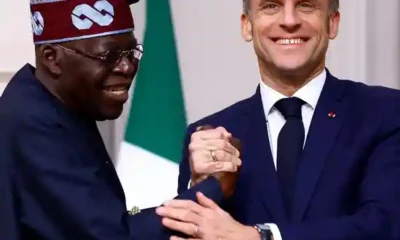






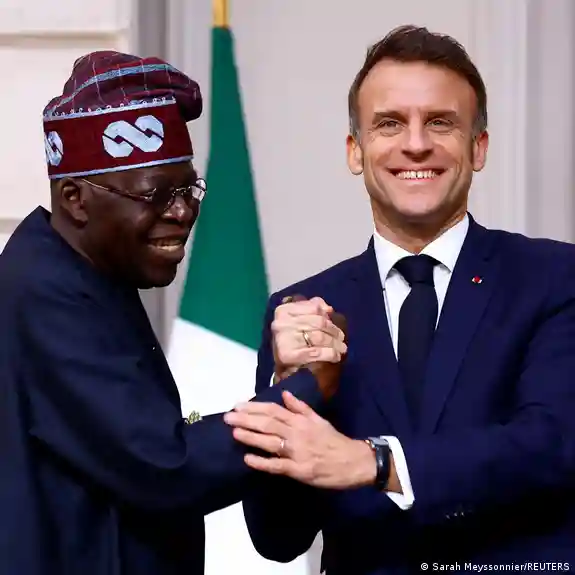
French President Emmanuel Macron has postponed his planned state visit to Nigeria until early 2027 following an agreement with President Bola Tinubu.
The visit, initially scheduled for October 29 to November 6, 2026, was deferred by both leaders, according to information on the trip obtained by Nairametrics.
A French presidential source also confirmed on Friday that Macron had postponed his planned visits to Nigeria and Senegal.
The source did not explicitly state the reasons for the postponement but described the trip as involving a “diplomatic and cooperation agenda”.
The specific reasons for the change in schedule have not been officially disclosed, while new dates for the visit are yet to be announced.
Macron’s visit was expected to strengthen bilateral relations between France and Nigeria, with discussions anticipated to focus on trade, investment, economic cooperation and other areas of mutual interest.
The postponement comes amid unrest in France, where demonstrations reportedly triggered by staff shortages and poor facilities in schools have spread across the country. The protests have also drawn attention to concerns over the rising cost of living.
However, the French presidential source did not explicitly link the unrest to the decision to postpone the visits.
Macron’s planned trip would have followed Tinubu’s three-day state visit to France in November 2024, during which the two leaders discussed finance, energy transition, solid minerals, trade, investment and communications.
At the time, presidential spokesperson Bayo Onanuga said Tinubu’s visit was aimed at “strengthening political, economic, and cultural relations and establishing more opportunities for partnership”.
Since assuming office in May 2023, Tinubu has visited France several times for official engagements, working visits and private trips.
Macron, whose second and final presidential term is due to end in May 2027, has maintained diplomatic relations with Tinubu since the Nigerian leader took office.
The rescheduled visit is expected to provide another opportunity for both countries to deepen cooperation, although the new dates and agenda remain unconfirmed.
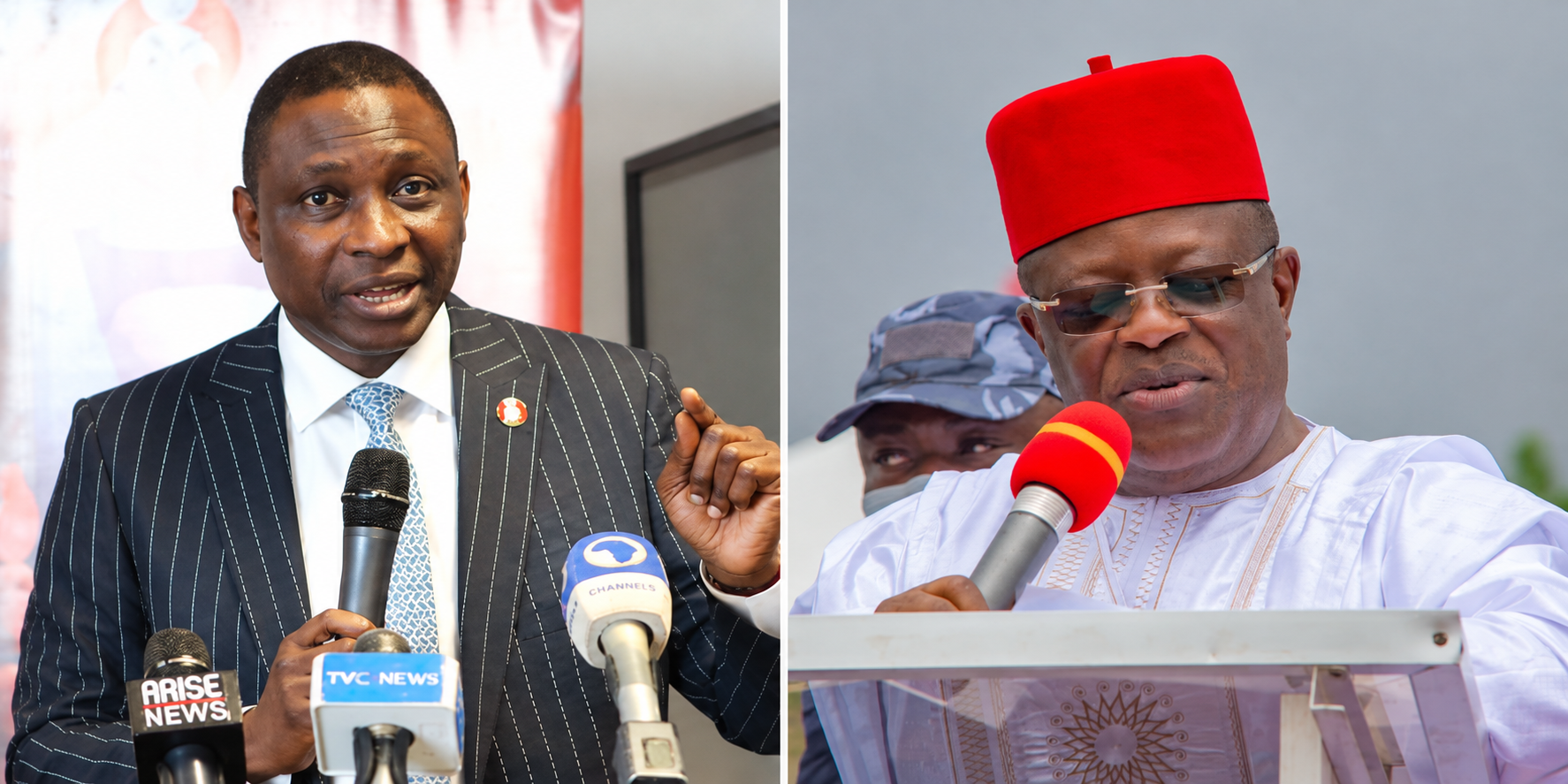
The Minister of Works, Chief David Nweze Umahi, has urged Nigerian journalists to promote democracy and maintain impartiality by avoiding bias towards political parties or candidates ahead of the 2027 general elections.
Umahi, a former Governor of Ebonyi State, gave the charge on Thursday evening while delivering a lecture at the Nigeria Union of Journalists (NUJ), Enugu Correspondents’ Chapel Press Week.
The event was themed, “Strengthening Democracy Through Responsible Journalism: 2027 Polls in Focus.”
Represented by his media aide, Emmanuel Uzor, the minister said journalists should not take sides in the political process or determine which candidate has the best manifesto.
He noted that as the watchdog of society and the Fourth Estate of the Realm, the media must discharge their constitutional responsibilities impartially, without favouring one political party or candidate over others.
While acknowledging the media’s critical role in holding leaders accountable, Umahi cautioned against partisan reporting and urged journalists to remain objective in their coverage of political activities.
“Journalists should not take sides. 2027 is here, and every party and all the candidates are presenting their manifestos. It is not your duty to say that this candidate or that candidate is better,” he said.
He maintained that the media had a responsibility to bridge the gap between leaders and the people, stressing that democracy thrives when journalists discharge their duties professionally.
Umahi, however, observed that journalists often face hostility when they hold those in authority accountable, adding that they are more readily accepted when they engage in praise-singing.
He warned journalists against abandoning their professional responsibilities, urging them to continue serving as a link between the government and the governed.
“You should fill in the gap between the leaders and the led,” he said.
Olukoyede Tasks Media on Anti-Corruption Fight
In his keynote address, titled “The Role of Media and Other Critical Stakeholders in Sustaining the Fight Against Corruption,” the Chairman of the Economic and Financial Crimes Commission (EFCC), Mr Ola Olukoyede, underscored the importance of the media in combating corruption and financial crimes.
Olukoyede, who was represented by the EFCC’s South Zonal Director, Mr Daniel Isei, said the media had continued to play a critical role in promoting good governance and building a better society.
He urged journalists to sustain their efforts in holding public officials and institutions accountable.
According to him, the Nigerian media deserve commendation for their contributions to sanitising society and promoting accountability.
“The media in Nigeria deserve their flowers for the critical roles they play in ensuring good governance and a better society.
“You have been playing your watchdog role, and that is holding the people and institutions accountable,” he said.
The EFCC chairman noted that the importance of the media’s watchdog function was recognised by the framers of the Nigerian Constitution, who assigned the press the responsibility of holding the government accountable to the people.
However, he cautioned journalists against losing focus or allowing cynicism to undermine their anti-corruption reporting.
“In fighting corruption, the media should not amplify public cynicism of the facts,” he warned.
Ani Emphasises Fact-Checking
The Chairman of the occasion, Chief Anthony Ani, SAN, also acknowledged the media’s significant role in society.
Ani urged journalists to verify information thoroughly before publishing or disseminating it to the public, stressing the importance of accuracy and responsible reporting in strengthening democracy.
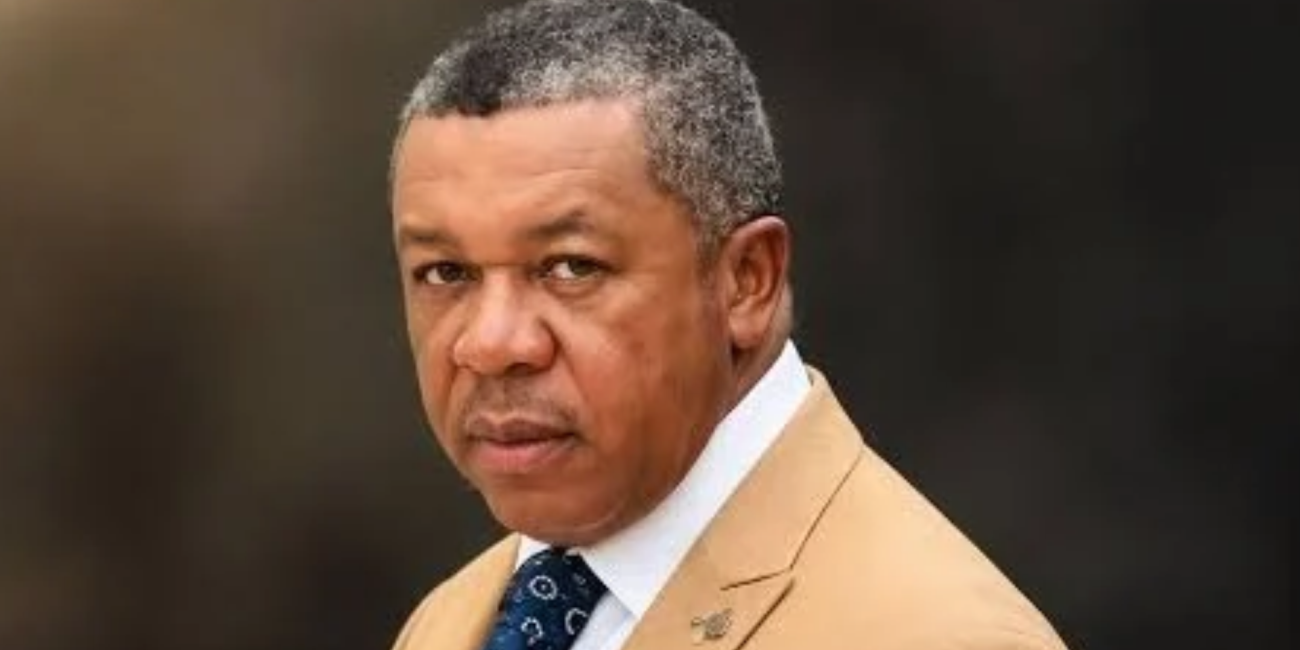
Veteran Nollywood actor Francis Duru has died at the age of 57 following a brief illness, his family has announced.
The family disclosed his death in a statement posted on the actor’s official Instagram page in the early hours of Friday, expressing gratitude to fans, colleagues and well-wishers for their prayers and support.
“We, the family of Francis Duru, regret to announce his passing following a brief illness.
“We appreciate your prayers, love, and understanding. May his soul rest in perfect peace. Amen,” the statement read.
The family did not disclose the nature of the illness or announce funeral arrangements as of the time of filing this report.
Duru’s death comes months after he dismissed reports that he was battling a life-threatening illness. In June, a video showing him looking frail circulated on social media, raising concerns among fans and colleagues.
The actor subsequently released a video on Instagram, describing the footage as “fabricated and malicious” and dismissing the claims about his health.
Early Life and Education
Born Francis Ogide Duru on July 27, 1969, in Cameroon to Nigerian parents from Imo State, the actor spent his formative years in the Central African country, where he completed his primary and secondary education.
He later returned to Nigeria to pursue his university education at the University of Port Harcourt, Rivers State, where he studied Theatre Arts and graduated with a Bachelor of Arts degree in 1996.
His academic background in theatre helped lay the foundation for a career that spanned more than three decades, during which he established himself as one of Nollywood’s recognisable performers.
Rise to Fame in Nollywood
Duru began his acting career in 1989 with Missing Mark, a film directed by the late filmmaker Ndubuisi Oko.
However, his breakthrough came in 1995 when he played Ahanna in Rattlesnake, an action-comedy produced by the late filmmaker Amaka Igwe.
The film became a defining production in the history of Nollywood, and Duru’s performance helped bring him wider recognition among Nigerian audiences.
His portrayal of Ahanna remains one of the roles associated with his rise during the formative years of Nigeria’s home-video film industry.
Over the years, Duru demonstrated his versatility by featuring in films across different genres, including drama, crime, family stories and comedy. He worked alongside several established actors and filmmakers, building a reputation for his ability to interpret diverse roles.
Notable Movies
Throughout his career, Duru featured in numerous Nigerian films and productions. Some of his notable screen credits include:
- Missing Mark (1989)
- Rattlesnake (1995)
- Blood Money (1997)
- Narrow Escape (1999)
- Home in Exile (2010)
- Nnenda (2009)
- Stigma (2013)
- Mortuary Gate (2014)
- Lipstick (2016)
- Who Killed Chief? (2017)
- Merry Men: The Real Yoruba Demons (2018)
- Why Not? (2019)
- The Good Husband (2020)
- Mboputa (2020)
- The Locals (2021)
- Blood Vessel (2023)
- Abigail’s Memoir (2024)
- Ugly Bird (2024)
His extensive filmography reflected his ability to remain relevant across different generations of Nollywood productions, from the industry’s early video-film era to more recent cinematic releases.
Awards and Industry Contributions
Duru received several honours in recognition of his contributions to the Nigerian entertainment industry.
In 2007, he was named a United Nations Ambassador of Peace in recognition of his positive influence on young people.
He was appointed interim president of the Actors Guild of Nigeria (AGN) in 2010, reflecting his involvement in the affairs of the professional body representing Nigerian actors.
In the same year, he received a nomination for Best Actor in a Supporting Role at the Africa Movie Academy Awards.
In 2020, he won the Best Actor in a Leading Role in an Igbo-language film category at the Best of Nollywood Awards for his performance in Mboputa.
Beyond his acting career, Duru was also associated with humanitarian and youth-development initiatives, contributing to efforts aimed at improving the welfare and opportunities available to young people.
Family Life
Duru married his wife, Adokiye, in 2003, and they had four children together.
The family suffered a devastating loss in August 2024 when their son, Ifeanyi, died at the age of 15.
The actor publicly mourned his son at the time, attracting messages of sympathy and support from colleagues, fans and members of the entertainment community.
His death on Friday marks the loss of a veteran performer whose career connected different generations of Nigerian cinema.
With memorable roles in productions such as Rattlesnake, Blood Money and Mboputa, Duru leaves behind a body of work that reflects his contribution to the growth and development of Nollywood over more than three decades.
-
 News3 days ago
FG confirms Ebola case in FCT, identifies 44 contacts
-
Features24 hours ago
Kogi’s Kidnapping Crisis: Why Do Forests Remain Safe Havens for Criminals Under Ododo’s Watch?
-
News2 days ago
“It’s not debatable, we can’t go back,” Mbah Backs Tinubu on Fuel Subsidy Removal
-
News23 hours ago
Kidnappers kill seven-year-old boy after ransom demand
-
News3 days ago
Afenifere leader, Fasoranti, dies at 100
-
News2 days ago
Mbah: Enugu Now Produces 120 Million Litres of Water Daily, Expands Agricultural Investment
-
Politics2 days ago
Mike Igini: Politicians Infiltrate Agencies Responsible for Election Personnel as Electoral Laws Go Unenforced
-
Politics3 hours ago
2027: Atiku, Obi, Duke, Others in Talks on Single Opposition Candidate – Coalition