News
American fact-finding mission confirms Christian genocide in Nigeria

Formal Statement on Widespread Violence and Displacement in Nigeria
October 14, 2025
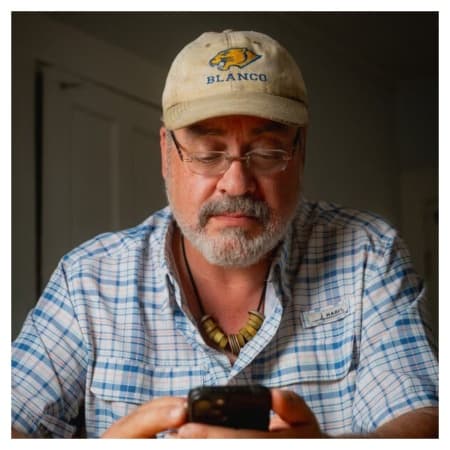
By Mayor Mike Arnold, MBA

Founder, Africa Arise International / Africa Arise USA
Presented at Abuja Hilton, 4 p.m. WAT on Tuesday, October 14, 2025
Contributors:

- US Amb. Lewis Lucke (retired)
- Pastor Jed D’Grace
- Mr. Judd Saul
I. Purpose and Credentials
My name is Mike Arnold. I recently served as the elected Mayor of the City of Blanco, Texas. I first visited Nigeria in 2010 as a board member of Unity for Africa. Since then, I have made 15 trips to Nigeria, including six extended investigative missions since 2019. I founded Africa Arise International and Africa Arise USA in 2019. I have frequently been quoted in top newspapers and TV news broadcasts here. I have never extracted anything from Nigeria beyond modest gifts. My closest and most trusted friends are native Nigerians. I come only to give, serve, and stand with the people and nation I dearly love as my second home.
I was personally invited here today by National Security Advisor Nuhu Ribadu and influencer Reno Omokri. The sole stated (written) charge given to me for this trip is simply to meet certain key people, and then declare the truth. I know what’s at stake and take this very seriously. While my plane ticket and accommodations have been paid for, I have not asked for, been offered, nor received any compensation or promise of compensation for this. Neither am I connected in any way or compensated by the US Government. I am here independently and this statement is made without coercion or inducement of any kind.
I also note that numerous top US officials have been briefed and are personally aware of my being here, the purpose of my trip, my specific itinerary, and expected return date. At their request, I am providing updates as to my status. These include but are not limited to my Senator from Texas, Ted Cruz, and Congressman Chip Roy, the White House, US State Department and Acting Ambassador, as well as a Pulitzer Prize winning journalist from the New York Times, and their International Editor.
Also note that as I present this statement, it is being simultaneously distributed not only to these people, who are awaiting it, and also posted online for all to access.
This statement is my formal account and analysis of facts, findings, and firsthand documentation of claims of widespread violence, displacement, and atrocity crimes in Nigeria, primarily directed against Christian populations in the North and Middle Belt, and whether this rises to the level of genocide. It is addressed to journalists, international observers, human rights bodies, and policymakers in the United States and abroad.
We have traveled to cities, villages, and remote encampments: from Bokkos, Jos, and Gwoza to Abuja, Lagos, Port Harcourt, Bukuma and Makoko. I have interviewed governors, cabinet ministers, traditional rulers, two former Presidents, and others. I have met orphans whose parents were hacked to death. I have built schools in internally displaced persons (IDP) camps and documented over 80 hours of filmed testimony and evidence, at great personal risk, soon to be released in our documentary film Me & Ms. Hanatu. My findings carry the weight of direct experience.[1]
II. Nigeria in 2010: A Nation at Peace
In 2010, Nigeria was a beacon of rising prosperity and religious tolerance, often cited as the only country where radical Islam was being pushed back. Attacks were rare and sparked national outrage. Recognized IDPs were effectively zero, with only minimal displacement from localized communal conflicts—a stark contrast to the crisis that followed, marked by a 1,200% surge in IDPs by 2011 due to Boko Haram’s escalation.[2] This prior absence of a displacement crisis is both verifiable and damning.
III. What Changed? A Deliberate Crisis
By 2014, Nigeria’s stability was shattered. Foreign meddling, including U.S. involvement, played a pivotal role in the 2015 election, enabling regime change that emboldened actors who ignored or enabled extremist violence.[3][4] High-placed eyewitness testimony confirms this interference, with firms like Cambridge Analytica further skewing the political landscape.[5]
Radical jihadist elements, fueled by foreign fighters from Libya and the Sahel post-2011 Arab Spring—not invaders, but invited—flooded into Nigeria, amplifying Boko Haram and ISWAP.[6][7] Today, over four million Nigerians are displaced—a very conservative estimate based in part on my work in hidden camps denied by officials who label victims “criminals” or “vagrants,” rendering UN and government figures entirely unreliable.[8] The vast majority are Christians, driven from their homes by deliberate political engineering and radical conquest, while mostly Muslim IDP encampments do exist.
IV. Our Team’s Field Work
Since 2019, our team has conducted relentless frontline research:
- Interviewed survivors across multiple states.
- Operate schools in two IDP camps for both Christians and Muslims, with a third under construction, with a present total of 550+ students. We provide free, high quality education.
- Filmed camps the UN and Nigerian government deny exist.
- Recorded numerous IDP testimonials via https://www.youtube.com/@My.Voice.Matters
- In late 2024, my team visited and filmed in Ngoshe, Gwoza LGA, Borno State—a once-thriving Christian farming community now a post-apocalyptic wasteland. Recent 2025 attacks confirm ongoing devastation, with surviving Christians confined to militarized zones where leaving risks abduction or execution.[9][10] Our firsthand proof exposes a reality ignored by officials. Many people of Gwoza have been refugees in Cameroon for over a decade, abandoned by Nigeria while those who returned languish in the FCT, their homelands occupied by Boko Haram as the seat of its caliphate for years now.
V. Consistent Pattern of Targeted Destruction
Across regions and years, we’ve documented a chilling pattern:
- Churches destroyed.
- Mosques left untouched.
- Christian homes torched.
- Jihadists resettled on captured land.
- Authorities deny or excuse the attacks.
While some Muslims resisting extremism are targeted, the overwhelming evidence—thousands of churches razed, obviously selective violence—leads some to claim this is a faith-based genocide against Christians and those rejecting radical Islam.[11][12]
VI. What Drives the Violence?
This is not chaos but a calculated campaign driven by three forces:
- Radical Islamic Conquest: Armed groups, bolstered by foreign fighters from Libya/Sahel post-Arab Spring, seek to impose extremist ideology with local enablers and political protection, described by eyewitnesses as “jihad by occupation.”[6][7]
- Blood Mineral Extraction: Nigeria loses $9 billion annually to illicit mining of gold, tin, and lithium, with a significant portion—estimated at 10%—funding violence and corruption. Heavy machinery and foreign buyers appear days after displacements, exploiting lands of the displaced.[13][14]
- Political Realignment: War masquerades as politics—local government areas overrun, electoral districts redrawn by force, militants resettled to skew demographics, dismantling communities deemed inconvenient.
VII. The Euphemism of “Farmer-Herder Clashes”
The term “farmer-herder clashes” is cynical doublespeak, weaponizing historical land disputes to mask jihadist conquest. For centuries, herders and farmers coexisted with rare, non-lethal disputes. Now, villages are erased, churches leveled, and tens of thousands are dead. This is systematic terror, not grazing conflicts—a lie akin to calling Bosnia’s ethnic cleansing a “neighborhood spat.”[8][15] These targeted, deadly attacks are the same whether labeled “herders,” “bandits” or “insurgents.” The puppets may change but the same forces pull the strings. A jihadi by any other name is just as deadly. Mincing words over labels appears to be intentional obfuscation.
While global attention often focuses on Boko Haram and ISWAP, the majority of killings and displacements across Nigeria’s Middle Belt are in fact carried out by the Radical Islamist Fulani Ethnic Militia. Numerous field reports, satellite imagery, and survivor testimonies confirm that these Fulani militant groups—often operating under political protection and mislabeled as “herders”— are responsible for the most widespread, systematic, and sustained attacks on Christian farming communities. Their campaigns extend well beyond traditional grazing disputes, encompassing organized massacres, forced displacement, and the strategic occupation of conquered lands. Today, these Fulani militias represent the single most lethal terrorist threat to Nigeria’s internal stability—surpassing Boko Haram and ISWAP combined in reach, frequency, and civilian death toll.
VIII. The Crime of Obfuscation
I have personally seen ongoing efforts by officials and their loyal media to bury the truth:
- Sanitizing massacres as “conflict.”
- Labeling displaced survivors “vagrants” and “criminals.”
- Refusing to name perpetrators.
This is not confusion—it is complicity. To play semantic games while people die is beyond obscene. There can be no solution while leaders play word games to hide the truth.
IX. Legal Definition of Genocide
Per Article II of the UN Convention on the Prevention and Punishment of the Crime of Genocide (1948), genocide includes acts committed with intent to destroy, in whole or in part, a national, ethnical, racial, or religious group:
(a) Killing members of the group;
(b) Causing serious bodily or mental harm;
(c) Inflicting conditions to bring about physical destruction;
(d) Preventing births within the group;
(e) Forcibly transferring children to another group.
The evidence is undeniable: targeted killings, mass displacement, destruction of homes and churches, denial of aid, and erasure of Christian identity.
X. Conclusion: My Formal Finding
As an objective expert and eyewitness, a longtime lover of and traveler throughout Nigeria with access at the highest levels, based on more than five years of investigation, field interviews, firsthand documentation, and deep consultation with top scholars, statesmen and legal experts, I declare this without any shadow of a doubt:
The campaign of violence and displacement in Northern and Middle Belt Nigeria does indeed constitute a calculated, currentand long-running GENOCIDE against Christian communities and other religious minorities, without any reasonable doubt.[1][11][12]
To continue to deny this is to be complicit in these atrocities.
I say this not in anger, but in truth and grief. My stated assignment from my host was to speak the truth and I have done that to the best of my ability.
I believe Nigeria has a bright future. I believe in Christian-Muslim harmony. I believe good people of every tribe and faith must stand against this evil. But first, we must name it.
Here I stand. I can do no other. So help me God.
(REFERENCES BELOW)
References
[1] Open Doors, World Watch List 2025,https://www.opendoors.org/en-US/persecution/countries/nigeria/
[2] Frontiers in Human Dynamics, “Conflict-Induced Trends in Nigeria,” 2022,https://www.frontiersin.org/journals/human-dynamics/articles/10.3389/fhumd.2022.1009651/full
[3] Premium Times, “How U.S. Firm Helped Buhari Win 2015 Election,” 2015,https://www.premiumtimesng.com/news/top-news/180123-how-u-s-firm-helped-buhari-win-2015-election.html
[4] BuzzFeed News, “Democratic Operatives in Nigeria Election,” 2015,https://www.buzzfeednews.com/article/davidsirota/democratic-strategists-who-helped-obama-are-now-working-to-el
[5] The Guardian, “Cambridge Analytica’s Role in Nigeria’s 2015 Elections,” 2018,https://www.theguardian.com/news/2018/mar/17/cambridge-analytica-nigeria-election-data
[6] Council on Foreign Relations, “Boko Haram and the Sahel Connection,” 2023,https://www.cfr.org/backgrounder/boko-haram
[7] JSTOR, “Islamic State and Sahel Spillover into Nigeria,” 2022,https://www.jstor.org/stable/26976645
[8] International Crisis Group, “Herders vs. Farmers: Resolving Deadly Conflict in Nigeria,” 2023,https://www.crisisgroup.org/africa/west-africa/nigeria/302-herders-against-farmers-nigerias-expanding-deadly-conflict
[9] Premium Times, “Boko Haram Attacks Ngoshe, Gwoza in 2025,” 2025,https://www.premiumtimesng.com/news/top-news/614523-boko-haram-attacks-gwoza-kills-five.html
[10] UNOCHA, “Borno State Humanitarian Situation Report,” 2025,https://www.unocha.org/publications/report/nigeria/north-east-nigeria-humanitarian-situation-update-january-2025
[11] U.S. Commission on International Religious Freedom, 2024 Annual Report: Nigeria,https://www.uscirf.gov/countries/nigeria
[12] APPG FoRB, “Nigeria: Unfolding Genocide?” 2020,https://appgfreedomofreligionorbelief.org/nigeria-unfolding-genocide/
[13] NEITI, “2023 Report on Illicit Mining in Nigeria,”https://neiti.gov.ng/reports/mining-sector
[14] Global Witness, “Blood Minerals in Nigeria’s Conflict Zones,” 2024,https://www.globalwitness.org/en/campaigns/natural-resource-governance/nigeria-mining-conflict/
[15] Genocide Watch, “Nigeria: Media Misrepresentation of Violence,” 2023,https://www.genocidewatch.com/single-post/nigeria-farmer-herder-narrative









The Enugu State Commissioner of Police, CP Mamman Bitrus Giwa, has ordered a thorough investigation into the death of Nnaji Izuchukwu, who sustained gunshot injuries during a police operation at Bull Hotel, Asata, Enugu.
The directive followed an intelligence-led raid by operatives of the Anti-Cultism Section of the Violent Crime Response Unit (VCRU), during which 10 suspects were arrested.
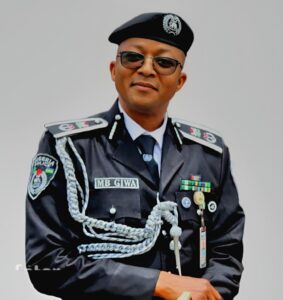
Enugu CP, Mamman Bitrus Giwa
In a statement issued on Friday, October 23, 2026, the command’s Public Relations Officer, SP Daniel Ndukwe, said the commissioner had directed the Assistant Commissioner of Police in charge of the State Intelligence Department (SID) to establish the circumstances surrounding the incident.
The investigation is expected to determine whether the operation, particularly the use of firearms, complied with established police operational standards and applicable laws.
According to the police, the operation was carried out based on what the command described as credible intelligence concerning criminal activities at the hotel.
The statement identified one of the suspects as Nworie Chidera Kelvin, popularly known as “Akidi,” whom the police alleged was a notorious drug dealer and member of the Vikings Confraternity.
The command further alleged that Akidi had been linked to several cases involving unlawful possession of firearms and cult-related activities, including a case in which he was reportedly charged in absentia. He was also suspected of keeping firearms and other criminal items for the gang.
The police said the operation resulted in the arrest of Akidi and nine other suspects, both male and female, aged between 17 and 28.
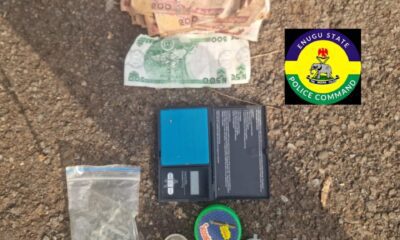
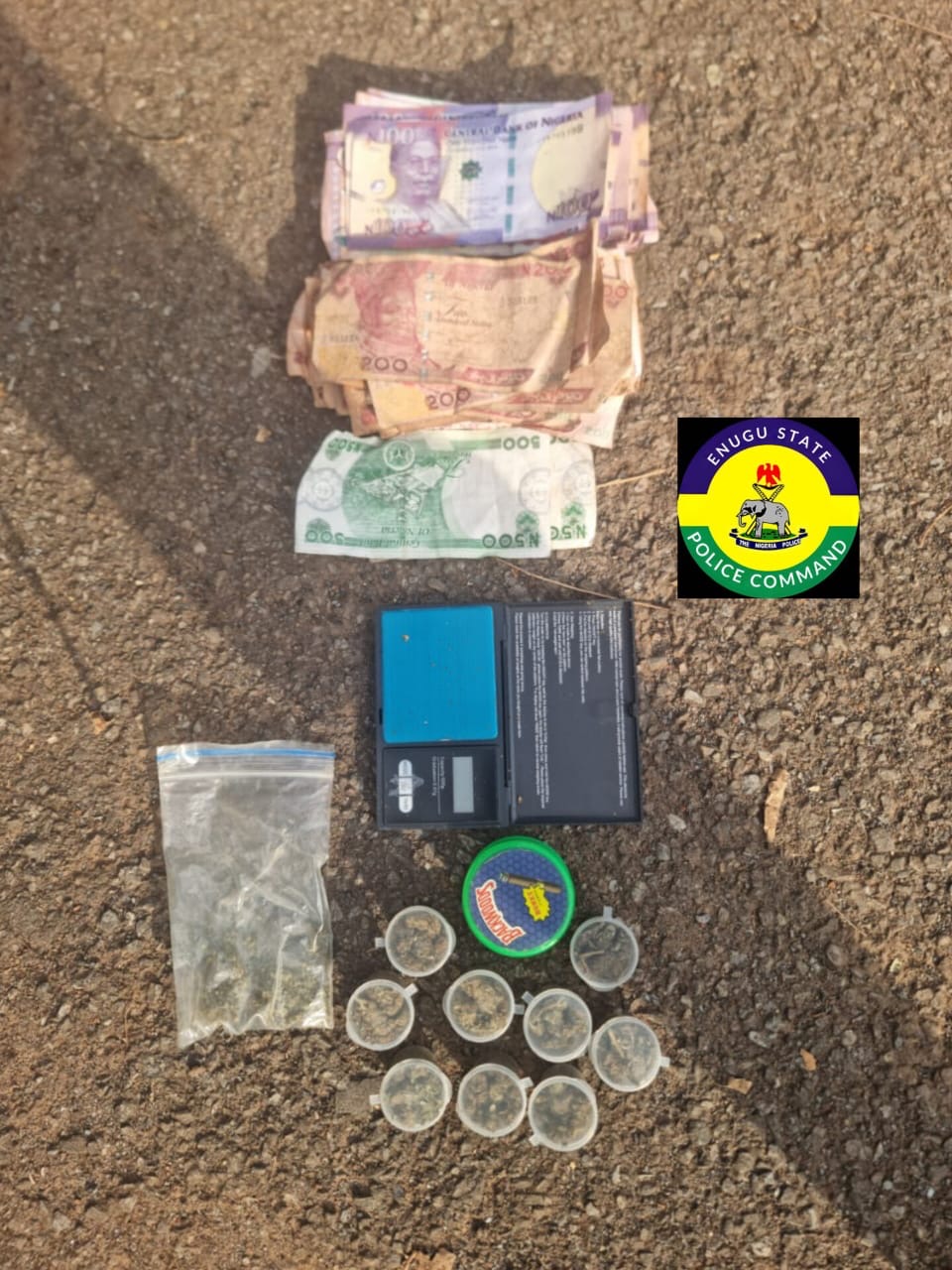
Items allegedly recovered from the scene included quantities of dried weeds suspected to be cannabis, popularly known as “loud,” a weighing scale suspected to have been used for measuring illicit drugs, and ₦43,400 in various denominations.
The statement said that during the operation, Izuchukwu and another suspect allegedly jumped through a window in an attempt to escape.
It added that an operative pursuing the two men was reportedly confronted by them, with both suspects allegedly attempting to disarm the officer.
The ensuing struggle allegedly led to the officer’s firearm discharging, hitting Izuchukwu and leaving him with gunshot injuries, while the other suspect escaped.
Izuchukwu was subsequently rushed to a hospital, where he was confirmed dead. His remains have been deposited in a mortuary for preservation and autopsy, according to the police.
Reacting to the incident, CP Giwa appealed to the deceased’s family, associates and other concerned persons to remain calm, assuring them that the investigation would establish the facts surrounding his death.
He also pledged that any police officer found culpable would face appropriate disciplinary action.
The commissioner reaffirmed the command’s commitment to professionalism, ethical conduct and strict compliance with operational procedures, stressing that established rules governing the use of firearms must be observed during police operations.
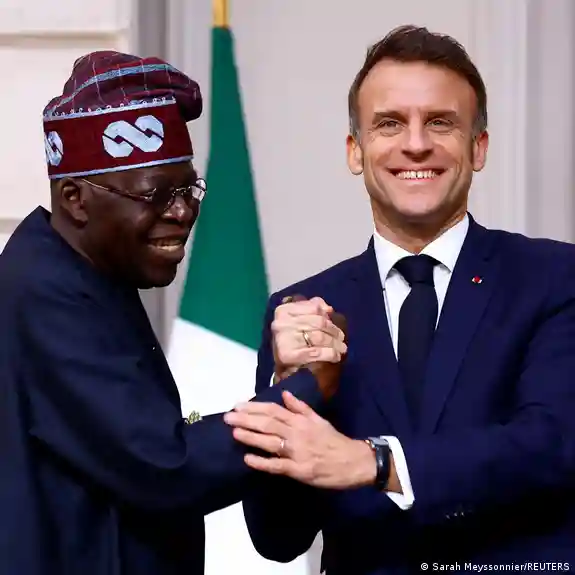
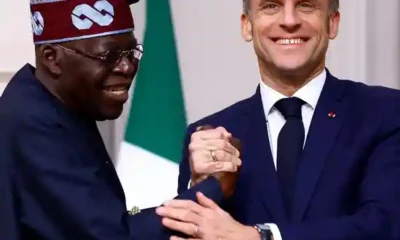
French President Emmanuel Macron has postponed his planned state visit to Nigeria until early 2027 following an agreement with President Bola Tinubu.
The visit, initially scheduled for October 29 to November 6, 2026, was deferred by both leaders, according to information on the trip obtained by Nairametrics.
A French presidential source also confirmed on Friday that Macron had postponed his planned visits to Nigeria and Senegal.
The source did not explicitly state the reasons for the postponement but described the trip as involving a “diplomatic and cooperation agenda”.
The specific reasons for the change in schedule have not been officially disclosed, while new dates for the visit are yet to be announced.
Macron’s visit was expected to strengthen bilateral relations between France and Nigeria, with discussions anticipated to focus on trade, investment, economic cooperation and other areas of mutual interest.
The postponement comes amid unrest in France, where demonstrations reportedly triggered by staff shortages and poor facilities in schools have spread across the country. The protests have also drawn attention to concerns over the rising cost of living.
However, the French presidential source did not explicitly link the unrest to the decision to postpone the visits.
Macron’s planned trip would have followed Tinubu’s three-day state visit to France in November 2024, during which the two leaders discussed finance, energy transition, solid minerals, trade, investment and communications.
At the time, presidential spokesperson Bayo Onanuga said Tinubu’s visit was aimed at “strengthening political, economic, and cultural relations and establishing more opportunities for partnership”.
Since assuming office in May 2023, Tinubu has visited France several times for official engagements, working visits and private trips.
Macron, whose second and final presidential term is due to end in May 2027, has maintained diplomatic relations with Tinubu since the Nigerian leader took office.
The rescheduled visit is expected to provide another opportunity for both countries to deepen cooperation, although the new dates and agenda remain unconfirmed.
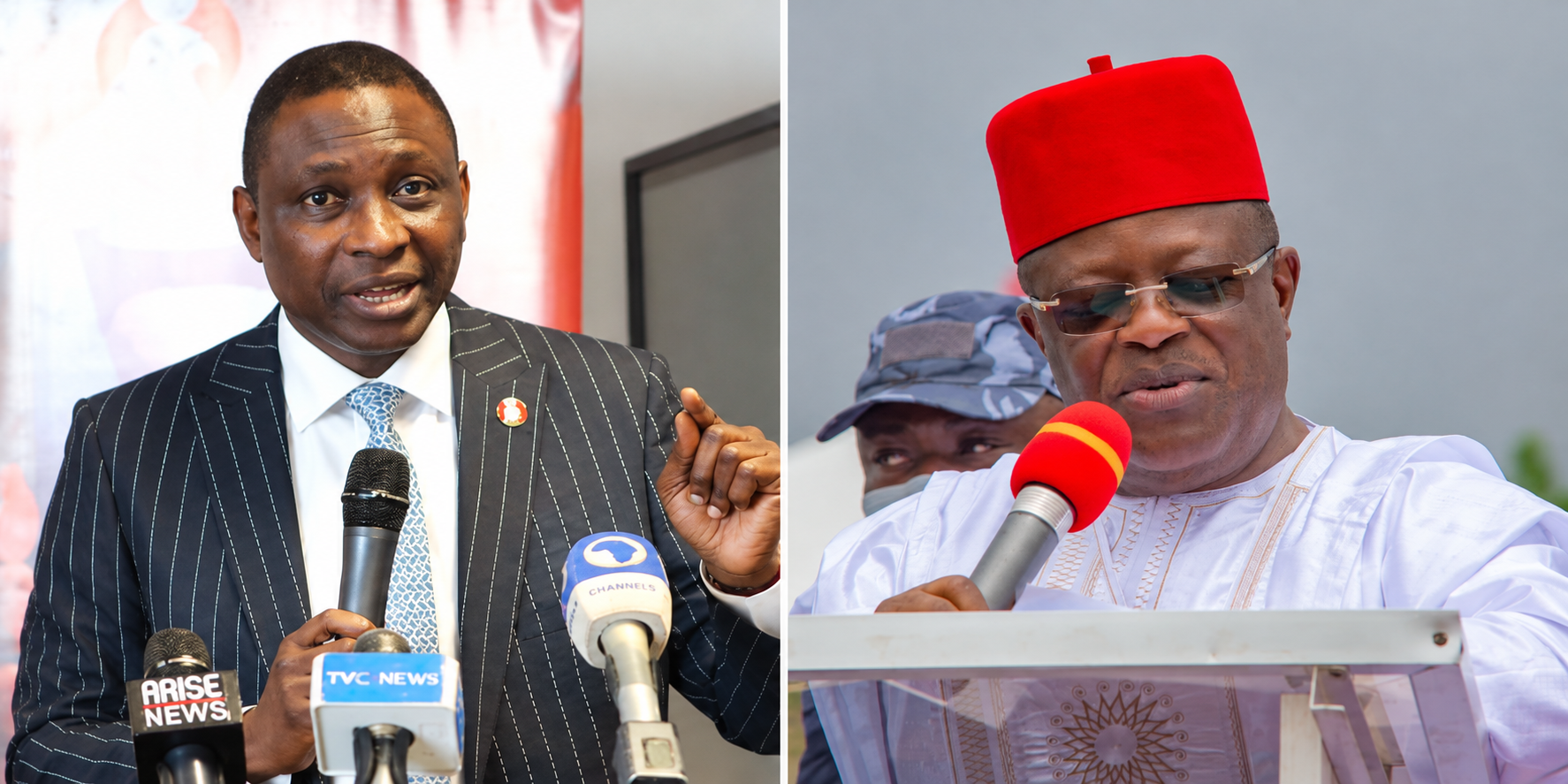
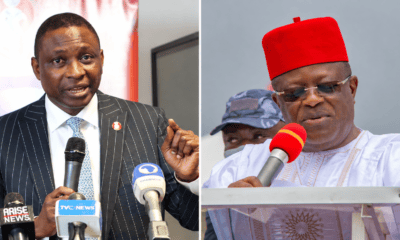
The Minister of Works, Chief David Nweze Umahi, has urged Nigerian journalists to promote democracy and maintain impartiality by avoiding bias towards political parties or candidates ahead of the 2027 general elections.
Umahi, a former Governor of Ebonyi State, gave the charge on Thursday evening while delivering a lecture at the Nigeria Union of Journalists (NUJ), Enugu Correspondents’ Chapel Press Week.
The event was themed, “Strengthening Democracy Through Responsible Journalism: 2027 Polls in Focus.”
Represented by his media aide, Emmanuel Uzor, the minister said journalists should not take sides in the political process or determine which candidate has the best manifesto.
He noted that as the watchdog of society and the Fourth Estate of the Realm, the media must discharge their constitutional responsibilities impartially, without favouring one political party or candidate over others.
While acknowledging the media’s critical role in holding leaders accountable, Umahi cautioned against partisan reporting and urged journalists to remain objective in their coverage of political activities.
“Journalists should not take sides. 2027 is here, and every party and all the candidates are presenting their manifestos. It is not your duty to say that this candidate or that candidate is better,” he said.
He maintained that the media had a responsibility to bridge the gap between leaders and the people, stressing that democracy thrives when journalists discharge their duties professionally.
Umahi, however, observed that journalists often face hostility when they hold those in authority accountable, adding that they are more readily accepted when they engage in praise-singing.
He warned journalists against abandoning their professional responsibilities, urging them to continue serving as a link between the government and the governed.
“You should fill in the gap between the leaders and the led,” he said.
Olukoyede Tasks Media on Anti-Corruption Fight
In his keynote address, titled “The Role of Media and Other Critical Stakeholders in Sustaining the Fight Against Corruption,” the Chairman of the Economic and Financial Crimes Commission (EFCC), Mr Ola Olukoyede, underscored the importance of the media in combating corruption and financial crimes.
Olukoyede, who was represented by the EFCC’s South Zonal Director, Mr Daniel Isei, said the media had continued to play a critical role in promoting good governance and building a better society.
He urged journalists to sustain their efforts in holding public officials and institutions accountable.
According to him, the Nigerian media deserve commendation for their contributions to sanitising society and promoting accountability.
“The media in Nigeria deserve their flowers for the critical roles they play in ensuring good governance and a better society.
“You have been playing your watchdog role, and that is holding the people and institutions accountable,” he said.
The EFCC chairman noted that the importance of the media’s watchdog function was recognised by the framers of the Nigerian Constitution, who assigned the press the responsibility of holding the government accountable to the people.
However, he cautioned journalists against losing focus or allowing cynicism to undermine their anti-corruption reporting.
“In fighting corruption, the media should not amplify public cynicism of the facts,” he warned.
Ani Emphasises Fact-Checking
The Chairman of the occasion, Chief Anthony Ani, SAN, also acknowledged the media’s significant role in society.
Ani urged journalists to verify information thoroughly before publishing or disseminating it to the public, stressing the importance of accuracy and responsible reporting in strengthening democracy.
-
 News3 days ago
FG confirms Ebola case in FCT, identifies 44 contacts
-
Features1 day ago
Kogi’s Kidnapping Crisis: Why Do Forests Remain Safe Havens for Criminals Under Ododo’s Watch?
-
News2 days ago
“It’s not debatable, we can’t go back,” Mbah Backs Tinubu on Fuel Subsidy Removal
-
News1 day ago
Kidnappers kill seven-year-old boy after ransom demand
-
News3 days ago
Afenifere leader, Fasoranti, dies at 100
-
News2 days ago
Mbah: Enugu Now Produces 120 Million Litres of Water Daily, Expands Agricultural Investment
-
Politics2 days ago
Mike Igini: Politicians Infiltrate Agencies Responsible for Election Personnel as Electoral Laws Go Unenforced
-
Politics4 hours ago
2027: Atiku, Obi, Duke, Others in Talks on Single Opposition Candidate – Coalition