News
Japa: 1,429 Nigerians repatriated from Niger Republic – Report

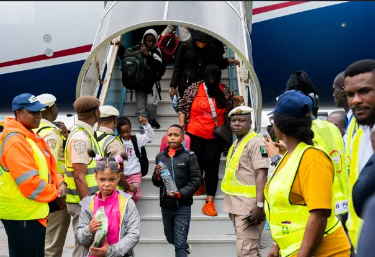
At least 1,429 Nigerians were repatriated from Niger Republic in May 2026, the latest data from the Mixed Migration Centre show.
This is as the West African country continues to serve as a major transit corridor for citizens attempting the dangerous journey to Europe through Libya and Algeria.

The figures are contained in the Quarterly Mixed Migration Update for West Africa, Quarter 2 2026 and obtained by Saturday PUNCH as the latest data on stranded Nigerian migrants along the Sahel migration corridor.
The latest data come as Nigeria continues to grapple with a wider japa wave, driven largely by economic hardship that has also pushed hundreds of thousands of citizens toward the UK, the United States, Canada, and other destinations through both regular and irregular channels in recent years.
The data cited a Saturday PUNCH report from May in which the Nigeria Immigration Service confirmed the arrival of at least 1,100 Nigerians who travelled by road from Niger Republic on May 22, 2026.

Two days later, the National Emergency Management Agency received an additional 329 returnees from Agadez, Niger’s main desert transit hub, bringing the total to more than 1,400.
The Mixed Migration Centre, a Geneva-headquartered research body affiliated with the Danish Refugee Council, stated that the mass return “highlight the continued presence of stranded migrants in Niger, many of whom face prolonged stays in IOM (International Organization for Migration) centres or urban areas with limited resources.”
Agadez, roughly 950 kilometres north-east of Niger’s capital, Niamey, has for over a decade functioned as the main northbound staging post for West Africans attempting to cross the Sahara into Libya or Algeria, before onward sea crossings to Italy or Spain.
The report showed that Nigerians remained among the persistent nationalities still attempting the Central Mediterranean Route into Italy.
As of May 2026, 163 Nigerians had arrived in Italy via that route, behind only Mali (193) among West African nationalities, though the figure was down from 196 Nigerian arrivals recorded over the same period in 2025.
The document also showed that Nigerians were also being swept up in a parallel and largely unrecorded expulsion running from Algeria back into Niger.
Citing Alarm Phone Sahara, a Sahel-based migrant rights network, the report disclosed that at least 14,602 people were expelled from Algeria into Niger between January 18 and May 17, 2026 alone.
It said this was equivalent to 43 per cent of the reported 34,000 expulsions recorded through the whole of 2025.
While most of these convoys officially return Nigerien nationals, the report noted that “increasing numbers of Nigeriens have also been included in unofficial convoys, which have primarily affected non-Nigeriens,” with those affected reportedly including nationals of Mali, Guinea, Nigeria, Sudan, and Chad.
The report added that on several occasions, migrants expelled from Algeria into Niger Republic were subsequently pushed back across the border into Algeria by Nigerien police.
It said this cycle of expulsion and re-expulsion has left affected migrants, Nigerians among them, in prolonged limbo along the borders.
Regionally, the report said Spain recorded 12,138 irregular arrivals by sea and land as of June 30, 2026, a 33 per cent decline from the same period in 2025, driven mainly by a 67 per cent drop in Atlantic Route crossings to the Canary Islands.
But the report cautioned that falling number of arrivals “do not necessarily reflect fewer crossing attempts,” noting that recorded deaths and disappearances on that same route fell by just 16 per cent, which was a far smaller decline than the drop in arrivals.
The role of Niger Republic as West Africa’s principal transit corridor dates back more than a decade, but accelerated after the collapse of the Muammar Gaddafi regime in Libya in 2011 and opened new smuggling routes northward.
Agadez, a UNESCO World Heritage desert town, became the last major stopover before migrants crossed hundreds of kilometres of open desert into Libya or Algeria.
Under pressure from the European Union, Niger Republic in 2015 passed a law criminalising migrant smuggling, which reduced visible transit through Agadez for several years but pushed smugglers and migrants onto riskier, less-monitored desert routes.
Niger’s military government, which seized power in a 2023 coup, later repealed the anti-smuggling law, a move rights groups said reopened Agadez as one of Africa’s busiest migration routes and complicated cooperation with European partners on migration control.
Nigeria, under the ECOWAS Protocol on Free Movement of Persons, allows its citizens to travel to Niger Republic without a visa for up to 90 days.
The report said this freedom has long made the neighbouring country both a legitimate trade corridor and an easy first step for Nigerians attempting onward irregular migration to North Africa and Europe.
(Saturday PUNCH)



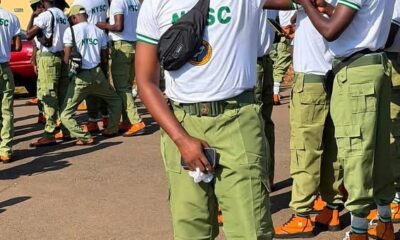










The Senate on Thursday called for an investigation into the circumstances surrounding the death of a corps member, Etimbuk Daniel, at an NYSC orientation camp in Enugu.
The resolution followed a motion of urgent public importance moved by Sen. Aniekan Bassey (APC-Akwa Ibom North-East) during plenary.
Bassey said the Senate received with shock and profound grief the news of Daniel’s death while undergoing the mandatory National Youth Service Corps (NYSC) programme in Enugu.

Etimbuk Daniel
He described the deceased as an outstanding student leader and former Students’ Union Government (SUG) president of Akwa Ibom State University who had embarked on national service.
Bassey expressed concern over reports that Daniel died following complications from a minor headache after allegedly experiencing delays in receiving adequate medical attention at the camp’s clinic.
He said the incident raised concerns about healthcare services in NYSC orientation camps, particularly the availability of qualified medical personnel, functional facilities and effective emergency referral systems.
The senator said the reported lapses highlighted the need to review healthcare delivery in orientation camps to prevent similar tragedies and protect corps members.
He emphasised that the government had a constitutional responsibility to safeguard citizens’ welfare, adding that young graduates mobilised for national service deserved adequate medical care throughout their service.
Bassey said Daniel’s death had plunged his family, the Akwa Ibom State University community and the entire state into mourning.
Seconding the motion, Sen. Mohammed Monguno (APC-Borno North) supported the call for an investigation, emphasising the importance of establishing the circumstances surrounding Daniel’s death and ensuring accountability.
The Senate observed a minute of silence in honour of the deceased and prayed that God would grant his family the strength to bear the loss.
It also called for a thorough investigation to establish the facts surrounding Daniel’s death and determine whether negligence contributed to the incident.
The Senate directed its committees on Police, Judiciary, Human Rights and Legal Matters, Youth Development, and Health to investigate the matter alongside the Nigeria Police Force and the Department of State Services (DSS).
Deputy Senate President Barau Jibrin, who presided over the proceedings, thanked Bassey for bringing the matter before the Senate and urged the relevant committees to conduct a thorough investigation. (NAN)
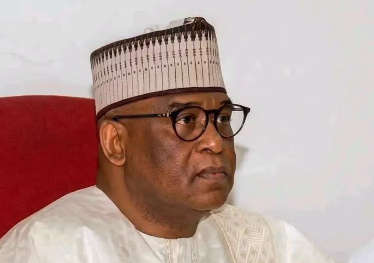
Senator Abdul Ningi has recounted how his colleague, Bello Mandiya, reportedly died after slipping in his bathroom and hitting his head, with his body discovered about 72 hours later in his Abuja residence.
Ningi, who represents Bauchi Central Senatorial District, said neighbours discovered Mandiya’s lifeless body after a foul smell began emanating from his apartment and residents became concerned about his prolonged absence.
Speaking during a Senate plenary session, Ningi said he was in Saudi Arabia when he received a telephone call from his son informing him of Mandiya’s death.
He said his son was among those who discovered the former lawmaker’s body on Monday, September 7, 2026.
Recounting the events leading to the discovery, Ningi said a colleague had last seen Mandiya at about 11am on Friday, September 4, before the former senator returned to his residence, where he lived alone.
According to him, Mandiya was preparing to attend the Friday congregational prayer when he reportedly slipped and hit his head after bathing.
“He brought out his cap, his phones, and put them on the bed, and went into the bathroom to take his bath,” Ningi said.
“After taking his bath, when he was out of the bathroom, then he slipped and knocked his head in the bathroom.”
Ningi said nobody realised what had happened until the stench from Mandiya’s apartment began spreading to neighbouring properties.
“For 72 hours, Mr President, nobody knew where Bello Mandiya was,” he told the Senate.
He said the chief imam of Apo also raised the alarm after noticing that Mandiya, who regularly joined other Muslims for the five daily prayers, had been absent for three consecutive days.
The combination of the imam’s concern and the foul smell prompted residents to investigate the apartment.
Ningi said those who went to the residence eventually broke open the door and found Mandiya’s body in the bathroom.
“And there lies Bello Mandiya in the bathroom, lifeless. Seventy-two hours, and that’s a simple tragedy,” he said.
Expressing sadness over the circumstances of his colleague’s death, Ningi said the incident highlighted the uncertainty of life, noting that nobody could predict when death would come.
He also expressed condolences to Mandiya’s family, the people of Katsina State and the constituents he represented in the Senate.
Before his election to the Senate, Mandiya served as chief of staff to former Katsina State Governor Aminu Bello Masari.
He was elected in 2019 on the platform of the All Progressives Congress to represent Katsina South Senatorial District and served in the ninth National Assembly until 2023. He also chaired the Senate Committee on Water Resources.
Mandiya’s death prompted tributes from political leaders and former colleagues, who remembered him for his contributions to public service in Katsina State and at the national level.
Ningi, who said he had known Mandiya since 2002, described the loss as a reminder that political office, wealth and social status could not shield anyone from the fragility of life.
“There is nothing permanent about anything. Nothing permanent about our position, nothing permanent about our wealth,” he said.
He prayed for Allah to grant the deceased eternal rest and give his family the strength to bear the loss. (Daily Trust)

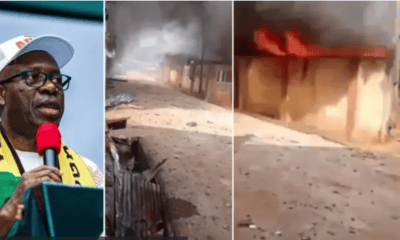
Suspected political thugs have attacked the secretariat of the Nigeria Democratic Congress (NDC) in Ikpoba-Okha Local Government Area of Edo State, destroying property at the facility.
The attack, reported on Wednesday, October 14, comes barely a week after NDC complained of a similar incident in Enugu.
A video circulating on social media showed damage to property within the Edo secretariat, although no casualties had been reported as of the time of filing this report.
In the footage, a woman accused the ruling All Progressives Congress (APC) of being responsible for the attack, linking the incident to the earlier violence in Enugu, which is being investigated by the police.
“The last one happened in Enugu, where one person allegedly died. Now they have brought it to Edo. APC, your end is here,” she said.
Her allegation against the APC has not been independently verified, while the identities of those responsible for the attack remain unknown.
The reported incident follows growing concerns over political violence ahead of the 2027 general elections.
The earlier incident in Enugu had prompted Governor Peter Mbah to demand an impartial police investigation, warning that anyone found responsible would face prosecution regardless of political connections.
It was not immediately clear whether security agencies had commenced an investigation into the Edo attack or identified any suspects.
-
 News16 hours ago
How Senator Mandiya died after bathroom fall in Abuja Home – Ningi
-
News1 day ago
2027: Why I wont attend every campaign rally – Tinubu
-
News14 hours ago
Senate fumes over death of NYSC Corps member at Enugu Camp, orders probe
-
Features2 days ago
Aguleri/Umuoba Anam Crisis: The Bloody Battle Between Close Neighbours
-
News2 days ago
EFCC probes Atiku over alleged corruption committed as Vice President
-
News2 days ago
‘Anyone who attempts suicide and fails will go to jail,’ says Akpabio
-
News3 days ago
BREAKING: Soludo, Wike, Adeleke, others appointed member of APC Presidential Campaign Council
-
News3 days ago
Rochas Okorocha arrested, released after one-hour Interrogation — Police