News
Enugu winning war against underage gambling through cutting-edge technology, education – Gov Mbah

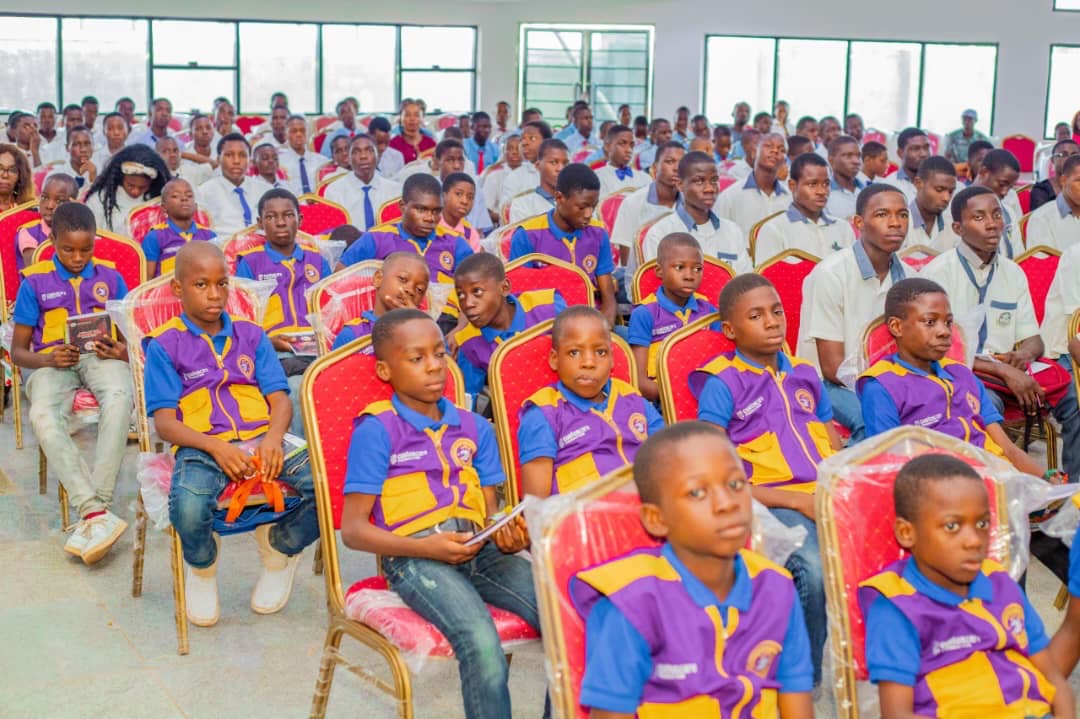
Enugu State Governor, Dr Peter Mbah, has declared a full-scale offensive against underage gambling, citing a combination of technology-driven regulation, education reforms, and inter-sectoral collaboration as the pillars of his administration’s unprecedented response, which was already eliminating the menace from the state.
Speaking at a stakeholders event organised by the Ministry of Children, Gender Affairs and Social Development at the Enugu International Conference Centre on Thursday on the theme, “Ending Underage Gambling in Enugu State,” the governor painted a vivid graphic of the social corrosion caused by the menace and the state’s strategic determination to address it and creating an engaging, meaningful and creative future of children.

Describing underage gambling as a “public crisis,” Mbah lamented its links to youth drug abuse, petty crime, academic failure, and growing urban violence.
“It is no longer a private vice. It corrodes society, fuels criminality, and destroys dreams before they are even formed,” he said.
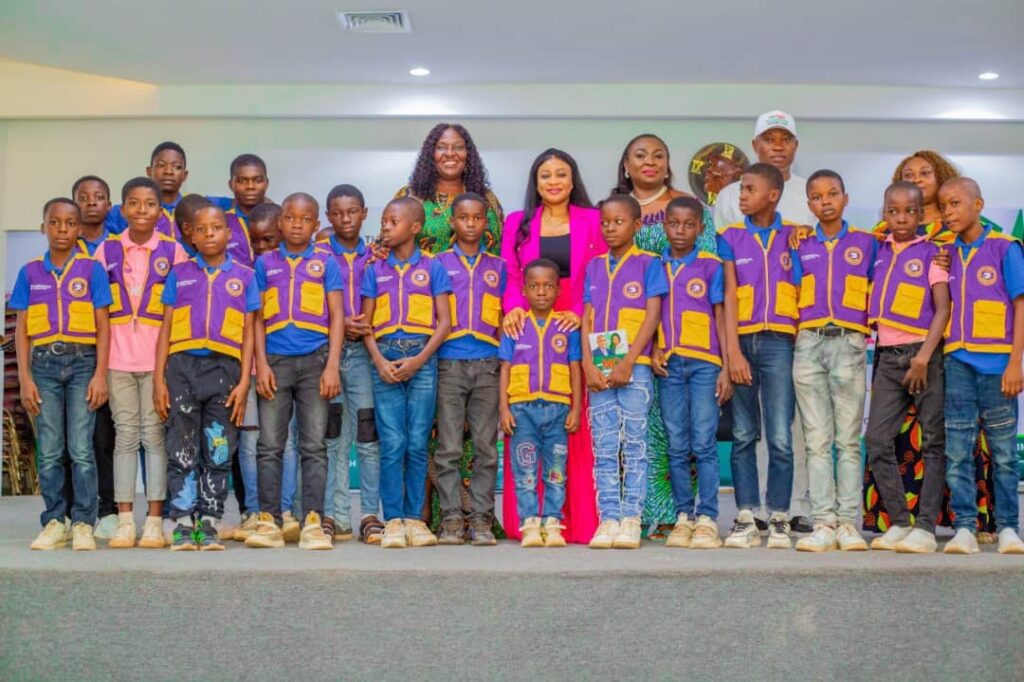

The governor, who was represented by the Attorney General and Commissioner for Justice, Dr Kingsley Udeh, disclosed that since November 2024, Enugu had adopted a zero-tolerance approach, empowering the state’s Gaming & Lottery Commission to dismantle unlicensed betting points and enforce permanent, regulated structures under real-time digital surveillance.
Mbah, however, made it clear that regulation alone would not solve the crisis, assuring that his administration was expanding its strategy beyond enforcement to include re-education, creativity, and compassion.
“School, family, and community must be louder than the gambling hall. We are embedding financial literacy and empathy in our Smart Green Schools by challenging students to build gamified learning tools,” he said.
He added that the 260 Smart Green Schools across Enugu would serve as launchpads for digital innovation aimed at reshaping young minds away from chance and toward purpose.
He announced that the state was partnering with the Federal Neuro-Psychiatric Hospital, Enugu, to introduce early intervention systems within schools and youth hubs where minors caught gambling would be met, not with criminal penalties, but with mental health evaluations, peer mentorship, and structured alternatives.
“This is not just enforcement. It’s rescue,” Mbah emphasized, highlighting the human-first approach of the state’s policy shift.
On the legislative front, Governor Mbah revealed upcoming moves to institutionalize advanced ID verification systems, including real-time Tax Identification Number (TIN) and National Identity Number (NIN) checks for all gaming participants, stressing that it was modeled after successful implementations in Lagos and the Federal Capital Territory (FCT).
“This is no longer about best practice; it must become legal mandate,” he declared.
Mbah concluded with a rousing call for collective action among all the stakeholders involved. “Our fight is not against games, but against the exploitation of our future. We are not just shutting doors—we are opening better ones,” he said.
The governor also hinted at plans to develop a regulated gaming tourism sector that would generate revenue while enforcing strict ethical and community-based standard, calling on parents, faith leaders, traditional institutions, and youth advocates to “crank up the conversation” and ensure that young people bet only on hard work, education, and digital innovation—not on gambling.
Describing underage gambling as troubling, the Commissioner for Children, Gender Affairs and Social Development, Mrs Ngozi Enih, said the fight against the social vice must not be left to government alone as parents, guardians teachers, civil society as well as stakeholders in child protection had pivotal role to play to ending it.
She maintained that, if not collectively tackled, the menace would creep silently into homes, communities and schools with the potential impact of eroding values, disrupting learning and exposing children to moral, psychological and social harm.
Lending his voice to the growing calls to end underage exploitation in whatever form, the state’s Commissioner for Youth and Sports Development, Hon Lloyd Ekweremadu, said the state government was already committed to sanctioning operators who failed to adhere to the standards regulation in the state.
On his part, the Executive Secretary of the Enugu State Gaming and Lottery Commission, Prince Arinze Arum, said the commission was not unmindful of the potential harms underage gambling could cause the society, adding that government had already set the machinery that was addressing the menace in motion.
He further explained that a bill designed to empower the Commission on oversight and regulatory functions over the operators of gambling and gaming houses was already in the House of Assembly undergoing legislative processes.
“Regarding what we are doing today, we have lots of policies. First as a matter of strict policy, no betting outlets is allowed within 100 to 200 meters close to any school. Second, on no account must an under-aged person be seen in a betting environment because such attracts outright sealing and closure,” he concluded.



…Sen. Nnamani, Nwobodo, Dr. Nnamani, Chime, Ugwuanyi, Prof. Nnaji, Arthur Eze, Frank Nweke, Madueke, others get advisory roles
…Udeh, Nwoye, Utazi, Egumgbe, Ben Collins Ndu, Onyia, others head 51 Directorates
…Council to be inaugurated on Tuesday
The Enugu State Chapter of the All Progressives Congress (APC), on Monday, unveiled the party’s Campaign Council ahead of the 2027 general elections.
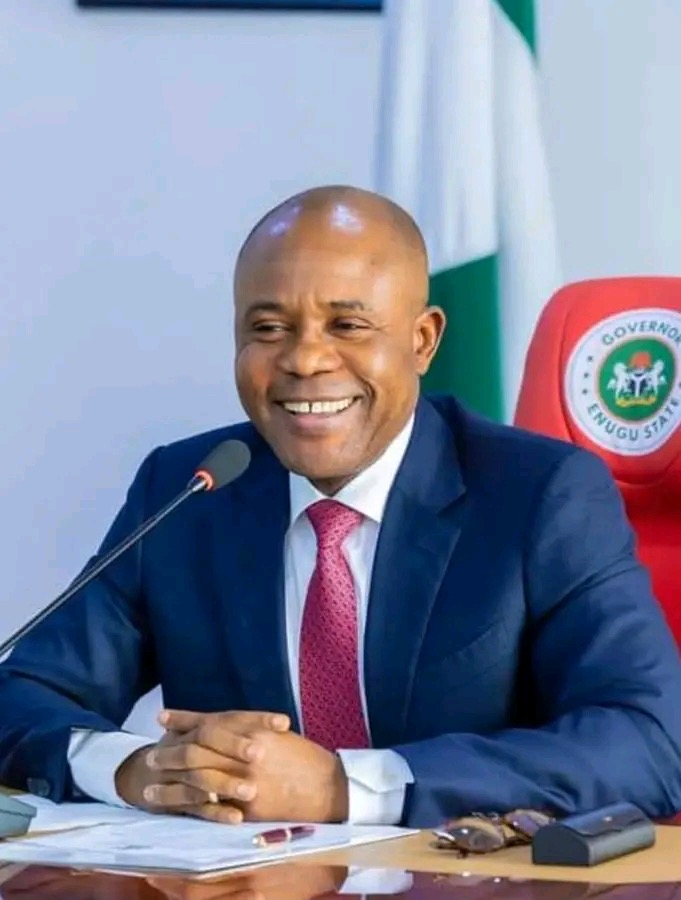
The Campaign Council, comprising 51 Directorates, is chaired by the Governor of the state, Dr. Peter Mbah, while the Deputy Governor, Barr. Ifeanyi Ossai; Deputy National Chairman, APC (South); Speaker, Enugu State House of Assembly, Hon. Uchenna Ugwu; and the Chairman of the party in the state, Dr. Martin Chukwunweike, are Vice Chairmen.
The list signed by Chukwunweike and the Secretary of Enugu APC, Hon. Chukwudi Nnadozie, also has Chief Charlie Mbah as the Director-General of the Campaign Organisation and Dr. Eric Oluedo as the Secretary-General.
Deacon Okey Ogbodo, Dr. Dan Shere, and Hon. S.K.E. Udeh-Okoye are Deputy Campaign DGs for Enugu East Senatorial District, Enugu North Senatorial District, and Enugu West Senatorial District, respectively.
Barr. Steve Oruruo is the Campaign Spokesperson and Director of the Public Communication Committee, with Dr. Austin Okolie as co-spokesperson and Dr. Malachy Agbo as Secretary.
Mazi Uche Anichukwu and Dan Nwomeh, both drawn from the Governor’s media team, head the Directorate of New Media and Strategic Communication and the Directorate of Mainstream Media, respectively. Dr. Collins Ogbu is the Secretary of the former, while Dr. Reuben Onyishi is the Secretary of the latter.
Barr. Victor Udeh leads the Administration Directorate, while Dr. Ben Nwoye and Arc. Uche Nwatu are the Director and Co-Director of the Fundraising Committee, respectively.
Former Chief of the Naval Staff, Vice Admiral Ikechukwu Ogalla (Rtd.), chairs the Security Directorate, while former Inspector General of Police, Ogbono Onovo (Rtd.), is the Secretary.
The Minister of Innovation, Science and Technology is in charge of the Directorate of Government Appointees Coordination (Federal and State), with Prof. Chidiebere Onyia as Secretary, while former Speaker of the Enugu State House of Assembly, Rt. Hon. Eugene Odoh, heads Inter-Party Affairs.
Senator Osita Ngwu, Senator Ikeje Asogwa, and Senator Kelvin Chukwu are Coordinators of the Campaign Council in Enugu West, Enugu North, and Enugu East, respectively.
Meanwhile, in their co-signed statement, Chukwunweike and Nnadozie said the size of the Campaign Council was a reflection of “the conviction that every community, ward, local government area, professional group, support organisation, youth body, women’s group, elder, party faithful and person of goodwill must be seen, heard and meaningfully engaged.”
“Appointment into the campaign structure is therefore not merely an honour; it is a call to duty, accountability and measurable contribution,” they stated.
The Council will be inaugurated at the International Conference Centre, Enugu on Tuesday, October 27, 2026.
All members of the Campaign Council are to be seated before 3pm.
CLICK LINK BELOW TO SEE FULL LIST:
APC ENUGU CAMPAIGN COUNCIL COMPOSITION-1
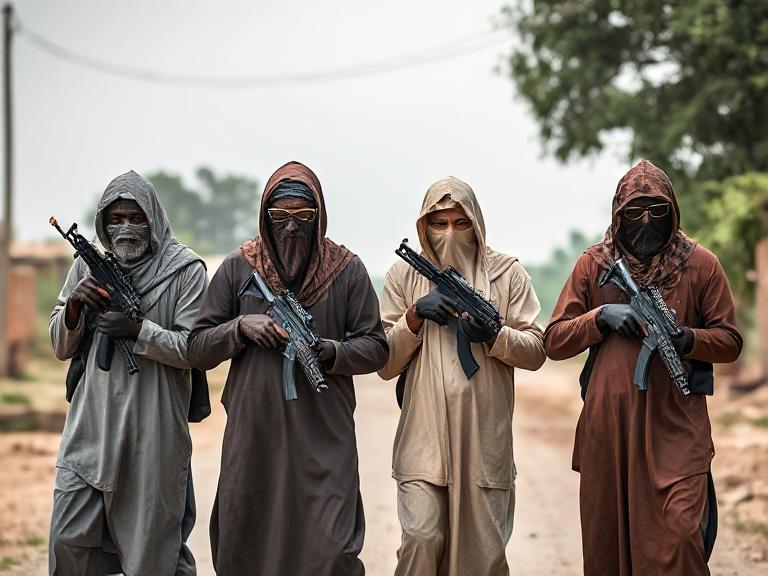
Tension has gripped parts of Kwara State following the reported abduction of members of the Iru Ekun Security Group, a security outfit spearheaded by Yoruba nation agitator Sunday Adeyemo, popularly known as Sunday Igboho.
The assailants reportedly abducted the security operatives and forced them to renounce their activities of protecting communities in the state.
According to reports, the abducted members pleaded for their release and were compelled to renounce their community protection activities.
The Iru Ekun Security Group was established to protect Yoruba communities in Kwara State against terrorist attacks and kidnappings.
The reported abduction has sparked fear among residents who rely on the group for protection against insecurity in their communities.
As of the time of filing this report, Igboho had yet to issue a statement on the reported abduction of the security group members.
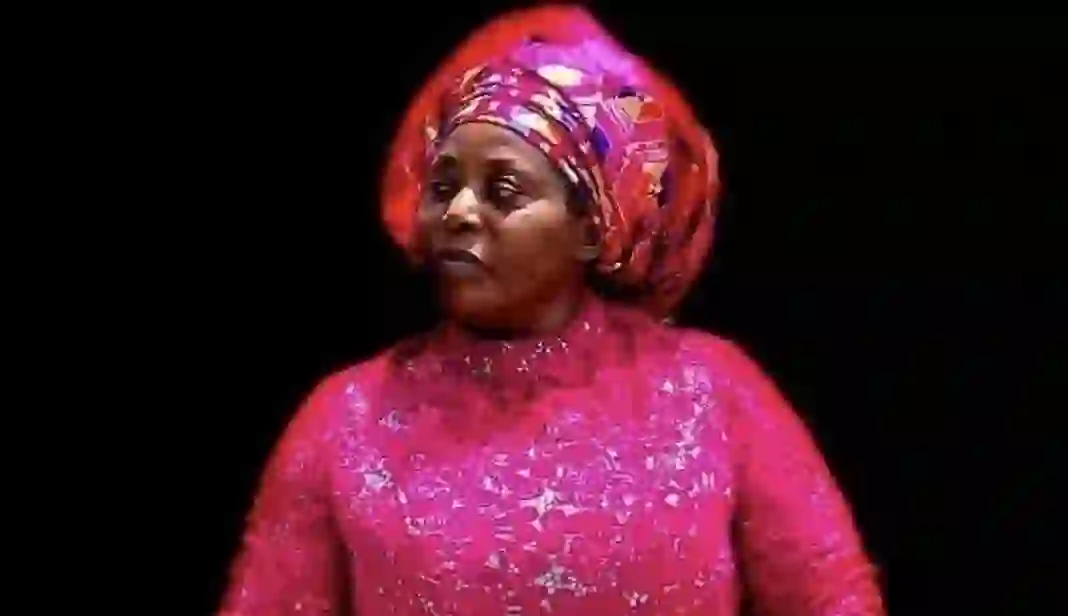
Fidelia Ezinwanne Chigbogu, the immediate elder sister of the late Senator Ifeanyi Ubah, has died at the age of 61.
Mrs Chigbogu, fondly called “Darling” by her husband, reportedly slumped and died on Sunday morning in Lagos while preparing to attend church.
Her husband, Chudi Chidinma Chigbogu, a native of Nnewi in Nnewi North Local Government Area of Anambra State, described her death as a devastating shock, saying she had shown no signs of illness before the incident.
“It was like a shock to me because, even as I am talking to you now, I never believed it,” he said.
Narrating the circumstances surrounding her death, Mr Chigbogu said the family had experienced an electrical incident the previous Thursday when their electricity meter exploded and burnt their changeover room.
He said they had contacted officials of the electricity distribution company, who promised to visit on Monday to replace and relocate the meter.
“We were busy waiting for them. My wife said she would give testimony in church on Sunday, and we were preparing for that,” he said.
According to him, his wife woke up on Sunday morning without any apparent health complaints and was preparing to leave for church when the incident occurred.
“That Sunday morning, she woke up. There was nothing like a headache, nothing like fever, nothing. She finished bathing and was preparing to go to church. She usually leaves home between 7 a.m. and 7:30 a.m. because of the roles she plays in the church,” he said.
Mr Chigbogu explained that he was washing his car because of dust when he became concerned that his wife had not come downstairs.
“I went to wash the car because of dust. Around 8 a.m., I called my son and said, ‘Why has mummy not come down? Go and check.’
“Only for the boy to go and start screaming that he called his mummy and she did not answer. He lifted her hand, and her hand dropped,” he recounted.
He said he immediately rushed upstairs and found his wife lying unresponsive on the bed.
“I called her names, no way. I alerted neighbours, and we carried her to six hospitals. Anywhere we went, they would take me aside and say I didn’t bring her on time, that she had passed on.
“I said no, it was not possible, until we got to Navy Hospital, where they refused to admit her,” he said.
Mr Chigbogu said prayers continued at their home for several hours as the family struggled to come to terms with the tragedy.
He recalled that around 4 p.m., someone told him she had seen his wife in a vision, moving swiftly without looking back, which she interpreted as a sign that the deceased had made it to heaven.
“That was when I changed my mind and allowed an ambulance to come. She left here after 6 p.m. and got to the village around 7 a.m. the next day,” he said.
Describing his late wife, Mr Chigbogu said she was a natural leader, peacemaker and philanthropist who played a significant role in her family, church and community.
“Aside from calling her Darling, I called her many names because she was a leader. No matter the case in the family, she would settle it.
“She is the founder of a women’s group, played a very big role in the church and was known for her charitable work. Before her passing, she was working on her orphanage.
“Even though she is no more, I will not let her down. I will make sure that project comes to pass,” he said.
On her family background, Mr Chigbogu said her parents had seven children—three boys and four girls—and that his late wife was the second daughter.
He added that she was also one of the trustees of the Ubah family.
-
 Features2 days ago
Mmesoma Umeorini: When Love Turns Deadly, and a Young Woman Pays With Her Life
-
Features2 days ago
Why Igbos Celebrate New Yam Festival Worldwide: The History, Cultural Significance and Lessons For The Younger Generation
-
News1 day ago
BREAKING: Tension as Video Shows Islamic Group Members Allegedly Calling for AK-47 to Kill Christians in Enugu, Jos
-
News2 days ago
Kogi Police Probe Alleged Murder-Suicide Involving Two Officers
-
News18 hours ago
Ifeanyi Ubah’s Elder Sister, Fidelia Chigbogu, Dies Suddenly at 61
-
News2 days ago
NCDC Reports Two Suspected Ebola Cases as Contacts Rise to 53
-
News2 days ago
Enugu Traders Pledge Support for Mbah’s Second Term, Cite Market Reforms
-
News17 hours ago
Terrorists Abduct Sunday Igboho’s Iru Ekun Security Group Members in Kwara