Opinion
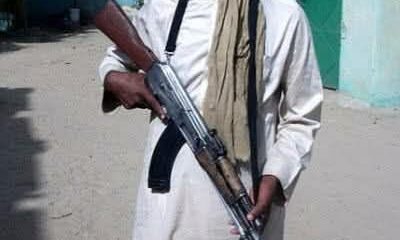
Stop Fulani ethnic militia or break up Nigeria

By Michael Owhoko, Ph.D
For how long shall the rest of the country look on while Fulani ethnic militia trouble the peace of Nigeria? Why are Fulaniterror groups spreading fear, causing pains and inflicting psychological trauma on Nigerians through deliberate, calculated and organised acts of kidnapping, torture, rape and killings? What exactly do they want, and for how long will Nigeria endure this malevolence? Nigeria’s current despicable image as fifth-most-violent country in the world, is largely due to this jihadist voyage.

Of over 250 ethnic groups in Nigeria, why is the Fulani the only tribe that has chosen this nefarious and cold-hearted path of violating rights of fellow citizens with impunity? If all other ethnic groups resolved to embark on similar acts of violence, will the country be safe and conducive for them to live in? Or do they think they have exclusive capacity for violence? Who will call them and their sponsors to order? Painfully, all other ethnic groups had been in existence in Nigeria before the adventof Fulani in 1800.
Ironically, these lawless and violent extremists constitute a handful of the larger Fulani population who transact and go about their businesses peacefully without links to criminal and armed banditry gangs across the country. Actions and demeanors of these sadistic minority are already rubbing off on the image and reputation of the entire Fulani ethnic nationality, who are being perceived as risky to live with, particularly by victims and Nigerians whose peace and safety have been breached.
In the African tradition, when a group of miscreants deviatefrom accepted norms, society looks up to leaders and prominent members of such ethnic group to use their authority to prevail on them. In Nigeria, there are influential Fulani leaders who can call these Fulani criminals to order. We have the Sultan of Sokoto, Alhaji Muhammadu Sa’ad Abubakar III, the Emir of Kano, Muhammadu Sanusi II, Alhaji Atiku Abubakar, Engr. Rabiu Kwankwanso, Alhaji Abdulsamad Rabiu, NSA MallamNuhu Ribadu, Mallam El Ru’Fai, Sheikh Ahmad Gumi, Alhaji Abdullahi Gaduje, Alhaji Dikko Umar Radda, Alhaji Bala Mohammed, Alhaji Abdullahi Sule, Alhaji Nasir Idris, and so on. They can exert their influence on them to stop the carnage.

The Emir of Kano had demonstrated this possibility previously. As the spiritual leader (khalifa) of the Tijanniyah Sufi order in Nigeria and also leader of Tabital Pulaaku International, a cultural organization of the Fulani, Sanusi is revered among the Fulanis. He had travelled to Ghana in the past to intercede when Ghana threatened to expel Fulani over alleged criminal activitieswhich had fueled public anger and tension in the country.
The Nigerian Fulani is part of Tabital Pulaaku International. Therefore, Sanusi, in his capacity as leader of this cultural organization, can call these Fulani Islamic extremists to order. Besides, prominent Kaduna-based Islamic scholar, Sheikh Ahmad Gumi, who had interfaced, negotiated and brokered peace with Fulani terror groups in the past, can also deploy his contacts and influence to rein in their activities. Gumi is notableand commands their respect. This is important because of the growing adverse public emotions against Fulani militia, which is slowly but steadily, impacting negatively on the Fulani people.
Furthermore, the Arewa Consultative Forum (ACF) and Northern Elders’ Forum (NEF) can also mediate by emulating Afenifere and Pan-Niger Delta Forum (PANDEF). Afenifereintervened when the Oodua People’s Congress (OPC) was going to extremities, just as PANDEF doused tension when Niger Delta Avengers (NDA) exceeded their course, though their mission differed fundamentally from the Fulani jihadists. While the philosophy of the Fulani ethnic militia is based on forceful territorial acquisition driven by jihadism and violent conflict, the struggle of OPC and NDA were based on protection of Yoruba identity and resource control, in that order.
The silence of Fulani leadership is unhelpful and widening public suspicion. Their intervention will not only go a long way to control the damaged reputation of the Fulani ethnic nationality; it will curtail growing tendencies to label Fulani as untrustworthy people with behavioural red flag. This perception is gradually gaining ground, with danger of isolation by other ethnic nationalities in the face of continued threat to peace and safety.
This emerging reality played out recently when a video of a Fulani man went virile. In the video, the man who is of Fulani heritage, expressed frustration when he was refused by other passengers from boarding same commercial bus with them from Lagos to Calabar. Ground of refusal was his ethnic identity asFulani, whom they considered unsafe to travel with. As a result, his transport fare was refunded and forced by the transport company to disembark.
In the light of this experience, I venture to predict that this is going to be the trend in the coming years. Also, there is high probability of counterattacks over the Fulani menace soon, as endurance capacity of other ethnic groups is nearing dangerous limit. When a man is pushed to the wall with his life threatened, he will be forced to push back, not with smile, but with propelled astronomic anger. Put differently, self-defence will become inevitable and unstoppable, except there is a 180-degree turn by Fulani insurgents.
The Fulani terror groups are overstepping their bounds. This is not the time to keep mute. It is high time prominent Fulani leaders spoke out in unison to condemn and call these miscreants to order. A stitch in time saves nine. Martin Luther King Jnr, said “We must learn to live together as brothers or perish together as fools.” But we all cannot be fools at the same time, hence cannot perish together. It is better to defend oneselfthan to foolishly yield to unprovoked assaults.
Currently, there is no part of Nigeria that is not under attack by armed Fulani extremists. They have infiltrated all six geo-political areas, occupying farmlands and bushes of ancestral communities of other ethnic nationalities, from where they launch unwarranted onslaughts on innocent citizens. This is unacceptable. These killings must stop before they set the country on fire.
Fulani history of lethal proclivity initially informed the classification of Fulani armed militia as fourth deadliest terror group in the world by the Global Terrorism Index (GTI) in 2015. But somehow, this label later disappeared from the international terrorism rankings, perhaps, due to confusion created by the Nigerian public in recurrently describing armed Fulani terror groups as “bandits” and “gun men”, same way armed herders’ offensives on farmers, are wrongly depicted as “farmers-herders clash”.
From the report of The Observatory for Religious Freedom in Africa (ORFA) released this year, 2026, it is scary to note that a total of 79,323 people were killed between 2020 and 2025 across Nigeria, including 42,000 innocent civilians. According to the report, Fulani terror groups alone killed 44 percent of the 42,000, while Boko Haram murdered 8 percent and Islamic State West Africa Province (ISWAP) was responsible for 4 percent.
This shows that Fulani ethnic militia are deadlier than Boko Harm, ISWAP, Ansaru, Mahmuda and Lakurawa. This status isaptly captured in the Agatu massacre of 2016 where between 300 and 500 people were killed; the Christmas Eve mayhem at Bokkos and Barkin Ladi local government areas of Plateau State in 2023 where about 200 people were slaughtered; and the Yelwata bloodbath of 2025 which claimed approximately 150 lives. This is exclusive of other killings across the six geo-political areas of the country.
Nigeria cannot continue in this circle. It is a secular country and belongs to all. The various ethnic nationalities that make up Nigeria are historically and culturally different with varied values, dreams and aspirations. They only ceded their sovereignty for Nigeria, and so, no one ethnic group has the right to kill and make life unbearable for others. Citizens should be able to live peacefully in a country where their future and thatof their children are guaranteed.
The Fulani leadership should therefore cooperate and work closely with government to stop to this bloodbath, otherwise, a process for peaceful dismemberment of the country should be initiated. It is important to be reminded that ethnic discontent and national injustice were what triggered the quest for regional autonomy and agitation for self-determination as epitomized by Yoruba Nation/Oduduwa Republic, Biafra Republic and Niger Delta Republic. The fire was only put out; the smoke is still raging.
Dr. Mike Owhoko, Lagos-based public policy analyst, author, and journalist, can be reached at www.mikeowhoko.com, and followed on X {formerly Twitter} @michaelowhoko.












There is no debate about Nigeria’s power crisis.
Millions still live on generators and inverters. Businesses run below capacity. Communities endure long outages. The national grid is fragile, and the gap between installed capacity and actual supply remains painfully wide.
Managing Director of Leadership Newspapers and columnist, Azu Ishiekwene, is right about the problem. Nigeria has not solved its electricity crisis. No serious Minister of Power should pretend otherwise.
But a system can be deeply broken and still begin to move in the right direction.
That distinction is essential in assessing Joseph Tegbe’s first 100 days.
A minister who has spent barely three months in office cannot be expected to fix a failure of decades. He cannot be judged as if he inherited a working market, nor should he be dismissed because the lights have not suddenly come on everywhere.
The fair question is: what has actually changed?
—What Tegbe inherited—
Tegbe did not inherit an empty cupboard. He inherited a structurally weak sector.
Nigerian Electricity Regulatory Commission [NERC] data for April 2026 puts installed grid-connected capacity at 13,625MW. Average available capacity that month was just 4,286MW. Only about a third was available for dispatch.
That is the crisis in one number.
The financials are worse. The sector’s debt backlog is about N3.3 trillion, with only 27% of GenCos’ invoices being paid. That chokes gas supply, generation, and maintenance across the entire value chain.
His predecessor admitted it. In January 2025, then Minister Adelabu described the grid as old and dilapidated, saying government was merely managing it pending a major overhaul. Grid disturbances were frequent. In April 2024 alone, Nigeria had suffered its fifth collapse of the year.
The starting point was ugly.
—What has actually moved—
Start with generation.
Before June, generation and transmission hovered between 3,700MW and 4,700MW. In the weeks before Tegbe’s 100-day briefing in September, it crossed 5,000MW, with a peak of 5,330MW in August and September.
That does not mean 24-hour power. It does mean a measurable shift at system level.
NERC’s August factsheet corroborates it: average available capacity of 4,758MW, with 4,102MW utilised.
Then Alaoji. A 375MW plant offline for three years is now back on the grid.
On transmission, interventions in Lagos and Abuja have unlocked 912MW of additional capacity – 672MW from new transformers at Apapa, Ijora, Alausa and Lekki, and 240MW from a 300MVA transformer at Katampe.
These are not promises. They are physical additions to the system. They will not light up every home tomorrow, but they cannot be dismissed because Wuse Market still runs generators.
Another telling intervention: over 300 containers of critical power equipment, long stranded at the ports, have been released for inspection and deployment. It is a quintessentially Nigerian paradox – unfinished projects in the field, equipment stuck in ports. Moving them is unglamorous, but essential.
—Metering, money and the hidden work—
Consider 350,000.
That is the number of meters installed in Tegbe’s first 100 days, taking cumulative installations to 1,004,260 as of August 2026. Resolution of litigation around the AMMON programme has also unlocked procurement of 1.4 million smart meters, while 5,000 young Nigerians are being trained as installers.
A meter does not generate power, but it fixes one of the market’s most corrosive problems: estimated billing. It makes consumption measurable, billing defensible, and revenue more transparent.
Then liquidity.
The Federal Government has raised N1.23 trillion towards the N3.3 trillion debt backlog. It does not clear the debt, but it is a substantial injection into a value chain whose illiquidity threatened collapse. The Presidency had earlier confirmed a phased settlement of verified legacy debts through the domestic capital market.
Along the Ikorodu-Sagamu industrial corridor, interventions are targeting energy theft and revenue losses estimated at N120 billion annually. No ribbon-cutting, but critical work.
Power reform is often like that. The most consequential gains happen inside the machinery before consumers feel them.
—The freezer is not the story—
Tegbe’s “freezer” comment – that some areas now enjoy up to 18 hours, with residents joking that their freezers are freezing too much – has been blown out of proportion.
As a national claim, it would be absurd. Nigeria is not on 18 hours of supply.
Tegbe himself has clarified: system-wide improvement does not mean improvement on every feeder.
That is the reality of the grid. One location can have 18 hours while another is in darkness. The country can hit 5,330MW at peak while a factory still runs diesel. Lagos and Abuja can gain transmission capacity while another cluster suffers.
All three can be true at once.
Something has changed. It simply has not changed everywhere.
The real test is not the anecdote. It is whether early, localised gains can be converted into sustained, wider, commercially viable supply.
—The harder test—
Pretending Tegbe has fixed power in 100 days is dishonest. He has not.
Giving him a free pass because generation crossed 5,000MW is also wrong.
But claiming nothing has changed is equally dishonest. The evidence says otherwise: A 375MW plant back on the grid. 912MW of transmission capacity unlocked. Generation peak of 5,330MW. About 350,000 meters in 100 days. Over one million cumulatively. N1.23 trillion mobilised for debts. Over 300 containers of equipment released. Specific transmission corridors and a Super Grid proposal outlined for the next phase.
What matters now is what Tegbe does with this acknowledgement that national numbers do not invalidate local pain. That is a useful stance for a minister – it respects the difference between a spreadsheet and a household.
Nigeria does not need another minister who declares victory because a graph moved. It needs one who takes a moving graph and keeps pushing until it becomes a lived experience.
That is the burden on Tegbe’s desk.
The problems are formidable. Expectations are huge. Patience is thin.
Three months is enough to show direction. It is not enough to deliver transformation.
The power sector is still broken.
But the machinery is beginning to move.
● Comrade Tony Erha is a journalist and columnist.
By Atiku Abubakar
TWENTY-one days have come and gone since President Bola Ahmed Tinubu left Nigeria on what the Presidency described as a three-week annual vacation.
Today, Nigerians are entitled to ask a very simple constitutional question: Who is in charge of Nigeria?
Section 145 of the Constitution is not ambiguous about presidential vacations. It provides that whenever the President proceeds on vacation, he shall transmit a written declaration to the President of the Senate and the Speaker of the House of Representatives, whereupon the Vice President performs the functions of President as Acting President.
And where the President fails to transmit that declaration within 21 days, the Constitution provides a further safeguard: the National Assembly shall, by a simple majority of each House, mandate the Vice President to perform the functions of President as Acting President.
President Tinubu left Nigeria on 30 August. The Presidency publicly announced a three-week vacation. Yet, to date, Nigerians have not been shown any constitutional letter transmitting presidential authority to Vice President Kashim Shettima.
The 21 days have now elapsed. If such a letter exists, the Presidency should publish it immediately.
If it does not, then the constitutional mechanism contemplated by Section 145(2) has been triggered, and the National Assembly owes Nigerians an explanation as to why it has not acted.
This is not a matter of political convenience. It is a matter of constitutional order.
The situation is made even more disturbing by the fact that Vice President Shettima is himself presently in New York representing Nigeria at the United Nations General Assembly — the third consecutive UN General Assembly at which President Tinubu has delegated Nigeria’s representation to his deputy.
So again: who is exercising presidential authority in Nigeria today, and under what constitutional instrument?
Nigeria cannot be governed by assumptions. It cannot be governed by presidential social-media posts from Europe.
It cannot be governed by photographs from private dinners at the Élysée Palace.
It cannot be governed on autopilot.
While President Tinubu has been abroad, 37 Nigerians died in NSCDC custody in Minna, an incident grave enough to trigger investigations, suspensions and demands for independent scrutiny.
At the same time, petrol is selling for as much as ₦1,500 per litre in parts of the country, worsening transportation costs and squeezing families already struggling with the cost of food, electricity, rent and other necessities.
These are not ordinary times. Yet the President is abroad. The Vice President is abroad.
The Senate President is abroad.
And Nigerians have not been told, in the clear constitutional language required of a serious democracy, who is exercising the powers of the President.
President Tinubu’s private dinner with President Emmanuel Macron in Paris may serve diplomatic purposes. But Nigeria itself cannot be placed on vacation.
The Constitution does not recognise a “working vacation” as an alternative system of presidential succession.
It provides a procedure. That procedure must be obeyed.
The Presidency should therefore tell Nigerians immediately whether President Tinubu transmitted the declaration contemplated by Section 145(1) before leaving the country.
The President of the Senate and the Speaker of the House should equally tell Nigerians whether such a communication was received.
And if no declaration was transmitted within the constitutionally stipulated period, the National Assembly must explain why the procedure provided by Section 145(2) has not been activated.
Nigeria is bigger than any President. At a time of severe economic hardship, rising energy costs, security challenges and the shocking deaths of citizens in government custody, the country deserves visible, accountable and constitutionally grounded leadership.
The question will not disappear: Who, constitutionally, is in charge of Nigeria?
“ Atiku Abubakar
Presidential candidate of the African Democratic Congress and Vice President of Nigeria, 1999-2007
Abuja
By TOM CHIAHEMEN
There is something profoundly unsettling about a government announcing a policy ostensibly designed to resolve one of Nigeria’s most intractable security and agricultural problems, only to discover that the announcement itself has become another source of anxiety.
That, increasingly, appears to be the predicament of the Federal Government’s proposed National Ranching Policy.
On paper, few would quarrel with the idea of modernising Nigeria’s livestock industry. A country struggling with farmer-herder violence, cattle rustling, dwindling agricultural productivity and an increasingly stressed food system ought to be thinking seriously about how to move livestock production away from open grazing and an increasingly unsustainable nomadic model.
Indeed, the Federal Government’s argument is straightforward. According to the Minister of Livestock Development, Alhaji Idi Maiha, the government plans to pilot the National Ranching Policy in Adamawa, Benue, Kaduna, Nasarawa and Plateau states, as well as the Federal Capital Territory, with the Wase Grazing Reserve in Plateau State serving as the test model.
The rationale, he explained, is that these areas have experienced high levels of farmer-herder violence partly because traditional grazing routes have been swallowed by expanding towns and farms.
The proposed programme also includes livestock tracking, under which four-legged animals would be tagged to curb cattle theft and establish a national livestock database.
And the broader objective is to move Nigeria away from cattle mobility and nomadism, which the minister says is no longer safe or sustainable.
All of that sounds reasonable.
But then comes the question that the government must not dodge:
Whose land?
And immediately behind it come several others:
Ranches for whom? Who owns them? Who occupies them? Who benefits from them? And what happens to the communities whose land is required to establish them?
Those are not rhetorical questions. They are the questions that may determine whether the policy becomes a historic solution to Nigeria’s livestock crisis or another trigger for a fresh round of conflict.
The reactions from the Middle Belt since the minister’s August 12 announcement have been swift and unusually emphatic.
In Benue, the three major ethnic socio-cultural organisations—Mdzough-U-Tiv, Ochetoha k’Idoma and Omi Ny’Igede—have not rejected modern ranching as an idea. Far from it.
Their objection is to what they perceive as an attempt to impose the policy from Abuja without adequate consultation with the communities, traditional institutions and state authorities whose lands and livelihoods would inevitably be affected.
Their message is perhaps best captured in the phrase: “peace must precede policy.”
That distinction is important.
For years, Nigeria’s public conversation about the farmer-herder crisis has been reduced to the convenient phrase “farmer-herder conflict”. But many communities in Benue and elsewhere in the Middle Belt strongly reject that characterisation.
They insist that what they have experienced is not merely a quarrel between farmers and wandering cattle rearers but sustained attacks, killings, destruction of homes and farms, and mass displacement.
That perception matters because public policy is rarely successful when it begins by dismissing the lived experience of the people it is supposed to serve.
The Benue socio-cultural organisations say more than 500,000 displaced citizens remain in IDP camps after losing their homes and farms.
And here lies perhaps the most emotionally and politically potent objection to the ranching proposal:
How does a government explain allocating land for a new federal livestock project while the original owners of land in parts of the state remain refugees?
That is a question Abuja must answer convincingly.
The Middle Belt Forum has gone even further, describing the proposed policy as a potential “forceful land-grabbing scheme” dressed up as livestock development.
The Forum argues that states such as Adamawa, Plateau, Southern Kaduna, Benue, Taraba and the FCT—areas it identifies as Middle Belt territories—have suffered some of the worst violence associated with herder militias.
It therefore questions why these same territories should now become the principal theatre for a ranching programme.
The Forum’s argument is brutally simple: if the primary objective is livestock development, why concentrate the pilot in areas where land ownership, security and community relations are already so combustible?
It points to large expanses of unused land in parts of northern Nigeria and asks why states such as Jigawa, Kano, Sokoto, Bauchi, Zamfara and northern Kebbi are not being considered.
The Forum also raises questions about the changing composition of the proposed pilot locations. Kano, which was reportedly among the locations announced earlier in the year, has now given way to Nasarawa.
Whether that change is simply a matter of policy design or something more fundamental, the government owes Nigerians an explanation.
Because once suspicion enters a policy of this magnitude, silence becomes an accomplice to conspiracy theories.
The Wase model has also become controversial.
The Middle Belt Forum says ordinary farmers and Plateau indigenes have opposed the model, arguing that support for the allocation of large areas of land comes principally from sections of the political and traditional elite who may benefit from it.
Whether that allegation is entirely fair is another matter. But it cannot simply be dismissed.
The government must demonstrate that the proposed ranching programme enjoys genuine grassroots consent—not merely endorsements from politicians, officials or selected traditional rulers.
And this is where the intervention of Christian leaders in Benue adds another dimension.
The Nigeria Catholic Diocesan Priests Association, Makurdi Diocese, has also rejected the proposed pilot scheme, arguing that the immediate priority should be the safe return and resettlement of displaced citizens.
Their position is anchored on a simple moral proposition: land should not be allocated for new settlements while citizens who originally occupied and cultivated that land remain homeless in camps.
They also insist that the Federal Government must respect Benue’s existing Open Grazing Prohibition and Ranches Establishment Law.
This raises another constitutional and policy question that Abuja cannot wish away: how does a federal ranching initiative interface with state laws governing land use and open grazing?
But perhaps the most useful intervention in this increasingly polarised debate comes from an individual voice that refuses to choose between modern livestock development and protection of indigenous land rights.
Gideon Inyom, a visionary leader, innovation strategist and transformational thinker, asks the question that perhaps ought to have been at the heart of the government’s consultation process from the beginning:
“Ranches for whom, on whose land, under what ownership structure, and with what long-term consequences?”
That is the real conversation.
Suppose the Federal Government’s ranching programme is designed to empower Benue farmers themselves to enter commercial livestock production.
Suppose Tiv, Idoma, Igede, Etulo and other Benue citizens who want to diversify from crops into cattle, sheep, goats, poultry, dairy production, animal-feed manufacturing, veterinary services and meat processing can access finance, improved breeds, veterinary support, water infrastructure, processing facilities and markets.
Would that not be an opportunity worth embracing?
Of course it would.
There is no compelling reason why Benue should remain merely the “Food Basket of the Nation” on the strength of crops while other Nigerians dominate the economic opportunities in the livestock value chain.
Indeed, if ranching is to be the future of livestock production in Nigeria, the people of the Middle Belt should not merely be expected to provide the land.
They should be among the principal beneficiaries.
This is why the government must clearly identify the intended beneficiaries of the programme.
Are the ranches to belong to existing Nigerian livestock farmers?
Will Benue farmers have access to them?
Will participation be voluntary?
Who will own the land?
Who will own the ranches?
Will government acquire community land?
What rights will existing landowners retain?
Will beneficiaries acquire ownership rights, leases or merely occupancy rights?
And, most importantly, what safeguards will prevent a livestock-development initiative from quietly transforming into a permanent settlement programme?
These are not anti-development questions.
They are the questions of responsible development.
There is a world of difference between establishing a modern ranch on voluntarily acquired or properly leased land for Nigerian livestock entrepreneurs and acquiring vast stretches of ancestral community land for permanent settlement of populations from elsewhere.
The former is an agricultural policy.
The latter could become a demographic and territorial policy.
And once permanent settlements are created, reversing the consequences may be virtually impossible.
That is why the Federal Government should resist the temptation to sell ranching as a simple technical solution to a problem that is fundamentally also about land, identity, security, justice and trust.
Nigeria has been here before.
Policies imposed from Abuja without sufficient consultation with the communities expected to live with their consequences have often produced resistance, suspicion and, eventually, conflict.
The irony would be tragic if a policy designed to end farmer-herder violence ended up generating another dispute over land.
The government therefore needs to slow down—not necessarily abandon—the ranching initiative.
There is nothing wrong with the concept of ranching. In fact, Nigeria urgently needs a modern livestock economy.
But modernisation must not mean dispossession.
Agricultural transformation must not become an excuse for land alienation.
And livestock development must not become a euphemism for permanent resettlement.
The first step should be an exhaustive consultation involving state governments, traditional institutions, local communities, farmers’ organisations, livestock producers, displaced persons, security agencies, civil society and other relevant stakeholders.
The government must also publish the ownership, financing, land acquisition and beneficiary framework of the programme.
Let Nigerians see the map.
Let them know whose land is involved.
Let them know who will own what.
Let them know who will benefit.
Let them know whether participation is voluntary.
And let them know what happens to the indigenous communities whose ancestral lands may be required.
Above all, let the government first resolve the security crisis that has displaced hundreds of thousands of citizens.
There is a moral absurdity in creating new ranches while old homes remain abandoned and old farms remain inaccessible because their owners are afraid to return.
The Middle Belt does not need to reject development in order to defend its land.
Nor should Abuja interpret legitimate concerns about land and security as opposition to livestock modernisation.
There is a middle ground—and that is precisely where sensible policy should live.
Let Benue people participate in livestock.
Let Plateau people participate.
Let Nasarawa, Kaduna and Adamawa communities participate.
Let Nigerian farmers across the country enter the entire livestock value chain.
Let the government provide finance, technology, veterinary infrastructure, water, processing facilities, markets and security.
But let Nigerians also retain the right to determine what happens to their ancestral land in accordance with the law.
The lesson from this controversy should therefore not be that ranching is impossible.
It should be that ranching without trust is impossible.
Nigeria can modernise its livestock industry without surrendering the land rights, security and dignity of the communities that have already paid an enormous price for the country’s failure to resolve the farmer-herder crisis.
The Federal Government has an opportunity here to demonstrate that development does not have to be a zero-sum game.
But it must first answer the questions that are already echoing across the Middle Belt:
Ranches for whom? On whose land? Who owns them? Who benefits? And what happens to the people who are already there?
Until those questions are answered convincingly, the proposed National Ranching Policy will remain less a solution than another controversy waiting to happen.
As Inyom aptly puts it, Nigeria can embrace economic opportunity without abandoning institutional memory.
That may ultimately be
-
 News3 days ago
Tragedy as RCCG pastor collapses, dies during sermon at funeral in Rivers
-
Features3 days ago
Mbah Lists Projects Driving Enugu’s Revenue Growth, Says Less Than 13% Comes From Taxation
-
News3 days ago
Six missing as boat carrying 70 Benue mourners capsizes
-
Entertainment1 day ago
BREAKING: Temi Nkem wins BBNaija season 11
-
News20 hours ago
NAF confirms ownership, launches rescue operation after aircraft crash in Ondo
-
News3 days ago
IGP Disu deploys DIG, two CPs to rescue abducted NYSC members, passengers
-

 International2 days ago
Six people missing as plane vanishes from Bermuda to Boston
-
News3 days ago
Fulani Militia leader linked to Christian killings arrested in Plateau