
Entertainment
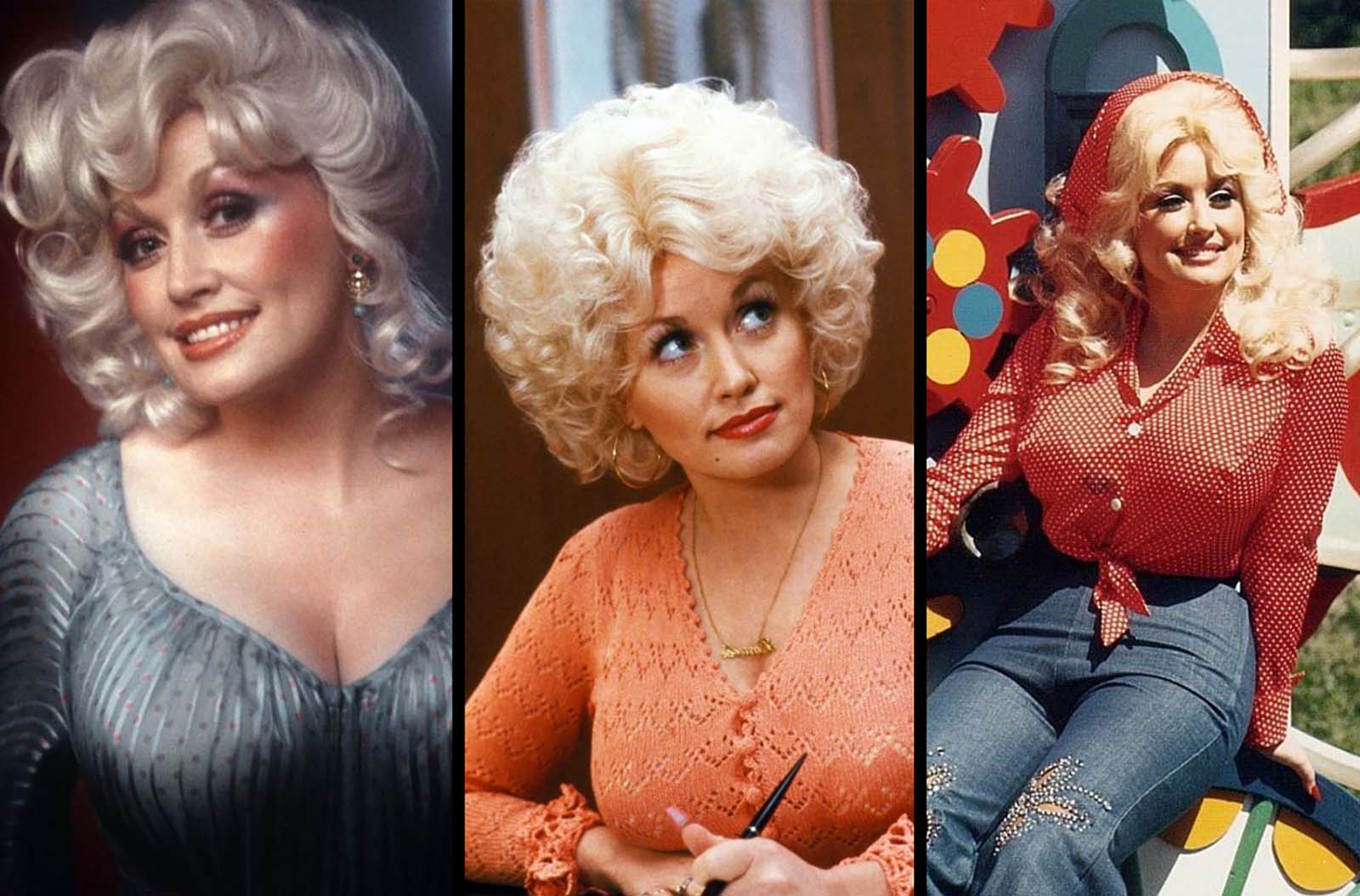
Dolly Parton: The Coat of Many Colors She Left for the World

By Tony Edike
A life stitched together with music, courage, generosity and the enduring lesson that love is worth more than wealth
Dolly Parton came from a place where there was not much money, but there was music, faith, family and love.

She left that place and became one of the most recognisable women in the world.

Yet, somehow, she never truly left it behind.

Dolly Parton, the country music legend, songwriter, actor, entrepreneur and philanthropist, died on 25 August 2026 at the age of 80 after a brief battle with cancer. Her death brought an outpouring of grief from admirers, fellow artists and generations of people whose lives had been touched by her music and generosity.
But perhaps the best way to understand Dolly was not through the rhinestones, the fame, the awards or the fortune.
Perhaps it was through a coat.
A simple coat made by her mother.
In “Coat of Many Colors,” Dolly transformed a childhood memory into one of the most enduring lessons in popular music. Her mother, unable to afford an expensive coat, stitched together scraps of fabric to make one for her daughter. At school, the little girl was mocked because of what she wore.
Dolly Parton wearing her Coat of Many Colours
But Dolly did not remember that coat as a symbol of shame.
She remembered it as a symbol of love.
Her mother had made it for her.
And that distinction says almost everything about Dolly Parton.
The world saw rags.
Dolly saw love.
The world saw poverty.
Dolly saw the richness of having a mother who cared enough to make something with her own hands.
The world saw something to laugh at.
Dolly found a story worth singing.
That was her extraordinary gift: the ability to take the ordinary, the painful and the humble and turn it into something beautiful.
The lesson in the coat
There is a lesson in that song that reaches far beyond country music.
It tells us not to measure people by what they wear, what they own, where they come from or how much money they have.
It teaches us that humiliation does not have to become defeat.
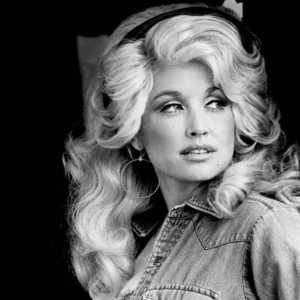
Dolly Parton
It teaches us that our beginnings do not have to determine our destination.
And, perhaps most importantly, it teaches us to recognise the value of the people who loved us when we had nothing to offer them.
Dolly never appeared ashamed of her humble beginnings. Instead, she carried them with her.
She remembered the mountains of Tennessee. She remembered her family. She remembered poverty. She remembered her mother’s hands.
And she turned those memories into songs that travelled around the world.
That is why her success was never simply about becoming famous.
It was about becoming something bigger than fame.
From the mountains to the world
Born into a large, poor family in rural Tennessee, Dolly Parton rose from circumstances that could easily have limited her ambitions. Instead, she became a prolific songwriter whose catalogue stretched into the thousands, a country music pioneer whose songs crossed genre and national boundaries, an actor whose performances became part of popular culture, and a formidable businesswoman.
Songs such as “Jolene,” “9 to 5” and “I Will Always Love You” became cultural landmarks.
But numbers alone cannot explain Dolly Parton’s impact.
She did something more difficult.
She made people feel understood.
She could sing about heartbreak without bitterness, ambition without arrogance and poverty without shame.
She could make millions laugh while reminding them of the struggles that millions quietly endure.
And beneath the wigs, sequins, humour and larger-than-life personality was a woman who understood the dignity of ordinary people.
She gave her success away
Dolly Parton’s generosity was not an accessory to her fame. It was part of her identity.
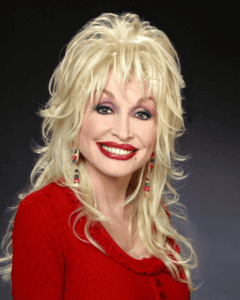
Dolly …gave her success away
Through the Dollywood Foundation and its Imagination Library, she helped put books into the hands of children around the world. The programme has distributed more than 300 million books, reflecting her lifelong belief in the transforming power of reading and education.
She also supported healthcare, education, disaster relief and medical research, including a $1 million donation toward COVID-19 vaccine research.
In that sense, the little girl in the coat of many colors never disappeared.
She simply grew up and acquired the means to make sure that other children had opportunities she had once lacked.
Dolly knew what it meant to have little.
And when she had much, she remembered.
That may be one of the greatest measures of a person’s character.
A legacy beyond music
Dolly Parton’s death leaves a remarkable space in American culture and in the wider world.
She was a country star, but she belonged to more than country music.
She was an actor, but her influence reached beyond film.
She was a businesswoman, but her greatest enterprise may have been the lives she changed.
She was a philanthropist, but she never seemed to regard generosity as a performance.
She was Dolly.
Funny. Glamorous. Sharp. Warm. Ambitious. Unapologetically herself.
And, beneath it all, deeply connected to the people and places that made her.
Her passing is therefore not simply the death of a celebrity.
It is the end of a remarkable human story.
A story that began in poverty and travelled through music to the whole world.
A story about a woman who refused to be defined by what she did not have.
A story about someone who understood that success is most meaningful when it becomes an opportunity to lift others.
The coat remains
In the end, perhaps Dolly Parton’s most important message was never complicated.
Love your people.
Remember where you came from.
Do not be ashamed of humble beginnings.
Do not measure human worth by possessions.
And when life gives you the opportunity to help someone else, do it.
The coat her mother made from scraps could easily have been remembered as an emblem of poverty.
Instead, Dolly turned it into an emblem of love.
She took something the world might have considered worthless and made it priceless.
Perhaps that is what she did with her entire life.
She took humble beginnings and made them beautiful.
She took pain and made music.
She took success and turned it into service.
She took her story and gave it to the world.
Dolly Parton has left the stage, but the music remains.
The books remain.
The kindness remains.
The lessons remain.
And somewhere, in the hearts of millions who heard her sing about a little girl wearing a coat her mother made for her, the colours remain bright.
A coat of many colors.
A life stitched together with love.
A legacy that will not wear out.
May God grant the soul of Dolly Parton eternal peace.
• Edike is Publisher/CEO, The Advocate Newspaper Nigeria













Entertainment
BREAKING: Veteran Nollywood Actor Pete Edochie Dies at 79 After Battle With Prostate Cancer
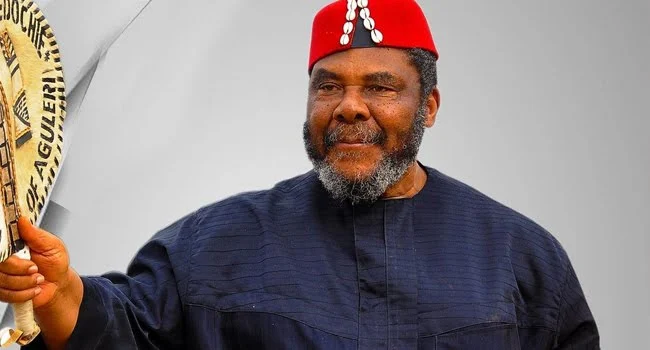
Veteran Nigerian actor and broadcaster, Chief Pete Edochie, has died at the age of 79.
Edochie reportedly died at 12:30 a.m. on Wednesday, November 25, 2026, in Enugu, following a prolonged battle with prostate cancer.
His death was announced in a statement signed by his son, Chief Leo Pete Edochie, on behalf of the family and shared on Instagram on Wednesday.
The statement described the deceased as a beloved husband, father, brother and kinsman, disclosing that he hailed from Akamnato, Ifite Nteje, in Oyi Local Government Area of Anambra State.
The statement read:
“With profound sadness and hearts bowed in total submission to the will of Almighty God, we announce the passing of our beloved husband, father, brother and kinsman, Chief Dr Pete EDOCHIE, MON (Ononenyi), a retired broadcaster and veteran actor, who departed this life on Wednesday, 25th November 2026 at 12.30am after a protracted battle with prostate cancer in Enugu, Nigeria. He was aged 79 years.
“Chief Dr Pete EDOCHIE hailed from Akamnato Ifite Nteje and is survived by his beloved wife, Barrister Mrs Josephine Edochie, his children, siblings and numerous other relations.
“Funeral arrangements will be announced in due course.
“As we mourn this painful loss, we pray that Almighty God grants his gentle soul eternal rest and gives the entire family the fortitude to bear this irreparable loss. May God be with us all at this trying time. Amen.”
The statement was signed by Chief Leo Pete Edochie on behalf of the family.
Born on March 7, 1947, Pete Edochie was one of Nigeria’s most celebrated actors, renowned for his commanding screen presence, distinctive voice, mastery of dialogue and memorable portrayal of traditional African patriarchs.
His career spanned several decades, during which he became a household name in Nigeria and gained recognition across Africa and among international audiences.
Early Life and Educational Background
Edochie was of Igbo origin and hailed from Nteje in Anambra State. He spent his formative years in Northern Nigeria, particularly Kaduna, where he attended St. Patrick’s and St. James Primary School before proceeding to St. John’s College for his secondary education.
His interest in communication and broadcasting later took him to England, where he studied Journalism and Television at the School of Journalism and Television.
Before establishing himself as an actor, Edochie reportedly had a brief working experience with the Nigerian Railway Corporation.
His professional broadcasting career began in 1967 when he joined the Eastern Nigerian Broadcasting Corporation as a junior programmes assistant.
He subsequently rose through the ranks, becoming one of the prominent figures in the broadcasting organisation, which later became associated with the Anambra Broadcasting Service.
At different times, he served as Director of Programmes and occupied senior management positions, including Deputy Managing Director.
His years in broadcasting helped develop the articulate delivery, commanding voice and exceptional communication skills that later distinguished him on screen.
Breakthrough With Things Fall Apart
Although he had established himself in broadcasting, Edochie’s major breakthrough in the entertainment industry came in 1987 when he played the lead character, Okonkwo, in the Nigerian Television Authority’s television adaptation of Chinua Achebe’s internationally acclaimed novel, Things Fall Apart.
His interpretation of Okonkwo, a proud, hardworking and uncompromising traditional Igbo warrior whose life is shaped by ambition, cultural expectations and personal tragedy, became one of the most memorable performances in Nigerian television history.
The production, undertaken in collaboration with the British Broadcasting Corporation, brought him national and international recognition.
His powerful interpretation of the character earned him widespread acclaim and established him as one of the most recognisable faces in African entertainment.
The role also helped introduce Nigerian television productions and African storytelling to wider audiences.
A Distinguished Nollywood Career
Following the success of Things Fall Apart, Edochie transitioned into the Nigerian film industry, where he became one of its most influential and recognisable performers.
He featured in numerous Nollywood productions, often portraying traditional rulers, wealthy patriarchs, community leaders, fathers and authoritative elders.
His ability to deliver dialogue with authority, particularly his use of proverbs, cultural expressions and traditional wisdom, distinguished him from many of his contemporaries.
Among the films associated with his career are Igodo, The Egg of Life, Billionaire Club and Lionheart.
He also became particularly popular among younger audiences through his memorable performances in films featuring some of Nollywood’s leading actors.
Beyond his acting talent, Edochie was widely regarded as one of the actors who helped establish the cultural identity and international appeal of Nigerian cinema.
Awards and National Recognition
His contributions to broadcasting and the entertainment industry earned him several recognitions.
In 2003, he was conferred with the national honour of Member of the Order of the Niger (MON) by former President Olusegun Obasanjo.
He also received industry recognition, including an Industry Merit Award from Africa Magic and a Lifetime Achievement Award from the Africa Film Academy.
His career and public influence made him a respected figure in Nigeria’s creative industry, particularly for his promotion of African cultural values, traditional wisdom and indigenous storytelling.
Family and Legacy
Beyond the screen, Edochie was a family man who was married to Barrister Josephine Edochie and blessed with children, including Nollywood actor Yul Edochie.
He remained one of the most recognisable elder statesmen in the Nigerian film industry, with his distinctive voice, memorable expressions and portrayal of traditional African values becoming part of popular Nigerian entertainment culture.
His influence extended beyond acting, as his performances helped preserve and popularise aspects of Igbo culture, traditions and oral storytelling for successive generations.
With his death, Nigeria’s entertainment industry has lost one of its most recognisable performers, whose portrayal of Okonkwo in Things Fall Apart remains a defining moment in the history of Nigerian television.
Funeral arrangements are expected to be announced by the family in due course.

A popular Benue-based dancer and entertainer, Kelvin Ngutor, popularly known as ‘Benue Chris Brown’, has been killed by suspected armed robbers in Makurdi, the state capital.
Ngutor was reportedly shot dead on Wednesday after dropping off an acquaintance at an estate, where the assailants allegedly ambushed him and made away with his motorcycle.
A former aide to Governor Hyacinth Alia, Terver Atu, disclosed the incident in a social media post, alleging that the attackers appeared to have been waiting for the entertainer at the entrance of the estate.
His death has triggered an outpouring of grief among members of the Benue entertainment industry, who described him as a talented performer with a passion for dancing and roller skating.
Atu said the deceased had performed at several of his events without demanding payment, describing him as a dedicated entertainer who was passionate about his craft.
He also appealed to youths to support security agencies with credible information that could lead to the identification and arrest of those responsible for the killing.
Another social media user, Ati Kengkeng Ati, said Ngutor was known to Governor Alia dating back to the governor’s days as a Catholic priest at St. Theresa’s Church.
Ati described the late entertainer as a gifted dancer whose performances captivated audiences, while also highlighting his impressive roller-skating skills.
He expressed concern over the rising incidents of motorcycle theft and insecurity in Makurdi, urging members of the entertainment industry to pay greater attention to their personal safety, particularly as their engagements often extend into late-night hours.
Comedian Nicodemus also joined in mourning the deceased, recalling his efforts to secure performance opportunities and establish himself in the entertainment industry.
He described Ngutor as respectful, hardworking and determined to make a living through his talent.
Nicodemus appealed to residents with useful information about the incident to assist security agencies in tracking down the perpetrators.
Another entertainer, who said he saw Ngutor at his album launch last month, described his death as a painful loss, lamenting that a young man pursuing his dreams had lost his life in an incident reportedly linked to the theft of his motorcycle.
Similarly, Cornelius Tyavkase expressed sadness over the killing, recalling how he met Ngutor at Barcony, where they exchanged contacts and bonded over their shared passion for dancing.
Tyavkase said he had looked forward to collaborating with the deceased but would now have to live with the painful reality that the opportunity would never come.
Meanwhile, efforts to reach the spokesperson for the Benue State Police Command, Peter Orchia, for confirmation and comments on the incident were unsuccessful, as calls placed to his telephone lines were not connected.

Nigerian singer Habeeb Okikiola, popularly known as Portable, has claimed that he received N100 million for participating in campaign activities organised by the All Progressives Congress (APC).
The street-pop singer made the claim in a video circulating on social media on Friday, where he was seen wearing an APC-branded shirt and a cap bearing the name of Senator Solomon Adeola, popularly known as Yayi. He also displayed campaign materials featuring the politician.
Portable alleged that he woke up to discover that N100 million had been credited to his bank account, claiming that the payment was made on Adeola’s instructions in recognition of his participation in the campaign activities.
Expressing excitement over the alleged payment, the singer thanked the senator and another individual identified as IBD Dende.
“My dearest fans! I just woke up to an alert of N100 million from Yayi! IBD Dende, oga mi! God bless you. Thank you! Yayi instructed them to send me the money,” he said.
Portable also recounted how he had initially been sceptical after some associates informed him that Adeola was looking for him, recalling a previous occasion when he allegedly received no money despite similar assurances.
He, however, expressed gratitude to God and the politician, describing the alleged N100 million payment as a significant financial boost.
The latest claim comes weeks after the singer publicly acknowledged receiving payment for participating in APC campaign activities in support of President Bola Tinubu ahead of the 2027 general elections.
In October, Portable appealed to President Tinubu and his son, Seyi Tinubu, for additional payment after performing at an APC rally held at the Onikan Stadium in Lagos on October 13.
In a video recorded after the rally, the singer was seen lying on the stadium floor, complaining about the physical demands of entertaining supporters and requesting an opportunity to meet the President and his son.
“I want to see President Tinubu and Seyi Tinubu; they have almost squeezed me to death. I have fainted; it is President Tinubu that is winning. Did we not collect money? President Tinubu, pay me more money; I am feeling so much heat,” he said.
Although Portable acknowledged receiving payment for his participation in the rally, he maintained that his efforts deserved additional compensation.
In another video that circulated earlier in October, the singer claimed that the money he received from campaign activities had improved his financial situation following a period of financial difficulties.
However, Portable’s latest claim of receiving N100 million has not been independently verified. The alleged transaction, including its source, purpose and circumstances, remains unclear.
-
 Entertainment3 days ago
BREAKING: Veteran Nollywood Actor Pete Edochie Dies at 79 After Battle With Prostate Cancer
-
News2 days ago
Gunshots as Obi, Kwankwaso Arrive Benin for NDC Town Hall Meeting
-
News3 days ago
‘We’ve Lost a Titan, Legend, an Icon’, Gov Mbah Mourns Pete Edochie
-
News3 days ago
Mbah Makes Christmas Homecoming Easier, Offers Enugu Indigenes Free Transport
-
News1 day ago
‘They Shot Me Five Times’ — NDC Supporter Recounts Attack on Omo-Agege’s Campaign Team in Delta
-
News17 hours ago
Davido, Patoranking, Zoro, Cubana Chief Priest Join Anyi Chuks As He Unveils Five-Point Agenda, Promises 180,000 Jobs In Ebonyi
-
Features2 days ago
Ebonyi Will Rise Again: Odii’s Vision of Economic Renewal, Jobs and Inclusive Development
-
News2 days ago
Ebonyi 2027: Odii Pledges to Complete Abandoned Projects, Rejects Political Thuggery