News
Enugu begins commercial production of Palm Oil, targets product refining

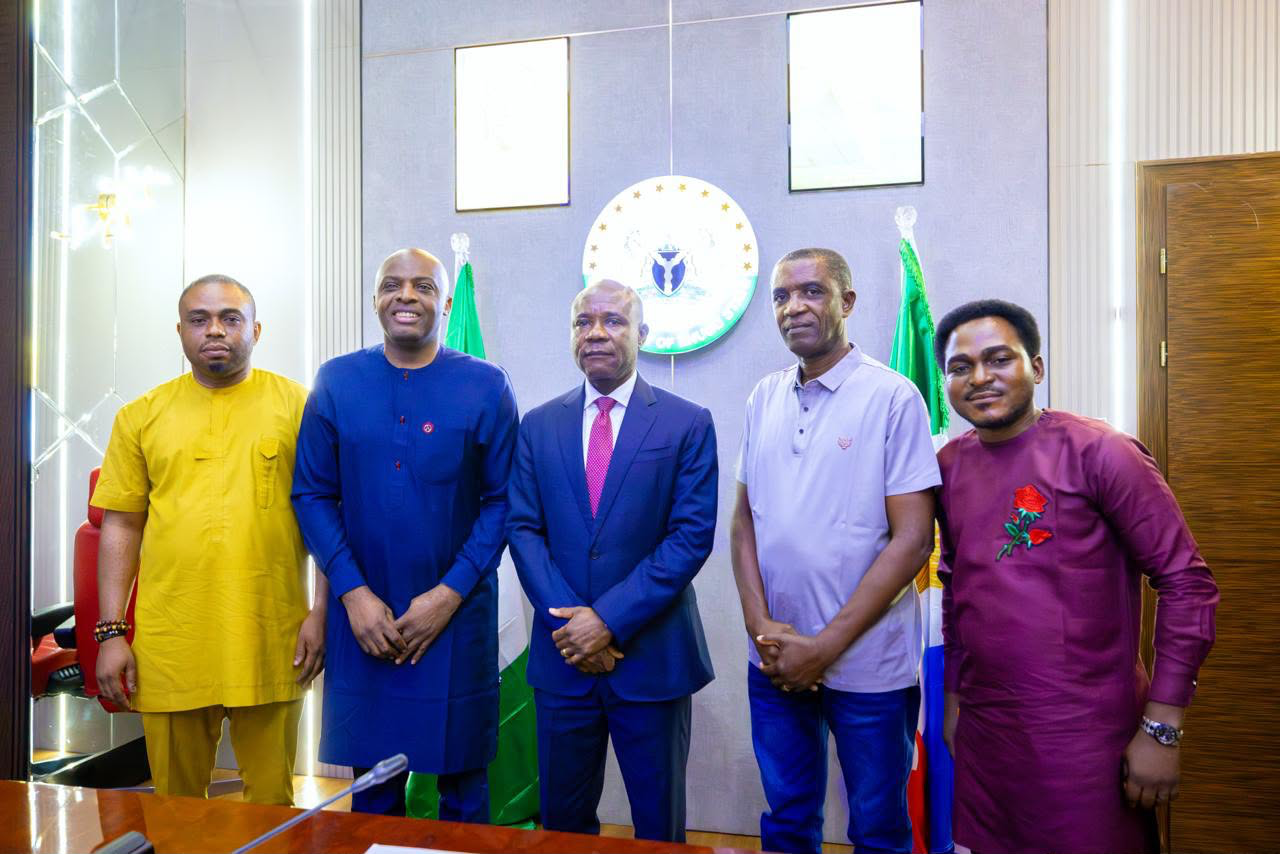
The Enugu United Palm Products Limited (UPPL), a public-private partnership between Pragmatic Palms Limited and the Enugu State Government, has commenced commercial production of palm oil for the Nigerian market, with plans to expand into refined products and establish a new industrial complex.
The development was disclosed on Monday by the Managing Director of the company, Prof. George Nwangwu, when he led other directors of the firm to Government House, Enugu, to brief Governor Peter Mbah on the progress of the company since the commencement of its operations two years ago.

Nwangwu said the company had restored its plantations in Ibite-Olo, Umulokpa and Ugwu-Oba, located in Ezeagu, Uzo-Uwani and Oji River Local Government Areas of the state, respectively, to productive use.
According to him, the company has so far replanted over 1,000 hectares and is gradually replacing old palm trees, some of which are more than 50 years old.
“When we took over, the place was thick forest and nothing but a dead place. We came in and turned the place from being a forest into a plantation.

“We have cleared the whole place, pruned the trees that were there and started replanting. The trees we met were very old, over 50 years old, and so they needed to be replaced. Gradually, we are replacing them. So far, we’ve planted over 1,000 hectares. The idea is to keep planting until we replant the entire plantation and renew all the trees that are there,” he said.
The UPPL boss said the company was moving beyond primary agricultural production by investing in processing and value addition, noting that it had installed mills and improved the quality and volume of palm oil production.
He disclosed that the company was also investing $2.2 million in a refinery that would process Crude Palm Oil (CPO) into olein and stearin, while refining palm kernel oil.
“We also understand that this is a business and not just planting. Agriculture has moved beyond planting alone. We need to process because value addition is important. So, we’re milling our oil now. We’ve improved the quality and quantity of the oil that we’re producing.
“We have installed mills and also invested heavily in refining the products further down the line. We’re investing about $2.2 million to install a refinery. The refinery will not only refine our Crude Palm Oil (CPO) into olein and stearin, it will also refine our palm kernel oil,” Nwangwu said.
He added that the company was developing a new industrial complex to consolidate its production and processing operations.
Nwangwu further disclosed that the company’s palm oil brand, EVOP, had been launched and was already available in open markets and supermarkets across Nigeria, with sachet packaging expected to hit the market within two weeks.
He explained that the EVOP name was chosen to connect the product with the region’s agricultural and industrial heritage, particularly the former AVOP vegetable oil brand produced in Nachi, Udi LGA.
“We chose the name EVOP to make sure that we keep in touch with our historical foundation. Some of us who are old enough would remember AVOP vegetable oil being bottled in Nachi, Udi. We feel that this is the product of our people and we had to connect with our historical beginnings.
“That’s why we called it EVOP, to connect with and remind people of our historical AVOP,” he said.
According to him, the company’s objective is to make the product accessible to households across Nigeria while maintaining strict standards of quality, natural production and traceability.
“The important takeaway about this palm oil is that it’s natural. Our plantations are in Ibite-Olo, Umulokpa and Ugwu-Oba. You can see the trees there. If you go there, you can see where we harvest the fruit bunches, how we mill the fresh fruit bunches and how we package them.
“Everything is done in-house. Nothing is contracted. We are end-to-end, and we also have certification from NAFDAC, SON and all the relevant agencies.
“If you look at our product, you’ll see a barcode there, and you’ll also see a code that you can scan to tell you where the product is from. For us, traceability matters, and that is the fundamental advantage of our palm oil,” Nwangwu added.
He said the company’s expansion was expected to contribute to employment generation, local economic activity and the development of the state’s agricultural value chain.
Responding, Governor Mbah described the partnership between the Enugu State Government and Pragmatic Palms Limited as a model worthy of emulation, saying it demonstrated the administration’s commitment to reactivating dormant government assets for the benefit of Ndi Enugu.
He assured the company that the state government would fulfil all its obligations under the partnership and provide the necessary support to enable UPPL achieve its full potential.
Mbah also expressed support for the company’s plan to list on the Nigerian stock market within four years, saying Enugu needed companies capable of attracting public investment and creating greater value for the state.
“This is consistent with the state’s ambition, to optimise these assets and to grow them and make them big. We are talking about an investment outlay of over N100 billion, and if in four years you are targeting going to the market, we are with you on that. We will give you all support,” he said.
The governor disclosed that the state government was at the verge of awarding two major road projects to improve access to the company’s plantations, including the road from Umumba Ndiagu to Ebenebe, adding that the projects would be fast-tracked.
He also said he had directed that the headquarters of the state’s Forest Guards be located at Ibite-Olo to strengthen security around the plantation, while assuring the company that the government would address any encroachment on its acquired land.
Mbah further assured UPPL that the government would
provide the 6,700 hectares committed under the partnership and work with the company and the host communities to secure additional land if it decides to expand its target to 10,000 hectares.
He stressed the importance of maintaining transparent and credible financial records ahead of the proposed listing and said the government would hold regular briefings with the company to identify and swiftly resolve challenges.



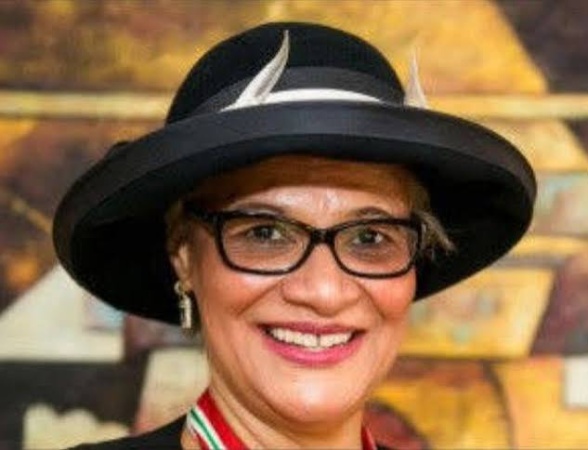
A retired justice of the Supreme Court, Amina Adamu Augie, has warned that corruption within Nigeria’s judiciary and legal profession is eroding public confidence in the administration of justice and transforming the courts from institutions of impartiality into what she described as “market stalls.”
Speaking in Abuja during the 40th anniversary celebration of the Nigerian Law School Class of 1986, popularly known as the Centennial Class, Augie said corrupt practices involving judges, lawyers and court officials had weakened the credibility of the justice system and damaged the public’s perception of the legal profession.
The retired justice called for practitioners found guilty of misconduct to be punished, regardless of their seniority, influence or professional standing.
Augie, who taught at the Nigerian Law School before beginning her judicial career, identified corruption, political interference, inadequate funding and delays in the administration of justice as some of the most serious challenges facing Nigeria’s judiciary.
“The third, which I will not dress up, is corruption. Where it exists on the Bench, at the Bar, or in the Registry, it poisons everything by turning the one place that a citizen should find impartiality into one more market stall,” she said.
She nevertheless cautioned against the blanket condemnation of the judiciary, stressing that the majority of judges and lawyers remained honest, hardworking and poorly remunerated.
According to her, the justice system must be designed in a way that protects judicial officers and other legal practitioners from undue pressure and temptation, rather than exposing them to conditions that make misconduct easier.
Augie expressed particular concern about the conduct of some senior members of the legal profession, saying their actions had contributed substantially to the decline in public trust in the courts and the wider justice system.
“Have we kept faith with them? In part, YES, in part, NO. Public trust has paid the price. The public today is quick to believe the worst of lawyers, and sorry to say, not always without cause,” she said.
“When a few senior members of the profession have been found to traffic in the corruption of justice, the damage is not to them alone; it stains the gown we all wear.”
She said rebuilding confidence in the legal system would require more than public relations campaigns or efforts to improve the image of the judiciary. In her view, the profession must demonstrate a willingness to discipline its members openly and fairly, without being intimidated by their status.
“Restoring that trust is not a matter of better public relations. It is a matter of conduct and a profession willing to discipline its own, without fear or favor, no matter how senior the offender may be in the legal profession,” she said.
The retired justice reminded lawyers that their foremost duty was to the court and the administration of justice, not merely to the clients who retained them. She said professional responsibility demanded honesty, candour, respect for judicial authority and commitment to the rule of law.
Augie urged lawyers to reject attempts to manipulate court proceedings, manufacture or distort evidence, delay cases unnecessarily or secure favourable judgments through improper influence.
She also warned that corruption could not be addressed in isolation from the broader conditions under which the judiciary operates. Inadequate funding, she said, posed a serious threat to judicial independence because a court that depended on the executive for basic infrastructure and operational needs could not be regarded as completely autonomous.
“A Judiciary that must beg the executive for a Courtroom roof, vehicles, or even the Judges’ entitlements is not fully free; financial autonomy for the Courts is not a perk for Justices and Judges, but a guarantee for litigants,” she said.
Augie further criticised the delays and high costs that continue to make litigation inaccessible to many Nigerians. She described delay as the “chronic disease” of the country’s justice system and said it had weakened public confidence in the courts.
Drawing on her experience at the Supreme Court, she said the apex court was burdened by an excessive number of appeals, including disputes that should ordinarily have been resolved at lower levels of the judicial system.
She recalled an appeal concerning the burning of 12 goats that eventually reached the Supreme Court, despite the enormous workload already confronting the court.
According to her, constitutional amendments were needed to narrow the categories of cases that could be taken to the apex court. Such reforms, she said, would enable Supreme Court justices to focus on matters involving significant constitutional, legal and national questions.
Augie also condemned the repeated failure of government authorities to comply with court orders. She cited the prolonged detention of former National Security Adviser Sambo Dasuki and Islamic Movement leader Ibrahim El-Zakzaky, despite judicial directives ordering their release.
She said the disobedience of court orders by public officials weakened the authority of the judiciary and sent a dangerous message that compliance with the law was optional for those in power.
Reflecting on the development of Nigeria’s justice system over the past four decades, Augie acknowledged that progress had been made, particularly since the country’s return to democratic rule in 1999. However, she expressed disappointment that justice remained slow, expensive and beyond the reach of many citizens.
She referred to Nigeria’s ranking of 120th out of 143 countries in the 2025 World Justice Project Rule of Law Index, describing the position as an uncomfortable indication of the country’s institutional weaknesses and the continuing challenges facing its justice system.
Augie called for comprehensive reforms to strengthen judicial independence, improve access to justice, modernise case management, reduce delays and restore ethical standards across the legal profession.
She urged members of the Class of 1986, many of whom now hold senior positions in the judiciary, government and legal profession, to use their influence to defend the rule of law and rebuild public confidence in the courts.
“If Governments obey the Courts, if its Judgments are enforced, if justice comes within a reasonable time and within reach of the poor, if the profession upholds its integrity and disciplines its own, Nigeria would be better positioned to secure its future”, she said. (Weekend Trust)
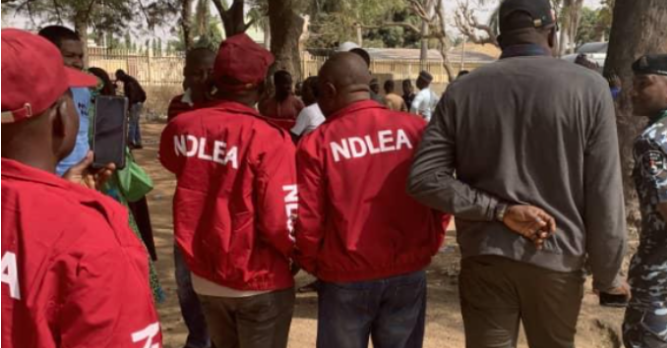
The National Drug Law Enforcement Agency (NDLEA) has intercepted 8,725 kilogrammes of tramadol powder worth more than ₦6.98 billion at the Apapa Port in Lagos and arrested a female passenger allegedly attempting to smuggle cannabis to Saudi Arabia.
The passenger, Fatimah Ahmad, was arrested on Friday, October 16, during the outward clearance of an Ethiopian Airlines flight to Jeddah via Addis Ababa at the Mallam Aminu Kano International Airport, Kano State.
The agency said operatives found 511.75 grammes of cannabis concealed in a gallon of palm oil she was carrying.
According to the NDLEA, Ahmad told officers that her cousin, Abubakar Yahaya, had given her the gallon. Yahaya was subsequently arrested at the airport car park.
The agency’s Director of Media and Advocacy, Femi Babafemi, disclosed the arrests and seizures in a statement on Sunday, detailing a series of anti-drug operations across several states.
At the Apapa Port, NDLEA operatives, working with the Nigeria Customs Service and other agencies, uncovered the tramadol shipment on October 2 during an examination of cargo declared as maize starch.
A confirmatory test at the agency’s forensic laboratory identified the substance as tramadol hydrochloride powder. When separated from its concealment on October 14, the shipment comprised 349 bags with a gross weight of 8,725 kilogrammes, valued at more than ₦6.98 billion.
At the Tin Can Port, also in Lagos, officers discovered 55 kilogrammes of Canadian Loud, valued at ₦165 million, hidden in a Toyota Sienna vehicle inside a 40-foot container on October 12.
The agency also reported the arrest of Elizabeth Chidera Kalu at Idumota Market on October 14, with 10,600 ampoules of diazepam injection and 6,500 tablets of Molly recovered from her store.
In separate operations in Mushin, two men, Idowu Daudu and Ahmed Oniyinde, were arrested on October 15 with 59.95 kilogrammes and 61.23 kilogrammes of skunk, respectively.
Another operation along Iyana Oba led to the interception of a truck allegedly carrying illicit drugs from Trade Fair Market. The NDLEA said 18,000 pills of tramadol 250mg were found in cartons labelled as Rambo insecticide. The suspects arrested were identified as Tajudeen Adeduntan, a loading manager, and his assistant, Azeez Sikiru.
In Edo State, six suspects were arrested during raids in Warake, Ivhiaro and Ewe/Irue communities in Owan East Local Government Area between October 15 and 16.
Those arrested included 85-year-old Grace Ehimeka, who was allegedly found with 179 kilogrammes of skunk, and Ayo Aigberadion, 53, with 220.8 kilogrammes. Other suspects were allegedly found with varying quantities of cannabis and other substances, including tramadol, Swinol and diazepam.
In Ondo State, the agency said operatives raided a cannabis farm in Okemoro Isinbode camp forest on October 17, destroying 7,500 kilogrammes of skunk cultivated on three hectares of land and arresting five suspects.
The operation also yielded 92 bags of skunk weighing 1,267 kilogrammes, 11 kilogrammes of cannabis seeds and three kilogrammes of fresh stems, bringing the total weight of the recovered exhibits to 1,281 kilogrammes.
In another operation in Owo, officers tracked 53-year-old Okunebe Ndidi to a hideout in Ameyinti on October 16 and recovered 25 bags of cannabis weighing 375 kilogrammes.
In Bauchi State, NDLEA operatives intercepted a Volkswagen Golf wagon at Ragwam village in Katagum Local Government Area on October 14, recovering 894,800 tramadol capsules and Exol-5 tablets from Shamsu Garba, 35.
The agency also said officers on patrol along the Bauchi-Gombe road recovered 291 blocks of cannabis weighing 265 kilogrammes from an abandoned vehicle at Tudun Natsira village. (Channels TV)
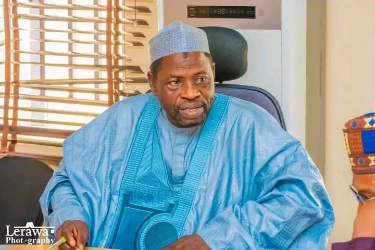
Alhaji Ibrahim Ladan Duguri, the Executive Secretary of the Bauchi State Health Contributory Management Agency (BASHCMA), has lost his life alongside those of four of his children in an accident at Yalwan Duguri in Alkaleri Local Government Area of the State.
Governor Bala Mohammed, who confirmed the tragedy, expressed profound sorrow and deep grief.
The governor described the death of Alhaji Ibrahim Ladan Duguri as a monumental loss to Bauchi, particularly the health sector, “where he distinguished himself through dedication, commitment, and an unwavering passion for improving access to healthcare services for the people”.
In his condolence message signed by his Special Adviser on Media and Publicity, Mukhtar Gidado, the governor equally saddened by the tragic circumstances surrounding the incident and extends his heartfelt sympathy to the immediate family of the deceased, the Duguri Emirate Council, friends, associates, colleagues, and the entire people of Bauchi over the loss.
He also prayed for the full recovery, strength, and comfort of Suleiman, one the deceased’s son who reportedly survived the accident .
Mohammed said, “As Executive Secretary of BASHCMA, the deceased played an important role in advancing the state’s health contributory management system and supporting efforts to make healthcare more accessible to the people, especially the less privileged. His dedication was also evident in his contributions to the state’s medical team during pilgrimage exercises in the Kingdom of Saudi Arabia, where his commitment to the health and well-being of pilgrims was widely valued.
“Beyond his professional accomplishments, Alhaji Ibrahim Ladan Duguri was a close personal friend, and classmate of Governor Bala Mohammed. His death, therefore, represents not only the loss of a valued public servant but also the painful departure of a beloved family member and trusted companion whose life was marked by service, loyalty, and dedication to humanity.”
He acknowledged that no words can adequately express the pain and anguish of the bereaved family at this difficult moment.
Mohammed prayed that Almighty Allah, in His infinite Mercy, would forgive the shortcomings of the deceased, accept their good deeds, and grant Alhaji Ibrahim Ladan Duguri and his beloved children eternal rest in Aljannatul Firdaus.
The governor called on all well-meaning citizens of Bauchi to remember the bereaved family in their prayers and to offer them the necessary compassion, and solidarity during this moment of profound grief.
The funeral prayer for the deceased will be conducted at the palace of the District Head of Yalwan Duguri by 11:00am, on Sunday.
-
 Faith3 days ago
BREAKING: Anglican Church Places Archbishop Ibezim on Six-Month Leave, Bars Him From Church Duties
-
News3 days ago
Gunmen Abduct Catholic Priest in Benue, Police Launch Rescue Operation
-
News3 days ago
Tinubu Orders Rescue of Kidnap Victims, Demands Peaceful 2027 Elections
-
Faith1 day ago
Awka Anglican Diocese Rejects Ibezim’s Suspension, Threatens to Leave Church of Nigeria
-
News1 day ago
BREAKING: Mbah Extends Enugu Movement Restriction to 10pm, Scraps Keke Ticketing
-
Politics22 hours ago
Nigeria’s Weak Opposition and the Cost of One-Party Dominance: Can the Opposition Rebuild Before 2027?
-
News1 day ago
2027: Keke Riders Endorse Mbah, Tinubu
-
News2 days ago
Enugu Approves ₦32bn Legacy Gratuity Payment, Begins Disbursement Next Week