News
Bello seeks court approval for overseas medical trip

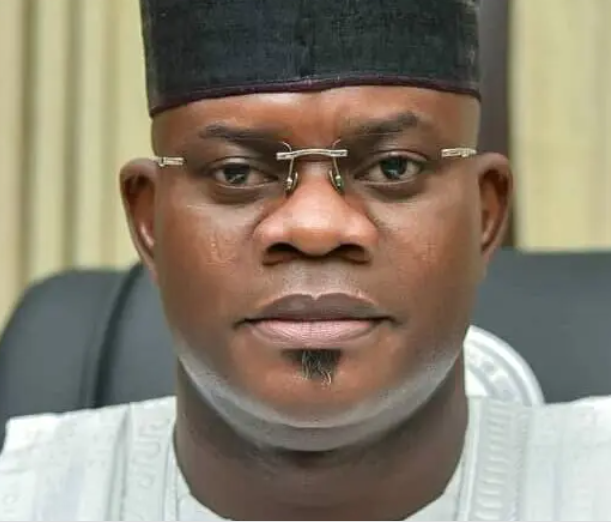
Former Kogi State Governor, Yahaya Bello

The immediate past Governor of Kogi State, Yahaya Bello, on Friday urged the Federal High Court in Abuja to release his international passport to enable him to travel abroad for a medical check-up.
Bello is being prosecuted by the Economic and Financial Crimes Commission on allegations of money laundering amounting to ₦80.2 billion.
During the resumed hearing, the defendant’s lead counsel, J.B. Daudu (SAN), filed an application requesting the retrieval of Bello’s travel documents, citing the defendant’s medical needs.

However, the prosecution counsel, Kemi Pinheiro (SAN), told the Court that they are opposing the application and a counter-affidavit has been filed to this effect.
He argued that the application was technically incompetent, adding that a similar application had already been filed at the FCT High Court, describing it as an abuse of court process.
In response, Daudu countered that it was the prosecution that was guilty of abusing court processes. He said, “We were served with the counter-affidavit yesterday, and overnight, we filed a further affidavit addressing the complainant’s counter-affidavit, supported by two exhibits.
“My Lord, the substance of this application is the release of my client’s international passport in accordance with the bail conditions, which require court approval for travel. He has pressing medical needs to attend to during the court’s vacation period. After eight years without travelling, he needs to address specific aspects of his health,” Daudu added.
Meanwhile, the fourth prosecution witness, a compliance officer with Zenith Bank, Mshelia Arhyel Bata, denied claims by the EFCC that he was harassed by Bello’s security aides.
The EFCC had raised an observation that the witness was harassed by one of the security details attached to the defendant.
The Daudu, however, doubted the claim, noting that he had always known his client to be a man of peace.
He proceeded to assure the court that he would investigate the allegation and report back accordingly.
The judge urged the defendant’s counsel to thoroughly investigate the matter.
However, at the close of cross-examination, the witness sought the court’s permission to address the allegation made earlier.
Bata clarified that he had not experienced any form of harassment, contrary to allegations raised by the EFCC.
“My Lord, I wish to clarify the matter raised earlier before the commencement of proceedings. I was not harassed by any of the security details attached to the defendant. I was not harassed at all, and I felt the need to clarify this, my lord,” Bata stated.
The defence team also drew the judge’s attention to a report on the EFCC’s website alleging that the witness had been harassed.
He also said the EFCC misrepresented the facts of the previous day’s court proceedings, responding, Pinheiro assured the court that he would notify the EFCC of the defence’s concerns.
Under further cross-examination by Daudu, Bata confirmed that Bello was neither a signatory to nor listed as a beneficiary of any transactions in the accounts submitted as evidence.
He admitted that, going through Exhibit 22A, from pages 24 to 413, Yahaya Bello was not listed on any of the documents as a beneficiary of any transaction.
The witness stated, “From the documents presented, there is no mention of His Excellency, Alhaji Yahaya Adoza Bello, as a signatory or beneficiary in any transaction.”
The compliance officer also mentioned the signatories on the accounts managed for the Kogi State Government House Administration and confirmed letters that introduced those who replaced some key officials along the line.
The prosecution objected to some of the defence’s questions, asserting that the witness should limit his testimony to the documents provided, stating, “The witness is not an expert in law.”
However, Justice Nwite remarked, “The witness, as an expert, knows what to say.”
The witness also told the court that he supervises a cluster of 13 branches within Abuja and other places like Gwagwalada, University of Abuja, Ahmadu Bello way, Baze University, Garki, and Garki Ultra Modern Market, among others.
He admitted that his clusters did not extend beyond the Federal Capital Territory.
The witness was told to identify the signatories to the accounts and their designations, considering the documents tendered as evidence.
He mentioned the names, ranging from the Permanent Secretary to the Chief Accountant and the accountant.
The court had on Thursday admitted as evidence statements of accounts for the Kogi State Government House Administration during the tenure of Bello as governor and six others, marking them as exhibits.
The witness submitted the computer-generated copies of the account statements and tendered certificates of identification for the accounts, in compliance with legal requirements.
Justice Emeka Nwite adjourned the case to July 3 and 4 for the continuation of the trial and set July 21 for the ruling on the travel application.











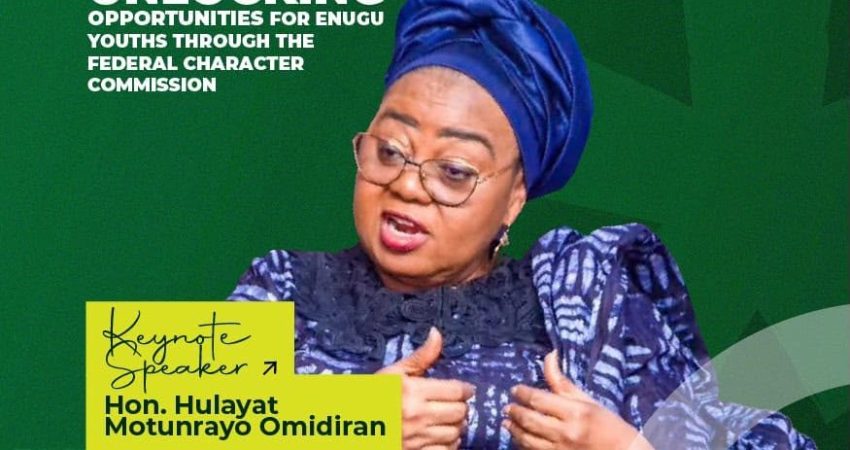
The Executive Chairman of the Federal Character Commission (FCC), Hon. Hulayat Motunrayo Omidiran, is expected to deliver the keynote address at the maiden edition of Peter Eze Youth Connect 2026 in Enugu.
Omidiran, popularly known as Ayo Omidiran, will be the keynote speaker at the youth-focused gathering, which is expected to provide a platform for discussions on expanding opportunities, promoting inclusion and unlocking the potential of young people in Enugu State.
The programme, themed “Beyond Quotas: Unlocking Opportunities for Enugu Youths Through the Federal Character Commission,” will hold at the International Conference Centre (ICC), Enugu.
Her participation is expected to bring a strong institutional perspective to the event, particularly on the role of the Federal Character Commission in promoting equitable representation and ensuring that young Nigerians have access to opportunities within the public sector and other areas of national development.
Omidiran assumed office as Executive Chairman of the FCC in January 2026 following her appointment by President Bola Ahmed Tinubu. She succeeded Dr. Muheeba Dankaka and became the first person from Southern Nigeria to lead the Commission.
She is expected to speak to young people on how they can better understand and take advantage of opportunities available through government institutions, while also addressing the broader question of inclusion and representation in Nigeria.
The FCC chairman’s participation comes at a time when youth unemployment, access to opportunities and equitable representation remain important issues in the country.
The event is being hosted by Hon. Peter Ogbonna Eze, the FCC Commissioner representing Enugu State and Chairman of the Commission’s Committee on Works, Transport and Aviation.
Eze, an economist and public administrator, was appointed by President Tinubu and inaugurated on January 22, 2026. At 35, he is the youngest Federal Character Commissioner in Nigeria.
The Peter Eze Youth Connect 2026 will also feature a programme on “Connecting Youths in Enugu State to the European Union Market for Apiculture Products,” aimed at exposing young people to opportunities in honey production, beekeeping and access to the European Union market.
The organisers said the initiative is designed to move beyond conventional discussions on youth empowerment by connecting young people with practical opportunities for economic participation, inclusion and growth.
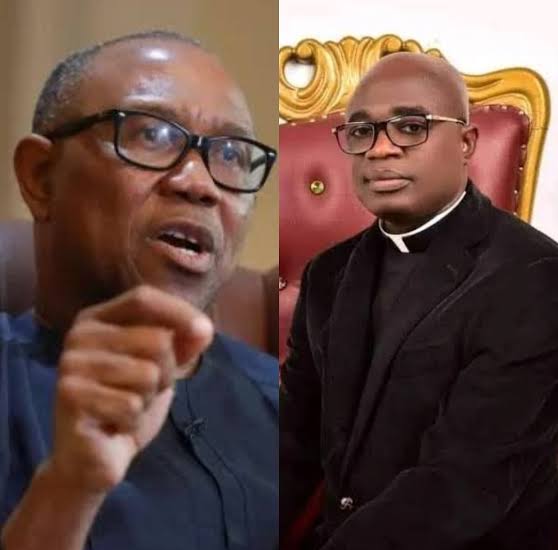
Benue State Commissioner for Information, Solomon Iorpev, has stated that the presidential candidate of the Nigeria Democratic Congress, Peter Obi, is courting trouble with the state government.
Iorpev, who was reacting to the blockage of Obi by some youths on Tuesday, said this was not the first time Obi had ignored protocol by failing to officially inform the state government about his visit to the state, considering his status.
The commissioner described Obi as a high-profile person and a former governor whose security should be provided by the host state.
He said, “A high-profile person who has been a former governor of a state is coming into the state; he should have written a letter to the State Government.
“We are supposed to guarantee his safety and protection, but in an instance where no letter was written, we could not guarantee his safety.
“This is not the first time he is doing this. He is just looking for our trouble. We are peace loving and hospitable people.”
The commissioner, who said he did not know those behind the attack on Obi, however, said that Obi’s visit regrettably coincided with the meeting of youths from the 23 local government areas of the state.
“So, if they were coming from either Tarka, Gboko, Buruku, Ushongo, Konshisha or Vandeikya at the same time of his visit and blocked the road, it is unfortunate. I do not know the youths who did that,” the commissioner said. (PUNCH)

The Peoples Democratic Party’s governorship candidate in Benue State, Chief Michael Aondoakaa, SAN, and the Obidient Movement have both condemned an attack on the Nigeria Democratic Congress, NDC’s presidential candidate, Peter Obi, during his engagements in Makurdi, describing it as a threat to democracy and constitutional rights.
Aondoakaa’s condemnation came in a statement issued on Tuesday by his media assistant, James Ian, in which he called the incident a disgraceful assault on democracy and a direct affront to the constitutional rights of Nigerians.
According to him, the Constitution of the Federal Republic of Nigeria guarantees every citizen the right to freedom of movement, association, and political participation.
“As such, no individual, group, or government has the authority to deny any Nigerian access to any part of the country on account of political affiliation.”
The former Minister of Justice and Attorney General of the Federation noted that President Bola Tinubu has repeatedly emphasised that all presidential and other candidates, as well as political leaders, must be free to travel across the country to canvass for support and engage with citizens ahead of the 2027 general elections.
The PDP gubernatorial candidate said, “any attempt to obstruct, intimidate, or attack a political leader exercising that right runs contrary to the spirit of democratic competition and undermines the President’s call for a peaceful and inclusive political process.
Chief Aondoakaa said the incident also constituted a violation of the recently signed peace accord by political actors, under which parties and candidates committed themselves to conduct issue-based campaigns, refrain from violence, and allow opponents to move freely and interact with voters without harassment, intimidation, or attacks.
He said democracy thrives on the free exchange of ideas, not on violence and political intolerance.
While expressing concern about the incident, the governorship candidate said the ugly incident portrays Benue State in a very negative light before the nation and the international community.
He, however, clarified that the actions of a few politically motivated individuals should not be seen to have represented the character, values, and culture of the people of the state.
“Benue people are renowned for their hospitality, civility, and respect for visitors. Our state has always welcomed people from different political, ethnic, and religious backgrounds. The attack on Mr. Peter Obi is therefore inconsistent with the true identity of our people and should be condemned by all lovers of democracy irrespective of political affiliation,” he said.
Aondoakaa lamented that at a time when Benue people are mourning the loss of hundreds of innocent citizens to incessant attacks and grappling with widespread insecurity, the state government appeared unable to prevent violence against its own people but quick to unleash political actors against visitors and opponents.
He insisted that no responsible government should tolerate, encourage, or be associated with acts of thuggery, intimidation, and harassment against political opponents or visitors to the state.
He called on security agencies to immediately conduct a thorough and impartial investigation into the incident and ensure that all those responsible are brought to justice regardless of their status or political connections.
While urging security agencies to guarantee the safety of all political actors and Nigerians exercising their constitutional rights, Aondoakaa called on Benue people to remain peaceful, law-abiding, and committed to democratic principles, stressing that violence, intimidation, and political thuggery have no place in the state’s political future.
Separately, the Obidient Movement condemned the attempt to restrict the movement of Obi during his engagements in Benue State.
In a statement issued by its Media and Communications Directorate on Tuesday, the group said the organised thugs barricaded Gboko Road near the Makurdi airport, causing significant traffic disruption and attempting to frustrate Obi’s movement.
The group alleged that the latest incident involved the blockage of major highways around the Air Force Base and Makurdi airport, accusing the organisers of deliberately creating a gridlock to disrupt Obi’s activities.
The group argued that Obi, as a Nigerian citizen and former governor, had a constitutional right to travel, assemble and interact with citizens anywhere in the country without seeking political permission.
The movement urged the authorities to end what it described as threats, highway blockades and other tactics designed to frustrate Obi’s political activities. (Nigerian Tribune)
-
 News2 days ago
NOUN bursar shot dead in Zamfara
-
News2 days ago
Gumi took my Moroccan wife from me, Kaduna man alleges
-
News2 days ago
Enugu CP receives Best Crime Bursting police chief award , SP Ndukwe best PRO
-
Health3 days ago
My wife had headaches from oranges preserved with chemicals – Osinbajo
-
News2 days ago
Atiku’s lobbyist deletes Trump appointment claim as White House keeps mum
-
News3 days ago
Enugu Youths unite against terror, declare support for FG, Mbah’s War on Insecurity
-
Politics14 hours ago
Peter Obi can rescue Nigeria, POMR replies Datti-Baba Ahmed
-
News14 hours ago
Fake agency sagas: Ministers, DGs face fresh hurdles over foreign trips