Connect with us

News

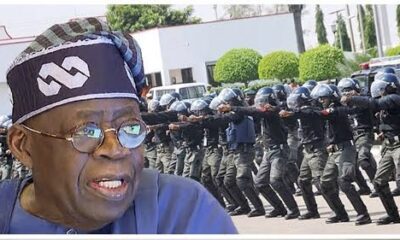
Democracy Day: Tension as protesters prepare to hit the streets

Published

on

Spread the love
A clash between protesters and security operatives looms on Thursday (today) as the Take It Back Movement, the rally organisers, has resolved to carry out a demonstration at the National Assembly, Abuja and 19 other locations across the country during the June 12 celebrations.

On the heels of the planned nationwide rallies, the police and other security agencies have beefed up security across the country.

The protest organisers confirmed to The PUNCH their intention to take their campaign against economic hardship to the political leaders.

The group earlier planned to rally against the tough reforms implemented by the Tinubu administration at Eagle Square, but later announced a change of venue in an interview with The PUNCH on Wednesday.

The protest, which is expected to draw participants from various civil society groups, is aimed at dragging attention to what the organisers described as “two years of misrule, hardship, and insecurity” under Tinubu’s government.

Maduka College Advert

Speaking on Wednesday, National Coordinator, Take It Back Movement, Juwon Sanyaolu, said the shift in protest location did not alter the objective of the demonstration.

“That we earlier said the protest would hold at the Eagle Square doesn’t foreclose the fact that Nigerians cannot organise themselves at the National Assembly to protest the two years of misrule under Tinubu,” Sanyaolu said.

“The unprecedented hardship and insecurity we have experienced under his government are alarming. So, Nigerians will be turning out nationwide to protest against this, and the National Assembly is one of those spaces where Nigerians can exercise their constitutional rights. We are encouraging Nigerians to move there in their numbers tomorrow (today).”

Sanyaolu cited rising poverty, rampant insecurity, and lack of democratic accountability as key grievances.

“All Nigerians from different walks of life have been mobilised, Nigerians are coming to the streets tomorrow (today) to demand an end to bad governance.

“Nigerians have nothing to lose. Nigerians have been beaten and battered. We are like people who are on the ground; we should have no fear of falling. It is also their constitutional right to protest.

“They have no reason to fear. The worst has happened, and the only way to stop the escalating level of our sorrow, tears and blood they are witnessing is to actually do something by protesting tomorrow. We have nothing to fear and we have nothing to lose but our chains.”

The activist said despite the attacks on some coordinators in Lagos, Gombe, Bauchi and Edo, among others, the protest would go on as scheduled.

“Presently, there has been a nationwide attack on organisers, but we are not deterred. The Bauchi state executives of TIB are being hounded by the police.

“In Gombe, Cross-River, Edo and Lagos, our coordinators are being hounded. We are convinced the only way to end the era of worse governance is defiance; that is what we are going to be doing fearlessly,” he noted.

Sanyaolu, however, cautioned security agencies, particularly police, against arresting or violating the rights of citizens to protest.

The Director of Mobilisation for the protest in the Federal Capital Territory, Michael Adenola, said the movement had gained momentum among young Nigerians who are angered by the worsening economic conditions and government neglect.

“Preparations are in order. Many Nigerian youths, who have expressed frustration over the spate of killings in the country, mass unemployment, and underfunded education, have shown commitment to participate in the protest.

“Other civil society organisations have also committed to mobilising their members. Expect thousands on the streets of Abuja.”

Adenola also cautioned the security agencies to respect the constitutional rights of protesters and refrain from using force.

“Again and again, men of our security agencies have shown themselves to be uncivilised by attacking protesters unprovoked. Our call to them is to at least pretend they are civilised.

“There is no reason to bring lethal weapons to the protest grounds. Take them to Sambisa or Plateau State to combat the real insecurity, not against protesters who are civilly demanding their rights,” he added.

When asked about the police plan to manage the protest, the Force Public Relations Officer, Muyiwa Adejobi, referred our correspondent to the FCT Police Command, Josephine Adeh.

However, Adeh did not respond to calls or messages as of the time of filing this report but he FCT Commissioner of Police, Adewale Ajao, assured law-abiding citizens of protection during the protest.

He said, “We are still on engagement and discussion, until then, we won’t know. We want to advise all law-abiding citizens that they should go about their lawful businesses without harassment from anybody. We urge Nigerians to be orderly. Everybody’s right must be respected.”

Meanwhile, Sanyaolu said the protest would take place in at least 20 locations nationwide.

“In Abuja, we will converge at Eagle Square by 8.00 am. In Lagos, we have four locations: Badagry, Maryland, Agbara, and Toll Gate, all starting by 7am.

“In Akure, Ondo State, we will gather at Cathedral Junction by 8am, and in Benin City, Edo State, at the Museum Ground by 9am. In Niger State, the venue is Gida Matasa at 8am.

“In Yobe, we will meet at the Maiduguri Bypass Roundabout in Damaturu by 7:30am, while in Oyo State, it is Mokola Roundabout in Ibadan by 8am.

“In Bauchi, the protest will be held opposite the Bauchi School of ACR, Yelewam Makaranta, by 8 am. In Osun State, it will be at Olaiya Junction in Osogbo,” Sanyaolu explained.

Speaking on the participants’ safety during the protest, he noted, “In regards to how we intend to cope with any attack, it is not the job or responsibility of Nigerians, or protesters, to secure themselves, it’s our right to protest.

“We have a duty as citizens to protest; as a matter of fact, it’s a part of our civic responsibility. So, the police must ensure the protection and safety of protesters.”

A group, the #EndBadgovernanceMovement, also slated the Ikeja Underbridge for protest.

In support of the rallies, the Ikeja branch of the Nigerian Bar Association wrote to the Lagos State Police Command seeking protection for the protesters.

In a letter on Wednesday signed by the Chairman of the NBA Ikeja Human Rights Committee, Chinenye Udeh, and vice chairman, Joseph Opute, the association referenced the prior notification given to the police by the organisers, and called for law enforcement agencies to fulfil their statutory duty under the Police Act.

Citing section 84(4) of the Police Act (as amended) 2024, the NBA reminded the police commissioner that, “where a person or organisation notifies your office of its intention to hold a rally, the police shall provide security cover for the rally.”

The letter further emphasised the constitutional nature of peaceful assembly.

“Rally is an expression of the constitutionally guaranteed right to movement, association and assembly and the law vests in your office the statutory duty to protect the rights and freedom of every person as provided in the Constitution and the African Charter on Human & Peoples Rights.”

The NBA noted that while the rally organisers were invited for a meeting with the police on June 10, 2025, the meeting was postponed due to the commissioner’s other engagements.

A request to hold the rescheduled meeting virtually was made, but according to the letter, it has yet to receive a response from the police.

The Bar urged law enforcement officials to adhere to the rule of law, stating, “The organisers of the #Endbadgovernance Movement have in full compliance with the law duly notified your good office of its intention to hold its June 12 commemorative rally. We therefore now respectfully request your office to provide the participants with security cover as stipulated by law.”

The lawyers also pledged to monitor the rally and issue an official report on the outcome.

Addressing journalists in Osogbo, Osun State, on Wednesday, the State TIB coordinator, Victor Lijofi, called on residents to come out en masse and join the demonstration, which he said would take off from Olaiya Junction, Osogbo.

“The police should therefore deploy officers to protect protesters and desist from any attempt to suppress or arrest peaceful protesters, and in the event of any attacks before, during, or after the protest, we shall hold the Nigeria Police Force accountable.”

The Bauchi State Coordinator, TIB Movement, Nuhu Nazif, revealed that the police requested a dialogue with him and his team after he notified them of the protest.

“Now is not the right time for dialogue,” Nazif said. “It is not good to be a friend of the police, especially when organising peaceful conduct.”

The Bauchi State Police Command vowed to address activities threatening public peace during the Democracy Day celebrations.

According to a statement on Wednesday by the command’s Police Public Relations Officer, Ahmed Wakil, all officers assigned for the occasion have been instructed to exercise vigilance, maintain professionalism and demonstrate courtesy in their interactions with residents.

He said a clear directive had been established to address activities threatening public peace.

The statement added that “Commissioner of Police Sani-Omolori Aliyu encourages citizens to reflect on the nation’s progress, honour the contributions of past leaders, and actively promote unity and peaceful coexistence.”

“The command wishes to make it unequivocally clear that any individual or group seeking to instigate disorder or disrupt the peaceful observance of Democracy Day celebrations in the state will face the full extent of the law.”

In readiness for the rallies, the security agencies in Borno, Edo, Delta, Ondo, Ogun, Yobe, Osun, Oyo, Jigawa and other states also deployed scores of personnel across their territories.

The Borno State PPRO, Nahum Daso, disclosed that about 1,500 policemen were mobilised ahead of the protest.

“Currently, we don’t have any threats in the state. Nevertheless, the police EOD team is currently on ground to sweep the area and will continue tomorrow (today) after the programme. It is going to be a hitch-free June 12 Democracy Day celebration,” he assured.

In neigbouring Yobe, the command confirmed it had put in place measures to maintain peace and order within and outside Damaturu, the state capital.

The state PPRO, Dungus Abdulkarim, said, “The police command has equally deployed adequate personnel and equipment to protect key infrastructure and ensure public safety, especially in public places such as markets and shopping centres.”

He added that the command was not officially notified about the protest.

“As we speak, no activist or groups have informed the command about any protest in the state. The Commissioner of Police has instructed that anyone who breaks the law should be handled professionally and dealt with decisively,” he said.

The Nigeria Security and Civil Defence Corps in the state confirmed the deployment of its officers to maintain peace during the Democracy Day celebrations.

The NSCDC PRO, DanJum Maina, said, “The whole idea is to ensure a hitch-free Democracy Day. For that reason, the state commandant has also set aside a vanguard troops Rapid Response Squad to beef up security before, during and after the events.”

The Ogun State Commissioner of Police, Lanre Ogunlowo, assured the residents that the June 12 Democracy Day celebrations would be hitch-free.

“Ogun State remains peaceful. Residents are expected to mark Democracy Day peacefully. The command is collaborating with relevant stakeholders, and there is no cause for alarm regarding June 12,” Ogunlowo assured.

In Oyo, the NSCDC posted its personnel across the 33 local government areas of the state.

This, according to the state Commandant, Augustine Padonu, is to ensure a peaceful celebration.

On its part, the police in Ondo said its men had taken positions in strategic locations in the state.

The state PPRO, Olayinka Alayande, stated, “All around, there is an operational order which the CP has given out. Of course, protest is a fundamental right of everybody. However, the command will not take or allow anybody that wants to take us back from the security gains we have made; we won’t allow hoodlums to hijack the protest.’’

Similarly, the NSCDC Public Relations Officer, Dan Aidamenbor, said although the organisers did not notify the command about the planned protest, the security agencies would not allow a breakdown of law and order.

“There was no formal request by the organisers detailing their route, which would have enabled security agencies to provide adequate security.

“Be that as it may, the security agencies in the state will ensure that any breakdown of law and order will be resisted. The Nigeria Police is coordinating other sister agencies with necessary strategies to mitigate against any unlawful act,” the NSCDC spokesman stated.

The Gombe State NSCDC spokesman, Buhari Saad, hinted that 500 personnel had been deployed across the state.

On his part, the state PPRO, olice Public Relations Officer, Buhari Abdullahi, noted that the command had mobilised adequate personnel and resources ahead of the June 12 Democracy Day celebration.

The Executive Director of War Against Injustice, Umar Ibrahim, stated that he was invited for questioning by the Department of State Services over the protest.

He said the coalition of civil society organisations in Kano State would not participate in the rally.

“You saw what happened during the #EndBadGovernance protest in Kano,” he said, referencing previous unrest linked to similar rallies.

He explained that their decision was influenced by the prevailing security situation in the state, expressing fears that the protest could be hijacked by political actors.

“Kano has been grappling with a crisis of political thuggery and clashes. Therefore, I cannot take part in it,” he said.

As an alternative, Umar announced that the coalition would hold a series of public lectures instead of street demonstrations.

The lectures are scheduled to begin on today at the Aminu Kano Centre for Democratic Research and Training (Mambayya House), in collaboration with Bayero University, Kano.

Similarly pro-democracy groups in Kwara State said they plan to organise training workshops for their members during the Democracy Day celebrations.

Some of the active groups in the state, including Committee for the Defence of Human Rights, Community Outreach for Development and Welfare Advocacy and Brain Builders Youth Development Initiative, said they would organise the workshops.

Chairman, CDHR in Kwara State, Comrade Lukman Afolabi, said, “We will not go on street protest but our members will be attending a training workshop at a Hall in Ita Alamu area”

The NSCDC, Kwara command said it was prepared to safeguard government properties.

The PRO, NSCDC, Ayoola Michael, said, “Though we are not envisaging protest from the pro-democracy groups in the state but we have deployed our men and officers to sensitive and strategic places to safeguard government properties in Ilorin, the state capital.”

The Jigawa State Police Command and the NSCDC have heightened security measures ahead of Democracy Day celebrations and possible protests on June 12.

The police spokesman, Shi’isu Adam, said, “We were not notified about any protest of this kind. However, we have increased routine security measures across the state to prevent any negative occurrences.”

The NSCDC spokesperson, Badruddeen Tijjani, corroborated Adam’s statement, saying the corps is also on high alert.

On Wednesday, the Sokoto State Police Command announced enhanced security measures to ensure an incident-free Democracy Day celebration in the state.

The state Commissioner of Police, Ahmed Musa, held a high-level strategy meeting with tactical unit commanders on Tuesday to finalise operational plans ahead of the national commemoration.

The meeting focused on coordinating intelligence, rapid response strategies, and crowd control to safeguard residents during the scheduled events.

According to a statement issued by the Police Public Relations Officer, Ahmad Rufai, the command would deploy multiple layers of security.

These include visible patrols at major event venues, public buildings, and streets, strengthened surveillance and intelligence gathering in potential flashpoints, specialised traffic control units to ensure smooth vehicular movement and tactical response teams on standby for rapid deployment in case of emergencies.

It placed a ban on fireworks, explosives, and unauthorised drone use near celebration areas.

“The Sokoto command is fully prepared to protect all citizens exercising their rights to peaceful assembly,” Musa said.

In Delta, the PPRO, Bright Edafe, assured the residents of a peaceful June 12 celebration.

“The state police command is dialoguing with them (the TIB Movement) on the way forward,” the PPRO said in a terse statement on Wednesday evening.

Also, the Edo police command said its men would ensure a peaceful protest.

“We know about the protest by the movement, and we are prepared for it. Operational deployment has been done in this regard.

“We won’t divulge what we want to do, but we are to ensure the protest takes place peacefully,’’ Moses Yamu, the spokesman, said.

The TIB leader in the state, Afiz Lawal, announced the group would converge on Ring Road in the capital city of Benin and Jattu Junction in Auchi, Edo North.

He said the protest might become “charged if the police want to trample on the right of the protesters.”

In Niger State, a prominent activist in Minna, Abdullahi Jabi, noted that there would be a peaceful protest to draw attention to the persistent bad governance in the country and the need for the leaders to turn a new leaf.

“The Democracy Day protest is very important to drum home our demands on President Bola Tinubu to know that Nigerians are going through hardship and rising cost of living.

“This is the right time to tell him and other leaders who control the National Assembly and the judiciary. Let them know that they have failed Nigerians and they are pushing Nigerians to the wall. This hardship cannot continue and the people will not continue to keep silent,” Jabi said.

The Niger police command spokesman Wasiu Abiodun explained that the state Commissioner of Police Adamu Ellaman had deployed officers and men to the Gidan Matasa venue and other places around the capital.

“The Police command is aware of the proposed protest by a group known as Take It Back movement purportedly slated for June 12 at Gidan-Matasa in Minna.

“As a result of this, the Commissioner of Police, Niger State Command, CP Adamu Elleman, directed officers of the command to deploy all available human and operational assets to public places, including the venue indicated and identify vulnerable points with a view to ensure that there is no lawlessness and breach of public.

“However, members of the public are advised to continue with their lawful businesses, as the command assures of its readiness to ensure public safety,” Abiodun said.

The spokesman of the state NSCDC, Muhammad Muti, said, “The Nigerian Security and Civil Defence Corps is aware of the planned protest march tomorrow and the officers and men have have mobilised to ensure a peaceful protest. It is within the constitutional right of the people to protest and we must not stop them.

“We are only going to make sure that they do not breach the peace of the society. We are also going to ensure that they are not prevented from protesting peacefully,” Muti said.

In Rivers, former Chairman, Ijaw Youths Council, Eastern Zone, Tamuno Kpokpo, called on youths in the state to reject attempts by politicians to lure them to the streets to protest during the Democracy Day celebrations.

Kpokpo said the intention of the plotters is to link the protest to the suspended Rivers State Governor, Siminalayi Fubara and portray him in bad light.

The ex-IYC boss stated, “I want to caution that no youth in the state should allow himself to be used for politically contracted protest in Rivers State on June 12.”

Kpokpo said anyone asking them to come out for such protest should first ask the said contractors to put their children at the forefront.

He said the suspended Governor Siminilaye Fubara had remained peaceful and deserved the support of well-meaning residents of the state.

“Their kids are all in London, Abuja and Lagos. How long will they be using our useful youths, the youths that will take over leadership of Rivers State? Please let’s be wise; let’s not be used against the effort and the interest of the Governor of Rivers State.

“The governor has been very peaceful, I don’t think in the next 10th generation we are going to have a governor like this. If the governor has advised that Rivers State should be peaceful, let it be peaceful.

(PUNCH)

Editorial

Fake Drugs: NAFDAC Seeks Death Penalty as Counterfeit Products Flood Nigerian Markets

Published

on

Fake drugs and other products seized and destroyed by NAFDAC in June 2026
Spread the love

ADVOCATE SUNDAY DISCOURSE 

By Tony Edike

As counterfeiters devise new ways to deceive consumers, the agency records hundreds of enforcement cases, thousands of product seizures and dozens of convictions, raising fresh concerns about the safety of medicines, food, water and everyday consumer products in Nigeria.

The growing circulation of fake, adulterated and substandard products in Nigeria has assumed an alarming dimension, prompting the National Agency for Food and Drug Administration and Control (NAFDAC) to demand tougher punishment, including life imprisonment or the death penalty, for manufacturers and distributors of counterfeit regulated products.

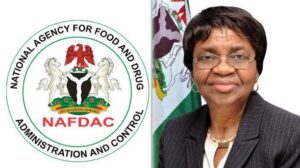
NAFDAC DG, Professor Mojisola Adeyeye

The agency’s Director-General, Professor Mojisola Adeyeye, recently described individuals involved in the production and distribution of fake products as “merchants of death”, arguing that their activities amount to a deliberate threat to the lives of millions of Nigerians.

Her demand comes amid renewed efforts by the agency to dismantle networks involved in the manufacture, importation and distribution of counterfeit medicines, adulterated food, contaminated water, fake cosmetics and other potentially dangerous consumer products.

Maduka College Advert

The concern is that while NAFDAC continues to intensify its enforcement operations, those involved in the illicit business are equally devising new methods to evade regulatory authorities, exploit weaknesses in the supply chain and maximise profits at the expense of public health.

A disturbing picture of counterfeit products

The scale of the problem is reflected in NAFDAC’s enforcement statistics.

Between January and August 2026, the agency recorded 474 new cases, 821 product seizure entries and 213 raids nationwide.

Its Directorate of Investigation and Enforcement also reported 52 arrests, 179 establishments closed or sealed, 218 administrative sanctions and 295 concluded cases within the eight-month period.

The operations covered medicines, cosmetics, packaged water, drinks, food, medical devices and chemicals.

Cosmetics accounted for the highest number of seizure entries, with 401, followed by drinks with 215 and drugs with 112.

The figures demonstrate that the threat extends beyond counterfeit medicines to virtually every category of regulated product consumed by Nigerians.

In another surveillance exercise between May and July 2026, NAFDAC’s Post-Marketing Surveillance Directorate reportedly visited 5,738 facilities across the 36 states and the Federal Capital Territory, mopping up 7,210 brands of products considered non-compliant.

Food and water accounted for 3,633 products, while drugs and herbal products accounted for 2,459.

These figures provide an indication of the scale of regulatory concerns confronting the agency.

From fake medicines to counterfeit drinking water

One particularly disturbing dimension of the menace is the counterfeiting of products belonging to established and trusted manufacturers.

NAFDAC recently uncovered the activities of three companies allegedly involved in counterfeiting CWay dispenser water bottles.

According to Professor Adeyeye, the operators collected empty 19-litre bottles bearing the identity and branding of the legitimate water company, refilled them with water from unapproved production sources and reintroduced them into the market.

The counterfeit products were reportedly distributed to major hotels and supermarkets.

The development raises serious concerns about the safety of drinking water consumed in homes, offices, hotels, restaurants and other public establishments.

Unlike properly manufactured and regulated bottled water, water obtained from unapproved sources may not have undergone the necessary treatment, filtration and quality-control procedures.

Contaminated water can expose consumers to dangerous microorganisms and waterborne diseases, including cholera, typhoid and diarrhoeal infections.

The CWay incident also demonstrates how counterfeiters exploit the reputation of established brands to deceive unsuspecting consumers.

For many Nigerians, the appearance of a familiar brand on a product is enough to create confidence, without necessarily verifying where the product originated or how it was manufactured.

Fake toothpaste, medicines and cosmetics

The counterfeiting of everyday household products has also become a source of concern.

NAFDAC disclosed that it had investigated the production of counterfeit Oral-B and Colgate toothpastes and arrested individuals allegedly involved in the operations.

The agency also uncovered the counterfeiting of products bearing the Nivea and Listerine brand names during an enforcement operation at Igbudu Market in Warri, Delta State.

The operation, conducted by officers from NAFDAC’s Asaba Zonal Office with the support of the Department of State Services, the Nigerian Army and the market union, led to the seizure of suspected counterfeit cosmetics and other regulated products.

In a related warning, NAFDAC cautioned Nigerians against purchasing KY Jelly lubricant currently circulating in the market.

According to the agency, the product’s marketing authorisation holders confirmed that the last authorised supply was made more than five years ago. Consequently, any such product currently being sold should be treated as suspect.

Although the agency did not declare every product bearing the affected brand names counterfeit, the developments underscore the importance of verifying the authenticity and source of consumer products before purchase.

The danger associated with counterfeit cosmetics and personal-care products is particularly worrying because such products are applied directly to the skin or used in sensitive parts of the body.

Where their ingredients, manufacturing conditions and safety standards are unknown, consumers may be exposed to harmful substances, contamination, skin reactions and other health complications.

The deadly consequences of fake medicines

Perhaps the most dangerous aspect of the counterfeit products business is the circulation of fake and substandard medicines.

Medicines are manufactured to treat specific illnesses, control medical conditions and save lives. However, when counterfeiters introduce products containing the wrong ingredients, inadequate quantities of active substances or harmful contaminants, the consequences can be devastating.

A patient who purchases a fake antimalarial drug, for instance, may continue to suffer from malaria because the medicine does not contain the required active ingredients.

Similarly, counterfeit antibiotics may fail to treat bacterial infections, allowing illnesses to worsen and potentially contributing to antimicrobial resistance.

The consequences can be particularly severe for children, pregnant women, elderly people and patients battling serious medical conditions.

There is also the danger of patients losing confidence in genuine medicines after experiencing treatment failures caused by counterfeit alternatives.

In some cases, victims may spend additional money treating complications arising from the consumption of fake medicines, thereby worsening the financial burden on families already struggling with the rising cost of healthcare.

The business is therefore not simply an economic crime. It is a serious public health threat capable of causing avoidable illnesses, permanent injuries and deaths.

Pharmaceutical Insecurity: Pharmacists Sound the Alarm

The concerns surrounding counterfeit medicines have also attracted strong warnings from the Pharmaceutical Society of Nigeria (PSN), which believes that the country’s drug crisis has reached a level that requires urgent government intervention.

The society has called on the Federal Government to declare a state of pharmaceutical insecurity in Nigeria, warning that drug diversion, illicit trafficking, uncontrolled distribution and the circulation of counterfeit medicines pose serious threats to public health and national security.

Speaking at the opening ceremony of the PSN’s 99th Annual National Conference, tagged PSN-IJELE 2026, in Awka, Anambra State, the society’s President, Ayuba Ibrahim Tanko, expressed concern that the government appeared to have surrendered significant control of the nation’s pharmaceutical supply chain to private interests, resulting in uncontrolled distribution and dispensing of medicines.

Tanko maintained that medicines should not be treated as ordinary commercial commodities because their misuse, diversion and circulation outside regulated channels carry serious public health, regulatory and security consequences.

He specifically warned that the diversion and abuse of controlled medicines were closely connected to the country’s insecurity challenges, insisting that pharmaceutical distribution required stronger government supervision and regulatory control.

According to him, the activities of unregulated open drug markets and the uncontrolled movement of medicines across the country undermine public health protection and national security.

The PSN president also raised concerns about the possible consequences of allowing private operators to dominate critical aspects of the pharmaceutical supply chain, arguing that such arrangements could weaken collaboration among government agencies responsible for regulating medicines.

Nigeria’s pharmaceutical regulatory framework relies significantly on the activities of NAFDAC, the Pharmacists Council of Nigeria (PCN) and the National Drug Law Enforcement Agency (NDLEA), which have distinct responsibilities covering medicine quality, pharmaceutical premises and practitioners, and controlled substances.

Tanko warned that weakening coordination among these agencies could create further opportunities for illegal operators to exploit gaps in the system.

To address the situation, the PSN called for the establishment of a Federal Drug Management Agency, backed by legislation, to provide a transparent and accountable framework for the procurement, distribution and management of medicines across federal health institutions.

The society also advocated replacing unregulated open drug markets with licensed Coordinated Wholesale Centres, integrating community pharmacists into the national security architecture and establishing a Presidential Committee on the Pharmaceutical Sector.

The PSN’s intervention underscores an important dimension of Nigeria’s fake drug crisis: the problem is not limited to the manufacture and importation of counterfeit products but also involves the channels through which medicines are distributed, stored, diverted and eventually sold to unsuspecting consumers.

Until these weaknesses are addressed, enforcement efforts against counterfeit drug manufacturers and dealers may continue to face significant challenges.

NAFDAC moves beyond seizures to convictions

In defending its enforcement record, Adeyeye disclosed that NAFDAC had secured 64 convictions against individuals involved in counterfeiting across the country.

The offenders reportedly received prison sentences ranging from one to seven years without an option of fine.

The agency also recalled its major enforcement operations between February and March 2025 in Idumota, Lagos; Aba, Abia State; and Onitsha Bridgehead, Anambra State.

Those operations resulted in the seizure and destruction of more than 137 truckloads of counterfeit and substandard products valued at over N1.5 trillion.

In February 2026, NAFDAC also destroyed fake, expired, counterfeit and banned medicines worth more than N15 billion in Ibadan, Oyo State.

The products included Analgin, co-codamol, codeine syrups, tramadol, oxytocin and expired vaccines.

Another destruction exercise in Kuje, Abuja, in March 2026 involved counterfeit medicines and other regulated products valued at N1.8 billion.

At the Lagos Trade Fair Market in February 2026, the agency seized more than 10 million doses of counterfeit malaria medicines and cosmetics valued at approximately N3 billion.

Four suspects were reportedly arrested following the discovery of the products in a three-storey building allegedly used as a warehouse.

These operations indicate that the agency is increasingly focusing on the criminal networks behind the trade rather than limiting its activities to the removal of suspicious products from markets.

Why NAFDAC wants the death penalty

Against this background, Adeyeye has called for the introduction of tougher penalties for individuals who deliberately manufacture and distribute fake regulated products.

She argued that existing punishments are insufficient to deter individuals who continue to risk human lives for financial gain.

“The penalties should include death penalty or life imprisonment to people who produce and sell fake regulated products,” she said.

The NAFDAC boss disclosed that the agency’s enabling laws and other relevant legislation were undergoing review, expressing the expectation that the revised legal framework would provide stronger sanctions.

Her position is based on the argument that individuals who knowingly manufacture and distribute products capable of killing unsuspecting consumers should face punishment proportionate to the harm their activities can cause.

However, the proposed death penalty has also opened up a wider debate about criminal justice, proportionality of punishment and the effectiveness of severe sanctions in addressing economic crimes.

Under the existing Counterfeit and Fake Drugs and Unwholesome Processed Foods (Miscellaneous Provisions) Act, Cap C34, Laws of the Federation of Nigeria 2004, a person convicted of producing, importing, manufacturing, selling or distributing counterfeit, adulterated, banned, substandard or expired drugs, or unwholesome processed food, faces a fine of up to N500,000 or imprisonment for between five and 15 years, or both.

The law also provides punishment for the unauthorised sale of drugs in unlicensed premises.

Importantly, the death penalty is not the punishment prescribed under this existing law for these offences. NAFDAC’s proposal would therefore require legislative action before it could become an applicable punishment.

The challenge of enforcement and prosecution

While tougher legislation may serve as a deterrent, the fight against counterfeit products requires more than the introduction of harsher punishments.

One major challenge is the ability of regulatory authorities to identify and dismantle the entire supply chain, including manufacturers, importers, financiers, warehouse operators, distributors and retailers.

In many instances, the individuals selling counterfeit products in markets may not be the same people responsible for manufacturing them.

This makes intelligence gathering, investigation, laboratory analysis and successful prosecution particularly important.

NAFDAC must also strengthen its surveillance of production facilities, warehouses, distribution networks, border entry points and online marketplaces where counterfeit products may be advertised and sold.

The involvement of other security and regulatory institutions, including the Nigeria Police Force, Nigeria Customs Service, Department of State Services and relevant state authorities, is equally important.

Another concern is the possibility of regulatory compromise, inadequate monitoring and the continued operation of illegal production facilities despite repeated enforcement exercises.

For the proposed tougher penalties to achieve their intended purpose, investigations must be thorough, prosecutions must be successful and offenders must be held accountable regardless of their financial status or political connections.

Consumers must also become more vigilant

NAFDAC has repeatedly stressed that the fight against counterfeit products cannot be left entirely to government agencies.

Consumers have a responsibility to pay attention to the products they purchase and report suspicious items to the appropriate authorities.

Nigerians are advised to purchase medicines from licensed pharmacies and other authorised outlets rather than relying on roadside vendors or unverified online sellers.

They should also examine product packaging, registration numbers, manufacturing and expiry dates, batch numbers and seals before purchasing regulated products.

However, consumers must understand that the presence of a NAFDAC registration number does not, on its own, guarantee authenticity, as counterfeiters can reproduce the registration details of genuine products.

Product details should therefore be checked against NAFDAC’s official registration databases, including its Greenbook and NAPAMS platforms.

Suspiciously cheap products, damaged packaging, spelling errors, unusual changes in colour or texture and sellers unable to explain the source of their goods should also attract caution.

NAFDAC has urged Nigerians to report suspected fake and unsafe products through its official complaint channels.

The agency can be reached on 0800-1-623322 or through its official reporting channels.

Beyond death penalty: Nigeria needs a sustained war against counterfeiters

The growing circulation of fake products raises fundamental questions about the effectiveness of Nigeria’s consumer protection and public health regulatory systems.

How can a country guarantee the safety of its citizens when counterfeit medicines, questionable drinking water, fake cosmetics and adulterated food products continue to find their way into markets?

How can legitimate manufacturers compete when criminal operators can exploit established brands, avoid quality-control expenses and make enormous profits from products that may endanger human lives?

And how many Nigerians have unknowingly consumed counterfeit products without realising that what they purchased could expose them to serious health risks?

These are questions that require urgent answers.

NAFDAC’s demand for life imprisonment or the death penalty reflects the seriousness of the threat confronting the country. However, the ultimate measure of success will not be the severity of the punishment announced but the agency’s ability to prevent dangerous products from reaching consumers, dismantle the criminal networks behind their production and distribution, and secure convictions against those responsible.

Nigeria must also strengthen public awareness, support genuine manufacturers, improve product traceability and ensure that regulatory agencies have the resources and institutional independence required to carry out their responsibilities.

Ultimately, the fight against fake products is a fight to protect human lives. No Nigerian should have to worry that the medicine purchased from a pharmacy, the water served in a hotel, the toothpaste used by a child or the food consumed by a family could become a source of illness or death.

The business of counterfeiting must no longer be treated as an ordinary commercial offence. It is a threat to public health, consumer confidence and national development that demands sustained action from government, industry stakeholders and citizens.

• The Advocate

Continue Reading

News

ESIRS Raises Alarm Over Fake Property Tax Notices in Enugu

Published

on

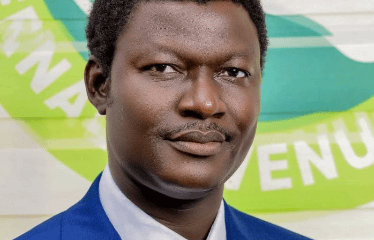
ESIRS Chairman Emmanuel Nnamani
Spread the love

• ESIRS Moves Against Those Behind Fake Notice

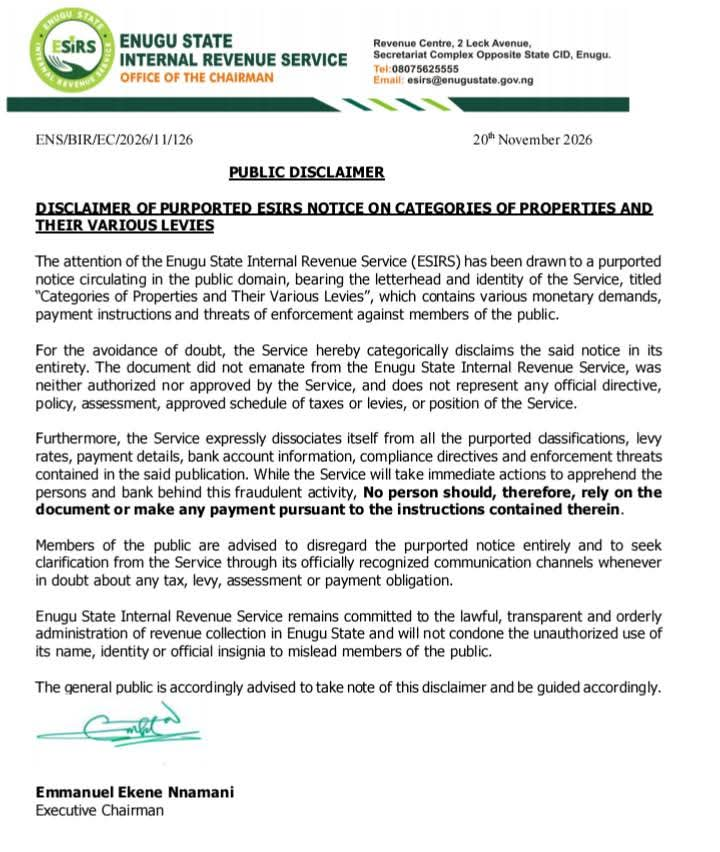
The Enugu State Internal Revenue Service (ESIRS) has disowned a purported property tax notice circulating across the state. It described the publication as fraudulent and unauthorised.

The document reportedly contains property classifications, corresponding levies, payment instructions and threats of enforcement. However, the agency insists that it did not issue or approve the notice.

In a public disclaimer dated November 20, 2026, ESIRS said the publication carried the title, “Categories of Properties and Their Various Levies.”

The disclaimer bears reference number ENS/BIR/EC/2026/11/126. The agency’s Executive Chairman, Emmanuel Ekene Nnamani, signed the statement.

Maduka College Advert

According to ESIRS, the document has circulated publicly as though it were an official communication from the state revenue authority.
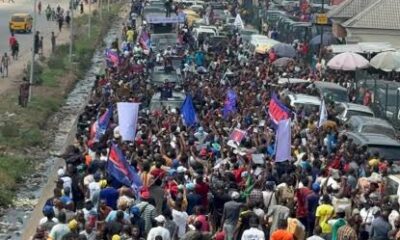
The agency expressed concern that the publication contains monetary demands and purported bank account details. It warned that unsuspecting residents could suffer financial losses by acting on the information.

ESIRS Disowns Circulating Property Tax Notice

Clarifying its position, the revenue agency rejected the entire publication. It stressed that nobody should treat its contents as an official government directive or revenue policy.

ESIRS specifically distanced itself from the property classifications, levy rates and payment instructions. It also rejected the bank account details, compliance directives and enforcement threats.

The agency explained that the document does not represent any official assessment or approved tax schedule. It also does not reflect any established position of the Service.

“For the avoidance of doubt, the Service hereby categorically disclaims the said notice in its entirety,” the statement read.

The clarification follows recent public discussions about taxation and revenue administration in Enugu. ESIRS recently addressed tax exemptions under Nigeria’s new tax laws in its explanation of protections for low-income earners.

Meanwhile, the state’s revenue figures have attracted public attention. The latest NBS figures on Enugu’s tax revenue-to-IGR ratio provides further context for the ongoing discussions.

Residents Warned Against Making Payments

ESIRS warned residents, property owners and other members of the public against relying on the purported notice. It also advised them not to make payments based on its instructions.

The agency cautioned that anyone who follows the document could fall victim to fraudulent activity. It particularly highlighted the purported bank account details and financial demands.

“No person should, therefore, rely on the document or make any payment pursuant to the instructions contained therein,” the disclaimer stated.

Furthermore, ESIRS urged residents to disregard the publication entirely. It advised them to seek clarification through its recognised communication channels whenever they have questions about taxes, levies or assessments.

The warning comes amid wider conversations about revenue collection and government charges. ESIRS Chairman Emmanuel Nnamani previously clarified the revised payment structure for commercial tricycle operators following the state government’s Keke e-ticket reduction.

The state government has also addressed public concerns about transport-related collections.

ESIRS Moves Against Those Behind Fake Notice

Meanwhile, the revenue agency said it would take immediate steps to apprehend those responsible for circulating the purported notice.

It warned against the unauthorised use of its name, identity or official insignia. According to the Service, such actions could mislead residents and create confusion around revenue administration.

ESIRS described the development as an attempt to undermine public confidence in its operations. It also reiterated its commitment to lawful and transparent revenue collection.

The agency’s position comes as Enugu continues to pursue reforms in its revenue administration. The state government has highlighted fiscal  reforms and development initiatives aimed at strengthening public institutions and accountability.

Governor Peter Mbah’s administration has also identified revenue automation as part of its wider economic strategy. The government outlined several reforms in its development scorecard and economic growth agenda.

Service Reaffirms Commitment to Transparent Revenue Administration

ESIRS assured residents that legitimate revenue collection would continue under approved policies and procedures. It maintained that the Service would follow due process in all its operations.

The agency urged the public to remain vigilant against unofficial publications. It specifically warned residents about documents that claim to introduce new taxes, property levies or payment obligations.

It also advised residents to verify every revenue-related demand directly with the Service before making payments. This is particularly important when demands contain unfamiliar bank details or threats of enforcement.

Property-related charges and housing regulations have also featured in recent state policy discussions. The Enugu State House of Assembly recently passed a tenancy bill proposing limits on agency fees and rent increases.

The November 20 disclaimer was signed by Nnamani in his capacity as Executive Chairman of the Enugu State Internal Revenue Service.

Continue Reading

News

Bayelsa Boat Tragedy: NEMA Recovers 24 Bodies as Rescue Operations Continue

Published

on

Spread the love

The National Emergency Management Agency (NEMA) says 24 bodies have so far been recovered following a boat mishap in Bayelsa State, as search and rescue operations continue.

Manzo Ezekiel of NEMA’s Press Unit, Abuja, disclosed this on Saturday, saying, “So far, 24 bodies have been recovered from the scene of the incident, while search and rescue operations are ongoing.”

Ezekiel said the agency had deployed a technical team to Bayelsa State to strengthen the coordination of ongoing search and rescue operations following the tragic boat mishap at the river junction between Oweikorogha and Otuan communities in Southern Ijaw Local Government Area on Friday, November 20, 2026.

Maduka College Advert

He explained that NEMA had earlier activated its South-South Zonal Directorate and deployed an emergency response team from its Port Harcourt Operations Office to the scene.

According to him, NEMA personnel are working alongside the Bayelsa State Emergency Management Agency (SEMA), Nigerian Red Cross Society, Nigeria Police Force, Nigeria Security and Civil Defence Corps (NSCDC), local divers and other stakeholders to sustain the rescue operations.

The boat was reportedly conveying passengers from Ayama to Ukubie community to attend a burial ceremony when the accident occurred.

Governor of Bayelsa State, Senator Douye Diri, visited the scene of the tragedy, where he expressed deep sorrow over the loss of lives and extended his condolences to the bereaved families.

Newsdiaryonline reports that the governor commended NEMA, SEMA, the Nigerian Red Cross Society, the police, NSCDC, local divers and other stakeholders for their prompt mobilisation, collaborative efforts and commitment to the ongoing rescue operations despite the difficult riverine terrain.

NEMA also commiserated with the government and people of Bayelsa State, particularly the families who lost loved ones in the unfortunate incident.

The agency assured that it would continue to work closely with relevant authorities and emergency responders to support the ongoing operations and ensure effective coordination of the response efforts.

Continue Reading

Trending

Maduka College Advert