





Connect with us

News

FG bans sachet alcoholic drinks in Nigeria

Published

on

Sachet alcohol
Spread the love

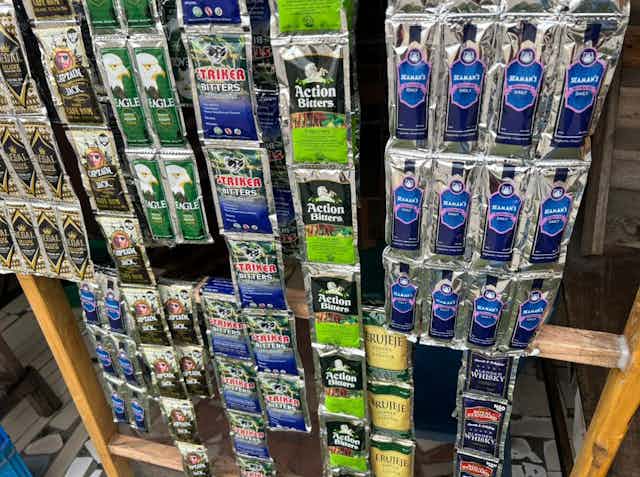
The National Agency for Food and Drug Administration and Control has clarified its stance regarding the nationwide ban on sachet alcohol.

The Director of the FCT Directorate of the agency, Kenneth Azikiwe, in Abuja on Monday, said the temporary lifting of the ban was only valid until Dec. 31, 2025.

He emphasised that the recent ministerial lifting of the ban was not permanent and urged the public to disregard misinformation suggesting that the government had permanently lifted the restriction.

“There is a ministerial lifting on the ban of sachet alcohol, but it is only temporary and will be reviewed by Dec. 31, 2025.

“After this date, the full enforcement of the ban will commence.

Maduka College Advert

“The minister granted this temporary relief to allow manufacturers and regulators time to collaborate and ensure a more structured and effective implementation of the ban,” Azikiwe stated.

He highlighted NAFDAC’s ongoing efforts to sensitise the public across the country, noting that awareness campaigns had reached every state.

“We have sensitised distributors, and we’ve emphasised that alcohol should not be sold to individuals under the age of 18, which is also clearly indicated on product labels,” he added.

Azikiwe also commended the Distillers and Beverages Association of Nigeria for supporting the awareness drive.

He reassured the public that NAFDAC remained fully committed to regulating alcohol consumption and reiterated that sachet alcohol products containing less than 200 millilitres would be phased out after December 2025.

News

US asks American business executives to be wary of insecurity, corruption, detention risk in Nigeria

Published

on

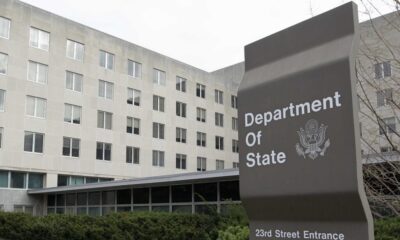
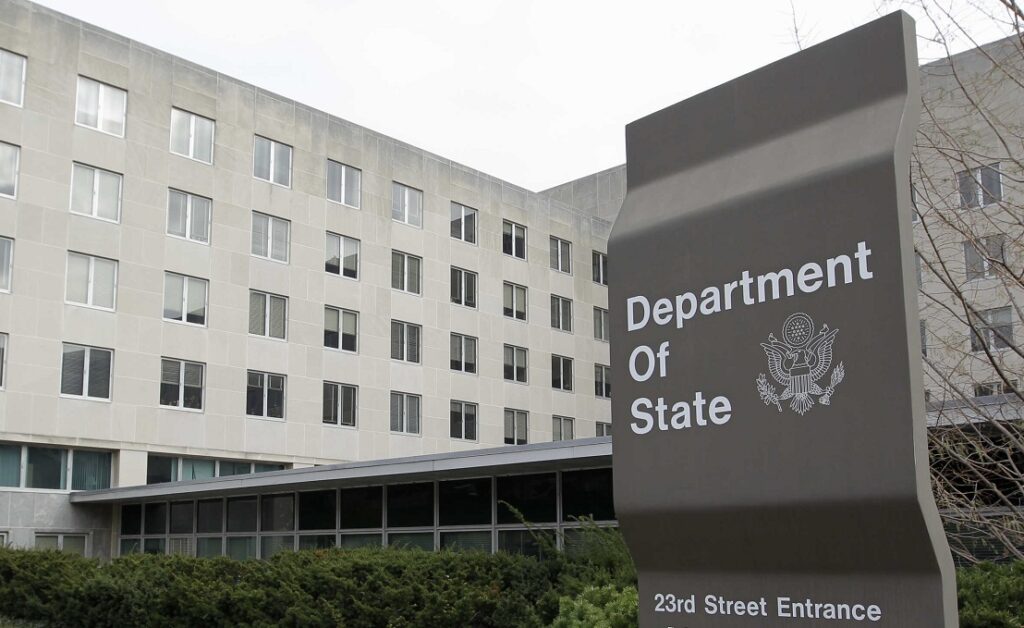
The State Department in Washington | Photo: AP/Luis M. Alvarez
Spread the love
A report by the United States Department of State has identified insecurity, corruption, port inefficiencies and regulatory uncertainty as major obstacles to investment in Nigeria, warning that these challenges continue to weigh on the country’s business environment despite signs of macroeconomic stability.

In its ‘2026 Investment Climate Statements on Nigeria’, the department said the country’s investment landscape has been shaped by the outcomes of “painful but necessary” structural reforms introduced by the President Bola Tinubu administration.

The report said the removal of fuel subsidies and liberalisation of the foreign exchange market initially triggered significant economic volatility, although indicators in early 2026 suggested some stabilisation.

However, it warned that security concerns, administrative bottlenecks and the social consequences of economic reforms remain significant considerations for foreign investors.

“The security environment is a primary variable which gives pause to potential investors,” the report said.

It noted that although attacks on oil infrastructure in the Niger Delta have decreased, oil theft and illegal bunkering persist.

Maduka College Advert

“In the North, the expansion of terrorist and ‘bandit’ groups continues to degrade the climate for agribusiness and mining,” the document added.

The report also raised concerns about the treatment of foreign business executives in regulatory disputes, citing the detention of Tigran Gambaryan, a US citizen and Binance executive, for nearly eight months in 2024.

“Furthermore, the use of coercive exit bans and detentions — highlighted by the high-profile nearly eight-month detention in 2024 of U.S. citizen Binance employee Tigran Gambaryan — serves as a cautionary note for foreign executives regarding the risks of aggressive regulatory friction,” it said.

The report said such cases could influence the perception of Nigeria as a destination for foreign investment.

PORT DELAYS DESCRIBED AS ‘HIDDEN TAX’ ON INVESTMENT

The department identified inefficiencies at Nigerian seaports as another major challenge for businesses, particularly those dependent on imports and exports.

“Port inefficiency remains a significant ‘hidden tax’ on investment,” the report said.

It noted that the Lekki Deep Seaport handled $9.6 billion in trade in 2025 and operated at 50 percent capacity, helping to ease pressure on older facilities.

However, it said traditional ports in Apapa and Tin Can Island continue to experience cargo dwell times exceeding 20 days because of manual examinations.

“To address this, the government launched phase one of the National Single Window (NSW) on March 27, 2026,” the report said.

The platform is designed to integrate trade agencies, including the Nigeria Customs Service, the National Agency for Food and Drug Administration and Control and the Standards Organisation of Nigeria, into a single digital workflow.

According to the report, the initiative targets a reduction in cargo dwell time to fewer than seven days and the elimination of 80 percent of manual paperwork by the end of 2026.

92% OF CAPITAL INFLOWS WAS PORTFOLIO INVESTMENT

The report acknowledged an increase in capital inflows but said the figures did not necessarily reflect a corresponding surge in long-term investment in physical infrastructure.

“Nigeria’s capital importation reached $21 billion in October 2025, a large increase from 2024,” it said.

“However, 92 percent was made up of foreign portfolio investment (‘hot money’) seeking high interest rates, while actual foreign direct investment (FDI) in physical infrastructure remained modest.”

The report said Nigeria continues to permit full foreign ownership in most sectors, subject to restrictions in certain industries and licensing requirements.

It also noted that the Nigerian Investment Promotion Commission’s One-Stop Investment Centre coordinates 27 government agencies to help investors navigate administrative processes.

The report said US foreign direct investment in Nigeria reached $7.9 billion by the end of 2024, representing a 25 percent increase from the previous year.

It added that bilateral trade between Nigeria and the United States reached $14.8 billion in 2025.

The department said Nigeria’s economic reforms had improved some macroeconomic indicators but imposed high costs on households.

“The fiscal correction came at a high social cost,” the report said.

It added that the removal of fuel subsidies had caused petrol prices to “quintuple from 2023 levels”, contributing to an estimated national poverty rate of 63 percent in 2025, citing an April 2026 World Bank report.

The report said Nigeria’s gross domestic product growth rose from 3.3 percent in 2023 to 4.1 percent in 2024 before easing slightly to four percent in 2025.

It also noted that the Central Bank of Nigeria reported foreign exchange reserves of $50.45 billion in February 2026, which it described as a 13-year peak.

On inflation, the report said headline inflation reached 34.8 percent in late 2024 before falling to 15.15 percent by December 2025 following the rebasing of the Consumer Price Index and subsequent methodological changes.

Food inflation stood at 10.84 percent in December 2025 under the rebased index, it added.

‘CORRUPTION REMAINS A SYSTEMIC BARRIER’

The report identified corruption as a persistent obstacle to investment, including in port operations.

“Corruption remains a systemic barrier, including at seaports where customs delays impede trade,” it said.

It also described Nigeria’s trade regime as “somewhat protectionist”, pointing to high tariffs and import restrictions intended to protect domestic industries.

According to the report, some companies are required to invest in local production in exchange for permits and quotas to import the same products.

It said the government had introduced reforms to improve the regulatory environment, but implementation remains uneven.

“Nigeria’s regulatory environment has transitioned toward a ‘structural reset’ designed to improve predictability, though implementation remains uneven,” the report said.

The department also highlighted the transition from the Pioneer Status Incentive scheme to the Economic Development Tax Incentive, which took effect in January 2026, as an area requiring administrative adjustment for foreign businesses. (The Cable)
Continue Reading

News

Petrol hits N1,900/litre as depot prices surge despite NNPC cut

Published

on

Spread the love

•NIPCO raises petrol price by N170 in Port Harcourt; Rain Oil, Matrix hike diesel to N1,900 in Warri; NNPC sells at N1,360, MRS at N1,338 in Lagos; Brent rises to $104.50 per barrel

There are indications that domestic petroleum product prices could rise further as petrol depot prices surged across Lagos, Port Harcourt, Warri and Calabar on Friday, with several marketers in Port Harcourt raising their prices to N1,900 per litre, despite lower pump prices at some filling stations in Lagos.

NIPCO led the increases in Port Harcourt, raising its Premium Motor Spirit, PMS, price by N170 per litre to N1,900 from N1,730, while six other depots increased their prices by N150 to the same level.

The developments coincided with an increase in international crude oil prices, as Brent crude climbed to $104.50 per barrel from $104.28, while the US benchmark, West Texas Intermediate, WTI, rose to $91.73 from $91.49.

A review of depot prices showed that African Terminal, Ascon, Eterna, Gulf Treasure, Ibachem and Ibeto raised their petrol prices in Port Harcourt to N1,900 per litre from N1,750 each.

Duport and Integrated, however, increased their prices to N1,806 per litre from N1,750, representing an increase of N56 per litre.

Maduka College Advert

In Lagos, Masters raised its petrol price to N1,350 per litre from N1,303, while Matrix increased its price to N1,360 from N1,330.

Sigmund and T.S.L raised their prices to N1,350 per litre from N1,300 each, while NIPCO increased its price to N1,350 from N1,326.

In Calabar, Matrix raised its price to N1,370 per litre from N1,315. In Warri, Keonamex, Matrix, Nepal and Parker increased their prices to N1,360 per litre from N1,315 each, while Optima raised its price to N1,360 from N1,330.

Pump prices vary

At the retail end, the NNPC Limited sold petrol at N1,360 per litre at its filling stations in Lagos and surrounding areas.

MRS Oil Nigeria Plc sold the product at N1,338 per litre, while 11 Plc sold at N1,338.80. Independent marketers charged between N1,368 and N1,400 per litre, depending on location.

Consequently, motorists patronising MRS and 11 Plc paid less than those buying from some independent marketers, whose prices reached N1,400 per litre.

The price differences highlight the divergent pricing trends across the supply chain, with depot prices rising in several locations even as some filling stations continued to sell below the rates charged by independent marketers.

Diesel prices climb

The diesel market also recorded significant increases in Warri, where Rain Oil and Matrix raised their Automotive Gas Oil, AGO, prices by N180 per litre to N1,900 from N1,720 each.

In Port Harcourt, Dangote increased its diesel price to N1,720 per litre from N1,702, while Masters raised its price to N1,825 from N1,788.

The increases could add to operating costs for manufacturers, transport operators and other businesses that rely on diesel for power generation and transportation, particularly if the higher prices persist.

Crude oil market mixed

On the international market, the OPEC Basket rose to $109.50 per barrel from $108.59, while WTI Midland increased to $92.74 from $92.32.

Natural gas prices climbed to $3.235 from $3.168, but Murban crude fell to $108.50 per barrel from $110.49.

Among refined products, gasoline declined to $3.293 from $3.316, while heating oil dropped to $4.724 from $4.883. The Indian Basket rose to $121.10 per barrel from $117.63.

The mixed movements across international benchmarks indicate that domestic depot price increases should not be attributed solely to the day’s crude oil gains. Product replacement costs, supply conditions, transportation expenses and individual marketers’ pricing decisions may also influence local prices.

Commenting on the developments in an interview with Vanguard, the Chief Executive Officer of Petroleumprice.ng, Olatide Jeremiah, said: “Despite domestic issues and development in Nigeria, the downstream sector would continue to respond or react to developments at the global oil market.”

With petrol reaching N1,900 per litre at several Port Harcourt depots and diesel hitting the same level in Warri, the latest price movements underscore the pressures facing Nigeria’s downstream market and the continuing differences between wholesale and retail prices. (Saturday Vanguard)

Continue Reading

News

Motorist escapes unhurt as train hits car in Lagos

Published

on

Spread the love

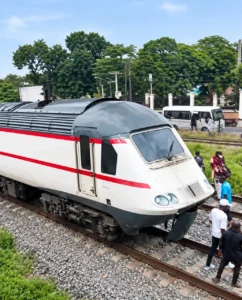
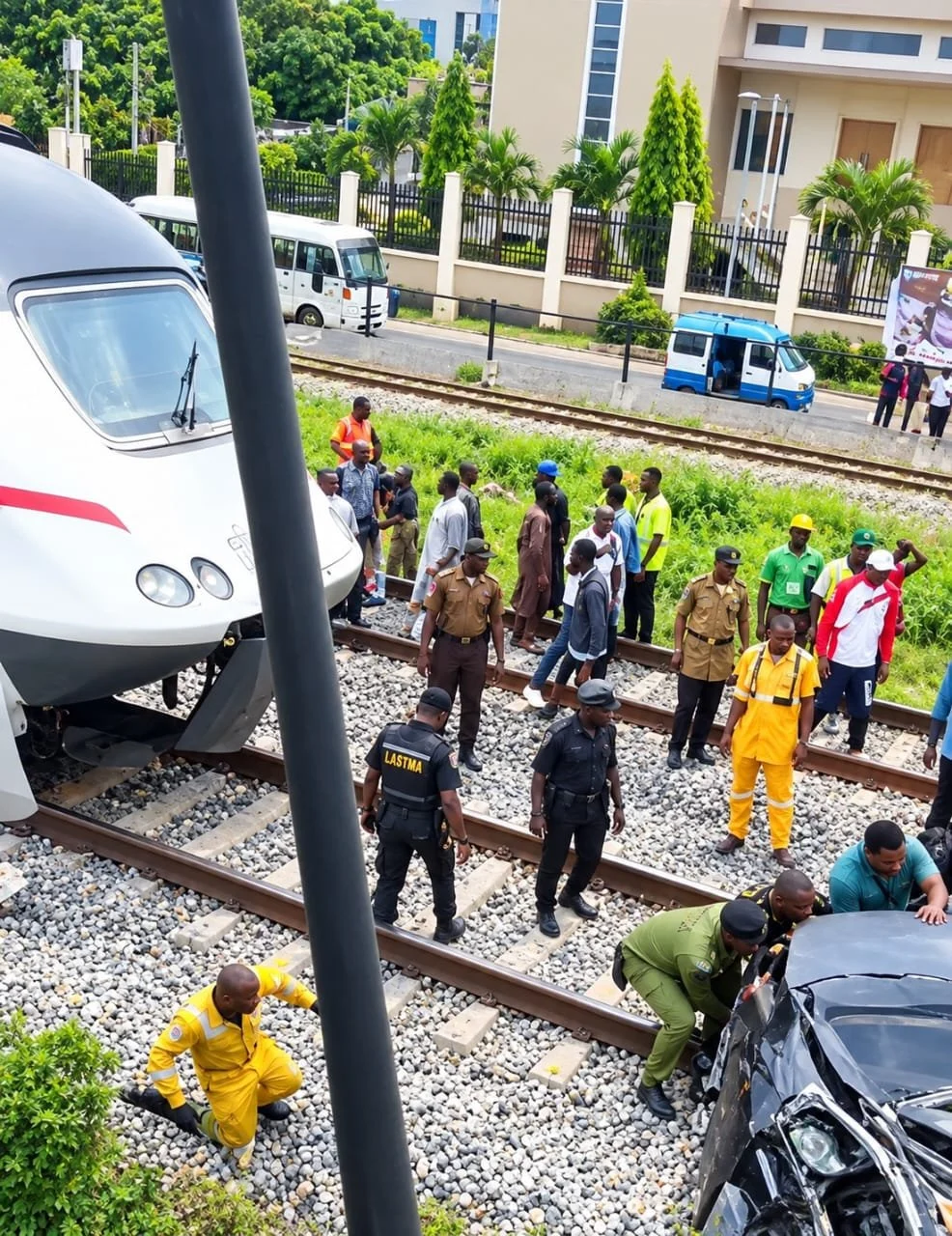
A 55-year-old driver escaped injury after a train rammed into his Honda car at the PWD railway crossing in Lagos.

The accident involved a train heading towards Agege and a Honda car with registrationi number EKY 902 JT, which sustained extensive damage.

The Lagos State Traffic Management Authority said its officials, alongside security personnel, rescued the motorist and cleared the damaged vehicle from the tracks, enabling the train to continue its journey.

Despite the clearance, traffic congestion remained around the PWD area after the incident.

LASTMA said the wrecked vehicle was handed over to security personnel to facilitate an investigation into the circumstances surrounding the collision.

Maduka College Advert

The agency’s General Manager, Olalekan Bakare-Oki, praised the officials and security personnel for their swift response, noting that their joint efforts highlighted the need for effective collaboration during emergencies involving railway lines and adjoining roads.

He advised motorists to be vigilant when approaching railway crossings and areas designated for train movement.

Bakare-Oki cautioned drivers against crossing railway tracks when a train was approaching or in motion, warning that “reckless disregard for railway safety protocols could precipitate devastating and irreversible consequences”.

LASTMA also urged road users to obey traffic rules and railway safety guidelines.

The agency emphasised that “the preservation of human life must remain paramount in all road-use decisions”, adding that responsible driving and compliance with safety instructions were essential to preventing avoidable accidents.

Recall that in March, the Nigerian Railway Corporation announced that 26 passengers and crew members sustained varying degrees of injuries following a train incident along the Abuja–Kaduna rail corridor on Monday.

The Managing Director of the NRC, Kayode Opeifa, said the incident occurred near Asham Station when a loud bang was heard as part of the train formation collided.

He said the Kaduna–Abuja service (KA-2) departed Rigassa Station at 7:15 a.m. and arrived at Jere Station one minute ahead of schedule at 8:52 a.m.

Continue Reading

Trending

Maduka College Advert