News
Hardship: FG proposes N1,350 ceiling for petrol ex-gantry price

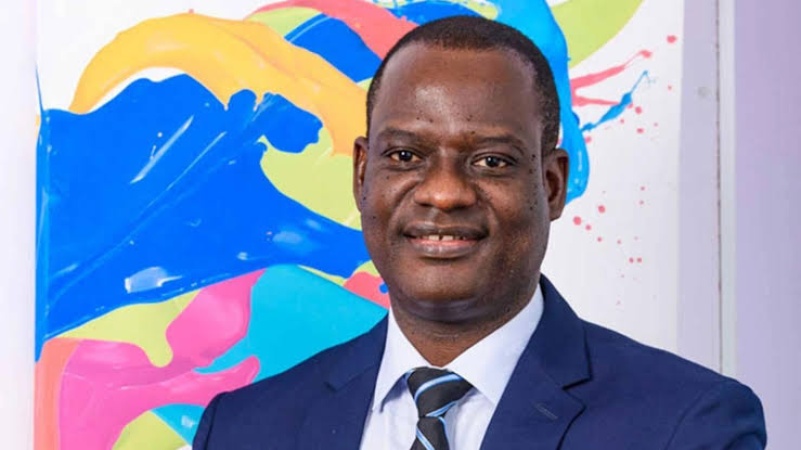
The Federal Government is planning to negotiate a ceiling of N1,350 per litre on the ex-gantry cost of petrol in a move aimed at shielding pump prices from fluctuations in global crude oil prices and exchange rates.
Taiwo Oyedele, Minister of Finance and Coordinating Minister of the Economy, disclosed this on Thursday in Abuja while addressing a press conference on fuel prices and subsidy-related questions.

However, Oyedele acknowledged that the measures being proposed by the Federal Government would not completely ease the pressure on households.
He then outlined the proposed measures, including the N1,350 ceiling on the ex-gantry or landing cost of petrol, which he said was designed to reduce volatility in pump prices.
“We are introducing price modulation. Pump prices should not have to follow every swing in global crude or exchange rate. The government is negotiating a ceiling of N1,350 a litre on the ex-gantry cost of petrol to keep pump prices stable,” he said.

According to him, where the actual cost rises above the ceiling, refiners and importers would bear the shortfall and recover it later when crude prices or exchange rates become favourable, without breaching the ceiling.
“This is neither a subsidy nor a price control; it is designed to smooth prices over time, rather than suppressing them,” Oyedele said.
He explained that the objective was to prevent sharp swings in pump prices, saying, “The reason is simple: N1,400 a litre today and tomorrow is better than N1,500 today and N1,300 tomorrow, because volatility itself adds to uncertainty and fuels go up sharply; they rarely come down as fast.”
Oyedele said the ceiling would be reviewed monthly, with adjustments made where necessary and the figures published for transparency.
He also announced a 30-day discount on petrol dispensed by NNPC Limited, with priority given to public transporters nationwide, while insisting that the measure was not a subsidy.
The NNPC limited had announced a ₦66 fuel discount for customers using the NNPC Fuel App at its stations nationwide.
“We are offering a discount on petrol dispensed by NNPC Limited for the next 30 days in the first instance with priority for public transporters nationwide. It’s not a subsidy; the government is saying we sell to you at a cost,” he said.
The minister said the government was also working on forward crude sales to domestic refiners, adding that rising production would help shield pump prices from volatility in the international market.
“We’re working with the states across the federation under the new tax laws. We are reigning in the taxes and levies that inflate fuel and logistics costs,” he added.
Oyedele said the government was also increasing funding for cash transfers to vulnerable households and subsidising credit for small businesses and consumers, while working with state governments to accelerate the rollout of compressed natural gas.
The proposed measures come amid a renewed political debate over fuel subsidies, with African Democratic Congress (ADC) presidential candidate Atiku Abubakar and Nigeria Democratic Congress (NDC) presidential candidate Peter Obi promising to restore the subsidy if elected in 2027.



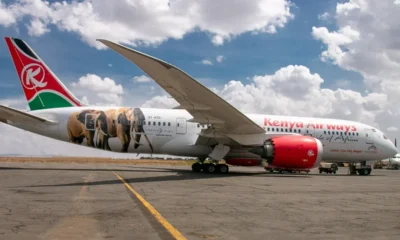







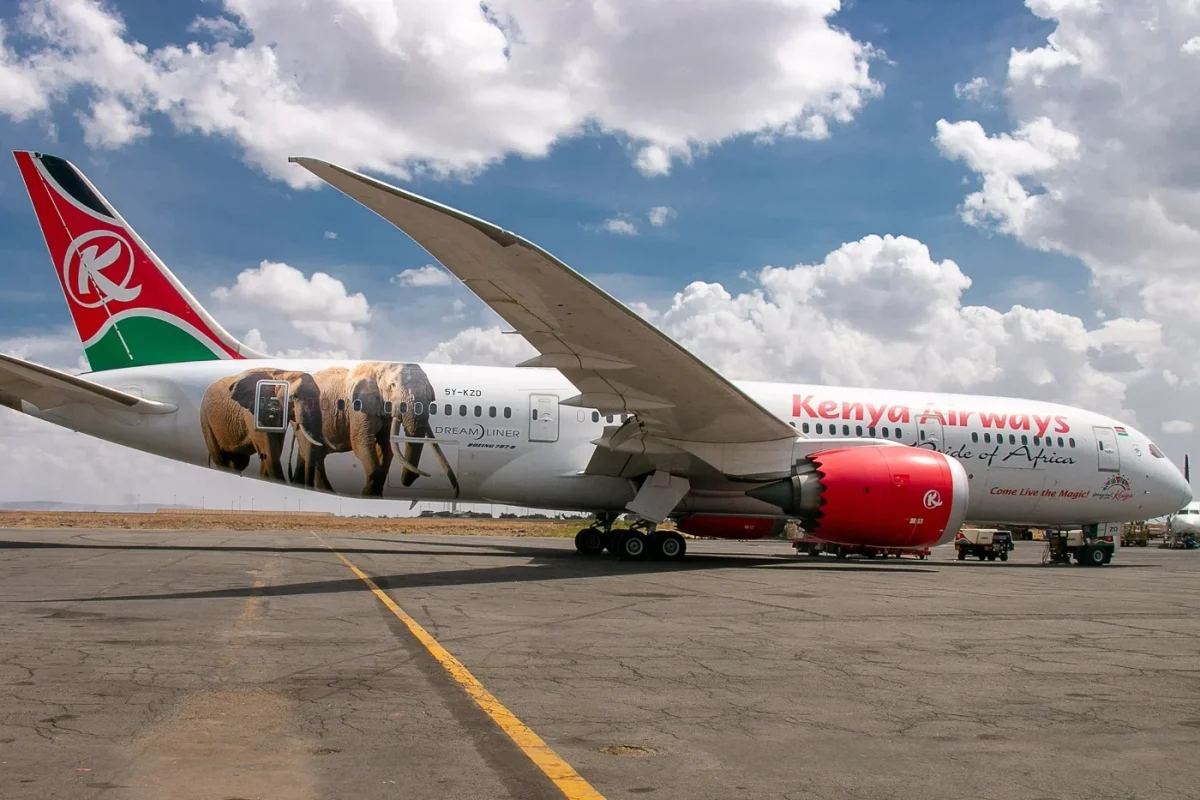
A passenger has died aboard a Kenya Airways flight from Nairobi to Lagos after becoming unresponsive about 20 minutes before the aircraft landed at the Murtala Muhammed International Airport, Lagos.
Kenya Airways confirmed the incident in a statement on Wednesday, saying the medical emergency occurred at about 9:20 p.m. Nigerian time on Tuesday.
The airline said its crew administered first aid to the passenger in line with their training and followed emergency procedures before the aircraft landed at 9:41 p.m.
“Upon landing at Murtala Muhammed International Airport at 21:41 hrs, the aircraft was met by medical personnel, and upon further examination, the medical personnel confirmed that the passenger had passed away,” the airline said.
Kenya Airways expressed condolences to the passenger’s family and friends and said it was providing support in coordination with the family, local authorities and aviation regulators.
The airline did not disclose the identity of the passenger or the cause of death, saying it would respect the privacy and dignity of those involved.
NCAA responds
Responding to the incident, Michael Achimugu, Director of Public Affairs and Consumer Protection at the Nigeria Civil Aviation Authority (NCAA), said the police have taken over the investigation.
Mr Achimugu said he was briefed by Kenya Airways’ country manager on Wednesday morning.
According to him, the passenger had reportedly been picked up in Madagascar after authorities there denied him entry and was being returned to Nigeria by Kenya Airways.
He said the airline was expected to return the passenger because it had transported him to Madagascar.
“The country manager said he was picked from Madagascar, after customs had earlier denied him entry into the country, and as expected, the airline that brought him into the country take him back,” Mr Achimugu said.
He further said the passenger allegedly became restless and aggressive during the return flight, attempted to gain access to the cockpit and later tried to open the rear door of the aircraft.
He explained that the passenger was subsequently restrained by members of the crew.
“When he got into the aircraft, he became restless and aggressive inside the aircraft, wanted to enter the cockpit and later wanted to open the rear door, but was later tied down. His hands were tied to his back to ensure that he stopped the troubles,” he said.
Mr Achimugu said the passenger was pronounced dead after the aircraft arrived in Lagos.
“But when he got to Nigeria, he was declared dead on arrival. I don’t want to pre-empt the police investigation, but they have taken it over for now,” he said.
He added that the deceased’s family could request an autopsy as the investigation progresses.
Police begin investigation
The spokesperson for the Airport Command of the Nigeria Police Force, Muhammed Adeola, confirmed that an investigation had commenced.
Mr Adeola said the incident involved an “inadmissible passenger” and that complications reportedly developed during the return flight.
“Yes, it’s true, and investigations have commenced. It’s an issue of an inadmissible passenger, and the said complications arose on their way back,” he said.
He said the passenger became unable to breathe before medical personnel were alerted ahead of the aircraft’s arrival.
Mr Adeola said the police have taken statements from members of the flight crew, including the captain.
He added that the body had been deposited at a morgue in Ikeja.
Similar incident
The death is not the first reported case of a passenger dying aboard an international flight bound for Lagos.
In March 2019, a 54-year-old passenger aboard a Delta Air Lines flight from Atlanta, United States, to Lagos was found unresponsive shortly before the aircraft landed at the Murtala Muhammed International Airport.
The passenger was confirmed dead after the aircraft landed, with medical personnel meeting the flight at the airport.
Medical emergencies have also led to international flights returning to Lagos.
In September 2025, reports said a that a United Airlines flight from Lagos to Washington, D.C., returned to Lagos after a passenger suffered a medical emergency about 90 minutes into the journey. Medical personnel attended to the passenger after the aircraft landed.
Kenya Airways said it is providing the necessary support in coordination with the deceased passenger’s family, local authorities and aviation regulators.
The airline also apologised for any inconvenience the incident may have caused other passengers.
…As Mbah pushes for lower tariffs, speedy delivery
In a major boost to the state’s drive to expand electricity supply, attract clean-energy investments and provide more reliable power for homes and businesses, Enugu State Government has secured a $200 million investment for a 100mw solar power programme.
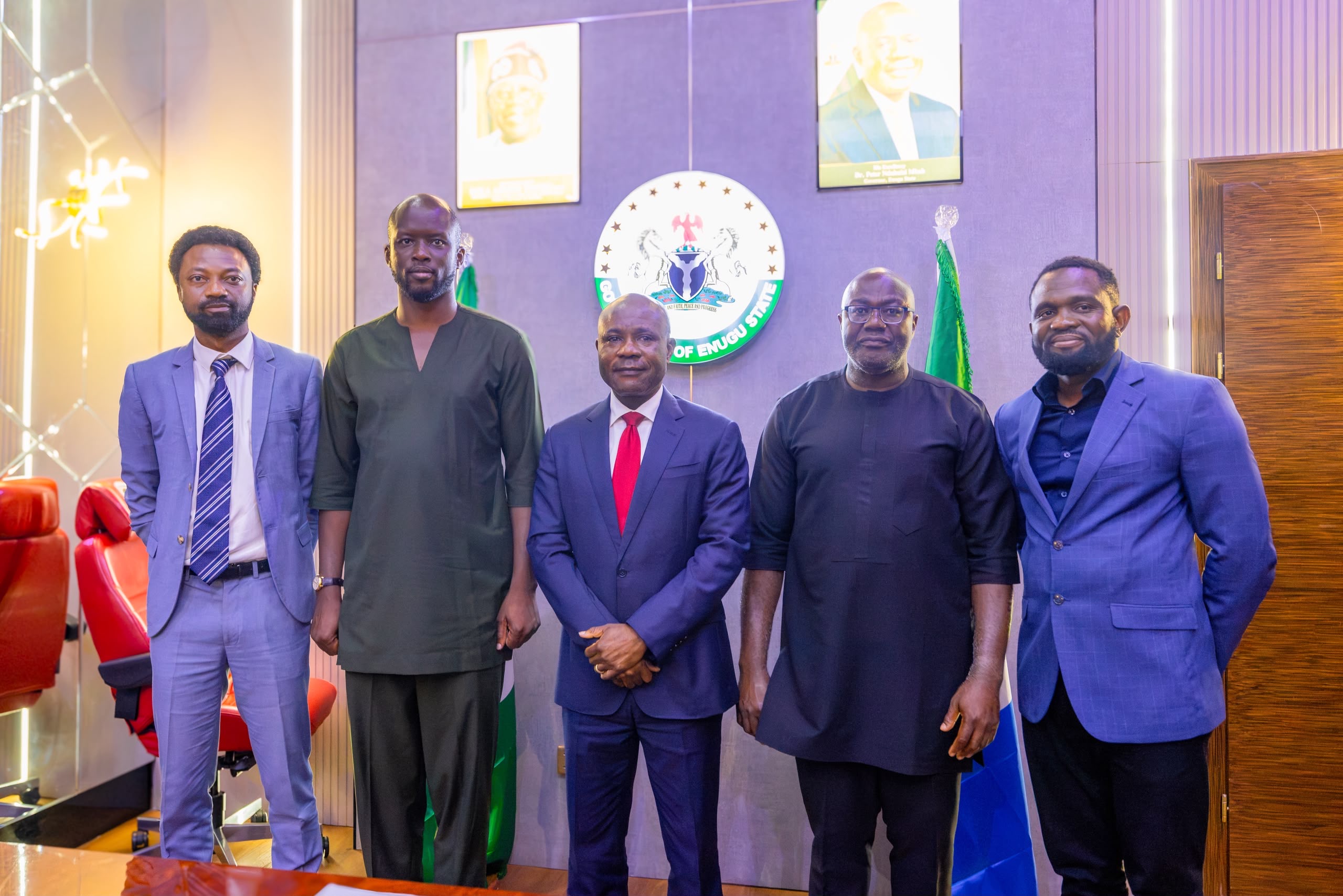
The investment, estimated at about N300 billion, was disclosed during a meeting between Governor Peter Mbah and a delegation from Eauxwell Nigeria Limited led by the Managing Director, Mr. Edwin Enwegbara, at Government House, Enugu.
The investment engagement, brokered through the state’s Climate and Development Investment Platform (CDIP) coordinated by the Special Adviser to the Governor on Climate and Sustainable Development, Prof. Chukwumerije Okereke, is the first major investment breakthrough facilitated by the platform established by the Mbah Administration to connect investors with government institutions, regulatory agencies and communities.
The Governor, while welcoming the investment, stressed that the state government’s interest went beyond attracting capital.
He insisted that the ultimate objective was to deliver reliable and affordable electricity to residents and businesses in the state at affordable cost.
“We want an electricity market that encourages competition and gives consumers the benefit of competitive pricing,” he said.
Governor Mbah said the tariff assumptions and financial model presented by the investors needed to be reviewed, emphasising the need to balance legitimate cost recovery by investors with electricity prices that households and businesses can afford.
“Cost recovery is important, but we must also ensure that the tariff is affordable to our people and businesses,” Mbah said.
He also called for a shorter implementation timeframe, pledging the state government’s support in removing bureaucratic and institutional bottlenecks that could delay delivery.
Speaking, Mr. Enwegbara acknowledged the need to strike that balance and said the final tariff would be determined in collaboration with the relevant electricity regulators.
He said that the proposed 100MW programme would deploy distributed solar generation, supported by battery storage, providing more dependable electricity for communities and businesses while also supporting productive activities, including agricultural processing, small businesses and other enterprises whose operations depend on reliable power.
Governor Mbah’s intervention comes against the backdrop of Enugu’s ongoing electricity-sector reforms and the state’s assumption of regulatory oversight of its intrastate electricity market.
The administration seeks to create a competitive electricity market capable of attracting further private investment.
Olufemi Akinyelure, Head of the Nigeria Electrification Programme at the Rural Electrification Agency, who joined the meeting virtually, explained the structure, objectives and implementation processes of the DARES programme.
The meeting had in attendance the Secretary to the State Government, Prof. Chidiebere Onyia, who also chairs the CDIP Steering Committee; the State Attorney General and Commissioner for Justice, Barr. Osinachi Nnajieze; the Commissioners for Environment and Climate Change, Prof. Sam Ugwu; Trade and Investment, Dr. Sam Ogbu-Nwobodo; and Lands, Barr. Chimaobi Okorie; as well as the Special Advisers to the Governor on Project Delivery and Power, Ozurumba Afigbo and Joe Aneke, respectively, and the Chairman of the Enugu State Electricity Regulatory Commission (EERC), Mr. Chijioke Okonkwo.
Also on the Eauxwell team were the Director of Business Development, Mr. Kingsley Okenyi; the Head of Project Management, Mr. Lazarus Agu; and Project Engineer, Victoria John.
The meeting also addressed the separate Aninri electrification project.
Following the discussion, Mbah requested an urgent meeting with the President-General of the community and its traditional ruler to resolve the land-related issues and facilitate commencement of the project.
By Sufuyan Ojeifo
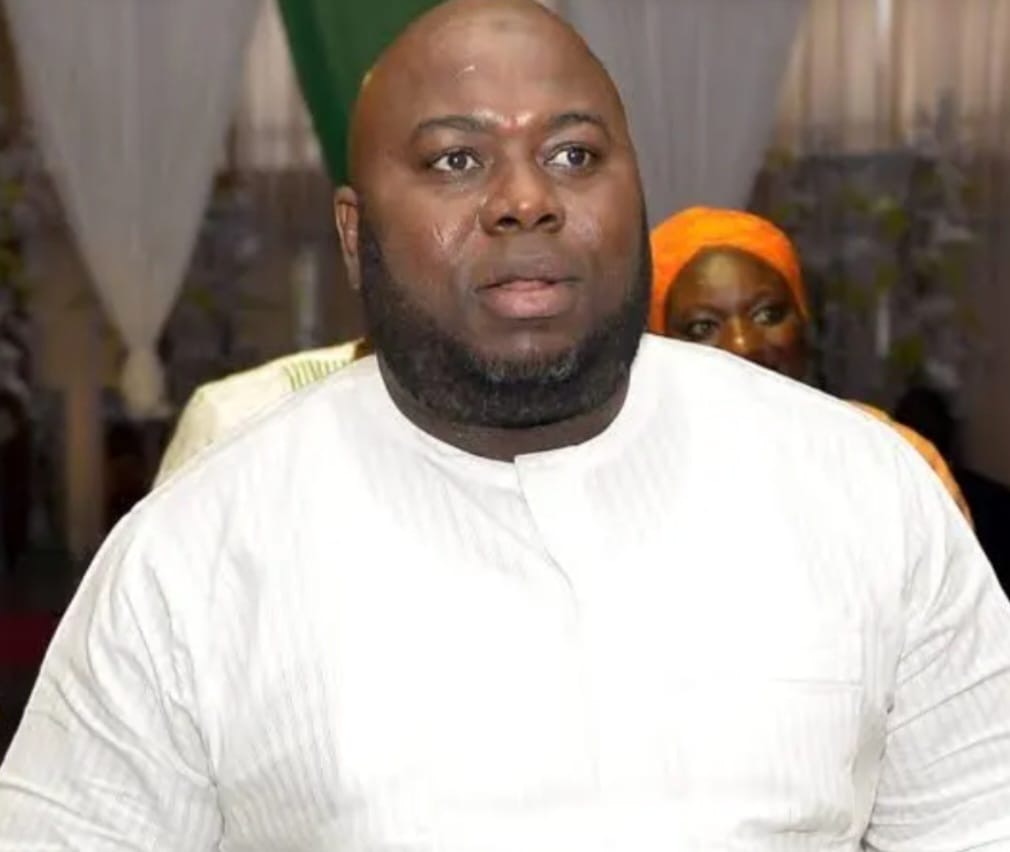
There is something deeply troubling about the latest public outburst by Asari Dokubo.
It has little to do with the legitimate demand that public contracts face scrutiny. Men like Tompolo are not beyond criticism, nor should they be. The real concern lies in the peculiar logic with which Dokubo has chosen to defend one figure while attacking others.
In a video now circulating widely, Dokubo alleges that the Olu of Warri and Dr Osahon Okunbo collect ₦2.7 trillion annually for pipeline surveillance. He then introduces ethnicity into the argument, suggesting that the two escape scrutiny because they are “Benin” and “Itsekiri”, while Tompolo is being singled out.
The question that follows is simple: where is the evidence?
Dokubo has produced no contract, no payment record and no documentary proof of any kind to substantiate this extraordinary claim. The Olu of Warri’s representative has publicly challenged him to produce the evidence.
A figure of ₦2.7 trillion is not a sum one casually introduces into national discourse and expects responsible citizens to accept on the strength of a speaker’s word alone.
If Dokubo has the documents, let him publish them. If he has the contract, let him display it. If he has evidence of payment, let him present it.
That is how serious allegations are made.
In the absence of such proof, what remains is an allegation dressed up as fact.
There is a more troubling dimension to the argument.
Dokubo appears to suggest that because pipeline surveillance occurs in the Niger Delta, contracts associated with it are somehow the proprietary entitlement of Niger Delta actors. That proposition should concern every Nigerian.
The Niger Delta belongs to Nigeria. Its oil belongs to Nigeria. The pipelines are national infrastructure. Contracts for protecting them are matters of public procurement, public accountability and national security.
They are not tribal dividends.
If a company from Rivers State is competent, let it compete. If a company from Delta State is competent, let it compete. If a firm from Edo, Abia, Lagos, Kano or Kaduna possesses the expertise, resources and capacity and wins a properly awarded contract, that should be welcomed as evidence that Nigeria remains a country rather than a collection of ethnic fiefdoms.
The idea that a contract is somehow “Niger Delta money” until someone from elsewhere secures it, at which point it becomes private enrichment, is a dangerous distortion of federalism.
It is precisely the kind of thinking that has kept Nigeria trapped in the politics of ethnic entitlement.
Perhaps the most unfortunate aspect of the intervention is the attempt to drag the Olu of Warri into a commercial argument in which the monarch has not been shown to be the contractor alleged.
The Olu of Warri, Ogiame Atuwatse III, is married to Olori Atuwatse III, daughter of the late Captain Hosa Okunbo. Osahon Okunbo is Captain Hosa’s son. The family connection is a matter of public record.
But marriage does not turn a traditional ruler into a commercial contractor.
Being someone’s son does not make a businessman guilty of whatever detractors choose to allege against him.
That distinction is elementary.
Osahon Okunbo currently serves as Executive Director of Pipeline Infrastructure Nigeria Limited. Publicly available information indicates that PINL has been involved in pipeline infrastructure and surveillance activities, including the deployment of camps, vessels, drones and other assets along pipeline corridors.
That work should be scrutinised, as should every naira of public money and the performance of every contractor. But scrutiny is not the same as slander. An allegation is not evidence.
There is another question Dokubo should answer: If the real concern is the cost and effectiveness of pipeline surveillance, why does the argument repeatedly return to the ethnic identity of those involved?
Why does “Benin” matter?
Why does “Itsekiri” matter?
Why does “Ijaw” matter?
The only questions that should matter to the Nigerian taxpayer are straightforward: who received the contract, under what terms, for what amount, to perform what work, and what did the country receive in return?
That is the conversation worth having.
If a contract is inflated, expose it.
If a contractor has failed, expose the failure.
If public funds have been misused, let the appropriate agencies investigate and prosecute.
If procurement rules have been breached, pursue the evidence. But if all that exists is a video, an allegation and a theory about ethnicity, then one has not established corruption. One has established noise.
There is also something deeply distasteful about dragging a dead man into this quarrel.
Captain Hosa Okunbo died in August 2021. He cannot answer for himself, produce a document or challenge an allegation. That places an additional responsibility on those who invoke his name.
Captain Hosa was a businessman whose interests spanned maritime, transportation, logistics, agriculture, hospitality and security. At his death, tributes from across Nigeria recognised both his commercial achievements and his philanthropy.
His son has chosen to continue in business. His daughter is married to the Olu of Warri.
Neither fact constitutes evidence of wrongdoing. Neither fact grants anyone the right to convert family relationships into an ethnic conspiracy.
There is, finally, a curious irony in Dokubo’s intervention.
A man presenting himself as an advocate of the Niger Delta should be particularly careful about reducing the region’s legitimate grievances to a crude contest over who gets what contract.
The Niger Delta’s historical grievances are real. Environmental degradation is real. The failures of successive governments are real. The region’s demand for justice, development and a greater stake in the management of its resources is legitimate.
But those grievances are diminished, not strengthened, when they are converted into a doctrine that says public opportunity belongs first to one ethnic constituency and everyone else is an interloper.
That is not justice.
It is simply another form of entitlement.
Dokubo is entitled to question government contracts. He is entitled to criticise Tompolo’s critics. He is entitled to demand greater participation by Niger Delta businesses. He is even entitled to argue that pipeline surveillance should be organised differently.
What he is not entitled to do is manufacture certainty where there is no evidence and then dress the allegation in ethnic colours.
That is not agitation.
That is recklessness.
Nigeria has suffered enough from those who mistake volume for evidence, anger for courage and ethnic mobilisation for patriotism.
If Asari Dokubo possesses evidence that the Olu of Warri or Osahon Okunbo received ₦2.7 trillion annually for pipeline surveillance, he should produce it.
*Watch the Asari Dokubo video posted on Facebook via the link below:*
_*https://www.facebook.com/share/v/1FJbNd2Gf2/?mibextid=wwXIfr_*
Let the documents speak.
Let the contracts speak.
Let the auditors speak.
Let the law speak.
But if he cannot produce the evidence, the responsible course is to withdraw the allegation.
In a country already strained by suspicion, insecurity and ethnic distrust, there are some accusations a responsible man should not make without proof.
This is one of them.
■ Sufuyan Ojeifo, is a journalist and publisher.
-
 Editorial1 day ago
Nigeria’s Roads: Where a Driver’s Licence May Not Mean a Driver Can Drive
-
News3 days ago
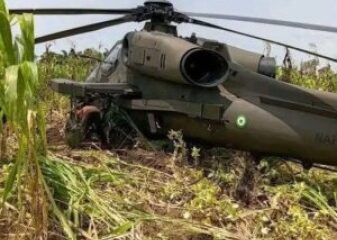
Nigerian Air Force releases names of passengers on board crashed Aircraft in Ondo
-
News1 day ago
Over 1,000 Islamic clerics ask Tinubu to drop 2027 re-election bid
-
News3 days ago
“Stop chasing shadows” – Obi’s camp fires back at Soludo over anti-Obi campaign
-
Features1 day ago
TWENTY YEARS IN MEMORY: MARIA UKAMAKA IFEOMA OJUKWU
-
News2 days ago
Ralph Obioha, Ex-NADECO founding member, dies at 80
-
News1 day ago
Military, DSS, police rescue 20 NYSC corps members, civilian in Imo
-
News2 days ago
90-year-old father of ADC Edo South candidate abducted