News
Petrol hits N1,900/litre as depot prices surge despite NNPC cut

•NIPCO raises petrol price by N170 in Port Harcourt; Rain Oil, Matrix hike diesel to N1,900 in Warri; NNPC sells at N1,360, MRS at N1,338 in Lagos; Brent rises to $104.50 per barrel
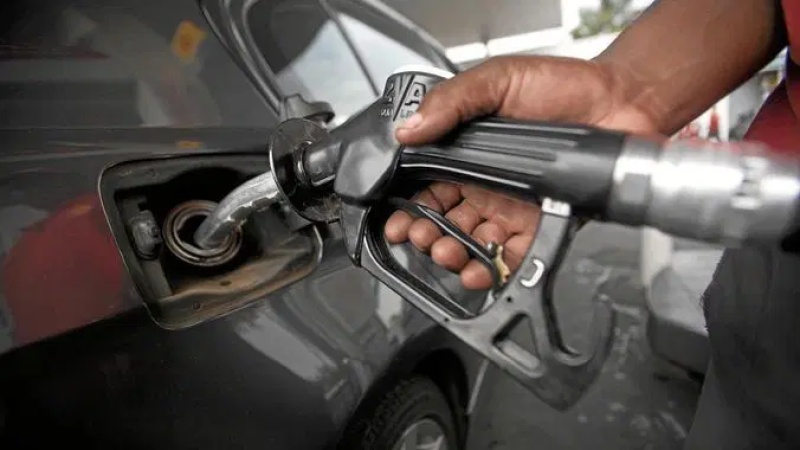
There are indications that domestic petroleum product prices could rise further as petrol depot prices surged across Lagos, Port Harcourt, Warri and Calabar on Friday, with several marketers in Port Harcourt raising their prices to N1,900 per litre, despite lower pump prices at some filling stations in Lagos.
NIPCO led the increases in Port Harcourt, raising its Premium Motor Spirit, PMS, price by N170 per litre to N1,900 from N1,730, while six other depots increased their prices by N150 to the same level.

The developments coincided with an increase in international crude oil prices, as Brent crude climbed to $104.50 per barrel from $104.28, while the US benchmark, West Texas Intermediate, WTI, rose to $91.73 from $91.49.

A review of depot prices showed that African Terminal, Ascon, Eterna, Gulf Treasure, Ibachem and Ibeto raised their petrol prices in Port Harcourt to N1,900 per litre from N1,750 each.

Duport and Integrated, however, increased their prices to N1,806 per litre from N1,750, representing an increase of N56 per litre.
In Lagos, Masters raised its petrol price to N1,350 per litre from N1,303, while Matrix increased its price to N1,360 from N1,330.
Sigmund and T.S.L raised their prices to N1,350 per litre from N1,300 each, while NIPCO increased its price to N1,350 from N1,326.
In Calabar, Matrix raised its price to N1,370 per litre from N1,315. In Warri, Keonamex, Matrix, Nepal and Parker increased their prices to N1,360 per litre from N1,315 each, while Optima raised its price to N1,360 from N1,330.
Pump prices vary
At the retail end, the NNPC Limited sold petrol at N1,360 per litre at its filling stations in Lagos and surrounding areas.
MRS Oil Nigeria Plc sold the product at N1,338 per litre, while 11 Plc sold at N1,338.80. Independent marketers charged between N1,368 and N1,400 per litre, depending on location.
Consequently, motorists patronising MRS and 11 Plc paid less than those buying from some independent marketers, whose prices reached N1,400 per litre.
The price differences highlight the divergent pricing trends across the supply chain, with depot prices rising in several locations even as some filling stations continued to sell below the rates charged by independent marketers.
Diesel prices climb
The diesel market also recorded significant increases in Warri, where Rain Oil and Matrix raised their Automotive Gas Oil, AGO, prices by N180 per litre to N1,900 from N1,720 each.
In Port Harcourt, Dangote increased its diesel price to N1,720 per litre from N1,702, while Masters raised its price to N1,825 from N1,788.
The increases could add to operating costs for manufacturers, transport operators and other businesses that rely on diesel for power generation and transportation, particularly if the higher prices persist.
Crude oil market mixed
On the international market, the OPEC Basket rose to $109.50 per barrel from $108.59, while WTI Midland increased to $92.74 from $92.32.
Natural gas prices climbed to $3.235 from $3.168, but Murban crude fell to $108.50 per barrel from $110.49.
Among refined products, gasoline declined to $3.293 from $3.316, while heating oil dropped to $4.724 from $4.883. The Indian Basket rose to $121.10 per barrel from $117.63.
The mixed movements across international benchmarks indicate that domestic depot price increases should not be attributed solely to the day’s crude oil gains. Product replacement costs, supply conditions, transportation expenses and individual marketers’ pricing decisions may also influence local prices.
Commenting on the developments in an interview with Vanguard, the Chief Executive Officer of Petroleumprice.ng, Olatide Jeremiah, said: “Despite domestic issues and development in Nigeria, the downstream sector would continue to respond or react to developments at the global oil market.”
With petrol reaching N1,900 per litre at several Port Harcourt depots and diesel hitting the same level in Warri, the latest price movements underscore the pressures facing Nigeria’s downstream market and the continuing differences between wholesale and retail prices. (Saturday Vanguard)









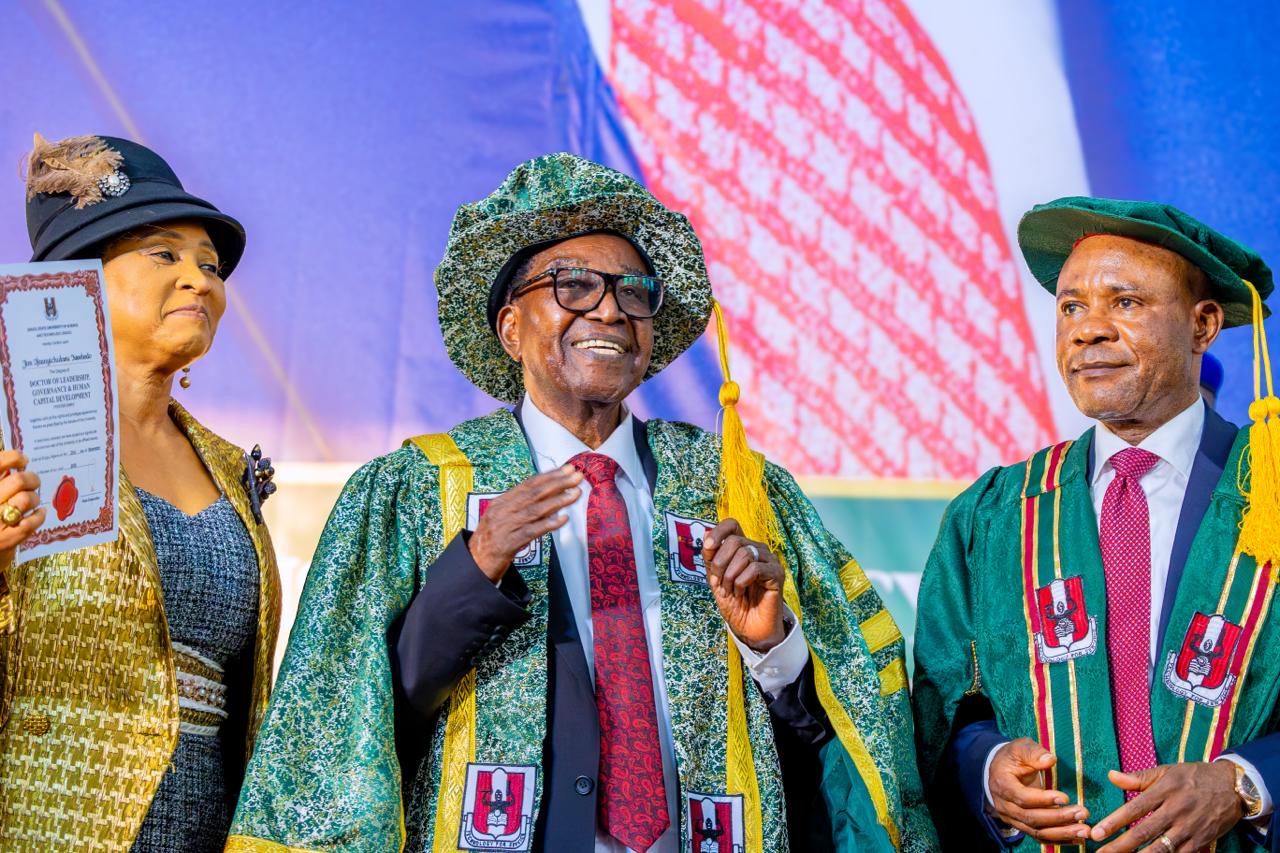
Governor of Enugu State, Dr. Peter Mbah, has unveiled plans to rename the Enugu State University of Science and Technology (ESUT) after a Second Republic Governor of old Anambra State, Senator Jim Nwobodo, subject to stakeholders engagement and legislative due process.
Mbah made this known during the 3rd Distinguished Personality Lecture of the university delivered by Nwobodo at the Barr. Peter Ndubuisi Mbah Multipurpose Auditorium, ESUT, Enugu, on Thursday.
He said the idea, which was first suggested by the ESUT Alumni Association, was in tandem with his thoughts, describing it as a fitting tribute to the elder statesman, who founded the institution in 1980.
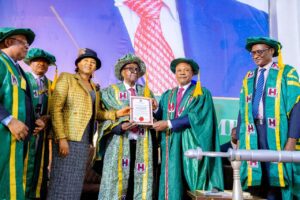
The Governor emphasised that the brainchild of the ex-governor had played a critical role in the human capital development of not just Enugu State, but also the old Anambra State and Nigeria as a whole.
“Recently, representatives of the alumni of this university and its associated institutions came to see me.
“They asked that Enugu State University of Science and Technology be renamed in honour of Senator Jim Ifeanyichukwu Nwobodo.
“I told them that I support the proposal. I was particularly encouraged that the request came from the alumni who understand, through their own experience, what the university has meant to people’s lives.
“There is a legal process to follow. ESUT was established by law, and changing its name would require the appropriate legislative steps and engagement with relevant stakeholders.
“I intend to begin those engagements and work with the institutions concerned to advance the proposal through the proper process.
“Your Excellency, I hope that gives you some sense of the regard in which your contribution continues to be held.”
The Governor praised Nwobodo’s vision and courage in leadership, especially for investing heavily in human capital development, taking the bold step to establish ESUT a few years after the civil war, not minding the enormity of the challenges involved.
“I have often wondered what it must have felt like to be governor in 1979. Nigeria had just returned to civilian government after thirteen years of military rule.
“The Civil War had ended less than a decade earlier, and the country was still dealing with its consequences. There was much to rebuild, and enormous pressure on the resources available to government.
“For many families, university education remained beyond their reach. And here was a young governor, who decided that his state should establish a university of science and technology.
“People questioned whether it could be done. Was there enough money? Could a state government sustain such an institution? Shouldn’t this be left to the federal government?
“These were reasonable questions. I suspect some of them would have kept you awake at night.
“But for Jim Nwobodo, the fact that a problem is difficult does not mean we can afford to avoid it.
“In July 1980, Anambra State University of Technology was established. Forty-six years later, we are gathered in one of the institutions that grew from that decision. And generations of young people have gained opportunities that might otherwise have been beyond their reach,” he stated.
Mbah noted that beyond the establishment of ESUT, the Nwobodo Administration encouraged communities to build schools, with government providing teachers and other support.
“He also invested in industry, seeking to create employment and strengthen the state’s productive capacity.
“Some of those industries later fell into decline, and today we are working to bring a number of them back into use.
“The value of such decisions is ultimately found in people’s lives. A child who could attend school in their own community. A young person who became the first in their family to enter university. A household supported by employment in a local industry,” he stated.
He hailed generations of academics, administrators and staff, who have sustained ESUT through changing governments, difficult economic circumstances and the demands of educating successive generations.
“In this regard, I want to assure the university community that the Enugu State Government is committed to the full implementation of the Academic Staff Union of Universities’ agreement with the Federal Government.
“We are already speaking with legislators to firm up its inclusion in the budget for implementation as soon as possible,” he assured.
Meanwhile, a major highpoint of the event was the conferment of an Honorary Doctorate Degree in Leadership, Governance, and Human Capital Development on Nwobodo.
ESUT’s Vice Chancellor, Prof. Aloysius-Michaels Okolie, said it was in appreciation of the ex-governor’s huge contributions to the development of Enugu State, but also the entire old Anambra State, listing his many achievements.
Another highpoint was the unveiling of Senator Nwobodo’s iconic status and the commissioning of a newly constructed road, Dr. Peter Mbah Drive, by the Governor.
The Nigerian Association of Resident Doctors (NARD) has given the Federal Government four weeks to address outstanding welfare concerns, clarifying that the period is not an ultimatum but an opportunity for further negotiations.
NARD President, Dr Ogar Idoko, made the clarification during an interview with Arise News on Thursday, explaining that the association preferred continued dialogue with the government to confrontation.
Idoko said the decision followed progress recorded on several of the association’s demands since the current leadership assumed office.
He disclosed that NARD presented 17 demands at its Annual General Meeting in Calabar, with between 13 and 14 reportedly addressed through engagements with the government.
According to him, although the association had issued ultimatums in the past, its National Executive Council resolved to give the authorities more time to address the outstanding issues.
Among the key demands yet to be fully addressed is the payment of 14 months of outstanding professional allowance arrears and promotion-related entitlements before Christmas.
Idoko said the government had so far paid four months out of the 18 months of outstanding professional allowances following an agreement reached at a tripartite meeting at the Presidential Villa.
He also disclosed that more than 400 doctors were excluded from the initial payment following the 25 to 35 per cent upward review of the allowances.
The association, he said, had submitted the details of the affected doctors and expected the outstanding payments to be processed after the November salary exercise.
The NARD president appealed to President Bola Tinubu to invoke Article 17 of the National Constitution, as amended, to facilitate the settlement of the outstanding payments.
He stressed that the allowances were legitimate entitlements owed to doctors and should not be treated as seasonal gifts or Christmas bonuses.
The association is expected to review the government’s response on December 20 before deciding on its next course of action if the outstanding issues remain unresolved.
The development comes after NARD recently commended the Federal Government for completing the payment of the 2026 Medical Residency Training Fund.
Idoko had described the payment as a significant step towards addressing the welfare concerns of resident doctors.
The association also acknowledged the government’s approval of an increase in the fund for 2027 and the commencement of payments for outstanding Professional Allowance Table arrears, with four of the 18 months reportedly settled.

The Federal Government has unveiled measures to reduce food prices, including the release of three million bags of fertiliser, the distribution of stored grains and increased investment in agricultural production.
The Minister of Agriculture and Food Security, Abubakar Kyari, disclosed this on Thursday in Abuja during the presentation of the 2026 Wet Season Agricultural Performance Survey Report (APS) and the unveiling of the government’s plan to lower food prices, stabilise the market, boost domestic production and achieve food sovereignty.
Kyari said increased agricultural productivity and the expansion of cultivated farmland would improve food supply and drive down the prices of some commodities.
He noted that the administration of President Bola Tinubu had recorded significant progress in the agricultural sector through various policies and interventions.
The minister added that grains purchased and stored under the Bank of Agriculture’s Guaranteed Minimum Price Programme would soon be released into the market to prevent excessive price increases and stabilise food prices.
“The same crops that we have stored under the Guaranteed Minimum Price Programme of the Bank of Agriculture will be released very soon to stabilise market prices,” he said.
Kyari said the government would soon announce the modalities for distributing the stored commodities.
He explained that the latest survey covered only agricultural activities during the 2026 wet season, adding that the ministry had directed the National Agricultural Extension and Research Liaison Services (NAERLS) to conduct a separate assessment of dry-season production to establish the country’s overall agricultural output for the year.
The minister, who highlighted the increase in agricultural production recorded in 2025 and the marginal improvement in 2026, said the government was encouraged by the progress made so far.
He also said a comparison of food prices between 2025 and 2026 showed reductions in the cost of some commodities, particularly dairy products and maize.
“When you compare prices between 2025 and 2026, I am not even comparing 2023 and 2026. Within just one year, we have seen a drop in the prices of dairy products, maize and other commodities,” Kyari stated.
On the cost of agricultural inputs, Kyari disclosed that the Presidential Fertiliser Initiative was preparing to release three million bags of fertiliser within the next month to reduce production costs for farmers.
He said the intervention, earlier announced by Vice-President Kashim Shettima, formed part of the administration’s broader strategy to make farming more affordable and improve food availability.
Kyari stressed that government policies would be implemented in a manner that balances the interests of consumers, farmers and food processors.
He also highlighted the impact of agricultural financing and support programmes, including the National Agricultural Development Fund and the recapitalisation of the Bank of Agriculture, which he said had improved farmers’ access to funding.
According to him, the Guaranteed Minimum Price Initiative had encouraged farmers to return to their farms by providing a ready market for their produce at affordable and competitive prices.
The minister further attributed the expansion of cultivated farmland to improved security, noting that the efforts of the Nigerian Armed Forces had enabled farmers to regain access to previously inaccessible agricultural areas.
On mechanisation, Kyari said the government had deployed 2,000 tractors, adding that deliveries under the second phase of the programme were expected to commence within the next two to three months.
He expressed optimism that increased food production, cheaper fertiliser, improved mechanisation and the planned release of stored grains would further ease food prices and strengthen food security across the country.
The minister also disclosed that the government was attracting fresh investments into agricultural processing, including projects involving cocoa, sesame, cassava, cashew nuts and other economic crops.
He cited a $33 million investment agreement signed with a Turkish company for greenhouse projects within the country’s Special Agro-Industrial Processing Zones as evidence of growing investor confidence in Nigeria’s agricultural sector.
Kyari reiterated the government’s commitment to sustaining interventions aimed at increasing agricultural output, lowering production costs and ensuring that the benefits of improved food production translate into more affordable prices for Nigerians.
Earlier, the Executive Director of the National Agricultural Extension and Research Liaison Services (NAERLS), Ahmadu Bello University, Zaria, Prof. Yusuf Sani, said 13 of the 17 major crops assessed were expected to record increased production in 2026.
He said the projection indicated improved agricultural output despite prevailing environmental and production challenges.
Sani disclosed that 19 multidisciplinary teams conducted field assessments across the 36 states and the Federal Capital Territory between August 31 and September 6, 2026, in collaboration with state ministries of agriculture, agricultural research institutes, Agricultural Development Programmes and development partners.
He identified Niger State as the leading rice-producing state, Kano as the highest producer of sorghum and Yobe as the leading millet-producing state.
The NAERLS director emphasised the need to strengthen storage facilities, post-harvest handling and market access to minimise losses and ensure that increased agricultural production translates into improved food availability and affordability.
-
 News22 hours ago
BREAKING: Enugu Billionaire, Ferotex Boss Festus Oshaba-Onuh Feared Dead in Road Accident
-
News2 days ago
U.S. Strategist Diana London Deletes Posts on Tinubu, Nigeria-U.S. Security Partnership
-
News1 day ago
Anambra Billboard Saga: Onyima Challenges Soludo Govt to Cite Law Behind Umeh’s Billboard Removal
-
News22 hours ago
Festus Onu’s Death: Enugu APC Campaign Council Suspends Activities
-
News1 day ago
EFCC Arraigns Socialite Over Alleged ₦603.4m NNPC Appointment Scam
-
News2 days ago
Enugu CP Ogarabe Seeks Stronger Security Partnership with ESUT, Meets AIG Zone 13
-
News2 days ago
Enugu Court Sentences Security Guard to Death by Hanging for Killing Man Over Alleged Theft
-
Education2 days ago
Covenant University Retains Africa’s Top Spot as Nigeria Records 27 Varsities in 2027 THE Rankings