Connect with us

Politics

INEC to politicians on 2027 polls: Your ambitions not worth blood of Nigerians

Published

on

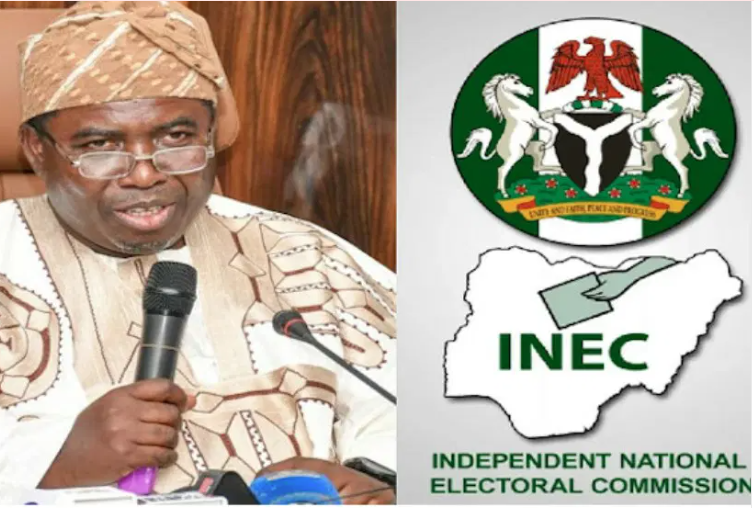
INEC Chairman, Professor Joash Amupitan SAN
Spread the love

• Vows arrests, sanctions for violence, hate speech, vote-buying

•  Sets to track illegal campaign spending

•  As voter register tops 103m, 57,000 new BVAS acquired, PVC collection begins Friday

The Independent National Electoral Commission, INEC, has warned politicians that their ambitions were not worth the blood of Nigerians, vowing arrests, sanctions and prosecution against parties, candidates and agents who resort to violence, hate speech and vote-buying during the 2027 general election.

INEC Chairman, Professor Joash Amupitan SAN, gave the warning at a strategic workshop for editors, organised by the Nigerian Guild of Editors, NGE, in collaboration with the commission, in Abuja yesterday.

“As electioneering intensifies across the country, I must sound a clear note of warning to all political parties, candidates, and campaign managers: INEC will not stand by and allow political competition to devolve into violence, intimidation, or inflammatory rhetoric.

“Democracy thrives on the clash of ideas, not the clash of weapons or the proliferation of hate speech,” he stated.

Amupitan said the commission had put machinery in place to track offenders, adding that “through the Inter-Agency Consultative Committee on Election Security, ICCES, we have activated an early-warning tracking framework to log incidents of political violence, thuggery and dangerous campaign rhetoric.

Maduka College Advert

“Any political party or candidate implicated in inciting violence, disrupting rivals’ rallies or deploying armed thugs will face direct statutory sanctions and swift prosecution. No political office in this country is worth the blood of a single Nigerian.’’

Departing from his prepared speech, the chairman said he had just been shown evidence of the kind of conduct he was warning against.

“Just before I was invited to come and speak, somebody shared with me… a person, an NDC candidate in Kano State who was campaigning yesterday with a gun in his hands, brandishing the gun, and so on and so forth.

“Another person was threatening that with AK-47s, they will kill all of us in the commission. So, that is what elections have turned into in Nigeria of today,” Amupitan lamented.

He appealed for restraint, saying “let us not forget our role as citizens of Nigeria to be patriotic because election is a periodic process for the election of leaders every four years”.

Vote-buying

On vote-buying, the chairman also announced a crackdown on money politics, stressing that the integrity of the ballot box was fatally compromised when a citizen’s vote was treated as a commodity for sale.

“The commission is taking an uncompromising stance against vote-buying in all its forms ahead of the 2027 general election,” he said.

He disclosed that the commission was working with the Federal Ministry of Justice, the Economic and Financial Crimes Commission EFCC, the Independent Corrupt Practices and Other Related Offences Commission, ICPC, and the Nigerian Financial Intelligence Unit NFIU.

103m registrants

On the voter register, Amupitan said Phase I of the Continuous Voter Registration, CVR, which ran from August 25, 2025, to December 10, 2025, registered 2,611,266 voters, while Phase II, from January 5 to April 17, 2026, registered 4,121,835.

According to him, Phase III, from May 11 to July 26, 2026, registered 3,867,997, which together amount to over 10.6 million new registrants.

57,000 new BVAS

On technology, Amupitan said the commission had acquired 57,000 new Bimodal Voter Accreditation System, BVAS, devices “for optimal performance.”

He said the enhanced eEC8A system digitised polling unit result sheets, authenticated them cryptographically and uploaded them directly from polling units to the INEC Result Viewing Portal, IReV.

Amupitan said Form eEC8A would halt manipulation of votes at the polling unit level before the figures were entered into the BVAS and transferred to IReV.

Bulletproof vests, cars

He disclosed that at the commission’s North-West zonal engagement in Kaduna State, staff from Zamfara, Sokoto and other states asked for bulletproof vests and vehicles because of insecurity in parts of those states. He said the commission might secure bulletproof vehicles for staff in flashpoints, noting that the commission had completed physical readiness audits and staff engagements in the South-West and North-West zones, covering state office facilities, safe storage, security command protocols and logistics networks, adding that the other four geopolitical zones would follow.

Speaking on the issue of staff welfare, he said the commission had “recently introduced the Consolidated Election Management Body Salary Structure, CEMBSS, accompanied by a 150% increase in state office operational overheads effective July 1, 2026. ‘’We are working on the cash backing to ensure immediate implementation,’’ he added.

In his remarks, NGE President, Mr Eze Anaba, said the partnership was timely as the country approached another round of elections.

“Elections are not merely about casting ballots; they are about trust. They are about citizens believing that their votes will count, that the process will be transparent and that the institutions responsible for conducting elections will act fairly and professionally,” he said.

Anaba said the media had a critical role in building and sustaining that trust, noting that “as editors, we determine, to a significant extent, what information reaches the public, how it is presented and the context in which it is understood. With that responsibility comes an obligation to uphold accuracy, fairness, balance and the public interest,” he said.

He acknowledged that the media could carry the responsibility alone.

“At the same time, we recognise that the media cannot perform this responsibility effectively without credible, timely and accessible information from the electoral management body,” he said.

Anaba, who warned of the environment in which both sides operate, said:  “In an environment increasingly polluted by misinformation, disinformation, manipulated content, deepfakes and partisan narratives, the relationship between INEC and the media must therefore be one founded on openness, mutual respect and regular engagement.’’ (Vanguard)


Politics

State Police: Yilwatda hails unanimous endorsement by 36 State Assemblies, governors

Published

on

The National Chairman, All Progressives Congress, Prof Nentawe Yilwatda. Photo: APC
Spread the love

•  APC chairman says Tinubu is building a safer Nigeria, urges continuity ahead of 2027 presidential election

The National Chairman of the All Progressives Congress (APC), Prof. Nentawe Goshwe Yilwatda, has commended the 36 state governors and all 36 State Houses of Assembly for their unanimous support for the proposed constitutional amendment to establish State Police Services in Nigeria.

Yilwatda described the development as a landmark achievement in the country’s democratic evolution and a demonstration of political maturity, national consensus and constructive cooperation among the different tiers of government.

In a statement issued by his Special Adviser on Media and Information Strategy, Mr Abimbola Tooki, the APC chairman said the unanimous endorsement by the 36 State Houses of Assembly represented an unprecedented collective commitment to addressing one of Nigeria’s most pressing challenges: the security of lives and property.

Speaking during a meeting with party stakeholders in Abuja, Yilwatda particularly applauded the governors for their positive disposition, constructive engagement and support for the initiative.

Maduka College Advert

He also commended the Speakers and members of the various State Houses of Assembly for recognising the urgency and importance of the proposed security reform.

According to him, the willingness of all states, irrespective of political affiliations and differences, to support the constitutional amendment demonstrates that national security transcends partisan considerations and remains a collective responsibility.

“This development is a powerful affirmation that when the national interest is placed above political differences, our democratic institutions can work together to deliver meaningful solutions to the challenges confronting our country,” he said.

Yilwatda described the proposed establishment of State Police Services as a major component of President Bola Tinubu’s broader reform agenda aimed at building a more responsive, effective and practical security architecture for Nigeria.

He argued that the country’s security challenges had exposed the limitations of an overly centralised policing structure in responding adequately to the peculiar security realities of different communities and geographical locations.

According to him, State Police would provide an additional layer of policing, bringing security administration closer to the people and enabling authorities to respond more promptly to threats within their jurisdictions.

He said the proposed framework would give state governments greater institutional capacity to complement the Federal Police Service in crime prevention, intelligence gathering, maintenance of law and order, and protection of communities.

Among the anticipated benefits, he listed improved grassroots intelligence gathering, faster response to security emergencies, more effective community policing, better understanding of local security threats and stronger collaboration between federal and state security institutions.

He added that the reform would strengthen efforts to tackle kidnapping, banditry, communal violence, armed robbery, terrorism and other criminal activities threatening the safety and economic wellbeing of Nigerians.

“Most importantly, State Police will enhance the capacity of government to identify emerging security threats before they escalate into major security emergencies,” he said.

However, the APC chairman stressed that the success of the initiative must be anchored on professionalism, adequate training, accountability, respect for fundamental human rights and strict adherence to constitutional provisions.

He warned that State Police Services must be established to protect citizens and enforce the law, rather than serve as instruments of political intimidation or partisan interests.

Yilwatda also commended President Tinubu for what he described as his courage, determination and commitment to addressing the country’s security challenges through institutional reforms and practical solutions.

He said the President’s approach was driven by the understanding that the primary responsibility of government was the protection of lives and property and that every Nigerian deserved to live in safety, dignity and peace, irrespective of geographical location, ethnic background, religious affiliation or political persuasion.

“The President’s determination to advance the State Police initiative demonstrates his willingness to take difficult but necessary decisions in the overriding interest of national security,” he said.

Yilwatda maintained that security should not be treated as a privilege reserved for residents of particular cities or regions, insisting that Nigerians in metropolitan centres, rural communities, farming settlements and border towns all deserved adequate protection.

He expressed confidence that, with the necessary constitutional processes and implementation safeguards, the State Police framework would become an important instrument for strengthening national security and restoring public confidence in the country’s policing system.

The APC chairman further argued that the proposed State Police reform, alongside other ongoing institutional and economic reforms, underscored the need for continuity in leadership under President Tinubu.

He urged Nigerians to look beyond political rhetoric and assess the country’s direction based on the policies, decisions, institutional reforms and measurable commitments of the present administration.

According to him, nation-building requires courage, consistency, experience and the willingness to confront difficult challenges rather than abandon necessary reforms whenever they become politically inconvenient.

“Nigeria cannot afford to repeatedly interrupt its reform journey or return to the uncertainties of leadership approaches that have failed to deliver sustainable solutions to the country’s fundamental challenges,” he said.

As the country approaches the January 16, 2027 presidential election, Yilwatda called on Nigerians across the 36 states and the Federal Capital Territory to vote for President Tinubu’s re-election.

He said continuity would provide an opportunity to consolidate ongoing reforms, strengthen the security architecture, deepen economic recovery, improve infrastructure, expand opportunities for young Nigerians and build on the foundations already being established for a more prosperous country.

The APC chairman said the forthcoming election presented Nigerians with an important choice between sustaining an ongoing reform programme and embracing political alternatives whose records in public office should be critically assessed.

He cautioned Nigerians against entrusting the country’s future to political actors whose overriding ambition, according to him, was to occupy the highest political office rather than present credible, practical and sustainable solutions to national challenges.

Yilwatda noted that the ambition to become President did not, in itself, qualify anyone for leadership, stressing that what mattered was the capacity to lead, clarity of vision, courage to make difficult decisions and a demonstrable record of responsible governance.

“It would be dangerous for the country to surrender its future to individuals whose previous opportunities to serve in positions of authority did not produce the economic stability, institutional strength and national development they now promise Nigerians,” he said.

He further argued that some politicians seeking a return to power had been part of previous administrations whose economic policies and governance decisions contributed to the difficulties the country subsequently faced.

He urged Nigerians to critically examine the records of presidential aspirants by asking what they achieved when they had the opportunity to govern, the lasting institutions they built and the solutions they provided to the economic and security challenges of their time.

Yilwatda insisted that Nigeria’s future must not become an experiment in political nostalgia, personal ambition or desperation for power.

Continue Reading

Politics

2027: ADC Appeals Leadership Judgment, Seeks to Stop INEC from Dropping Atiku

Published

on

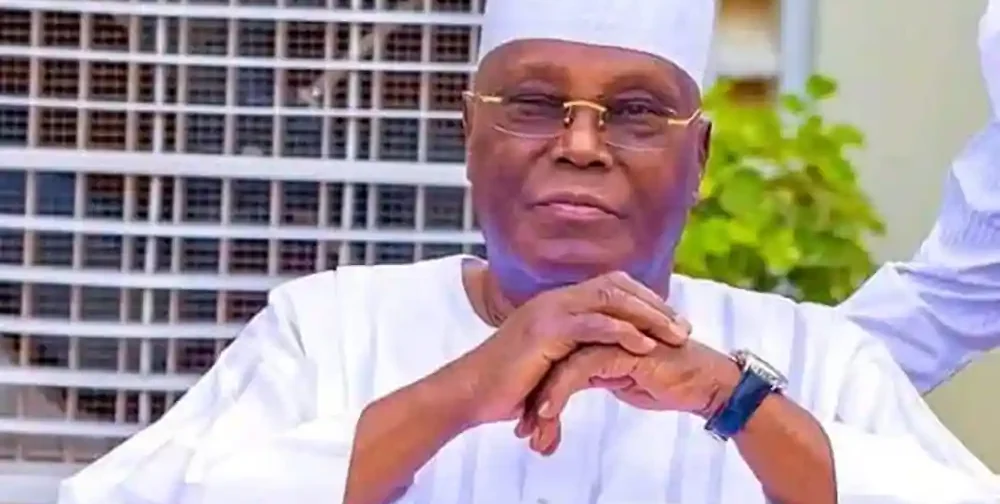
ADC Presidential candidate, Atiku Abubakar
Spread the love

The African Democratic Congress (ADC) has approached the Court of Appeal, seeking to overturn the judgment that nullified the leadership of the party led by former Senate President, David Mark.

The party is also asking the appellate court to restrain the Independent National Electoral Commission (INEC) from altering its leadership records or tampering with the names and nomination details of its presidential and governorship candidates pending the determination of its appeal.

The ADC argued that the judgment delivered by Justice Lifu was based on an amended court process that was already the subject of a pending appeal.

It faulted the trial court for delivering its ruling before the earlier appeal had been determined, describing the development as a matter requiring the intervention of the appellate court.

Maduka College Advert

According to the party, allowing INEC to implement the judgment at this stage could trigger changes that might be difficult to reverse, even if the appeal eventually succeeds.

The party is therefore seeking an order directing INEC to maintain the status quo that existed before the November 5 judgment, to safeguard its candidates’ participation in the 2027 general elections.

It urged the electoral commission to refrain from taking any action that could undermine the appellate court’s eventual decision or jeopardise the political interests of its candidates while the appeal and related applications remain pending.

The ADC further argued that the Court of Appeal must preserve the subject matter of the dispute to ensure that its eventual judgment is not rendered ineffective by any intervening action.

“These are serious questions before the Court of Appeal,” the party said.

Continue Reading

Politics

Five Key Considerations When Choosing Nigeria’s President in 2027

Published

on

By Michael Owhoko, Ph.D.
Spread the love

By Michael Owhoko, Ph.D.

As Nigerians prepare to go to the polls in January next year to elect a new president, the election presents another opportunity to determine the country’s future: whether to maintain the status quo, move backwards or make meaningful progress.

In making this choice, the electorate should be guided by five crucial factors that lie at the root of distrust and disunity — the twin obstacles undermining national progress and prosperity.

Until these issues are decisively addressed, expecting Nigeria to remain united, let alone prosper, may be delusional. The country is currently trapped in a complex web of pretence, with leaders operating under the guise of pseudo-patriotism, profound ethical deficits and hypocritical commitments to national unity.

Maduka College Advert

No country can prosper in an atmosphere of pathological distrust and disunity. Challenges such as poor leadership, corruption, insincerity, ethnic conflicts, economic stagnation, insecurity, negative global perception and declining international indices are all manifestations of these underlying problems.

The five factors are political structure, Sharia law, constitutionalism, traitor-powered terrorism and sectional nepotism. How do these issues fuel disillusionment and perpetuate Nigeria’s seemingly endless struggle for nationhood, with the country increasingly at risk of drifting towards the precipice?

1. Political Structure

Nigeria operates a highly centralised political system that, in practice, is unitary in form, structure, organisation, intent and operation. The 1999 Constitution allocates 67 items to the Exclusive Legislative List and 13 to the Concurrent Legislative List, reflecting a powerful centre (the Federal Government) and relatively weak states (the federating units). Nigeria needs genuine federalism, not merely a federation in name.

This arrangement is unsuitable for a diverse country comprising more than 250 ethnic groups, each with distinct cultures, histories, beliefs, aspirations and traditional institutions. The federating units require substantial autonomy to determine their development priorities and manage their resources without excessive dependence on the Federal Government.

Nigeria should therefore be restructured into a genuine federal system in which states or regions exercise greater control over the mineral and natural resources within their territories while remitting an agreed percentage of revenue to the central government. Alternatively, the country could adopt a confederal arrangement comprising strong, relatively autonomous regions and a comparatively weak central authority.

Such restructuring would reduce the unhealthy dependence of states on monthly allocations from the Federation Account while encouraging resource development, productivity and economic competitiveness. It would also address perceived inequities in revenue allocation, under which states that contribute little or nothing to the common pool receive substantial allocations.

More importantly, decentralisation would reduce the excessive concentration of presidential powers and limit the arbitrary deployment of public resources for ethnic interests and political patronage. It would also reduce the desperation among ethnic groups and regions to capture political power at the centre primarily for sectional advantage rather than national development.

Nigeria therefore needs a president who is prepared to confront the dysfunctional political structure and champion genuine federalism.

2. Sharia Law

Nigeria is a multi-religious country, not an Islamic state. Section 10 of the 1999 Constitution prohibits the Federal Government and state governments from adopting any religion as a state religion.

Yet, 12 northern states — Zamfara, Kano, Sokoto, Gombe, Niger, Kaduna, Yobe, Kebbi, Katsina, Bauchi, Borno and Jigawa — introduced expanded Sharia criminal laws, generating controversy over the constitutional limits of religious law in a religiously diverse country.

This development has heightened religious tensions and deepened distrust, particularly among non-Muslims who perceive it as inconsistent with the country’s constitutional commitment to religious neutrality.

Closely related to this is Nigeria’s membership of the Organisation of Islamic Cooperation (OIC). In January 1986, the military government of General Ibrahim Babangida upgraded Nigeria’s status from observer to full membership without national consultation.

The decision generated disagreement within the military government, particularly from the then Chief of General Staff, Commodore Ebitu Ukiwe, who maintained that the matter had never been discussed by the Armed Forces Ruling Council.

Ukiwe’s objection reflected concerns shared by many non-Muslims across the country, further exposing the depth of religious distrust and disunity.

Whether or not the decision was motivated by an intention to Islamise the country, its implications for national cohesion cannot be ignored.

Nigeria needs a president with the courage and integrity to address these contentious issues while protecting religious freedom, constitutional neutrality and national unity.

3. Constitutionalism

Nigeria has a Constitution but lacks a strong culture of constitutionalism. Governments at all levels, public institutions and influential individuals frequently disregard constitutional provisions, established procedures and the rule of law, creating the impression that some people are above the law.

This situation undermines citizens’ confidence in the justice system, particularly when wealthy and politically connected individuals allegedly exploit their influence to frustrate justice.

In many instances, powerful individuals are heard intimidating others with statements such as: “Do you know who I am? I can kill you, and nothing will happen.”

There are numerous reported cases of arbitrary arrests, unlawful detention, torture and suppression of freedom of expression by security agencies, raising serious concerns about respect for the rule of law.

For instance, Section 287 of the 1999 Constitution, which provides for the enforcement of court decisions by all authorities and persons throughout the country, is frequently disregarded.

A notable example is the continued detention of Okuama community leaders in Delta State by the Nigerian military, despite a Federal High Court order. This illustrates the challenges of enforcing the rule of law and protecting citizens’ rights.

A credible presidential candidate must therefore demonstrate an unwavering commitment to constitutionalism, judicial independence, accountability and the equal application of the law, regardless of an individual’s wealth, status or political influence.

4. Traitor-Powered Terrorism

Nigeria has the capacity to defeat terrorist organisations such as Boko Haram, the Islamic State West Africa Province (ISWAP), Ansaru, armed Fulani militias, Mahmuda and Lakurawa. However, this advantage is undermined by alleged internal collaborators, traitors and saboteurs within government institutions, including the armed forces, intelligence services and other strategic security agencies.

The possibility of insider collaboration has been acknowledged by security officials and, notably, by former President Goodluck Jonathan, who raised the alarm during his tenure that Boko Haram had infiltrated government institutions, including the armed forces, police and other security agencies.

Painfully, alleged sabotage, particularly where driven by extremist jihadist ideology, poses a serious threat to a multi-religious country like Nigeria.

Until individuals involved in aiding and abetting terrorism are identified, investigated, prosecuted and, where found guilty, appropriately punished, Nigeria may continue to struggle to overcome this security menace.

The electorate should therefore vote for a presidential candidate with the courage, political will and capacity to identify and decisively deal with this challenge.

5. Sectional Nepotism

Ethnic prejudice, cronyism and sectional considerations frequently influence decisions by Nigerian leaders in the discharge of their official responsibilities.

The Presidency is particularly culpable in this regard, especially in appointments to strategic national positions, where ethnic and sectional interests sometimes take precedence over competence and merit.

The same tendency is evident in infrastructure development, where projects and their locations are sometimes determined by sectional considerations rather than economic viability, national priorities or the broader public interest.

Such practices undermine fairness, weaken institutions and deepen suspicion among Nigeria’s diverse ethnic and regional groups.

National interest must take precedence over ethnic loyalty, just as merit must prevail over mediocrity. Appointments, infrastructure development and the distribution of public resources should be guided by fairness, competence and national priorities to promote national unity.

The President Nigeria Needs

Indeed, Nigeria needs a president of integrity, free from ethnic and religious prejudice, with the courage, vision and capacity to address these five critical challenges.

Given the enormous powers vested in the President by the 1999 Constitution, the question is: which of the 18 presidential candidates has the political will to initiate the reforms necessary to restore public trust and strengthen national unity?

For too long, Nigeria has been held captive by these challenges, mired in a morass and trapped in a cycle of negativity, while groaning under escalating distrust and disunity fuelled by the five issues.

Sadly, these challenges have evolved into powerful influences shaping the behaviour of leaders and determining how public policies are formulated and implemented.

Even initiatives designed to promote national unity, including the establishment of Unity Schools, the National Youth Service Corps (NYSC), the National Orientation Agency (NOA), the Institute for Peace and Conflict Resolution (IPCR), the Federal Character Commission (FCC) and the Federal Ministry of Information and National Orientation, have proved largely cosmetic. They have failed to foster genuine national unity, inspire patriotism and bridge the widening trust deficit among Nigeria’s ethnic and geopolitical groups.

Unless these concerns are decisively addressed, Nigeria risks remaining trapped in a cycle of instability, insecurity and underdevelopment.

Dr Michael Owhoko, a Lagos-based public policy analyst, author and journalist, can be reached through his website, www.mikeowhoko.com, and followed on X (formerly Twitter) @michaelowhoko.

Continue Reading

Trending

Maduka College Advert